There are natural times where the ego has to have its primary guiding principles re-examined. And often later in life, they have to be sacrificed so that something better, more expansive, more reflective of the maturity that we've gained can emerge. Welcome to this Yungian life. Three good friends and Yungian analysts, Lisa Mariano, Deborah Stewart, and Joseph Lee invite you to join them for an intimate and honest conversation that brings a psychological perspective to important issues of the day. >> I'm Lisa Mariano and I'm a Yungian analyst in Philadelphia. >> I'm Joseph Lee and I'm a Yungian
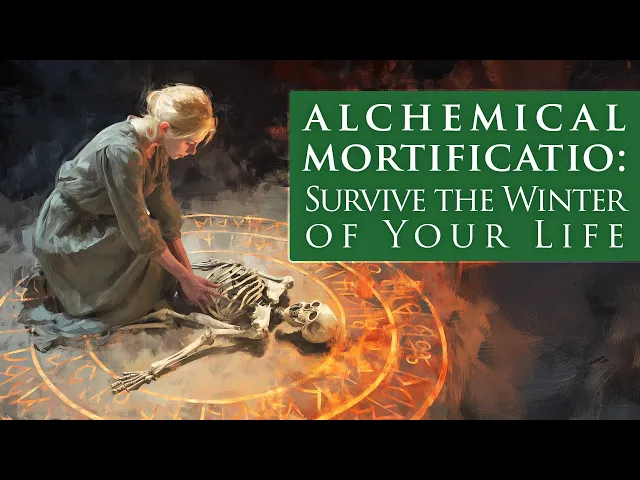
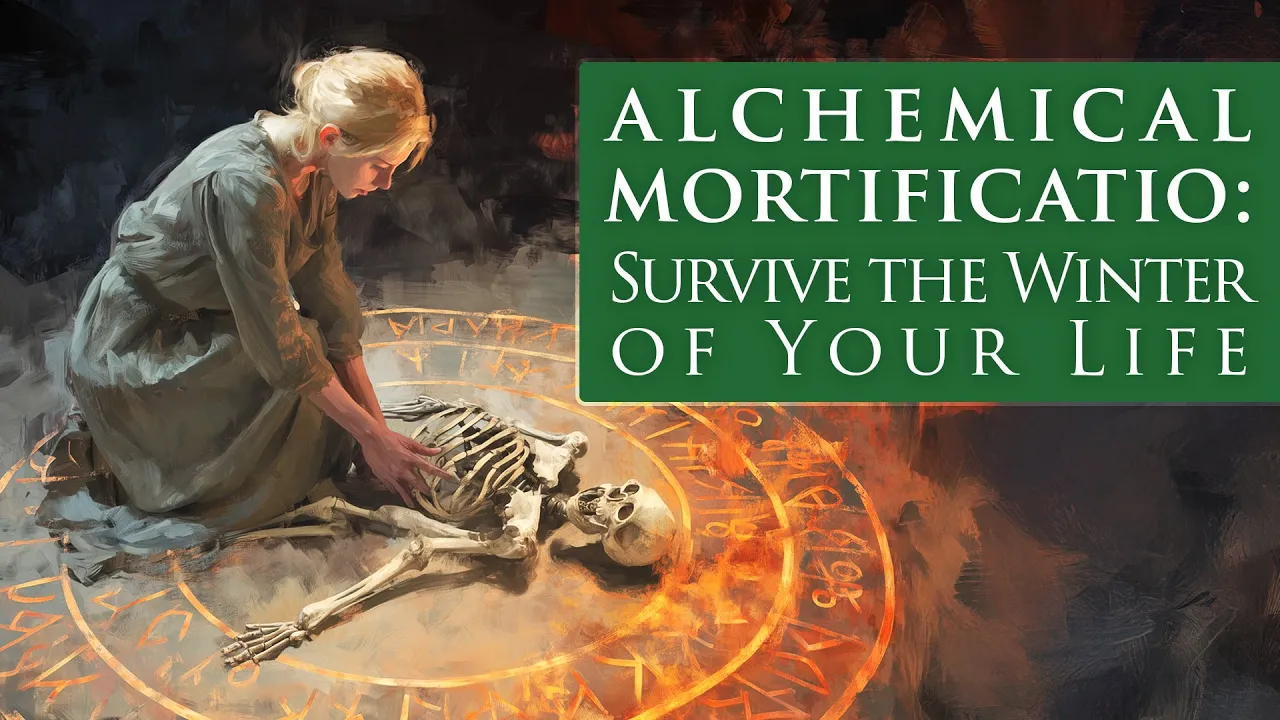
analyst in Virginia Beach, Virginia. I'm Deborah Stewart, a Yungian analyst on Cape Cod. Today, Joseph and I uh as Lisa can't be here are going to discuss an important life uh process and one that is uh critical in alchemy part of our uh ongoing series of alchemical processes and that is the process of a mortific uh or death. uh from a psychological point of view it's the dark turning point but uh when we are in that process it doesn't feel like a turning point it feels like the end uh that we are just in the
negrado alchemical term for the blackness or depression uh it's associated with shadow it's associated with death it's associated with putrifaction, uh, dismemberment, you know, all kinds of awful dark things that we don't want to face and yet we do in the course of a life. So, uh, what are the elements psychologically speaking that that can die and may need to die um when we experience mortificio? Well, the first and most universal thing is it's some element of ego uh that usually uh has to exceed to a force greater than itself. As we all know from
Jung and others, one of the necessary conditions for humanity and being human is we develop an ego and we need to develop an ego. uh but then it tends to arrogate to itself uh a sense of wholeness, power, authority as if that's all that we are and then we are going to run into these processes of mortificio. Uh the ego is often represented in alchemy as the king or the sun, the lion, the eagle uh and other such symbols. One of the things that can die in the process of mortificio is also our instinctual nature
when it is leading us astray. Uh such as perhaps a process of addiction. Uh the dark uh primal material that has perhaps not made it all the way into being integrated into ego. uh and that can be symbolized by uh the toad or a poisonous dragon um something that's very fleshy and material and unevolved excrement and so on. Another thing that can be subjected to the process of mortificio is the lesser conjunctio of two things that are joined together but but imperfectly. Uh, and this is often symbolized by things like marriage. It may be a
career crisis, something we were drawn to, a person we loved, and then it's not perfect. We're not perfect. And that conunctio that we projected uh onto a person, a situation, a career uh has to suffer uh some kind of death of the original idea in order to move to something else. And another thing, the last on my on my list of all these things that can die, um, is the childhood state that I think we can carry into very late years in life of purity or innocence or just idealism. And that's often symbolized by uh
the sacrifice of something that is innocent. In the New Testament, Herod persecutes uh young children uh two years old or younger or the white sacrificial lamb, which is an early stage of sort of whiteness, but it needs to be uh tempered with that as our uh mini framework for a very big important and difficult life process. Let's see where we go. This Yungian life dream school is our yearlong online program in the art of yian dream analysis. We offer guidance, instruction, and community as you learn to work more deeply with your dreams. There are 12
course modules, each with audio, video, and written materials, as well as a curated reading list. You'll be invited to join monthly live meetings with the three of us and to connect with fellow Dream Schoolers in our thriving online community. And this year, we are offering 10% off Dream School for the holidays. Just use the code holiday 2025 when you check out anytime between now and the 31st of December. And you can also use this code to purchase Dream School as a gift for someone you love. Visit our website this yungian life.com to learn more and
we look forward to seeing many of you in dream school in time for 2026. So if we take that first position which is that there are natural times where the ego has to have its primary guiding principles re-examined and often later in life they have to be sacrificed so that something better, more expansive, more reflective of the maturity that we've gained can emerge. >> So in one of the alchemical sequences of the splendor Solless, there's an image of a young prince standing on the shore and then far out in the lake there's an old king
that's flailing in the water and is, you know, going down for the count. And one of the ways that that's interpreted is that we often don't realize that we have a core axiom and attitude right right woven into the fundamentals of the personality. Often it's something that's came into us very early in childhood even and that that becomes an orientation to ourselves and to life and it takes us as far as it does. But as the self begins to assert and make demands on the ego, what we find is that that old belief has been
limiting us. Now for most of us it's very hard to put our hands on that kind of guiding principle that's been there for 50 years let's say but the self is keenly aware of the operating system that we've been running on and at a certain point it will intercede and start taking the life and libido away from that little nexus of images and beliefs. starve them so to speak which as you had said often leads to a temporary period of depression or confusion and to be patient enough to wait and discover what the new and
more comprehensive idea is. Now talking about the death of an idea sounds so abstract. But if we understand that the central attitudes by which we perceive the world are captured as concepts and live inside us. That is a radical process. >> Let's really illustrate this uh with with some examples. So, one example that I could just toss out because I just went through this with with somebody I'm working with is that if you're raised in a house where there's a lot of turbulence or trauma, sometimes the organizing attitude can be very primal and it might
sound like something like this. No, just that >> just that little gasp of no. And when that feeling and that word gets installed as a fundamental attitude towards the world, we see that later in life that as opportunities or experiences present themselves that the body kind of locks up, gasps and initially interprets it as something that shouldn't be happening or that we don't want. And so we have a tendency to push life away. In our more sophisticated adult world, we're not aware of that gasp and that single word. But when we think about these very
very young moments where a guiding principle is installed, it often can sound and feel that primal. And if that's an attitude that's carried into the adult life, once we realize it, we can see how many things out of fear and startle and anxiety that we have rejected for no other reason than we have this echo from a very young time. And luckily, if we're gifted the moment to see that, we might notice that that needs to go and something better needs to replace it. That's one example I've been thinking about. What What do you think,
Deb? I want to acknowledge uh how incredibly uh painful uh these experiences of of mortific Vicatio can be >> the degree of of suffering and the amount of time that it can take and uh the example that I can offer from my personal life is my first career as a special ed teacher. >> Mhm. >> And this is up for me because it came up in the context of something else just last week. And we worked with adolescents. They were not especially cute or adorable. And we we loved them and kind of kicked their butts
and had a wonderful team and wanted very very much to support them in becoming and being who they were. uh and taking responsibility for for decisions and choices. And um needless to say, this program did not um adhere to typical school rules of of everyone sitting at a desk and working uh through a workbook. After four or five years, uh the powers that were uh decided to dismantle us. M >> and I uh the mortific Ficatio was that honestly I was on a quest. I was on the call to adventure Allah Joseph Campbell. I was
looking for the grail. I think all of us were as relatively young people. I think I was in my probably early 30s. And I was devastated. I can still feel my way into that period of life. And I wandered around doing whackadoodle part-time jobs for couple of years uh before finding my way into something else uh with all the feelings that you might imagine of you know that it wasn't fair and so on and so forth. So mortificio comes with grief and uh anger and a sense of injustice and you can make a long list
until something else uh emerged but it is a hard time and as I said at the beginning you know um somebody can write that it's about the dark turning point but honestly it felt much more like I was just lost in in the forest. >> That makes perfect sense. And when I think about how many people retire and then they fall into a great depression, it's ubiquitous. Happens all the time. >> Yeah. >> And one way alchemy can help us is that it really is a kind of death of our identity or an aspect of
our identity. Um, and it's very it's very complicated and as you were saying, it's very painful and deserves a kind of grieving process which really is the process of letting something go or watching it leave, frankly, and then waiting the way one waits in the winter and watching to see what's going to sprout when the weather turns warmer. And often we don't know what's under the ground. We don't know what the next chapter necessarily is. We could determine it. But as Yungians, we might encourage you to rest into the wintering, to rest into the mortific.
And I would say also that we can in the process um although I didn't know this then uh reflect on what exactly is dying. >> Mhm. >> So for me it was an idealistic uh innocent uh kind of belief in helping people that needed help. >> Yeah. uh and that all the powers in the school system were aligned with our particular vision for that uh which which they were not. Um in the case that you just mentioned Joseph of somebody um who could suffer a mortific uh it may be the the identification not that all
these things are not mixed up together. they are. But if uh if somebody has really held a position of of leadership um skill uh all the investment of all those years at work, that is an ego attitude that is going to die now. uh you're just so and so uh and nobody knows uh who you were at work and what you could do. Uh you're going out in the world as as yourself, but it helps if you can to reflect on, you know, what is it that I have just lost? What died? What died? Uh,
and we see this in dreams all the time, don't we? Of that somebody's pet died, somebody's friend dies. Um, the list is is goes on and on and on of of something dying. And people can often come in and say, "Oh my god, I had the most awful dream." What was being symbolized by this particular death? So another death which again is ubiquitous is getting a divorce. 50% of marriages end in divorce. Sometimes both partners are in agreement. They've been talking for a long time. But it's not uncommon for one partner to be very surprised
and the other to feel very determined. The loss of a marriage very much can feel like a death. and all of the mourning processes, the mourning of the fantasies, the the breaking down of the internal image. >> Because if we've been partnered for a long time, we have an internal image of ourselves and the partner are held together as a single idea. And when the partner is gone, there is a melting down of an internal representation, which sounds very abstract, but in the immediate sense, it is agonizing. We don't know who we are. We don't
know what to take back into our own hands. We we don't know whether love will ever come back and etc. But as you were saying, what's dying? How do I sit in it? How do I not avoid it? Because the avoidance can look like a lot of things we're all familiar with. I'm not dead. I'm driving a brand new red convertible. You know, I'm not dead. I'm I'm going to put all my retirement into crypto. See what happens. Let's roll the wheel. So there are ways that we will try to gin up life to avoid
the natural grieving process, the the withering process that that must happen in order for us to rest down into the mulching of the old life. And that your example of of a divorce or long-term relationship of any kind, a bad breakup as they as they say, um is the uh mortificio. >> Yes. Yes. >> In alchemy, it's two substances that each of which has not been sufficiently purified. Now that that's all of us in our human in our human condition and they unite, you know, in all the feelings that go with partnering and commitment until
and unless those impurities speaking alchemical east here uh really interfere with the partnering the conunctio the joining together. It's a very difficult and sad process and it it can be like uh all of these assaults on our ego which knows how it was quote supposed to be. It really uh is a job in itself to convert that into mourning of just the sadness and the loss of an idea, an aspiration. uh a love a a purpose to simply be sad at its loss rather than going into ego and saying this wasn't right. You know, I'm
I'm going to fight it. I'm going to litigate it. I'm going to continue to protest it rather than let ourselves be sad. And as ever, as someone said to me, you know what what have you learned from this? My first thought was, "What are you talking about?" Uh, but what do we extract from it? How do we use it? How do we how do we make new meaning from all of these incredible hardships that life can land on us? And this is where alchemy can can be so helpful in containing because when we understand the
alchemical stages, what we see is that these are stages. I think what happens when we're in something that's very painful is that we lose the arc of time and process. >> So, oh my gosh, I'm in the middle of divorce. I feel terrible. I guess this is the new norm that I'm I'm just going to be feeling bad forever. We don't always think that consciously, but unconsciously people can really think this is now how it's going to be. But alchemy gives us some confidence that this is a sequence and that we can trust the sequencing.
There's a a wonderful alchemical phrase that I'm sure I'm going to pronounce poorly. Corruptio unus Alarius. >> Well, you get points for attempting it. >> Thank you. I think you're supposed to say it with an Italian accent is how I've been called. The corruption of one form is the generation of another. And if we can wrap our hands around that or perhaps find evidence of that in previous changes that perhaps have been thrust upon us, then we might have some confidence that something is going to be generated out of the detritus of the old the
old attitude, the old career, the old relationship that that becomes a kind of soil for the next thing. And if we can cling to that with some confidence and perhaps find evidence of it also. So it's not purely theoretical, we can weather the wintering, we can weather the dying process with some confidence. So we've talked a little bit about the lesser uh mortific is is also a mortific Picardio, you know, the death of the child, the death of the innocent one, and that's, you know, replaced by these kind of roaring sexual demands inside of us,
all very natural in a sense. The greater mortificio which Jung talks about in the Rosarium woodcuts is when the ego is being prepared to receive the influx of influence from the self. that there is that transpersonal part of us that is trying to marry our ego and create this new amalgam of conscious and unconscious material. What Jung suggested is that the barrier between the conscious and the unconscious mind thins so that there is kind of a unified spectrum between the waking and the sleeping mind or the conscious and the unconscious that doesn't have such a
sharp demarcation as it needs to in the first half of life that the unconscious is in constant dialogue with throughout the course of the day and the night. Jung suggested that he had attained this, and this was one of his explanations as to why he no longer dreamed in the latter years of his life. He said, "I'm talking to the unconscious all day long. There's not a lot left to figure out when I'm asleep. So, my sleep is generally just deep and dreamless. So, there is an idea that we could unify the right and left
sides of the brain. the ego and the unconscious, the masculine and the feminine, however we language the polarities >> into a more unified spectrum of consciousness. And that requires a melting down or a mortificing. And that's the greater and the more radical mortificio that not all of us attain. Actually, >> I think uh what you're leaning into, Joseph, that is really important um goes to these uh great grand old uh traditions of uh the escalion or the healing chambers of there were something like 250 and more of these uh healing chambers around the Levant around
the uh the the Mediterranean uh ruled over by the god uh Esleio and um I'm just going to read a little bit that talks to this greater mortificio a and its other side of the polarity of of its function as healing and wholeness. Um, so it starts with uh Greek Greek mythology and I'm reading from uh a book by Edward Edinger uh called Anatomy of the Psyche. We'll put all these in the show notes. Uh so it says that the crow uh which is a symbol of mortificio in Greek mythology appears as the birth of
Eslepios. His mother was Coronus the crow maiden who while pregnant with Esleios by Apollo had intercourse with Ishis. This infidelity was reported to Apollo by the crow who was turned from white to black for bringing bad news. Coronus, the mother, was killed for her crime, but the infant Eskelepios was snatched from her womb while she was on the funeral p uh by by Apollo. As has been demonstrated from a mythology named Corini has demonstrated, the birth of healing power from the Negrado, the blackness, belongs to the archetype of the wounded healer. In his words, the
myth refers psychologically to the capacity to be at home in the darkness of suffering and there to find germs of light and recovery with which as though by enchantment bring forth eslepios, the sunlike healer. So people would go to these um eslepians, speak with a priest, ask for a healing dream and and descend into the unconscious um in a in a whole sort of method of of preparation and then uh and then having a dream having the dream interpreted to find something in that darkness of the unconscious and um Peter Kingsley uh again they'll be
in the show notes um I'm rereading his book in the dark places of wisdom in which he talks about this process of the eslepian as a way of dying before you die >> of that we need to find uh as the ancients did uh a way to sink into what uh Jung would call the collective unconscious uh to let go of of ego and to surrender and to suffer. And that I think is the huge challenge uh of of mortificio. Can we let go? Can we let ourselves drop? Jung writes about this in memories dreamers
reflections that he wrestled and wrestled and wrestled with these terrible intrusive thoughts and then one day he says I let myself drop. Uh do we trust the unconscious? Uh and when these hard times come upon us either from the outside or as a result of our own internal imbalance, can we suffer it? Can we go through it? >> And some suffering is foisted upon us. Like we said, an unwanted divorce, getting fired, getting a serious medical diagnosis. Sometimes it's something that we choose. We decide we're going to do a big change and then maybe we're
surprised by how painful the change is, but we're the ones who kind of took it on as a heroic determination. But what you're saying, Deb, is that the ability to tolerate the mortificity, which Jung sometimes called a crucifixion. In as much as we're caught between two things, we don't know what the new thing is yet. And so, we bear it. and we sit in the not knowing, the agonizing not knowing. >> I have to say, um, my experiences, I don't know that I could ever claim that I went through any of them with a kind
of muscularity uh, versus um, simply having to be in it because it just engulfed me. And again, I think I don't want to ever minimize uh just just how hard it it is. And it's not as if something else appears like, you know, the happy ending in a fairy tale. And yet, as you said before, Joseph, it is part of a process. It is part of a circulatio, a process that goes around and in and above and on and through and weaves its way with us >> and that it is natural. >> Mhm. that that
this is central to the way human beings are shaped so to speak which is why when Jung discovered the various alchemical writings his first experience was recognition because I these are familiar to me these themes these symbols they've been showing up in uh the dreams of analysis and as he began to psychologize the symbolism he began to really appreciate how this was an accurate map of how we change as human beings. Having the map presents a level of meaning. symbols offer us ways of containing affect and also organizing our suffering in a certain way and
helps us lay claim to the ark of change and and I think all of that helps us it helps us surrender a little bit more gracefully maybe it helps us keep a sharp eye out for what's emerging to be able to look for what's hatching and what's gaining steam inside of us and perhaps gives us the confidence to rest into the dying and putrifying process. So there's a dying which is that something is broken down. Often it's the dominant ego position that we need to outgrow. And then there's a rotting process which is called the
putrifactio which is that breaking down of the old thing. And like most other putrifactions, it releases the toxins in a thing. So often there might be the swift killing. My god, I just got fired. And then as that all as that churns inside of us and it breaks down there is kind of a temporary sickness that we feel and this goes to the serpent as well that the bite of the serpent is both poison and medicine at the same time. And the truth, let's say, of getting fired because, you know, we didn't fulfill expectations is
a painful, venomous fact that we don't want to look at. It eats away at various inappropriate attitudes that we've been harboring and it makes room for something new and better ideally to emerge. So the putrifaction to me is that brooding. We go over it o over and over again and we make ourselves a little sick as we think about this and brood on that and shake our fists against the gods and fight it and then don't fight it and then hate everybody and then beg everybody for help. And all of that agonizing, roing process to
me is part of that breaking down process. >> Yeah, that I I really kind of like that, Joseph. Um, as sort of odious as the process of putrifaction can be, that um, there is that breaking down of of the old attitude. And that the going over it and going over it and going over it is part of that. that in that process, we're grinding things down to a more a more a level that where they can be metabolized. uh that we're working through something and uh and it can be something where it feels like we're
just stuck on it of like, oh, you know, are you going to talk about this again? Uh how unfair and awful it was to be fired? all these various life events um that that are difficult and yet we're called to endure that process of putrifaction, the breaking down of the old attitude. You had talked about the the raven or the crow the black bird and we associate since ancient times the crow and the raven with death in as much as they are carrying eating birds >> right >> so yes particularly in Europe after the battle
is fought it's the crows and the ravens that are that are eating the flesh now that's that represents intracychically that instinctive response >> that something inside of us on a very primal instinctive level knows how to eat up the energy of the old thing to to pick the old attitude apart and digest it because part of the putrifaction is also metabolizing. So, the crow eats the dead thing, but also integrates it and turns it into flight and and laying eggs and raising babies and and an ongoing life that rises out of the dead thing. >>
Yeah. And that's the the goes back to that Greek myth of the birth of >> Eslepios >> and these healing chambers in which uh something dies so that something can be healed. Uh this odd unbelievable juxiposition of of death and and no life. Now I'd like to go back to something that you had um said in the introduction Deb which is that there's a way of being curious about instincts and the mortific Vicio and that as we see sometimes our natural instincts can become trapped in a complex and then the energy of the instinct becomes
co-opted by something that can be well useless sometimes but sometimes life-threatening >> as you were saying an addiction that the instinct which in and of itself is clean or pure or natural has been co-opted by something that is dangerous like an addiction, but it could look like any number of other things. And so the instinct then has to be put into the alchemical vase. It needs to be cked and kept tight. And then as the instinct is frustrated, we're not letting the genie out of the bottle quite yet. In some alchemical drawings, it becomes a
dragon and then it becomes an angel and then it's red and it's green and it's roaring and then it's quiet and and all of those things speak to how intense it is to say no to ourselves. But then also to watch with curiosity what happens in our fantasy life when we restrain the improperly canalized instinct. So let's say that some analysts believe that addiction in and of itself is an impulse towards transcendence. Because if we drink enough, there's a way in which the ego is taken offline. The boundaries of the ego are reduced. The unconscious
has a lot more free reign and we find ourselves dancing at the office party with a lampshade on our head or things that are far less charming than that, by the way. And there's a sense of that being important, maybe even miraculous that it's so wonderful to feel liberated from all restraint. But doing that only with alcohol is is a ritual that can eventually kill our bodies, destroy our livers, um create all kinds of problems. So, right impulse, wrong ritual. And so the instinct to want to be more, the instinct to want to be free,
to be more than I was, to be beyond the neurotic limits that I experience suffocating me daytoday. Good impulse. We would need to contain the destructive expression of it long enough to discover that the true impulse is to transcend to be more than we were. And that would need to be experienced in a very real way so that it's not academic. And in that moment, the instinct can lead us to re-imagine how it could be in service to our growth. And in order for it to be re-imaged, that we would have to suffer the agony
of burning away the inappropriate or negative way in which it's been captured. And Jung talks about this when he is writing about the flighted and the unflighted raven which shows up in the one of the Rosarium woodcuts. And what he's suggesting is that the raven that's poking its head out of the ground represents the instinct when it's churning and trapped in the container and it's not allowed to express itself. The flighted bird that meets the unflighted bird beak to beak represents the spiritualized clarity of what the instinct actually wants for itself. Not the not the
distorted thing that the culture or our trauma from our childhood >> have limited it. And when the instinct and the spiritualized possibility of its expression meet, then all kinds of new options emerge. >> You know, I'm going back to uh your uh talking about the alchemical retort uh the the glass container that in every high school chemistry class somebody was designed to break one. >> Yes. or the cork would pop off uh because nobody followed the one kid didn't follow the instructions. But the alchemical process of fermentation and what can be distilled out of that
what what emerges it and it's such a vivid image of the of things roing around in this container uh and keeping the cork in uh for uh transformation to occur. Um the alchemists talked all the time about torturing uh the substances with which they worked. Uh so that this is a process that is uh agonizing that if it can be endured uh can lead to the very transcendence uh that may have been inappropriately or wrongly uh sought. And I want to make a rather artless segue into the um archetypal dimensions >> of some of this
of how these opposites and how this kind of process um is depicted with the various dying gods of Osiris who was dismembered. Dionis that I know you can elaborate on Joseph um and Christ they are not the only ones but uh illustrating this process of of mortificio and that archetypally something new is born >> and often it is the incorruptible thing >> that is born. So if we take the mythopoetic story of Jesus and I'm framing it in that way so that we're we don't need to wonder about the historic relevance but really taking it
at an archetypal level. We have this um rabbi, this teacher who has a divine purpose. So we think and that somehow Jesus has absorbed the full prima materia of the world. All the darkness of the world has been taken in by this extraordinary person and that they are going to suffer the mortific. ficatio that we can't suffer or don't know how to suffer and by observing this godlike man suffer that which we can't and die with it that we are somehow transformed and in that transformation Christ takes all of that darkness resolves it into its
spiritual components and then comes back and offers us grace. But the grace is the substance of the sin that has been brought into the light of unmaking which we call forgiveness >> and reissued in the form of grace which shows up in artwork as the Pentecost when all of the um apostles suddenly have these little flames suspended above their head. And that is the return of the grace out of which the sin has been transformed in the alchemical process. You know though I to go back to the mortific uh part of that it's so uh
one of the difficulties with this whole topic is that uh we do tend not to stick with the mortificio because uh we are waiting for the new thing the transformation new life new understanding whatever it might be. Uh and yet it it's a grim process. Think about being nailed to a cross and Jesus says, you know, to God, why hast thou forsaken me? >> Right? >> There are no there are no guarantees here. We have to simply uh surrender because our egos cannot do it, bear it, fight it, change it. We are forced uh to
our to our knees uh metaphorically speaking. And we have the stories uh the Christian myth Osiris uh Dionis. So I'm thinking about you know really uh going back to the very beginning where we started of that we surrender our our egos. Uh it's not that we don't go through our day and mow the lawn and get the oil change in the car. uh and all the things that we have to do. But the knowing in Mortificio is uh ego really is not running this show. That's just the truth of it. And I think that integrating
the idea that the ego is not running the show even when it thinks that it is is preparing us for the mortific and and of itself it is not the mortification so that when the self asserts and begins to pull energy away because we can't do that ourselves. that we have an understanding of the process and that understanding grants us a kind of muscularity to tolerate a process and this is something that Victor Frankle helped us understand that we are capable of withstanding tremendous amounts of suffering mindbogling amounts of suffering if we understand what it
means >> or if we can discover discover meaning inside of it. So one of the thing that that Jung does that's so wonderful and alchemy offers that as well is that it is meaningful and not meaningless. And so when the dying happens, we have some preparation for it. >> Well, uh just uh to say for people who might not be familiar, uh Victor Frankl uh was imprisoned in a German concentration camp. uh during World War II and survived to tell the tale in a book called Man's Search for Meaning. So, you can take a look
at that if you're so inclined. It'll be in the show notes. Uh I'm wrestling honestly Joseph with the juxiposition of the experience of simply um suffering and falling into a mortific helplessness and darkness with your idea about muscularity and thinking about it and finding uh the meaning and how those two things work together or or don't. I don't know that I can claim for myself that um in some of the dark places that I felt very muscular. I didn't >> and I understand that as do we all that that we're not gifted with preparation necessarily.
But I think that one of the reasons that we studied this kind of work is that it offers something that we may not have had access to when we were much younger where we were just >> treading water and hoping we don't drown psychologically speaking >> because we we didn't have a philosophy when we're 20 let's say and and the cicitudes rip the carpet out from under us. But there still is a process inside because the archetypes pre-exist. The whole alchemical sequence is stored in the collective unconscious and activates of its own accord or for
some mysterious way that we don't understand and then carries us in some regard. The difference between being carried by the archetype or co-articipating has to do with the acquisition of wisdom. >> It's still not a process that we have our hands on totally, but over time we may acquire a kind of wisdom that helps us bear. And I think this this could be seen in the Gethsemane moment where Christ goes out into the wilderness and prays to God and says, "Let this cup pass me by. This is too horrible." Basically, this is beyond me. And
then there's a moment where he realizes he could step out of this. He could refuse this but he submits to the self and says not my will but thine be done and then the whole mortificio process putrifactio and resurrection then occurs. But there is a moment where there is a choice to submit to a process which in the theological writing is a process that he is aware of although has not experienced yet. Yeah. So you're um talking about um the uh sojourn in the desert and then the experience uh with with the disciples, but the
common thread is uh the submission. A and you touched on something that I I think can be you know place where we come to a good stopping place which is uh the acquisition of wisdom which from what I have read is really about uh letting go of the identification with ego not its use for our lives as sort of our life administrator But letting go of the identification with ego that can be forced upon us by external life events and it can come from within. Uh something pressures us and grows and demands but we're forfeiting
ego as the primary source of our identification. We are part of something bigger. We are part of something that is beyond our understanding. Our egos are not the sole arbiters, directors and have the sole power over uh how our lives will will unfold. And there's a kind of humility in that of well here I am still and that we will see where the rest of the alchemical symbols and sequence you know unfold in in our lives. I like that idea of wisdom rather than uh something that is um only intellectual. Right? Or the bad advice
that we might receive on how to escape the change process which Jung called the regressive restoration of the persona. That in the change in the death process, just like the Gethsemane moment, you may sense that there's a way to flee, to flee the death process and go back to the old way. Let that cup pass you by. And again, having some wisdom might give you the confidence to not flee the process. And that is a precious gift that Young has given us. So this may be a good time to turn to the wisdom of our
dream maker and uh see what we can look into and try to understand. And before we jump into that, I'd like to remind everybody that we have a program that we've designed with you in mind to put you into relationship with your dreams to be able to embrace and take in the transformative medicine of your dreams. It's called Dream School. If you go to our website this youngianlife.com on the top banner click dream school and you'll receive a bunch of information about how the program works. The feedback we've gotten over the several years that we've
been running Dream School is universally positive and useful. There's a community of really wise and dedicated fellow aspirants as well as the three of us who do live events so that you can have access to us as well. And we would like to meet you there. So, our dream today is a 33year-old female. She works as a yoga teacher and grocery store clerk. And here is her dream. I'm in a ruined city, and I know that it's the apocalypse. Me, my father, and my two brothers are taking shelter in an abandoned store, and there are
other people with us, maybe another family. It is chaos, and everyone is deciding how they want to die. At some point, my father gets up and leaves us, and we know that he has gone out to shoot himself, and this is how he's chosen to go. I walk out of the store and down the road to the hospital where my mother is dying of cancer. When I walk into the hospital, I meet a doctor who is taking care of the patients. I ask her if there is a way to go that doesn't involve pain, and
she says yes. that this is what they're giving to the patients. She gestures towards the bed and I see my mother lying as if asleep. She is hooked up to an IV. And then I look back at the doctor and she shows me her own arm. She is also hooked up to an IV and has also chosen this drug as a method of death. I go over to my mother and for a moment I see that she looks uncomfortable or in pain. But then it passes and she looks completely peaceful. I sit on the bed
and hold her, but I know that she has died. It is a very beautiful moment. My mother's skin is pale and glowing, and she looks peaceful and content. There is light all about us. At this moment, I know this is how I want to die. to take this drug and to lie on the bed holding my mother, the two of us together. However, somehow I know that now is not the right time. So, I get up and walk back out of the hospital. It seems like time passes and now I'm standing outside a city apartment
block at nighttime. The lights of the apartment block are all glowing. I look different with shorter hair and I'm talking to my mother. My mother isn't there. I know she's dead. Yet, I am talking to her and telling her that there are still people who are alive and that not everything has died. I tell her that I know how I want to die and I still want to be with her. But maybe I don't have to leave right now. Maybe I should stay a little bit longer here and try to do some of the things
I had wanted to do in my life before the apocalypse happened. It's like I need to explain it to her. I think of my brothers and realize I don't know what happened to them, though I imagine they both chose violent ways to die. The dream ends with me standing there looking at the sky. For context, she writes, "My mother was diagnosed with leukemia 5 years ago and has recently been told that it's progressed and there is now little that the doctors can do for her." At the time of the dream, both of my brothers had
come back home as she was undergoing some very aggressive treatment and we were told there was a risk she would not survive. So me, my father and brothers were lying back at the family home and going in to visit my mother who was still with us, though weak and recovering in hospital. She says the main feelings in her dream were a sense of purpose. I knew I wanted a different mode of death from the other people in the city and was glad when I found the doctor. Sadness, but also relief and peace when my mother
died. And then a sense of curiosity and hope at the end when I realized not everyone had died and maybe there was still something I could do with my life. She gives us a bit more and writes, "At the end of the dream, I was also reading the novel The Road by Cormarmac McCarthy. The book has a powerful effect on me and I felt it was a source of help and strength at a dark time." So quite a mortific. So the first thing I'd like to offer the dreamer and the listeners is the word apocalypse
is often misunderstood. It means revelation. So if we take it at its true meaning that the psyche has offered a revelation, an insight, something that was hidden is now known. And the power of the thing that is now revealed has deconstructed great swaths of her psychology. That things that she used to believe, things that she used to pursue have been disrupted by the revelation of something. And in the midst of this powerful revelation, there are decisions to be made. >> What I'm thinking about here a lot is that the the dream actually has to do
with the family complex. Well, you know, of what is dying, what what is being threatened and um the ending that we commonly associate with the word apocalypse and then its underlying meaning of what is being revealed uh as you have helpfully informed us. This is grim times and it's echoed by her having been so powerfully affected by the Cormack McCarthy novel, The Road, which is a dystopian journey of a father and son um trudging they hope toward freedom after uh some sort of awful world uh event. I I remember having read it some years ago
and uh it certainly is a powerful book. But here is the dream ego is surrounded by death. Mother is dying. The the father does die. Uh mother dies. Brothers are uh she doesn't know where they are. And I'm thinking about whether there is a a differentiation here from uh some way of identifying belonging, conceiving herself as part of of this nuclear family. And uh the dream ego after all the things that go on decides that she's not going to die. She says now is not the right time to die. Time passes. There is a way
that she can still communicate with her mother or her mother complex. Not everything has died. Maybe I should stay a little longer here on Earth. And do some of the things I wanted to do. So I I wonder if there is this is an individuation uh theme that is running through the family complex and differentiating itself from it. >> That makes good sense and grounds it in a in something that's very um accessible that the death of a parent is is a massive massive event. Even if we've been estranged from a parent to at one
point discover that you are no longer the child of anyone that everything about your life rolls into your own hands with a new authority when the parents have have passed away. I want to bring up an uncanny bit in the dream because I'm very interested when words repeat and I'm trying to unpack this in my mind. I know she has died. It's a very beautiful moment. My mother's skin is pale and glowing. The lights of the apartment block are all glowing. So there's something interesting in the um remnant of the mother that the mother's life
force is still luminous although the vessel of the mother is inert. And then we have the image of the apartment building. And apartment buildings in and of themselves are inert shells, but there is a glowing light inside of the inanimate thing which is still visible. And glimpsing what is secretly luminous inside of the vessel gives her a new attitude and makes her question what is death? I is death exclusively changes to the container, changes to the vessel. And if the vessel of life changes, does that mean there's no life? Or is there still a luminous
reality that exists separate from the vessel even when the vessel has become inert? And to me that's a very profound religious experience. Even though it may sound rather ordinary in the telling of it, but the comparison between the mother and the apartment building seemed relevant to me. >> Yeah. And she says, "I look different with shorter hair uh talking to my mother even though my mother isn't there. Not everything has died." And that the outer seeming of things can change change radically. But it doesn't mean the life force itself is gone or that we no
longer have any access to life. So the apocalyptic revelation in the beginning of the dream may very well point to the news from the mother's doctor which is that the prognosis is we cannot do anything else to prolong the life of your mom. That's an that is a revelation that can create this massive change in our psychological life. And then there is a concern that the spirit of death is going to move through the entire family complex or through the entire psychological life. and she is seduced initially to want to follow her mother into death.
So just to sit with that, that's probably not something that the dreamer was necessarily consciously pondering. But the dream maker is looking at her from the inside out and saying, "There is a secret attitude about following your mother into death that needs to be looked at consciously. It needs to be held consciously so it doesn't creep up on you and trick you into doing something that is very self-destructive which could hurt her. So by seeing it dramatized in the dream then she can ponder it consciously and perhaps break its spell because she does come to
the realization that I I don't need to follow my mother into death and maybe the true spirit of her is still alive and she has that experience that she can talk to the mother IMO in her psyche which is still a vibrant set of memories, ideas, and images that are alive and well in her soul. So that the fear that all would be darkness, that there would be nothing left if she couldn't relate to the outer mother is disproved in the dream. This is a really uh it's a it's a big dream around a time
in this dreamer's life that is of course uh very very sad and and painful. Uh it's apocalyptic in the sense that something so big is happening. the death of one's mother that's really huge as you've acknowledged too Joseph and uh there are the dream images of of the glowing I can talk to her I am different >> the other thing which pervades the dream is the power of choice the dream is full of choices es. Now the mother is subject to this terrible and devastating illness. She is not given choice although there may be some
choice as to how much comfort care is provided and in that way there is choice but she can choose life or not. The father can choose life or not. the doctor, the brothers. There is aeros and thantos, life, relationship, love, eros or death, the abdication of those things. And then the retreat into whatever else is there. And the whole dream is sitting with this capacity of choice of dramatic in intense extraordinary kind of choice. And in that last bit she makes a choice and she chooses eros. She chooses life and she chooses to go on
and that is a choice for all of us. Yes, there is the mortificity, but we can still choose life to be alive and to believe that there is still a luminous reality that is underneath the outer seeming of things. And to me, that is a kind of spiritual initiation which I believe the dream is offering her. Thanks for listening. To submit a dream, suggest an episode topic, or join our mailing list, visit our website, this unionianlife.com. If you enjoyed this episode, give us five stars and a good review on Apple Podcasts, Spotify, or wherever you
get your podcasts. Subscribe to our YouTube channel and make sure to click the notification bell to be alerted whenever we upload videos. and keep up with all things TJL by following us on Instagram, Facebook, X, and Tik Tok.