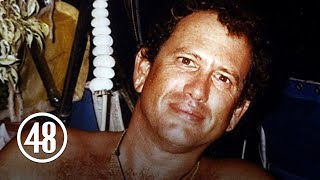
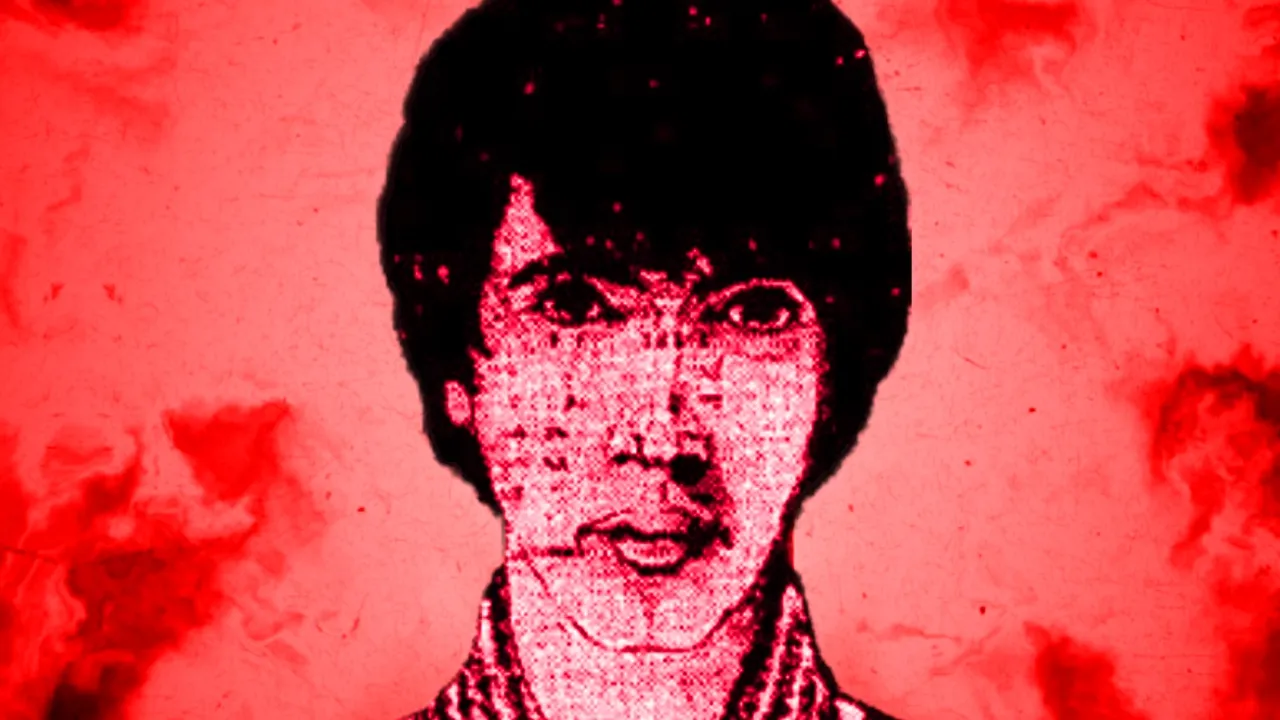
On Valentine's Day 1975, a teenage boy was found suspended from a tree in rural Louisiana, leaving behind an intriguing side note. Despite a massive nationwide investigation involving over 300 families and four months of intensive efforts, his identity remains unknown 50 years later. Hurricane Katrina's destruction of all forensic evidence in 2005, combined with the loss of his burial plot location and law enforcement's limited interest in exumation has left this case in a tragic limbo.
Ironically, granting the young man his explicit final wish to remain anonymous. The evening of February 14th, 1975 began normally by all accounts. Valentine's Day had brought cold, overcast skies to the region.
An unnamed couple was driving along an isolated farm road that cut through dense woods between Louisiana Highway 23 and the Mississippi River near the small community of Belchess. This area had thick vegetation, moss draped trees, and was sparssely populated and infrequently traveled. As they navigated the winding dirt road, something caught their attention.
A flash of white or pale color visible through the tangle of branches and moss. At first, it may have appeared to be nothing more than fabric caught in the wind or perhaps a piece of debris. However, something about the site compelled them to stop and investigate further.
Approaching on foot, the couple found themselves standing before a pimmon tree from which hung the body of a teenage boy. A bed sheet had been fashioned into a crude noose and secured to a sturdy branch above. The body was suspended several feet off the ground, indicating the teenager had climbed the tree himself.
There were no signs of struggle or violence beyond the act itself. There were no drag marks in the earth, no indication that the teenager had been brought to the location against his will, and no evidence of any other person's involvement. The ground beneath the body showed no disturbance that would suggest a struggle or an attempt to escape.
Everything pointed to a deliberate solo act. What made the discovery particularly disturbing for the couple was that they had recently traveled this exact same route approximately 6 hours earlier. They had passed through this area during daylight hours when visibility was much clearer and had seen nothing unusual.
So in that 6-hour window, the boy had come to this location. When Deputy Dominic Verie of the sheriff's office arrived at the scene, he immediately suspected that the boy was not a local. The victim appeared to be a white male between 16 and 18 years old, though age estimation based on physical appearance is notoriously imprecise.
His height was estimated at somewhere between 5' 10 in and 6 feet tall. He had a slender build, weighing an estimated 150 to 160 lb when alive. He also had brown hair and brown eyes.
One potentially identifying characteristic that investigators noted was the teenager's slightly protruding front teeth. Investigators hoped that when combined with other physical characteristics and the widespread publicity the case would generate, someone would come forward with this crucial detail as part of their identification. As far as his clothes went, they were more or less mundane.
However, the most striking detail was that the boy was not wearing shoes. Louisiana in February, while not experiencing harsh winters, still sees temperatures that make walking barefoot uncomfortable, particularly in the evening hours. The barefoot detail took on additional significance when combined with the bed sheet that was used to conduct the incident.
This led some to suggest that the teen came from psychiatric hospitalization. However, this theory remains speculative. The teenager might simply have removed his shoes before climbing the tree and left them somewhere else.
or lost them during his journey to this location. Inside his trousers, investigators found a small cleaning tag marked with the notation DD44. In the 1970s, dry cleaning establishments often used alpha numeric codes to track customers clothing pieces through the cleaning process.
These tags served as claim tickets and organizational tools, ensuring that clothing returned to the correct customer. The DD44 marking potentially represented a crucial clue. If investigators could determine which dry cleaner used this particular coding system, they might be able to trace the pants back to a geographic area or even a specific customer.
However, without a comprehensive database of codes from across the United States, and with no way to know whether the pants had been purchased new or secondhand, this clue proved difficult to pursue. While the physical evidence from the teenager's body and clothing provided some clues, it was the contents of the sealed glass jar that would transform this case. There were several pages inside, and the handwriting was neat and legible.
The pages showed no signs of rushed writing. The note was addressed simply to mom and dad. This opening is interesting, as you will soon learn, the individual instructed authorities not to identify him to those same parents.
Yet, these notes were intended for them. This apparent contradiction would fuel decades of speculation about his true intentions and psychological state. Rather than [music] brief explanations or apologies, the teenager had composed what amounted to a philosophical essay on his decision to end his life.
He cited Emil Durkheim, the French sociologist who conducted studies on side as a social phenomenon. The mere fact that a teenager in rural Louisiana in 1975 was familiar with Durkheim's work suggested a higher level of education. Durkheim's writings on the topic were primarily studied in college level sociology courses, suggesting the teenager had either attended or at least read material from higher education.
The letter began with gratitude. He wrote, "You have provided me excellent advantages and privileges and experiences. I am extremely grateful for all of your sacrifices, time, and support.
Immediately after this came what he perceived as his betrayal. He said, "I am now repaying you with an arrogant act. In this light, I do see it as criminal.
I can only hope that you see that it was me who caused it. " He called his decision an arrogant act, suggesting he understood it could be perceived as supremely self-centered, putting his own escape from suffering above his parents inevitable pain. The notes continued by explaining his psychological condition and touching on topics of existentialism, saying, "I never did develop into a real person, and I cannot tolerate the false and empty existence I have created.
" The boy explicitly recommended that his parents quote, "See a psychiatrist in order that you might understand my death and my life. Ask thoroughly about what I was, and you will see that it is not tragic that I am gone, but more natural than if I continued. " This sentence has provoked decades of speculation and interpretation among researchers and amateur investigators.
The line, "What I was," had led some investigators to suggest that it was alluding to a sexual orientation. During the 1970s, homosexuality was heavily stigmatized and had only recently been removed from the Diagnostic and Statistical Manual of Mental Disorders. Others have interpreted this as reference to severe mental illness, perhaps schizophrenia, bipolar disorder, or another chronic condition that he believed would make genuine life impossible.
The statement that his death was more natural than if I continued might reflect a belief that his particular type of mental illness was incompatible with a meaningful life. In a subsection he explicitly titled why you should not feel responsible. The boy provided what amounted to a psychological self assessment.
He wrote I was born with a definite pervasive melancholy. What frustrated me most in the last year was that I had built no ties to family or friends. There was nothing of lasting worth and value.
I led a detached existence and I was a parody of a person literally and figuratively. The time reference in the last year suggested that his isolation and detachment had either worsened recently or had come to his conscious awareness during that period. He might have completed high school or moved away from home for college in the preceding year, finding himself unable to form new connections in a new environment.
He then offered a statement that has become one of the most quoted parts of the notes. He said, "I didn't tell jokes. I was a joke.
" He saw his entire existence as ridiculous, something to be laughed at rather than taken seriously. Whether this reflected his own assessment or internalized judgments from others, it spoke to a complete absence of self-worth and human dignity. The next statement said, "I am a bomb of frustration and should never marry or have children.
It is safest to diffuse the bomb harmlessly now. " He added, "I do not want to bother with being a reformed and cured person limping through life. I am this self-centered.
The line about being reformed and cured suggested that he could have been previously exposed to some type of professional treatment. Continuing, another part of the note said, I am no longer interested in the world and know that it is not following this message to his parents. The audience shifted from the parents to law enforcement.
He began by saying, you are bound to preserve domestic peace and order. He then provided his argument against identifying him. If you pursue who I was and spend hundreds of dollars, you will accomplish a little.
There are no legal consequences of my death or any kind of entanglements. All that can happen is that you will shatter the domestic peace and order of two innocent lives. Do not deprive them of the hope that their missing son will return.
He concluded his instructions saying, "Let me be. Let it be as if I wasn't ever here. simply cremate me as John Doe.
But of course, this John Doe's wishes could not be honored. Upon discovery, an immediate investigation was launched. The subject's fingerprints were collected and circulated to law enforcement agencies throughout the United States.
Authorities hoped that matching these fingerprints against databases would quickly establish an identity. However, no matches were found, indicating the young man had never been arrested or served in the military. The Associated Press ran a national story about the unidentified victim and his controversial note, generating widespread media attention.
The philosophical nature of the letter, combined with the tragic circumstances and the boy's explicit request for anonymity, captured public imagination. The response was overwhelming. More than 300 parents of missing sons contacted the Plaamines's Parish Sheriff's Office, each hoping and simultaneously dreading that the unidentified teenager might be their missing child.
To help with identification, authorities made an unusual decision. The teenager's body was imbalmed and placed on public display at a funeral home in Alers, Louisiana. Over the course of the 4-month investigation, hundreds of families traveled to the funeral home to view the body.
Despite this massive effort, not a single person was able to positively identify the young man. Some parents expressed that the body resembled their missing son, but could not make a definitive identification. Others immediately recognized that the deceased was not their child.
Ultimately, there was a growing sense that this individual had either never been reported missing or came from circumstances that prevented his family from learning about the case. After 4 months of intensive investigation yielded no identification, authorities concluded that further efforts would be futile. On June 12th, 1975, John Doe was laid to rest in Woodlon Park Memorial Cemetery in Greta, Louisiana.
He was buried in an unmarked grave, though not cremated as he had requested. One interesting aspect of the investigation was the potential link to a 19-year-old named Charles Wallace Jr. who had gone missing from Memphis, Tennessee in late 1974.
Wallace's disappearance occurred only months before John Doe was discovered, making him a plausible candidate based on the timeline alone. According to reports that circulated amongst enthusiasts of the case, Wallace's dental records were compared to those of John Doe and showed compatibility for a potential match. The specifics of this match were never clearly documented in surviving public records, leaving ambiguity about whether it was a definitive match or merely consistent characteristics.
However, when Charles Wallace's mother traveled to Louisiana to view the body at the funeral home, she adamantly stated that the deceased was not her son. This created a puzzling situation, leading to the formation of various theories. The first theory suggested that the mother might have been too emotionally distressed to accurately recognize her son's body after months of decomposition and the trauma of potential death, even though she was there specifically to make an identification.
A second explanation proposed that the mother chose not to identify her son to honor his explicit wish to remain anonymous, as stated in his note. Some theorized that the mother felt unable to acknowledge her son's death publicly due to the nature of the death and the stigma prevalent in 1970s society. Others suggested that the match in dental records may have been overstated or based on general similarities rather than definitive unique dental features.
Regardless, to many, the John Doe being Charles Wallace seemed like the most plausible explanation. However, this particular line of investigation would come to a head in 2025. In September of last year, Aram Laboratories announced a breakthrough identification.
Skeletal remains discovered in a field near Route 79 in Lee County, Arkansas in 1977, had been identified through advanced DNA testing as Charles Wallace Jr. The identification definitively ruled out Wallace as a candidate and raised new questions about the comparison process that had seemed so promising decades earlier. The identification, while providing closure for one family, simultaneously reopened questions about John Doe's true identity and highlighted how plausible seeming leads can ultimately prove false.
With this possibility eliminated, attention has increasingly focused on Bired William Cousins, a 22-year-old who disappeared from Virginia Beach, Virginia on February 1st, 1975, exactly 13 days before John Doe was discovered. The proximity is striking as it would have provided just enough time for someone to travel from Virginia to Louisiana. Cousins left his residence while his parents were out of town, leaving behind only a brief note telling them not to worry about him.
No further trace of him was ever found. He was never reported to have been in Louisiana and no evidence connects him to the Belshass area. Yet, the circumstantial elements align in intriguing ways that have made him the subject of increasingly serious speculation among researchers.
According to the Charlie Project and other missing person's databases, Cousins presented a detailed profile that warrants careful examination. He was 22 years old at the time of his disappearance, but was frequently mistaken for younger, appearing perhaps in his mid to late teens. He stood at 6'2 in tall and weighed 160 lb.
His hair was brown and his eyes were hazel. A distinguishing feature was a cross-shaped scar on one of his fingers. He also wore glasses regularly.
Beyond his physical characteristics, Cousins had an interesting background. He was fluent in Spanish, suggesting international education or exposure. He was described as an ecology activist, indicating environmental awareness and scientific interests.
He was clearly educated and intellectually engaged, moving in circles that valued analytical thinking and environmental consciousness. However, several factors complicate this theory significantly. Cousins height exceeds even the upper bound of John Doe's 6- ft estimate by 2 in.
While height estimation can be imprecise, particularly on suspended remains, this represents a notable difference that some researchers find difficult to brush aside. Cousins also had hazel eyes rather than the brown eyes recorded for John Doe, though hazel eyes can appear brown in certain lighting conditions. [music] He wore glasses, but none were found at the scene, which raises questions about whether they were lost or whether this fact excludes cousins.
But John Doe was also missing shoes. So the absence of certain items does not necessarily exclude candidates. Most significantly, no evidence suggests cousins had any ties to Louisiana or any reason to travel there.
Unlike Charles Wallace, whose mother had the opportunity to view the body and whose case has received renewed attention, Cousins has no documented connection to anyone who viewed John Doe's body. As of January 2002, he remains missing and he has never been officially ruled out as John Doe. Without DNA comparison, which requires locating and exuming John Doe's remains, Cousin's status as a potential match remains speculative.
Albeit the most compelling theory currently under consideration by researchers. The case would see another major event on August 29th, 2005 when Hurricane Katrina made landfall on the Gulf Coast, causing catastrophic damage to Louisiana and neighboring states. Plaeamin's Parish, located at the southernmost point of Louisiana, where the Mississippi River meets the Gulf of Mexico, suffered some of the most severe impacts.
[music] Storm surge and flooding devastated the region, destroying government buildings, homes, and critical infrastructure. Among the countless losses was the complete destruction of the sheriff's office and coroner's office records, including all files related to the John Doe case. The obliterated materials included fingerprint records, dental records, and odontological examinations, autopsy reports and findings, additional DNA samples, photographs of the body and scene, and physical evidence from the crime scene.
Investigative documents lost included complete case files and investigative reports. the full unedited side note, interview notes from the hundreds of families who contacted authorities, and any leads or theories developed by investigators. Multiple commentators have noted the dark irony that Hurricane Katrina inadvertently granted the teenager his explicit request to be treated as if he wasn't ever here.
As one researcher said in a 2009 comment, "In a twist that is either blackly humorous, overwhelmingly sad, or both, this child did receive his wish to remain anonymous, albeit inadvertently. Though his case was a fairly high-profile one in 1975, nearly four decades later, due in large part to the immense damage wrought by Katrina, no records concerning him are available with the Louisiana authorities. The destruction was so complete that the case effectively ceased to exist in official databases.
While it is established that John Doe was buried at Woodlon Park Memorial Cemetery in Louisiana, the specific location of his grave within the cemetery remains unknown. The grave was unmarked and cemetery records that would pinpoint the plot location were among the documents destroyed in the hurricane. This has created a frustrating situation where his remains are somewhere in the cemetery.
But the exact burial site cannot be determined without extensive invasive search methods. While cemetery records might contain plot numbers or maps, the loss of these records means the cemetery would need to conduct a physical search or rely on the memories of individuals who were involved in the burial in 1975. Individuals who are now elderly or deceased.
Adding to the confusion, conflicting information exists about what happened to the body. Most sources share what I just stated about resting in an unmarked grave in Gretina. However, other sources claim he actually was cremated and buried in a popper's grave in Alers, Louisiana, ultimately aligning with his final wish of being cremated.
As of today, there is some discourse as to whether the investigation should be dropped off entirely or continuously pursued. A vocal minority within the true crime community argues that the young man's explicit request for anonymity should be respected. With parents likely deceased, what purpose does identification serve beyond satisfying researchers curiosity?
But it seems that the majority position within both enthusiasts and law enforcement is that the identification should still be pursued. They state that his parents have a right to know what happened to their family member regardless of his wishes. The 50-year period of uncertainty represents a profound burden and closure benefits surviving relatives even if parents are deceased.
His severe mental state may have impaired his judgment when he made these statements. Society has an interest in identifying all deceased persons for legal, genealogical, and historical purposes. A frequently expressed sentiment in unidentified persons research is that the responsibility to name the nameless transcends individual preferences expressed in crisis.
Whether his name will ever be restored remains uncertain. The technical capability exists. The legal and administrative pathways are available.
The question is whether anyone with authority will decide that a nameless teenager from 1975 deserves the resources, effort, and ethical complexity of identification or whether he will remain perhaps fittingly as he asked to be simply John Doe.

![The Dark Side of Reddit [2]](https://img.youtube.com/vi/wszAFgiwQOI/mqdefault.jpg)