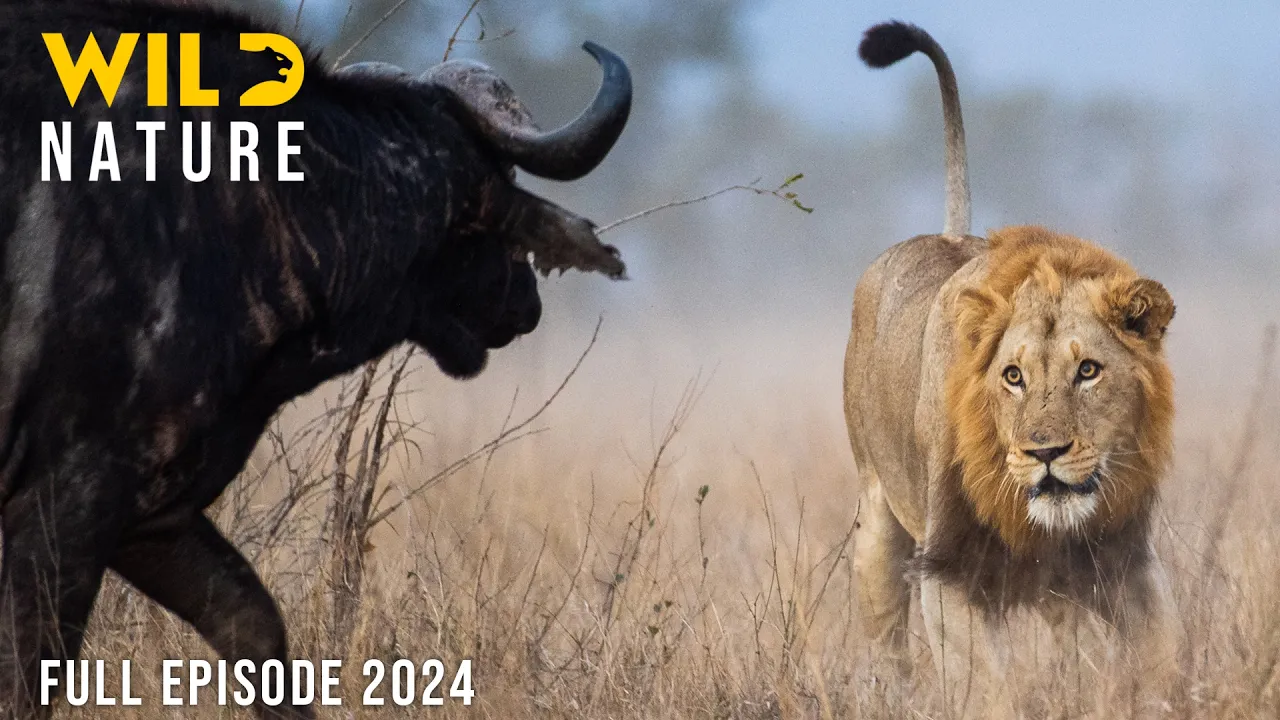
[Music] from the tropical rainforests to the Arid deserts from Majestic mountains to vast grasslands the rains come and go as quickly as a breath leaving behind a clear sky and parched Earth the African Savannah where the sky and land meet in an endless Horizon this is a land of harsh contrasts here the yellowing wild grass Stretches out like an old worn out carpet but beneath the surface life teams with unstoppable energy every day is a race for survival Predators move silently like a breeze passing through meanwhile the prey must flee fighting for every moment the
battle for survival here is as tough and Relentless as a steel Forge and Only the strongest species manage to endure and live on [Music] [Music] sh [Music] [Music] welcome to Wild Savannah survival stories from the heart of [Music] [Music] Africa as the first light touches the African Savannah grasslands the sky is painted with a brilliant orange Hue a new day begins but peace is nowhere to Be found the cycle of survival spins on as life and death Clash like light and Shadow constantly vying for [Music] dominance in the tropical Savannah herds of wilderbeast embark on
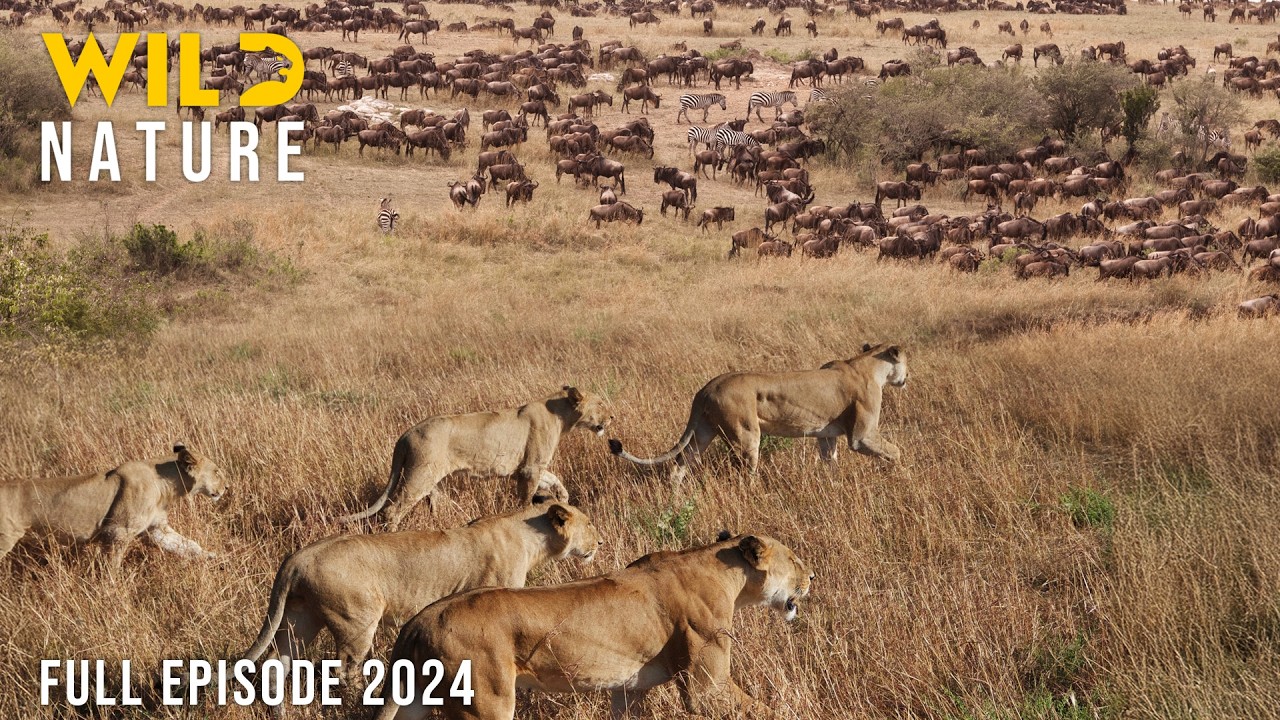
their Journey Millions migrate like pilgrims searching for precious water [Music] behind them hungry Lions lie in wait in the Tall Grass as silent as Soul Hunters awaiting the perfect Moment in the temperate Savannah zebras and Wilder beasts face other enemies African wild dogs and leopards the dry brittle grasslands of the temperate savann test their patience and endurance beneath the Cool Waters of the flooded Savannah crocodiles await their annual Feast when the migrating wilderbeast and zebra herds cross the Swift Rivers only 70% of zebras make it through this grueling Journey Every Creature here predator or prey
fights For survival Guided by Instinct and a Divine Force at every moment [Music] [Music] the Savannah covers about 20% of Earth's land surface stretching out as golden grasslands under the blazing sun a Savannah or Prairie is a biome and mixed ecosystem grasslands interspersed with widely spaced trees allowing sunlight to penetrate to nurture the endless green grass Below it's a unique biome where trees are spaced far enough apart to let light in supporting Lush [Music] undergrowth the African saana one of the oldest and most abundant ecosystems on Earth has witnessed Nature's great transformation ations around 8
to 5 million years ago dense forests started to retreat and the dry climate began to dominate the vast grasslands of the Savannah emerged this was the moment When animals had to make a choice adapt or face Extinction Landscapes changed ecosystems evolved and from this a new world was born harsh yet brimming with life [Music] the African Savannah stretches out like a giant carpet covering about 5 million square miles accounting for 65% of the continent this is the land of golden grasslands spreading to the Horizon creating an expansive and Untamed space The rainy season comes and
goes as quickly as a lightning flash leaving behind an enduring dryness like a NeverEnding test from the god the African Savannah ecosystem is home to over 8,000 plant species from vast grasslands to forests of shrubs and large trees these plants not only provide sustenance for countless creatures but also help regulate the [Music] climate the animals in the savannah are Incredibly diverse as well more than 1,000 500 species of mammals jostle for survival in the wild from massive herbivores to apex predators showcasing the strength and adaptability of [Music] nature in the sky over 2,000 species of
birds soore from predatory Birds to migrating flocks additionally Wetlands like the S are home to 500 species of aquatic animals along with 400 species of reptiles and fibian all contributing To a miraculous and balanced food chain meticulously arranged by the Creator the tropical Savannah of Africa is one of the most important ecological zones noted for its biodiversity and unique flora and FAA the tropical Savannah like the Beating Heart of Africa stretches out under the vast sky it covers about 50% of Africa's land area spanning many countries such as Kenya Tanzania Zambia Zimbabwe Botswana And Namibia
this is where life moves to the rhythm of wet and dry [Music] seasons at the heart of the tropical Savannah ecosystem lies Serengeti spanning 12,000 Square mil from Tanzania to Kenya Serengeti is one of the most biologically divers first grasslands in the world here over 70 species of large mammals and more than 500 species of birds Thrive creating a vibrant tapestry of Life amidst the endless green Grasslands the highlight of Serengeti is the annual Great Migration between Serengeti in Tanzania and mesai Mara in Kenya the rainy season from November to May allows the grass to
grow vigorously in sing creating ideal conditions for herbivores to flourish however when the dry season begins in June and lasts until October the grasslands dry up and water sources become Scarce about 1.5 million wilderbeast around 250,000 zebras and hundreds of thousands of Thompson gazel udas tomson and other herbivores set off on the largest migration on on the planet the journey spanning over 1,800 Mi is not easy the herds must cross dry grasslands and treacherous Rivers the rugged terrain and fierce Rivers create a dramatic and or inspiring scene where survival and Peril intertwine at every moment
like a journey to a Promised Land These animals must endure hard ships to find new grounds where life is more abundant but in the face of difficulty the herds keep moving forward the fresh grass of Masai Mara is like a promise of renewal the herbivores Drive the Regeneration of vegetation while Predators maintain the balance of the wildlife populations this is one of the most extraordinary natural phenomena in Africa and the world forming an Essential biological cycle for the survival of the Savannah ecosystem [Music] in this biological cycle the wilderbeast zebra and other herbivores provide a
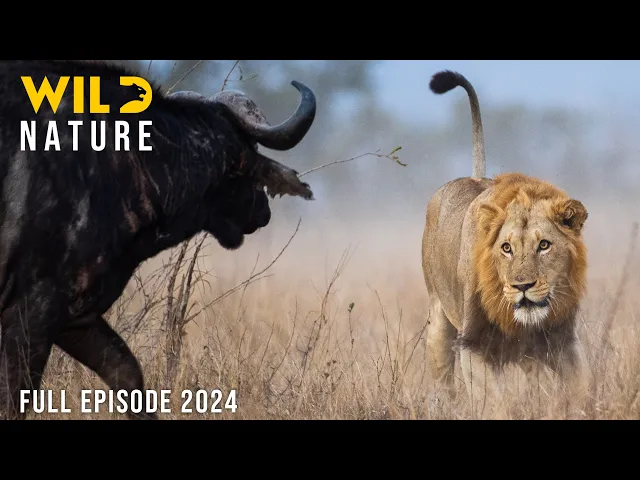
bountiful food source for 3,00 to 3,500 lions in the Serengeti according to the wildlife conservation Society approximately 6,000 wilderbeast and thousands of zebras fall prey to Lion Prides each year this helps regulate the herbivore populations Maintaining a perfect balance within the ecosystem Lions scientifically named panthera Leo are the second largest big cat after the Siberian tiger and are Africa's most powerful Predators despite being known as the king of the Savannah these apex predators do do not rely on individual strength alone they hunt in groups coordinating like a perfectly programmed machine a lion pride typically consists
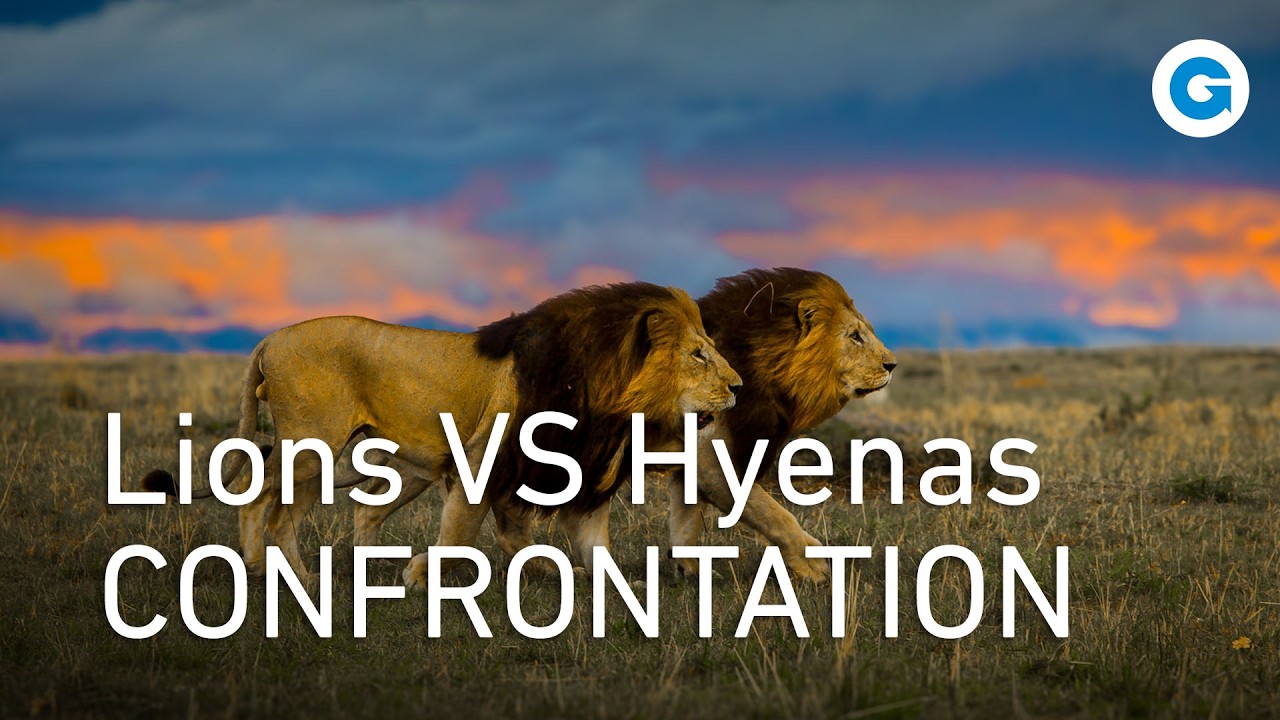
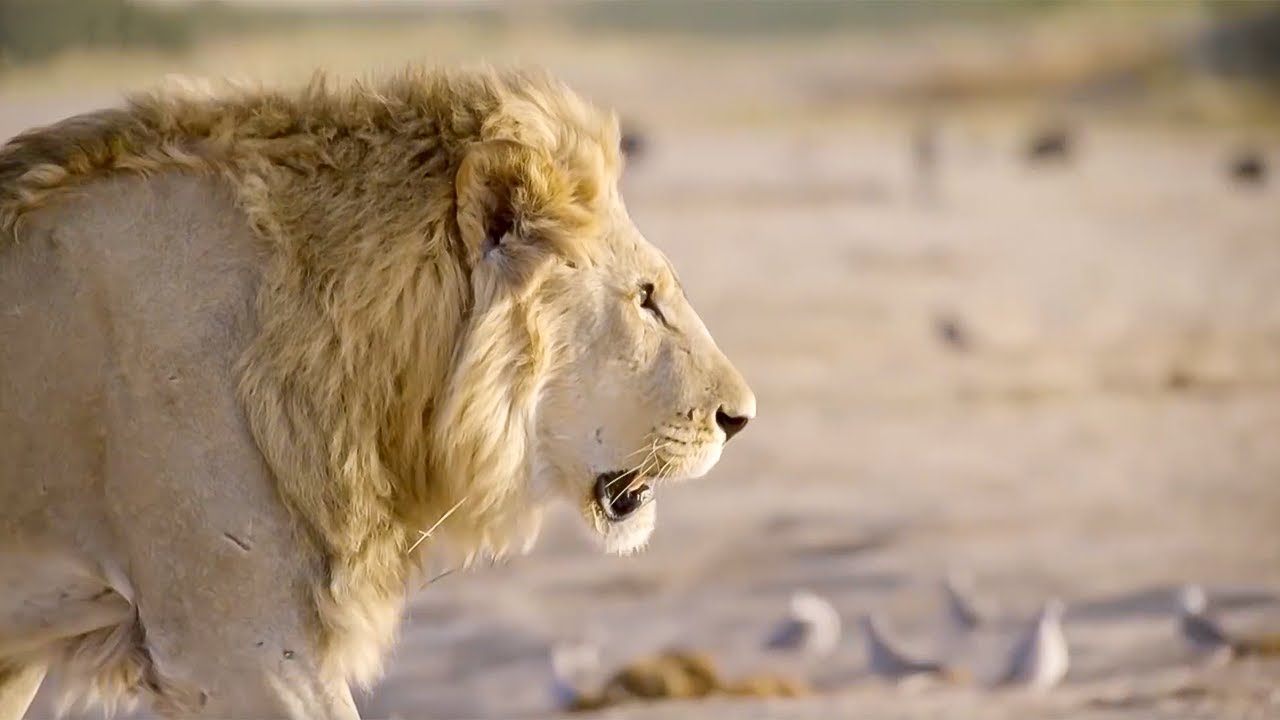
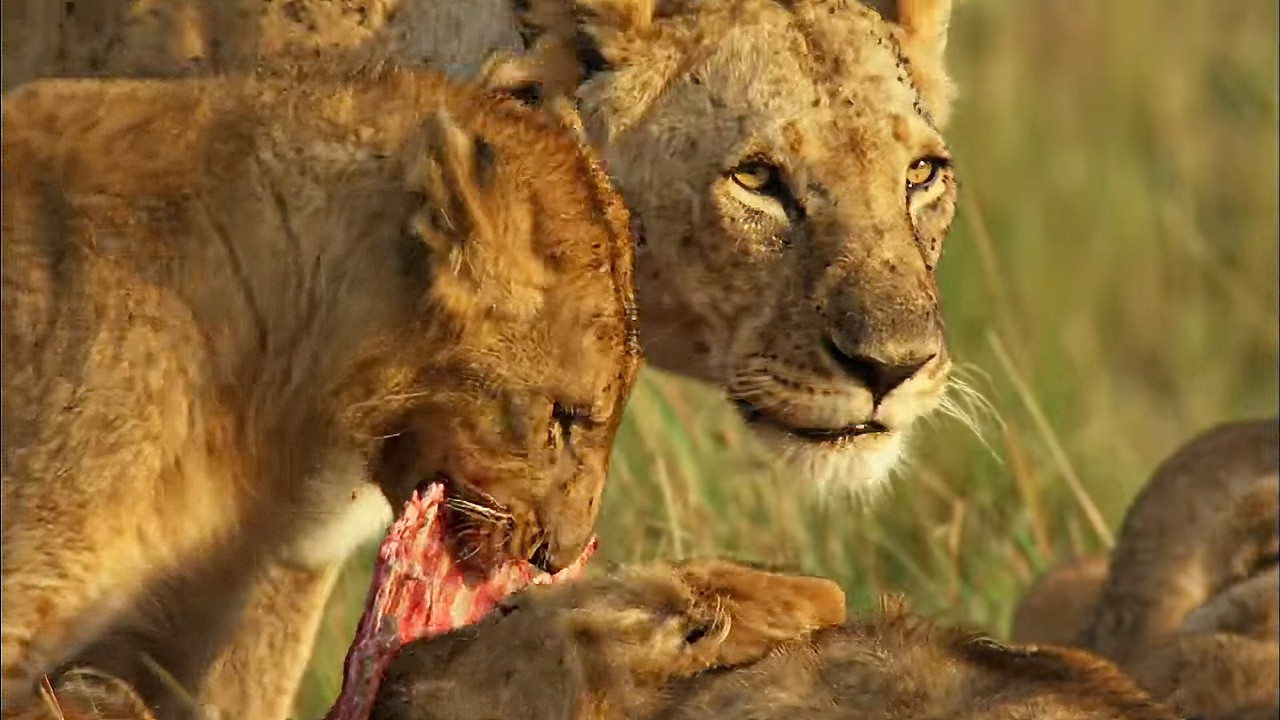
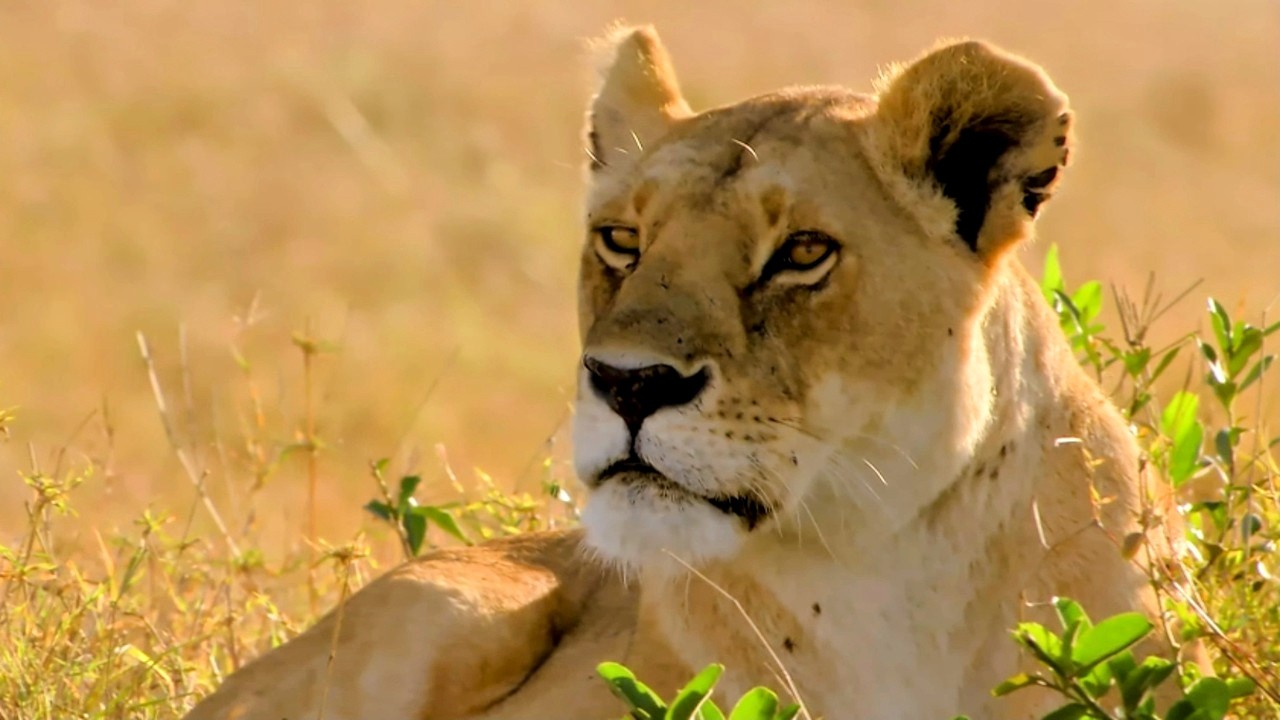
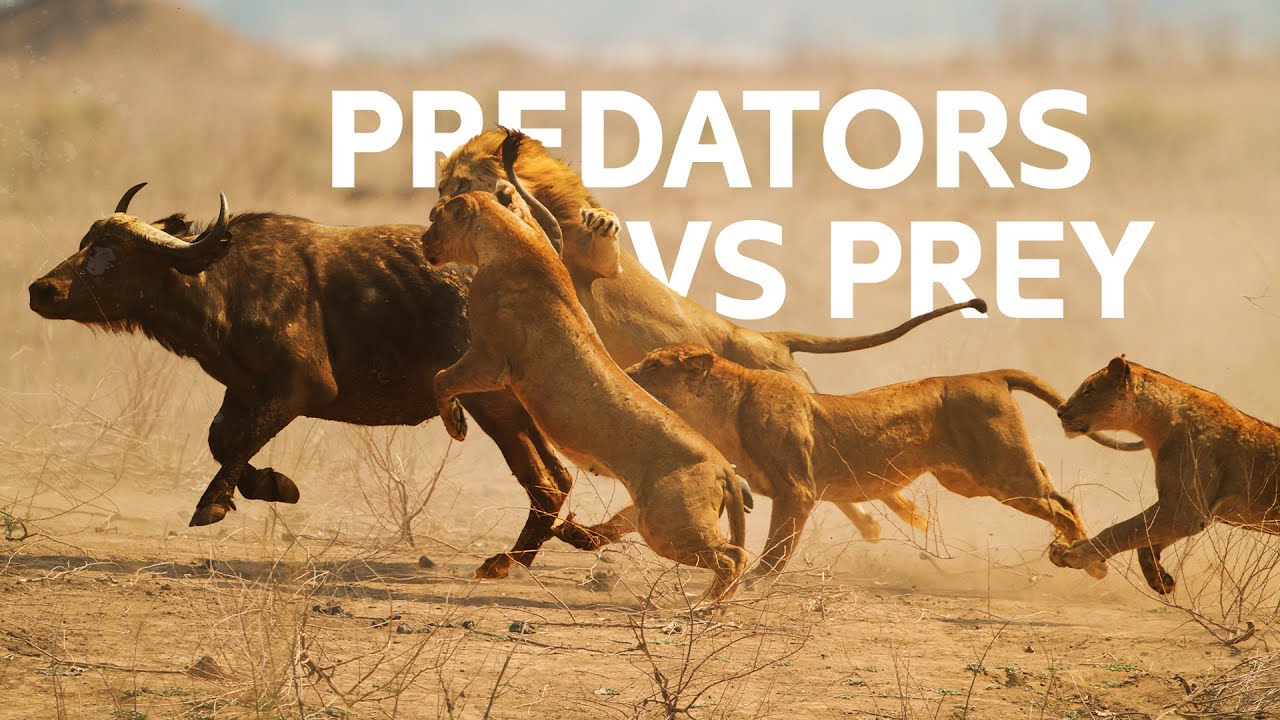
of 10 to 15 members the lionesses with Their agility and tactical minds are the primary Hunters they patiently select and Ambush large prey like wilderbeast or zebras particularly targeting young old or weakened individuals a group of lionesses surrounds the prey cutting off Escape Routes and bring down their large prey with combined strength meanwhile the males with their impressive Mains and Roars that can be heard up to 5 mes away use their Superior strength to protect the pride Their role is to fend off other male lions and hungry hyena packs that constantly compete for food the
Lion's age-old rival is the spotted hyena scientifically named cuta cuta although often thought of as scavengers 60% to 75% of their food comes from hunts they carry out themselves spotted enas are highly social Predators usually operating in large packs a single pack can include up to 80 individuals with a matriarchal Social structure where females dominate this creates a coordinated and strategic hunting formation enabling them to easily overwhelm larger prey during the Serengeti migration hyena packs take advantage of the wilderbeast herds crossing the mara River to hunt weak or exhausted animals according to a 2024 report
from Serengeti National Park approximately 25% of wilderbeast fatalities during migration are due to hyenas and other Predator attacks however the true strength of the hyenas lies in their powerful jaws which are the strongest among mammals their bite force reaches up to 1,100 lb per square in nearly double the bite force of a male lion which averages around 650 lb per square in spotted hyenas are not only formidable Hunters but also play a crucial role in keeping the environment clean they consume carcasses before they Can pollute the ecosystem helping prevent disease and maintain Natural Balance the
vast grasslands of the Serengeti are also the stage for the cheetah which races across it like a golden bolt of lightning cheetah scientifically named asonic jubatus are known as the fastest land animals capable of reaching speeds of up to 58 mph this speed enables them to pursue their favorite prey Thompson's Antelope one of The most common species of antelope in the Serengeti cheetah typically hunt during the day to avoid competition with nocturnal Predators like lions and [Music] hyenas they rely on their sharp eyesight to track prey from a distance and wait for the right moment
to strike the hunt begins with stalking usually hiding in the tall Savannah grass to approach prey quietly once within 100 to 130 ft of the target the cheater accelerates rapidly To catch up with its prey with a lightweight muscular build and Long Legs cheaters can unleash powerful bursts of speed using their long tails to maintain balance as they rise across the uneven Savannah terrain but speed alone is not enough since running consumes a great deal of energy cheaters can only maintain their top speed for about 20 to 30 seconds requiring them to be extremely precise
in choosing the right time to pursue Their prey even after a dizzying Chase cheaters often face a harsh reality weak endurance even when they bring down prey they risk losing their meal to Stronger scavengers there are only about 200 cheaters in the Serengeti according to the latest 2023 report from the iucn the cheetah's survival Journey here is a race not only against its prey but also Against Time and fierce competition from Other predators in the wild world of the serengetti it's not just the large mammals that thrive life in the skies is equally [Music] vibrant
over 500 bird species reside here each playing a unique role in this vast ecosystem one of the most impressive figures in the sky is the Marabou stalk this large wading bird scientifically known as leptoptilos Crumeniferus belongs to the stalk family secon with a wingspan of up to 10 ft they have the largest wingspan of any land bird they are sometimes called the Undertaker bird because when viewed from behind their wings and back resemble a cloak and their thin white legs look like skeletal limbs this nickname also reflects their role Nature's Cleanup Crew their habitat includes
swamps grasslands and areas where lions and hyenas hunt these Dumping grounds are ideal for Marabou stalks to wander around the carcasses left behind by lions and hyenas using their powerful beaks to consume The Leftovers helping prevent the spread of [Music] disease but Serengeti is just one small part of the broader picture of the tropical Savannah in the vast tapestry of the tropical Savannah the central Zambian miombo Woodlands is one of the largest and most diverse Savannah Ecosystems in central and southern Africa this region stretches across Zambia Zimbabwe Angola and mosambique and is home to towering
trees like braia and julbernardia these ancient trees are like pillars of the heavens raising life high and Sheltering thousands of wild species below they maintain the ecosystem by absorbing carbon and mitigating climate change balancing life and the environment the shrubs and grasses here Thrive as well adapted to harsh climates long dry seasons and irregular rainfall the animals in this region have also evolved to withstand the harsh environmental conditions helping maintain the delicate balance of the vast Savannah [Music] ecosystem here the African bush elephant Reigns as the gentle giant over the vast grasslands and dense forests
of the central Zambian myomo [Music] Woodlands this elephant species scientifically named loxodon Africana is known as the largest land animal still in existence the largest recorded individual stood 13 ft tall and weighed up to 22,900 lb 10.4 metric tons not only does the African bush elephant impress with its size but it also plays an essential role as the architect of the ecosystem Each day a single elephant consumes up to 330 lb of vegetation and requires a large amount of water forcing them to move continuously in search of food and water especially during the harsh dry
seasons their massive footsteps create ecological corridors breaking through dense vegetation and allowing other species to access new [Music] areas despite their immense strength the survival journey of the African bush Elephant is fraught with challenges since 2021 the iucn has listed them as endangered due to Habitat destruction and poaching for their Ivory fortunately thanks to conservation efforts the population of African bush elephants in the miombo region has seen a slight increase according to WWF in 2023 about about 50,000 elephants were recorded in Zambia and Zimbabwe a positive sign for the future of this giant [Music] herbivore
The mayombo Woodlands are also home to two prominent Antelope species the kudu and the Sable antelope in this land of scorching heat and severe droughts these antelopes have developed incredible survival skills and play Vital roles in maintaining the balance of the ecosystem in the woodlands and grasslands of the central zambezian miombo the kudu scientifically named Tropus strepsiceros is famous for its spiraled horns which resemble Regal crowns they can stand as tall as 5 ft and weigh up to 595 lb moving gracefully through the dense canopy they consume tough and old leaves a type of food
that few other species can digest allowing them to thrive in environments where food and water are always scarce meanwhile the Sable Antelope scientifically named hippotragus Niger Cuts An Elegant figure with its shiny black coat and long curved [Music] horns weighing up to 550 they live in herds enduring the intense heat and dry conditions of myomo the Sable Antelope moves constantly in search of scarce food helping maintain population stability with approximately 75,000 individuals recorded in [Music] 2023 the grasslands and Woodlands of the Central zambesi and mayombo are also the domain of African wild dogs scientifically known
as Lan [Music] pictus these animals are among the most efficient Predators boasting a hunting success rate of up to 80% far surpassing larger Predators like lions or [Music] hyenas they are known as masters of coordinated hunting their hunts are not just races of speed but tests of Patience and [Music] strategy a pack of African wild dogs usually consists of 10 to 20 individuals sometimes up to 40 during a hunt each member has a specific role and they coordinate perfectly to exhaust and Corner their [Music] prey thanks to their teamwork they can take down animals much
larger than themselves like wilderbeast and Occasionally even Buffalo however ever the role of African wild dogs goes beyond just hunting they play a crucial role in maintaining the ecological balance by controlling herbivore populations which prevents overgrazing and helps preserve vegetation despite their remarkable hunting skills their survival is not easy genetic isolation poaching and diseases transmitted from domestic animals are significant threats to this Species according to the iucn African wild dogs are currently at high risk of Extinction with only about 6,000 individuals left across Africa in the mayombo region there are only about 500 to 600
African wild dogs as of 2023 calling for stronger conservation efforts to secure the future of this incredible Predator leaving behind the dry forest and wide grasslands of the central Zambian miombo a New Journey unfolds in West Africa this is the guinean forest Savannah Mosaic here Forest vegetation and Savannah intermingle creating breathtaking Blended Landscapes stretching across Guinea Sierra Leon kot devois Ghana and Togo the guinean forest Savannah Mosaic is one of the rare regions where two seemingly opposing ecosystems coexist as the dry season arrives in the guinean forest Savannah Mosaic the ran Antelope scientifically named hippotragus
equinus Embarks on a grueling survival [Music] Journey the ran Antelope population in the guinean forest Savannah Mosaic is estimated to be around 8,000 individuals as of 2024 with their striking light brown coats and long curved horns ran antelopes are a symbol of resilience they roam continuously across the sparse forests and grasslands like dots of light moving against a backdrop of golden Earth the adaptability of this Antelope species is truly remarkable they can consume a variety of grasses and shrubs including plant types that many other animals cannot eat this allows them to to endure the harsh
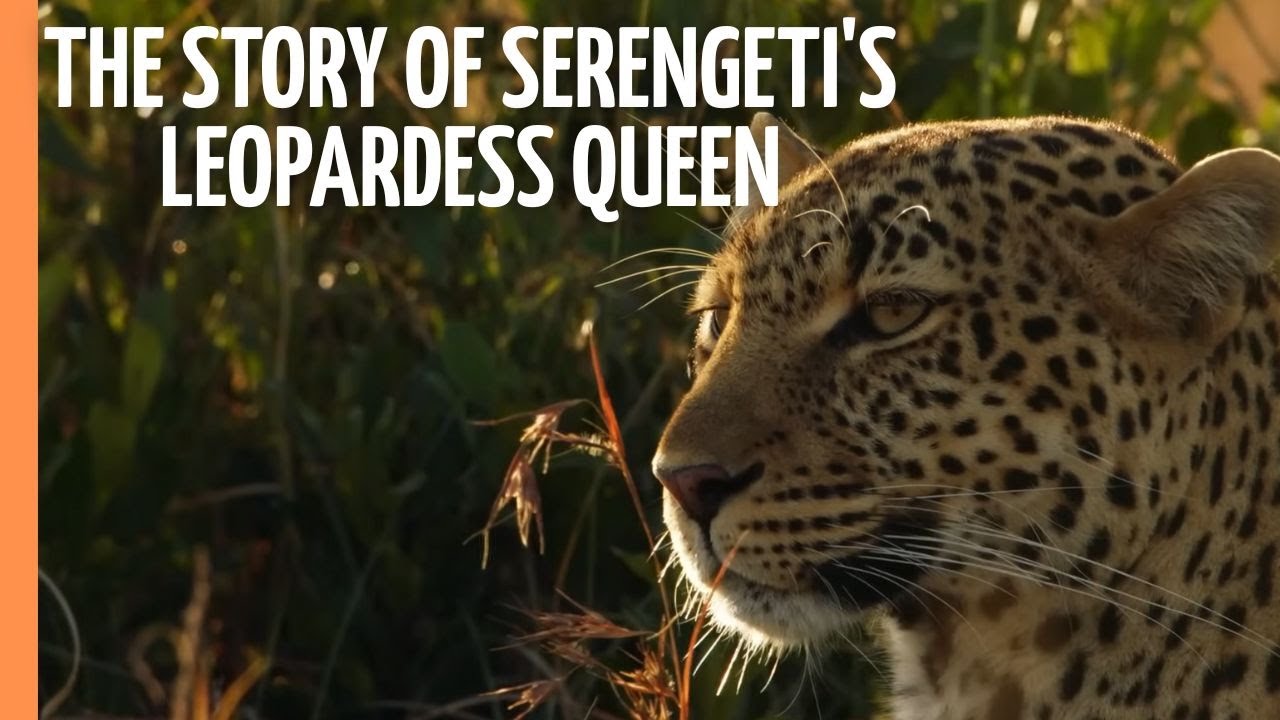
conditions of the dry season when the land cracks and vegetation becomes scarce within the rainforests and grasslands of the guinean forest Savana Mosaic the leopard scientifically named panthera Paris stands out as a key Predator with exceptional adaptability the leopard makes use of both environments they hide in the dense forest vegetation and also move freely across the open Savannah to chase down prey as an opportunistic Predator leopards have a diverse diet that includes antelopes smaller gazel monkeys and even Birds their hunting skills become particularly formidable at night when their excellent vision and Silent approach turn them
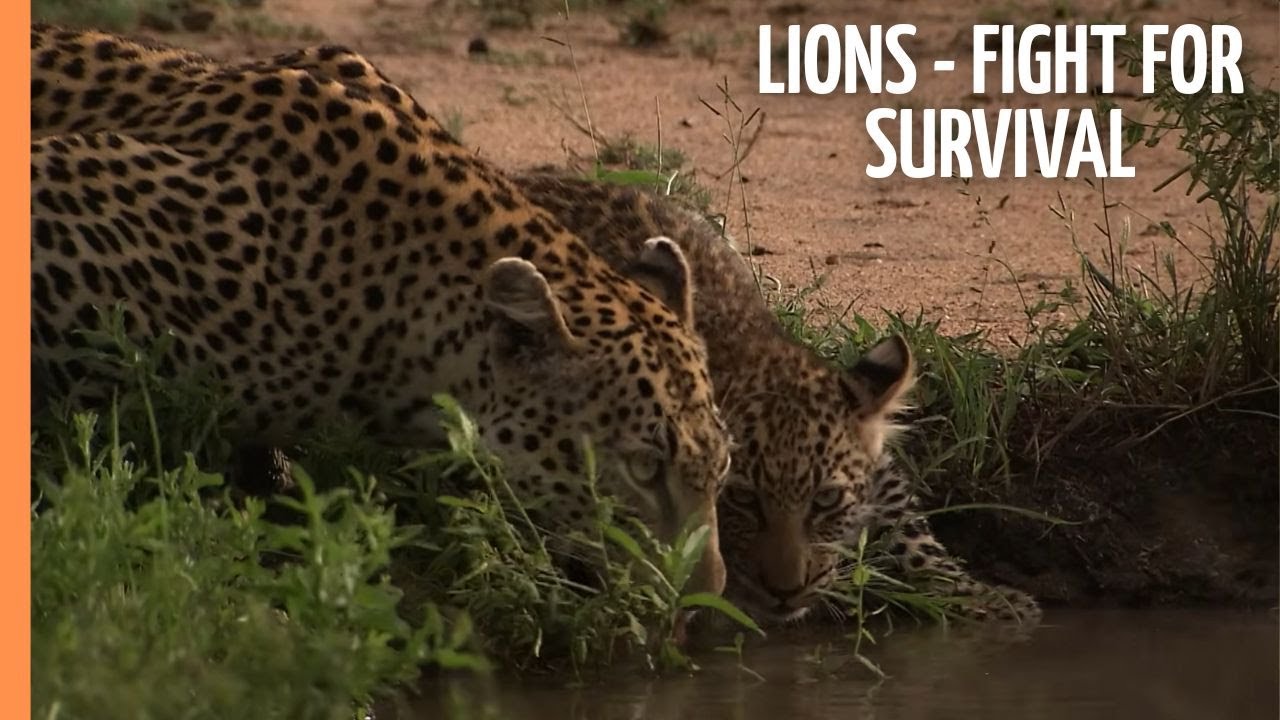
into elusive Hunters Leopards hunt by relying on patience and their ability to conceal themselves in tall grass or trees taking advantage of their distinct spotted coats which help them blend into their surroundings leopards often Ambush prey in the dark or at dusk when their targets are less [Music] Vigilant once within Striking Distance the leopard leaps at speeds of up to 35 mph using its powerful jaws to mobilize and take down its Prey the leopard's incredible climbing ability also allows them to ambush from above or drag their kill up into the trees avoiding competition with other
Predators like lions and hyenas however the survival journey of the leopard in this region is becoming increasingly challenging according to the 2023 panthera report the leopard population in the guinean forest Savannah Mosaic is estimated to be only about 2,500 Individuals due to habitat loss and poaching for their fur as rainforests are cleared for Timber and agricultural expansion leopards are forced to migrate into the Savannah in search of food where they often become targets for hunters or come into conflict with humans after leaving the transition zone between the forest and Savannah of the guinean forest Savannah
Mosaic we enter a new landscape the Somali ACAA comera Bushlands and thickets this region spans Northeastern Kenya Southeastern Ethiopia and much of Somalia and is one of the harshest Savannah ecosystems in Africa this is an environment marked by a regular rainfall prolonged dry spells and average high temperatures ranging from 77° f F to 86° F the dry thorny terrain with its low growing spiny trees creates a wild yet challenging natural scene these lands are not just a habitat But serve as a keeper of the Rhythm for the entire ecosystem Acacia and Kora trees resilient to
Drought stand tall as pillars of Life providing shade and valuable food sources for the animals the creatures of this region have developed unique survival strategies to cope with the harsh environment in this challenging region gravy zebra Rises as a symbol of resilience their scientific name is Eis Gravy they are recognized as the rarest zebra species in the world with only about 2,800 individuals remaining as of 2023 according to the gravy zebra trust gravy zebra is also the larg of the three zebra species standing up to 5 ft tall and weighing between 770 and 990 lb
they are distinct from other zebras with narrower black and white stripes and larger rounder ears which enhance their hearing and help regulate body temperature in the harsh Climate gravy zebras have developed an impressive ability to survive in this dry region they can endure long periods without without water subsisting on dry grass and traveling to remote areas to find water in an environment where resources are scarce they move in small herds traveling far to find water and food in doing so gravy's zebra plays a critical role in the ecosystem by controlling wild grass growth and providing
Stability to the Savannah's vegetation [Music] in the Wilds of the Somalia CA comora bushlands where the dry thorny shrubs stretch out under the scorching Sun the batier fox scientifically named oton megalotis thrives as a small yet resilient warrior with its large ears resembling natural radar dishes the bat eared fox has evoled D in extraordinary ways to adapt to the harsh environment the ears Not only serve as listening tools but also as weapons in hunting detecting the smallest movements underground where termites and insects hide at night when the intense heat subsides the fox begins its journey
in search of prey termites its primary food source make up 80% of this fox's diet interestingly according to a 2023 study the ears of the bat-eared fox have evolved to be 10% larger than in previous generations allowing it to hunt More efficiently even during prolonged [Music] droughts however it is the striped hyena that proves to be the more formidable predator in this region scientifically known as high AA hyena this species is one of the main carnivores in the Somalia qua Kora ecosystem identified by their striped coat and strong for legs these hyenas can easily navigate
the rugged thorny terrain of the harsh landscape unlike The larger spotted hyena the striped hyena is smaller but no less formidable they are nocturnal emerging from their dens after dark and retreating back before Dawn known as expert scavengers striped hyenas not only clean up the environment but also prevent the spread of disease by consuming decaying carcasses the iucn lists this species as near-threatened with the global population estimated at fewer than 10,000 mature individuals [Music] the Somali ACAA comora bushlands with their scattered shrubs and dry grass scorched under the blazing sun are also home to the
ginuk this Antelope scientifically named litocranius weri is also known as the giraffe gazelle due to its slender body and strikingly long neck the ginuk has a remarkable ability It can stand on its hind legs to reach the leaves of trees as high as 6 to 8 ft far above the reach of other herbivores during extended droughts when other animals must migrate or seek water far away the ginuk remains thanks to its exceptional adaptations they regulate their activity to conserve energy minimize water loss and maintain their body temperature efficiently Additionally the ginuk can even adjust its
metabolism to cope with Extreme conditions the savanas of the Somalia Casia Kora region are also home to one of the most resilient Antelope species the East African orx scientifically named orx [Music] basa with its striking white coat gleaming Under the Sun like a sheep and its long straight horns Rising like sharp swords the orx is always ready for any Challenge when the sun sets and the intense heat subsides the orex begins its quest for food night time is when they are most active avoiding water loss through sweat and taking advantage of the cooler air as
the dry season intensifies and grasslands wither they switch to feeding on drought resistant shrubs like Acacia and Kora thanks to their strong digestive system oric can extract vital nutrients From the tough dry vegetation they can survive for weeks sometimes even months without drinking water a 2023 study by ep found that orics not only seek food but also extract water from dried leaves leaves maximizing every resource the harsh environment provides orics have an extraordinary ability to adjust their body temperature allowing them to withstand extreme heat of up to 116° [Music] F this helps them reduce water
loss an invaluable trait in a land where water is scarce but what makes the orx formidable isn't just their heat tolerance when threatened by large Predators like lions and leopards they fight with strength and determination their 33-in long straight horns sharp as swords are ready to fend off any threat on numerous occasions Orics have not only escaped but have also forced even powerful predators to [Music] retreat Additionally the somal acaia comora bushlands and thickets are home to important residents like the ostrich struthio camelus and Somali ostrich struthio malibo phenes the ostrich with its massive frame
standing up to 9 ft tall and weighing 340 lb is the largest living bird and is often referred to as a Living dinosaur ostriches have incredible resilience to the harsh heat of the Somali bushlands they can regulate their body temperature to cope with the extreme heat keeping cool despite the scorching Sun their sparse lightweight feathers act as a natural cooling system allowing the ostrich to release heat quickly a 20123 unep study revealed that ostriches can survive long periods without drinking water Instead they obtain moisture from the plants they consume such as grass and leaves which
are rich in water allowing them to endure the severe droughts of the region moreover ostriches have a unique biological mechanism to minimize water loss through respiration and urination during the hottest parts of the day ostriches reduce their activity spending most of their time resting in the shade though they cannot fly ostriches Are capable of running at speeds of up to 40 mph and they can maintain a steady pace of 34 m per hour over long distances however if cornered ostriches can defend themselves with powerful kicks a single kick from an ostrich is strong enough to
inflict Serious injury and they can even fend off large Predators like lions or cheaters with one swift strike turning the tables on their attackers encircling Lake Victoria like a giant Natural bracelet is the Victoria Basin Forest Savannah Mosaic Lake Victoria the largest freshwater lake in Africa is often likened to a beating heart in the middle of the continent sustaining millions of living creatures [Music] here rainforests and savanas meet like two rivers converging creating a land of harmonious coexistence with a tropical climate this Area experiences short rainy seasons and long dry seasons causing the landscape to
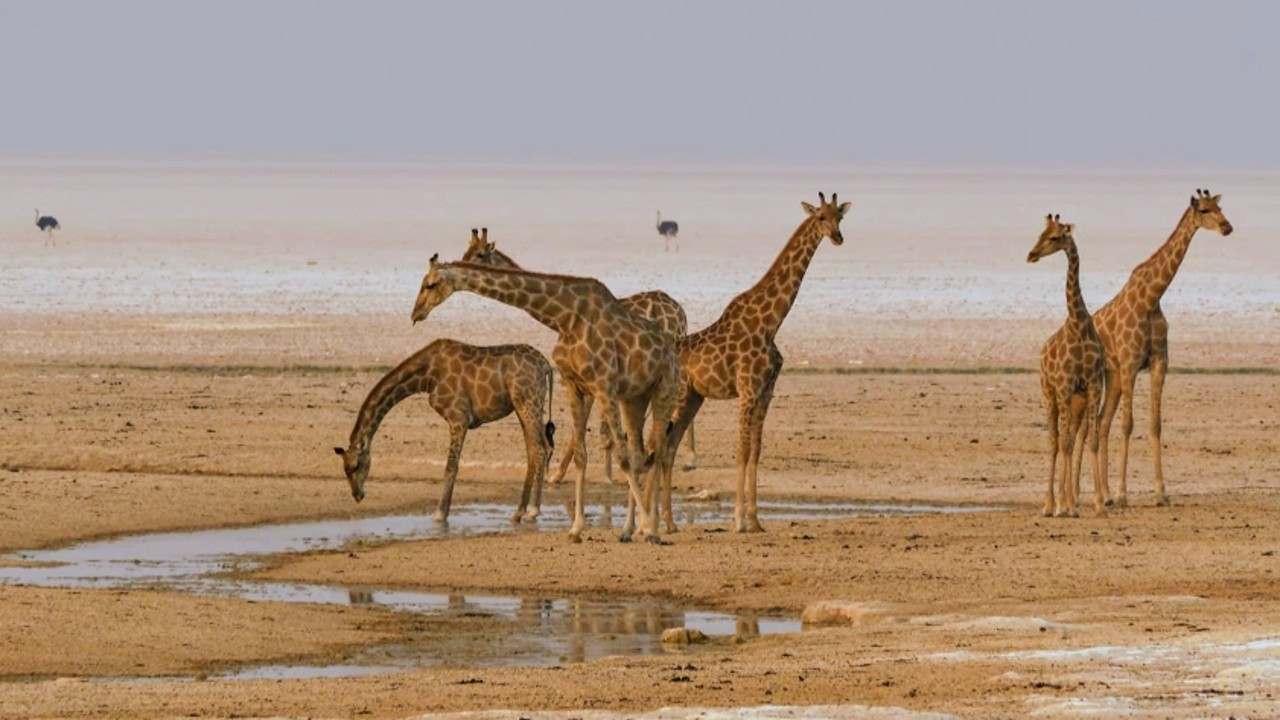
shift in tune with Nature's [Music] Rhythm this is the home of the Rothschild's giraffe scientifically named giraffa Camelo Paralis rothschildi the rarest giraffe subspecies in the world as of 2024 the Rothschild's giraffe population numbers only about 800 individuals according to the giraffe conservation Foundation their pale coats with patterns that do not extend down to their legs make them easily distinguishable standing up to 18.7 ft tall Rothschild's giraffes are the tallest of all giraffe species they also stand out due to the presence of five oon horn-like structures on their heads a feature few other giraffes [Music]
share Rothschild's giraffes are not only symbols of majesty but also play the Role of gardeners in the savannah their primary food source consists of the leaves of Acacia and chora trees and by controlling the growth of vegetation they help maintain ecological balance thanks to their feeding habits the tree canopies are kept in check allowing sunlight to penetrate and support the life of many other species below the trees their presence is like the Heartbeat of the Savannah ecosystem keeping everything in a state of Natural Balance but Rothschild's giraffes are not just ecolog logically significant they are
also important for sustainable ecotourism according to WWF Eco tourism plays a vital role in the conservation of this species providing income for local communities and supporting Wildlife protection programs tourist trips to observe giraffes offer opportunities for humans To connect with nature serving as a reminder that every living creature plays a critical role in conservation efforts [Music] across the vast grasslands of the Victoria Basin topi scientifically known as damaliscus lunatus gima strides with the strength of a warrior with their reddish brown coats and black markings on their elbows and faces topis blend perfectly into the Savannah
where the golden grass and Dusty Earth create a natural camouflage with a muscular build and long legs topis are known as one of the fastest antelopes on the Savannah their ability to run at speeds of up to 43 mph allows them to easily escape from formidable Predators like lions and leopards topis exhibit migratory Behavior seeking Lush grasslands and stable water sources near Lake Victoria during the long dry seasons these Antelopes live in herds of 20 to 40 individuals but during the breeding season or migration ation their groups can grow into the hundreds this is a
dance of unity where the herd protects one another from predators moving away from the sundrenched tropical savanas with their unpredictable rains we enter a new world the temperate Savannah this ecological region is characterized by alternating wet Summers and dry [Music] Winters this shift creates an entirely different ecosystem like a new melody in Nature's endless Symphony the temperate Savannah eco- region stretches across vast plains in southern Africa from krugger National Park to pilanesburg and cagala gardi here tall grass and shrubs like Acacia tortilis and comum stretch out under the Blue Sky standing resilient against dry soil
and natural Wildfires the temperate Savannah is not just a place of challenge but also where life shines brightest in adversity with each creature telling a story of resilience and strength among them the white rhinoceros stands as one of the most iconic species in the temperate Savannah of southern Africa this massive herbivore is scientifically named serium simum and is the largest of the five remaining rhinoceros Species according to its average body mass weighing up to 5,500 lb and reaching a body length of 13 ft the white rhinoceros is one of the largest terrestrial mammals alive today
second only to the three extant elephants [Music] species the white rhinoceros is distinguished by its characteristic broad square-shaped mouth perfectly adapted for grazing on short grasses its Two large horns made from keratin the same material as human hair and nails are its most recognizable feature the front horn which is the longest can reach up to 65 in in large bulls with an average weight of around 8.8 lb this horn a powerful tool for self-defense and a symbol of strength is also the reason why the species is highly targeted by poachers white rhinoceroses have endured a
long survival Journey full of Challenges by the late 19th century they had nearly disappeared from the wild with only about 20 individuals remaining yet through Relentless conservation efforts the population began to recover in one of the most remarkable stories of wildlife preservation as of 2023 the population of White rhinoceroses in Africa is estimated to be around 18,000 individuals white rhinoceroses have a wide Square lip which is specially Designed for grazing on low growing grass every day they consume up to 265 lb of grass playing a vital role in maintaining the balance of the grassland ecosystem
by preventing grass from growing excessively white rhinoceroses help promote the growth of other plant species and provide living space for numerous other animals within the Savannah most of the white rhinoceros population resides in krugger National Park and kgalagadi National Park areas With wet Summers and dry Winters this harsh climate creates ideal conditions for grass to thrive providing a steady food source for the Rhinos however the Journey of the white rhinoceros is not just a story of survival it is also a battle against poaching save the Rhino reports that in 2022 alone more than 450 rhinos
were killed in South Africa for their horns primarily to supply the Asian market this poses a serious threat to the Species survival [Music] on the vast plains of southern Africa Plains zebras scientifically known as IIs qua are a common site they are one of the most abundant zebra species and play a crucial role in maintaining the ecological balance in these expansive grasslands the black and white stripes that cover their bodies are nature's unique design no two zebras have identical Stripes Each one is a masterpiece unto itself when zebras move in large herds the stripes blend
together confusing Predators like lions as they try to focus on a single Target as of 2023 the population of plain zebras in southern Africa is estimated at around 300,000 individuals these zebras are primarily grazers consuming up to 30 lb of grass daily with their ability to digest tough fibrous plants plain's zebras help Regulate the growth of grasslands they prevent overgrowth inhibit the spread of invasive grass species and create room for other vegetation thus sustaining the Savannah ecosystem their existence supports not just their survival but helps maintain the delicate balance of the Savannah where each species
contributes to the dynamic web of African Wildlife the blue wilderbeast famed for its great migrations in East Africa also Maintains a stable population in southern Africa with around 1.2 million individuals recorded as of 2023 this fact demonstrates that the temperate savanas of southern Africa are still home to one of the richest populations of wildlife on Earth this species of antelope scientifically named conoces torinus is easily recognized by its bluish gray coat and distinctive curved horns they weigh up to 600 lb and measure about 8 Ft in length with powerful legs blue Wilder beasts can Sprint
at speeds of up to 50 mph outpacing Predators like lions and hyenas in the temperate Savannah blue Wilder beasts play a crucial role as one of the primary herbivores consuming large amounts of grass and helping to keep the Savannah's grasslands in Balance each day a single wilderbeast can consume up to 33 lbs of grass slowing down the growth of older grasses And creating space for new choots in doing so they provide sustenance for other herbivores like antelopes zebras and cudas [Music] alongside the blue wilderbeast the Eland Antelope is one of the most important and widespread
Antelope species in the temperate savanas of southern Africa the Eland scientifically known as torot trus oric is the largest Antelope species in the world boasting a robust physique Weighing up to 2,200 lb and standing around 6 ft tall at the shoulder with a tan coat and long spiral horns which can grow up to 26 in in males these features make the Eland Antelope stand out their horns are not only used for defense but also play a significant role in power struggles for dominants and mates during the breeding season despite their size Eland antelopes can run
at speeds of up to 25 Mph making them Swift enough to escape Predators like lions and Hy enas Eland antelopes mainly inhabit open grasslands where they can move freely to forage for food and water their ability to endure droughts is remarkable as they can survive for long periods without drinking water obtaining moisture from the plants they eat instead according to the iucn the population of Eland remains stable with approximately 136,000 individuals across Africa as of 2023 thanks to their seasonal migrations in search of fresh grazing lands which help maintain their health and [Music] [Music] population
leaving behind the grasslands of the temperate Savannah we venture into a different world the flooded Savannah this is a region where water and life blend together where seasonal rains transform the Landscape the dry grasslands are suddenly submerged creating vast lakes and wetlands the flooded Savannah is one of Africa's most miraculous ecosystems where adaptation is the key to survival the S one of Africa's largest Wetlands is a Heartland of life where the hippopotamus Finds Its Ideal Home the hippopotamus commonly known as the hippo has the scientific name hippopotamus Amphibious according to WWF The sud is home
to approximately 40,000 hippos making it one of the largest populations in the world the hippo is a massive animal only surpassed by elephants and white rhinoceroses in size an adult male can weigh up to three 3,300 [Music] lb despite their enormous size they spend most of their time in the water where the cool Currents help regulate their body temperature and protect their Skin from the harsh Savannah Sun a typical group of hippos consists of 10 to 30 individuals that live and protect each other the role of hippos extends beyond the water as they graze and
move across land they help maintain the vegetation preventing wildfires that could occur from the accumulation of dry grass additionally their waste serves as a vital nutrient source for River and Lake ecosystems nourishing microorganisms and Fish acting as a bridge between two worlds the hippo is both a water dweller and a land manager maintaining the delicate balance of the sud ecosystem [Music] the sud is not only a sanctuary for large animals but also a critical stopover for hundreds of migratory bird species the Journey of these migratory Birds to the sud is closely tied to the rainy
season as water levels rise the region becomes a vibrant ecological Tapestry according to bird life International more than 400 bird species have been recorded in the sud including many rare species the gry Heron scientifically known as Arda CA is another significant bird species found in the sud with a wingspan of up to 6.5 ft and a slender body the gray Heron is easily recognizable by its long neck and gray white feathers they nest and breed in the wetlands where abundant fish and amphibians support Their next generation the African spoon bill is another prominent waterb bird
species in the sud ecosystem scientifically known as plala Alba they thrive in Shallow marshes and rivers where water is abundant and food is plentiful their pristine white plumage and long flattened Bill make them well suited for foraging in muddy water where they scoop up small fish insects and crustations Their bills act like sensitive cves allowing them to hunt efficiently without needing to see their prey with a wingspan of 3.5 ft African spoon bills can glide effortlessly over shallow Waters moving swiftly between food rich areas living in flocks helps them find and protect each other in
the harsh natural environment this species breeds during the rainy season when the wetlands are most fertile and nutrient-rich African spoon bills build their nests in tall bushes or along river banks far from [Music] predators each rainy season water from the Nile floods the grasslands and shrubs creating a lush and Rich landscape Papyrus tyer and fragm mites characteristic aquatic plants Thrive here covering the land and providing shelter for numerous species these thick patches of water Grass not only serve as refugees but also as abundant food sources for both land and Aquatic wildlife in the Nile Delta
flooded Savannah the Nile crocodile is the top predator with the scientific name crocodilus niloticus this species is the second largest crocodile in the world measuring between 16 and 18 ft long and weighing up to 1,650 lb they dominate the Nile Delta Ecosystem not just because of their enormous size but also due to their impressive hunting skills during the dry season as water levels decrease Nile crocodiles Retreat to remaining swamps and lakes to find shelter [Music] Al their thick skin helps protect them from the harsh sun and their ability to regulate their body temperature enables them
to withstand extreme heat when the rainy season comes and the Nile Waters rise crocodiles expand their hunting range seeking prey such as Antelope and buffalo drinking by the river [Music] banks not only are they top predators but Nile crocodiles also act as The Gatekeepers of the Nile Delta flooded Savannah removing weak and sick animals ensuring the health of the wildlife populations in the area they help maintain a strong and Diverse ecosystem where life and death are constantly balanced according to birdlife International the Nile Delta flooded Savannah attracts more than 200,000 Birds annually among them the
greater Flamingo phoenicopterus rosias is one of the most prominent species every year 30,000 to 40,000 greater flamingos migrate to this region to breed and [Music] Feed greater flamingos travel hundreds of miles to find safe flooded areas like the Nile Delta where they can find abundant food and a secure environment to raise their young their migration often takes place in Spring and fall when changing temperatures and Rising Waters create ideal conditions for their breeding this species is the largest in the flamingo family with a wingspan of 5.6 ft and standing about 4.5 ft tall with their
long legs they can easily Navigate the marshlands using their curved bills to filter food from the mud and water a perfect survival tactic in this challenging environment their distinctive pink plumage is a result of the carotenoid pigments they consume from shrimp and microorganisms found in the shallow Waters of places like the Nile Delta flamingos migrate not only to find food but also to maintain genetic diversity in their Population huge flocks of flamingos sometimes numbering thousands protect each other from predators and create favorable breeding conditions their migration journey is a life of constant searching adaptation and
survival [Music] [Music] Lake Chad once one of the largest lakes in the world has been shrinking due to climate change and the overuse of its Water resources today the lake covers an area between 1,350 and 1,500 square miles depending on the season despite this reduction the surrounding flooded Savannah remains a diverse ecosystem [Music] the African wild buffalo scientifically named cerus cffa is a large mammal frequently seen in the Lake Chad flooded Savannah Lake Chad's flooded Savannah Provides a rich environment where grasslands and abundant water sources create ideal conditions for the African wild buffalo to thrive
according to the latest iucn report the population of wild buffalo in the Lake Chad area was estimated at around 50,000 individuals in 2024 reflecting relatively good conservation conditions this makes them one of the most populous large mammals in this region weighing up to 1,500 lb and Reaching a body length of 11 ft wild buffalo are among the largest and strongest animals in Africa their curved horns are not only defensive tools but also symbols of power helping protect the herd from from threats such as lions and hyenas wild buffalo move in large herds sometimes numbering up
to 200 individuals creating a tight-knit social network this herd structure helps them defend one another and strengthens the Bonds between members however their survival journey is not easy during the dry season water sources gradually dwindle and the Buffalo must migrate to other areas to find new sources of water and food they move through different areas within the ecosystem to avoid water shortages thereby reducing the risk of extreme drought conditions African wild buffalo are not only powerful animals but also play an Important role in maintaining the balance of the Lake Chad flooded Savannah ecosystem by grazing
they help control the overgrowth of vegetation preventing grasses from growing too thick and thus helping to maintain the DI diversity of other plant species this in turn creates a habitat for smaller animals from antelopes to birds the presence of Buffalo also attracts large Predators like lions thus helping sustain the food chain in the [Music] ecosystem in the Zambian flooded ecosystem the water buuck scientifically known as cobus ellips Primus is one of the most prominent animals weighing between 400 to 600 lb and standing up to 4 ft tall they are among the largest antelopes in the
region recognizable by the characteristic white circle around their rump waterbuck not only have impressive size but also remarkable adaptability to The flooded environment with strong swimming abilities water bucks usually live near rivers swamps and lakes where Grass Grows year round and provides their primary food source they rely heavily on clean water and fresh vegetation unable to endure long dry spells when faced with Predators like lions or hyenas waterbuck use a survival tactic of plunging into water to protect their herd this skill helps them Escape Lurking dangers turning the flooded environment into a natural advantage [Music]
in the flooded grasslands of Zambian there exists a distinctive Antelope species this is the lechwe scientifically known as kobus leche although modest in size male Leches possess horns that can reach up to 28 in in length these horns are not only tools for protection against predators but also symbols of power Power during territorial battles in the flooded areas where aquatic grasses Thrive Lewes find their sustenance they feed on the Aquatic grass ensuring a rich source of nutrients as the rainy season comes to an end the flooded areas give way to the harshness of the dry
season as water levels recede leest begin their migration Journey searching for remaining water sources to survive but thanks to their remarkable endurance And adaptability Lewes not only survive but also Thrive like Natural Born athletes they navigate the challenges of nature keeping their life cycle ongoing in the flooded grasslands of southern [Music] Africa with a Golden Crest shimmering like a natural Crown the gray crowned crane stands out amidst the lush green grasslands and vast Wetlands this is the gray crowned crane scientifically named balar regulorum a vibrant symbol of the Zambian ecological region the gray Crown crane
has fully adapted to the harsh and everchanging flood season they move gracefully through the flooded grasslands with their long slender legs and proud tall necks their powerful wings are not just symbols of freedom but also essential survival tools allowing them them to Glide over swamps without hindrance when the rains come the zambesi and grasslands come alive grass Flourishes and insects and small animals multiply that's when the gray crowned cranes return from migration together they forage and seek places to nest building their nests in Tall Grass to protect their eggs from predators the zamb Asian flooded
grasslands are not just a sanctuary but the heart of the ecosystem sustaining this population's [Music] survival the African Savannah ecosystem Is one of the most challenging environments on Earth where the erratic climate and weather patterns shape the survival journey of millions of animals according to data from the ipcc the average temperature in the savannah has increased by about 1.5° C over the past 50 years causing significant changes in the ecosystem every day animals here face the harsh challenges brought by Nature like resiliant Warriors these creatures Must adapt to survive drought is one of the greatest
challenges that the Savannah ecosystem faces in the temperate Savannah region of South Africa average rain fall has decreased by about 20% over the past 3 decades leading to severe water shortages this has caused significant declines in vegetation and directly impacted herbivores like the white roseros zebra and wilderbeast they have been forced to Develop survival strategies to [Music] adapt white rhinoceroses and some Antelope species can survive for many days without drinking water relying solely on moisture from the grass meanwhile zebras and Wilder beasts tireless Travelers must alter their migration schedules to keep Pace with the shifts
between the rainy and dry seasons when the rare rains come they quickly move to take advantage of fresh Grass and clean water their flexibility in coping with drought is a prime example of Nature's incredible adaptability climate change has led to significant alterations in the flooded Savannah regions here seasonal water level changes dictate the survival of all species Wetlands like Lake Chad and the Nile Delta have become essential stopover points for migratory Birds however the constant fluctuation of Water levels presents a major challenge one of the biggest impacts of human activity on the Savannah ecosystem is
deforestation and agricultural expansion according to a 2023 report by the World Wildlife Fund approximately 75% of the Savannah in Africa has been altered or degraded due to human [Music] activity poaching casts a dark shadow over the Savannah ecosystem iconic Wildlife species such as the White rhinoceros African bush elephants and lions are facing the threat of Extinction due to human greed among them the white rhinoceros was on the brink of Extinction in the early 2000s as its numbers plummeted due to poaching for their [Music] horns although by the end of 2023 the population of the white
rhinoceros had rebounded to 18,000 individuals the dangers of poaching still Loom large in South Africa and Namibia elephants too have not escaped this cycle of Destruction each year over 20,000 elephants are killed for their Ivory fueling the black market by 2023 the African bush elephant population had dwindled to 415,000 individuals if this situation is not controlled African elephants could disappear from many regions within the next few decades [Music] The African Savannah is the Wild Heart of the Earth where life and death wrestle in every breath but humanity is disrupting this delicate balance the growing divide
between human life and Wildlife has created a deep wound demanding more effective mitigation measures to maintain the balance and protect both people and animals within the Savannah ecosystem human threats remain and conservation efforts must continue to be maintained And developed to ensure the survival of the iconic species of the African Savannah one of the most important solutions for preserving the Savannah ecosystem is the establishment and management of nature reserves and national parks these areas not only protect natural habitats but also help mitigate human Wildlife conflicts and prevent poaching activities that threaten rare species according to
the iucn there are Currently more than 300 nature reserves and national parks across Africa covering approximately 3.9 million square miles these are ecological fortresses where nature can breathe and life can continue to flourish moreover Advanced Technologies have been deployed to combat poaching in Parks like Krueger and Serengeti drones and GPS systems are used to monitor animals and detect poachers the smart spatial monitoring and reporting tool Project has made a significant impact in the journey to protect the Wilderness of the African Savannah the story of the African wild dogs is an inspiring example of conservation efforts
in the early 2000s the Wild dog population had plummeted to only about 6,000 individuals across the continent the species was on the brink of Extinction facing habitat loss and poaching however conservation initiatives have sparked hope for the Recovery of this species the story of the African wild dogs Resurgence is a vivid Testament to how conservation is not only the responsibility of large organizations but also requires the collective effort of local communities protecting the Savannah is not just about safeguarding a Wilderness but about preserving the rhythm of the global ecosystem each individual has a Responsibility and
we can all contribute through even the smallest [Music] actions this could mean supporting organizations like WWF and African parks in their anti- poaching projects it could mean avoiding the use of wildlife products such as Ivory and animal skins additionally contributing to re forestation programs and protecting animal habitats are small acts that can make a big Impact have you ever immersed yourself in the natural landscape and witnessed the wild survival Dance of the African Savannah if so feel free to share your exciting experiences in the comments section below every story you share is like a green
seedling helping to nurture the life of the African Savannah grasslands so that the beauty of nature can be preserved and endure forever don't forget to like subscribe And ring the notification Bell to join us on more magical adventures where Nature's stories are still waiting to be told [Music]