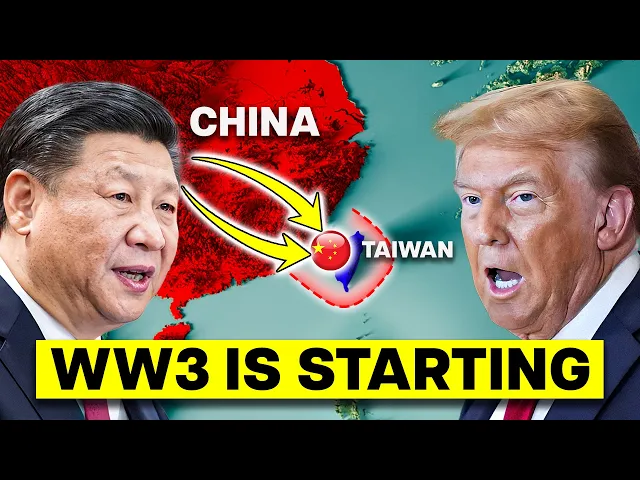
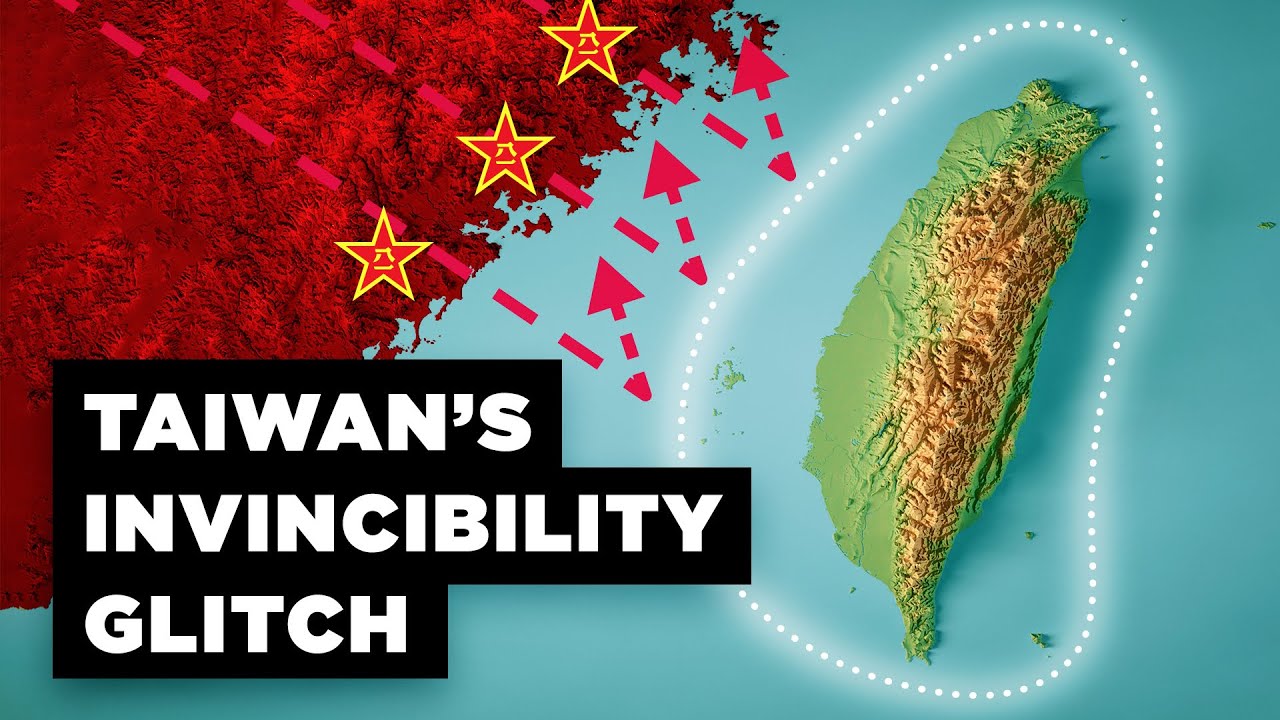
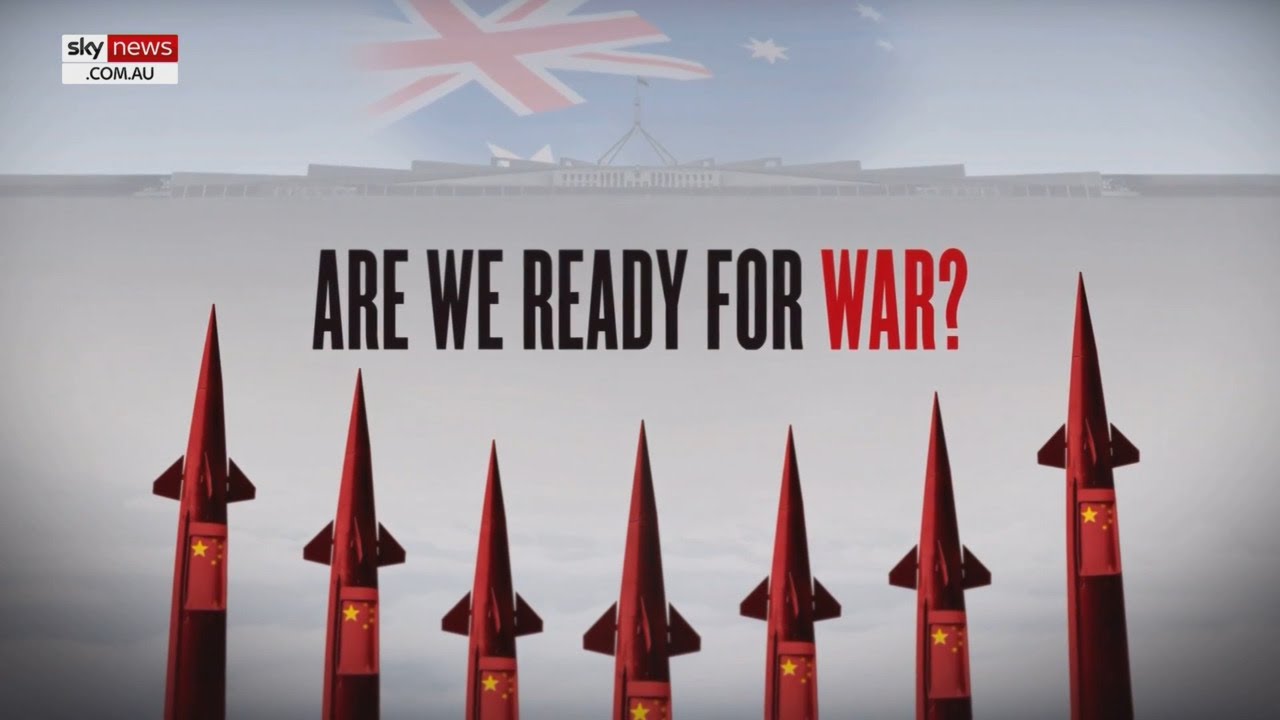
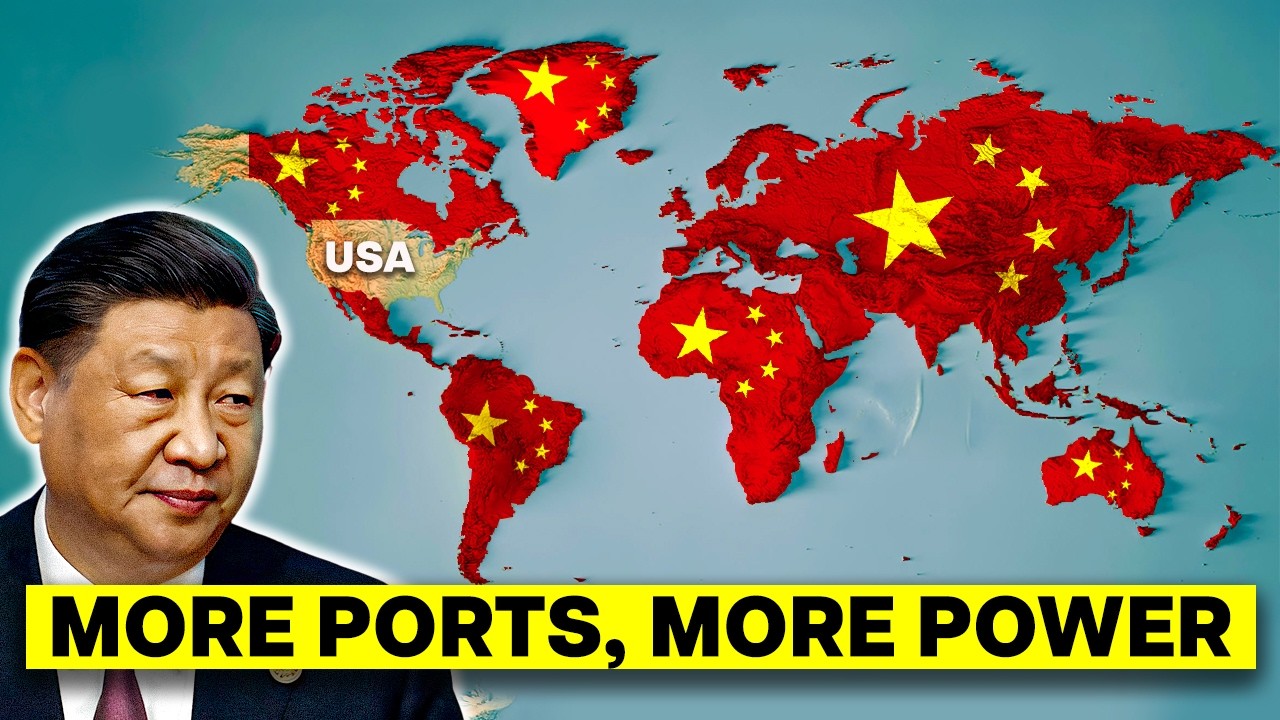
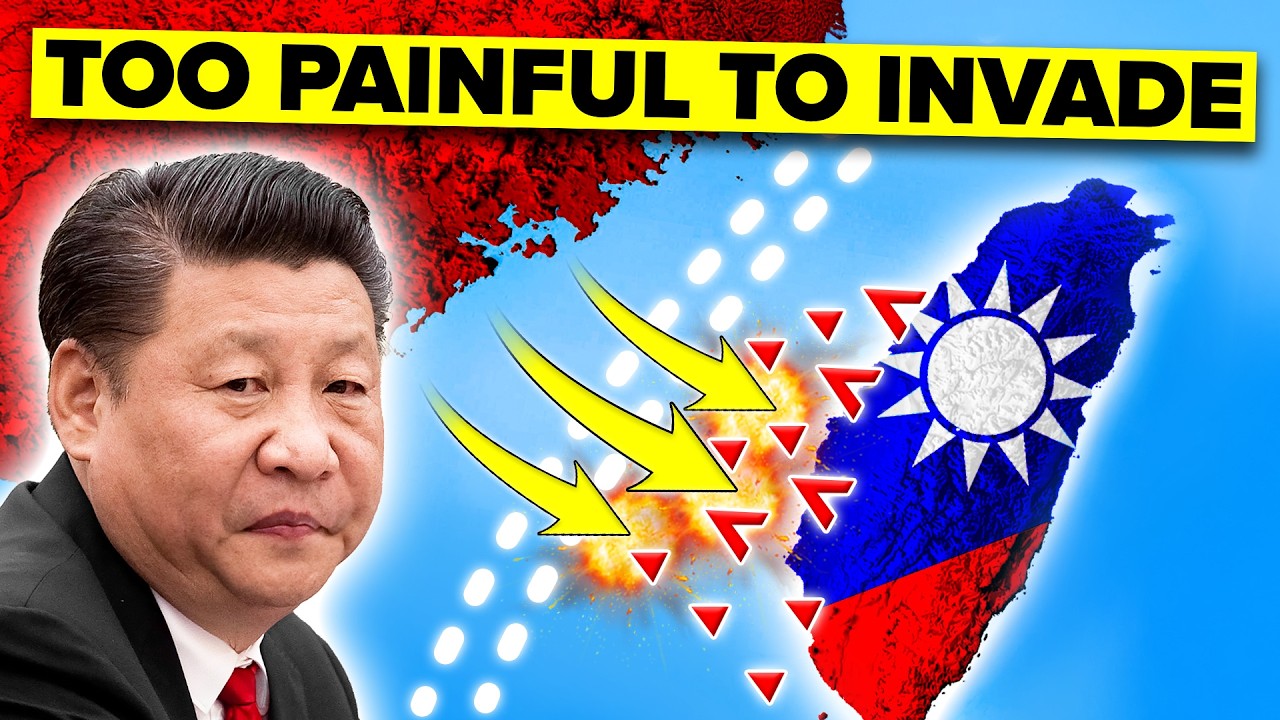
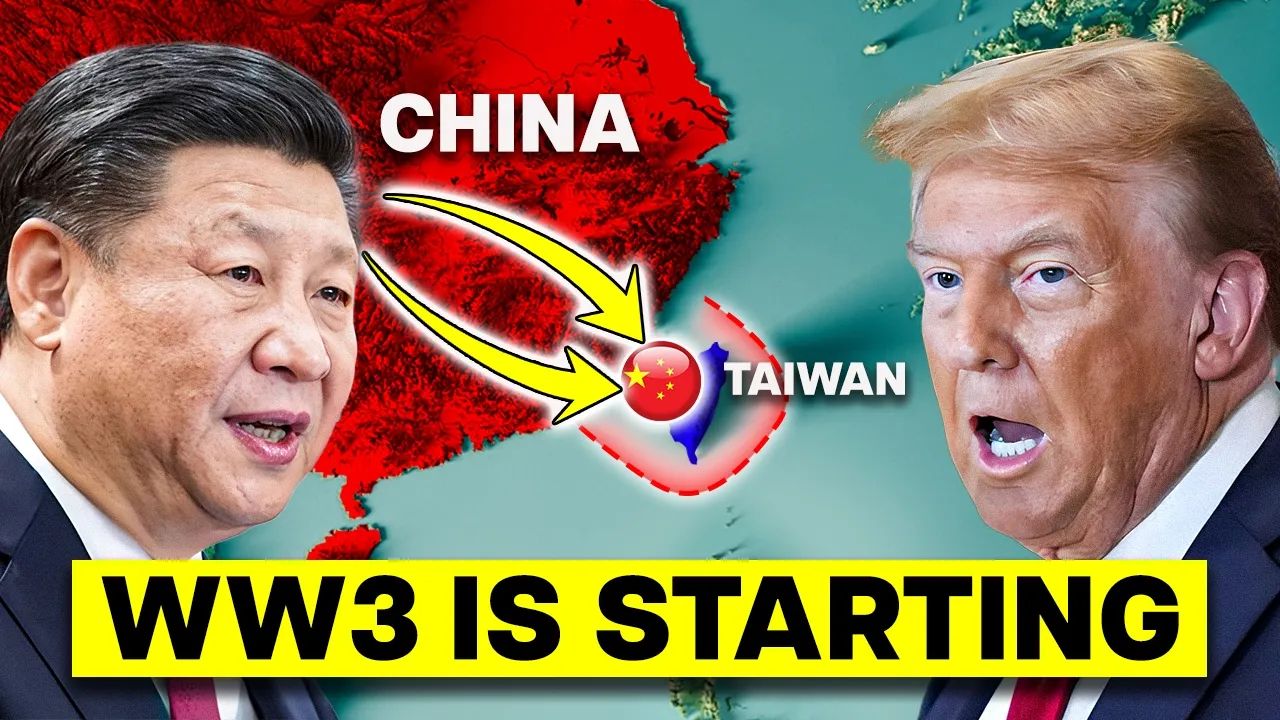
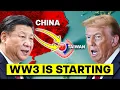
China has launched large-scale military drills in the waters around Taiwan to deter the self-governing island from seeking independence. The Chinese Army, Navy, and Air Force sent planes and 19 warships to surround Taiwan in a drill aimed at practicing a total air and sea blockade of the territory. China escalates its operations around Taiwan, showcasing a formidable display of force.
The Chinese military also deployed hypersonic anti-ship missiles and what analysts say is a signal to the US against any potential interference. China just carried out its biggest war drill by surrounding Taiwan from all sides. Hundreds of warships, jets, missile launchers, and artillery units ran practice runs on how to cut Taiwan off from the world.
And to make the threat even clearer, the Chinese army released a video showing simulated missile strikes on cities like Tynan, Halian, and Tai Chong. Something similar had already happened just a few months earlier. In December of 2024, China sent out nearly 90 warships and dozens of aircraft, their biggest naval drill in decades.
And even before that, in October, Taiwan had tracked 125 Chinese jets and 34 warships swarming near its airspace. But these drills aren't like the ones we've seen before. Something's off.
The timing feels too deliberate. The tone is far more aggressive, and the pace they're moving at doesn't look like a show of force anymore. It looks like preparation for a hostile takeover.
And it's all happening while China's economy is falling apart. Tariffs are choking exports. American buyers are pulling out.
And the factories built for that trade are shutting down one after another. For a regime that's built on control, this is a nightmare. Xi Jinping is backed into a corner with no good options left.
And when a regime like the CCP starts to feel that grip slipping even just a little, it lashes out. This is when you see its real face. This is how things like the Tinnaman Square massacre happen.
Remember 2019, Trump hit China with $200 billion worth of tariffs and then months later, the world was dealing with a deadly virus that came straight out of Wuhan. Yeah. The CCP never apologized for any of that.
Instead, they just moved on like nothing happened. And now it's happening again. Tariffs are still crushing Chinese exports, some marked up by 145%, even 245%.
China's once booming supply chains are breaking down. And instead of adjusting or fixing the problem, Beijing's response has been pride and silence. Because in she's eyes, China isn't a struggling economy anymore.
It's a superpower. And when a superpower feels humiliated, it doesn't just sit quietly. It fights back.
That's why recent satellite images show a significant military buildup in Fujian Province, just across the street from Taiwan. This includes Type 63A amphibious tanks, PHL191 longrange and multiple rocket launchers, Type 305 radar systems, and logistics convoys equipped for rapid deployment. Military rail lines feeding into the region have seen increased traffic, and staging zones near coastal bases are filling up with assault vehicles and mobile missile units.
None of this looks like defense. And all signs point to one thing. China is getting ready for war.
For you to understand why this is happening and where it's likely headed, you need to look at how it started. How one war, one revolution, and one American warning shaped everything that's happening right now. Taiwan became the last piece of China that Mao couldn't take.
And the US made sure that he never did. In this video, we'll break down the historical split between China and Taiwan, how China plans to invade, and how Taiwan's doomsday plan is built to bleed China's forces. The CCP loves to push this narrative that mainland is the motherland of Taiwan, when in reality, Taiwan, officially called the Republic of China, is actually older than China, officially called the People's Republic of China.
Recently, we posted a clip of the Taiwanese president pointing out this fact. Well, that video was mass reported by Chinese bots and then got shadowbanned. there's a good chance that the CCP bots will target this video, too.
So, if you guys can please do us a big favor and hit that like and that subscribe button down below. It helps us out tremendously. Okay, let's start from the beginning.
You see, in the 1800s, Taiwan was just a part of theQing Empire, which basically ruled over all of current China. But in 1895, Japanese forces took over Taiwan, defeating theQing government in the first Sino-Japanese War. After that, Taiwan was officially handed over to Japan, becoming a full colony under the Treaty of Shimonoseki.
Japan ruled Taiwan for the next 50 years, building roads, railways, and schools, but also trying to erase Chinese identity from the island. Taiwan became a supply base for Japan's empire, and the people that lived there lived under strict Japanese control. Meanwhile, the Republic of China, or the ROC, overthrew theQing Empire and took control of mainland China in 1912.
Fast forward to the end of World War II. Japan had just been crushed. After years of brutal war across Asia and the Pacific, Japan was finally forced to surrender.
During these surrender talks, the ROC sat down with the US and the UK and basically said, "Hey, Japan's still controlling Taiwan, but it's kind of a part of China. They only took it because they beat theQing Empire. " So, while you're negotiating Japan's surrender terms, if you can throw in the return of Taiwan to the ROC, we'd really appreciate that.
And the Allies, well, they agreed. Under the terms worked out after Japan's defeat, Taiwan was handed over to the ROC in 1945. Japanese forces on the island surrendered to the Chinese troops.
And just like that, Taiwan was back under Chinese rule. at least on paper. Under the terms worked out after Japan's defeat, Taiwan was handed over to the ROC in 1945.
Japanese forces on the island surrendered to the Chinese troops. And just like that, Taiwan was back under Chinese rule. At least on paper.
So the ROC, the then current government of China, now had complete control over both mainland China and Taiwan. But while they were busy trying to rebuild the country, chaos erupted yet again. A full-scale civil war broke out.
This time it came from their people. The Communist Party, led by a man named Mao Zadong, rose up from within. After years of brutal fighting, Mao's forces won.
He set up the People's Republic of China or the PC, which eventually became the CCP we know today. Meanwhile, the old government, the ROC, packed up whatever was left and they fled to Taiwan, holding on to the last piece of China they still controlled. Mao wasn't too happy with the old government taking a piece of China from him, so he decided to invade Taiwan.
But he lost. This wasn't the end, though. Mao immediately started planning for a second invasion, building up forces along the coast and waiting for the right moment.
But this time, the United States stepped in. Fresh off of winning World War II and deep into the early days of the Cold War, the US wasn't about to let communism spread any further, Washington made it crystal clear. Taiwan wasn't just some disputed island.
Congress passed legislation promising US military support if Taiwan was attacked. And the warning to Mao was brutal. If you try, we'll nuke China.
That threat stopped everything cold. Mao backed off. But that's when China realized that if they ever wanted to be taken seriously as a superpower, they needed nuclear weapons of their own.
Good old mutually assured destruction. No one wins, but everybody's too scared to start. Even with the risk of nuclear war hanging over them, China never stopped dreaming about Taiwan.
Mao tried and failed. And now it's Xi Jinping's obsession to finish what Mao couldn't. To drag long-lost Taiwan back under Beijing's grip and carve his name into Chinese history forever.
The only difference is that China isn't weak anymore. It's not the broken country that it was back then. Now they have nukes.
Now they have one of the most powerful militaries on Earth. And they're back stronger, louder, and more determined than ever to reclaim the island they never stopped calling their own. So far, China has done everything from threats of force, economic pressure, trade tensions, online disinformation, cyber attacks.
I mean, you name a dirty tactic, and chances are they've already used it on Taiwan. Beijing hoped all of this would break Taiwan from the inside that life would get so hard, so scary, that people would give up on independence, or at least start losing faith in their government. But instead, it backfired.
Polls show most Taiwanese still back the status quo. And every time Beijing screams about doom, the mistrust only grows stronger. Now, China's running out of options.
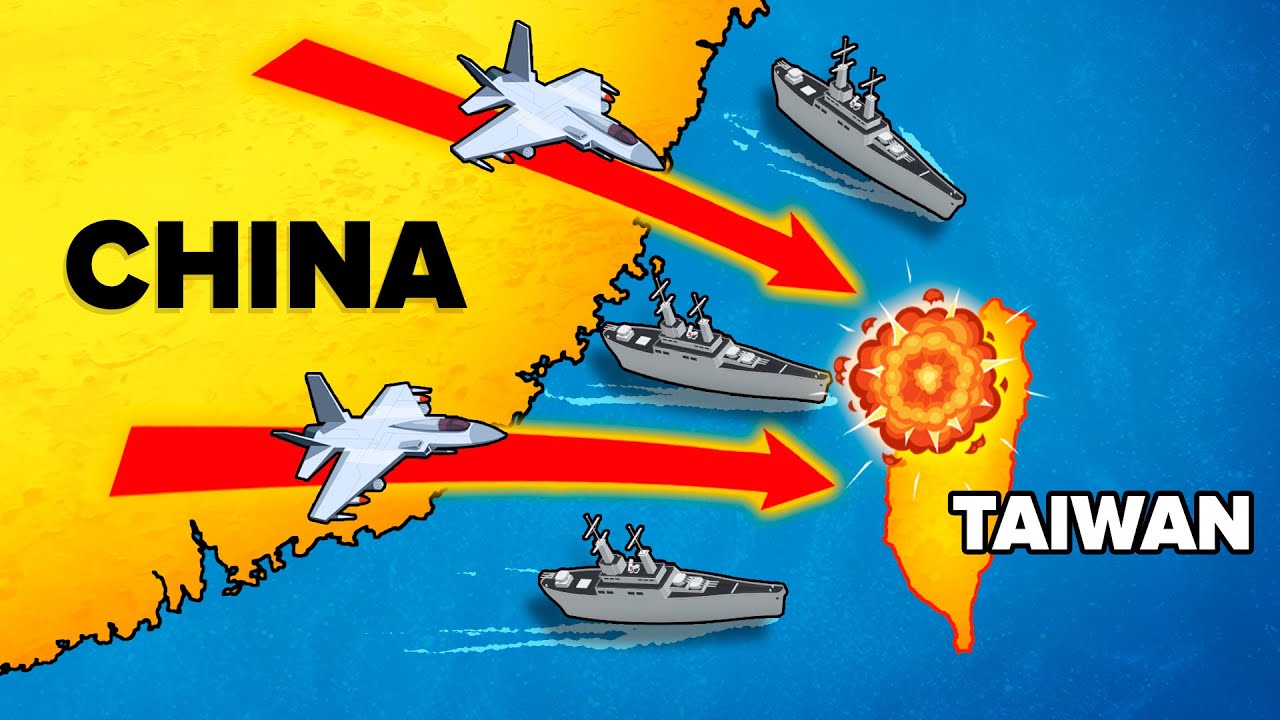
The only one that's left is the one that nobody wants to see, a hostile takeover. The Chinese military often talks about a three-part assault in which first they'd launch a wave of missile strikes, what they call the joint firepower strike operations to wipe out Taiwan's defense in minutes. Hundreds of ballistic and cruise missiles would rain down, crippling early warning radars, air bases, and anti-ship missiles.
Bombers and drones would smash command centers, power grids, and air defenses. China's goal would be to take the skies and the seas before Taiwan can even call for help. PLA jets would flood the air, hunting down Taiwan's fighters in the air or bombing them on the ground.
Missile warships and submarines would swarm the waters, laying mines if they have to, and once the skies and seas are locked down, the island would be cut off alone, surrounded, and staring down the barrel of an invasion. At the same time, China would launch a blockade. PL warships and coastg guard vessels would move in to seal off Taiwan's major ports, Kaang, Tai Chong, and Kong, and patrol the straight nonstop.
They'd board or turn back any ship carrying fuel, food, or weapons. They might even lay mines in the shipping lanes to choke Taiwan off completely. PLA aircraft would declare an air interdiction zone over the islands east and south, forcing civilian and military planes to identify themselves and letting China control who flies where.
In fact, we've already seen hints of this. Chinese ships have started demanding ID and cargo information from passing vessels near Taiwan's coasts. And in 2023 alone, Chinese war games include mock quarantine zones and submarine picket lines right off of Taiwan's shores.
But if the bombing and blockade don't break Taiwan, and Chinese intelligence knows it probably won't, the next phase kicks in, the amphibious invasion. PLA leaders know a long blockade would only give Taiwan and its allies time to prepare. So, their doctrine calls for a fast strike once the first wave of paralysis is in place.
Chinese analysts prefer short and intense campaigns over long sieges, fearing that every extra day only invites US intervention. In one school of thought, once Taiwan's air defenses are softened and US ships are kept at bay, China would send its marines and army across the straight. Hundreds of landing ships, assault boats, and amphibious craft and invasion fleet, possibly in the hundreds, would launch all at once and aim for multiple spots on Taiwan's western shore.
Areas like Tai Chong or Ma. The beach heads would be seized on day one, and once they're secure, tens of thousands more troops would flood in. Chinese plans talk about an initial wave of 15 to 20,000 soldiers with more jumping in the next day.
All the while, PLA rockets would keep pounding away any Taiwanese counterattacks. Meeting that invasion on the beaches would be Taiwan's toughest fight. Taiwan's defenses would already be fragmented after the missile barges, but Taiwan knows the game, too.
In fact, they've built a doomsday plan designed to bleed China dry before the first flag ever hits Taipei. Taiwan's generals plan to ambush landing boats and destroy gear as it unloads. In a defense plan straight out of Vietnam, or the Pacific Island battles, sometimes called a porcupine strategy, Taiwanese troops would hide in villages, hills, tunnels, and bunkers, turning every mile of ground into a deadly slog for Chinese marines.
And the PLA, they know it. Official Chinese doctrine even warns it might take weeks of brutal, bloody street fighting after a successful landing before Taipei could fall. A nightmare that would look a lot like the first days of D-Day, only bloodier.
No wonder some Chinese strategists say they'd rather avoid that nightmare landing if they can. In Rand War Games, planners look at scenarios where China might blockade and bomb Taiwan first, then just sit and wait, hoping Taiwan would break or the US would back off. One scenario talked about cutting off oil shipments without striking major targets at first, turning the fight into a long, ugly contest of attrition.
In reality, if China moved to invade or blockade, US and Japanese forces would be racing to the region. But China's gamble is that time wears everyone down. Analysts point out that in a long contest, both navies and air forces age fast.
China is betting it can endure the waiting game better than the US and weaken American options without ever firing a shot. We've already seen China testr run this kind of strategy. In 2023 and 2024, Beijing quietly blocked its own tourists from visiting Taiwan.
It weaponized fake food safety warnings and bogus COVID rules to choke off business ties. It picked off Taiwan's diplomatic allies one by one, leaning hard on countries to cut ties and bow to Beijing. Meanwhile, Chinese and North Korean hackers target Taiwan's government, military, banks, and power grids every single day.
Taiwan's own authorities say that they're getting hit by millions of cyber attacks every month. And to be real, there's a very high chance the CCP has already infiltrated Taiwan's systems. They've hidden malware, planted back doors, and are just sitting there quietly, undetected, waiting.
Because the goal isn't to wreck things immediately. It's to sit in the dark until the perfect moment comes. The United States learned it the hard way in 2020.
During the Solar Winds attacks, hackers broke into US government networks, but didn't launch any big attacks right away. They just sat there for months, gathering intelligence, waiting for the right time. Same thing in Ukraine.
Russian hackers planted malware inside of Ukraine's power grids long before the blackout attacks actually started. They waited and when the moment came, they just flipped the switch. That's how it would start.
Silent, invisible before the first bullet is fired or the first missile even leaves the ground. Taiwan knows this won't be a fair fight, and they know they can't afford to wait and react. The real question is, what's Taiwan actually doing to stop it?
Since around 2016, the Taiwanese government has shifted hard towards a new playbook, something they call the overall defense concept, or just the porcupine strategy. Instead of wasting time trying to match China's massive armies, navies, and air force, which would be suicide, Taipei has poured its resources into smaller, mobile, and hidden weapons, things that can survive the first wave of attacks and still hit back hard. For example, Taiwan has stockpiled a huge number of ground launching anti-hship missiles.
Longrange ship killers like the Seungfong 2 and the hypersonic Hyongsung 3. Instead of keeping them out in the open, they've hidden them in the mountain tunnels and mounted them on mobile launch trucks. Missiles that can pop out, fire, and vanish before China even knows what hit them.
The idea is simple. If China tries to land troops, Taiwan won't meet them at the beaches. Taiwan will kill them at sea.
And they're not stopping there. Taiwan is already mass- prodducing an extended range version of its best missiles. So if things go really bad, they can reach deep into the South China Sea and start blowing holes in Chinese fleets before they even get close.
Similarly, Taiwan's fighter planes would be kept dispersed in underground shelters or hidden on civilian airfields so they could survive an initial missile barrage. The island has even tested civilian highways and regular roads as makeshift runways, ready to launch fighters if bases get destroyed. Air defenses are drilled constantly.
During last summer's Hong Kong exercises, Taiwan rolled out mobile patriots and Tian Kong SAM units around key targets, launched interceptor rockets, and practiced intercepting mock missiles aimed at airports and ports. The idea is to have a distributed defense. Instead of stacking all planes at one base, you scatter mobile launchers, radars, and vehicles everywhere.
So even if China hits hard, there's always something left to fight back with. On the ground, Taiwan plans to use every local advantage. Guerilla style fighting and militias are a big part of the plan.
The Taiwanese public would be in an all hands-on deck situation. Police, firefighters, farmers, and workers all taking up roles once an invasion starts. Taiwan's doomsday plan would kick in almost immediately.
Within a few hours, the island would transform into one of the most heavily armed fortresses on Earth. Every street, every alley, every town ready to fight. In fact, Taipe's government has already staged large-scale civil defense drills called one-on-one exercises where civilians practice moving to shelters, first responders simulate blackouts and fires, and roadblocks are set up to slow an enemy advance.
They are reviving reserve forces and militia training. Last year's exercises for the first time included female reservists being called up to learn field tasks. A central idea is to hold out until help arrives.
Taiwan calculates it might get at most a few weeks of warning and then it would switch to wartime footing and mobilize its 1 and a. 5 million reser to man second line units. Top Taiwanese commanders have even said publicly that the entire society must be prepared to resist siege conditions, stockpiling fuel, medicines, and food in anticipation of a blockade.
Militarily, Taiwan is also moving away from old Cold War thinking. They still keep older tanks and destroyers, but even Taiwan's own analysts warned that big, heavy systems are vulnerable. Critics say Taiwan has overinvested in large conventional weapons, heavy ships, aging jets at the expense of smarter asymmetric capabilities.
And in a real war with China, every wasted dollar could mean losing real lives. In response, Taiwan's new defense plans focus a lot on small, fast-moving targets, missiles, boats, rocket artillery, drones, and sea mines. For example, Taiwan's Navy is adding small missile corvettes instead of wasting money on expensive destroyers, and the army is shifting towards more truck-mounted rocket launchers.
One proposal even calls for building mobile missile silos inland to fire Coast defense missiles. For the air, the focus is on quantity and dispersion. Radar warning aircraft stay low profile while dozens of mobile surfaceto-air missile SAM batteries roam the island at all times.
Taiwan knows it can't stop a full volley of Chinese rockets with interceptors alone. So instead, it's aiming to spoil Chinese air dominance, make it messy, make it costly, using cheaper mobile SAMs scattered across the island. In short, Taiwan is trying to be a moving target.
Hard to find, harder to kill. But no matter how good the plan is, everyone knows one thing. Taiwan can't win this alone.
A cornerstone of Taiwan's plan is that any war will depend on outside help. Taiwan's government and defense thinkers are clear that the US and to a lesser extent, Japan are crucial. The Taiwan Relations Act obligates America to provide arms.
And over decades, the Pentagon has shipped Taiwan everything from Patriot missiles and F-16 jet upgrades to submarines and attack drones. Still, analysts warn in most war games, Taiwan can't hold out long enough by itself. If the first wave of Chinese missile strikes goes Beijing's way, Taiwan would be left defending itself with hidden infantry, rocket trucks, and whatever mobile forces survive.
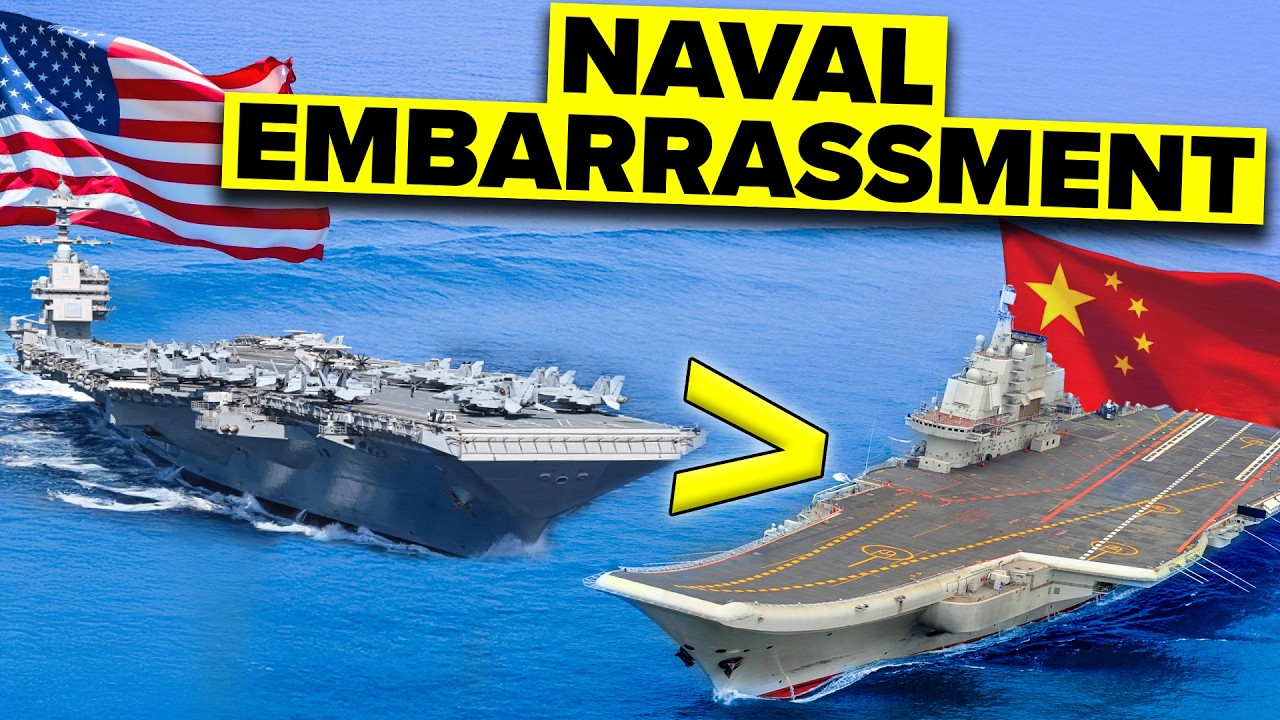
That's why US help has to come fast. cruise missiles, bombers, carrier strike groups. Without it, Taiwan risks getting ground down to surrender.
Allies like Japan are also stepping up. After decades of postwar pacifism, Japan now plans to double its military spending by 2027. They're buying strike missiles similar to US tomahawks so they can hit Chinese launch sites if war breaks out.
Last year, Washington and Tokyo even drew up joint plans to base US rocket launchers, highars, and others on Japan's southern islands, ready to fire at Chinese forces moving around Taiwan. In war game after war game, the US, Japan, Taiwan alliance eventually defeats the Chinese invasion in most outcomes, but only at a devastating cost. A big CSIS simulation ran dozens of scenarios and found Taiwan held on with Allied help in almost all cases.
But it came at a horrific price. US and Allied losses counted in dozens of sunk ships, hundreds of downed aircraft, and tens of thousands of casualties on all sides. Taiwan itself would suffer massive damage with its economy and infrastructure devastated.
And Beijing knows this, too. Even if China fails to take Taiwan, a brutal war could still destabilize the CCP's grip on power. That's why many recent PLA war games are more cautious, treating a full-scale invasion as a last resort and focusing instead on limited strikes, blockades, and shows of force.
But if push comes to shove, Taiwan is ready to make the war so brutal, so ugly that nobody wins. YouTube just dropped a mindbogling announcement. It is paying creators $64 million per day.
Why? Well, because YouTube doesn't have enough creators. That is why you see videos on your homepage that have less than a,000 views, like this one.
Now, of course, that doesn't mean everyone should start a channel, but if you have ever wondered about starting a YouTube channel or a faceless YouTube channel like this one, well, now is a perfect time. YouTube is paying creators millions every day, and it's pushing newer, smaller channels now more than ever. But I'm sure many of you have questions on how to get started and how to grow a channel.
We get questions in our email all the time from some of you guys. So that's why we've decided to put all of our YouTube advice into one training boot camp for the low low price of completely free. So if you're someone interested in starting your own YouTube channel, you can sign up for this boot camp by clicking on the link in the description or on the screen.
Sign up now because unfortunately unlike YouTube videos, the boot camp is like a Zoom call, so it's limited to just 100 people.