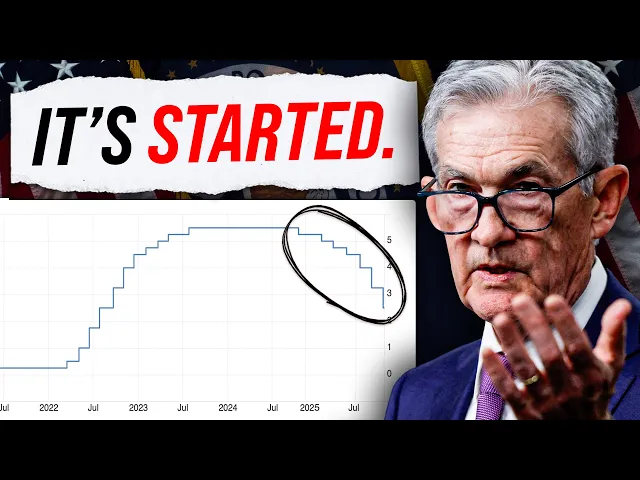
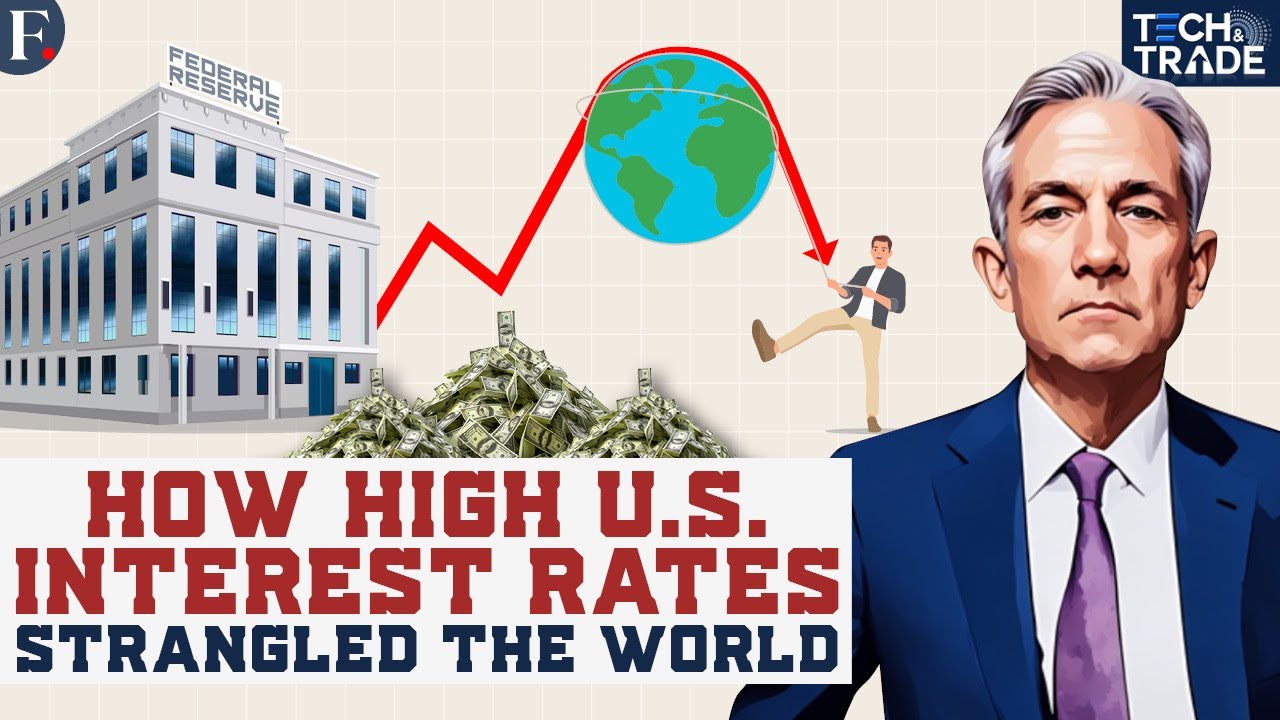
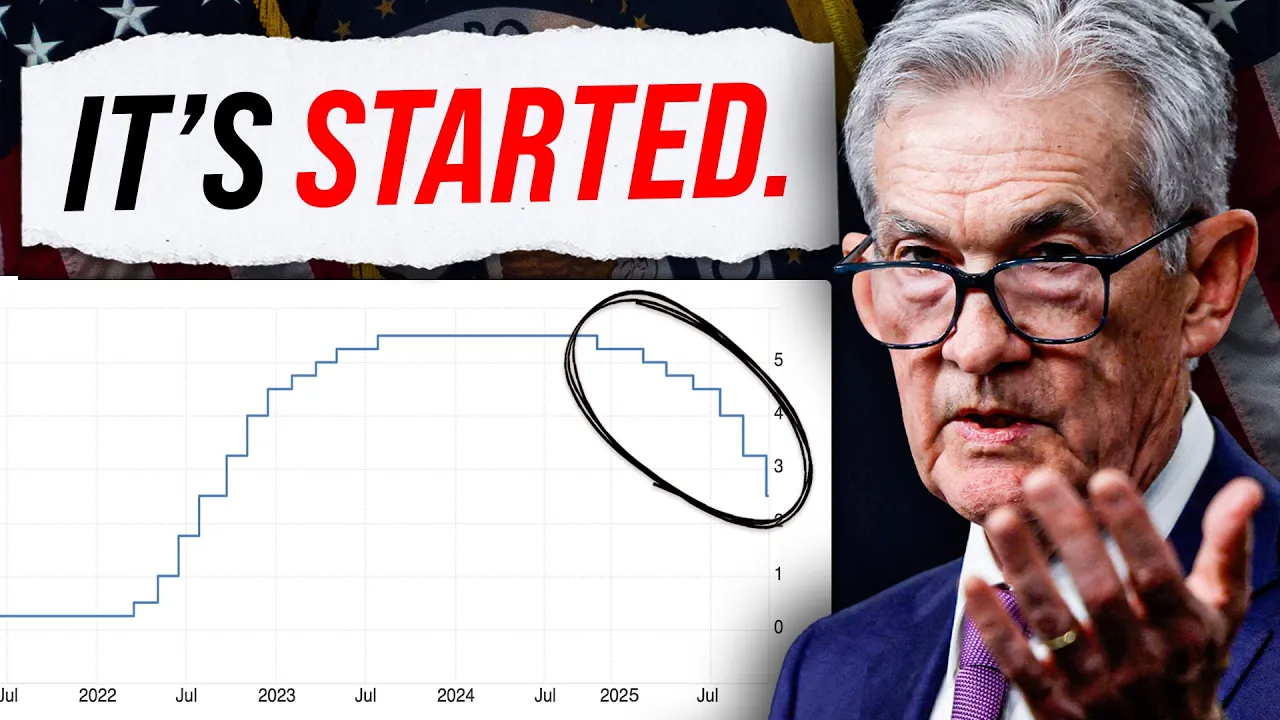
the time has come for policy to adjust the direction of travel is clear and the timing and pace of rate Cuts will depend on incoming data the evolving Outlook and the balance of risks well you heard it folks that there is Jerome pal the chair of the Federal Reserve talking at Jackson Hall a few weeks back and in that speech he acknowledged that the time has come for the FED to start lowering interest rates in the United States currently the US federal funds rate sits at 5.25 to 5.5% that's the highest since the turn of
the century but now with inflation lowering to around 3% jobs creation stalling and unemployment starting to tick up drone power and the Federal Open Market Committee have decided that it's time to flip policy and lower rates which in turn starts to take the clamps off the economy it makes borrowing conditions easier it means mortgage rates come down for homeowners people have more money left over at the end of the week to spend on what they like and ultimately that's good for businesses who get a boost of their revenues and it's generally positive for stock prices
the FED will next meet on the 17th and 18th of September where it is now pretty likely that they will announce an interest rate cut and in fact turning to the current stock market conditions reuter reports that the market is currently pricing in a full percentage Point drop to interest rates by the end of this year so investors are in a grants and they are very excited to hear that rates will likely be coming down in the not too distant future but and I don't like being the party pooper but I want wanted to make
this video because in my nonprofessional opinion I think everyone is getting way too excited over this and as you'll see later in the video I'm far from the only one so let's look a little bit deeper into the proposed reversal of monetary policy is it actually a smart move for the FED to begin lowering rates well firstly let's lay some groundwork and talk about why the FED is deciding to flip monetary policy and it comes back to their dual mandate so for those that don't know the Federal Reserve has two jobs they work to ensure
price stability AKA make sure inflation stays steady and at the same time they try to promote maximum employment in America now over the past few years and really after the initial phase of the pandemic the promoting maximum employment side of their equation really hasn't been an issue and all eyes have instead been on the massive inflation that we saw and that was really the trend for a good few years we basically didn't mention jobs or unemployment because we were all just worrying about inflation now however inflation seems to have settled but for the first time
in many years it's the unemployment side of the equation that the FED is having to focus more on a few weeks back the Bureau of Labor Statistics noted that job additions in the United States had lowered quite substantially versus PRI months and if we look at the unemployment rate it's now risen to 4.3% which is the highest level we've seen in a good few years and in that speech at Jackson Hall the other week Jerome pal said that the FED is not keen to allow allowed the labor market to worsen any further than it has
by keeping interest rates up at around 5% the cooling in labor market conditions is unmistakable job gains remain solid but have slowed this year labor market conditions are now less tight than just before the pandemic in 2019 a year when inflation ran below 2% we do not seek or welcome further Cooling in labor market conditions so it's ultimately the labor market conditions that caused the fed's decision and as you've probably seen this decision to start lowering rates is making a lot of people very excited and I can understand this excitement it is a lifting of
the shackles moment and when interest rates are lowered in theory it's a good thing for the economy and for the stock market but I do think this excitement is overblown and I think it's worth tempering expectations on these proposed rate Cuts because honestly I don't see them making all that much of a difference I think a lot of people went hearing the idea that monetary policy has flipped they assume the FED is going to begin unwinding all of the interest rate Rises we've seen over the past few years you know we were at 0 to2
now at 5.5 and now the FED will start to reverse course back to 0 to2 now that might be the case but I think it's very unlikely that the FED will cut rates by any significant amount over the next few years I think the reversal on their STS of monetary policy makes for a good headline but in practice it simply won't materialize into anything super significant and this is a point that many much smarter people than myself have been discussing over the past few months but perhaps none have explained it quite as well as how
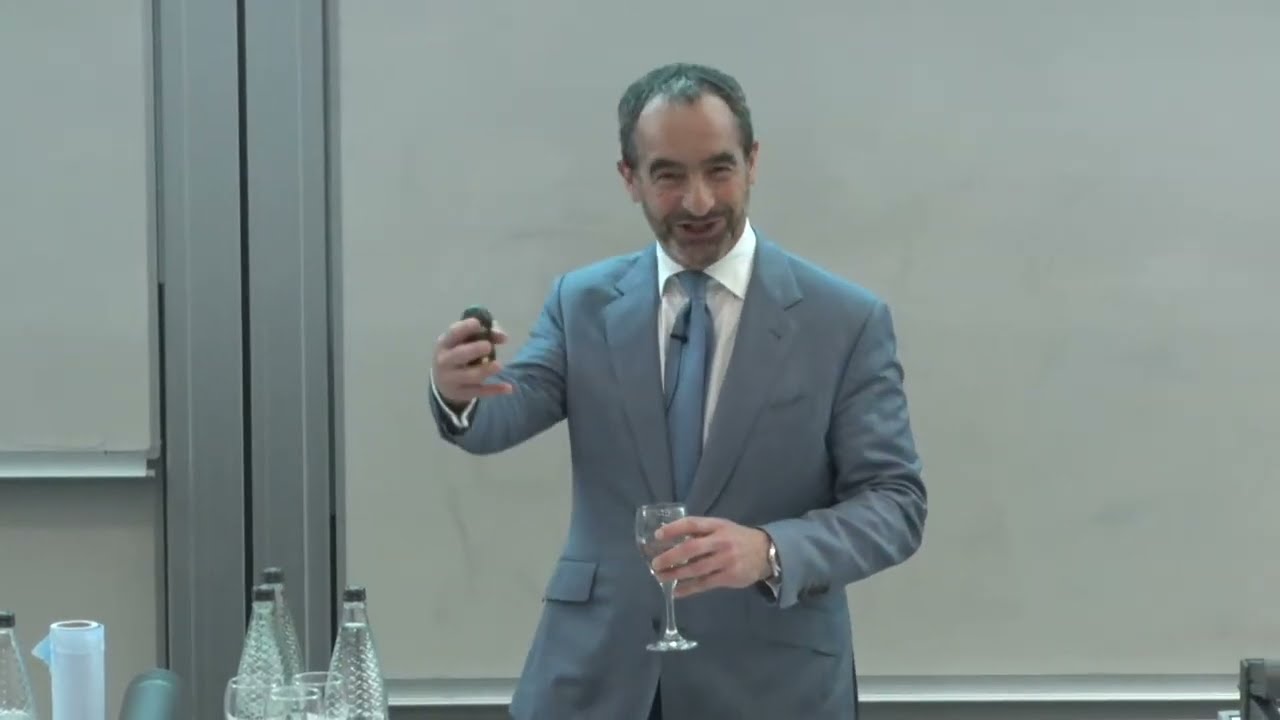
it marks rates are likely to be between two and four not between Zer and two the FED funds rate between 0er and two is uh an emergency measure the FED funds rate was Zero much of the probably the majority of the time in the 09 to 21 period and that's inappropriate you can't live on a shot of adrenaline every morning for 13 years I would like to see a Fed get to a neutral position which is neither stimulative nor restrictive and I describe that as 2 to four I think that within two or three years
the FED funds rate is likely to be in the threes and to settle there uh for the subsequent years uh lower than today's 5 and a quarter 5 and a half but well above the uh half% average that prevailed between 09 and 21 and ultimately that ra low interest rate environment that stimulative adrenaline environment of the past few decades is what's causing the situation now to be so painful for a lot of people but even from my own experience it's been really interesting to see how many people buy into the idea that interest rates simply
going to go back to where they were it's interesting here in Australia we don't have those 30-year fixed mortgages like what's available in the US so generally speaking homeowners after a fews will go onto a variable rate mortgage uh where they are sensitive to interest rate changes it's been really interesting hearing even some of my friendss who are homeowners saying to me you know I can't wait until interest rates go back to where they were and it's a tough pill to swallow but I cannot see that happening and I'll explain why as Howard Mark says
the 0 to2 interest rate environment should be an emergency a stimulative Zone but over the past few decades because rates have just been left there it's felt like those rates are just normal but we have to look at the current environment we're in inflation is still stubbornly sticking around 3 % Mark as opposed to trending all the way back down to 2% and on top of that the labor market conditions despite weakening slightly now are really not that bad as Jerome said himself the other day historically unemployment is still really low so while it makes
sense that rates could start to be lowered now there's no great need to do so and in fact with inflation still higher than the target rate it makes more sense to keep cautiously elevated versus where they were previously as if you cut too fast or too far then all you're doing is encouraging inflation to ramp back up again and that's what happened in the 1970s and it's what the FED wants to avoid at all cost so that's 0 one and in a similar vein and another reason I do not believe rates will be cut by
a significant amount over the next few years is because Jerome himself has acknowledged that they do want to do what Howard marks was talking about the FED wants to position interest rates so that they can very easily move in either direction if they need to in the future they want that flexibility because we have to remember right now people are saying we're really suffering with high interest rates but historically these are not high interest rates at all these are just normal rates as crazy as that sounds the rates we're seeing right now are just in
a normal range historically and it's just the last few decades have made this stimulative environment feel normal I resist the term higher for longer because I don't think of rates today as being higher these are not high rates these are normal rates but nevertheless they're a lot higher than what we lived through in the last 15 years in fact if you're in your 20s or 30s you should ask your parents what the interest rate was on their first home their first mortgage and you'll probably be surprised by the number they tell you and with interest
rates in a normal range now the FED would prefer to keep them there to give them room to move in either direction if they need to if unemployment spikes or the economy suffers then yeah they've got sufficient room to lower rates to help out but if inflation spikes again then they wouldn't need to raise rates in a drastic manner like what they've done the last year or two in order to get inflation back under control we think policy is well positioned to handle the risks that we face if higher inflation does persist we can maintain
the current level of restriction for as long as needed at the same time we have significant space to ease should the labor market unexpectedly weaken that was a snippet from a speech Jerome gave about 4 months ago and this is a snippet from a speech he gave just a couple of weeks ago the current level of our policy rate gives us ample room to respond to any risks we may face including the RIS risk of unwelcome further weakening in labor market conditions he's essentially telling us that they want to keep interest rates roughly where they
are now to give themselves room on either side of the equation don't necessarily commit to Big interest rate Cuts if you don't absolutely need to and rather keep that ammunition for a rainy day and this line of thinking is exactly what many of the world's best investors were also expecting from the fed this is Steve Eisman about 4 months ago explaining exactly this perspective I mean my view is the economy is fine I personally think there should be no fed Cuts this year you know the market will do whatever the market does but the economy
is fine my my actual fear is that if the FED were actually to cut rates the market goes into some it becomes I guess Bubblicious and then then we have a real problem so you know things are good the the FED should do nothing and and and and wait for data to get weak because there's no weak data now as I said that click was from a few months back and since then some of the labor market data has worsened but you get his point right if inflation is not 100% under control and you're not
being forced to lower rates you probably shouldn't and ultimately that's why I do not believe we will see meaningful Fed rate cuts across the next year or two yes maybe a percentage point or two but nothing like the low interest rate environments of the past few decades and this may cause some very real economic and market dynamics that investors may not like and should be prepared for as Howard Marx is about to explain after a long period in which everything was unusually easy in the world of business finance and investing I think something to normaly
appears to be setting in and as a consequence I believe economic growth may be slower profit margins may be lower interest investor psychology may not be as uniformly positive ownership interest may not appreciate as reliably the cost of borrowing will not Trend down consistently Leverage is unlikely to add as much to results as it did in the period of declining rates business may not find it as easy or as as inexpensive to obtain financing and default rates may head higher so while I hate being negative I just think it's worth keeping our heads in check
as investors there's no doubt the market has already responded extremely strongly to inflation calling and the FED suggesting rate Cuts might be on the horizon year today the S&P 500 is already up roughly 20% but I think it's just worth checking our excitement level slightly and maybe modeling for a future where interest rates stay in the 3 or 4% range as opposed to the 0 to 2% range I mean this is the summary you know Einstein said that insanity is doing the same thing over and over and expecting a different result I think another version
of insanity is doing the same thing in a different environment and expecting the same result so if the EnV environment for business and investing is so thoroughly different in the coming 5 or 10 years as it has been in the last uh 15 to 40 years I think it's Folly to expect uh the same results but with that said please let me know what you guys think down in the comments section below do you think we're in a new era of normal rates or do you think the FED will lower rates as low as they
realistically can I'd love to hear from you guys and lastly if you're interested in learning how to invest quick that new money education is the spot to head to we've got two amazingly well produced courses over there and some really great testimonials that I'd encourage you guys to check out but with that said thanks very much for watching everyone and I'll see you all in the next video