It wasn't supposed to come to this, but then again, when had Washington ever been predictable? Outside, a biting February wind swept through the streets of DC, rattling the wrought iron fences around the Capitol and whistling through the towering marble columns. The sun, sluggish in the winter sky, threw its last streaks of burnt orange and violet across the horizon, bleeding through the grand windows of the Foreign Affairs Committee chamber.
Inside, the air was thick with the scent of old wood and political ambition. The room itself bore the sterile, austere elegance of power: polished mahogany desks arranged in rigid formation, the crest of the United States emblazoned on the wall behind the Chairman's seat, its golden eagle staring down over the proceedings like an unflinching guardian of order. Rows of leatherback chairs lined the room, their surfaces worn smooth by decades of men and women who had sat here, spoken here, and fought here.
What had started as a routine power struggle on Capitol Hill had escalated into a full-blown spectacle—a high-stakes political showdown wrapped in equal parts controversy and theatricality. The Foreign Affairs Committee chamber, usually a space reserved for dry diplomatic briefings, had transformed into the stage for an entirely different kind of battle: one of retribution, ideology, and raw political will. And today, there would be a fight.
This wasn't just any hearing; it was a reckoning. Kevin McCarthy, Speaker of the House, sat at the head of the table, his suit crisp navy with a faint sheen under the overhead lights, a picture of measured control. He had been called many things: a strategist, a power broker, a man who knew how to play the long game.
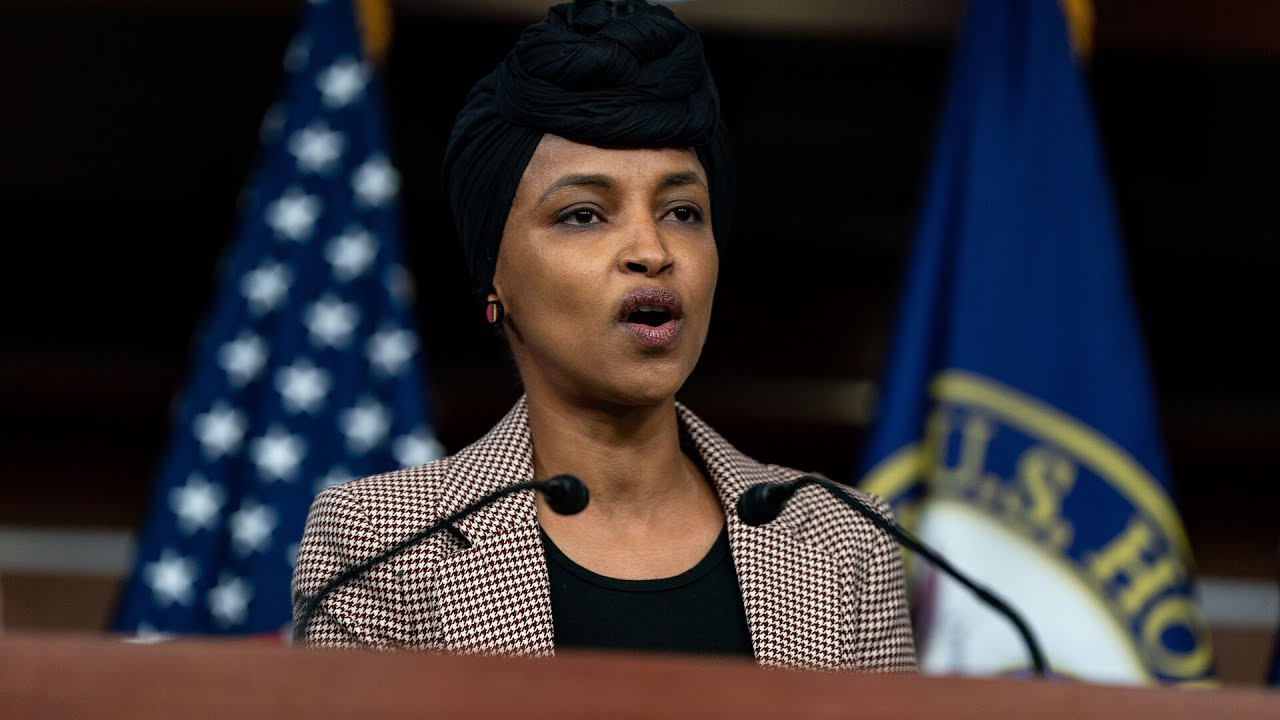
But today, he was something else entirely: the Executioner. It had been his call to strip Representative Ilhan Omar of her seat on the Foreign Affairs Committee—a controversial decision, of course, but Washington thrived on controversy, and McCarthy thrived on control. Across from him in the witness chair sat Ilhan Omar, a woman who was no stranger to controversy herself.
If McCarthy was the Executioner, she was the Insurgent, the voice that refused to be silenced. Drssed in deep navy—a contrast against the stark white walls—she sat with a quiet but undeniable defiance, her hands folded neatly on the table in front of her. The tension in the room was palpable, pressing in like a storm rolling in over the Potomac: silent for now, but charged with the promise of thunder.
To some, she was a trailblazer, a fearless fighter for justice, a voice for the marginalized. To others, she was reckless, dangerous, a firebrand who had spent too much time towing the line between criticism and provocation. That was the thing about Washington: no one was simply one thing.
And now, here they were, two figures from opposing worlds seated just feet apart, their political destinies colliding in a room heavy with expectation. The press had gathered in droves, their cameras trained like sniper scopes, waiting for the moment when one of them would make a misstep. McCarthy knew the game well; every word, every gesture, every shift of his expression would be dissected before the night was over.
For Omar, this was more than just a political dispute; this was personal. For McCarthy, this was business as usual. The chamber was tightly packed, charged with silent hostility.
On one side, Democratic lawmakers sat rigid, their faces set in stone, seething over what they saw as a political vendetta. Some whispered in low tones; others sat motionless, arms crossed in quiet defiance. Opposite them, Republicans exuded quiet confidence, their demeanor poised but watchful.
This was their victory, but they knew Omar wouldn't go down without a fight. At the back, journalists leaned in, cameras poised, pens scratching against notepads, capturing every flicker of expression, every shift in posture. Omar sat steady, her presence defiant, unreadable, while McCarthy, calm and composed, surveyed the room like a man who already knew the outcome.
The air was thick, pregnant with the weight of what was to come. Then the first voice shattered the silence: "The committee will come to order. " McCarthy leaned back in his chair, hands folded neatly before him, eyes sharp, assessing.
He had no intention of making this easy for Omar, but she wasn't here for easy. The hearing had begun. If Kevin McCarthy thought he'd be the one steering this hearing, he had sorely miscalculated.
Before he could so much as adjust his tie, Ilhan Omar was already on her feet, her movements smooth and measured, like a queen rising from her throne rather than a politician on trial. She didn't clear her throat; she didn't fidget; she just spoke. "Let's get one thing straight: I am not here to apologize.
" That was it—no warm-up act, no polite preamble. She walked straight onto the stage and fired the opening shot. The room reacted on cue: Democrats straightened in their seats, their expressions shifting from restrained fury to something dangerously close to approval.
Republicans—some smirked, others exchanged knowing glances, as if watching a performer hit their first rehearsed note. And McCarthy? McCarthy did nothing.
Omar turned her attention directly to him—not to the committee, not to the cameras, just him. "I don't need permission to speak the truth about American foreign policy. " That truth, apparently, was going to be served piping hot.
She leaned forward slightly, not enough to be aggressive, just enough to make it absolutely clear that she was here on her terms. "This hearing—this isn't about what I've said; it's about who I am. " She let that settle for a moment—not drift, not linger, settle—like a chess piece placed with absolute precision.
"I am a Black woman. I am an immigrant. I am a Muslim.
" No embellishments, no unnecessary theatrics—just facts delivered with the weight of a gavel striking wood. "And that is why I am here today. " “didn't rise.
It didn't have to. The words did the heavy lifting on their own—not because of policy, not because of debate, but because some people in this room simply cannot tolerate the idea that someone like me holds power. A bold statement; a calculated one.
And yet, across the room, McCarthy still hadn't spoken, still hadn't moved. But if Omar thought she had caught him off guard, if she thought she had backed him into a corner, she was in for a surprise. Omar had no intention of stepping down— not physically, not politically, and certainly not in this moment.
If her opening words had been a challenge, these next ones were a hammer swung at the very foundation of the Republican stronghold. She lifted her chin, her expression unwavering, and delivered her next attack like a prosecutor before a jury. "Islamophobia isn't just a problem in American politics," she declared, her voice crisp and deliberate.
"It is woven into the very institutions of power. " The Democratic benches shifted: subtle nods of agreement, murmured affirmations. They had heard this argument before, but today it was sharper—more personal.
Omar pressed forward. "The hypocrisy is staggering. You allow people who have openly threatened my life to keep their committee seats.
" She paused just long enough for the weight of that to settle—not hover, not linger—settle. Then she struck. "But I am the one you remove this time.
" The reaction wasn't just among the lawmakers. The journalists in the back leaned in instinctively, notebooks flipping open, camera shutters clicking with urgency. The headlines were already forming in their minds.
On the Democratic side, expressions darkened; a quiet but simmering outrage waiting for its moment to boil over. On the Republican side, some looked on with disinterest, others exchanged glances. But at the center of it all sat McCarthy, and he—he was completely, utterly unfazed.
For a long second, he studied her, as if considering his next move in a game whose outcome he already knew. Then he smiled—not wide, not smug; just enough—a knowing, measured smile, the kind that wasn't meant to mock but to signal something worse. "Experience, you know, Congresswoman," he finally spoke.
"I was wondering how long it would take before you played that card. " Omar didn't flinch, but the room reacted—a flicker of movement, a shift in the dynamic. McCarthy leaned forward now, his voice even, his tone not sharp but cutting all the same.
"This isn't about your faith," he let it sit for half a beat. "This isn't about your background. " Another pause.
"This is about accountability. " Now the balance of power in the room tilted just slightly. McCarthy's voice remained calm—almost conversational—but beneath it was the unmistakable edge of a man who knew exactly where he was leading.
"This is about the things you have said, the claims you have made, the people you have accused. " He gestured slightly—not dramatically, just enough to make his point land. "And if we're talking about endangering lives, let's not pretend your rhetoric hasn't had consequences.
" The silence that followed wasn't empty; it was heavy. The press scribbled furiously, the committee members bristled. Omar's expression remained unreadable, but McCarthy knew one thing for certain: she had expected pushback.
What she hadn't expected was that he would push back harder. Omar had spent enough time in Washington to recognize the look on McCarthy's face; he was waiting, preparing. She could practically see the gears turning, the cool calculation of a man who had built a career on knowing exactly when to strike.
And she knew that if she gave him that opening, he would take it without hesitation. So she didn't. Instead, she struck first, hard.
She tilted her head slightly, her expression somewhere between amusement and disbelief—the kind of look one might give a man confidently walking off a cliff, still convinced he's on solid ground. "Accountability? " Her voice carried just enough incredulity to let the word drip with challenge.
McCarthy raised a brow; she didn't give him the luxury of responding. "Tell me, Mr Speaker, where exactly is this so-called accountability when it comes to your own party? " She let the question hang—not float, not linger—but hang like a guillotine waiting to drop.
McCarthy was too smart to react immediately, but there it was—a flicker, barely visible but real. She seized it. "Let's talk about Marjorie Taylor Greene.
" And just like that, the room tightened. Democrats shifted forward, sensing the turn. Some Republicans stiffened, others stared ahead as if this was the first time they'd ever heard the name.
McCarthy still quiet, but not still. Omar’s lips curled—not quite a smile, but close enough to be dangerous. "A woman who peddles conspiracy theories so outlandish that even your party—your party—had to strip her of her committee assignments.
" She gave McCarthy a pointed glance, then flicked her gaze toward the Republican benches. But now she gestured—casual, effortless. "She's back—elevated, rehabilitated; a darling of the very machine that once tried to distance itself from her.
" McCarthy's hands, previously clasped, shifted slightly—a small thing, but a thing nonetheless. Omar pressed forward. "And then there’s Paul Gosar.
" The tension in the room became tangible. Omar's tone remained measured, but there was an unmistakable sharpness underneath, like the edge of a knife drawn just enough to gleam. "A man who thought it appropriate—no, amusing—to post an animated video depicting himself committing violence against a sitting member of Congress.
" Another beat. "Did he face consequences? " She tilted her head as if considering the absurdity of the question herself.
"Did he find himself before a committee like this? Was he held to the same standard you claim to uphold? " She let her words land, let them dig in.
Then the final strike. She turned fully toward McCarthy now, her gaze sharp enough to cut. "So tell me, Mr Speaker, where.
. . " Is your justice silence not the silence of order but the silence of impact—the kind that preceded a storm?
McCarthy's posture didn't change, but something in his eyes did, and Omar saw it, which meant she had landed a blow. For now, McCarthy had watched long enough. He had watched as Omar delivered her speech with fire and fury, her words slicing through the chamber like a prosecutor laying out the final case of a trial she believed she had already won.
He had watched as she wielded her accusations like weapons, building her narrative brick by brick, confident in its unshakable foundation. And he had done exactly what seasoned politicians do when faced with a grandstanding opponent: he let her talk. He let her push, let her feel the rush of momentum, the intoxicating high of an unchecked monologue, let her think for just a moment that she had control of the room.
And then, when she finally stopped, when she leaned back slightly believing she had landed her final blow, McCarthy moved—not with haste, not with irritation, but with the precision of a man who had been here before and had no intention of losing. He rose to his feet, slow, deliberate. The leather of his chair creaked slightly as he pushed it back, but otherwise, he made no sound—not yet.
He took his time smoothing down the front of his jacket, adjusting the knot of his tie with the careful ease of a man who wasn't rushed, a man who knew he owned the next move. The room, once buzzing with the aftershock of Omar's words, quieted—not because he demanded it, but because there are moments in politics where silence is more powerful than speech, and Kevin McCarthy knew exactly how to wield it. When he finally spoke, his voice was smooth as polished steel—measured, steady, and brimming with quiet authority.
"Congresswoman Omar," he said. He didn't raise his voice; he didn't need to. "You can stand there and play the victim all you want.
" The impact was immediate. The Democrats stiffened; a few shook their heads, whispers exchanged in clipped hushed tones. The press leaned in instinctively, pens poised, cameras zooming in.
Some Republicans, sensing what was coming, sat a little straighter, the hint of something between amusement and anticipation flashing across their faces. McCarthy let the moment sit—not linger, not hover, but sit. Then he continued, his tone carrying the weight of a hammer brought down with deliberate force.
"But this isn't about you. " He paused just enough to let the words do their work. "This is about something bigger than one person, bigger than one speech, bigger than the headlines you so desperately want to generate today.
" He turned slightly now, letting his gaze sweep across the room, not at Omar, but at the press, the lawmakers, the entire audience witnessing this spectacle. "This is about whether you still deserve to represent the United States of America. " The weight of the statement dropped like an anvil onto the room.
This wasn't just a rebuttal; this was a shift in momentum. McCarthy let his words settle, then turned his attention back to Omar, meeting her gaze head-on. She wasn't intimidated; he knew that much.
But she wasn't untouchable either, and now she had to defend herself. But first, she had to watch as he took back control, and Kevin McCarthy was just getting started. McCarthy didn't rush.
Power wasn't in volume; it was in control, and right now, he had all of it. With the weight of the room already shifting in his favor, he moved in for the kill—not with bluster, not with dramatics, but with the one thing that no amount of righteous indignation could outrun: cold, unvarnished facts. He tilted his head slightly, voice crisp and deliberate.
"Let's talk about the truth, then. " With the ease of a man who had rehearsed this in his head a dozen times, he started laying down the timeline. "February 2019.
" He let the date land like a marker in the sand. "You suggested that American support for Israel was driven by money. 'It's all about the Benjamins,' you said.
" The words carried weight, not just because of what they were, but because of what they meant. McCarthy's eyes locked onto Omar's; that wasn't just a poor choice of words; that was an anti-Semitic trope as old as history itself. A shift, a murmur, a knowing glance exchanged between members on both sides of the aisle.
Omar's jaw tightened, but McCarthy wasn't done. "March 2019, the next strike: you claimed that Jewish people—and I quote—'hypnotized the world. '" Another moment of impact, another wave of discomfort rippling through the chamber.
McCarthy let it settle for just a second before pressing forward. "June 2021, a final deliberate step forward: you stood on the House floor and compared the United States of America—this country, the one that gave you everything—to Hamas and the Taliban. " Silence—not empty, heavy.
He didn't need to raise his voice; the weight of his words did all the work. Then Omar moved. She wasn't about to just sit there and let herself be dissected like a specimen under a microscope.
Her hands curled slightly against the table, her voice sharp, deliberate—not defensive, but forceful. "You cherry-pick my words, Mr Speaker, because it's easier than addressing the uncomfortable truths I bring to light. " McCarthy remained still, watching, calculating.
Omar continued, seizing back just enough ground to keep herself in the fight. "When I spoke about U. S.
foreign policy, I was calling out human rights violations. I was holding power to account. But of course, you twist that into an attack on America itself because that's the game, isn't it?
" A flicker of movement on the Democratic side: approval, encouragement. She turned her focus fully on McCarthy now, eyes locked. "And let's talk about the so-called Benjamins remark, shall we?
" leaned forward slightly. "You pretend it was about Jewish people when, in reality, I was talking about the influence of lobbying money in Washington—something you, more than anyone, should understand. " The Republican benches stiffened, but McCarthy, he didn't flinch.
If anything, he looked amused. Then, with the confidence of a man who had heard every possible variation of this defense, he simply shrugged. "So it was a critique of lobbying," he let the question hang for just a second, then his voice turned sharp.
"Tell me, Congresswoman, why is it that the only lobby you ever seem to call out is AIPAC? Why not the countless other special interest groups shaping policy? Why not Big Pharma?
Why not the unions? Why not the defense industry? " His words cut with precision—measured, intentional, unavoidable.
Omar opened her mouth to respond, but McCarthy was already moving. McCarthy saw it, that fleeting moment of hesitation, the half second where Omar recalibrated, trying to find her footing again. He didn't let her.
His stance remained casual, one hand resting lightly on the table, the other adjusting his cuff with maddening ease, as if this wasn't a heated political battle but a routine boardroom meeting where he was about to deliver the final quarterly report that would sink his opponent's stock. And then, with that same measured, deliberate cadence, he delivered the strike. "So it was about lobbying," he echoed her defense back to her as if genuinely considering it, then let his voice sharpen.
"How convenient. " He took his time now, letting his words drip with the kind of deliberate precision that made every syllable unavoidable. "If corruption in politics is your crusade, if your grand concern is the undue influence of money in Washington, then tell me, Congresswoman, why is it that AIPAC is always your chosen villain?
" A pause, a flicker of movement across the chamber, a shift, a subtle intake of breath—the kind of reaction that signals the room was no longer just listening but bracing. McCarthy tilted his head slightly, his expression unreadable but his tone laced with razor wire subtlety. "Why not Big Pharma?
" His voice was smooth, almost conversational. "Why not the trillion-dollar defense industry—the lobbying arms that push for forever wars, the energy corporations that spend billions influencing policy behind closed doors? " Another pause.
"Why? " His gaze locked onto hers, and now his voice turned cold. "Because they don't hypnotize the world.
" A ripple of unease. Omar stiffened. McCarthy wasn't done.
"Because they don't have Benjamins behind them. " Now it wasn't just a moment of tension; it was a shift in gravity. McCarthy let the silence sit—not awkwardly, not uncomfortably—but like a man giving his opponent just enough rope.
Then he took one small, deliberate step forward. "You know what's interesting, Congresswoman? " His voice took on a deadly calmness, the kind that wasn't shouting for effect but cutting for impact.
"Whenever someone questions you, whenever someone dares to push back, it's never about what you said; it's always about who you are. " He let that hang for a second, a short, loaded pause that carried the weight of something far more dangerous than a direct attack—an undeniable truth. Then the real dismantling began.
"You say this is about Islamophobia? " His tone sharpened like a blade being drawn from its sheath. "Then tell me, Congresswoman, why is Rashida Tlaib still seated on her committees?
" A flicker in the air. McCarthy pressed further. "Why is Andre Carson still serving without challenge?
" A heavier pause now—the kind that wasn't waiting for a rebuttal but simply letting the inevitable realization sink in. And then, just to twist the knife, "Are they not Muslim enough? " The words hit the room like an anvil.
A murmur rippled through the audience, a sharp inhale from somewhere on the Democratic side. Even the press, who had been meticulously recording every second, suddenly seemed to sense that this was no longer just another political spat. McCarthy didn't stop.
His voice remained steady, almost cruel in its precision, because there was no need for volume when the argument spoke for itself. "You weren't removed because of your faith. " A pause, a step back—not retreating, just letting the final strike fall into place.
"You were removed because no one trusts you. " And then the final nail in the coffin: "Not Republicans, not Democrats, not the American people. " Silence.
Omar's jaw tightened, her grip on the table firming. Omar wasn't finished. McCarthy had delivered his blows with surgical precision, stripping her arguments down piece by piece.
But if he thought she would simply accept defeat, he didn't know her well enough. She exhaled sharply, steadying herself, then met his gaze head-on. "You talk about trust, Mr Speaker, as if this is some grand moral crusade.
" She leaned in just slightly, not out of desperation but out of defiance. "You say no one trusts me, but tell me, are we supposed to trust the people who stood by while this country was dragged into endless wars, while corporations bought and sold influence, while those who wielded power did everything to silence voices like mine? " McCarthy's expression remained impassive.
Omar pressed further. "Trust is not declared, Mr Speaker; it is earned. " She swept her gaze across the room, then back to him.
"And if you believe for one second that this hearing is about America's integrity rather than silencing dissent, then you are either deceived or deceptive. " Her words hung in the air—charged, electric. A flicker of movement from the Democratic side—subtle nods, murmured approval.
She glanced around the chamber, then let out a slow breath. "You can twist my words; you can take them out of context. But you cannot erase the fact that I am here, here, standing before you because my voice threatens the very power structures you are desperate to protect.
" Finished expecting McCarthy to fire back, but before he could, another voice cut through the tension, and it wasn't his. A chair scraped against the polished wood, then the crisp, deliberate rhythm of high heels striking against the floor of the Foreign Affairs Committee hearing room. The room shifted, not with chaos, not with murmurs, but with the sudden collective awareness that something had changed.
Candace Owens was on her feet. She didn't raise a hand; she didn't wait for acknowledgment; she didn't need to. Owens was no stranger to controversy; in fact, she thrived in it.
A conservative powerhouse, a relentless critic of identity politics, she had built her career dismantling the very narratives Omar had just spent the last hour constructing. And now, in this chamber, she was stepping directly into the fight. Her voice was sharp, deliberate—not rushed, not uncertain—just clear, just unshakable.
"Representative Omar," the weight of her words landed instantly. Omar's jaw tensed. Owens took her time now, scanning the room, letting her presence settle in.
"You do not represent me. " The reaction was immediate: a flicker of motion, a hushed exchange of glances, not just from one side of the aisle but both. Owens continued, her tone steady, cutting through the moment like a blade through silk.
"And let me be very clear, because someone needs to be. " She took a step forward, her presence commanding. "You do not represent every Black person in America.
" Another step. "You do not represent every Muslim in America. " She tilted her head slightly, studying Omar with a look that was neither hostile nor amused—just unyielding.
"Because you see, I am a Black woman. I am the daughter of hardworking Americans who built a life in this country, and I did not get to where I am today by playing the victim. " She let the words land—not thrown, but placed like bricks laid with intention.
A murmur stirred in the chamber, a reaction but not an interruption. Owens pressed forward. "You claim to fight for justice, but all I see is a politician who constantly paints herself as the target of oppression whenever she's held accountable.
" She shook her head slightly; her voice never rising, but somehow growing sharper with every word. "Do you know what real oppression looks like? " A pause.
Owens didn't blink. "It looks like women in Iran being beaten for showing their hair. It looks like Uyghur Muslims being forced into concentration camps in China.
It looks like young girls in Afghanistan being denied an education because the mere thought of them reading a book is seen as a threat to the men in charge. " She took a measured breath. "And yet, here you are in Washington, D.
C. , standing in the halls of power, in one of the most influential committees in the government, telling us that you are being silenced. " Another ripple in the room.
This time, it wasn't just from one side. She didn't stop. "America is not perfect; no country is.
But it is not a country that oppresses you, Representative Omar. It is a country that has given you one of the loudest microphones in the world. " She let the final words sink in, then stepped back.
And for the first time since the hearing began, Ilhan Omar had nothing to say. The room was still buzzing from Candace Owens's sharp rebuke—the kind of statement that didn't just shift the conversation but yanked it off its axis. Omar hadn't spoken, not because she had nothing to say, but because for the first time in this entire hearing, she no longer dictated the terms of the debate.
And McCarthy—he knew it; he felt it. And like any seasoned strategist, he knew exactly what to do next. With the calculated precision of a man who had played this game long enough to know when the final move was his, he lifted a hand and gave the table a single, deliberate tap—not loud, not rushed—just enough to cut through the charged air, to remind everyone in the room that this wasn't over.
Because he hadn't decided it was over yet. Then, he straightened his suit, glanced around the chamber, and spoke. "Let's get one thing perfectly clear.
" His voice was measured, firm—not raised, but carrying a weight that made it impossible to ignore. "This is not about race. " He let it sit.
"This is not about religion. " Another pause, calculated, purposeful. McCarthy slowly looked around the room, meeting eyes—Democrats, Republicans, the press—all of them waiting, listening, absorbing.
Then he turned his full attention to Omar. And when he spoke next, there was no hesitation, no pretense—just the cold, unshakable force of reality. "This is about integrity.
" A shift in the atmosphere—not loud, not chaotic—just a slow, creeping realization settling into the room. "This is about responsibility. " He took a step forward— not aggressive, not imposing—just firm, unyielding.
"You see, Congresswoman, there is something deeply insulting—not just to me, not just to this committee, but to the American people—about sitting here and listening to you frame this as an attack on your identity, rather than an indictment of your actions. " A flicker of tension in Omar's stance—small, but there. McCarthy continued, unbothered.
"You accuse us of Islamophobia, a shrug of racism, of every possible form of oppression that conveniently shifts the conversation away from the real issue at hand. " His gaze didn't waver. "But let's be honest, Congresswoman, you weren't removed from this committee because of the color of your skin or the faith that you practice.
" A beat, a slow, deliberate pause, then the hammer: "You were removed because no one trusts you. " The words didn't just land; they settled—not a single voice interrupted. McCarthy let the weight of it linger, then pressed on.
"Not Republicans, not Democrats, not the American people. " A murmur from the press. A shift in the atmosphere.
Seats, and then the final irrevocable blow: you were removed because you have abused the trust placed in you. Time and again, your words have cast doubts within the division and endangered the very credibility of this institution. Silence.
McCarthy didn't move, didn't smirk, didn't revel in the moment. McCarthy had spoken, and when a man in power speaks with finality, the room shifts—not because of volume, not because of theatrics, but because everyone present recognizes that the moment has passed. The press had captured their headlines; the committee had heard its arguments, and Ilhan Omar, she had lost.
McCarthy didn't need to revel in it. Victors don't gloat; they declare. And so, in one smooth motion, he pushed back his chair and rose to his feet—not in haste, not in agitation, but in deliberate control.
He adjusted his suit, smoothing his tie, as if this entire exchange had gone exactly as expected—because of course it had. Then, with the kind of unwavering certainty that leaves no room for debate, he delivered the closing statement: "The decision has been made. " His voice carried—not because he raised it, but because it was the only thing left to listen to—and it will not be reversed.
The words weren't a suggestion; they weren't an argument; they were a period at the end of a long, exhausting sentence. McCarthy's gaze swept across the room, pausing ever so slightly on the Democratic side of the aisle, where frustration sat thick and unmoving. They wanted to object; they wanted to fight, but they knew there was no fight left to win.
And that was the moment McCarthy knew he didn't just win today; he had cemented control over the conversation moving forward. Across the room, Omar sat stone-faced, hands gripping the table's edge just enough for her knuckles to turn white. The verdict had been delivered, and despite every effort to frame herself as the target of a political witch hunt, she now found herself in the one position she despised the most: powerless.
She scanned the faces in the room, looking for something—outrage, dissent, an uprising against the decision. She found none—not because the Democrats in the room agreed with McCarthy, but because they understood one fundamental truth about Washington: losing battles are abandoned quickly. She could feel it, the quiet acceptance settling among them.
They would fight for her in press conferences; they would tweet their outrage and condemn McCarthy on cable news, but here, now, she was alone. Her jaw tensed, her shoulders squared; she would not give them the satisfaction of seeing her broken. So with a final sharp inhale, she stood.
She didn't look at McCarthy, didn't acknowledge him, because if she did, it would be an admission that he had been the one to end this. She turned, lifting her chin ever so slightly, and walked toward the exit, her heels striking the floor with practiced precision. Each step was firm, measured, unapologetic.
But for the first time in her career, Ilhan Omar left a room without having the last word. The doors had barely closed behind Ilhan Omar when the energy in the room shifted decisively. There was no more tension, no more back and forth, no more debate.
The battle was over, and the victors knew it. On the Republican side, a quiet but undeniable air of triumph settled in—not the kind that erupted in cheers or fist pumps, but the kind that carried the weight of a well-executed plan coming to its inevitable conclusion. McCarthy stood at the center of it, a man who had just demonstrated once again why he was the one holding the reins of power.
His colleagues nodded toward him, subtle gestures of acknowledgment, of respect, of certainty that their leader had done exactly what was needed. In Washington, there were two kinds of victories: ones that made headlines for a day and ones that cemented legacies. This question mark?
This was the latter. McCarthy knew it; the Republicans in the room knew it; and judging by the way some of the Democrats sat in stunned silence, glancing at each other as if processing what had just happened, they knew it too. As the murmurs of shifting chairs and closing notebooks filled the air, McCarthy took one last look across the room, then he spoke: "This isn't about partisanship; this is about leadership.
" His voice was steady, controlled— not gloating, not boastful, but carrying the unmistakable weight of a man who had just reaffirmed his position as the most powerful figure in the room. "And leadership means making the tough calls. " He let the words settle before continuing: "The American people expect accountability; they demand integrity, and today we have reinforced those values.
" The Republican side nodded, satisfied—even those who might have been hesitant before, who had wondered if this move would create backlash, now saw what McCarthy had accomplished. He hadn't just removed Omar; he had drawn a line in the sand. He had defined the battle on his terms, and in doing so, he had further solidified his grip on his party.
Whatever doubts existed about who truly led the Republican caucus, who had the political instincts to wield power effectively, were gone now. Across the room, another presence had commanded just as much attention as McCarthy's: Candace Owens. The name had already begun circulating among reporters, whispered between journalists as they furiously typed out their po hearing analysis.
She had entered the room as a commentator; she left it as something far more—a symbol, a new voice in the Republican movement. Not just as a political firebrand, but as a conservative black woman who had stood toe-to-toe with Ilhan Omar and won. Some called it fearless; others called it brutal.
But no one called it irrelevant. As she stood near the Republican delegation, her posture unshaken, her expression composed, the camera lenses trained on her. As much as they did on McCarthy, this was a moment that wouldn't be forgotten.
For Owens, this wasn't just a political skirmish; this was a defining moment in her rise. And if Ilhan Omar had spent the past hour fighting to prove she was a voice of the people, Owens had just positioned herself as a voice for an entirely different America. By the time the hearing room had emptied, the narrative had already been written: McCarthy had won, Omar had lost, and Candace Owens had emerged as a rising force in conservative politics.
Across newsrooms and social media, the takes came fast: "McCarthy flexes political dominance in foreign affairs hearing," "Ilhan Omar's removal: Justified or political revenge," "Candace Owens steals the show," "The conservative movement's next big voice. " Some commentators called it a necessary reckoning; others decried it as a dangerous precedent. But for those in power, the result was what mattered.
The decision had been made, the hearing was over, and in Washington, where perception is power, only one side had walked out stronger than when they walked in.






![The Rachel Maddow Show [9PM] 2/28/2025 | 🅼🆂🅽🅱️🅲 BREAKING NEWS Today February 28, 2025](https://img.youtube.com/vi/0NTVdRAHyyQ/maxresdefault.jpg)