(gentle music) - [Narrator] Currently in the United States of America, one of the many hot button issues faced by our society is immigration. Politicians are scrambling to implement many new types of rules pertaining to who's allowed into the country and how long they will be permitted to stay. There's a lot of irony to this, because we are all immigrants.
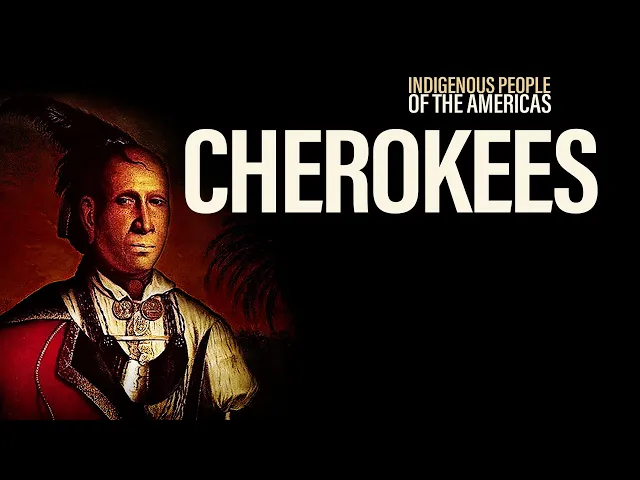
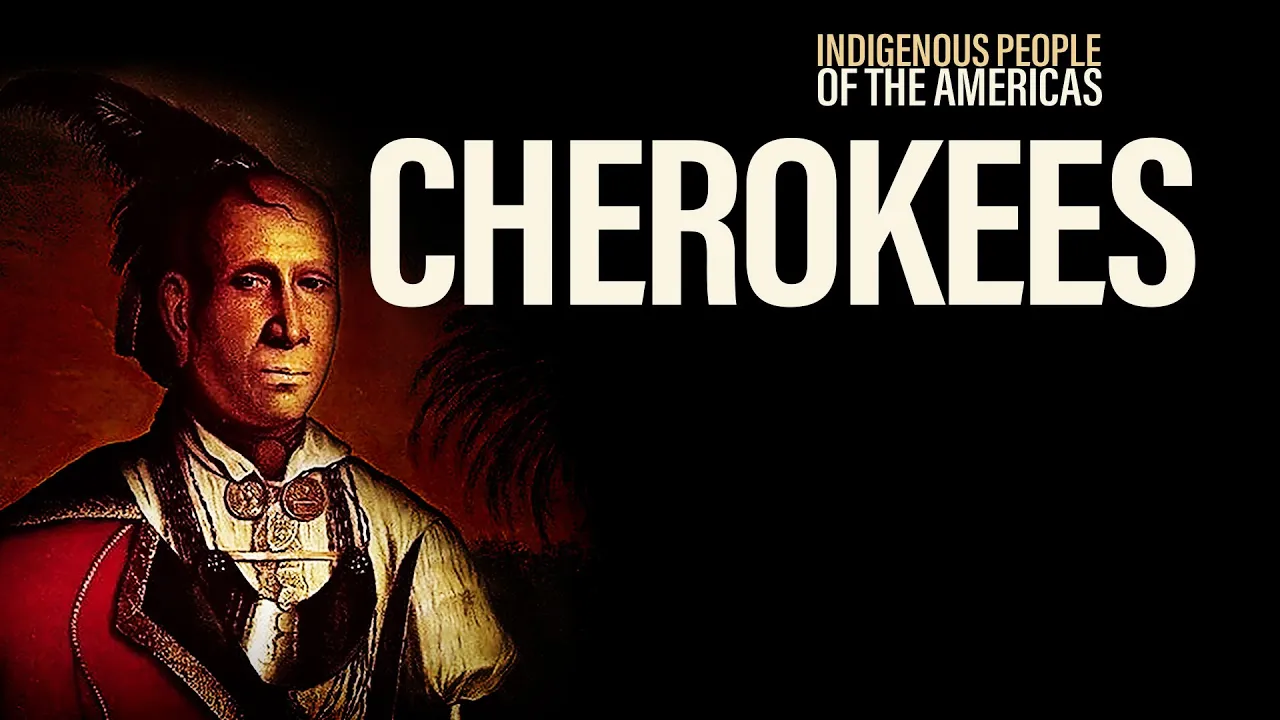
There were several tribes of people here way before every one of the historical boats and their captains pulled into various ports on every shore. One of them were the Cherokee, one of the indigenous people of the Americas. The Cherokee were one of the tribes of people who made their homes in the southeastern woodlands of the United States.
Before the 18th century, the Cherokee people were centralized in what is now southeastern Tennessee, southwestern North Carolina, northeastern Georgia, edges of western South Carolina and northeastern Alabama. The language is part of the Iroquoian language group. During the 19th century, James Mooney, an American ethnographer, recorded one spoken tradition that told of the Cherokee migrating south in ancient times from the Great Lakes region, where other Iroquoian speaking peoples resided.
However, according to leading anthropologist Thomas R. Wright, the origin of the Proto-Iroquoian language was probably the Appalachian region, and the split between northern and southern Iroquoian languages began somewhere around 4,000 years ago. During this same time period, European settlers in America classified the Cherokee of the southeast as one of the five civilized tribes, because they lived in permanent villages and began to adopt some cultural and technological practices brought here by said European-American settlers.
There are three Cherokee tribes which are federally recognized. The United Keetoowah Band of Cherokee Indians, known as the UKB in Oklahoma, the Eastern Band of Cherokee Indians in North Carolina, and the CN, the Cherokee Nation, who are located in Oklahoma. The Cherokee Nation has more than 300,000 tribal members, making it the largest of the 567 federally recognized tribes in America.
Additionally, numerous groups claim Cherokee ancestry, and some of these are state-recognized. A total of more than 819,000 people are estimated to claim having Cherokee ancestry on the US census, and this number includes people who are not enrolled members of any tribe. Of the three Cherokee tribes, the Cherokee Nation and the UKB have headquarters in Tahlequah, Oklahoma.
The UKB are mostly comprised of the descendants of old settlers, meaning they are made up of Cherokee who had migrated to Arkansas and Oklahoma around the year 1817 prior to Indian removal. These people are the direct descendants of the Cherokee that were later forceably relocated there in the 1830s because of the Indian Removal Act. The Eastern band of Cherokee Indians is on the Qualla Boundary in western North Carolina.
Their ancestors either fought or avoided relocation, thereby remaining in the area. Many theories have been explored as to the origin of the Cherokee name, but none of them have been proven. It may have originally come from the Choctaw word cha-la-kee, which means people who live in the mountains, or Choctaw chi-luk-ik-bi, meaning people who live in the cave country.
One of the earliest Spanish transliterations of the name from 1755 is recorded as Tchalaquei. Another belief is that the name Cherokee came from a Lower Creek word, Cvlakke. The Iroquois Five Nations based in New York have historically called the Cherokee Oyata-ge-ronon, which translates to inhabitants of the cave country.
It is also a possibility that the word Cherokee is derived from a Muscogee word, meaning people of different speech. So, what is the origin of the people themselves? Anthropologists and historians have two main theories regarding the origin of the Cherokee.
One is that the Cherokee, an Iroquoian-speaking people, are latecomers to the Southern Appalachia area, who could have migrated in late prehistoric times from northern areas around the Great Lakes, which was the usual territory of the Haudenosaunee Nations and other Iroquoian-speaking people. Another more simple theory is that the Cherokee had been in the southeast for thousands of years. 19th century researchers recorded conversations with Cherokee elders who recounted an oral tradition of the Cherokee people moving south from the Great Lakes region during the ancient times.
They may have migrated south into the Muscogee Creek territory and settled at the sites of mounds, which were built by the Mississippian culture and earlier mound builders. It was during these times that European-American settlers mistakenly credited several Mississippian culture sites in Georgia to the Cherokee, which included Moundville and the Etowah Mounds. However, there has been other bits of evidence which suggests that the Cherokee didn't reach this part of Georgia until sometime in the late 18th century, and as a result, couldn't have built the mounds.
Pre-contact Cherokee are thought to be part of the later Pisgah Phase of Southern Appalachia, which lasted from 1000 to 1500. Despite the consensus among most scholars in Southeast archeology and anthropology, scholars argue that the ancestors of the Cherokee people who lived in western North Carolina and eastern Tennessee for a far longer period of time. It is believed that in the late Archaic and Woodland Period, Native Americans in the region started to cultivate plants such as lambsquarters, marshelder, sunflowers, pigweed, and various types of native squash.
People created new art forms such as shell gorgets, embraced new technologies, and developed an intricate cycle of religious ceremonies. During the Mississippian culture-period, which took place from 800 to 1500 CE, local women created a brand-new variety of maize known as eastern flint corn. This new type of corn closely resembled modern corn, and was produced in larger crops.
The successful cultivation of corn crops allowed the rise of larger, more complex chiefdoms consisting of several villages and dense populations within this time period. Corn became celebrated by numerous people in religious ceremonies, especially in the Green Corn Ceremony. A lot of what is known about pre-18th century Native American cultures has come from the records of Spanish explorers and their journeys.
The earliest ones of the mid-16th century encountered people of the Mississippian culture, the ancestors to later tribes in the southeast, such as the Catawba and Muscogee. Specifically from the year 1540 to 1541, a Spanish expedition led by Hernando de Soto made its way through what was later characterized as Cherokee country by English colonists based on their now historical experience. De Soto's tribe-visited villages in present-day western Georgia and eastern Tennessee documented them as being ruled by the Coosa chiefdom.
It is now thought to be a chiefdom ancestral to the Muscogee Creek people that are from a cultural group and different language. The Spanish reported a Chalaque nation as living around the Keowee River where North Carolina, South Carolina, and Georgia meet. It should be noted that because some of this work wasn't translated into English until the 20th century, many different views have developed among English-speaking scholars and historians in relation to the limited understanding by English colonists of historic Native American cultures in the southeast.
Additionally, the dominance of English colonists in the southeast led to a discounting of Spanish sources for some time in their establishment of the history of the area. American writer John Howard Payne wrote extensively about pre-19th century Cherokee culture and society. These documents became known as the Payne Papers.
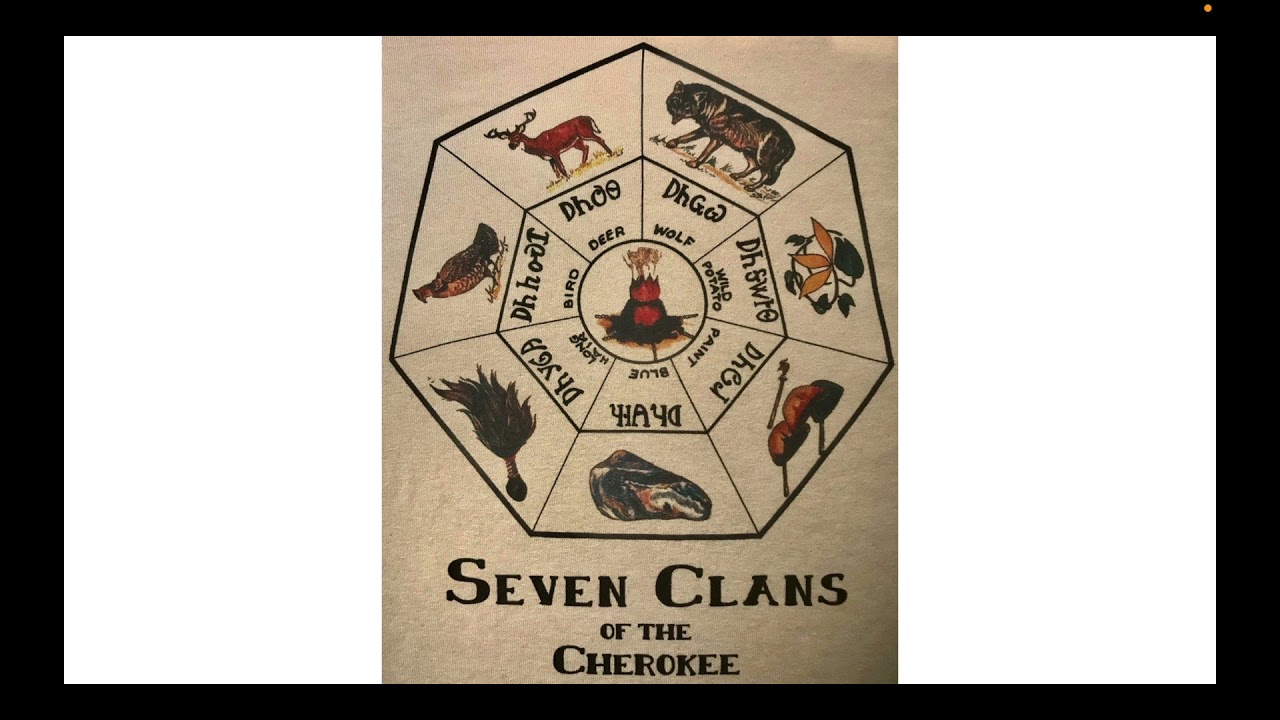
They tell of the account by Cherokee elders of a traditional two-part societal structure. A white group of elders represented the seven clans. According to Payne, this organization, which was priestly and hereditary, was responsible for religious activities such as healing, purification, and prayer.
A second group of younger men known as the red organization were responsible for all things pertaining to warfare. The Cherokee generally thought of warfare as a last resort, as they considered such violent practices a polluting activity. After warfare, the warriors were required to be purified by the priestly class before they could be reintegrated into normal village life.
This hierarchy disappeared long before the 18th century. Researchers have long debated the reasons for the change. There are historians who believe the drop in priestly power started with a revolt by the Cherokee against the mishandling of the priestly class known as the Ani-kutani.
Ethnographer James Mooney, who studied the Cherokee during the late 1880s, was the first to trace the decline of the former hierarchy directly to this uprising. By the time that Mooney was studying the people, a composition of Cherokee religious practitioners was far more informal and based more upon individual knowledge and ability than it was in heredity. Another vital source of early cultural history comes from materials written in the 19th century by Cherokee medicine men known as the Didanvwisgi, after Sequoyah's creation of the Cherokee syllabary during the 1820s.
At first, only the Didanvwisgi learned to read and write these materials, because they were considered to be extremely powerful in a spiritual sense. Later on, the syllabary and writings were largely adopted by the Cherokee people. Unlike most of the other Native Americans who were located in the American southeast at the beginning of the historic era, the Cherokee spoke an Iroquoian language, and this is believed to be a sign of their migration from another area.
Because the Great Lakes region was the territory of most Iroquoian-language speakers, scholars have speculated that the Cherokee had moved south from that region. This view is also supported by the Cherokee oral history tradition. According to the scholars' theory, the Tuscarora, another Iroquoian-speaking people who lived in the southeast during historic times, and the Cherokee broke off from the overall group during its northern migration.
Other historians believe that, judging from cultural data and linguistics, the Tuscarora people moved south from other Iroquoian-speaking people while in the Great Lakes region during ancient times. After a period of extended brutal warfare in the southeast during the 1700s, the Tuscarora left the area and returned to the New York area, considering their tribal migration complete by the year 1722. The Iroquois Five Nations accepted the Tuscarora as the Sixth Nation of their political confederacy, which became known as the Haudenosaunee.
Linguistic study reveals a relatively large difference between Cherokee and the northern Iroquoian languages, suggesting they had migrated long ago. Scholars hypothesize that a split between the groups in the distant past perhaps took place anywhere from 3500 to 3800 years ago. Glottochronology studies suggest that this split occurred between about 1500 and 1800 BCE.
The Cherokee have said the ancient settlement of Kituwa on the Tuckasegee River as the original Cherokee settlements in the southeast. It was once adjacent to and is now part of Qualla Boundary, the reserve of the Eastern Band of Cherokee Indians in North Carolina. In the year 1657, there was strife in Virginia Colony as the Siouan Manahoac and Nahyssan, as well as the Rechahecrians or Rickahockans, broke through the frontier and settled near the Falls of the James, near present-day Richmond, Virginia.
The next year, the combined force of English and Pamunkey banded together and collectively drove the newcomers away. The identity of the Rechahecrians has been debated for many years. Historians and scholars alike have noted that the name closely resembles that recorded for the Eriechronon or Erielhonan, which is mainly known as the Erie tribe, another Iroquoian-speaking people based near the Great Lakes.
This Iroquoian people were driven away from the southern shore of Lake Erie in the year 1654 by the powerful Iroquois Five Nations, who at the time were seeking to expand their hunting grounds. Anthropologist Martin Smith suggested that some remnants of the tribe migrated to Virginia after the wars, later becoming known as the Westo to English in the Carolina colony. A handful of scholars had suggested that this tribe was indeed the Cherokee.
Before the end of the 17th century, Virginian traders developed a small-scale trading system with the Cherokee in the Piedmont. The earliest recorded Virginia trader who lived among the Cherokee was Cornelius Dougherty or Dority in the year 1690. The Cherokee were among the Native American peoples that sold the traders Indian slaves for use as workers in Virginia and further north.
They took them as captives in raids on enemy tribes. In the 18th century, the Cherokee offered sanctuary to a band of Shawnee in the 1660s, but from 1710 to 1715, the Cherokee and Chickasaw became allies with the British and fought the Shawnee, who were at the time allied with the French, and forced them to move northward. The Cherokee quarreled with the Catawba, Yamasee and British in late 1712 and early 1713 against the Tuscarora in the Second Tuscarora War.
The Tuscarora War was the beginning of a British-Cherokee relationship that, despite breaking down on occasion, remained strong for much of the century. The deerskin trade became very popular, and the Cherokee were considered valuable trading partners, because deer skins from the cooler country of their mountain hunting grounds were of a higher quality than those which were supplied by the lowland tribes, who were neighbors of the English colonists. In January of 1716, the Cherokee killed a delegation of Muscogee Creek leaders at the town of Tugaloo, and that incident marked their entry into the Yamasee War.
This conflict ended in 1717 with peace treaties between the colony of South Carolina and the Creek. However, hostility and surprise raids between the Cherokee and Creek went on for decades. These raids came to a boiling point at the Battle of Taliwa in 1755, known present-day as Ball Ground, Georgia, with the defeat of the Muscogee.
During the year 1721, the Cherokee relinquished lands in South Carolina. In the year 1730, at Nikwasi, a former Mississippian culture site, a Scots adventurer named Sir Alexander Cuming had crowned Moytoy of Tellico as the Emperor of the Cherokee. Moytoy then agreed to recognize King George II of Great Britain as the Cherokee protector.
Cuming made plans to take several important Cherokee members, including Attakullakulla, to London, England. It was there that the Cherokee delegation signed the Treaty of Whitehall with the British. Amo-sgasite attempted to succeed him as Emperor in 1741, but the Cherokee elected their own leader, Conocotocko of Chota.
Political power among the Cherokee remained scattered, and towns acted autonomously from one another. In 1735, the Cherokee were thought to have 64 towns and villages, and 6,000 warriors who were trained and ready to fight. In 1738 and 1739, a smallpox epidemic broke out among the Cherokee, and this led to a disastrous time for the tribe, as they had no natural immunity to this new brutal and infectious disease.
As a result of the epidemic, nearly half their population died within a year. Hundreds of other Cherokee sadly committed suicide due to their losses and disfigurement from the disease. From the years 1753 to 1755, battles broke out between the Cherokee and Muscogee over the hunting grounds in north Georgia.
The Cherokee were victorious in the Battle of Taliwa. British soldiers built forts in Cherokee country to defend them against the French in the Seven Years' War, which was fought across Europe. On the North American front, this battle was known as the French and Indian War.
In 1756, the Cherokee were allies of the British in the French and Indian War. Very serious misconceptions arose quickly between the two allies, resulting in the 1760 Anglo-Cherokee War. After the Anglo-Cherokee War, resentment remained between the two groups.
It was during this time in the year 1765 which Colonial Anglo-American officer, journalist and cartographer, Henry Timberlake, took three of the former Cherokee enemies to London to help cement the newly declared friendship. Timberlake recorded the way in which he saw the Cherokee people in the year 1761. "The Cherokees are of a middle stature, of an olive color, though generally painted, and their skins stained with gunpowder, pricked into it in very pretty figures.
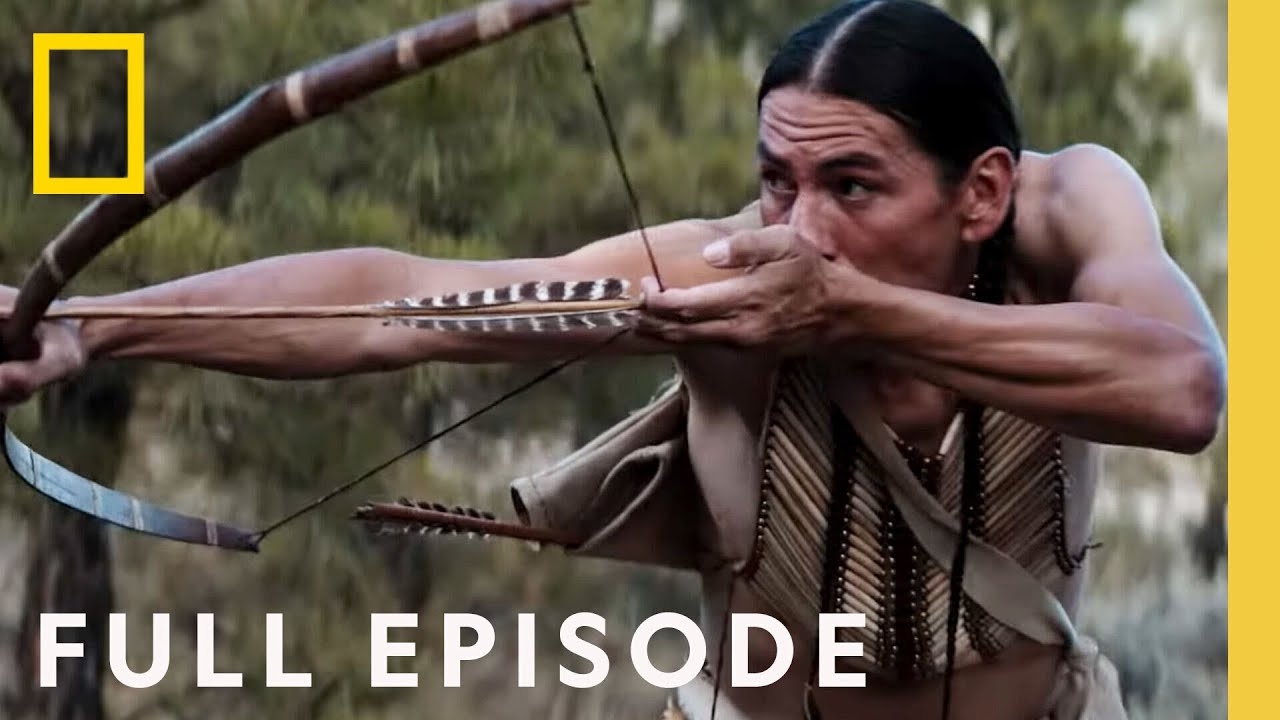
The hair of their head is shaved, though many of the old people have it plucked out by the roots, except a patch on the hinder part of the head, about twice the bigness of a crown piece, which is ornamented with beads, feathers, wampum, stained deer's hairs, and such like baubles. The ears are slit and stretched to an enormous size, putting the person who undergoes the operation to incredible pain, being unable to lie on either side for nearly forty days. To remedy this, they generally slit but one at a time, so soon as the patient can bear it, they wound around with wire to expand them, and are adorned with silver pendants and rings, which they likewise wear at the nose.
This custom does not belong originally to the Cherokees, but taken by them from the Shawnese, or other northern nations. They that can afford it wear a collar of wampum, which are beads cut out of clam shells, a silver breast-plate, and bracelets on their arms and wrists of the same metal, a bit of cloth over their private parts, a shirt of the English make, a sort of cloth-boots, and moccasins, which are shoes of a make peculiar to the Americans, ornamented with porcupine quills, a large mantle or match-coat thrown over all complete their dress at home. " As a means to calm the turbulent waters, King George III's Royal Proclamation of 1736 forbade British settlements west of the Appalachian crest, as his government tried to afford some protection from colonial encroachment to the Cherokee and other tribes.
However, the Crown found the ruling extremely hard to enforce with colonists. In 1771 to 1772, North Carolinian settlers squatted on Cherokee lands in Tennessee, forming the Watauga Association. American folklore hero, pioneer, explorer, woodsman and frontiersman Daniel Boone and his party tried to settle in Kentucky, but the Shawnee, Mingo, Delaware and some Cherokee attacked a scouting and forage party that included Boone's son.
The American Indians used this territory as a hunting ground by right of conquest. It had hardly been inhabited for years. The conflict in Kentucky sparked the beginning of what was known as Dunmore's War, and this battle raged on from 1773 to 1774.
Allied with the Shawnee led by Cornstalk, Cherokee then attacked settlers in Virginia, South Carolina, Georgia and North Carolina in the Second Cherokee War in 1776. An Overhill Cherokee named Nancy Ward, Drgging Canoe's cousin, warned settlers of impending attacks. Provincial militias retaliated by destroying more than 50 Cherokee towns.
In 1776 and 1780, North Carolina militias invaded and demolished the Overhill towns. In 1777, surviving Cherokee town leaders signed treaties with the new states. Cherokee war chief Drgging Canoe and his band settled along Chickamauga Creek near present-day Chattanooga, Tennessee, where they established 11 new settlements.
Chickamauga Town was his headquarters and the colonists tended to call his entire band the Chickamauga to tell them apart from other Cherokee. It was from here that Drgging Canoe fought a guerrilla war against settlers, which lasted nearly two decades from 1776 to 1794. These are casually known as the Cherokee-American wars.
The first Treaty of Tellico Blockhouse was signed on November 7, 1794, and it finally brought peace between the Cherokee and Americans that achieved independence from the British Crown. Then in 1805, the Cherokee relinquished their lands between the Cumberland and Duck rivers, known as the Cumberland Plateau, to Tennessee. During the 19th century, Cherokee lands between the Tennessee and Chattahoochee rivers were far enough from white settlers to stay independent after the Cherokee-American wars.
The deerskin trade took a tremendous hit, as it was no longer feasible on their greatly reduced lands, and as a result, over the next few decades, the people of the fledgling Cherokee Nation started to build a new society modeled on the white southern United States. America's first President, George Washington, wanted to civilize southeastern American Indians through programs overseen by the Indian Agent Benjamin Hawkins. Washington encouraged the Cherokee to abandon their communal land-tenure and instead settle on individual farmsteads, which were made possible by the destruction of many American Indian towns during the American Revolutionary War.
The deerskin trade had brought white-tailed deer near to the brink of extinction, and as pigs and cattle were introduced, they became the main sources of meat. The American government supplied the tribes with spinning wheels and cotton-seed, and men were taught to both fence and plow the land. This was in stark contrast to their traditional division in which crop cultivation was primarily a woman's labor.
Americans taught the women the fine art of weaving. Eventually, Hawkins helped them set up smithys, gristmills and cotton plantations. The modernization of the Cherokee tribe had officially begun.
The Cherokee put together a national government under Principal Chiefs Little Turkey, who reigned from 1788 to 1801, Black Fox, who reigned from 1801 to 1811, and Pathkiller, who reigned from 1811 to 1827. They were all former warriors of Drgging Canoe. The Cherokee triumvirate of an influential Cherokee leader, James Vann and his protege The Ridge and Charles R.
Hicks, called for formal education, acculturation, and more modern methods of farming. In 1801, they invited Moravian missionaries from North Carolina to teach Christianity and the arts of civilized life to Cherokee settlements. The Moravians and later Congregationalist missionaries ran boarding schools, and certain students were educated at the American Board of Commissioners for Foreign Missions School in Connecticut.
In 1806, a federal road from Savannah, Georgia to Knoxville, Tennessee was built through Cherokee land. Chief James Vann opened a tavern, an inn and ferry across the Chattahoochee and built a cotton-plantation on a spur of the road from Athens, Georgia to Nashville. His son, Rich Joe Vann, developed the plantation to 800 acres, and it was cultivated by 150 slaves.
He exported cotton to England and owned a steamboat on the Tennessee River. The Cherokee allied with the U. S.
against the nativist and pro-British Red Stick faction of the Upper Creek in the Creek War during the Great War of 1812. Cherokee warriors led by Major Ridge played a major role in General Andrew Jackson's victory at the Battle of Horseshoe Bend. Major Ridge then moved his family to Rome, Georgia, where he built a substantial house, developed a large plantation and ran a ferry on the Oostanaula River.
Although he never learned English, he sent his son and nephews to New England to be educated in mission schools. His interpreter and protege Chief John Ross, the descendant of several generations of Cherokee women and Scots fur-traders, built a plantation and operated a trading firm and ferry at Ross' Landing, Chattanooga, Tennessee. During this time, conflicts arose between the acculturated elite and the great majority of Cherokee, who clung to traditional ways of life.
Around 1809, American and Cherokee academic named Sequoyah began developing a written form of the Cherokee language. He spoke no English, but his experiences as a silversmith dealing regularly with white settlers, and as a warrior at Horseshoe Bend, led him to be convinced that the Cherokee needed to develop writing. It was in 1821 that he introduced Cherokee syllabary, the first written syllabic form of an American Indian language outside of Central America.
Originally, this innovation was opposed by both Cherokee traditionalists and white missionaries, who sought to encourage the use of English. When Sequoyah taught children to read and write with the syllabary, he reached the adults. By the 1820s, the Cherokee had a higher rate of literacy than the whites around them in Georgia.
The Cherokee began holding council meetings at New Town at the headwaters of the Oostanaula, near present-day Calhoun, Georgia. In November 1825, New Town became the capital of the Cherokee Nation, and was renamed New Echota, after the Overhill Cherokee principal town of Chota. Sequoyah's syllabary was officially adopted.
They had developed a police force, a judicial system, and a National Committee. In 1827, the Cherokee Nation drafted a Constitution modeled on the used by the United States. It saw executive, legislative and judicial branches and a newly implemented system of checks and balances.
This two-tiered legislature was led by Major Ridge and his son John Ridge. Convinced the tribe's survival required English-speaking leaders who could negotiate with the U. S.
, the legislature appointed John Ross as its Principal Chief. A printing press was established at New Echota by the Vermont missionary Samuel Worcester and Major Ridge's nephew Elias Boudinot, who had taken the name of his white benefactor, a leader of the Continental Congress and New Jersey Congressman. They translated the Bible into Cherokee syllabary.
Boudinot himself published the first edition of the bilingual Cherokee Phoenix, the first American Indian newspaper, in February of 1828. After the Civil War, the United States government required the Cherokee Nation to sign a new treaty because of its alliance with the Confederacy. The US required the 1866 Treaty to provide for the emancipation of all Cherokee slaves, and full citizenship to all Cherokee Freedmen and all African Americans who chose to continue to live within tribal lands, so that they shall have all the rights of native Cherokees.
Both before and after the Civil War, some Cherokee intermarried or had relationships with African Americans, just as they had with whites. Many Cherokee Freedmen have been active politically within the tribe. The US government also acquired easement rights to the western part of the territory, which became the Oklahoma Territory, for the construction of railroads.
By the late 19th century, the government believed that Native Americans would be better off if each family owned its own land. The Dawes Act of 1887 provided for the breakup of commonly held tribal land into individual household allotments. Native Americans were registered on the Dawes Rolls and allotted land from the common reserve.
The US government counted the remainder of tribal land as surplus and sold it to non-Cherokee individuals. In 1898, The Curtis Act dismantled tribal governments, courts, schools, and other civic institutions. For Indian territory, this meant termination of the Cherokee courts and governmental systems.
This was deemed necessary before the Oklahoma and Indian territories could be admitted as a combined state. In the year 1905, the Five Civilized Tribes of the Indian Territory proposed the creation of the State of Sequoyah as one to be exclusively Native American, but failed to gain the support that it needed in Washington, D. C.
In 1907, the Oklahoma and Indian Territories entered the union as the state of Oklahoma. By the late 19th century, the Eastern Band of Cherokee were laboring under the constraints of a segregated society. In the aftermath of Reconstruction, conservative white Democrats regained power in North Carolina and other southern states.
They went on to effectively disenfranchise all blacks and many poor whites by new constitutions and laws which were related to voter registration and elections. They passed Jim Crow laws that divided society into white and colored, mostly to control Freedmen. Cherokee and other Native Americans were classified on the colored side of the spectrum, and suffered the same racial segregation and disenfranchisement as former slaves.
This also led to the loss of their historical documentation for identification as Indians when the Southern states classified them as colored. Blacks and Native Americans would not have their constitutional rights as US citizens enforced until after the Civil Rights Movement secured passage of civil rights legislation in the mid-1960s, and the federal government began to monitor voter registration and elections, as well as other programs. From 1906 to 1975, the structure and function of the tribal government were defunct, except for the purposes of department of the interior management.
It was in 1975 that the tribe drafted a constitution, which they ratified on June 26, 1976, and the tribe finally received federal recognition. In 1999, the CN changed or added several propositions to its Constitution, among them the designation of the tribe to be Cherokee Nation, dropping of Oklahoma. According to a statement by Bureau of Indian Affairs head Larry Echo Hawk, the Cherokee Nation is not the historical Cherokee tribe, but instead, it is a successor in interest.
The modern Cherokee Nation in recent times has experienced an almost unprecedented expansion in economic growth, equality and prosperity for its citizens. The Cherokee Nation, under the leadership of Principal Chief Bill John Baker, has enjoyed significant business, corporate, real estate and agricultural interests. The CN controls Cherokee Nation Entertainment, Cherokee Nation Industries and Cherokee Nation Businesses.
The CN has constructed health clinics throughout Oklahoma, contributed to community development programs, built roads and bridges, constructed learning facilities and universities for its citizens. It has instilled the practice of gadugi, a term used in the Cherokee language, which means working together and self-reliance in its citizens, revitalized language emersion programs for its children and youth, and is a powerful and positive economic and political force in eastern Oklahoma. The Eastern Band of the Cherokee Indians in North Carolina led by Chief Richard Sneed hosts over a million visitors a year to cultural attractions of the 100 square mile Sovereign Nation.
The reservation, the Qualla Boundary, has a population of over 8,000 Cherokee, primarily direct descendants of Indians who managed to avoid the Trail of Tears. The Cherokee Nation also participates in numerous joint programs with the Eastern Band of Cherokee Indians. It also participates in cultural exchange programs and joins tribal council meetings involving counselors from both Cherokee tribes.
These are held to address issues affecting all of the Cherokee people. The most Cherokee people are concentrated in Oklahoma and North Carolina, but some reside on the west coast of the United States due to economic migrations caused by the dust bowl during the Great Depression. Job availability during the second World War and the Federal Indian relocation program during the 1950s and 1960s.
Cherokees make up over 2% of the population of three largely rural communities in California, Covelo, Hayfork and San Miguel, one town in Oregon and one town in Arizona. Destinations for Cherokee relocation included multi-ethnic racial urban centers of California, for example, the Greater Los Angeles and San Francisco Bay areas. They usually live in farming communities, by military bases and other Indian reservations.
In 2000, the U. S. census reported 875,276 people self-identified as Cherokee Indian.
However, only 316,049 people were enrolled in the federally recognized Cherokee tribes. To date, there are over 200 groups who claim to be Cherokee Nations, tribes, or bands. Cherokee Nation spokesman Mike Miller has suggested that some groups, which he calls Cherokee Heritage Groups, are championed.
Others, however, are controversial for their attempt to gain economically through their claims to be Cherokee. The three federally recognized groups assert themselves as the only groups having the legal right to present themselves as Cherokee Indian Tribes, and only their enrolled members as Cherokee. One exception to this rule may be the Texas Cherokees.
Before 1975, they were considered a part of the Cherokee Nation, as reflected in briefs filed before the Indian Claims Commission. At one time, W. W.
Keeler served not only as Principal Chief of the Cherokee Nation, but at the same time held the position as Chairman of the Texas Cherokee and Associated Bands, known as the TACB Executive Committee. Following the adoption of the Cherokee constitution in 1976, TCAB descendants whose ancestors had remained a part of the physical Mount Tabor Community in Rusk County, Texas were excluded from citizenship. Their ancestors didn't appear on the Final Rolls of the Five Civilized Tribes, registered under the Dawes Commission.
However, most if not all TCAB descendants did have an ancestor listed on either the Guion-Miller or Old Settler rolls. While most Mount Tabor residents returned to the Cherokee Nation following the death of John Ross in 1866, today there is a large group that has been well documented but acting outside of that body. To date, it is not actively seeking a status clarification.
They do have treaty rights going back to the Treaty of Bird's Fort. From the end of the Civil War until 1975, they were associated with the Cherokee Nation. The TCAB was formed as a political organization in 1871, led by William Penn Adair and Clement Neely Vann.
Descendants of the Texas Cherokees and the Mount Tabor Community joined together to try to gain redress from treaty violations, stemming from the Treaty of Bowles Village in 1836. Today, most Mount Tabor descendants are in fact members of the Cherokee Nation. Only some 800 members are stuck in limbo without status as Cherokees.
Many of them still reside in the Rusk and Smith counties of east Texas. Other remnant populations continue to exist throughout the southeast United States and individually in the states surrounding Oklahoma. Many of these people trace descent from persons enumerated on official rolls such as the Guion-Miller, Drnnan, Mullay and Henderson rolls, among others.
Other descendants trace their heritage through the treaties of 1817 and 1819 with the federal government, which gave individual allotments to Cherokees. State recognized tribes require varying levels of genealogical proof that applicants are actually of Cherokee descent. Current enrollment guidelines of the Cherokee Nation of Oklahoma have been approved by the Bureau of Indian Affairs.
These facts were pointed out by Cherokee citizens of CN during the Constitutional Convention held to ratify a new governing document, the document that was eventually approved by a small portion of the electorate. However, the tribe does not have the power to change its membership procedures and maintain federal recognition. Any changes to the tribe's enrollment procedures must be approved by the Department of Interior.
The Cherokee Freedmen, descendants of African American slaves owned by citizens of the Cherokee Nation during the Antebellum Period, were first guaranteed Cherokee citizenship under a treaty with the United States in 1866. This was in the wake of the American Civil War, when the US emancipated slaves and passed US constitutional amendments granting Freedmen citizenship in the United States. On March 3, 2007, a constitutional amendment was passed by a Cherokee vote, limiting citizenship to Cherokees on the Dawes Roll for those listed as Cherokee by blood on the Dawes roll, which did not include partial Cherokee descendants of slaves, Shawnee and Delaware.
The Cherokee Freedmen had 90 days to appeal this amendment vote, which disenfranchised them from Cherokee citizenship, and file appeal within the Cherokee Nation Tribal Council, which is currently pending. On May 14, 2007, the Cherokee Freedmen were reinstated as citizens of the Cherokee Nation by the Cherokee Nation Tribal Courts through a temporary order and temporary injunction until the court reached its final decision. On January 14, 2011, the tribal district court ruled that the 2007 constitutional amendment was invalid because it conflicted with the 1866 treaty guaranteeing the Freedmen's rights.
There will likely never be a true resolve found for the Cherokee people. They have suffered as much as they've prospered, and maybe their plight should serve as a cautionary tale to be applied to the immigration nightmare happening right now. If history has proved anything, it's that the Cherokee are a proud people who are as tough as they come.
Maybe in the end, that is the true meaning of the word Cherokee, resiliency unmatched, the kind that serves only to be admired for generations to come.