You don't have as much money as you want. But it's not always because you don't earn enough. That's a lie that they've been telling us.
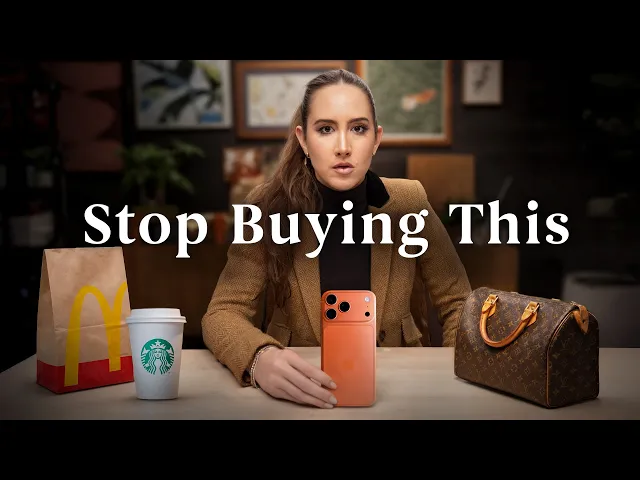
It's not these big one-off purchases that are draining your account. It's the everyday spending habits we've normalized without question. I've pulled the numbers and the stats on the most common ways people waste their money and how rich people never do this.
This is where your money is actually going and entire society is set up to steal it from us. Let's get into it. First one I want to talk about is there is a giant huge cost to being fat, which sucks and is inappropriate to say on the internet.
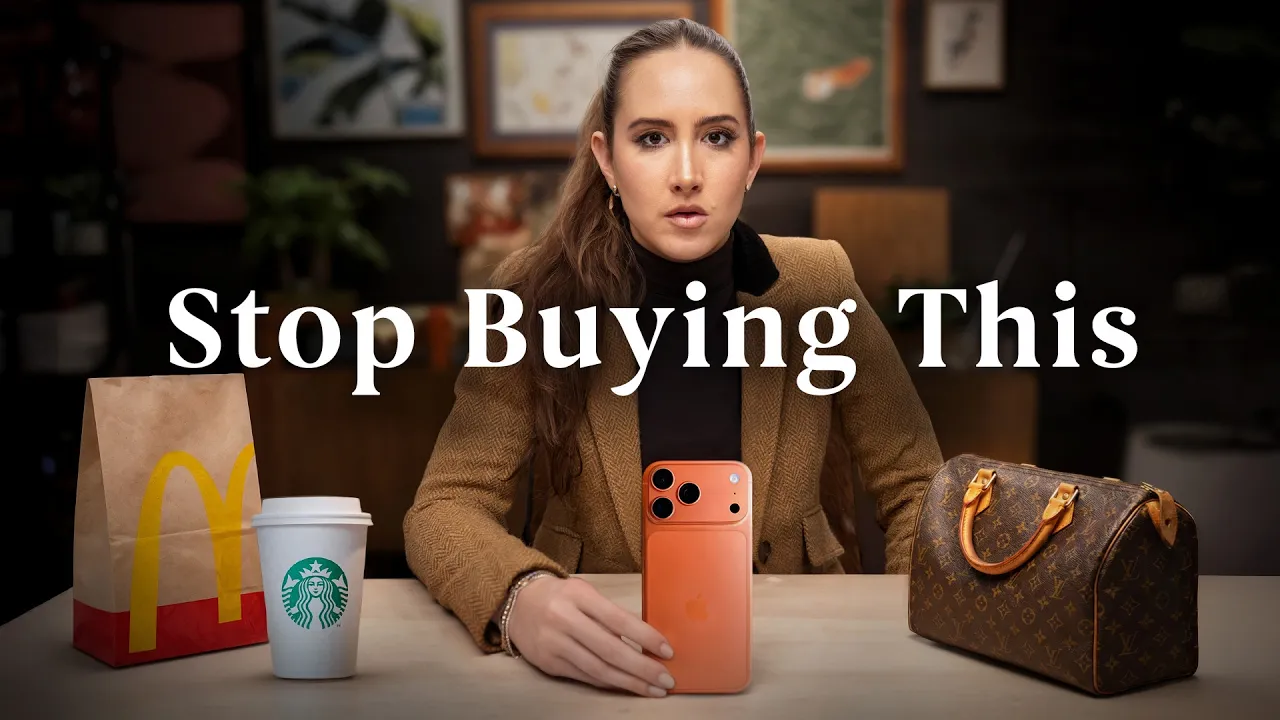
But the one thing that we've got to stop pretending is that fast food and bad for you food is cheap. It is actually the most overpriced, undernutritious scam Americans ever fell for in history. People think they're saving money by grabbing a $6, $12 combo meal.
>> Your kids will love McDonald's Happy Meal. >> But you got to wake up. You're actually paying restaurant prices for ingredients that legally don't even have to qualify as food.
85% of fast food menus ultrarocessed industrial sludge oils that could also power an automobile or be used to involve somebody. And it's actually getting worse and it's stealing your money in ways you don't realize. Fast food prices are rising faster than actual grocery prices.
>> Customers making $45,000 a year and less are ditching their Mickey D's and buying groceries instead. >> So, you're not actually buying convenience. You're buying inflation with extra salt.
There are three fast food meals a week most Americans eat. And if that's you, you just spent $1,500 to $2,300 a year on food that is actually probably going to make it harder for you to make more money. Let me tell you why.
And this is not judgment. We just need to be honest here about the math. It's not just health problems, medications, miswork, lower energy, blah blah blah.
It is that fast food pretends to be cheap. And between the premium pricing and the addiction, if you want to save money, you also need to think about how you look. The data says that if you wear makeup and are fitter, you earn somewhere between 15 to 30% more than somebody who wears no makeup or is less fit.
And this is across men and women. Number two, weddings. You're out of your mind if you spend one more penny than $5,000, unless you make a million plus a year.
I got married in a parking lot when I was worth 8 figures plus. I bought a $150 dress off of anthropology. I bought my roses at the grocery store.
The modern wedding isn't a celebration. This is financial cosplay, you guys. We've normalized this absurd idea that the best day of your life should cost the same as a Tesla.
You want it, sure, but maybe you want it because everybody else expects it. The average wedding in the US is $30,000 to $50,000. Now, we think that's normal.
So, they've turned your love into a luxury product. And here's the part nobody wants to admit. Most of what you're paying for is pure performance.
A 6-hour Instagram shoot disguised as a party. The cool part is a bunch of young people are waking up. Gen Z is like, "Nah, I'm out.
Cap. I don't know. " But they are doing less big number weddings than ever.
All over the country, we're seeing an increase anywhere from a third or more are considering $5,000 alopments, backyard ceremonies, thrifted rings, eBay dresses. The founder of Spanx, she's a billionaire. She gives away her wedding dress to people to reuse, and they use the dress again and again.
These vendors adjusted for inflation double what they would charge somebody who wasn't in a wedding because we're emotionally overwhelmed once we go to get married. We're like in La La Land. We're in love.
All of a sudden you're like spending like $25 on place cards. Yeah. Do you want, you know, the $15 thread count or do you want the what?
There's a thread count on like paper. Who the knew that? There's actual data that shows us the cheaper the wedding, the longer the marriage.
So, I know you're seeing all the billionaires have these crazy weddings and that's sick and good for them and great pictures, but that's cuz they don't actually care about the price. A luxury price tag to them is like going to Costco for us. >> Welcome to Costco.
I love you. >> This is your permission from me. You don't need a ballroom.
You don't need a $12,000 flower arch. You need one thing, a marriage that lasts longer than your credit card payments paying it off. I know, shocking.
Send this to your husband or wife, by the way, and say, "It's Cody's fault that we are going to have a cheaper wedding. And by the way, use the down payment to buy a house so that you actually have a non-depreciating asset. " Next, anybody who buys a Lamborghini is more likely to steal your money than make you money.
I This is a hill I will die on. Brand new fancy cars is the most socially accepted way to set your money on fire. People don't buy new cars because they need them.
They buy new cars because they want strangers at stoplights to think they're successful. Nice car. >> A new car loses 40% of its value in 3 years.
40%. You could literally throw dollar bills out the window. Lose money slower than that.
And according to the AAA, the average cost of owning a car in 2025 is $11,577 a year. And the biggest chunk of that isn't fuel, insurance, or maintenance. It's depreciation.
So it's like you pay for the privilege to watch your car lose value faster than your enthusiasm for it. So here's the irony. Leasing is not the solution either.
Leasing is just renting a car long-term with a smile slapped on the paperwork. Dealers are going to pitch it to you like you're getting more car for less money for the love of all that's holy. Please don't trust them.
>> Transmission shot, bumpers have fallen off. What do I do with her? >> I sell her.
>> You will realize you spent 3 years making payments and you walk away with nothing. This is going to piss so many people off. In fact, today I was just walking around Grinch Cody on the internet yelling at people when they have happy moments.
>> What's the matter WITH YOU? YOU SOME KIND OF WILD ANIMAL. >> Somebody who I really like on the internet.
I won't say who. She bought a pink G Wagon. I just I couldn't help it.
Usually I don't, but I just said, "No, don't buy another depreciating asset. " Then they started to go, "Well, section 179 of the US tax code, [ __ ] I know. You don't think I know the tax code?
You're at the highest tax bracket if you can afford that car, which means you're taxed at 37%. " Which means all you can sign off is off to the 37% tax bracket. So yeah, brilliant [ __ ] strategy.
You spent $100,000 to make 37? What the? Anyway, I nicely smiley faced and opted out of that conversation.
No, you could buy these fancy G Wagons. You can get a 100% tax deduction. Yeah, until Uncle Sam comes knocking.
Your corporate work truck is a pink G Wagon. The are you talking about? You have to prove that the car is actually used for work.
I don't know about you, but I don't want to fight with the government even if I don't like them. Simultaneously, used cars are out here like, "Hey, I've already depreciated. " You know, a nice little well-maintained used car.
Hold on to it for years. Suddenly, you're the weirdo with extra cash and no car payment. You could call it vintage.
My husband and I, he's had one of his trucks, 100,000 miles. When we were done with that truck, you know what we did with it? We gave it to my dad.
Now he drives it. That's what Latinos do. We keep the cars until they turn into beaters.
Be an adult. If you're not already wealthy, buying a brand new car is a flex you cannot afford. Period.
College degrees. College is the most expensive lottery ticket in America. And we all know the lottery tickets make you no money.
So, what the are we doing except asking for a participation ribbon? Tuition, fees, living expenses. And 4 years of not earning real money is actually around $180,000.
You could actually buy a house. You could start a business. You could invest and retire early, but sure, spend it on group projects, textbooks, and like networking.
What? Maybe if you're in engineering or computer science, that's a solid ROI. If you're in medicine, sure.
If you're an attorney, sure. I swear to God, you guys, if you go into a dance college degree, I mean, I just, come on, I'll have a teacher who hasn't done it in 20 years teach me instead of learning it on YouTube. Pew found that only 22% of people think a degree is worth it if you need loans to get it.
For a lot of grads, the only thing college guarantees is debt and disappointment. And you know, I have one from Georgetown, but guess what? My company paid for it.
So if your company pays for it, have at it. Go have a boondoggle. You don't get paid for having a diploma.
You get paid for having skills, trades, apprenticeships, boot camps, real world experience. This costs less, takes less time, and actually doesn't require donating a decade of your life to paying interest to some bank. The whole college equals success mindset is dead.
Like, skip the $180,000 degree. Buy my $20 book on Amazon about how to buy a business. Go to our Main Street Millionaire Live, which costs nothing to attend.
Three days of business buying, deal finding, operator level frameworks taught by people who have actually done it. You walk out with the tools you need immediately, not a diploma. You have to defend at Thanksgiving.
Sadly, boomers sold that dream because college used to cost the price of a lawn mower and a handshake. College works sometimes for some people, but you do realize you're just paying a six-figure cover charge to enter the real world. No better off than when you arrived.
Designer and luxury clothing. Most luxury fashion isn't a status symbol. It's financial self harm disguised as treat yourself.
>> Three words for you. Treat yourself. >> People love to say it's an investment piece.
I die. I die. I'm dead.
Even Kim Kardashian discounts her investment pieces on Kardashian's closet. If your investment is made of leather, canvas, or fabric, you got scammed with better lighting. A $2,000 handbag, a 900 pair of sneakers, a $15,000 Rolex.
If you want to buy a Rolex, buy a fake one because all you're doing is signaling and they look the exact same. You know, Ryan Sirhan on my podcast famously said he bought a fake Rolex. That's how he started and he wore it around.
It was a great investment. >> The fake Rolex for me was I was trying to find a way to enter rooms not as a broke kid and enter rooms as the person I wanted to become. >> I bought multiple fake watches when I was in China.
It's the same thing. I couldn't tell the difference between my real Rolex, my fake Rolex, my real Cardier, and my fake Cardier. And now what do I wear either, cuz who cares what you're wearing?
Luxury is the tax you pay for carrying what strangers think. And here's the funniest part. Half the people wearing this stuff, they don't feel successful.
They feel like they're impersonating somebody who is. Psychologists literally studied this. Luxury purchases often trigger imposttor syndrome.
One participant said wearing a diamond necklace made her feel shy because it didn't feel like her. She bought a status symbol instead of an identity, a costume basically. I think financially the whole industry is a joke.
Designer brands markup clothing 10 to a thousandx. Your 1500 designer hoodie cost about 60 bucks to me. The real flex now isn't wearing luxury.
It's refusing to get ripped off by it. The secondhand clothing market has exploded. $56 billion.
Coolest people in the room are wearing vintage finds that cost less than lunch. Not maxing out a credit card for a logo. Let me tell you, your girl Cody, she is not buying full price designer bags ever once in her entire life.
I've had it gifted to me and I'm kind of pissed. I'm like, nah, just give me the cash. I'll buy another laundromat.
Designer clothing doesn't make you look rich. It just makes you look like someone who overpays for validation. Smart money isn't on your wrist.
It's in your bank account. And the only reason this industry still exists is because people on the come up of wealth are sitting there flexing on top of the Gwagon. You know, they got the bracelets on, they got the Rolex.
They're trying to sell you something to the people who actually make all the money. They don't signal. Okay, this one's smaller, but it's kind of fun.
This is an easy one for you. Streaming channels. The crazy part about streaming is it was like supposed to save you money, right?
Like, if you're older like me, you had cable back in the day, which meant that you had all these combo things. It's like, do you want the 2x Sports plus the 5x cartoons on Saturday package? It's impossible to get rid of.
So, you got rid of cable. But now, it happens. Here's the scam of the century.
Streaming was marked as freedom, but they quietly rebuilt the exact same overpriced Frankenstein you try to escape from cable. The average person now pays $73 a month for streaming alone. One in four Americans are dropped in a hundred bucks to watch half of one season of something they forgot to finish.
Streaming is no longer cheaper than cable. It is cable just like chopped up into pieces and sold back to you. And like, by the way, when did they all start putting ads on?
Like, I pay for streaming and you give me ads. You open your email and all of a sudden you like somehow see a fee for a platform and you're like, "Oh, wow. I still subscribe to stars and you don't subscribe.
You're like being held hostage by autorenew. " If you can't list every subscription you have without checking your email, you're not subscribed. You're financially bleeding out.
So ask yourself, which apps do you actually watch every month? Which ones are you keeping because you're going to get around to that show someday? Because that someday is costing you thousands literally while your bank balance slowly evaporates in the background.
And here's a pro move most people overlook. Protect what you own. You can build cash flowing businesses, stack leverage, and reinvent your life.
But one accident, lawsuit, or didn't see that coming moment gets wiped out. Next Insurance makes it simple for small business owners to protect what they're building. It's fast, affordable, and tailored for owners like you.
From contractors to small shops, it keeps your business safe so you can focus on growth. You hop online, answer a few quick questions and you're covered. You even get an instant certificate of insurance so you can win bigger jobs without waiting on paperwork.
The smartest owners don't just grind, they protect what they've worked so hard on. Thanks to Next Insurance for sponsoring this video. Move fast and break things different when you actually own the thing you broke.
So protect your business here. I'm actually breaking the rules on this one and I'll say your daily coffee is something you're not wasting your money on. go meet somebody and make money.
Because here's the uncomfortable truth. You won't become wealthy by optimizing the cheapest part of your day. You become wealthy by optimizing the highest leverage parts of your life.
And some of the best opportunities in the world start with want to grab a coffee. >> Can I buy you a cup of coffee? >> Yeah.
Um okay. >> Partnerships, jobs, mentorships, investors, clients, ideas that turn into businesses and friendships. Won't you spend $6 to sit across from someone who could 100x your potential?
Let's not be frugal. Let's not penny pinch and disguise it as productivity. The entire specialty coffee industry could double prices tomorrow.
And if you do it right, it's still probably worth it. So stop obsessing over the cost of caffeine and start obsessing over the cost of missed opportunities. Your latte not the problem.
Your lack of leverages. This one's kind of niche. So important.
Please tune in, especially if you don't understand it. Startup equity. Startup equity is fake for 90% of companies.
They're keeping you poor by making you think their paper money is real. Every startup sells the same fantasy. You're not just an employee, you're an owner.
Maybe if this one company actually survives. People love to brag, I own 1% of a future billion-dollar company. Bro, after dilution, that 1% is going to be worth the same as that fancy hoodie you bought.
Let's talk numbers. 70% of funded startups never make it to their next round. Only 4% ever exit successfully.
And those exits, the investors get paid first, twice, and in full before employees see a dime. That 1% you think is life-changing, more like 0. 1% of whatever scraps are left after the preferred shares finish feasting.
Startup structures are usually designed like a financial hunger games. Investors get something called liquidation preferences, ratchets, adjustments, protection clauses that basically say employees eat last. So even if your startup does exit, and that's like a massive if, investors can literally walk away with millions while you walk away with a tax bill.
A tax bill for money you never made from exercising options that ended up not worth much or worthless. Harvard researchers created the 10% rule to simplify it. Take whatever you think your equity will be worth and give yourself 10% of that number.
And here's the part that really kills me. People who choose a startup because of massive upside, then get paid below market for years, burn out age 7 years and two, and walk away with equity worth less than the office ly budget. Meanwhile, their friends at stable companies were quietly stacking cash, getting promoted, sleeping like human beings.
Startup equity isn't usually compensation. It's hope. And if you want to gamble, fine.
But know the odds. You don't want to get paid in monopoly money. Spas, you know what I'm saying?
Like, don't buy your lady an expensive spa treatment. We don't care. They're a waste of money.
They barely rub you. They're like kind of touching you. Like, you want like a man like in there going like this to you.
>> So good, isn't it? >> So good. I don't know what I've done to deserve it.
>> Get us like a nice little Vietnamese massage for 20 bucks. You know, don't spend hundreds of dollars at the spa for your girlfriend or wife. Also, diamonds.
Fancy jewelry. What the >> girl? >> You know what the difference is with lab grown diamonds and real diamonds?
Lab grown diamonds are too perfect. That is literally why you know one is lab grown versus not. They go, "Oh no, that diamond's too good.
That's that's fake. Let's make it cheaper. " What?
Like who sold us this idea? I need to meet the diamond salesman. So tell your wife or girlfriend or whatever that you got her something nice and make it lab grown.
Also, I don't know, ladies, hand off in the comments, but you guys ever actually checked if your diamonds are real or not. >> These are fake. >> I think just go for the fake ones.
All right, alcohol. I want to talk about this one. I'm cool with it.
Also, I know this is controversial. I love me a glass of wine. If there's a mascow on site, I'm drinking it.
But there's one caveat. We should say no to shots. I think a shot cost you about an hour a day.
So, every time you do a shot, take your hourly wage, and the cost of the shot is not whatever the shot costs. It's the shot costs plus like 150 bucks plus, because it's going to take an hour of your life tomorrow. Your $6 latte isn't going to make you broke.
It's the $60,000 car, the overpriced degree, and the chasing status instead of stacking assets. Getting rich isn't about cutting the small stuff. It's about avoiding the big traps.
You do not budget your way to wealth. You earn your way there, but you stop having everybody else tell you what you should buy based on society. how you really make a ton of money is you learn to earn more and you learn to push back on a bunch ofing nonsense that other people tell you is necessary in order for you to look cool.
That's what owner Nation is where you guys are. That's how we help people at Contrarian Academy buy businesses because we know the real money is in the equity. The real cash flow is in getting ownership.
And if you want to become an owner with us, I got you. I'll even buy you a latte. Thank you for letting me rant at you.
I just want you guys to make more money and I don't want you to lose it and use it in stupid ways.