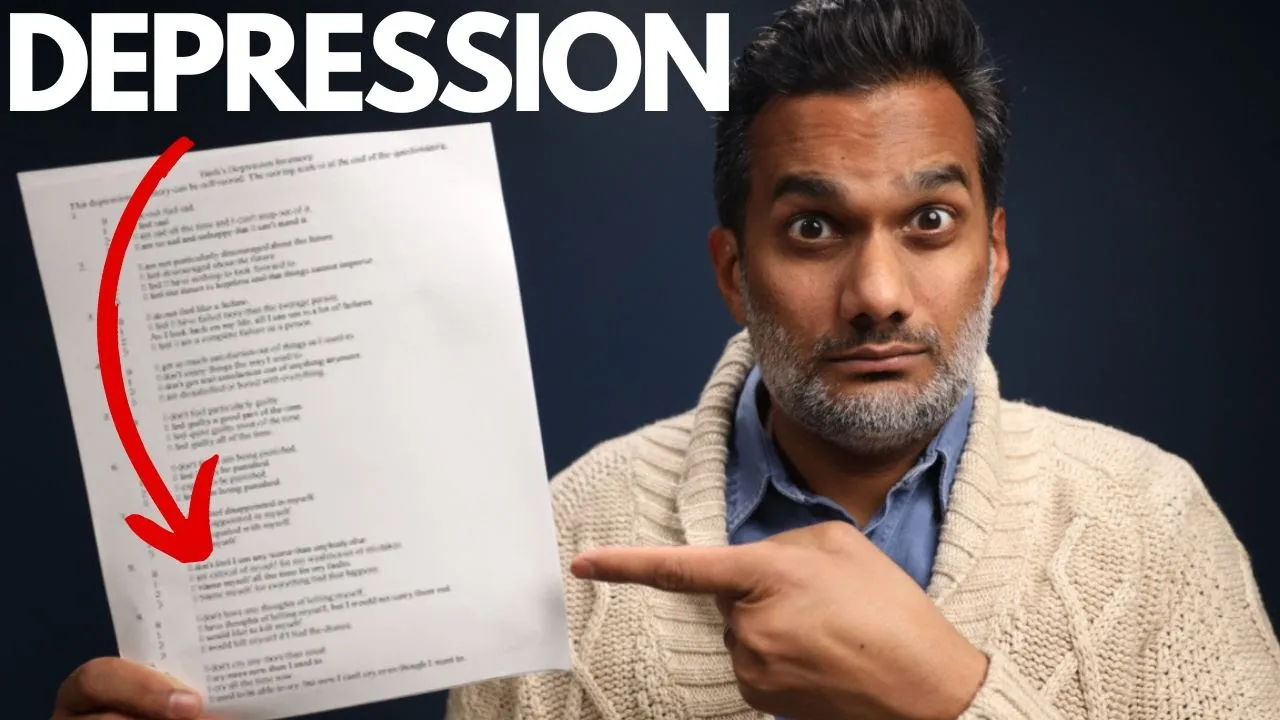
if you say yes to this question you might have depression hi I'm psychologist Dr alamatu helping you to live a more compassionate courageous and connected life a question I always get is how do I know if I'm sad or depressed and I'm gonna insert grief in there because it's often a part of the equation sadness is a temporary emotion it gets activated when we experience a loss or things aren't going the way we hoped they would you're the last one picked for a team sadness didn't get the job you applied for sadness your friend is
moving away sadness there are so many things that can make you feel sad but what sadness usually does is it brings down your energy it makes you want to be alone and it makes you more reflective this is different than other emotions like anger anxiety excitement those emotions rev you up we're built to experience sadness because in short bursts it's actually a good thing it helps you make sense of your loss why it's important to you and how to move forward if you're feeling sad because your friend is moving away that sadness can drive you
to make the most of the time that you still have together it can help you to make plans for how you're going to stay in touch when this person does move and it can make you recommitted to the people that are still there around you in your daily life if your sadness is about a goal you didn't achieve some time alone can help you to reflect on this and think about what happened and what you might want to do differently in the future sadness can usually come and go during the day and it can Peak
during times when you're reminded of this loss you've experienced time can really help when you're experiencing sadness and for a lot of people that might be all you need to get through it getting physically active can also be really helpful for me going on a walk riding my bike or playing with my kids all helped me to feel a little bit better you can also do something you're really good at so for me when I was a kid and I was the last one picked for a team at school I would come home and build
models they always help me to feel really good and my adult version of this is fixing things around house it makes me feel useful makes me feel like I've accomplished something what I find to be most helpful when I'm experiencing sadness is just connecting with my friends it doesn't mean I'm going to be talking about the thing that's making me sad but just being with them helps me to get my mind off stuff it helps me to get through those worse periods of sadness right moving beyond sadness let's talk about grief most people think about
grief only in terms of the death of a loved one but we can grieve all types of losses loss of a job a relationship an ability a way of life you can lose a precious object or your home going through the pandemic we all have something to grieve take this tweet for example imagine sitting down to watch a movie you love it and are enjoying it then with 20 minutes left to go it just shuts off and you never find out what happened that's what happened to my college experience there's no one way to experience
grief because grief does a lot of different things sadness because of a loss pain and yearning for something that you thought would be a part of your life for many years to come shock and confusion for something you never really thought would happen anger and resentment for something that doesn't feel Fair denial because you weren't ready for this or relief because there was so much pain for so long experiencing a loss like this can also make you question your identity and your role in life you've probably heard of the stages of grief and they kind
of map on to the things I'm talking about but the important thing to remember is there's no beginning middle and end to grief it's not a linear process you can bounce around all these different emotions all these stages and it looks more like a a soup of stuff grief can stick around for a long time there's no way to say here's exactly where grief should be ending because it really depends upon your background the circumstances of the loss the things you believe how much support you have in your environment your culture all that stuff but
if your grief sticks around for more than a year and also longer than what is culturally expected where you live and it's starting to get in the way of your life then you might be experiencing prolonged grief disorder people who are experiencing this are trapped in this cycle of Yearning where it feels really good to remember the person or the thing that you have lost but then you start remembering it and you get overwhelmed with all these emotions you want to distance yourself from it but you experience that yearning and pain so you try to
remember it again and it's just this cycle that you keep getting stuck in so how can we move forward from grief in a healthy way well when you're grieving and your emotions are all over the place one thing to do is experience some part of those emotions and also get some relief from them what this will look like day to day will change depending on what you feel but if you're able to do this over the long term your grief is going to start to feel more manageable and you'll be able to make more sense
of it people often think of grief as learning to let go but that is completely wrong grief is about learning how to remember finding a way to make this experience a part of your life as it is right now one way you can do this is by finding a way to be in the emotional state you want to be in so if you want distraction go play some video games if you want to look at photos and cry look at photos and cry if you're feeling overwhelmed then put away things that remind you of your
loss whatever you need right now that's okay it also becomes really important to strengthen existing relationships most cultures have some version of this when you're experiencing the loss of a loved one where people come together and they help you not only with the day-to-day of what you have to do but spending time with them can bring some sense of stability to the emotions you're experiencing grief also responds well to storytelling and it's not the act of telling the story that's important here but it's about forming a narrative bringing some clarity to all the different pieces
of how things used to be the loss that occurred and where you're going now in life you can do this through talking to other people writing or even going to therapy after I lost my brother to Suicide what helped me the most was talking to other people who had also lost a loved one to Suicide the more I heard about their stories the better I understood my own and then I was able to right about my loss which helped me to get a lot of perspective on what happened and now I share that story through
public speaking and it's a way for me to not only keep his memory alive but also find a new way forward for myself most people who have experienced grief will get better with time but one in 10 people are likely to experience prolonged grief disorder and while medications don't really seem to help people struggling with this type of grief there are a number of therapies that are helpful I've got a list of resources in the description below but my favorite type of therapy for someone who is struggling with grief is a support group or group
therapy because it just helps so much to be with other people who have experienced what you've experienced they just get it like grief depression is something that can stick around for a long time and here is the most important question I ask to understand if someone is sad grieving or pressed do you still enjoy things the way you used to I messed up right over here when I framed this video in the intro I framed it all around a yes answer to this critical question if you say yes to this question you might have depression
and then when I reveal that critical question I turned it upside down and made it a no question do you still enjoy things the way you used to so that if you say you're no longer experiencing pleasure then you're probably depressed I am sorry for that confusion I was sick with RSV my kids were sick with RSV I wasn't thinking very clearly here uh we're fine now I hope this makes sense it should make sense as you continue to watch the video again my apologies there are a lot of reasons why people get depressed sometimes
you experience a setback and it just really changes your life or you might be biologically vulnerable to experience a low mood maybe the world around using bad shape and the future is not looking too good either for most people it's some combination of these things that will lead to depression but regardless of these causes depression tends to do the same thing for most people it makes you lose interest in life then it gets harder to do anything now even if you're doing something that you used to enjoy you're not really getting much pleasure out of
it then you start to dislike yourself unlike sadness and grief the pleasure area of your brain just doesn't light up when you're depressed sadness slows you down and it makes you reflect on what you've lost grief revs up a lot of different emotions and keeps you yearning for what you've lost depression it evaporates Joy the word depression means to press down and that's what depression feels like to be weighted down by all this nothingness and it messes with all aspects of your life this is why depression can change so many things about your life like
you're thinking your ability to focus your your appetite your weight your sleep and it can make it really hard to manage day-to-day stressors and make you really irritable and really easily overwhelmed there are three times in my life where I've experienced depression and in each instance it felt like someone had turned up gravity on planet Earth because it was so much harder to do the Motions of life and I just felt like it would be a lot easier to not do stuff why on Earth would depression be a part of our software and how we
operate think of depression like a stop sign it removes pleasure from your life because it wants you to take a hard look at things and it's telling you hey this direction that your life is headed this is not a direction you want to be going in at least in small amounts that's probably why depression is a mood we can experience but if depression sticks around for a while it can cause a lot of problems side note I've got a link to a free assessment you can take in the description to figure out if you're experiencing
depression how much and I also have resources about what to do about it just like there's so many different things that can cause depression there are a lot of great effective treatments as well the most studied and effective psychotherapies are cognitive behavioral therapy interpersonal therapy and problem solving therapy cognitive behavioral therapy helps you to get unstuck with depressed thoughts figure out what patterns in your life might be making you feel more depressed and what are small things you can do to help you feel better interpersonal therapy is all focused on the important relationships in your
life and your different social roles which of those might be experiencing a problem and one you can do right now to overcome those problems and get connected in the way that you want to be connected to other people problem solving therapy is super practical what are the problems you're experiencing in life what are some possible solutions what are you going to try and how do you know if it's working there are a number of effective medications the first line of those are antidepressants I'm not going to go into detail here because I'm a psychologist not
a psychiatrist I don't prescribe medications but what I will say is if you have mild to moderate depression then it looks like therapy or medications alone might be enough to help you overcome this problem but if you have severe depression you might benefit from a combination of both now what I haven't talked about yet is bipolar depression and if you want to learn more about that check out this video right over here