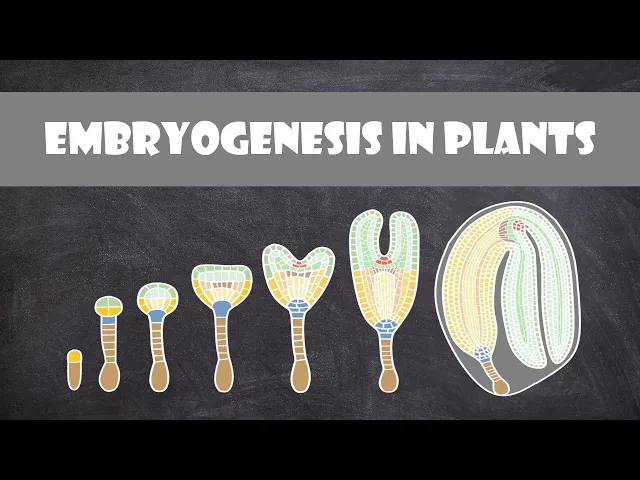
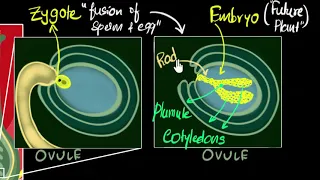
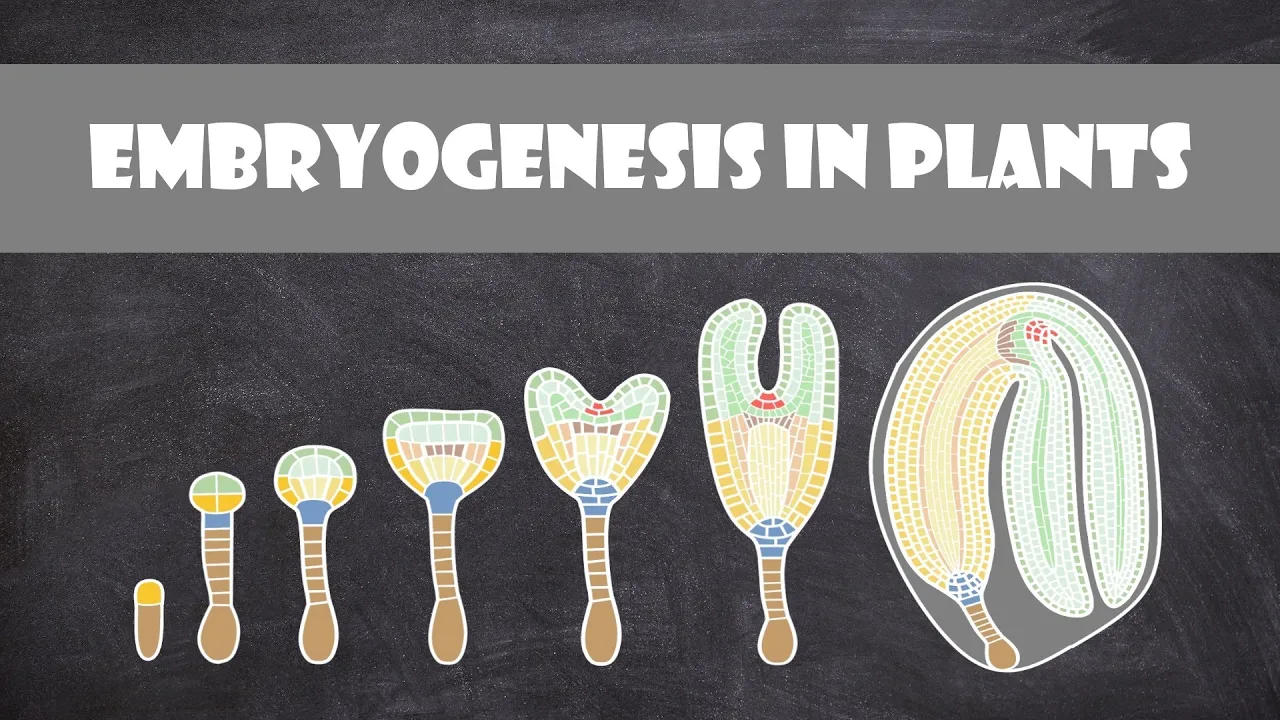
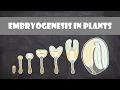
In this video we are going to go over the steps involved in embryogenesis in plants. Embryogenesis in plants is the process where an embryo is formed and develops, and where axial and radial patterning observed in mature plants are established. The first step of embryogenesis occurs with the first cell division of the zygote.
This cell division is asymmetrical creating a smaller apical cell and a larger basal cell. It is at this stage that the apical-basal axial developmental pattern is established. The apical cell contains more cytoplasm than the basal and goes on to divide and create the embryo.
The basal cell has a large vacuole and goes on to divide horizontally along its axis to form a 6-9 cell filament called the suspensor which connects the developing embryo to the endosperm. The one cell closest to the basal cell is the only cell deriving from the basal cell to contribute to the embryo, and is called the hypophysis and goes on to develop into the columella of the root. After the zygote has split to create the apical and basal cell, the developing embryo goes through four main stages.
The first of these stages is the globular stage which occurs after the apical cell undergoes several divisions to create an eight celled or octant emrbyo, and then continues to divide to form a more globular and then more triangular shaped embryo. It is in this stage that radial patterning is first established, and continues to develop through the rest of the stages creating the ring layers of structures found in the stems and roots. The outermost cells are one layer thick and called the protoderm and go on to form the epidermis.
The next layer of cells in from the protoderm will become the ground tissue meristem and eventually form the endodermis and the cortex. The central layer of cells are elongated and called the procambium and go on to become the vascular tissues and the pericycle in the root. The next stage is the heart stage and occurs through rapid cell division on each side of the embryo.
The centre of these outgrowths will become the shoot apical meristem. These outgrowths on each side will eventually become the cotyledons. It is at this stage that bilateral symmetry in the embryo is established.
The apical-basal axial patterning is even more clear at this stage, with three clear defined regions. The apical region gives rise to the cotyledons and shoot apical meristem. The middle or central region gives rise to the hypocotyl, root and the majority of the root meristem.
The Hypophysis give rise to the root meristem. The next stage is the torpedo stage and occurs from cell elongation throughout the embryo as well as continued growth in the cotyledons around what will become the shoot apical meristem. The final stage is the maturation stage.
During this stage, at the end of embryogenesis, the embryo folds over within the seed. The embryo and the seed that it is in both start to lose water and head into dormancy. Thank you for watching, if you found this video helpful be sure to subscribe and hit that like button.