We might be a small island but we've got a big history everywhere you stand there are worlds beneath your feet and so every year hundreds of archaeologists across Britain go looking for more clues who lived here when and how you can even see the architecture of the bone inside the jaw there Archaeology is a complex jigsaw puzzle drawing together everything from skeletons to swords temples to treasure she's got a very Cartoon-like face isn't she from Arney to Devon we're joining this year's Quest on sea land and air we'll share all of the questions and find
some of the answ As We join the teams in the field digging for [Music] Britain from Roman times the mystery of a man buried face down on a bed of meat a fabulous Treasure Trove of coins dedicated to ancient Gods and the shocking evidence of 97 murdered babies buried beneath this [Music] field I'm heading towards a place close to Hadrian's Wall where archaeologists are finding signs of that Roman influence RIT large this narrow road with its passing places is known locally as the stain gate it's one of hundreds of similar RADS which crisscross this part
of northern England but what makes this one Stand out is that it was once the northern Frontier of the entire Roman Empire and guarding the central section of the stain gate that important eastwest Supply Route was the fort of vindel [Music] Lander each year from April to midt an army of over 500 archaeology volunteers comes here from all over the world and every week they make new discoveries what you've got there John is a Beautiful great big dark blue glass melon bead and there's a bit of a debate about those because some people think that
Roman soldiers uh just simply wore these as decorations or ladies wmer decorations it's a very very corroded lump of metal but we've actually got here is the the back of a helmet by the looks of things it's very very badly bashed but you sort of see it on the side profile oh this is the this is the neck guard at the back and this is the Start of the top of the helmet coming up feranda has been excavated for over 40 years but they estimate they've only uncovered 15% of it and that it would take
another 150 years to finish the job which is utterly remarkable because the site as it stands is absolutely massive velander was bought in 1929 by the renowned archaeologist Professor Eric Burley his grandson Andrew is now its director of excavations s but the Romans Built four forts here by the time hadren wall was built so oh really so the first ones predate the wall predate the wall by a good 40 years and uh they're a long way down they're 7 or 8 meters beneath where we're standing and would they have been stain built no the first
six fors here are built in Timber and the last and stone and so they knock them down build them up knock them down build them up very very quickly so in perhaps only 125 years you get the landscape really Shooting up to the Fort we standing in at the moment so this is the last Fort there's an enormous amount of it still in place it's because nine forts have been built right on top of each other here that so much archaeological evidence survives in just the last couple of weeks the team working here have uncovered
this wonderful flagstone Street which leads from the northern gate of the fort straight up to the Headquarters building and the stones are really worn with centuries of use and you can just imagine the sound of those hob nailed boots as the Roman soldiers marched in and out of the fort as well as the excavations within the walls of the Stone Fort this year a separate team is working in the vicus the civilian Village which lies just outside the Garrison here at vindel Lander so what are you Excavating here well it's all part of the The
Garrison Settlement that sprung up outside the last Stone Fort that was built at vindel Landa so it's a combination of sort of workshops shops and houses sort of wagon parks and trading areas um to supply and sort of you know Link in with the fort there so it was a was a bit like retail World outside there had all sorts of shops flanking the roads a little bit of evidence for a pubers as well we had a building on there where we found a a room in the right on the street front There and inside
that room all the artifacts that we found are basically drinking beakers and gaming cter so fantastic it's one of those sites where you can almost be there as well you can virtually hear the Romans when you're digging because there's so many artifacts come from the ground and you've got all these buildings that are in really super condition for the past 3 weeks Justin and his team have been working on a Cobbled roadway which ran through the heart of the Roman village we've been really very lucky with this one because we actually got some some super
dating evidence because trapped in among the cobbles we actually found a little silver Denarius of Severus Alexander which was mined in ad 222 right so of course because it was trapped in the road surface it means that the road surface can't really have been made before that coin was minted so We've got a super date for it just beside the Roman Fort is the conservation area where the daily finds are taken to Barbara Burley and her team are all of these artifacts coming out this year most of them are yes oh this is amazing this
little Griffin just pull it out have a little bit closer look you can see um it's got the fabulous Wings here and you can actually just make out the detail of the feathers and then he's got the high quarters there of a lion And um the Romans had a lot of superstitious beliefs they felt that this type of of being would have been very good for protecting maybe something precious and and things like gold or treasure so we know that he's a little statue but uh we don't know what he was possibly guarding the village
of hambledon near the temps has always been a desirable place to live even so it seems for the Romans who built Villas here I'm just up from the River now walking along on the edge of this beautiful field which seems to be growing some kind of cereal crop but it's not the crop I'm interested in at all it's what's in the ground underneath it almost exactly 100 years ago this woman Miss glassbrook was walking along in this very same field and started to find some strange pieces of pottery very much like these ones and she
decided they were worth further Investigation Miss glassbrook approached a local archeologist who in 1912 would make an extraordinary Discovery beneath the soil in this buckinghamshire field the archaeologist Alfred Cox had discovered the foundations of a high status Roman villa which he would call uden over the course of a year Cox would excavate and photograph The Villa while collecting the fines but in doing so he would uncover a dark secret which is still troubling archaeologists almost a Century later the main Villa house is what we see in this Photograph and that's in there's a little bump
in the middle of the field here and the bump is entirely due to that building beneath the surface but it's quite nice you can work out where you are and you know it's that bump because you can actually see the scene in front of you that house there which has got a white front on it a right Gable end it's now it's now Pebble dust isn't it isn't it that's Right this is a huge excavation it is massive he had to have a huge team of laborers to dig this it was all by hand so
all by shovel and wheelbarrows and so that would have been a huge labor force and an enormous cost so this is all still there underneath that we still there just it's got all the the back fill then the soil layer reinstated and of course crops on it forever more for many years the fines from uden Roman villa were kept in a special Museum at hambledon but when that closed in the 1950s they were moved to buckshire County Museum in Alsbury where appropriately enough Alfred Cox was once curator Cox published his results in 1921 but it's
the way he reached his conclusions that's interesting archaeologists today Alfred Cox was unlike most of the antiquarian archaeologists operating in the early 20th century many of whom were To be honest just treasure Hunters but Cox was different he paid careful attention to each and every find he labeled them with the name the location and even the precise depth at which they were found the artifacts from the 1912 excavation fill over 300 boxes so Brett all of these boxes here are from uden are they absolutely um Brett Thorn is keeper of archaeology at the buckinghamshire County
Museum but The this is all of the objects he recovered from the 1912 excavations and these as you can see these are Roman brooches um but he's not just collecting the broaches there are little pieces of just well random bits of metal here as well exactly he he he did he didn't differentiate um he just picked up absolutely everything not only did he collect even the tiniest little cruddy bit like that little section there he labeled everything even these tiny Pieces yeah I mean just to kind of show you an example if I show you
this one this rather crude bit of card is that Cox's writing this is Cox Cox's handwriting yeah east side of yard 35 in north of east of enclosure wall uden and the date 21012 so this is his original display fantastic so this must be really unusual for the time hugely unusual I mean people these antiquarians just went in and dug they just took out the goodies The pretty items to put on show and they weren't interested in anything else all these little bits of bronze wire little tiny shirts of pot where the label is actually
bigger than the pot piece um they wouldn't have kept that that'd have just dumped it all back on site completely read the stratigraphy we wouldn't know anything about the site there's so much more information available to you now yeah because he's done this work because he's been so Careful so meticulous exactly yeah over the past year Jill has been taking home the HBL and boxes to re-evaluate Cox's 1912 findings with the eye and the techniques of the 21st century archaeologist but there was one particular set of remains which Alfred Cox was uncharacteristically reticent about well
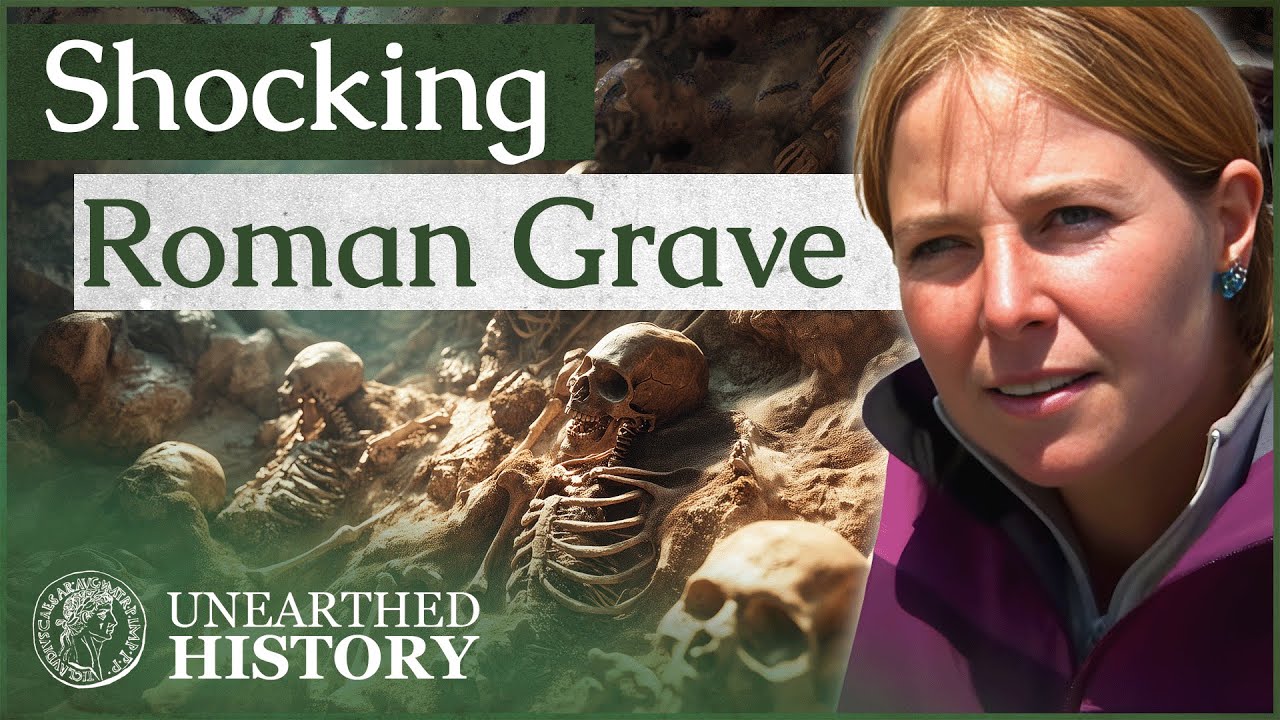
in Cox's report uh he obviously tells us about a good number of the finds selectively he doesn't Discuss all the fines um and I was rather surprised to find in his report that in actual fact he he did find 97 infant burials he only gives them a paragraph or so of a mention which you know even in 1912 that's a very important find it's an unusually high number um and it was rather odd the way he just described them rather informally as being wrapped as little bundles um and potentially buried secretly after dark so tiny
little bag here of oh yeah Little infant bines absolutely minute beautifully preserved though the bin is incredibly well preserved you've got some little pieces of skull there which is I it's almost eggshell like isn't it it's incredibly thin but but brilliantly preserved the infant bones were thought to have been lost until last year when Jill and Brett rediscovered them packed away in Old cigar and gun cartridge boxes discover the past with exclusive ancient history documentaries and adree Podcasts presented by world-renowned historians from history hit watch them on your smart TV or on the go with
your mobile device download the app now to explore everything from the wonders of Pompei to the rebellion of buddika and the Mystery of prehistoric Scotland immerse yourself in the captivating stories of this remarkable era by signing up via the link in the description how many infants were there buried at uden well that was the key Thing we've got 97 it's an astounding number for for the one Villa it's quite a shocking number actually it is yeah and it's actually quite normal to have infant burials you're not considered to be a proper human being ready for
the cemetery until you were about two years old in the Roman world so you do bury any babies that are lost between being born and two years and you put them in the garden or In the yard or perhaps even under your floor but this number but not 97 there's something different about uden there's something very strange going on there isn't there so these are the boxes are they that the the bones this is is how packed them cigarette boxes um with his detailed notes on about where that particular infant was uh was buried and
again the sort of the date and all of the information that he he loved to record But it's strange what doesn't seem in keeping is the fact that he squirrels his way and doesn't really look at them again there's no mention anywhere in the published report of them other than a short paragraph saying um Cox thought because the body's kind of cut and recut each other they're buried in in a very small area that he thought it must have been done surreptitiously after dark and hidden um I do handle human bones obviously but this is
the first time I've really had to deal with infant bones and um it's quite it's quite a strange feeling isn't it it actually quite upset me because they are obviously very small skeletons and they a clearly very young baby so it just has that effect on you nearly a century after Alfred Cox first discovered them the infant bones are once again coming under scientific scrutiny This Time by Dr to Simon Maize it's quite common to find um a Handful of burials at Roman villa sites um but what is unusual is to come across quite so
many that there's no other site that Shield anything like the 97 infant burials uh that we've got from hamon something that struck me is I laid out skeleton after skeleton was the all seem to be a pretty similar size the best way to determine uh how old an infant was when they died is to measure the bones we measure the bones of the arms And legs by doing this we can age uh an infant within about 2 weeks Simon's measurements confirmed his initial hunch the babies looked the same size because they'd all died around the
same age for 40 weeks just so it seems what we're dealing with is infants that died around time of birth if this was natural infant mortality there would be a wide range of bone size but this wasn't the case and that made us think that perhaps These individuals are being deliberately killed the shocking evidence is suggesting infanticide at uden Villa the Romans were murdering their newborn children I think the fact that we've got 97 infants makes us look for something systematic that was going on in the coming months Simon will carry out further tests on
the bones of those babies once buried beneath this buckinghamshire field these Investigations May shed light on the motives Behind These awful killings it seems like there's something quite disturbing going on here because oh to some extent we we expect to see this we know that infanticide was there in Roman society but at this scale what's happening the Roman army just happened to coincidentally be just over the hill there's a track in fact leading off in that direction towards where we know there's a Roman Road and in fact a Roman army encampment for some time the
only explanation you keep coming back to is it's got to have been a brothel really it really is the only explanation you can think of all sorts of wealth of other reasons but they just don't hold water but at the moment the story of Eugen Roman villa hasn't been told in all its fullness has it absolutely not that is just my opinion I have no proof of that theory of course but it's one that works for the moment I'm going to Continue investigating it 100 miles away in Kent there are new investigations into the beginnings
of Roman rule almost exactly where the emperor Claudius invaded these Shores [Music] in the year 43 ad the people living here on the Kent Coast looking out to sea would have been greeted by the sight of an armada of ships approaching it was almost 100 years since Julius Caesar had first invaded these Shores and the Romans were back this time they were here to [Music] stay just half a mile away from where the Roman army came ashore we're getting a glimpse into the Britain of the first century and it's all thanks to an 87 Million
Pound Road being built here in Kent 6 mil long and covering 100 acres it's the last part of a road project linking the channel tunnel and Coastal ports to the motorway Network beyond the New road here Cuts right across a part of the country that is incredibly rich in archaeological terms because for thousands of years this tip of Kent jutting out into the English Channel has been the gateway to Britain not just for the Romans arriving in 43 ad but for those who preceded them and those who would come much later archaeologically speaking this place
is something of a gold mine for the last few months digging for Britain has been following the teams from Oxford Wessex archaeology they've been tasked with Excavating and recording the evidence uncovered by the diggers and bulldozers before the ground is once again covered up this time by a four lane Highway the entire length of the new road has been carefully Stripped by Earth moving equipment removing the top soil without damaging the archaeology Below Andrew this is a massive area of excavation but this is only a small part of the whole scheme it's a very small
bit this is the biggest dig in Britain this year it's a road scheme just over 6 M long but it's one big archaeological site almost every single bit is an archaeological excavation and how many archaeologists have you got working here at any one time at the moment there are about 130 archaeologists on site but working in the offices backing them up There are others so about people so you've got this big new road being built and all the way along the length think of it archaeology has to happen first it is it's one of these
Bittersweet opportunities that the archaeology will be destroyed but the sweetness is we get the opportunity to make a record and to investigate about this part of the archaeology of East Kent turn the clock back 2,000 years and this part of Kent where the new road is Being built would have looked very different then the Isle of thanet really was an island separated from the mainland until Medieval Times by a stretch of water called the wantsome Channel and it's here that the new road is being built and more importantly for us where the excavations are taking
place the important thing is this is a precious opportunity to record the archaeology here before it disappears forever as the new road comes Through the Rolling Dead lines for completing different sections of the new road mean that the team has had to develop a fast method of systematically recording the objects at the time they're excavated every find is individually numbered plotted by GPS and photographed as well as being accurately drawn by archaeologists in the field back at the construction compound nearby the data is fed into computers And the photo are carefully traced I've come a
bit further south on the site now to an area rather poetically known as zone 6 but there's really interesting archaeology here 2,000 years ago this would have been the neck of a peninsula sticking out into the onome channel and the archaeologists are finding evidence of the very people who would have been living here when the Romans arrived and it's here that the team have Discovered the foundations of an Iron Age roundhouse and this is a typical building of the period before the Romans arrive in Britain yes for for for hundreds of years thousands of years
before the Romans arrived people lived in circular houses with conical thatched roofs and sometimes there been one or two in a small farm or it seems to be the case here maybe a small village with seven or eight or more houses in it so Very typical of the island age so you think this was a village then we think so yes um as you can see we've got many more of those curvy linear ditches which we think May indicate where the where the houses were this one's a nice complete circle but we're just catching the
edges here just little Arc edges houses we are really lucky with this one it doesn't happen very often to have such a good preservation so would been a Timber House none of the Timber is is there but we've still got this ditch that went around the periphery yes and is there any any dating material that's come out of that ditch we are quite lucky in this respect as well we've had um we've had some pottery from the um from the alter out to ditch and it suggests it's um it's a belgic pottery which would put
us about 100 years before the Romans arrived so it gives you a really precise date really good day we really lucky Yeah a few feet away the team have just uncovered a cobble surface littered with animal bones they seem to be they seem to be kind of embedded in the stones as well believe that this was The Butchery and food preparation area for the village whose very inhabitants would have seen claudius's Army arriving in 43 ad we've got these two parallel marks which could be from and KN so this is the remains of animals that
have been buted on the spot Just here it looks like it yeah and here we've got a tiny gold coin that on this side this coin reveals that the inhabitants of the village already had European connections before the Romans invad did so on the back you have the horse or The Chariot here and on on the other side there's just the very faint remains of of the head and we find coins like this some just a few miles away at Minster but in France as well and we think it may well have been made in
France and used in [Music] Britain that beautiful gold coin from the Iron Age Village in Kent suggests we already had links with France at the time of the Roman Invasion but I'm now headed west to Dorset where there's hard evidence of trading with the Romans themselves well before they thought of making us the latest addition to their empire for more than 200 years the Romans had been expanding their empire Across the Mediterranean but in the first century BC they started setting their sights further a field Britannia to the Northwest might have seemed like the end
of the world but it had things which the Romans wanted and what the Romans wanted they usually got Britain already had a reputation for its mineral wealth for its Gold Silver and Tin but there was something else the Romans wanted from us and it was this grain there was plenty of it growing in This part of Dorset back then just as there is today and in fact Britain would go on to become the bread B of the Roman Empire for those living in these agricultural areas well some of them would become very rich [Music] indeed
traditionally it was thought that the durat trigers the iron a tribe who occupied this part of Dorset were warlike and resisted the Roman Invaders but archaeologists from Bournemouth University seem to be finding very different evidence at this late Iron Age Farmstead well this survey of the site which is a magnetic survey shows us the uh iron AG ditched enclosure we call a banjo enclosure that's because it superficially resembles a banjo with the body and the neck and some of these necks are very very long where are we standing in relation to the structures you can
see there well we're standing Right at the entrance here where presumably there would have been a a possibly a gate so we're looking at this ditch just here yeah that's right that's this ditch here and it follows round and then curving round and back down this is where you would have entered the site and you would have seen one probably substantial roundhouse and a number of subsidiary round houses uh and a lot of activity going on within this uh large enclosure these sites are effectively Wealthy well appointed undefended [Music] but there's something else on the
site which is really intriguing the Bournemouth team they found more than 30 cylindrical pits carved into the chalk Bedrock by ancient tools and now excavated by the hands of modern-day archaeology students miles what are these pits well these are very sort of large cylindrical uh storage pits uh basically it's been Cut down straight into the chore and we're assuming that what they're actually storing is is grain of some kind have you found grain in these yes yes indeed we've got small pieces of sort of Oats um and barley which have come out from the lowest
levels of of these pits IR age barley and presumably that's not just for their consumption on the site here this I would imagine is stuff that's being exported right and to some extents we can see the results of That exportation from the artifacts that are coming up in these pits so there's artifacts as well yes indeed it appears that once the grains come out they're putting a whole range of artifacts in we've got these large slabs of iron AG Pottery oh yeah so they using this as a rubbish pit then uh no I don't think
so I mean we're not seeing a mass a random s of deposit of domestic waste we seem to be seeing a deliberate selection procedure they've got fragments of horse And cow and sheep it's quite peculiar it suggest there something symbolic about placing these objects in there yes indeed I mean it might be that having emptied the pit you've got to put something back in as a kind of off offering perhaps to ensure the the long-term fertility of the the land perhaps is an offering to the to the gods pits that the archaeologists are finding all
over this site seem to have a very obvious practical use for storage Of grain but there's definitely something else going on objects are being placed in the bottom of these pits that have some kind of symbolic value and it's not just objects it's not just animal bones and pottery that the archaeologists are find in of all the deposits I've seen on the site this has to be the strangest it's a an adult male who's lying faced down on I suppose what can best be described as a bed of meat how Strange you've got sort of
horse and pig and and cow bone all there sort of underneath him and it looks as though he's just been thrown into the hole I me it really doesn't look as there been placed in there with any any ceremony it's not a formal barrier is it well tur to our Modern Eyes it looks like he's he's been rolled in as I said he's lying face down his legs are slightly Tangled Up um there's no obvious kind of order or or perhaps reverence to that it's Difficult to see whether this is a grave in the conventional
sense and and that the bone represents food for the afterlife or whether the the adult himself represents just part of the deposit how strange there's something very odd going on with these pits isn't there there is there is I mean it's almost like um I suppose burying an ancestor bearing an aunt or an uncle in a c but in the kitchen it doesn't make sense to us you know this is the area Where they're living they're working but they're dead are going in these kind of disused pits very [Music] peculiar whatever the meanings of the
bones deposited in the pits here in Dorset it's clear that the people who farmed this land prospered from Trading with the [Music] Romans the Bournemouth University dig is showing that far from the popul image of Roman Invaders locked in combat with the local tribes this settlement at least is suggesting a much Karma transition becoming part of the Roman Britain is is no significant shock to these people at all um there's just a great deal of of of continuity I think that's that's pretty much for the whole of uh Roman Britain because we get so AED
by the high visibility of of Villas and temples without realizing that these just represent less than 1% of what's going On in the countryside the by far away the bulk of the population are living the same lifestyle doing the same things completely [Music] unaffected 30 m North in Somerset evidence is emerging that here too local people may have been keeping hold of their ancient beliefs and ways of honoring the gods there's nothing around to suggest there's anything particularly special or significant about this Somerset field but I know for certain that 1700 years ago somebody or
a group of people came here and did something right here on this very spot in late April this year metal detectorist Dave crisp was searching this same field he was about to make the discovery of a lifetime I got this funny signal and it it was an iffy signal it really was so I dug down and I dug a bit deeper and it was still there and I dug a bit Deeper I'm literally I'm 12 14 in down now and I put my hand in and I pulled out a black thing and I thought I
got a rock no it looks like a bit of pottery it looks like it looks like a Roman bit of Po bit of burnish back burnish wear that's quite interesting I thought to myself so I put my hand in again and pulled out a bit more clay and there was a little radiant little bronze Roman coin very very small about size of me fingernail then I realized that the the Piece of burnish where I had was the top of a pop and I thought I got hord and I went I got and I'm in the
middle of nowhere saying I've got a ho I've been 22 years detecting and I've never never had a hoorde before that weekend Dave was convinced he'd found treasure but instead of digging it up he contacted the portable Antiquities scheme which records archaeological objects found by the public finds liaison officer anab boo Suspected that this was going to be a job for a professional archaeologist we actually had no idea how big the H was going to be at this stage so it was very exciting for us all um we uncovered the neck of the vessel and
what we could see was a small dish in the top of it which was actually acting as a lid at first we wondered whether this was the bottom of a quite a small small vessel and it was turned upside down but when we dug a bit Further we realized that it was actually a lid sitting in top of an absolutely enormous vessel of the size that none of us had ever seen anything like it before so it was absolutely fantastic and it was only at that stage that we realized that it was actually a huge
horde of coins that we were we were dealing with that must have been quite breathtaking it was amazing it was absolutely fantastic and then over the following two days we actually undertook The excavation and it did take us the full two days starting first thing in the morning till last thing at night until the sun went down just Excavating thousands upon thousands of coins and bagging them [Music] up it took a huge amount of time but it was absolutely fascinating and an amazing process to go [Music] through because Dave crisp got Archaeologist in right from
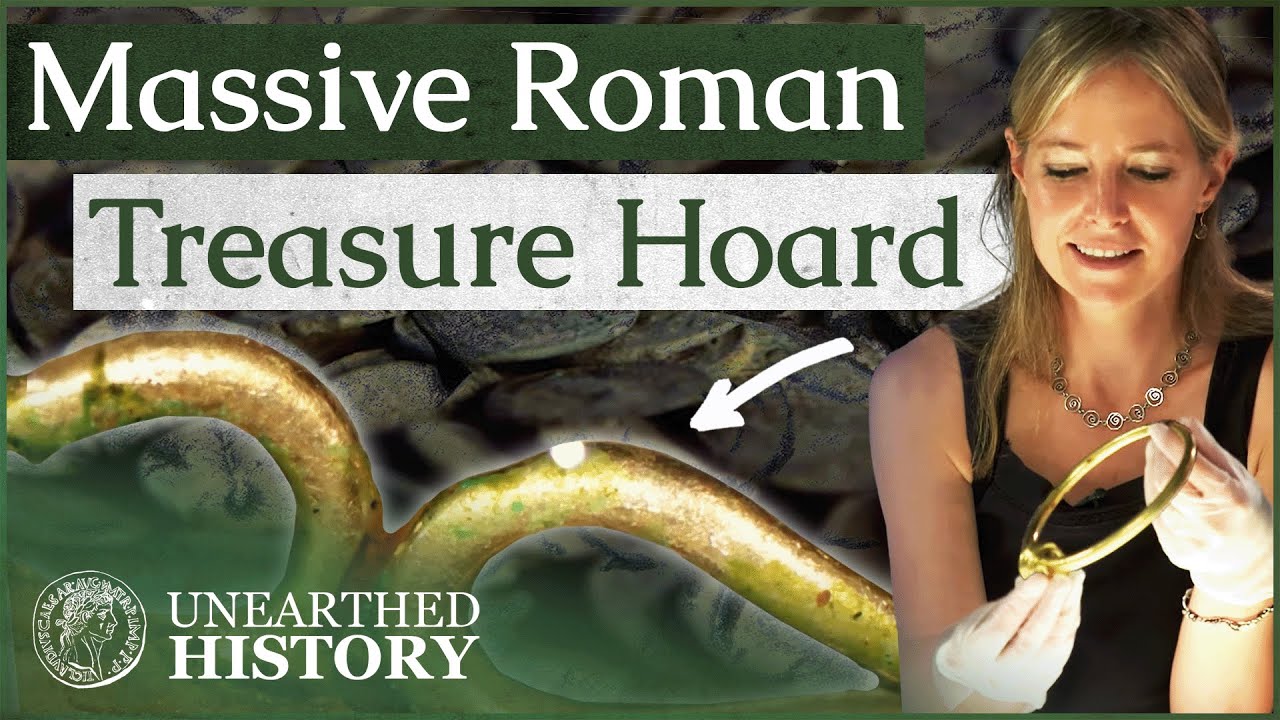
the very start archaeologists who were able to systematically excavate the pot layer by layer it's meant we have a much better chance of finding out why that pot full of coins was buried in this field all those years ago the F horde is looking like it might be the biggest coin horde ever discovered in Britain they've estimated that there are around 50,000 coins weighing in at 160 kilos that's about The weight of two adults but the coins need urgent attention and that's why in early may they were brought here to Central London the Roman coins
arrived at the British museum still wet and stuck together with heavy Somerset clay Pippa Pierce is a Metals conservative at the museum for several weeks now Pippa has been fully occupied carrying out the first stage of the coin's conservation By carefully washing the contents of the 67 bags which made up the FR horde so into the fume cupboard for a quick dry the coin span 40 years from ad 253 to 293 and the vast major majority are made of debased silver and bronze Roman coin experts Roger Bland and Sam moead have dropped everything to concentrate
on the somerset coins yet another coin of tetricus that's Claudius that's the emperor standing holding a branch they've been sorting the coins by Emperor at a rate of nearly 6,000 a week it's now eight week since the FR horde was raised and all the coins have been cleaned and sorted but are we any closer to finding out how and why such an enormous horde was buried in that Somerset field Roger this is just a small fraction of the whole horde how many Coins do you think there are well we think the final numberers going to
be just over 52 a half thousand coins so how big is this hoorde in the context of other hordes that have been found in Britain it's the largest ever um horde found in a single pot in this country there was another horde found in 1978 which um had just a couple of thousand more coins but that was in two parts and do you have any idea of the value of these coins maybe about um the Equivalent of four years pay for a Roman legionary soldier so if you were to turn that into present day values
that might be about £100,000 in in in present day terms say some this is a piece of the pot is it yes this is the piece of the pot that was found in and when they excavated the pot was already broken and you can see it's quite thin um neither I nor the conservator believe that this would have been able to hold 160 kg of metal without breaking yeah that is very Thin and so it's almost certain that the pot was actually buried in the ground first and then the coins were added after it had
been put in the ground Sam doesn't think that this pot was one person's saving scheme but more likely part of an ancient ritual I I don't believe myself that this is a horde of coins intended for recovery and I think what you could see is a community of people who are actually making offerings and they are each pouring in their own Contribution to a communal ritual votive offering to the gods or whoever it is just because it's communal that doesn't necessarily mean it's ritual though does it because people could be buing something in the ground
that they were worried was going to be taken away from them if you going to bury this for security and safety you put in lots of different pots so you could easily take them out of the ground later also if you wanted to get these coins out of the Ground you'd have to dig down to the pot smash the pot and then shovel them out which also be a very lengthy process so I believe that it was never intended for recovery and you're seeing echos here of a more ancient tradition pre- Roman I think so
yes absolutely the same people we know from other studies that the people of the West country were the same people as they were in the bronze and the iron ages so why not continue the same [Music] [Applause] practices I Am Naturally quite a skeptical person and I tend to look for the most obvious explanation for things but it really does seem from talking to the experts that whoever it was that buried that pot full of coins in the ground wasn't intending to come back to it in which case perhaps this is an echo of an
ancient tradition that we're seeing maybe those coins are a votive Offering and perhaps this was a sacred [Music] field not all archaeological recovery happen as fast as the Roman coin horde there's one project involving a catastrophic fire and a Roman shipwreck which has lasted for over 30 [Music] years since Peter port gy in the Channel Islands Jason Monahan is Museum's director [Music] Here as a young student in the 1980s along with diver Richard Keane he was involved in the biggest archaeology project the island had ever [Music] seen in the course of my diving in the
harbor and the perer heads picking up uh Potter and scallops and whatever else I could find uh I came across a wooden wreck Richard thought it was an old barge used to build the harbor wall but it would be another year before he Realized the significance of what he had found there was the wreck more exposed uh and great big chunks of Roman tile you know you can't mistake Roman tile um I thought crumbs this is going to be really interesting Richard had found the remains of a Roman ship uniquely preserved on the seabed for
over, 1600 years but how did it come to be here St petport would have had a wide Sandy Harbor and this ship would have been Somewhere in the entrance possibly anchored possibly mored um it caught fire for whatever reason we don't know the fire raged for some time then the water came on board quenched the fire and the ship sank what the maritime archaeologists had found were the remains of a Gallow Roman trading vessel which transported cargos from as far south as Spain through the English Channel and possibly even up into the nor Seea the
ship was carrying blocks of pitch a natural resin which would accidentally preserve the wreck we believe the fire raged in the back of the ship uh the back of the ship is the best preserved because the cargo of pitch the ship was carrying melted during the fire and this spread out to cover an area of about 8 square m so when the ship sank this quenched into a solid mass and effectively held the back end of the ship down The Roman Timbers have now crossed the channel to Portsmouth and the merry Rose trust where for
the past decade they've been treated and dried have been more exposed presumably yeah they was sticking out the seabed at this end here yeah for Jason 2 it's been a long journey this was my first job after leaving University so it's actually very strange after two and a half decades to be coming back and seeing the Timbers in the final state That we talked about very excitedly all those years ago conservation process has has worked beautifully there um CU you know but there's one final problem to overcome the Timbers are wrapped boxed and ready to
go home but there's nowhere big enough on gy at present to house the reconstructed ship this is a very important ship for gery Roman archaeologists talk a lot about trade in inverted commas but actually we have we have very little evidence apart from Inferring that this Pottery went from here to there so here we have a very solid example of how the trade was carried out ships like ours sailed from port to port carrying stuff in their holds 30 years might seem like a long time for an archaeological project but back here at vindel Landa
they've been digging for even longer and during that time it's here where we've come closest to knowing the Romans who occupied Britain CL your eyes it is tempting to Think that we know everything about the Romans already after all they wrote things down they left us records but archaeology gives us a different perspective it helps to fill in details and paint a fuller picture but it can also challenge our preconceptions and that's when sites like this get really interesting so Andrew what do we got here well what we've got here is the wonderful until recently
it was believed that temples were never cited inside Roman auxiliary forts that was until last year so this is all part of the temple this is all part of the temple it actually stretches from the gate all the way up to the angle Tower this is all three rooms of the quite an impressive building and what's awesome about this is that we absolutely do not expect to find temples to pagan gods particularly Eastern Cults inside auxiliary forts this is the first one that's ever been found anywhere in the Roman Empire Really we were actually looking
for a toilet block under here cuz we' got Barracks behind us and so you're looking looking for we found a temple there is some sort of poetry in that I'm sure so these little pillars here they are they supporting a floor is this a hyper system that's right exactly right a hyper system you can still see the burning on some of the stones here to show that they had to fire it up in the winter time at least so where would the Fire itself have been then the little furnace is in this room behind and
then the hot air comes through there comes through the flu and circul and they even know the identity of the God who is being worshiped in this newly discovered Temple because amongst the ruins they uncovered this remarkable find an altar to a god from turkey called Jupiter dolus he you've got the beautiful iconography of of Jupiter dolus riding his Bull on this Side he's got his Thunderbolts clutched in his hand here ax and the axe in the other hand so is this Al set up by a military man this altar is set up by the
Big Chief himself the commanding officer of the fort and if we just read the front of it here we can see I M for Jupiter Optimus Maximus Jupiter the biggest and the best I mean everybody's got to be a little bit beneath Jupiter and then Underneath Him you've got the actual name of the God himself it's Dolino d o l o c h e n o and very very clear on that line there and underneath that you've got the dedicator so pikus pudens his second name and the very very bottom line very common on most
inscriptions V LM and that's really just means the guy willingly and deserved he fulfilled his vow and what you're looking at here is the end of a contract it's a contract between personal contract between suus pudens and the god jup to docus so he's promised to erect An Al to this God somewhere and he's now fulfilled his promise exactly the sides are so beely preserved with the relief carving and the and the writing but obviously the top un Expos is very weathered isn't it it's really well warned but also it's been very very badly damaged
as well as well by people coming in when they were demolishing the temple and the demolition of the temple happened sometime we think in the 350s or 7s and you've got this sort of power Struggle with the Christianity becoming the official religion a lot of ancient Pagan Cults and shrines end up going by the wayside poor old J do canus here eventually fell victim to such a a new movement on the Northern Frontier of Roman Britain Christianity had arrived at vindolanda but just 50 years later later in 410 AD the Roman army departed Britain this
time for good vindel Lander 2 would slowly be abandoned and would Fall into ruin it's the remoteness of this part of Northumberland which has allowed vinder Landa and its archaeology to survive as a legacy to the Roman occupation of Britain in the 400 years the Romans were here they transformed formed our country from its language to its landscape leaving a lasting Legacy that remains with us today and yet 1600 years later we're still discovering new things about their society from that terrible Infanticide on the banks of the temps to that massive Queen horde found just
earlier this year in the southwest there's so much more to understand about the Romans in Britain and so the digging continues we might be a small island but we've got a big history everywhere you stand there are worlds beneath your feet and so every year hundreds of archaeologists across Britain go looking for more clues who lived here when and how you can even see the architecture of The bone inside the jaw there yes Archaeology is a complex jigsaw puzzle drawing together everything from skeletons to swords temples to treasure and it's still sharp from Arney to
Devon we're joining this year's Quest on sea land and air we'll share all of the questions and find some of the answers As We join the teams in the field digging for Britain [Music] the further back in time we go the more Rare those glimpses of our ancestors become tonight we're going into deep prehistory and this is where archaeology really comes into its own with no written records those pieces of evidence that we pull out of the ground are the only Clues we have to the Mysterious World of prehistoric Britain [Music] I'm on a journey
through a million years of history that will take me from orne to the South Coast I'll be discovering Art made by Ice Age Britain is this a leg down here is it coming down to a leg Yeah that's right the legs here and seeing how farming first developed here see some more teeth sticking up here yeah yeah I'll be finding out how the sea holds Clues to the birth of trade and as we travel through time we'll see how a culture emerged that still resonates today so when was she found our Journey Begins before Britain
Was even an island when a Broad River flowed through East Anglia and this is where archaeologists are trying to find out when the first people arrived in Britain for over 200 years archaeologists have searched these lands for signs that early human species may once have lived here but the first humans to have emerged from Africa were tropical they just weren't adapted to cold climates and they could not have survived in northern Europe now on this beach in Norfolk archaeologists are finding remarkable evidence that May challenge this belief I've been following this project for years and
the archaeologists are about 3 weeks into this year's dig so I've been really excited about coming here to find out how they've been getting on the team are part of an internationally renowned project searching for clues that will help them Date this site so Nick you're a few weeks in Nick Ashton of the British museum is leading the excavation and what sort of evidence are you finding in these in these ancient river sediments we're getting pollen from these grain sediments we're getting wood we're getting other plant remains Little Seeds uh also getting beetles and they're
very good for reconstructing climate and on top of that we're getting animal remains animal bones um and teeth And they really help with the dating of the site to retrieve that evidence every bucket load excavated must be painstakingly examined so it's all happening down here H what you got for a sovie nothing at not much you want oh wow some some Pebbles some pebbles at the moment so each SI load is checked and sorted and there doesn't appear to be anything in that over a 5year period they've sifted through 70 Tons of sediment but sometimes
it's the most unlikely fines that provide vital Clues oh no Co kinds ah all right and there it's quite a weathered but survive in Pine Cone really part of one yeah you could look at the structure of that and confirm the exact species when you're looking this far back in time even a single find like this pine cone core is crucial find by find the archaeologists can reconstruct This mysterious Lost World a Pine Forest that was inhabited by creatures no longer seen in Britain Simon pait from the Natural History Museum is an expert on prehistoric
mammals and what's that in that box down there okay this this thing is is Stone it looks like a stone um believe it or not it's hyena dropping this is fossilized hyena poo so we know there are hyena here as there are hyenas so You've got large carnivals we've got this fantastic rodent jaw uh with some of the teeth and this is an extinct Beaver like rodent and it was semi-aquatic living along the banks of the river it's such a beautifully preserved fossil I mean you can you can even see the the architecture of the
bone inside the jawel there yes yeah it's a wonderful thing it's because we know when each of these species became extinct that these Fossils are helping us to date the site this is a tooth of um a mammoth and this is in fact one of the earliest forms of Mammoth uh that we find in the this part of the world this helps us with a date because this is quite primitive so we have a fantastic tell that from the teeth that's right yeah it has very distinctive teeth you can see this is the chewing surface
and you have a series of plates and they're very widely spaced and this is a feature of Of primitive mammoths later mammoths the the plates tend to get closer together the enamel gets thinner so that's one of the features we can use to identify it this tooth belonged to a type of Mammoth that died out over 700,000 years ago so its position in these sediments gives another vital clue to the archaeologists with the various types of dating we're able to say that the the site dates somewhere between 800,000 and a million years old so that's
that's the data of Those sediments that we're looking at in the in the trench between 800,000 and a million years old yeah yeah [Music] fantastic this project really is unique so many important discoveries are made by pure chance especially in prehistory where something might be found in a quarry or when a road is being built but here the archaeologists have set out to find something new to make an important Discovery and they've done it because what's being found here are not just animal and plant finds it's not just evidence of a vanished landscape from perhaps
a million years ago there are find suggesting humans could have lived here then too actually today we recovered one of the rare artifacts that we're also getting from the site and this is really exciting CU it shows that humans were Living here at that time this is just today this is a small flake it's slightly broken and but you can see all the t t signs of human manufacturer this tiny object is a waste flake left over from making Flint tools so this is evidence of humans in Britain going back possibly a million years yeah
and so it makes it by a long way the oldest site in northern Europe the oldest human site in northern Europe so I'm holding in my hands a piece of Evidence of the earliest humans to inhabit this island going back nearly a million years they found over 70 pieces of Flint which show signs of human working and amongst them are even some intact stone [Music] tools this we actually nickname the this the butter knife cuz it's so pretty but you can see all the evidence of human working there that bulb of percussion Rings coming out
from that characteristic Rippling and actually on this piece they've um modified that edge it would certainly be ideal as some sort of you know for cutting meat yeah um so this is the original sort of knife and fork of the Old Stone Age and it's still sharp and after 800,000 million years no human remains have yet been found to confirm who made these tools but it was a truly ancient Species some 750,000 years old older than even the neander tals so hazra has pushed back the earliest human occupation of Britain by at least 200,000 years
but what's really remarkable is that the humans living here back then were surviving in extremely harsh conditions at this time Britain was approaching an Ice Age how did these early species m manag to survive here were they more advanced Than we've previously thought these are the questions now facing experts like Chris Stringer from the Natural History Museum so what were these capabilities do these people have control of fire do they have clothes whether they had clothing whether they had the use of fire we can't tell from here they must have had ways of keeping War
well that's right yes I mean the environment was comparable to say Southern Scandinavia at the present day and yes yes I I think You know stick Us in in the winters in SC Southern Scandinavia today and we would we would have problems coping so we'd have to imagine probably that there was at least Basic clothing and probably the use of fire but the evidence has yet to be found it does make us look again at these earlier human species and perhaps they were more sophisticated than we've given them credit for yes that's right yeah their
capabilities were far greater H and that's really Exciting so we have to make them in in in some way certainly more like us than we believed we know there were people here in Britain nearly a million years ago they were surviving in incredibly cold conditions it gives us newfound respect I think for those earlier human species and at the end of the day it's these insignificant finds that archaeological revolutions are made of we don't know how long those people Survived here but they were eventually wiped out by the vicious climate for hundreds of thousands of
years Britain went through some of the most violent climate changes in world history which repeatedly forced people out so these were not our ancestors to find them we have to go forward hundreds of thousands of years to the end of the last ice age and to a site in modern day Nottinghamshire where they once Lived it wasn't until around 13,000 years ago that Britain became recolonized by modern humans Homo sapiens people like us and this time they were here to stay and they were living in caves like these at Creswell Crags at the end of
the last ice age we know that these people were physically identical to us but archaeologists are Relentless in their search to find out just how similar they were to us in other ways searching for Those elusive things which let us feel truly connected to them cave art can speak to us like nothing else a distant Echo from an ancient world with no written language and since the discovery of of the famous Lasco rock art in France in the 1940s the hunt has been on to find similar rock art in Britain archaeologists scoured the walls of
caves like these but found nothing And they put that down to Britain being such a challenging environment back then that people were just surviving clinging onto existence with their fingernails they didn't have time for frivolities like rock art that belief was turned on its head by discoveries made in this cave where I met Ian wall he's an archaeologist and director of crestwell Craigs you thank you so you're you're now standing at the Level that uh we think our prehistoric ancestors were 12 13,000 years ago so it's the best place to actually view the rock art
that they were creating so I can see a few scratches on the walls here yes you like to come and stand here and I'll uh I'll show you this is one of the first figures that was discovered in in that in 2003 but you can just pick out some fainter engrave lines here at first I struggled to see what Ian was seeing gradually an image Emerged this is the the top of a neck of an animal yeah all right you're convincing me and the ear I'm coming down here a mouse is a m yes yes
and that's the chin running underneath yes is this a leg down here is it coming down to a leg Yeah that's right the legs here and then the uh the under Belly of the animal that's remarkable there it was appearing right before my eyes the image of a Deer we can imagine perhaps how important this creature would have been to our ancestors it was almost certainly one of the things that kept them alive so how do you know that that is ice AG crucially you get these deposits of flowstone it's redeposited calite and that forms
a thin skin of deposit and sometimes that Lies Over the Top of these engraved lines that's this that's this are that's right yes and that can Be dated um fairly precisely with a technique called uranium series dating right so if you can date that flow Stone then if the Engravings are underneath it they must predate it that's right so how old is that place St so it's roughly around 13,000 years old so we really are looking at ice AG art yes that's the Clincher this is the oldest rock art to be found anywhere on these
islands so much of Archaeology is about How people live their lives in quite a mundane way the tools they made the diet they were eating that sort of thing but here we've got art which is something a little bit different and and it does give you a real connection back to these people it's it's incredibly evocative you can imagine them in that cave making those images on the wall and I rather like the mystery that we will never know what it really [Music] [Music] means I'm on my way to a dig in orne where archaeologists
are finding out more about early farmers and their mysterious beliefs my destination is the tiny island of westray home to a site called The Links of nland where one of this year's most exciting digs is happening wow what a way to see an archaological S this bird's ey view looking straight down on It looks great can't wait to get down there many near lithic sites are Monumental and ceremonial they're really impressive but it's like going to a cathedral to find out how Everyday People live today this site is different I've come here because archaeologists are
unearthing vital evidence of early farms and these are the extraordinary and rare remains of a 5,000-year old village where the farmers once lived Archaeologists here are uncovering a remarkable story of a struggle to survive then as now these islands must have felt like the edge of the world I was given a tour around the site by Richard Sten it's almost always windy anony the weather can be on your side sometimes h a little bit of rain on the sight's very good as well archeologically it keeps the sh nice and moist so it's Ching yeah it
is like you Have four seasons in one day I can't believe it was raining this morning and now we've got sunshine it's very normal here should we go even and have a look at what some of the archeologists are finding the buildings are covered with a layer of ancient rubbish or miden and it's from this that many of the signs of everyday prehistoric life are appearing the whole site is basically sealed by this mid material this is containing the shell the bone all that sort of that Sort of stuff and you can see that we're
getting ptry too within this getting Flint is that a piece of pottery down there yeah this is a fantastic piece of Potter that that Sean's just uncovered you can see the wonderful decoration on it cuz this Archaeology is so centimeters below the surface isn't it yeah we can see literally you looking at it in places it's very very shallow under the sand is the evidence the archaeologists have been hoping for Proof that people here were growing barley which was one of the earliest plants to be domesticated [Music] Hazel Moore is directing excavations here I want
to go and talk to Hazel about something rather interesting over this side of the site what's the evidence for the barley farming um carbonized serial grain coming from these mid deposits they had field systems which Run from the settlement down the slope um and they were Ming and enriching the soils there so presumably that was for growing their their crops around the settlement from the field system evidence of composting is emerging each layer of soil tells a story of a struggle to make farming work here when we actually look at the profiles the soil profiles
that you know from the earliest times what we have are Cultivated soils swamped again and again by blowing sand so do you think this would have been a challenging environment to be farming in yes yeah I mean it's challenging nowadays and it wouldn't have been any different than it's light Sandy soils are ideal for for cultivation in that they can be worked easily and turned easily but they're also very prone to erosion and it's a very windy [Music] Place the conditions here would have made it difficult to survive just growing crops but new finds are
showing that domesticated animals were extremely important to these early farmers but yet again amongst the seemingly mundane finds there are marvelous glimpses of a vanished World emerging from the soils is something which has stunned the archaeologists the skulls of 40 cattle built into the foundations of a Wall how strange can we get a bit closer to it down there yeah you can come here this is really peculiar I can see a whole line of them here this is the outer face of the wall along here the stones that's the inner face there so they're placed
into the core of the wall into the thickness of the wall hilia because that means that they wouldn't have been visible when the building was standing no they they would Have been placed there when the wall was being built they would the foundation level of the building and you can see I mean how how they sort of relate to each other they've been put in sequentially these ones and the horns are actually overlapping on those ones and then they've put some stones in and then some more cattle skulls all along it's making them part of
a building it's it's almost monumentalizing them isn't it somehow enshrining them imbuing the building With their Spirit or whatever yeah building them into the very foundations this strange Discovery reinforces what the researchers have learned about the importance of livestock to those early farmers it's easy to see why cattle was so important in this fragile and remote landscape and it's yet another glimpse into a mysterious ancient mindset this is just utterly bizarre these cattle skulls built into the Fabric of a building we'll never know exactly what they mean but they obviously represent some complex beliefs the
archaeologists now know that this land was farmed for around 50 Generations but eventually the struggle proved too great overcome by the wind and sand they gave up and abandoned their Village it appears that the buildings were deliberately filled in with rubble within which archaeologists found what Could be a defining symbol of the father defeat now of course this is something we found last year which really is quite unique and we hadn't seen anything like this from the whole of Scotland before you brought her to show me how lovely well there she is in all her
glory I think you can check very small yeah this tiny figurine is known as the westray wifey and despite her Homespun appearance she may be the earliest known Expression of religious identity ever found in Scotland she's really sweet she's got a very cartoon like face isn't she she has we can just pick out that she has eyes and a very a very sort of curvy eyebrow yeah um and she's got this sort of a very rough mouth but she also got arms down by her sides design scratches on the top of her head as well
like her [Applause] [Music] Hair where the figurine was found makes her even more intriguing she seems to have been carefully positioned in the abandoned ruins it seems like she was probably put there deliberately as a closing deposit she was placed there and then there's no evidence that anybody ever came and did anything here again so that was probably their way of marking the close of that settlement she's really sweet Hazel believes the wifey's placing may have Been a ritual end to the farmer's long [Music] struggle we're actually seeing how people talk you know that they
decided that this is this was a good way to close this building off at the end of the period so it gives you much more of an insight into how people's minds worked at the time if the researchers are right then the westray wifey is unique a 5,000 year old household goddess Perhaps figurines of this type are usually thought to be goddesses or you know some religious deity kind of thing given that she's the only one that we have and we don't have why widespread representations it's hard to argue that she is definitely a goddess
it seemed that she must be representational of some concept religious concept it's rather wonderful to hold this tiny little figurine it's rather hard to know what she meant for the People that made her but nonetheless she's fantastic little message from the past and utterly unique but just days after I left the dig a second figurine was Unearthed bolstering Hazel's belief that these may have been household goddesses this is just the third season of digging here every day more of the mysterious settlement is revealed for thousands of years people had buried their dead in communal Graves
Then around 4,500 years ago something changed in that time moned ritual and people began to be buried in individual grave something which seems much more familiar to us today this is cual man he was discovered in 1975 and he had been buried in the new way this is very well preserved considering this is a 4,000-year old skeleton his skeleton is curated by by Allison Sheridan in his grave archaeologists found a beaker a distinctive Clay Pot that was the symbol of this new burial style we know that beaka burials started on the continent but once they
arrived here they spread rapidly throughout the country and the question that has perplexed archaeologists for 150 years is how that Beaker culture spread so far so quickly now at team of archaeologists is using Cutting Edge science to work that Out they want to know if it was just the ideas that traveled or if the people did too Janet Montgomery and Jane Evans are analyzing the isotopic signatures of Beaker skeletons like cul man to find out where they lived and whether they moved during their lifetimes to do that they must pay painstakingly extract some tooth en
anel from each Bronze Age individual we only need a very small amount less than a match head size of of Of tissue but you have to make sure when you take it that it's not contaminated it has to be cleaned it has to be carefully removed so you don't mix up the tissues and that it's free from any contamination from the burial what we want to do is take something that tells you about the person when they were alive not what's happened during the time they the body has been buried in the ground chemicals in
each sample tell us where that person grew up we know Where they were then buried so we can tell if someone moved during their lifetime or if they stayed in their childhood home Janet and Jane have analyzed over 250 Beaker skeletons in this way the project has been 5 years in the making it's the biggest ever survey of our prehistoric ancestors and Cal man is the latest to join it his teeth were in such poor condition that Jane had to use a different Technique to extract the sample these teeth have got almost no enamel remaining
on them so what I did instead of slicing the tooth up I had to pick off very carefully with forceps small fragments of the enamel Jane managed to obtain a sample but once she got the results she was convinced there had been a mistake was only after I got the enamel results in triplicate that I was convinced and happy enough with the result to to tell everybody else what We'd got the analysis has been carried out here at the British Geological Survey and after 5 years the researchers are just beginning to bring all their results
together and draw some conclusions I wonder how our man from KL has done the isotope composition that his teeth gave suggested that he came from an area of this type of rock this area of Anum and it's the Anum basss do you think he's Irish that is the most likely place For him to come from how interesting and so he managed to make it from his childhood sight here to his burial site up and around here so around 4,000 years ago cual man moved 300 miles across the seas from his Irish home to his Scottish
grave where he lay buried in a signature Beaker burial but cual man is just one of the 250 skeletons from around the country which could explain how the beaker culture Spread what about the isot tap project as a whole what is it telling you about this period in the Bronze Age and about populations moving around a lot of the evidence that I've got from um that this this this project another data they seem to be very mobile at this time the survey reveals some intriguing results showing our ancestors traveling long distances across the country results
from Beaker burials in the Yorkshire Wall's area for example showed that over 50% of the individuals sampled had moved there from somewhere else some from as far a field as Scotland it's interesting isn't it cuz I think you tend to think that people in these prehistoric societies were perhaps a lot more settled than that the further back you go the more settled they were I doesn't work that way no this project is really interesting because of the scale of it they've Looked at 250 individuals and that means we can start to answer some of those
big questions about the population of Britain during the Bronze Age [Music] I'm on my way to meet a group of amateur archaeologists who are uncovering a remarkable story about Bronze Age [Music] Britain 4,000 years ago these Waters would have been buzzing with ships Bronze Age Britain were traveling And trading the length of this Coast I'm heading towards a site that has yielded a treasure Trove of beautiful objects and Vivid proof of the early importance of trade and the risks that Traders ran we're about half a mile off the coast near Salam in South Devon we're
approaching really carefully because there are divers down there at the moment hello hi morning hello Alice hello hello hello these aren't professional archaeologists they're Divers who found a love for history and for me that makes what they're finding here all the more special real dedication here is these guys are down at every few weeks diving in the same spot constantly looking for new objects that are coming up from the seabed the team dive using underwater metal detectors to scan the seabed in the last few months their dedication has paid off with a massive Hall of
objects which have been sent to the British museum where they're being analyzed by curator Ben Roberts in total we've got over 300 objects we're still working through them at the moment and there still being found that's the Fantastic thing what's amazing about this particular collection of objects and it encapsulates where we were culturally about 3,000 or so years ago you have swords and this was for your Bronze Age Warrior what you would have used in Conflict against your neighbors and we have plenty of evidence for Warfare at this time also you have large scale trade
this is proper large scale trade in commodities [Music] so that's the next couple of divers going down the divers can spend up to an hour at a time underwater at a depth of 10 m I was talking to Jim and he said that The the seabed the sediments the gravels move around quite a bit down there so every time they dive there might be something new exposed the group dive around once a month because the seabed is constantly moving it's impossible to predict whether they'll find anything perhaps the most eye-catching of the finds so far
examined at the British museum is the exquisite jewelry usually when we find Bronze Age Gold uh from this time some about just over 3,000 years ago we find relatively simple gold objects so for instance here you have a fragment of what would have been a twisted gold neck ring where you take your gold bar and you twist it similarly you have gold bracelets these are solid bar bracelets they've just taken a bar of gold and they've just Twisted it around the wrist what this means is is that these bracelets here are just far in excess
of anything that Had come before here you have eight strands of gold wire that have been Twisted on their own and then bound together to create this stunning little bracelet which when it came off the seabed was just perfectly coiled these represent the absolute Pinnacle of Bronze Age goldw workking so what we've got here is this small group of divers who are spending all their free time combing the seabed down here in South Devon and they're Making really significant discoveries that are helping us to understand the Bronze Age that little bit better both the divers
and Ben have reached the same conclusion about why these objects are here although we're still finding objects and the stories are still being written I think this is probably a shipwreck and I say that because we're finding things that we don't normally find on land and we don't normally find When they've been deliberately placed in rivers and deliberately placed in bogs as we have all over Britain the group of discovered one of the oldest shipwrecks in Britain no remains of the ship itself have been found but most of the objects were probably its cargo but
there's a mystery here too the majority of the objects date to around 2,300 BC but some date to a few centuries Later Ben has been trying to work out why this could be I think there's only two ways that you can really explain why these objects ended up off the south coast of Devon in the same place and one is a shipwreck um or maybe two shipwrecks and the other one is to say well they were deliberately placed there so we have this tradition in the Bronze Age of placing bronze and gold objects in special
points in the landscape such as Hillsides or in bogs and springs so it's possible that it was a combination of the two with one taking place slightly earlier as a shipwreck and one potentially later as a dedication it's really hard to say so the objects with the later dates may have been an offering thrown into the sea in remembrance of that original shipwreck it's a touching thought although the gold objects found by the divers are the most beautiful and Striking they are not the most important of the fins instead it's some much more mundane lumps
of tin these ingots that we have absolutely the first tin ingots we've ever been found in the Bronze Age in northern Europe very exciting for me I understand not necessarily aesthetically beautiful for everyone else but nonetheless very exciting the tin ingots represents this Missing Link in our Bronze Age World between the finished bronze objects that We have here the bronze ingots so it's these that represent our first evidence of the tin trade in this part part of the world so it's these for an archaeologists that are actually more exciting than even than the gold archaeologists
have long suspected that the Southwest with its naturally occurring tinor would have played a central role in supplying this raw material across Europe This Is The crucial evidence they've been waiting For found by our amateur team those bubbles coming up there I mean there's a couple of divers just about to break the surface which is very exciting I wonder what they found hello Mick hi welcome back welcome did you find anything uh an old bullet it's not Bronze Age is it m no it's very disappointing [Music] well they didn't find anything today but UND doubtedly
there's more of this bronze a shipwreck to come to light here and of course what we're looking at is a 3,000 year old tragedy imagine this boat Laden with tin and copper ingots making its way along the coast here and perhaps they were just in sight of A Safe Harbor when disaster struck we'll never know whether the crew managed to survive but they Precious Cargo of copper and Tin was claimed by the Sea we started our milliony year Journey With fines of rudimentary Flint tools made by ancient homins as we've traveled forward through time to
discover this complex trading Society everything has become more familiar what strikes me is that in our prehistory are quite clearly the roots of what we think of today as our culture our way of [Music] life and what really brought that home were some discoveries made in the grave Of a chieftain in Fort evat in Scotland last year when Howard Carter opened tankman's tomb he reportedly said I see things wonderful things this is what really happens when AR ologist make these Amazing Discoveries oh my god oh oh my God this is the dramatic moment last year
when archaeologists filmed themselves as they lifted the Capstone of a 4,000 year old Tomb it would change our understanding of how Bronze Age people buried their loved ones after discovering the tomb with geophysics archaeologists Kenny broy and his team had to wait a year to be able to open it oh my godal this is cool as we might have to bleep that day yes there's a lot of excitement on say this is an incredibly exciting moment in archaeology isn't it because a lot of a Lot of archaological excavation is about painstaking painstakingly removing thin layers
of soil very gradually uncovering things this is this is a a rather momentous yes um uncovering of a of a grave it must be quite exciting to be standing there at the it was I mean it was it was it was really a setpiece moment there was a real sense that we just didn't know what we're going to find which is which is one of the great excitements of archaeology of course but This really was a mystery oh for Christ sake what the ston lined grave known as a kist held many Treasures and it would
prove to be the grave of a bronze AG Chieftain but there was one big surprise no sign of his body remained this is really peculiar isn't it You' taking this Stone off the top of the kiss burial and you're confronted with objects which are you know fantastic you know you've got organic Remains but there's no skeleton well that was a thing that that immediately struck us because I imagined in my Mind's Eye that when the kiss was opened we would see a skeleton lying there maybe with a a nice piece of Potter next to it
and nothing I saw conformed to anything that I expected but the team did recover this mysterious white material one thing we did notice when we were digging though that there was a Kind of white powder stuck to the side of the this the kest it was this powder that would solve the mystery of the missing skeleton we found out it was some kind of calite substance which had suggest it came from bone and that bone was perhaps broken down by body fluids that were leaking from the body and then the bones all dissolved right so
this is bone mineral but bone mineral that's been dissolved and then redeposited inside That grave yes yeah so and this is all that's left yeah this is all that's left so essentially that bag of material there is probably the only remnants that are left of the person who was buried in This Kiss which is I suppose a a sad end really to this person from almost the first first moment the team suspected they had a high status burial and one key find confirmed that This Magnificent dagger this is very elaborate isn't it It's it's a
fantastic piece of bronze a technology involving um a large blade of bronze which is a copper and 10 alloy rivets holding it together a bone handle a Band of Gold which is holding all together there's wooden pins involved here as well so this is an object that's not just about the metal the dagger it's about so much more than that this is a really beautiful elaborate object the sheer Rarity of these in the archaeological record suggests that what We're dealing with here is someone who was was very important and someone who this dagger perhaps was
a symbol of their power and symbol of their importance so it was entirely appropriate that when they died that ended up in the grave with them after the initial Discovery it's back here at the lab that most of the work has been done to identify the objects found in the grave we found a group of objects that Were perhaps in a leather bag and these include these strange looking objects here a lump of a metallic substance which is an iron ore called lonate a yellow iron ore and then it's lying on top of this Stone
tool which is made of Flint these objects served a very particular purpose in the Bronze Age and the combination of these two suggests that this is probably some kind of fir making kit the a strikey that maybe was something portable that could be carried About and Kenny do you think a fir making kit like this would have been something that everybody would have been carrying around or or just particular special people the balance of probability is that these were objects associated with powerful people perhaps making fire was something that powerful people were associated with but
we can't rule out the fact that these may be everyday objects that everyone had cuz everyone needed fire we we know exactly What it was used for but we're not sure whether that use was was a special magical use or perhaps whether it's something as ordinary as a as a box of matches all we know is that the people burying this person thought he should have it with him in the grave yes [Music] yeah but for me the most exciting finds from this grave are also the smallest ones and there they are [Music] In amongst
these objects in the grave archeologists also found these tiny things they're flowerheads now archaeologists often find pollen in Graves but pollen could get there because it's blown in or perhaps arrives in the grave in food and drink that have been placed in there with the body but here what we have is actual flowerheads of Meadow Suite so we know for the first time that Bronze Age People placed flowers in the graves of their dead that flowers were part of the Bronze Age funeral ritual just as they are today this is a piece of Meo Suite
just waiting to flow in the summer so we know that whoever it was that was interred in that grave at fortiv he was buried there during the summer months and I just find it amazing that something so ephemeral those flowerheads have survived through thousands of years And whilst the physical Remains the bones of that person have long since disappeared what we have got is the evidence of this incredibly tender Act of placing flowers in somebody's grave it's something that gives us a real sense of connection back to those Bronze Age [Music] people in our milliony
year Journey we found out that our history goes back much further than we ever thought Possible and we've seen that over time a complex society emerged in which the foundation stones of our own can be found we've discovered a Rich culture that has developed since those Ice Age artists first left their Mark in the [Music] caves and what this journey shows us is that our prehistory is still a part of who we are today and it's a part of our story that's only revealed with the help of archaeology and so the digging [Music] continues we
might be a small island but we've got a big history everywhere you stand there are worlds beneath your feet and so every year hundreds of archaeologists across Britain go looking for more clues who lived here when and how you can even see the architecture of the bone inside the jewel there Archaeology is a complex jigsaw puzzle drawing together everything from skeletons to swords Temple s to Treasure she's got a very cartoon like face isn't she from orne to Devon we're joining this year's Quest on sea land and air we'll share all of the questions and
find some of the answers As We join the teams in the field digging for Britain the Anglo-Saxons invaded and divided our Island and ushered in the Dark Ages this year Archaeology is offering fresh clues about the people who gave us England the land of the Angles their Warrior culture of swords and ornate burials the physical evidence of violence in a time of blood feuds and this is sliced down the entire left side of his body and the Mystery of the Magnificent ring once worn by a wealthy Anglo-Saxon and never seen publicly until [Music] now for
almost 400 years Britannia was a part of the Roman Empire controlled by Rome's Legions and strategically positioned forts but by 410 AD the TR TRS had withdrawn and Raiders began to plunder the wealthy and defenseless land in the Dying Years of the Roman Empire the emperor honorius received pleas from the British people but with barbarians to deal with on the home front and the Empire on the brink of collapse he couldn't afford to send reinforcements the people of Britain Would have to look to their own defense the islands ceased to be part of a herent
Empire and the legacies of Rome were left to crumble crucially written records all but disappeared ushering in the so-called Dark Ages Britain was left wide open to bands of Invaders from the continent they included powerful tribes from France Germany and Scandinavia who we've come to know collectively as the Anglo-Saxons and it wasn't long before before they started to feel comfortable in their new [Music] home the departure of the Romans and the arrival of the first Germanic settlers is a shady period recorded by just a sparse collection of texts and even the archaeology that connects us
to the people who live through this period is scarce Dorchester on TS has thrown up Some of the most important [Music] finds and a new dig is hoping to add to the best evidence we have for this transition a handful of artifacts that emerged from the fields around Dorchester over 100 years ago they're stored here at the ashmolean Museum in Oxford the objects I'm about to see were found in the 19th century but the fact that they are perhaps the best Archaeological evidence we have of the earliest Anglo-Saxons in Britain gives us an idea of
just how rare those physical traces of the early post Roman period are these artifacts came out of the graves of three people buried in the fth century one is a burial which seems to be Roman until you look more closely he was buried wearing a late Roman belt known as is a singul it's it's really a badge of rank of status And this would have been made in Gul in an imperial Workshop but the chap wearing it of course we know lived and died in Britain now you might just think well why couldn't he just
have been a Roman soldier this is certainly a a badge of of high rank in in in the Roman military but it would be very unusual for a Roman soldier to be buried with his singul with his belt that that's quite a dramaic style of burying you're dead so he's got Roman objects but he's Buried in an un Roman way with grave Goods absolutely next to him a woman's grave contains further evidence of this mixing of Roman and Saxon identities a Roman belt buckle alongside two early Saxon brooches this is a so-called little cruciform brooch
and the other um is the back plate of what's called an applied brooch and that proves that she was not only wearing dress items from Germanic parts of the world but that she was wearing a costume which is really Dramaic so she's got a mixture of both Roman and Germanic style about her absolutely the fact that she was buried next to or near to this Chap and that he was buried in a rather Germanic way albe it with Roman items suggests very strongly that these two were Germanic speakers from the other side of the North
Sea another grave added confirmation that the these people were Keen to signify themselves as both Roman and Saxon the question of what was happening to identities and how these were being reinvented and reformulated to meet these rapidly changing and you know rather traumatic circumstances is extremely interesting and it's incredibly difficult and rare to find objects that can be firmly and definitively dated to the first half of the fth century I mean whether Roman or Saxon they're both rare and these burials are some of the best evidence For for how people were negotiating this very tricky
period connecting with the Dark Ages even through Archaeology is a real challenge the artifacts from those Graves scattered around Dorchester are fascinating they date to this time of incredibly dramatic change in Britain but they are just a handful of objects from a very small number of Graves we're not looking at a whole Cemetery let l a settlement so we are just glimpsing a Very tiny part of the whole story at this year's dig amongst the garden allotments of Dorchester archaeologists are hoping to add substance to our hazy picture of this time of upheaval cleaned they're
not just looking for artifacts but for structures and features too and in situe in their original context Clues to make sense of two overlapping ways of [Music] life we tend to think of Multicultural Britain being a modern phenomenon but as we look back through history we see a nation transformed by successive waves of people and ideas and we neatly compartmentalize those cultures but just how abrupt were the transitions Roman Britain didn't become Anglo-Saxon overnight it must have been more of a gradual process a blending of two cultures and archaeology allows us to Examine the lives
of people living through that [Music] transition you've probably heard of the venerable bead he was an 8th century northumbrian Monk and the most famous chronicler of his age his ecclesiastical history of the English people is still our best source for the arrival of the Anglo-Saxons but we do have to treat what he writes with a little Caution he wasn't out to write an unbiased account And it's strongly motivated by his Christian faith be tells us that North Umbria was conquered and settled by the angles the commanding site of bamra became the power base of this
emerging tribal Kingdom the castle we see today was largely rebuilt in the 20th century but we know from archaeology that the site has been occupied for 5,000 years going right back into the Neolithic the castle sits on this massive Rock which is the Strongest natural fortress on the coast of Northeast England and with commanding views over Land and Sea bambra would become the seat of the northumbrian Kings but even at a royal site like bambra we have to work hard to decipher the clues left behind by the Anglo-Saxon people who lived here so what have
we got over here then gra well I mean that's the one fortunate thing that it's now exposed again so we can have a look at it director of Archaeology greme young outlined where and Timber Hall would once have stood the people who lived here constructed their buildings out of wood which has long since disappeared leaving just an impression of the early Fortress so this really is negative archaeology isn't it you've just got the holes left where the Timbers of this wooden building have have just rotted yes we've got enough evidence that we can reconstruct broadly
what's above Ground and we're standing right inside it and right on the edge of the RO Rock here so so what would this building have been uh well we think it's it's to do with the gate because the Anglo-Saxon entrance to to bambo is just behind us it's this Clift here uh there's a marvelous little text from ad 774 and it describes this these steps coming up through a Clift in a marvelous fashion as the author says and that must be it there's nothing else at bambo that that Fits the bill so we're standing in
the middle Anglo-Saxon Gate House to bamra castle Yeah I think that's pretty much it we know that generation s of Anglo-Saxons lived and worked at bambra over a prolonged period stretching hundreds of years and yet even here the footprints of the people are faint and hard to trace much of what we do know comes from sources like bead but what they tend to focus on is the high status individuals the kings and Queens but there are people who made much less of an impression on bead people whose archaeological signature is much more difficult to trace
there's not much evidence of their buildings and certainly no buried treasure or magnificent Graves these are the Ordinary People the farmers and workers who populated the rural landscape and they are even harder to find this is rural North umberland and we're right in the heart of bead's Home Territory today we exploit this landscape for its natural resources of sand and gravel [Music] but the same industrial Machinery used to remove this material has uncovered rare and vital evidence of life in the so-call Dark Ages Dr Clive wardington is leading the excavations at lanton quarry last year
his team Unearthed rare traces of an ordinary early Anglo-Saxon Village in front of me here we've got a range of the findes that we got from the excavations at lanon so you can see for example this large Stone here which is a local Sandstone to the untrained eye it might not look like a lot but when you turn it over you can see this lovely smooth flat face and that's got this perforation here in the center and this is a base of what we call a qun stone which is a rubbing Stone um which would
have had a rotary qun on on the top Another Stone um that would have been used for Milling grain to create flour fragments of evidence reveal that the daily lives of these long forgotten Villages would have involved Milling weaving and metal working but there are also more decorative items we found some glass beads and you can see that these are really beautifully decorated and we call them polychrome beads they're multicolored these have been analyzed And have been shown to contain traces of metal as well where which they'd used to color the glass it's not treasure
but these everyday objects are shedding light on the workers farmers and craftsmen who settled these Rural Plains 300 miles down the coast I'm about to meet the founding fathers of the invasion according to bead the Anglo-Saxon takeover began here on the Coast of ENT with the arrival of two Warrior brothers hangist and horsa they had been called in to help the British king vortigan fight against his enemies the picks and they were followed by wave upon wave of Germanic Warriors who settled in Kent but before long those incomers would turn against their host and start
to expand the boundaries of their new territory [Music] we don't know whether these two men Actually existed but it is clear that Germanic tribes were settling in Kent by the fth century we're in what may have been the territory of the first Anglo-Saxon Warlords to settle here within a 100 Years of their arrival their Kingdom became the richest and most powerful in Britain and this year the skeletons of the people who lived here at this time have been emerging from the Ground a huge new highway is being built in thanet cutting straight through an area
that's particularly rich in archaeology a team from Oxford Wessex archaeology has been called in to systematically excavate the area before the road can be led he's a male individual can see by the very prominent eyebrow ridges the very very robust clavicles or collar bones as well as Saxon Graves archaeologists have found pits full of Discarded shells evidence of the food eaten by local [Music] settlers they record their findings using satellite technology eventually linking together all the graves and finds across the site when the work is finished all the information they've discovered here will form a
detailed computerized map this excavation is absolutely massive but it's just one of over 20 Similar sites up and down the road scheme here we've got the two largest archaeological units in the UK coming together there are over a 100 professional archaeologists on sight at any one time making it the largest excavation in Britain this year and when they finished it will all disappear once more beneath the tarmac and cars that will eventually pass this way but the archaeologist's work will continue analysis will be carried out on The skeletons eventually we should know their age their
sex and even the diseases they suffered from it may take years but archaeology isn't just about the digging in 2008 another Anglo Saxon Cemetery was discovered 30 m away and it's only now after nearly 2 years of research that it's yielding remarkable insights into their [Music] world you might wonder what I'm doing in A car park outside a shopping center in sitting born but I promise you if you come with me through these doors there's evidence of Anglo en Kent at the height of its powers archaeologists have recovered 2,500 objects from around 230 Graves at
a site called the mes it's an enormous collection of Clues dating back nearly 1500 years and processing this volume of material Demands a unique [Music] approach right I think this must be it [Music] Dana Goodburn Brown is an archaeological conservator a year ago she pioneered a radical new scheme encouraging local volunteers to get involved with conserving the grave Goods of people who may have been their ancestors so have you got people coming in who who've never done anything like this before oh yeah no most no one's Done anything exactly like this no they go through
a training session and we have some practice pieces and then they start working on the real thing so what are the artifacts that you're working on here Dana well this is a side view of this block which seems to have this enormous um broch that's gilded you can just see a little bit of G Guild and gold coming out so there's quite an intricate design going on there but they could see that there was a series of Rings now if they lifted the M individually you'd kind of just have a series of rings and you
wouldn't really know what it was but if you X-ray it as a block you can see the Rel ship between one and the other so that's the these this was something that went around the waist and probably keys or things might have hung off of it Dana's Innovative project is opening up archaeology to everyone and is already proving Popular we've had almost 10,000 people and um so you get people just dropping by some people come back and again and again and um we've been open several months and people are still just discovering us new yeah
don't you think it's great because loads of people can see it normally conservation work goes on behind closed doors in a museum and and and I love what I do and it's really nice to share it with other people I do have to stop Myself sometimes and think ah this is400 years old and and and some Craftsman you know made this and then someone wore it it's quite special yeah this is such a great example of community engagement anybody in this shopping mall they might be coming here to get their weekly shop or for a
cup of tea can pop in here and find out more about conservation archaeology and local history and if they're really interested they can also volunteer but right now I Want to find out more about the artifacts from those Graves once they've been cleaned you get a sense of the incredible craftsmanship that's gone into making these stunning objects but what can they tell us about Anglo-Saxon life Dr Andrew Richardson of the Canterbury archaeological trust has been interpreting these finds for over two years Andy these are wonderful objects just here are they breaches yes I mean If
you if you look at this one this is what we call a plated disc roach it's basically a silver back plate with a gold front plate then gold cell work and then inlaid with with garnets and very very fine gold filigree wire it's also very delicately made it is it's it's very highly skilled uh craft working and you know when you show this sort of thing to Modern Jewelers uh they say that they would they would have to charge you an Enormous amount of money to make a a copy of this the woman who owned
this and wore this would probably have been at the top of the social scale in in this in this community incredibly High States possibly even Royal connections definitely yeah many of the people buried here by their grieving loved ones were adorned with magnificent pieces of jewelry but the whole Community is here some buried With ordinary everyday items like this iron knife if you think about you know the full range of objects we've got from this site it's a huge investment in wealth in the ground and it isn't recovered by them it's only when we excavate
it that that it emerges uh into the light again the people in heard here were part of a wave of settlers who'd come to make their Mark and nearly 1500 years on this cemetery is allowing us to Glimpse how their society Functioned a member of a powerful family dies they the family have to sort of reaffirm that that family still has power and status because this certainly isn't costume jewelry is it I mean this is the real thing these are these are incredibly prized items this this is the real thing I mean for their time
the these are the topof the range um jewelry that Anglo-Saxon England can produce we can suppose that these settlers were seen by the people already living here As Invaders and Power in these times was wielded at the end of a sword the cemetery Bears witness to the importance of these weapons these are iron weapons you've got spearheads uh some of these spearheads inlaid with with gold you've got um some decorated pyramid mount from a sword belt they are amazing can I pick that up on its base yes these Exquisite items are over a thousand years
old shaped in silver inlaid with gold and topped with Garnet an extraordinary amount of effort has gone into crafting them I think they're real um functional weapons but they have a symbolic role um young children uh people who are severely disabled have been found buried with weapons people who could never have used them in battle but still see themselves some Warriors they do they do and I think you know Anglo-Saxon culture if you look at their poetry uh their artwork is very very um Centered on warfare it's about communicating a message about how they see
themselves how their families see the deceased in the funeral right this amazing Cemetery has led me back into a long vanished world of anglo-saxon Warlords and their much loved wives and daughters but the finds reveal that this was a world not just of warfare but of feasting too what about these vessels here in the center they're rather intriguing well these Are replicas of two cut glass cone beakers that were excavated in one of the graves at this site they actually were found intact they're quite curious you obviously couldn't stand that up table and I think
I think these are again about communal feasting I think these to be passed around the me table um and these were found together in a in in a grave of of somebody with a sword so perhaps a warrior but certainly A man um and making a statement about perhaps his love of feasting his love of me uh and it's it's ironic that you know the site is called the mes and um they bu a p on it there is so little documentary evidence of early Anglo-Saxon Society so cemeteries like this and those amazing grave Goods
offer us a really precious insight into that culture and we start to be able to really focus on those people in the Forgotten Cemetery who Themselves have long since faded from memory the idea of a Christian God was slowly gain leing ground but the pagan gods and goddesses were so deeply rooted in Anglo-Saxon culture that they wouldn't disappear [Music] overnight Christianity had returned and like the invader's own arrival it would wash through the land slowly but surely one important aspect of this change is that by the 8th Century Hundreds of minsters and nunneries had taken
rote all all over Anglo-Saxon Britain the presence of these monastic communities molded the entire future of the country not least because they reintroduced widespread literacy but apart from inside the very greatest of these religious houses we have very little idea of what life was like in them and that's what makes our next story so exciting it's a rare opportunity to excavate and understand An Anglo-Saxon [Music] this is Barkley Castle in modern day gloustershire some of the castle dates to the 12th century but its roots go back to the Christian conversion of the Anglo-Saxons 17 century
manuscripts speak of an Anglo-Saxon nunnery based Within These grounds and my friends from Bristol University are hoping to find its walls looking good guys looking good no Dr Stuart prior is co-directing the Excavations he's been able to put a date on some of the early structures that are emerging just from this area here we got this absolutely fantastic Anglo Saxon strap end um would have been on the end of a belt and essentially it's uh it's in the shape of a little BEAST's head a little dragon's head and it's 9th century and this was buried
underneath the section of collapse wall so what that shows is that this building just here behind me has to be 8th or early 9th century goes out of use part of the wall collapses and seals this particular object and essentially what this does is it gives us really good datting evidence to say this is Saxon and it's probably the nunery go off to their 20 M long also directing the Dig is Professor Mark Horton he's finding some intriguing evidence of Life inside the Anglo-Saxon nunnery thing about angl Saxon Archaeology is that finds are incredibly Rare
but we've been really lucky in in finding an extraordinary quantity of material from this excavation metal work like buckles and so forth but maybe the most interesting of these three this is a wet stone or hone Stone it probably would have hung around somebody's neck what it was used for was sharpening the knife that you would then sharpen the quill which you would use for Illuminating manuscripts parchment manuscripts so it's evidence of learning Of scholarship um literacy in the middle Saxon period this find might be tiny but it's a rare piece of physical evidence from
a world influx a direct link to the Revival of the written word throughout Anglo-Saxon [Music] Britain and this is an extraordinary piece it's 8th Century experts are really divided on what it really is but I think it's what's called an Asel it would have had a bone pointer attached To one end would been used to help reading manuscripts we know that these religious houses were not just places of worship and as the digging continues artifacts are gradually emerging from the ground that reveal that they were also focal points for commercial activity this was only found
yesterday just up there on that surface up there and it is the earliest type of coinage used in Anglo Saxon England dates from Around 690 to around 740 known as a SK now these things are very very rare in Western br WR they're found in some quantities in plac like London and ipswitch and Southampton but here in the west they're virtually unheard of and why it's so exciting it tells us two things one is that this place was a really important for trade and commerce and the second reason is that this find puts the site
back much earlier the first documentary evidence we've got is In the middle part of the 8th Century this coin suggests that people here in the late 7th or early 8th Century right at the beginning of the conversion of this part of the world to [Music] Christianity the jewel in the crown of this Anglo-Saxon lery is a quite incredible object no one seems to know exactly where it is found or how and as far as I know it's never been seen by the public before so it's incredibly Exciting that we're getting a chance to examine it
that is fantastic isn't it absolutely fantastic it's actually bigger than I imagined yeah it's it's an extraordinary thing you you know you've seen photographs or drawings but when you see the thing itself it is a wonderful wonderful piece Leslie Webster former curator of Anglo Saxon archaeology at the British museum is astonished by the level of its Artistry the craftsmanship Which is magnificent um and the sort of she quantity of gold that's gone into that so the question I've got to ask you Leslie how old is it well looking at the style of the piece my
feeling is that it belongs to the first third of the 9th century that's amazing although we can't say for sure that the ring is Christian it seems to be in the shape of a cross Leslie suspects that it was worn by someone of very high status but whether a bishop or A king we just don't know the other question I really need to ask obviously is how how do you think it was made well if I can seize it from and a closer look it is absolutely superb I mean what we' got are four little
animal creatures with pointy ears long STS they've got little staring eyes so it does look quite wolf-like I think or Hound likee now the filigre is also wonderful it's so fine and this lovely plattered work around the outside here Very very delicate uh again that's quite an earlyish feature the craftsmanship is just magnificent I can't believe that it's survived in such amazing Condition it's a very imposing Monumental ring and and in in its whole character and style it is [Music] unique perhaps what's most interesting about this process of the re christianization of Britain is that
it's not one neat linear story various Missionaries arrived at different times from overseas preaching the religions of the Celtic and Roman churches and attempting the conversion of the Pagan Anglo-Saxon Kings according to be the North umbrian King Oswald brought Christianity to his people he called for a missionary to come from the Irish Monastery on the island of Iona to convert his people and when the monk Aiden arrived Oswell granted him land to build a monastery on Lindes over there and the island became a cradle of Christianity this was the Golden Age of North Umbria the
Royal capital of bambra would have been a magnet for people from across the kingdom perhaps from across the world who came here seeking fame glory and gainful employment 12 years ago archaeologists located an extensive burial ground right next to the Castle buried beneath the sand dunes were the remains of the residents of the Anglo-Saxon Fortress of bambra 100 skeletons were removed just a portion of the total number believed to be buried there and taken to Durham University for extensive analysis and research I'm an osteologist someone who studies human bones so I know how much these
physical remains can reveal about the lives of past people archaeologists can tell a certain amount about ancient Lifestyles by looking at objects that people have left behind but long after we die our bones hold an enormous amount of information about us Dr Sarah Groves was involved in the excavations at bambra as a student and has been analyzing the skeletons ever since her findings due to be published next year reveal some fascinating observations about the community living there the vast majority of the population did have quite bad teeth um Almost every individual adults and children alike
had calculus on some of their teeth at least and a really high proportion of them had carries as well so that's a tooth decay like this individual over here that hole's massive it's uh taking away almost the entire top of the rout there just hanging onto the cran and the tooth next to it completely gone all we've got left is the roots remaining there yeah we all know the pain of tooth AE and these People didn't have modern drugs or dentists to ease their [Music] pain so why do you think there were such high rates
of teeth Decay and gum disease in this population well it's got to be something to do with the diet that they're eating because it's affecting the whole population so they must be eating something in their diet which is making them more prone to having these these Dental diseases and what could That be well I think that they must be eating quite a lot of meat and we're seeing that from the archaeological material and also eating a lot of flour which is quite starchy and leads to sugars building up in the mouth and also things like
beer and wine and Mead all of which are quite sugary and if you're drinking a lot of drinks like that then that can also lead to tooth decay so rather bizarrely these atrocious teeth are telling us that these people had Quite a luxurious lifestyle potentially yeah and very rarely the stories told by individual skeletons contain clues about the way these people interacted with each other so is this a is this a young person a juvenile it's a young person but I don't think it's really a juvenile if you look at the state of fusion it
could be an individual who's between 10 and 16 years so looking here at the end of radius in the forearm that's that's Still completely separate and the ends of these finger bones as well are still separate but if you come up here and look at the teeth you can see that actually they've got quite an adult dentition do these teeth really belong with this skeleton they do and if I hadn't been there during the excavation I would have asked some questions about whether the skull did belong with the body but it really does so we're
looking At somebody who from their teeth looks as though they're in their late teens early 20s yeah but from the rest of their bones looks as though they're a child still yeah a picture was emerging of a seriously disabled young man whose skeleton was ravaged by a debilitating condition and if you go right down there to the knee you can see this right knee is really abnormal that's very odd if I pick up the left knee as well for Comparison just looks odd doesn't it it's very flared the knee joint is so malformed that it
probably would have caused the problems with walking so this person had a congenital problem they they're very short um they probably look slightly deformed as well but they're being buried in this High state of cemetery yeah and you can imagine that this is somebody who's potentially had to be cared for throughout their life and yet they've Still managed to reach early adulthood so it suggests that as the population their family their friends are looking out for them they're looking after them and affording them all the dignity and burial that everybody else in the cemetery was
given so it really shows you that this is a community so much like us now you know caring for our sick for our young people for our elderly and for people with disabilities what's emerging is a Different picture than we might expect of these so-called barbarians we're starting to see them as people like us members of families with friends and loved ones and this isn't just the perspective persective that we're getting at bambra 300 miles away to the Southwest Mark Horton has been researching a wonderful story of Anglo Saxon royalty and a Wessex Princess in
[Music] Love Inside Momsy Abbey in Wilshire is a Tomb dedicated to the first king of all England Athlon Athlon remarkably for his period was not just somebody who wanted to expand the the frontiers of the Anglo-Saxon Kingdom but also wanted to create alliances with Europe and he systematically married off his sisters to all sorts of European rulers and princes and Dukes the most successful Alliance was between his sister Edith and Otto of Germany Not only was this a politically astute move but it also proved to be a great love affair Edith captured the imagination not
only of Otto but also his court and the people around her because she was clearly stunningly beautiful um we know that that that Otto was very much devoted to her he gave magur as a diary this is this this this town on the frontier where she ended up being buried and where Otto himself ended up being buried later on during Recent excavations in magur Cathedral in Germany archaeologists set about exploring a 16th century sarcophagus dedicated to Edith was thought to be a senar it thought to be an empty tomb but actually inside was found a
lead casket um and in that was an inscription that said these are the remains of Queen Edith that were placed here in the year 1510 but in the Middle Ages people constantly move bones around Was big business so we really had to be certain that the bones were those of Edith and not some random person that have been scooped up in order to give this this tomb sful credibility if these were her remains it would be an extremely significant find providing a direct link to the first king of England Athlon and only science can help
us determine whose body this is [Music] Two of the teeth found within the coffin were sent off to be analyzed at Bristol University Dr Alistair Pike planned to measure strontium Isotopes in the teeth to find out where this individual grew up strontium is found in soil and absorbed by plants and animals it finds its way into the bones and teeth of the people who eat them because te formed during childhood the strontium found in Dental enamel reflects where a person was born and Raised and in Edith's case this would have been in Wessex the Royal
Kingdom at the heart of an emerging England as far as Alistair is concerned the results from the magur tomb are conclusive I think that we can be 99% certain that we have the remains of Princess Edith partly because the AR logical evidence suggests she's of the correct age but using the strontium Isotopes we can show that the the results are consistent with someone Who's been brought up uh on the kind of geology that surrounds the Winchester area which is what the historical account suggest princess edus did although Edith died over a thousand years ago she
remains proof of our Timeless fascination with princesses she came back to England in the way that in her lifetime she would never have expected to do and she was an exceptional lady and somebody who really is at the Fountain Head of sort of Modern Europe whose blood probably runs in the veins of most royal families in Europe today if Edith's bones tell a royal Love Story the skeleton of one young man from bambra encapsulates the violence of the Anglo-Saxon years and bears witness to his untimely death this is his left arm as part of his
left ch shoulder you can see that this has been sliced away across the top of the shoulder and this is something Which has happened in life rather than something which has happened to the bones in the ground definitely you can see if I put the rest of the shoulder together there that we've got another piece of bone which has been sliced away so this has happened while these two bones are actually still together as a joint something has sliced through them yeah absolutely so that's that's been a cut across his shoulder there and you can
see here on the pelvis A Great Big Slice of bone has been completely cut away oh my goodness yeah yeah cleaved right across it has so that's sliced away the front of the P was quite cleanly M and all the way down to his left knee really down here again sliced off right on the left hand side a really clean slice so it's again taken off the side of his knee and this is sliced down the entire left side of his body yeah it's really exciting because it gives us the possibility of even reconstructing How
he was standing when the blow was struck so because of the way that his shoulder is cut we can tell that his arm must have been slightly forwards and across his body yeah so he's probably standing in a defensive pose yeah so he's actually involved in in the fight which happened which which led to the end and his left side which makes sense if you've got a right-handed aggressor yeah absolutely yeah and potentially somebody who's coming from a little bit Above him as well do you think that he might have been a warrior it is
possible even though he's quite small we know that um men in the Anglo-Saxon period started their careers quite early so we have evidence for boys as young as seven being sent to monasteries to train as monks and uh we know that uh the elite started training with weapons from quite a young age as well so from maybe around seven or eight he might have started learning how to use weapons so this is a Young man who had a very tough physically demanding but very short life by looking at skeletons like these we can tell so
much more about past societies and new technologies are allowing us to get at evidence that's locked away inside their bones and teeth about diet or even where they grew up but when you look at the bones laid out like that the skeleton of that young man for instance who died of that horrific injury you realize there are also say Much more personal stories to be told the warrior Kings of North Umbria ruled bambra at sword point for hundreds of years and they left us one final reminder of their turbulent times almost unrecognizable now these swords
are the ultimate symbols of anglo-saxon power these are quite magnificent items aren't they they're both I mean obviously they're corroded now but when we x-ray them we can see the Deep structure and they're pattern welded uh Which means that they're they're made out of a series of of rods um welded together with a blade added to the outside this one is particularly fine you can see that it actually survives there's a lot of metal in it it's very strong very coherent this has six bullets in the core of the blade so this would have been
a high state of Sword definitely I mean six stranded swords are very very rare there are very few in Western Europe so the likelihood is that We're looking at something that may even be more than just a an artic Warrior this may have been genuinely an heirloom of the Royal House it may have been carried by Kings and looking at this this sword I can't help but remember back to the skeleton from the cemetery here who was obviously a young man who died at the hands of somebody wielding a weapon just like this the Royal
swords and indeed the entire site of bambra are fitting Symbols for the whole of anglo-saxon [Music] Britain there are still so many unanswered questions and the Mysteries will remain a challenge for archaeologists and historians to unlock for many years to come but it does offer us tangible connections too so what have I learned well in many ways these people were just like us they had holes in Their teeth some were healthy others marked by disease and cared for by their communities but this was a time of great unrest and violence weapons became symbols of status
and people died by the sword the struggle for power played out across all levels of society and even the dead were co-opted buried with Treasures of gold and precious stones whose real value seemed to be as Badges of identity these people may not have left Us detailed records of their lives but Archaeology is bringing them within our reach and the digging goes on we might be a small island but we've got a big history everywhere you stand there are worlds beneath your feet and so every year hundreds of archaeologists across Britain go looking for more
clues who lived here when and how you can even see the architecture of the bone inside the Jordan Archaeology is a complex jigsaw Puzzle drawing together everything from skeletons to swords temples to treasure she's got a very cartoon-like face isn't she from Arney to Devon we're joining this year's Quest on sea land and air we'll share all of the questions and find some of the answers As We join the teams in the field digging for Britain for me the chuda age conjures up images of magnificent kings and queens daring adventurers and an explosion of literature
under writers like William Shakespeare but this period was about much more than just those personalities it was a time of enormous political social and economic change which heralded the beginning of modern Britain and I'm hoping that archaeology can offer us fresh insights into the Tudor world and even provide us with glimpses of the everyday lives of those who witness that momentous era I'm searching for the vanished world of Tudor Britain it's just beautiful I Get hands on with discoveries at Shakespeare's house I want to find Shakespeare's sock I so want to find sh socks learn
about the popcorn of Tuda theater and investigate a mysterious wreck from this age of exploration and [Music] trade my journey begins in the heart of London with a love story and the birth of British theater Romeo Romeo wherefore art thou Romeo perhaps the most famous line from the greatest love story ever written and I'm sure like me you you can remember the first time you read or watched Romeo and Juliet but the very first time those words was spoken was here at the newly discovered chudah theater in London's shitch by a remarkable coincidence as this
site was being cleared to make way for a new theater the remains of a much older theater were discovered it wasn't just any old theater but London's Original chuda Playhouse where Shakespeare first became an actor and began his career morning Jay Good morning Joe Lion of the Museum of London archaeology service is supervising the Dig her team have just six weeks left to excavate the site and learn all they can before it's covered over so this is the very first place where Shakespeare worked as a playright yeah absolutely and There's so much here there's literally
meters of Tudor archaeology really this is actually it is the most important site I've ever done in my life the Dig is a real jumble of medieval chudah and later archaeology a few bits of glass and pot coming out and they think they've discovered the remains of a pub which may have been part of the theater complex but what's really exciting the archaeologists lies in the far Corner The remains of one small but significant section of the theater's floor now we're standing exactly as as an audience member would have stood back in the back in
the day uh we're standing at the back of the the yard you can buy a cheap ticket and go and stand in the yard and watch the play or you can sit in the Galleries and you'll see that the floor slopes slightly in that direction and and that's on purpose so that you can have a better view so that people at The back can still see over the heads of the people in front and what about this wall here is this is this the foundations of a wall so this is the edge of the galleries
the galleries would be coming up behind us off off of this foundation wall and we' be stood at the back and that means the stage would have been sort of over there perhaps 10 m away from here is that amazing 400 years ago there were people standing exactly where we are watching Shakespeare looking at a young William Shakespeare performing Romeo and Juliet you know for me that's amazing just send a bit of a shiver down the SP doesn't it yeah absolutely they're discovering fragments of pottery all the time but amongst them are some really interesting
objects including this almost intact wine goblet which dates to exactly the time of the theater that's really lovely that's such a gorgeous color it Could perhaps have been a stage prop or belong to a theater goer just a couple of days ago we had this amazing find which is an absolutely complete jug and there's not a floor in it there's no chip out of it nothing so they're called bellamine or Bartman jugs and it's got they all have this bearded male face on them which is yeah it's really distinctive isn't that amazing I mean it's
just fantastic such a nice feel to it as well hasn't it so what Would this have been useful what would have been in it do you suspect beer beer so possibly someone buying their beer making their way in the theater yeah why not it could work well the digging that's going on All Around Me will finish in just a few weeks time and then the sight will be handed over to the developers and very fittingly a new theater will be built here we just say privileged to get this glimpse into Shakespeare's world because Despite the
fact that Tudors were so influential in shaping modern Britain they're not an easy bunch to track [Music] down in later centuries many of the old chuda buildings fell out of fashion and were either completely renovated or pulled down erasing much of our chuda past and since Victorian times the fashion for deep sellers has obliterated many traces from earlier periods beneath the ground as well so today there are Only fragments of chudah Britain Left Behind even in this the capital of their Kingdom [Music] London the river temps was of vital importance to the chudah kings and
queens London was firmly placed at the center of their political power and they ruled their Kingdom from a series of palaces dotted along the river Westminster however was not the real seat of chuda power that was several Miles down river at Greenwich this Palace was located on the riverfront at the site of what is now Christopher Ren's iconic old Royal Naval College if I asked you to name a chudah palace chances are you'd say Hampton Court but the palace that once stood here was much more important and much more interesting but it's been largely erased
from public Consciousness We've Only Just Begun to understand the grand scale of the palace here thanks to a Series of digs over the last 30 years Julian Bower has been closely involved with revealing this forgotten Tuda world the Tor Palace built by Henry iith was one of the greatest of the new palaces of the time and because of Henry VII himself who was in fact born here he was born probably over in this corner here right he married his first wife Katherine of aragan and in the Church of a friy just over here he marri
and of cleaves right over at the other end at The private Chapel his daughter Elizabeth was born over here um it's very connected with Henry viith Henry VII Elizabeth they're all here you can almost feel them around here archaeological finds made at the palace can tell us more about the lives of the Tuda kings and queens who lived here we've got a Tor tile here that came from the chapel Royal that we excavated in 2005 and it's the private Chapel of the palace it's on this floor if you like That Henry married hand of caves
right the tuders used a potent new symbol to stamp their Authority on Britain the Tudor rose that looks very Tuda to me this this Rose what is it it's a lead cast decoration Tuda rose with even traces of guilt around the side and there would actually have been these all over the ceiling so these would have been colorful yes yes indeed yes it's a real stamp of T identity absolutely saying this is our Palace Greenwich Palace the center of England we're here to stay this is Tuda This Is Us there's nothing of those buildings remaining
up here now but down amongst the shifting mud and gravel of the temps foreshore there are tantalizing traces of greenwich's Tuda past on the foreshore in front of where the palace once stood a team from the temp's Discovery program think they may have found a structure that linked the palace to the River leading the team is Natalie Cohen Natalie hello Hi how are you doing good thank you so what have you got here down on the shore um we've picked up a whole series of Timbers running along the front of this wall here we think
it's part of a jetty structure that may have related to the Royal Palace immediately behind us here so what would this have been in the Jessie it appears to have been part of a base plate I would think pegged to the Foreshore or pegged to another piece of base plate through those Peg holes there excited you can just imagine the Royal barge Landing here and Henry VII or Elizabeth disembarking with a Fanfare surrounded by cches [Music] this now mundane stretch of the river was once the most exclusive in [Music] London it's not just structures like
peers and Jetties that can be found here On the temps foreshore there's archaeology literally everywhere you look there's Pottery bone shell fragments of clay pipe it's probably one of the richest veins of archaeology anywhere in Britain there are other people looking for Clues here on the foreshore the mudlock they have a special license that allows them to dig for the historical objects that litter the temp's beaches over the years they've made some Remarkable discoveries you might think they'd be using metal detectors but in fact they work by hand because the sheer quantity of metal here
makes detectors useless we've gone Elizabethan Fastener there yeah if you can imagine on your jacket this would actually fasten like that ah like Hooks and eyes yeah yeah yeah it's a Fastener so that is actually Elizabethan is Elizabethan and then on top of that these are in abundance down here these are Tuda pins a woman of Distinction had 1 th000 pins on her I think Elizabeth the first had 2,000 pins on her now doing what well for hair uh for clothing Elizabeth and Ru had 150 pins Plus on it and uh these are chea lace
tires so exactly the same as you get on your shoelaces yeah uh like on your on jackets on shirts and stuff where you'd have crisscrosses of like leather thongs and stuff these would be on the end so they could be threaded well the tide has come in now And covered up all of that archaeology on the temps foreshore it's disappeared very much like Greenwich Palace itself has disappeared from public Consciousness but we know now not just from history but from archaeology too that this was the spiritual home of the tuders the raising of the Mary
Rose in 1982 was one of those rare events that's etched into the national Consciousness but the recovery of the hole along with thousands of artifacts and hundreds of Bones was just the beginning of a 30-year project that's still going on today okay well if you'd like to come in here Alice this is going into our holiest of holies our holy Christopher dobs has been closely involved in planning the new Mary Rose Museum which for the first time will display the objects and the ho together baskets and barrels and chests and fantastic bowls and plates but
this one this absolutely superb Bowl here I think That this is probably a mess bowl and to actually serve individually into plates or bowls to 500 down in the in the ovens would would have been just too difficult so they almost certainly uh transferred the food food from one whole mess into a bowl like this and and that then led us to possibly identify this I mean it might look like a very minor object but it could well be a mess tag so you'd almost have like a luggage label because they may have cooked actually
in cloth Bags in The Cauldron because that would mean you could keep all the food for eight or 10 people together and you could tie like a luggage label onto this and that's what they were used in later something's being T down there it was definitely a tag of some sort it's almost overwhelming being surrounded by the worldly Goods of 500 men all interred in one catastrophic moment there's everything from Dice to musical instruments look at that one That's absolutely perfect and even the Combs they use to get rid of their lice I mean look
at that I can't believe that's a Tuda dagger handle knife handle it's just beautiful even mundane objects like grind stains used to make flow on board have a haunting quality to them many people think that the mayrose is something the project is something that finished 20 years ago or something but it doesn't You know daily we're finding out new things and new stories and and being able to tell things in new ways there's just a phenomenal number of objects recovered from the Mary Rose look at these beautiful long bows there are hundreds of them and
of course we don't just have the personal objects that these people carried around with them we do actually have the skeletons of the people themselves during the excavations the remains of 179 individuals were Carefully recovered as an anatomist these bones provide me with a unique insight into the lives of these men I can see some interesting things I'm meeting Dr Alex hildred who's a curator at the Mary Rose trust to uncover cover the stories of these men there were particular places which must relate to blocking of access routes to getting off the ship where you've
got 20 or 30 individuals and and far more bones than than that than you Can actually put into those individuals people fighting to get off the sinking ship especially as there was netting across the only really open bits of the ship had anti- boarding netting I think it would have been horrendous trying to get off the ship gunports were so tightly fitted to their guns that you wouldn't have been able to get through those easily did did anybody manage to get off about 35 survivors but then people didn't swim naturally it was Quite rare to
be a swimmer so um 35 survivors 35 out of out of how many were there 415 listed the men on board were there to fight and many of them would have wielded longbows which were amongst the most feared weapons in the medieval world one skeleton in particular provides a direct link to these devastating bows this chap was found pretty much by himself in the hold of the ship in the bow but just literally above him was a wrist guard with the Arms of England on it so you know it's interesting to suggest was one of
the tallest individuals who's very robust that you know he may well have been an Archer and that's what's been suggested in the past he's incredibly wellb built now some of that's going to be genetic but some of it might be what he's actually doing with his his body as well but the skeleton has got this rather interesting condition at the shoulder where the tip of his shoulder has failed To fuse I mean what we're looking at is the is the end of the scapula which um starts off as a separate little bone like this but
should fuse during development but here in a in an adult skeleton it has stayed separate and there's been a suggestion that this is to do with with with heavy use of the shoulder well archers well anybody any male in England at the time would have to shoot a bow once at least once a week uh from the age of about Seven so if somebody was good needless to say they probably would have been encouraged to do it more than once a week knowing that archery was widespread I suspected other skeletons might reveal a different Telltale
sign of the damage the archery might cause so this here is is evidence for what we call rotat cuff disease so this frilly bone here with the with the little holes in it the pitting in it which looks like ostearthritis now it's not ostearthritis Cuz it's not happening on the joint surface but it's happening where the muscles insert that stabilize the shoulders and this is associated with stress and strain on those tendons we get rotat cup disease happening in in young people when they are cricketers or baseball pitchers or archers maybe maybe maybe it is
such a privilege to look at the Bones from the Mary Rays it's something that I've wanted to be able to Do for a long time and I think coming here and looking at the collection as well I'm completely bowled over by it there are so many objects in and so well preserved from the wreck and they really do make sense when you look at them all together when you've got the ship and all those objects within it and the people themselves we've got this very complete picture of the lives of these Mariners in the Tuda
period [Music] I'm in West Wales on my way to the site of strata Florida Abbey which in its Heyday in the medieval period was among the most important religious places in the whole of [Music] Britain strata Florida stood in the shadow of the wild and remote Cambrian mountains far from the bustling towns and cities of chudah Britain it was founded by cian monks striving for a life of hard work and Solitude not much of their great Abbey remains today all that can be seen are the desolate ruins of the aby's once Grand church and its
famous Archway but in a field nearby a team from the University of Wales Trinity St David have spent the last few Summers slowly uncovering the remains of this sisian Monastery what they found lying hidden in the landscape AP is truly remarkable leading the team are Professor David Austin and Dr Gemma bizant geophysics there you can they've undertaken a geophysical survey which has revealed evidence of the buried Abbey site so is that where we are just there this is where we are here in this corner we' got the the the chur Abby the Abby church is
yeah over there but also I mean there's an enormous building complex just behind you and another really large complex over by the river there huge industrial activity down here You see these enormous signals there see what do you think this is well we think it's iron work because we've excavated an Iron Forge over here so it's a whole of this southern area at some point is processing metal coming out of their minds and their minds are just up on the hill slope over here it's amazing to think that this agricultural landscape was so busy yeah
it full of Industry full of people exactly you know this would have been a really busy Face this summer the team are hoping to reveal the full scale of the Abbey and also to find evidence of the great events it bore witness to I had realized how important Stant of Florida was but the whole of this Valley would have been home to a massive monastic community and we're just starting to get a real feeling for the extent of that from the excavations here the excavations have uncovered the foundations of a huge Stone building Which the
team believe is the great Gatehouse guarding the entrance to the Abbey gradually the Dig has begun to reveal its original layout you can just make out the plan of the building from the remaining walls the gate house would have dominated this flat valley floor and the road the gate house guarded would have stretched to the abbey church in the distance you really get a sense of how Visiting dignitaries would have felt confronted by this imposing structure the gate house dig has yielded some evocative finds which hint at the piety of the monks who once called
this place home we've got a nice find from inside the gate house this piece of bath stone that probably would have lined the archway and you can see here if you look very carefully an insed cross yeah yeah and it's almost like a good luck talisma And we think people would have just touched that as they pass through the Gateway on their way into the to the Abby Church other finds remind us of the great wealth the monks enjoyed which they lavished on their grand buildings are these Flor tiles here L tiles here yes you
can see this nice one shaped like a griffin or a dragon if you like you see the wings and the head and we know it was an impressive building it was a large building so Maybe it had this large impressive [Music] floor you tend to think of San monks seeking out Solitude finding some remote corner of the Welsh Countryside now it certainly is that today but it wouldn't have been like that in the medieval period and these monks were incredibly wealthy land owners controlling all the agricultural land around here as well as the lead mines
and the wealth they accumulated would be their Downfall after divorcing his first wife Katherine of aragan Henry had set himself on a collision course with the Catholic Church the pope excommunicated the king and Henry responded by declaring himself the head of his own church the break with Rome was Final after Henry's Schism with Rome in 1534 the time had come to finally crush the abies which Henry's ministers had described as bastions of corruption and Papal power and rather conveniently the King could seize the monastery's wealth for himself here at strata Florida and across the country
the crown seized the monks wealth and land the king then sold off the monastery's assets quickly to free up much needed Revenue the greatest beneficiaries of this process were the middling Gentry who now had the lands to create new Estates evidence for this lies just beside the Abbey ruins so what have we got here well this is um part of the arrangements of the Gentry house which lies behind us here uh it's now a farmhouse but it was a Gentry house probably originally built around 1600 and when you say a Gentry house who were these
Gentry who would have been living in that house it would have been a member of the stemman family they come with the Earls of Essex here in the early part of the 16th century And the ears of Essex acquired the lands of the Abbey cheap off the crown and then the aristocrats sell on to the local gentries and so this money filters down through the system and indeed a lot of the houses in the surrounding area used the Abby as a quarry and took Stone from there so it's not surprising that in fact the Abbey
is in such a ruin and there's not much of it surviving it is surviving but it's not there it's here no it's a quarry that's what it's an Asset and we're in the early stages of capitalism you don't leave assets lying around the landscape doing nothing you strip them due to the actions of Henry VII the landscape and belief system of Britain had changed forever strata Florida represents this change in microcosm a new Protestant church was built right next to the ruins of the Catholic Abbey it's a sweet little church it's a bit of a
contrast To the what the abbey church would have been like Abby Church massive hugely or ornate full of sculpture full of vivid paint and you come in here and this plainness and this Simplicity uh is is a wonderful counter foil to All That Glory and magnificence that lay in that church on the other side of the wall it's very much a secular power uh and that's one of the great marks of protestantism there is an organized church but it's a state church and the head of that church Now is a secular authorities a secular king
that's what Henry VII uh delivers we can only guess at what the monks who once lived and worked here must have made of the disolution their lives were torn apart and their world turned upside down the ruined monasteries that lie scattered across the British landscape provide a lasting reminder of the dissolution it marked the beginning of a new chapter in British history not only Did ordinary people find themselves living in a Protestant country they also witnessed an unprecedented redistribution of wealth and land that would have far-reaching consequences for our island nation it was during the
chudah age that we began to look beyond our own Shores to the new world after Columbus discovered America in 1492 waves of Daring Merchant adventurers set out on Voyages of Discovery to find new lands and painless wealth and these voyages are all the more remarkable when you consider that those men were traveling to the very edges of the Known [Music] World the remains of one of these Merchant ships is now being preserved at a saltwater lake in Portsmouth today a team of divers is going to inspect it for signs of Decay well um this is
what we got to do Today guys Gustav mil has played a key role in researching the ship time waits for no man what are you waiting [Music] for the ship was originally discovered in a channel in the temp estery during dredging and then moved here for safekeeping if the ship was simply brought to the surface it would soon begin to rot Away by studying the remaining Timbers it's been estimated it was a sizable Merchant vessel of up to 300 tons and 80 ft in length perhaps surprisingly for a merchant vessel they discovered four or cannon
at the rec site you can just make out one of the surviving gunports these ships carried Merchant adventurers across the globe and needed protection in uncharted waters despite all we know about this wreck its precise identity remains a mystery however a vital clear was found On one of the recovered cannons a team from the Royal armories led by Phil McGrath discovered an intriguing link with the most powerful financier of the Tuda age Sir Thomas gram the first thing that struck us was on the surface quite clearly we have the T and the g for Thomas
Gresham and then above that we have the family crest in the form of a grasshopper gresham's Legacy can still be seen in London's Financial Heart the dissolution of the monasteries released a huge amount of capital into the British economy and that money eventually filtered down to entrepreneurs like Sir Thomas gram it was men like gram who would help create the city of London that we know today he founded the Royal exchange which was the Forerunner of today's stock exchange so Thomas gesan worked directly for the chudah kings and queens and even Help save Britain from
bankruptcy by manipulating the foreign exchange markets so the gram ship provides us with a tangible link back to the beginnings of modern [Music] capitalism in the labs of University College London they're working to discover more about the ship's role and her crew many of the artifacts recovered are metallic and during a reaction with Saltwater some of these objects have become encased by what archaeologists call concretions by removing these concretions the team hoped to reveal the secrets of the gram ship processing this work is dirty messy heavy work we're using large tools not delicate scales uh
and we're creating a a lot of mess a huge variety of objects have emerged from within the concretions now this I think is the most Exciting find that we've discovered from the concretions and what we have here we have an additional Cannon which is represented by this powder chamber that is fantastic that really is a find and a half worth all that bashing we thought we had four cannons we have an additional powder chamber now which which suggests there was another cannon on board their research has shown just how heavily armed this ship was and
it's also Revealed the cargo which needed such formidable protection they've discovered numerous metal ingots some of which are solid lead these would have been very valuable and vital for industry and warfare this is the first time I've seen these ingots and these are one extremely heavy just get a load of that no I can't sorry I can't if that and we've got three of a cargo of potentially 2,000 of these um ingots imagine 2,000 Of those in a ship that is a robust vessel but some of the most moving objects are those that tell us
about the ship's crew the small finds associated with with with the concretions I think have been particularly exciting we have a couple of spoons Silver Spoons table Weare possibly from the Captain's Table they're fairly High status objects so what do you make of this wow is this Is candle holder the other possibility is as a salt holder the Intriguing finds which the team at UCL carefully smashed out of those concretions provide us with a snapshot into bustling chuda London you can just imagine the Gresham ship sailing up the temps Laden down with iron tin and
lead these ships brought prosperity to the city and they fueled whole new sectors of the economy like entertainment which sprang up in a big Way to help the londoners spend their hard-earned cash this is Stratford oppon Haven the birthplace of a man who would directly benefit from London's new Prosperity our most celebrated playright William Shakespeare his plays and poems are the most well-known and widely studied works of literature ever produced and his legacy is immense our everyday language is peppered with words and phrases from his writing but despite all that Fame And influence the man
himself remained an enigma only a few fragments of evidence survive from his [Music] lifetime this summer The Shakespeare birthplace trust a hoping that archaeology can shed some new light on this remarkable man they're digging at the sight of his last home new place we're nearly at the first stage Richard Kemp was involved in organizing the the Dig and has brought me to the City's Guild Chapel this medieval Church would have stood right next door to Shakespeare's house and today provides us with a fantastic bird's eye view of the Dig now Shakespeare's house basically occupied this
space so what would the house have been like well according to the historic sources that we've got we've got a c-shaped house around an open courtyard but there's not much evidence of this sea shaped house at the moment no there isn't because the Whole thing was knocked down in 1702 by the construction of a Georgian Mansion the area at the back of the site is exciting the archaeologists because it's here that the hous is rubbish would have been buried there's a real mix of archaeology here and the team have found 14th century Pottery right next
to 18th century rubbish an intriguing feature has emerged a large mysterious Pit Kevin HS the lead archaeologist on site and Richard have conflicting theories as to what this is I think it's the pit that's obviously been used to burn something right and we're digging it out now to see if we can find the bottom where hopefully there's charcoal and lots and lots of burning that we can find evidence for Richard has a more intriguing theory he thinks it's a filled in well if it is a well goes deeper and the stuff's water Logged when it's
water logged you get even more evidence preserved or all the Organics like the socks I want to find Shakespeare's sock I so want to find Shakespeare socks and shoes and stuff that you know gets thrown away and normally rots down yeah I suppose familiar with the idea that things survive in Peak bugs but equally well things might survive in the bottom of a well exactly exactly now maybe this is just a pit but if it is a well it will Take the team a while to get down to the water log levels where they could
be surviving chea rubbish have you ever done thearch before nope you oh I love it I love it it's absolutely wonderful just being here you really get a sense of the excitement and passion of everyone on site all hoping to find something Shakespearean I we don't do pot washing all the time we do traveling as well but you can say finds processing That's always it does Wasing yes yes it certainly does it pretty much gets no better than this really you normally dig sites which are Roman or Iron Age and you can't really put yourself
into the shoes of the people who who lived and worked on that site but the archaeology of this particular site is just all about one man and it's his life and times and you can really begin to feel your linking to the person as we're Excavating down Through material which he would have um walked on or threw away yeah Kevin and the team have already made some fascinating discoveries we've got this Stone roof tile here with the the hole where the nail would have been to hold it in place and that begins to build a
picture of what the building may have looked like so you've got fantastic Yellow Stone tiles on the top we're also finding more sort of domestic household objects is that a plug it is a plug it Is indeed a copper plug then we move on to more chuda potterin so you've got this green glaze chuda uh cooking pot with oh yeah burning on the bottom so this was this pot was put over heat this was this was used yes exactly exactly you can see it yeah you see the edge coming up almost like a skillet ex
exactly like a frying pan and that's you know perfectly in line with the sort of 16th century date that we're looking for really could have been used by Shakespeare you could be holding something that's been touched by William Shakespeare y Shakespeare and he lived here at new place for around 20 years archaeologically speaking finding traces of him is going to be like looking for a needle in a hay stack but nevertheless it's so exciting to be able to dig here where we know he lived and where we imagine we might be able to get a
closer glimpse of The Bard Himself this site was first dug by the victorians in a time before archaeology was a rigorous modern discipline rather intriguingly they built a number of puzzling walls and sealed brick boxes to preserve what they found you can feel the buzz of anticipation as the team prepare to open one of these boxes here we are basically Excavating the Sellar area these all these almost brick boxes so we're just about to open The last one of them and see what we can uh see what we can find really exciting so should we
so it's like the opening of Tuton kamu almost almost I know how Carter felt that's the side I think it's thrilling to think that after 150 years its contents will be revealed snails have got in there snails well not exactly like t t wi's team but there is something else in here that's interesting so Kevin what do you think We've got here what I think we've got here is 1702 seller walls of the property that replaced Shakespeare's house on this site whether any of these bricks are reused from Shakespeare's house we'll have to look at
so these could be chea bricks but they've been reused yes basically the thinness of these bricks seem that suggest that these are quite old so these might be 16th century bricks chuda bricks it definitely feels like we're getting Closer but Shakespeare seems to be just Out Of Reach here at the [Music] Dig Shake's didn't leave much evidence behind for historians say the few documents that survive have proved vital in piecing together what little we do actually know about his life I've come to the Shakespeare birthplace trust archives to see a key piece of evidence that
tells us both about new place and the man Himself Dr Paul Edmonson is a leading Authority on Shakespeare's life and works this is known as a new place fine and it established Shakespeare's legal entitlement to the property and which Shakespeare pays £60 for and because the purchase deed was usually half the cost of the overall property um we suspect that therefore shakes be paid £120 for new place that must have been a decent amount of money back then quite a lot in those days just remember that a school Master at that time earned £20 a
year it just kind of gives you the scale of the investment and a kind of Juicy fact about this particular purchase is that the person who lived there before Shakespeare was murdered by his son Fulk Underhill he was executed at Warick yeah and the surviving son um Hercules Underhill fantastic name is that fantastic is is the one who's involved in the in the in this purchase deed it's the biggest privately owned residence in Stratford yeah and Paul even though this this isn't a document that Shakespeare wrote himself no we can imagine that he would have
held it in his hand oh absolutely um he saved money on it too because you'll notice that there's a space here for a grand capital letter which has never been filled in because it been more money which is good to know like paid my 60 quid that's enough thanks very much well the team haven't found Anything that can change our understanding of Shakespeare just yet but I do feel I've got a sense of this man his wealth and his [Music] thriftiness and there's another place where clues about his life can be found like many young
men of his time Shakespeare left his home in the provinces and came here to London to seek his fortune streets weren't exactly paved with gold but nevertheless it was Here in the thriving City that he made his name we've already seen Shakespeare's earliest theater being excavated but discoveries at the Rose and the globe playhouses in the late 1980s have helped build a picture of the world in which he lived and worked this very ordinary looking building contains an extraordinary archaeological collection it's the Museum of London's archives and it's the Largest stores of its kind in
Europe housing over 750,000 individual objects including those found at the Rose and the glowe playhouses I'm here to see Julian Bower who has led the research into these playhouses Julian we meet again H hello la here finds from across London are brought to be washed dried and cataloged the same system is used for the thousands of fins from the Rosen Globe digs come in here where it'll all Get dried out under control after 20 years work Julian and his team have just published their findings the artifacts recovered offer us fascinating clues about life in Shakespeare's
theaters well the interesting thing really about the playhouse is that it's the beginning of modern theater these are purpose-built venues and you had to go through door and pay money and this is what you paid you paid a penny to get in to the main door so you could stand In the center or you could pay another Penny to get into the galleries around the edge and a third one to sit at the top where you get the best view so they all went into one of these ceramic money boxes of which we've just got
the lids so this would have been a completely sealed P oh yes like piggy banks they've got a little slot in the side there where the coin's going to go and at the end of the day they would have gone back to the sort of management area if you Like which is where they were smashed that's why we have the pieces and the whole lot all the money emptied into a box and that's the box office and is that where we get the term box office from then the absolutely these tah theaters yes so a
lot of the the other evidence we're looking for is what people are consuming inside the building we know about people who'd have the kind of the usherettes tray of pints of beer even bottled beer yeah and here we've Got um one of the most common comestibles that they've got are hazelnuts found underneath the galleries around the edge so these hazelnuts are the the popcorn and peanuts absolutely yes it's the Tuda popcorn and of course the other new comestible that we find in the theaters is the evil weed tobacco had only been brought to Britain about
30 years before in the 1550s also and these very typical Tudor pipes they're all very tiny because I I think it's Probably related to the price of tobacco right you can't fit much in there so this is the new fad it is and certainly quite popular as well as objects associated with the audience some of the finds might relate to the actors themselves this is a brush a very tiny delicate brush made of bone an isal bone handle with just a fragment of its bristles left the exciting thing about this is it's just the sort
of brush that uh actors would use for makeup and I Forget that Shakespeare was an actor as well so we're looking at Shakespeare and his fellows probably rushing off to do the final bit of makeup before walking on to the stage that which is really rather nice isn't that lovely but these stores also contain evidence of Elizabeth and London's darker side outside the city walls prostitution gambling and brutal blood Sports were commonplace next to the playhouses on Bank side there were animal baiting pits so right alongside the playhouses next to the playhouses and they had
Bears horses that were being baited by very powerful mastiff dogs like this this was found uh in one of the be baiting Rings next door to the Rose so do you think it would have been a different class of person that was going to the the bear bating and the theater I'm afraid not they regarded it all as part of an afternoon's Entertainment one of the interesting pieces we found is um a bone it's a FEMA the the upper thigh bone of a European brown bear in fact we found teeth marks here which our foral
osteologists have identified as precisely the sort of teeth made by a Mastiff and the playhouses and the the be baiting Arenas were outside the city uh the city was becoming under increasingly puritanical jurisdiction ition um and these sorts of activities were slightly frowned upon by The city fathers so they're very much situated outside the city particular in areas like bankside the plays the blood Sports the brothel the drinking dens the gambling dens the seia side of life abely yes the archaeology of cheetah London gives us a real insight into the city during this period and
allow us to peer more closely at all levels of society from Kings and Queens down to the ordinary people it's it's like Shakespeare's plays in that respect we get to peer inside the Royal palaces and look at the Rabel who attended the be baiting Arenas and the [Music] playhouses the digs and Dives I visited across Britain this year have allowed me to reach out and touch the men and women who lived during the Tuda Age The Wealthy monks who once thrived in the now desolate ruins of strata Florida and suffered the full Fury of Henry
[Music] VII the newly Rich merchants and financiers who sent ships and Crews to trade at the edges of the known world and the men who fought and died for their King as the merry Rose went to the Bottom of the [Music] Sea isn't that amazing and most thrillingly of all Shakespeare himself send a bit of a shiver down the spine Doesn't he but as always archaeology has Unearthed just as many questions as answers and so the digging for chuda Britain continues [Music] sh