Have you ever walked into a room and felt suddenly sad or anxious and had no idea why you're feeling that way because no one's around? Your brain can activate strong emotions without you being aware of why you feel that way. That's what I'm talking about today.
I'm Dr Tracey Marks, a psychiatrist, and I make mental health education videos. This is the first video in a series that I'm doing talking about emotions and emotion regulation. We all have emotions and they serve important purposes.
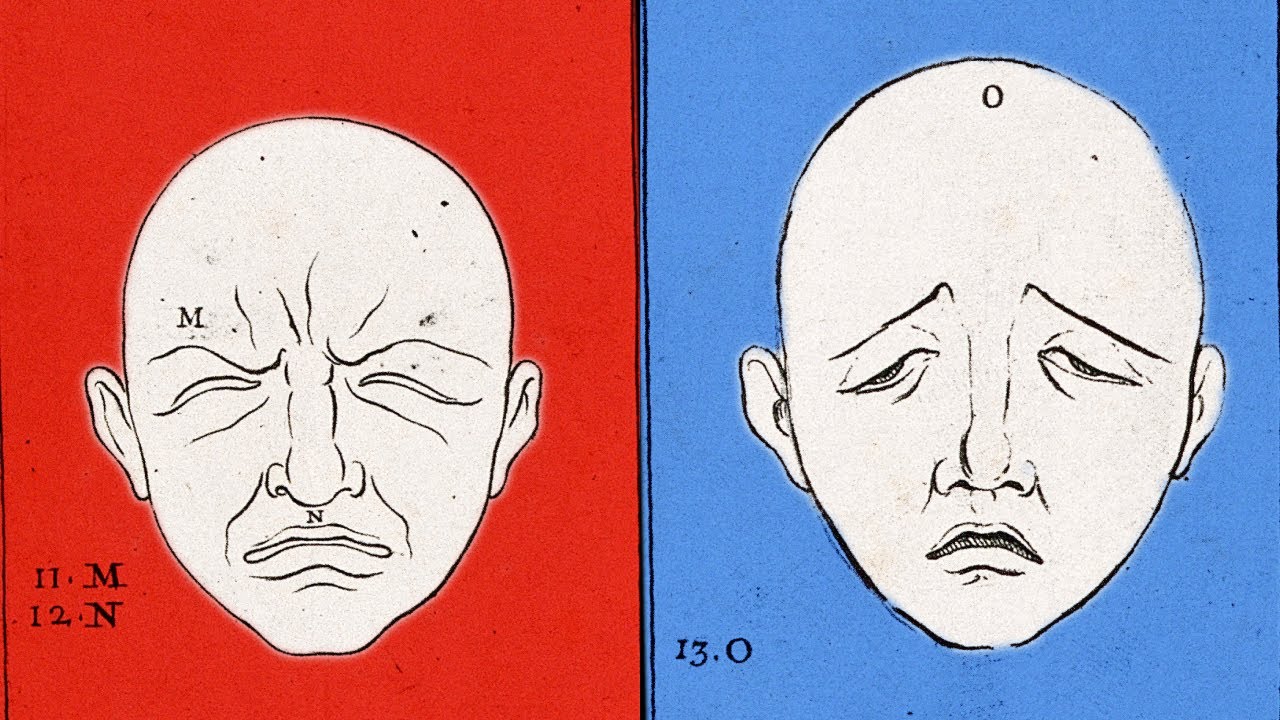
They help motivate us to action. Emotions help us communicate with each other. For example, our body language and facial expressions are reflections of how we feel.
And often, facial expressions or a tone of voice sends a stronger message than the words that you use. Our emotions also give us information about our environment. You can get a gut feeling that something's not right about a situation.
Your gut feeling isn't always accurate, but it does inform you about how you should consider the situation. Is this situation a threat or not? And this is where our biology comes in.
There are several brain regions involved in generating and processing emotions. For simplicity, I'm only going to discuss three of the areas that are involved, especially when we experience stress and trauma. These three areas are the amygdala, the prefrontal cortex, and the hippocampus.
I'm going to talk about the science of it and then apply that to how that works in real life. The amygdala is a small structure located deep in the brain that acts as an emotional alarm system like a threat detector. It's a subcortical structure, which means that it acts on instinct and not reasoning.
Your cortex is where the reasoning happens. Let's say I'm walking on a sidewalk on a busy street and a car is coming too close to the sidewalk as if it might hit me. Before I become aware of how close the car is, my amygdala senses the danger and triggers the release of cortisol and adrenaline that gives me the power to move out of the way and run if I need to.
How did the amygdala sense the danger? It got the information from my eyes, maybe even my peripheral vision, and then the sound of the car as it came close to me. And all of that happened before my mind registered it as a car that's coming too close.
Your amygdala is also involved in associating emotions with specific memories. This is why certain memories can evoke strong emotional responses. Another thing the amygdala does is recognize and interpret facial expressions, particularly those associated with fear and other strong emotions.
It helps us understand and respond to other people's emotions, which is necessary for empathy and social interaction. Early in development, our amygdala is not that active because we're sheltered and protected by our caregivers. But when there's childhood abuse or neglect, your amygdala becomes prematurely active.
This early activation causes excessive and chronic stress hormone release, especially cortisol. So early trauma and stress lead to an overactive and oversensitive amygdala. As powerful as the amygdala is, it doesn't work in isolation.
The hippocampus and amygdala are interconnected and communicate back and forth with each other. The hippocampus is a brain structure located in the temporal lobe. It's involved in encoding and consolidating emotional memories.
Let's say I get invited to a dinner and I don't know the people that well. They're friends of friends who want to include me in the group. I go and the hosts spend the dinner hour in heated political discussions grilling me about my political views.
I spend the rest of the evening annoyed and insulted. Months later, my friends have a gathering at their home and this couple shows up. I see them and immediately feel tense.
They haven't said anything to me but just seeing their face makes me feel angry and fearful and I feel uneasy because my hippocampus reminds me of the experience and associates them with unpleasantness. Another thing the hippocampus does is link emotions to the context in which they occur. It helps us remember not only what happened but where and when it happened.
So in this case, with the dinner at my friend's house, I associate this couple with having extreme views and being very judgmental. But they could have acted like that because they were drunk and in their own home. Now, being at someone else's house, they may be more personable.
That's contextual information that helps me process my initial emotional reactions and adjust my expectations because of the different set of circumstances. So I have this reflex response of, oh no, I may end up going off on this couple in front of everyone if they start up on me again with this stuff. But after some context, I pull back from that and think, there's too many people here for them to act like that, so things will probably be fine.
The third structure is the prefrontal cortex, which is located in the front part of your brain. The prefrontal cortex also helps tame our emotional responses by evaluating the emotional significance of a situation, consider the potential outcomes, and then generate appropriate emotional responses. So it's the thinking and evaluation center.
It also has reciprocal connections with the amygdala and hippocampus. So after it performs its analysis of the situation, it sends back information to the amygdala to regulate the intensity of your emotional response. Those are a few of the structures involved in emotion regulation.
Here's what happens when things go wrong. When you are exposed to adverse situations early in life, you get premature and overactivation of the amygdala. If the amygdala is overactive, it can override the hippocampus and prefrontal cortex and block them from giving us information that is reassuring.
If this happens, you can be at the mercy of your emotions and be so stirred up that you can't talk yourself down or think your way through the situation because you're missing the perspective information from the hippocampus and the reasoning ability of the prefrontal cortex. It's like your amygdala becomes sentient intelligence and just takes over and dominates the whole system. Brain scans confirm this and have shown that people with PTSD have amygdala hyperactivity and hypoactivity of the hippocampus.
This leads to emotion-based reactions. And this is what causes intrusive memories and flashbacks that you can get with post-traumatic stress disorder. With the flashbacks, you re-experience the event as if it's happening now and you can't pull in the contextual information that you need to ground yourself.
You don't see and experience the obvious facts like what you're thinking about happened in the past and you're safe now and you do have the power to protect yourself in the present. You can't think through it like that because you don't have the information you need from your other brain structures. All you know at the moment is what your amygdala is making you feel.
Even if you don't have PTSD, you can experience adverse situations that are distressing to the point where you become overwhelmed with emotion. Some people are more vulnerable to feeling this way under stress. In fact, chronic stress produces increased exposure to higher levels of cortisol.
High cortisol is neurotoxic to the brain and causes the hippocampus to shrink. People who get depressed for long stretches of time have smaller hippocampuses. A smaller hippocampus can't stand up as well to the active amygdala which leads to overwhelming emotions under stress.
The good news is the hippocampus is plastic. It's not made of plastic material but it's moldable. You can get nerve growth called neurogenesis in your hippocampus and other brain regions including the prefrontal cortex.
There are things that promote neurogenesis like exercise, intermittent fasting, curcumin, omega-3 fatty acids, diets high in the flavonoids found in fruits and vegetables. These are all things that I've talked about in other videos. What else promotes neurogenesis?
Psychotherapy and learning new skills. Learning new skills is what I aim to do in the next videos in this series on emotions. Stay tuned.
Thanks for watching today. See you next time.