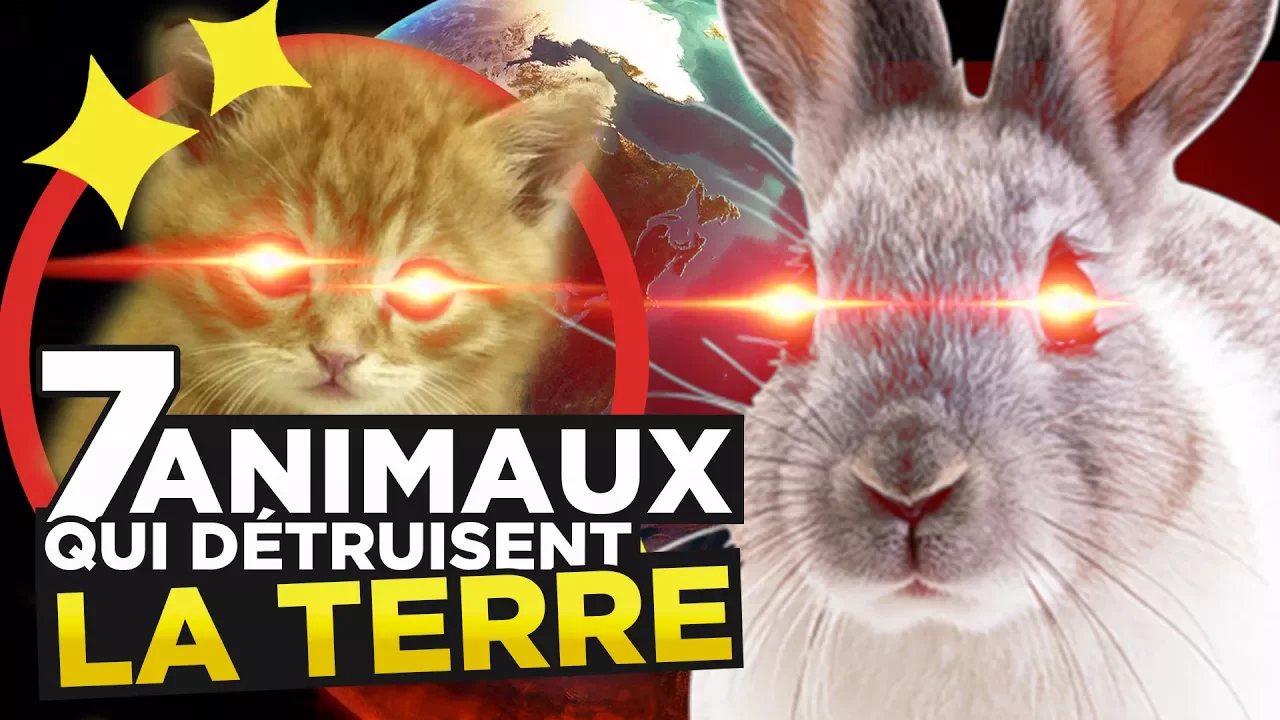
Yo Trashers! Do not release animals anywhere. Never.
It can be dangerous for them first of all, but it is as dangerous for our ecosystem! It is usually animals introduced by humans which are the cause of many environmental disorders, jeopardizing biodiversity! With globalization these species have multiplied and create real dangers!
Black rat, gray squirrel, even American crayfish! With Fildrong we will tell you about one of the biggest environmental disaster of the 21st century, 7 invasive species that destroy our biodiversity. The Asian Hornet Vespa Velutina, from its scientific name, is native from Southeast Asia and has been introduced in France like many other species by globalization: it is said that the larvae hid in Chinese pottery or in boats carrying Asian wood.
2004, the first Hornets are detected and 2011 it is not less than 2000 nests that are reported! 2010, Spain detects its first Hornets while some are spotted in Portugal, in Belgium and even some in Italy: the problem has become European. The Asian Hornet poses essentially two ecological and economic concerns, both closely related.
Vespa Velutina is a big bee-eater that still accounts for 80% of its diet. He hovers in front of one of their nest and patiently wait for a bee to come out to devour it. When the hive is emptied of the forager, the hornet enters and only has to chew the larvae.
One to two hornets do not seem to disturb excessively the operation of a hive, but beyond five it is the very life of the colony that is in danger! Beekeepers in southwestern France estimate that they lost between 30% and 50% of their livestock because of it. It's just huge and very fast: bees have no effective defense to repel these hornets (although some isolated self-defense behaviors are to be reported) and there is no natural predator here.
A true bee genocide takes place every summer which will in the short term destroy our natural balance, as bees are important for an eco-system. It's very simple, in the absence of bees, we would all die. They have such an important role in the pollination of certain flowers that the majority of the plant world is threatened.
They were already weakened by viruses and pesticides, but now the hornet appears as the species coming to strike a fatal blow to our bees. All that remains is to cross your fingers so that the recognition of "invasive species" to the hornets, although very late, allow men to save what is still possible to save. Gray squirrel If you go for a walk in London's parks one day, you will no doubt be amazed by the sight of adorable little squirrels coming up to your feet to try to find something to eat.
And yet under these cute rodents hide an ecological disaster. Gray squirrels, native to North America, are introduced in several areas of Great Britain at the end of the 19th century. Indeed, unlike their red European cousin, he is very comfortable with cohabitation with humans and makes a perfect presence in English parks and estates.
These introductions remained legal until 1930 in England, far too late to stem the advance. The gray squirrel is an omnivorous opportunist, he eats everything he finds, it can be garbage, buds or chicks. Along with this diet adapted to the rapid spread of the species, the gray squirrel is carrying a virus, the Parapoxvirus.
The latter is deadly for the red squirrel, even as the gray squirrel invades its historic population areas! As if that was not enough, the American cousin tends to skin the trees to eat softwood, which exposes hardwoods to viruses and other pests. It's already bad for the environment, but on top of that, the gray squirrel is mainly targeting beeches, which are also the favorite trees for the nest of red squirrels.
And what's crazy is that English squirrels are the only ones to do it, unlike their American counterparts! Indeed, since the great drought in England of 1976, they have acquired this habit of scratching the bark of beech, becoming hereditary behavior over the years. A sort of super dangerous and opportunistic super squirrel actually.
Result of all that, we count today 2,500,000 gray squirrels in Great Britain, against 160,000 red squirrels, and the trend continues. American crayfish The waters are also not spared by these introduced or unwanted species and you would be surprised to see that our water bodies have lost over time much of their diversity. The cause ?
The introduction of American crayfish more than a hundred years ago by a fish farmer in Germany. This species of crayfish used to move a lot from one water point to an other water point and can adapt very easily to its environment, it will not take long before they found some in France. American crayfish of olive green color is able to acclimatize to more or less polluted waters which are low in oxygen.
And that's not all ! In addition to that it has a fairly large reproductive power, which will accentuate its power of colonization, not to mention that crayfish larvae become self-sufficient after only eight days. The American crayfish is therefore the most widespread invasive species in our country, being EVERYWHERE, which causes a lot of trouble for other species of crayfish.
Because of their number, the Americans (clayfish) enter frontally in competition with the other crayfishes. The shelters are occupied and they are, the height of the disaster, healthy carriers of deadly diseases for other species such as crayfish plague. Beyond an obvious problem with the diversity of French freshwaters, American crayfish are also the source of a lot of deterioration of our shores because of where they are located, they will tend to dig a whole gallery network which will inevitably weaken the banks.
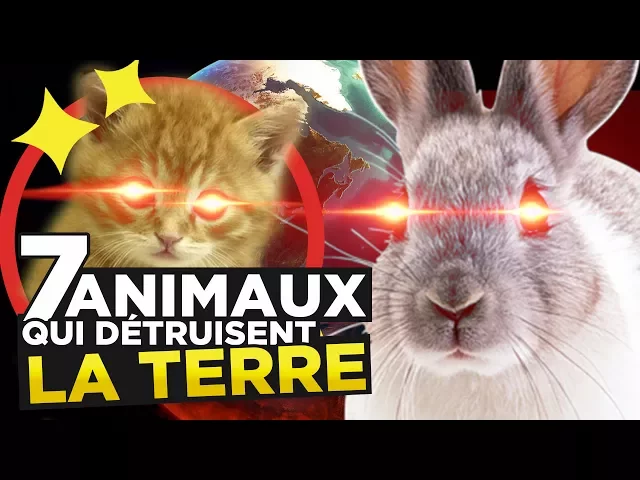
Finally, fighting against the proliferation of American crayfish is practically impossible, given the difficult accessibility of their galleries, at the bottom of the rivers. The European crayfish species seem to be condemned to more or less short term. The rabbit in Australia In 1859 in Australia, Thomas Austin, a British hunt lover imported from Britain 12 pairs of rabbits for fun.
What he could not imagine is that 150 years later, Australia would have on its shoulders the management of the biggest ecological disaster it has ever known. Some rabbits first escape their enclosure, after a fire. They will live their lives and reproduce in the wild.
Only problem? Unlike in Europe, rabbits have NO predators in Australia. And a rabbit breeds very, very fast, you know what is said on the subject.
Rabbits spread at a rate of 110 km of colonized territory per year. In 50 years, the vast majority of Australia is colonized. Rabbits eat all the vegetation of an already fragile soil, 10 rabbits eating as much grass as a sheep.
By eating the available food, many local species, especially the wallibies, small kangaroos, saw their population fall. The soil is weakened because the plants are no longer holding the nutrients in the earth, it is washed away by the wind. The process of aridification eventually reaches human cultures.
The Australian government, realizing this damage, then decides to put in place measures to counter its progress. Trying to build a 3000 km long barrier to prevent them from passing, except that the rabbit . .
. digs below. A lot of money lost, for the record of the longest unnecessary fence on Earth.
Second solution, the government authorizes the introduction of the fox, natural predator of the rabbit in Europe. It's a total disaster. The fox eats small marsupials, not prepared against this predator.
Good game. So it's been a real vicious circle for over 100 years which led to the almost disappearance of some local species. Even the introduction of viruses killing only rabbits has failed, since resistant populations have finally emerged, canceling any effect in a few years.
Today, the Australian government is trying to develop an immuno-contraceptive virus, which would prevent rabbits from reproducing. There's only to hope that it will not be an other failure . .
. The black rat This is one of the oldest and most dangerous invasive species for both the environment and humans. Originally from the Far East and introduced on the Mediterranean shores between 8000 and 5500 years ago, yes it starts to get old, the Rattus Rattus is a real plague found throughout the WORLD.
The thing is, the rat is a big tough guy. Not only do they have a high reproductive capacity, but in addition to that it has an extraordinary ability to adapt whether to the place it lives in or in the diet. Let me explain.
A rat in a "normal" condition feeds on 40g of cereals a day, or 8 to 10% of its weight, which makes it a voracious bash, imagine an 80kg-man consume 8kg of food a day. BUT. The absence of cereal will not upset our rodent: small animals, dead or alive, excrement, egg .
. . so many alternatives that can maintain a rat population.
Bearer of serious diseases like, among others, the Plague, the rat is also a danger for many other animals, especially birds, from which he eats the eggs and chicks! Volatile yet very important for our ecosystem since their excrement fertilize the land. Rats are responsible for the deaths of 25,000 chicks per year, also causing the disappearance of 75 animal species including 52 birds!
Recently rats have colonized many islands around the world and wreak havoc on the birds living there. Having not yet had the time to adapt to an unknown predator they undergo a real dammage. One solution: mass rat control.
It's expensive and it does not always work out. Forget about a handful of rats and in a few years they will colonize the entire territory, this is what happened on Henderson Island following a major rat extermination operation which still cost them a whopping $ 2 million, for nothing. Knotweed of Japan Invasive species status does not apply only to animal life.
The plant kingdom also knows its invaders, sometimes extremely dangerous for the environment. The Japanese knotweed is a plant that comes from Japan, yes I think it was clear, and was introduced during the 19th century in European gardens and parks for the beauty of its foliage. It also won the prize for the most beautiful plant in 1847, awarded by the horticultural society of Utrecht.
The plant is perfectly adapted to the mild climate of Europe, and multiplies very easily by vegetative propagation of its rhizome, its underground stem. Basically, the stems of the plant can give themselves a new perennial plant, quite quickly. In addition to that, its growth is extremely fast.
It can reach up to 4. 5 centimeters a day! Just tear off the plant and swing it on a pile of compost for a year later, a huge knuckle is held instead of your deposit.
And the worry for the neighbors of the plant is that the rhizome pumps all the water and nutrients present in the ground during the summer to be able to grow very fast the following spring. It therefore endangers many plant species which are therefore left with an impoverished soil and can not develop. A population of knotweed can in a few years occupy several tens of square meters of occupation, by preventing local plants from growing.
This impact also affects local animal species, which often rely on a few particular species for their diet or development. Fighting the plant is possible, but it's a daily ordeal and no final solution seems to be working now. The laborious uprooting and incineration of plants in a systematic way is still the only real solution.
And we end on an incredible fact. Molecular biology research conducted in Great Britain on 150 knots from all over Europe have confirmed that all the plants studied belong to the same original plant, having cloned indefinitely. The Japanese knotweed is probably the largest plant clone on the planet.
Really phew. The domestic cat The second most deadliest species after the rat, the cat is certainly the most vicious. And yes animal friends and Internet addicts, your cat is a killer putting at risk the biodiversity of our planet.
It can kill forty birds a year and 5 times more mammals, the cat is a danger, it is a fact. There are 11 million cats in our homes. They are responsible for the deaths of 2.
5 billion birds and 12. 3 billion mammals, about thirty species disappeared by his fault, all to eat, in the minority case of wildcats, or just for sport for the domestic cat. And this is a serious problem for both hunted animals, but also for natural hunters!
Cats cause unfair competition for animals who need hunting for survival: they have no other source of food than these little animals, where the cat will have an extended hand full of kibble anyway. The natural selection then leans in favor of the cat, the other predators disappear for want of food. Where their impact is most visible is in places recently colonized by humans.
One of the most convincing cases is the example of the marsupials on the island of Tasmania, in great danger on these lands. There are no predators on this island that looks like cats. consequence, the marsupials, naive and not knowing this disruptive element become easy prey.
This pattern is repeated over and over again for any kind of rodent or bird around the world, not knowing this new hunter from far away. The most devious in history is that where the rat, the crayfish, the fox or all other species seen so far are recognized as invasive, this is not the case of the cat. And even for the case of the stray cat, potentially much more harmful than the servants, the priority is to think about their well-being rather than taking into account any ecological considerations.
The concern with the species we talked about is that they have already been in their new territory for a long time. Sometimes long enough to develop new techniques of unnatural hunts, this is the case of the catfish introduced into our French rivers and who hunts the pigeons since it emptied our rivers of their fishes. To stop them is therefore more or less impossible, even if efforts are made to limit the damage.
Derelicting or destroying nests of hornets are all permitted measures by recognizing this threat status for biodiversity. But other newly defined invasive species have been spotted early enough to stop them. Awareness of the dangers that these species pose to the environment and to humans is now global, at several speeds of course, but it is taken seriously!
Globalization is unstoppable and this kind of species will be more and more numerous. It is up to us to rationalize and soothe our relationship with nature, a relationship that we wish harmonious one day.