[Music] hey everyone welcome back to mike and his whiteboard my name is mike and if you're brand new to this show this is a segment where i construct concepts visually for you so previously we've talked about things like the greeks we've talked about strategies we've talked about different metrics of trading today we're actually going to go back to the very basics and we're going to talk about buying versus selling premium and why we prefer to sell premium rather than buy premium for most of the time so without further ado let's get right into it so
when we're talking about call and put contracts there's essentially ways to be profitable with both of those so first we're going to talk about a put contract and we're going to see what happens when a seller does something and a buyer does something so we know that a put contract is the right to sell 100 shares of stock at a certain price so if i buy a put contract here and the stock ends up going down if i'm the buyer that's going to be good for me that's going to make me realize profit as long
as the stock price goes down further than the price that i bought it at plus the strike price so there's obviously things that go into this but in general if i'm buying a put contract and the stock goes down and my strikes in the money for further amount than what i purchased it for that's going to mean i'm going to profit now if i'm the seller that must mean that the other two are going to be profitable for me so if i'm selling a put contract we've got the stock staying the same if i sell
the strike price let's say this is the stock price and the at the money strike price if i sell that and the stock stays the same i basically keep the credit and the strike price would expire worthless or the option would expire worthless at expiration i keep that total credit and i'm profitable on that position now also if the stock goes up then that's going to be good for me as well because again a put contract is the right to sell 100 shares of stock so if i'm selling someone the right to sell me their
shares if the if the shares actually go up in price they wouldn't really have a reason to exercise that contract because if i've got the contract here and the stock price goes up they can now sell their stock up here as opposed to exercising their right on that contract and selling their stock at that strike price so with put contracts sellers profit if the stock stays the same if the stock goes up or we can also have the stock go down a little bit but not past the price we sold it to the other party
for and if i'm the buyer of a contract i need the stock to go down to be profitable so now we understand a put contract in the profitability on a put contract and you can clearly see that when you're a seller you have two out of the three ways to win and when you're a buyer you just have one to be profitable so this is one reason why we like to sell premium with put contracts now let's take a look at call contracts and it's going to be broken down a little bit differently so when
we're talking about call contracts it's essentially the right to buy 100 shares of stock at a certain strike price and certain expiration so again if i've got the stock price here and we're talking about a call contract that is basically at the money if i'm buying that call contract i need that stock to go up by the expiration point otherwise i'm not going to be profitable so if i purchase a call contract for let's say a dollar i'm going to need that stock price to go up above a dollar for me to just break even
so if it moves up a dollar i'll break even if you miss my break even segment check it out just by clicking on find shows at the top of tastytrade and you can search for mike and his whiteboard and you'll see that segment there but if i've got my break even at one dollar let's say the stock goes up one dollar if it moves up any further than that then at expiration as long as i purchased that call contract i would be profitable however if i'm the seller i can be profitable in two ways just
like if i'm a seller of a put option contract i can be profitable in two ways with a call as well however this time again i've got the stock staying the same would be profitable for the seller and that's because if i'm selling the call call contract right there and let's say the stock goes down now i basically sold someone else the right to buy shares from me at a certain strike price so if the stock price ends up going down and i've got the contract right here but the stock price goes down they can
now purchase the stock lower than what the strike price is so that would be an out of the money contract and it would essentially expire worthless at expiration now also if i'm the seller of this contract and the stock goes down then again i'm going to be profitable because like we just talked about if the stock price moves down and my strike price is above the stock price the other party in the contract can just go into the market purchase the shares at a lower price than the strike price that we agreed upon and it
would be a better situation for them and i get to keep the credit as well so with puts and calls regardless when we're selling them we have two ways to be right out of three and when we're buying them we only have one way to be right so that's one way that's one reason we like to sell premium as opposed to buy it now let's take a look at the next slide and we'll break it down in a different way so when we're talking about implied volatility and implied volatility reversion there's no really winner or
loser here but we like to just make sure that we understand this for conceptual visualization here so when i'm talking about a seller if i'm selling an option and implied volatility is high that essentially means that the option prices are high again if we're looking at implied volatility prices basically drive implied volatility so if the option prices are high i can know that the implied volatility is also going to be pretty high so if i sell an option at a level that's up here for me to be profitable if the price of the option goes
down then that's going to allow me to buy back that option for a lower price and the difference between these two levels is going to be my profit now one way for an option price to go down is for implied volatility to contract so we found that implied volatility has mean reverting properties which essentially means that if you look at a time frame of implied volatility if it goes down drastically it tends to go back up and if it goes up drastically it tends to go back down so if i sell implied volatility when it's
high i'm going to hope for an iv contraction because that's going to mean that if i'm selling that option i'll be able to buy back for a lower price and be profitable on the position now if i'm a buyer of an option i would want just the opposite so if i buy an option contract in a low implied volatility environment i would want implied volatility to expand because again if prices drive implied volatility and implied volatility is low that means that my price should be low relative to itself in terms of implied volatility so if
implied volatility expands that should increase that price there and allow me to sell the contract for a higher price than i bought it for which would mean profitability for me as a buyer so an example of this would be selling an option so if i sell a naked option or sell a credit spread i'm looking for an iv contraction on the other hand if i'm buying something like a calendar spread or a diagonal spread i'm going to want implied volatility to expand so generally you'll see us deploying credit strategies when iv is high and sometimes
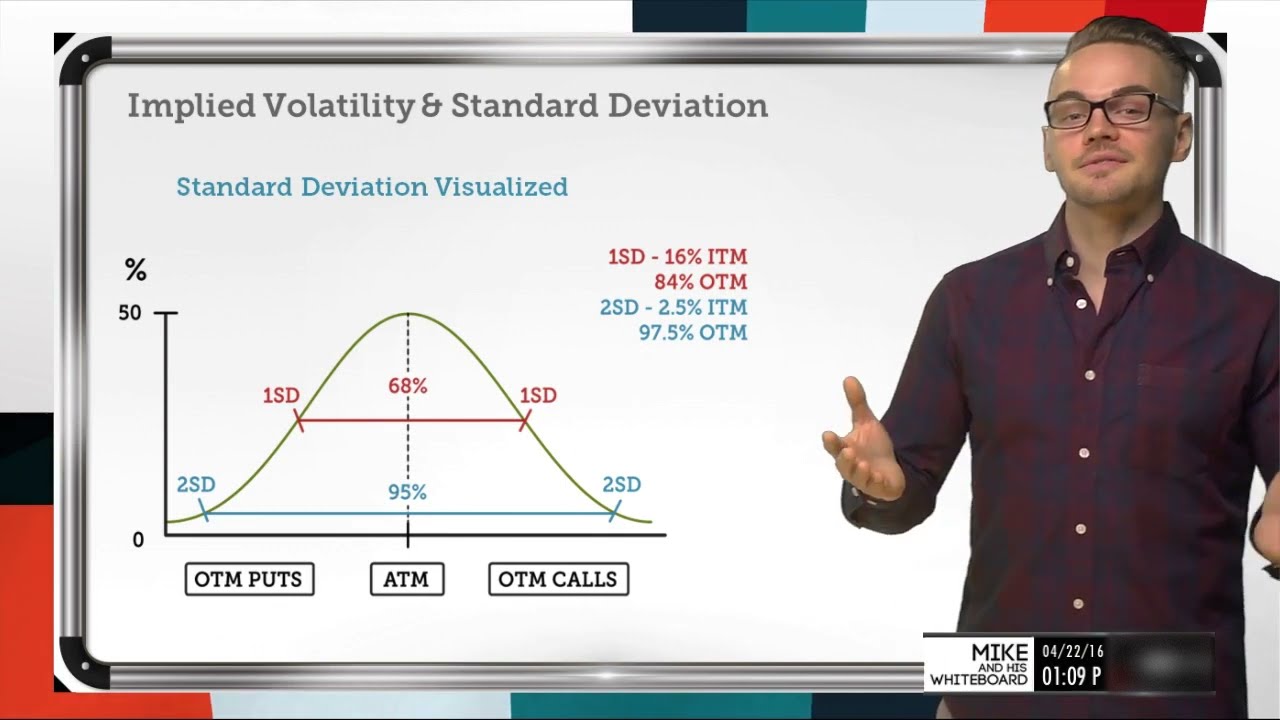
we'll expect we'll deploy those debit strategies like calendars and diagonals when iv is low so we understand iv reversion we understand the basics of a put and call contract but let's take it a step further and we'll talk about some probabilities here so when we're talking about probability of profit we're actually just talking about the probability of our trade making one penny at least in that expiration or in general so if i'm the seller i've got an out of the money and at the money and in the money option here and i also have an
out of the money at the money and in the money option for the buyer side so i know that the probability of profit has to be or the probability in general has to be 100 so when i'm looking at options being out of the money or in the money it's going to mean different things so with probability of profit if i'm selling an out of the money option essentially i'm going to collect less than if i were to sell an at the money option but my probability of profit will be higher so if we think
about our previous example if i'm selling an out of the money call so a call that's above the stock price i have all that room that the stock price can move and i'll still be profitable i'm just wanting my option to stay out of the money and that's going to reap profits for me however if i'm buying that same exact option i'm basically taking a gamble and taking a shot because like we talked about previously i need that stock price to move past my option and make my option in the money so if i buy
a call option that's way above the stock price i need that stock price to move way up beyond my call strike for me to be profitable and that's what gives us this 20 probability of profit so basically the seller plus the buyer side is going to equal 100 so the seller for out of the money options is going to be 80 and the buyer is going to be 20 for this example and what we're looking for is probabilities of profit that are above 50 so i've circled the out of the money seller which is 80
and that's above 50 percent here now if we're looking at at the money options you might think at first that it should be 50 50 but it's not and that's because when i'm selling an option i'm selling an option for a credit and that credit helps my break even prices which i discussed in the previous whiteboard which is giving me a higher probability of profit it essentially moves my breakeven point and it's it moves in my favor so when i'm selling something it's going to move my break even in my favor and when i'm buying
something it's going to move my break even against me because again if i buy something i need that stock price to move past the amount that i purchased it for at least for me to make money on the trade now if we're talking about selling in the money options so we're talking deep in the money options and buying deep in the money options it's theoretically going to be a 50 50 and you'll see this on the dole platform as well and that's simply because of the fact that if i'm selling in the money options or
i'm buying in the money options that are very deep in the money it's going to act more like long stock and short stock depending on whether i'm buying a long call or selling a call that's both in the money or buying a put or selling put as long as they're both deep in the money they're going to act like long stock and short stock which is why i've got the probability of profit listed here as about 50 because we like to believe that stock prices moving up and down is generally a 50 50 shot so
hopefully this has cleared up buying versus selling premium let's get to some takeaways before we end it though so takeaways premium sellers can win two out of three ways so again when i'm selling premium i can essentially have the stock price stay the same go down if i'm let's say i'm selling a call i can have the stock price stay the same go down and be profitable or it can even move a little bit up but not past the amount that i sold the credit for and if i'm buying an option i need that option
or stock price to move past that strike that i purchased plus the amount that i paid for it so it has to move quite a bit and that's why when i'm buying something i can only win one way whereas if i'm selling something i can win two ways also sellers benefit from iv contraction so like we talked about prices drive implied volatility so if prices are high that must mean that implied volatility is high relative to itself so if i want to sell that option i'm going to look for an iv contraction which is going
to allow me to sell it at a price up here iv will contract and it should lower the price which is going to allow me to buy it back and that difference will be that profitability on the flip side buyers benefit from iv expansion so if i buy an option when the iv is low and the iv expands but nothing happens even with the stock price implied volatility could just expand and that would allow me to sell that option for a higher price than what i purchased it for and last but not least selling out
of the money and at the money options allows us to obtain a pop above 50 so this is the name of the game here for us we love to have a large number of occurrences and get trades that are on that are above 50 so that in the long run we're going to hopefully realize those probabilities and they're going to be above 50 which will help us be profitable so this has been buying vs selling premium hopefully you enjoyed it thanks so much for tuning in if you've got any questions shoot me an email at
or you can tweet us trader mike the rest of the week wednesday and thursday we're actually going to talk about a few of my favorite diagonal spread strategies which are poor man's covered call and poor man's covered put so be sure to tune in but until then i'm mike and have a great night [Music] hey everyone hope you liked this video click below to watch more videos subscribe to our channel or go to to watch us live [Applause] you