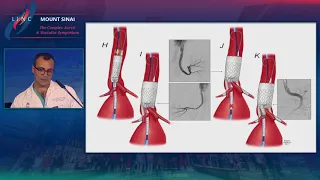
this is audible bleeding the vascular surgery podcast we're here to help you keep your finger on the pulse hello welcome back to audible bleeding I'm Adam Johnson and today we have with us Gustavo Oda rich from the Mayo Clinic in Rochester Minnesota he was originally from porto alegre brazil but now he is currently the chair of the division of vascular and endovascular surgery the program director for the vascular surgery integrated residency traditional fellowship and advanced a or tech fellowship at the Mayo Clinic he's also the associate editor for The Journal investment surgery and on the board of many other prestigious journals and he's really a pioneer in that fenestrated and branch devices for complex aortic aneurysm disease so welcome to Ottawa bleeding and thank you for your time so I guess we'll just get started with in general this is for vascular fellows and people starting in their training in basilar surgery so can you give us a little bit of story of what brought you to vascular surgery sure so we have to go back to the like 1995 or so I was a resident in general surgery in Brazil and I really liked the finesse of vascular surgery the idea that at that time already the specialty was changing a very fast pace with the introduction of endovascular procedures so I thought that that was going to be a very appealing specialty where I would be able to join the skill set of very fine open surgery with the potential to do catheter based procedure and that was what got me started way back in 1995 and so you in Brazil at the time yes sure if I did my medical school there and actually a couple of years of general surgery and during those true two years of general surgery I had the rotations on vascular surgery and had the chance to participate then as an intern or young resident in one of the first anniversary or ik repairs there at the time a lot was with a modified stance or actually stands they were coming from the US physicians from the US they were coming to Proctor and I thought that this was really a revolutionary that that it was going to change everything and at the same time I never thought that Brazil was gonna embrace and avascular therapies so fast there were numerous regulations to import devices and my my thought was that I had to kind of get out of the country to be able to train on these techniques the options were either to go to Europe or UK or come to the US and throughout advisers and so forth I found my way you know coming to the United States first started as a research fellow worked with Peter Lawrence at the University of Utah for one year and then went through the application process and was very fortunate to imagine a categorical program at the Mayo Clinic that was then 1999 few years after that so I'm sure you had many great mentors this is Kevin by the way throughout your time and helping you through your vascular training can you describe you know some of the characteristics of a good mentor yes Kevin that's a very good question I think I was blessed that I had the chance to train through giants of both open surgery and also endovascular surgery first for starters was against Peter globe iski I can't not mention about Peter globe is key I mean he's a masterful surgeon and person and has really accumulated all the accolades of an academic vascular surgeon but a masterful surgeon with open skills that are unmatched and also academician so he was a big mentor Tom Bower has had also a lot of influence on me on how I carry open surgery in general and I think he was heavily influenced by ken cherry Larry Houllier Peter Farrell Aero so I feel that a lot of the things I learned from him I kind of inherited from those then transitioning to endovascular the beginning of my vascular surgery training here at the Mayo Clinic we are back down now to 2004 I felt that we were very conservative on endovascular and we were kind of behind of what things were doing around the country and Tim Sullivan was really the one that I would grant that got me started on thinking endovascularly thinking out-of-the-box thinking you know can you do a less invasive alternative and can you push the limit on cases and can you actually be an independent vascular surgeon working on end of a score without having to have your hand held by interventional radiology all the time and that that I granted Tim Sullivan but still even when I came on staff at Mayo that's 2006 I felt that what I was doing was was then very good acceptable you know Brad and brother vascular procedures the e VARs the T VARs the lower extremity stuff but I didn't have the the training on the very complex endovascular and it was really working with Roy Greenberg at the Cleveland Clinic that I would say set the course of my career to think about complex endovascular procedures and I would say that not only on the techniques and it specifically how to think about the aortic disease and how to plan but also about how to set up a team how to set up the research part how to to participate in clinical trials and be engaged and interact with industry and I granted that out to write rain where he was a masterful endovascular surgeon skills that are unbelievable and and just had the ability to adapt and I think that is the most important trait for us and I say for the trainees is that you have to adapt because what what you're doing now what we're doing now and what I was trained it's a lot different than we actually I'm doing I mean the way I do cases is very much different than what Roy Greenberg taught me but he taught me how to think out of the box and how to adapt on planning and conducting this very complex and the vascular procedures what would you say is maybe some of the biggest differences as things have evolved from when you were trained and then tech how you do the procedures now so R I always like to do things through the femoral approach and he was blessed to have investigational devices at his hand every day and when I came to Mayo just like most of the centers in the u. s. I didn't have access to any manufacturer device so he was using creativity and working with others that we started using modified devices and one of the first things that I came to realize is that using the brachio axis was making those cases much easier faster using a staggered approach to deploy a stand so that I could leverage space to get the vessels so that is that started to set me apart from the traditional I would say green bar dogma of doing everything from the femoral approach and to this date that now we use a lot of our cases the vast majority are done with manufacture devices I still leverage that I oftentimes ask pre-loaded catheters or pre-loaded wires so I can I can do the case in actually a similar way as I was doing when using physician modify demographics the other difference is that the traditional culture of the Cleveland Clinic and you can see that on several of the people that were trained by Roy is to use Fitness trations no matter what on every case the usage of branches if you look at Stefan's param astrati is minimal particularly renal branches and I'm kind of more in the middle I'm not only branches I'm not only fenestrations I I came to appreciate the value of a branch when there is a very large and resume a downgoing renal artery I don't see the point really on using a fenestration quite frankly I think that there are other issues related to fenestrations that are sometimes underestimated so that's another difference from from my traditional training with Roy so Gustavo you know you have the luxury because you've positioned yourself to have the total spectrum of devices available to you when do you decide to use a physician modified device in your practice as opposed to a custom device like a branch of an astroid device do you see a role for parallel graft in your practice as well very good question so I think that an important message is that there is a role for all these techniques that we have to actually master all these techniques but the two techniques physician modified in parallel grasp for the most part originated from the creativity of physicians because of the lack of access to industry manufacture devices if we all had devices at our hand the vast majority of cases would be done with these devices they are easier they're less time-consuming their devices now with lower profile with pre-loaded systems that make the cases fasters so is really because physicians don't have access that physician modify devices in parallel graphs were it started and gained momentum but having said that these techniques I don't think will ever disappear and there are some patients where they have tremendous value and perhaps they are actually the best techniques better than a manufacturer device we for example we use is still physician modify devices in a very few patients every year maybe a handful of patients these are patients they have an urgency or some situation that they cannot wait for a manufacturer device they have multiple vessels involved so we don't feel that parallel graft is the best and the classic scenario would be a rupture contain rupture para Reno or or or para v-0 aneurysm where we don't want to use a tea branch for some reason perhaps is too much coverage of a thoracic aorta that is normal or renal arteries that are up going or coming from the relatively narrow aorta and in those case is knowing how to do a physician modify device well I think it's a tremendous advantage the parallel grafts you ask that I do see role and I am NOT one that says that parallel graft is an absolute nonsense I do think that it has been widely used again because of lack of access in to other technology and I don't think that for physicians they have access to devices it pays off to do parallel graft on elective cases that can actually be treated well with a bridged or a finished regret having said that there are cases that are really bad for fenestrae grafts patients they have very poor alike access patience they have a rupture that you absolutely have no time to waste and yet you feel you can get a seal with a parallel graft I think that's the right thing to do and and that's those are the patients I use here and also as you know our our access to manufacture devices link to the setting of clinical trials so these trials have numerous medical and anatomical exclusion criteria and sometimes you have a very elderly patient with a prohibitive risk that does not quite meet the criteria for the trial but we feel that there is a good Anatomy for a parallel graft that's the case that also we might use that so I'm not one that that say that you know it's it's a known sense you should never use I mean there is no room for it I think that there is room for this technique I just think it has been used much more than what it should and in part is because physicians don't have access to other devices do you have any personal experience with insight defenestration as described from the group of Paris and Milan partners who have used that in urgent cases and they seem to have good results of that if you have you done any of those cases yourself no actually I was finally critical and the first paper came up I actually was one of the reviewers and I was very critical and I have to say that I changed my mind on that I do think that there might be a role on our experience it's probably a very small role why because we can do a physician modified graph relatively fast very accurately and at the end of the day I think that the patients have good outcomes with that so I don't see much of a role on the pair of history order for us having said that we've done it in the arch and I am really impressed with the technique and the results that Dominic Fabri who really pioneered the pair of Israel inside impair is a now Stefan how long is working with him has now come up with a larger series so I think it's exciting as well just want to say for our listeners if you want to do any additional reading on this area dr.
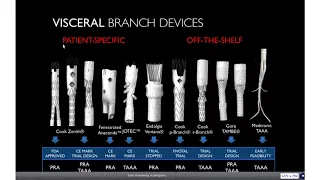
Aldridge just had a great publication come out in the JVs called the evolution from physician modified to company manufactured fenestrated branched and no grafts to treat perry nolan thoracoabdominal eric an immersive story kind of describes experience at Mayo Clinic now with these company manufactured fenestrated branch into grass do you think this is something that's gonna become more mainstream and available to a wider range of vascular surgeons or will be maintained in the centralized academic centers i think that it will be spread but when we look at data from how many physicians are trained to how many physicians actually do the cases let's look for example at the Z fan as if n is kind of the first step towards doing complex case so for every hundred physicians that are trained by cook about five percent actually do more than ten cases a year and what we don't know is really the difference in outcomes between physician centers that are doing higher volume versus though they're doing less volume we think that there will be a big difference in outcome if we look at any complex procedure open Torico is of ejecta me sweep of etc there is a huge impact of surgeon and center volume on outcome so I do think that as time goes by and now we have large datasets from Medicare etc we'll be able to start looking at at those things but at the end of the day once these devices become more available physicians both in the community and in large centers will use it a lot of the limitations are going to be imposed I think by cost and perhaps by limitations from the industry to who gets access but when we look at other procedures that are that adds some layer of complexity Tavor Z fans the elec branch devices it has actually spread pretty well through the community so I think that the same is going to happen with with the manufacturer devices and in fact there is a ton of physicians out there doing modify devices we don't even know how many and what is the volume of that but I have to think that that is is actually significant and with these physician modified graphs with your experience what's the medical legal discussion around these and how much liability to the surgeons take on when they do these modifications I think they take a huge liability actually and and there are two different scenarios or types of physicians doing this one is that you are truly doing very small number of cases on cases that are exceptionally high risk that you can have a frank discussion with a patient and a family about the stakes without repair with open surgery with a physician modified and it's very critical to get the family on board to get the patient on board a consent that is very well formulated and I also have some backup legally from your Hospital ahead of time when you do it the legal department your your chair or your division chief if you are doing this regularly absolutely should be done as part of an IDE first of all you don't have any backup to stand if you're doing this on high volumes you don't even get reimbursed for the entirety of the procedure so it's a major loss for your hospital and the FDA is very clear that if you are doing this with the intent of any research that then is is a high-risk procedure that you would need an investigational device exemption so dr. Ullrich what is the next big thing in in vascular treatment of aortic disease the immediate thing for us is that there is very exciting time on the next two years where finally there will be clinic trials that will allow access of these devices to a larger number of population in the US the Gorton betrayal is actually already rolling in and being submitted to IRB is in many centers and the cook trials in large part have been accelerated by the fact that Gore has already jumped on this so finally I do see that the cook trials are going to be coming to fruition within this year so the good news is there is access that is going to come so the generation of surgeons that is training now that's graduating will get their hands into devices but there is always advances on these devices that are gonna they're coming at a pace that's much faster than what the trials can overcome things like a smaller profile newer delivery systems newer designs newer bridging stands so the technology is getting better the procedures are gonna become I think easier on us technically to do it and easier on the patients with less complications the next thing that is going to happen I think is that and there is some light on that already is to go away some of the current paradigms that we have that all these cases are done under fluoroscopy for example there is work already with GPS guided procedures floralis procedures and I think that is going to become a reality and then going to the basic science part I think that we are we are still living this on complex aortic disease this paradigm that we fix everything with stent grafts of fabric and metal and I do think at some point in the future there will be work with regenerative medicine and stands that actually are biological that become incorporated in tissue or that reinforce the aortic wall and we're a long shot from that but I do think that that is gonna evolve that way so Gustav I have a question you know we're talking about this going from being something done in highly specialized centers to possibly being done more widely what do you think are the basics that you need at a Center to do advanced a or tech work so the first thing is you need the team and when you think about a team it's not only your surgical team which is a big part of it you know having your partners and there are scrub nurse but then you need to have a dedicated cardiovascular anesthesia team critical care team the nursing team that is all engaged because there are many parts of these procedures they go out of the or that are critical for the patient to have a good outcome I think the physicians also have to realize it's a lot of work it's not just the fun of putting that stent in the fenestration there's a lot of time-consuming work on planning these cases that the physicians have to be truly passionate about it on following up these cases and if you if you are interested on becoming a big player on this work with research on this area is critical because this is a technique in evolution that we are constantly assessing the outcomes to see what is best and you have to have a big part on that as well and so what do you see is maybe some of the big biggest barriers in advancing this field well I think clearly one of the biggest barriers we have now is is cost more and more these procedures are just exceptionally costly not only the aortic device is costly but the bridging stance er sometimes even more costly than the aortic device now we are doing staged procedures so we're talking about two operations the follow-up as well that's one big barrier because these are not money-making procedures for any cost or department at least that's what I'm told and it's a challenge to to build a big program when you're not having a positive margin the the second issue is still access you know access is just limited to like a zero one percent of the centers in in the world and that is hopefully gonna get bad there now with some trials and devices getting approved but it will always be an issue as long as there is regulation and there is going to be evolution of this devices so I can I can see that even when let's say the Tambi gets approved there is going to be the second generation device and the cook device gets approved there will be the newer generation device and accesses is always going to be a problem so I think that there is always room for having pipelines of clinical research that you can get access to things before they actually become commercially available going back to the cost a little bit so some controversy has been in the literature about the nice guidelines out of the UK where they won't reimburse Ivar in a lot of situations and recommend more open treatment partly because of the device costs the long term surveillance and rear intervention what are your thoughts about the role of open surgery then versus endovascular when you talk about this cost if you are more of a vascular surgeon in the community setting or who has just a patient who needs treatment for their aneurysmal disease so I think there are two things to say about what's going on in in England and with the in the UK with the nice document one is the price that we are paying for what's going on with endovascular repair which is even though there are numerous early advantages in terms of mortality and morbidity there are clear-cut long term disadvantages which include a higher rate of aneurysm rupture a much higher rate of aortic relatedly interventions and in some studies even a higher rate of late mortality from aneurysm ruptures and as we start looking at data from national datasets all these patients that are being treated way out of the boundaries of ifu and with techniques that are at the best questionable are going to come in to surface and hurt the general results of where endovascular therapy can actually be beneficial so to me little bit of what is happening in the UK is that the committee put it extra emphasis on these late results disregarding the evolution of endovascular technique all the early benefits that are major in terms of protection from operative mortality that IVA offers against open surgery and put too much emphasis on the late part which is very important but I think it can be improved and remediated by better devices and better control on which situations the devices are used so titled adherence the ifu and case selection you think of dependent result in their outcomes I think sure if you would have been better and also if we had better tools to tackle those complex cases but at the same time again he put emphasis on how important it is for us to know how to do open surgery because I'm telling you is is here to stay and you need to do it while there is less and less people that are comfortable and doing open surgery and there are patients that are absolutely not a good endovascular case and again if you start doing a no vastra on those cases then you expect you have a higher intervention you have more ruptures more mortality and then later on looking at the data of this case is of course they are not going to perform as well and you have to keep that in mind when when you look at that is a nice document I don't know they're going to revise from my last communications and and I'm hopeful they are going to come up with a much more reasonable recommendation that actually reflects the practice in the UK and worldwide so dr. hood rich in what situations are you guys performing opening or dick repairs at the Mayo Clinic and and how do you train the next generation of residents and fellows in these techniques one situation is when endovascular therapy has failed and we either exhausted reservations or we feel that our intervention is not going to be very effective and at the same time the patient is a reason open search for candidates till that patient is is a large part of our practice those are the conversions we still do a fair amount of infected a artists infected and Oh grafts mycotic aneurysms and then there is a subset of I would say very young patients with quite complex disease they may even be a candidate for a fenestrated or a branch repair but when you have a 50 year old 55 year old with bilateral Kane Rosen's ejects torino aneurysm and you need to do numerous fenestrations bilateral ich bringe device versus doing abdominal aortic repair even with ajax the renal clamp you have to challenge the end of a spur because it's just I think it's even technically sometimes easier to do it open and on the long run you may have significant advantages in terms of aortic intervention the one thing that it keeps us doing and of askers - on these patients is the issue of sexual dysfunction which always have to be discussed well particularly when we have the younger group that was just a wonderful discussion about a or DIC disease we're gonna pivot a little bit to talk to you about radiation exposure and techniques to mitigate risk for our trainees yes I think that there has to be a major focus for us that do endovascular procedures and as we have that trainees involved on this really get on their minds how important it is that from the beginning they develop good habits about radiation exposure it's starting up with with shielding you know shooting yourself shooting the field using glass shoots we have now since the last two years after the publication of the moderate study on circulation become very attentive about shooting our calf with with lower leg shields to protect from radiation there has been a tremendous advance on hybrid imaging so when we look at our own data over the years even after we already have overcome the learning curve so we kind of plateau in terms of fluoroscopy time operating time it was really how much better the imaging technology became that allowed us to decrease radiation substantially one of the the new features I would say the advanced features that helped us as only fusion you know to avoid doing repeated DSA's and leveraging digital zoom instead of magnification to me that has been the the major factor in our practice that we notice is being able to do an entire Torah called dominocus without a single magnet magnification and just using digital zoom we were able to cut the radiation those as you see on that publication from an average of three gray per for vessel case to 500 to 800 million so that has been a tremendous improvement so Gustavo what question we like to ask most of our interviewers is is there any technique that you use that has gotten you out of trouble in the operating room it can be an open technique and a technique but you know one little thing that you keep up your sleeve that keeps you safe well yeah one technique that I used now in a handful of cases is retrograde access to the visceral vessel so via a midline laparotomy I'll tell you sometimes if you're struggling with a case is best to fight the battle another day then end up with a case that is excessively long in the operating room with a lot of blood loss lots of lag ischemia a patient's end up not doing well so I think over the years as I might I might Chiron technique and matured on having enough complications with my own patients I pulled that trigger much earlier nowadays so I may actually quit revisit the case the next day next week and on those cases going back via midline laparotomy and doing some sort of a hybrid approach retrograde axis has bailed us out tremendously in several cases that we were able to complete so is that a case where they are still perfusion the branch but you can't bridge it from the fenestration or the or the branch itself or you know it's different than if it's like covered entirely no no usually that's the case sure if you have you are doing a case and you just cannot get into one of the passes you'll try you try and I have now a lower treasure to just quit leave the leave the branch is usually perfused you know I have not had an issue of that or cluding I guess it can happen but usually it's not the case and then just do an incision who do i retrograde and usually becomes a much easier case with less complications well dr.
hood rich you really appreciate all the great advice one question we like to ask is when you're performing these procedures do you listen to music in the operating room I do I do what's on your playlist well you know I like I'm very eclectic on that but I I release a lot to Coldplay you choo Dave Matthews Band's that's the style that I like the most but you know sometimes is the nursey and the team that dictates what we listen that's the most important thing I think with the music is getting something that everybody's happy with you know exactly we have two last questions for you that are kind of fun being from Brazil how have you adjusted to the weather in Minnesota Oh sad I adjusted you cannot adjust that is rather man that's why he travels so much for working yes I have never adjusted I live with it but we are always looking at at some point we're gonna move to a warmer place and for the kids he has been a great place to raise them and you know the clinic to work has been addictive and amazing you know allowing us to develop a practice and a team and that's those are the things that kept me here but the weather we struggle a lot you know it's just too cold and when it gets to be code that you can't walk outside that that's bad you know so fortunately this winter so far has been gentleness I actually went for a nice run today so it was 30 degrees follow me but that is an exception you know it seems like you stay active in your free time anything else that you do other than run well so we have two kids and we hang we do a lot of stuff around the kids so it might be we go to the cities we go to a play or a concert or one of the museums so when we have a break of free time we actually may do something out of Rochester usually Minneapolis we have a large group of friends here in tend to do social things together again with the families and as I said I'm very active so I'm always doing some work out weather is a now biking indoors or running or some you know insanity or p90x or whatever it is coming up that mom I tend to stay active have you done peloton yet I just got it yes I minored a week ago and I'm doing it almost every day you have to come to New York and do one of the live classes with us that's awesome I would love to all right well dr.