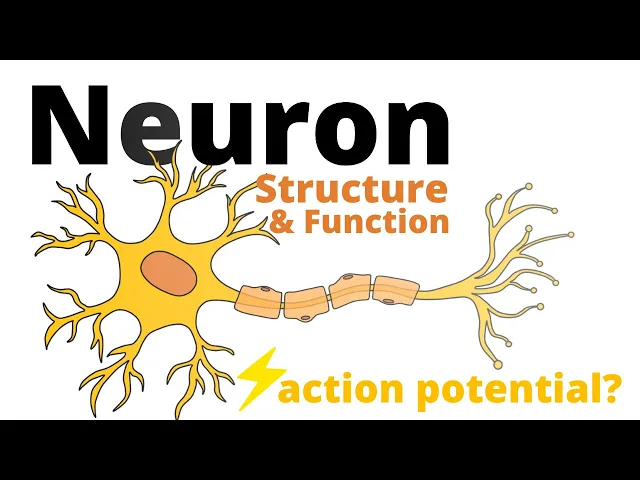
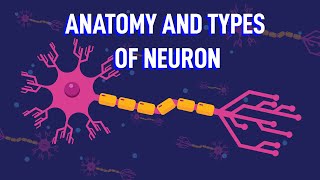
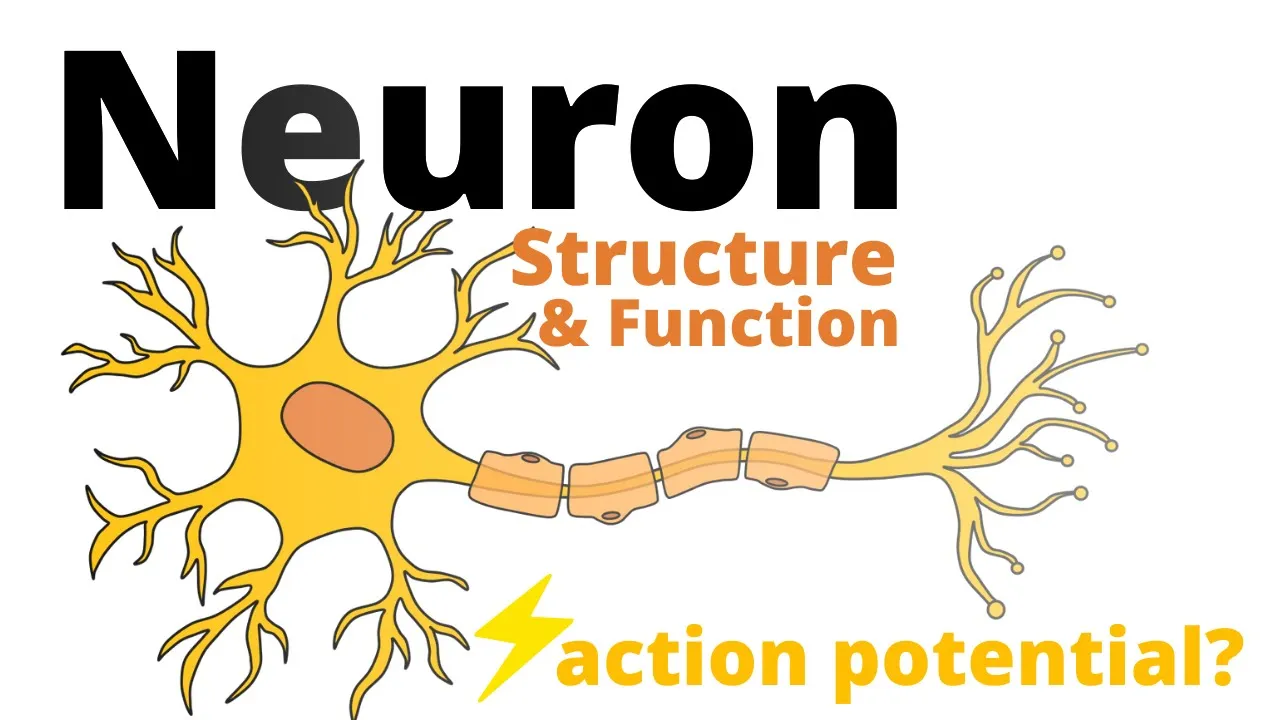
a neuron is a specialized type of cell that is responsible for transmitting and processing information but what exactly are the essential components and what is the structure of a neuron make sure to subscribe to the channel and activate the notification Bell to stay updated there are different subtypes of neurons namely Sensory neurons transmitting information from the external and internal environment to the central nervous system there are motor neurons conveying commands to muscles and organs and finally there are interneurons that transmit information between separate neurons despite these classifications there are characteristics that are shared between these
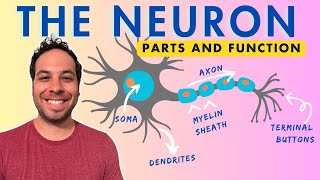
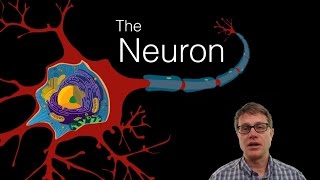
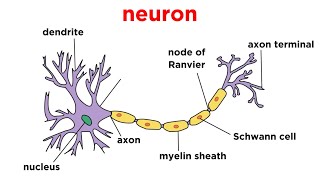
subtypes the cell body also known as Soma is the main part of the neuron the Soma includes the typical organelles that exist in the eukaryotic cells such as the nucleus for example besides maintaining the metabolism a central function of the Soma is to produce proteins and other molecules which are important for the signal transmission there are branched projections referred to as dendrites extending from a neuron cell body dendrites receive signals from other neurons or sensory cells but more about this later the axon is a long thin projection that carries electrical signals away from the cell
body to other neurons muscle cells or glands the first part of the axon is named axon hillock this is also the starting point for any action potential an action potential is a brief electrical signal that travels down the axon of a neuron allowing for communication within the body it is generated by a sudden change in the electrical potential across the neural membrane which triggers the opening and causing of ion channels in the membrane it is generated by a sudden change in the electrical potential across the neuronal membrane which leads to an electrical Cascade opening and
closing even more ion channels along the axon the axon is covered in regular intervals by so-called Schwann cells along the axon the Schwann cells produce an insulating substance known as myelin myelin sheaths are fatty layers encircling the axon which also prevent the presence of ion channels in these regions in between the myelin sheaths are gaps which are called nodes of rangier these nodes allow diffusion of ions as ion channels are present here this fantastic composition of the neuron leads to very fast electric signal transmission finally the action potential reaches the axon terminal this is the
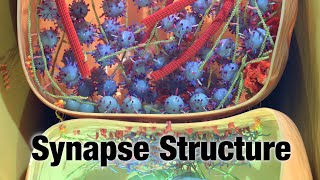
end of the axon that forms a synops these synapse is the junction between the axon terminal of one neuron and the dendrites or cell body of another neuron or Target cell here neurotransmitters come into action these chemical messages stored in vesicles are released from the axon Terminals and bind to receptors on the dendrites or cell body of the target cell a allowing for the transmission of signals between neurons if this summary of the structure and function of a neuron was helpful to you feel free to leave a like you should definitely check out this video
here and please subscribe to the channel if you haven't done it already thanks and have a good one