Have you ever looked at the world around you and wondered why life seems so unfair? You see people who lie and cheat getting ahead while honest people struggle just to make it through the day. You see sickness take away the young and innocent while the wicked live long and healthy lives.
It is a question that burns in the heart of every human being. If God is good and if God is all powerful, then why is there so much suffering in the world? Why do bad things happen to good people?
This is not a new question. It is as old as humanity itself. Deep within the pages of the Bible lies a story that tackles this mystery headon.
It is the story of a man named Job. You might think you know this story. You might have heard that he was a man who had patience.
But the true story of Job is not just about patience. It is a story about a man who lost absolutely everything and dared to ask God why. Our story begins in a place called the land of Oz.
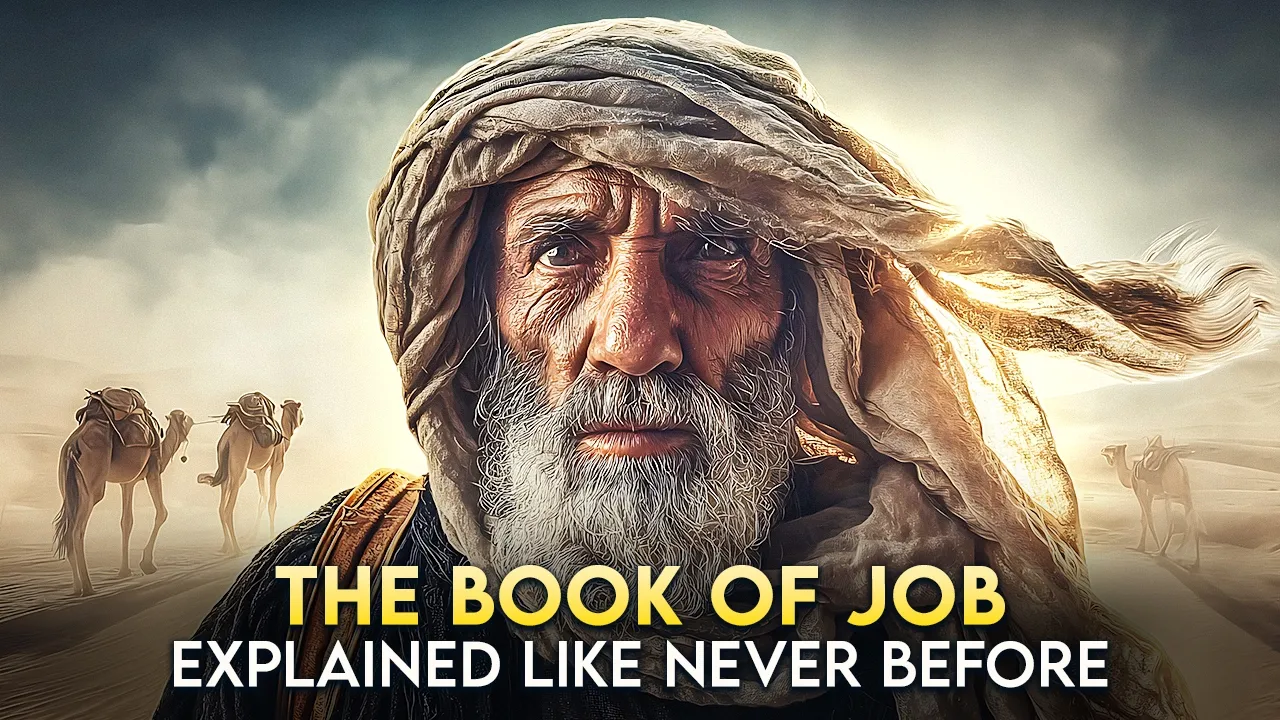
This was a real place likely located in the vast stretching deserts of the ancient Middle East. Imagine a land of golden sand and rocky hills where wealthy chieftains moved their vast herds of animals from oasis to oasis. It is here that the Bible introduces a legendary figure with a description that is rare and powerful.
There was a man in the land of ooze whose name was Job. And that man was blameless and upright and one who feared God and shunned evil. Notice what the text says here.
It does not say Job was perfect or without sin. It says he was blameless. This means that in his relationships with other people and in his relationship with God, he was a man of integrity.
He was whole. He did not have a secret dark life. He was exactly who he appeared to be.
He treated people fairly and he honored God with his whole heart. Job was not just a good man. He was a successful man.
In fact, he was the greatest man among all the people of the east. He possessed 7,000 sheep, 3,000 camels, 500 yolk of oxen, 500 female donkeys, and a very large household. In the ancient world, this was like being a billionaire today.
His wealth was vast. He had servants to manage his estate, and he was respected by everyone in the city gate. But his greatest treasure was his family.
Job had seven sons and three daughters. He loved them deeply. We see a glimpse of his fatherly heart in the opening chapter.
His children would often hold feasts in their homes, taking turns to host each other. Job was so concerned for their spiritual state that after their feasting days were over, he would get up early in the morning and offer burnt offerings for each of them. He thought, "It may be that my sons have sinned and cursed God in their hearts.
" This was his regular practice. This shows us that Job was not just following rules. He had a tender conscience.
He wanted to make sure that his family remained close to God. He was a man who built a hedge of prayer around his children. Everything in his life was in order.
He had wealth. He had respect. He had a loving family and he had a deep connection with God.
It seemed like the perfect life. But Job did not know that he was being watched. The scene suddenly shifts.
We leave the dusty plains of uzo and are transported to a place beyond our physical sight. We enter the heavenly realms. We see a gathering of the sons of God which is a term used for the angels.
They are presenting themselves before the Lord. Among them comes a figure known as Satan. Now it is important to understand who this figure is.
In the Hebrew language, the word Satan means the accuser or the adversary. He is the one who roams the earth looking for flaws, looking for cracks in the armor of humanity so he can bring an accusation against them before God. God speaks to Satan and asks, "From where do you come?
" Satan answers that he has been going back and forth on the earth, walking up and down on it. He has been patrolling. He has been watching.
Then God says something that sets the entire story in motion. God is the one who brings up Job. God asks, "Have you considered my servant Job that there is none like him on the earth, a blameless and upright man, one who fears God and shuns evil.
" God is proud of Job. He holds Job up as a trophy of what a human being can be. He is saying, "Look at this man.
He loves me simply because I am worthy of love. " But Satan is cynical. He does not believe that human beings are capable of loving God freely.
He believes that everyone has a price. He believes that people only follow God because of what they get out of it. So, Satan challenges God.
He sneers and says, "Does Job fear God for nothing? Have you not made a hedge around him, around his household, and around all that he has on every side? You have blessed the work of his hands, and his possessions have increased in the land.
But now stretch out your hand and touch all that he has, and he will surely curse you to your face. " This is the ultimate test. Satan is claiming that Job's faith is a transaction.
He is saying Job only loves you because you pay him to love you. You give him wealth, health, and safety. So of course, he worships you.
But if you take away the benefits, he will spit in your face. This challenge touches on the very core of the relationship between God and humanity. Is God worthy of worship simply because of who he is, even if we get nothing in return?
God accepts the challenge. He wants to prove that Job's faith is real. God says to Satan, "Behold, all that he has is in your power.
only do not lay a hand on his person. With that terrifying permission, Satan leaves the presence of the Lord. He goes down to the earth with destruction on his mind.
Job has no idea what is coming. He is waking up to what he thinks is just another normal day. It started like any other day in the house of Job.
The sun was shining. The servants were working in the fields. His children were gathering at the oldest brother's house for a feast.
Job was likely at home, feeling the peace of a life well-lived. Then the first messenger arrived. He was out of breath, running hard with panic in his eyes.
He collapsed before Job and gasped out the news. He said that the Sabians, a raiding tribe from the south, had attacked. They stole the oxen and the donkeys and they killed the servants with the edge of the sword.
This messenger was the only one who escaped to tell the tale. While he was still speaking, another messenger arrived. This one had the smell of smoke on his clothes.
He cried out that the fire of God fell from heaven. Lightning struck the sheep and the servants who were tending them and burned them all up. His entire flock of 7,000 sheep was gone in an instant.
While he was still speaking, a third messenger stumbled in. He reported that the Calaldanss formed three raiding parties and swept down on the camels. They carried them off and killed the servants.
Job's transportation, his trade, and his wealth were being wiped out systematically. But the worst was yet to come. While the third messenger was still speaking, a fourth one arrived.
He looked different from the others. He looked broken. He could barely get the words out.
He told Job that his sons and daughters were eating and drinking wine at their oldest brother's house. Suddenly, a great wind swept in from the desert. It struck the four corners of the house.
The house collapsed on the young people, and they were all dead. In a matter of minutes, Job went from being the wealthiest and happiest man in the east to a man with nothing. His bank accounts were empty.
His employees were dead. And his beloved children, the ones he prayed for every single morning, were buried under rubble. The shock must have been physical.
It was a blow that would kill most men. Everyone watched to see what Job would do. Would he scream?
Would he curse? Would he shake his fist at the heavens just as Satan predicted? Job stood up.
He tore his robe, which was a sign of deep mourning. He shaved his head and then he fell to the ground, but he did not fall in rebellion. He fell in worship.
Through his tears, Job said these famous words. Naked I came from my mother's womb, and naked shall I return there. The Lord gave and the Lord has taken away.
Blessed be the name of the Lord. It is one of the most stunning moments in human history. Job acknowledged that everything he had was a gift.
He did not own it. It belonged to God. Even in his shattering grief, he chose to bless the name of God.
The text tells us, "In all this, Job did not sin nor charge God with wrong. " Round one went to God. Job's faith was not a transaction.
It was real. If this helped you understand the Bible, please subscribe. May God's word guide your steps.
Amen. But the enemy was not finished. The scene returns to the heavenly court.
The sons of God present themselves again and Satan is there. God asks Satan if he has considered Job. Job is still holding fast to his integrity even though he was ruined without cause.
Satan answers with a cold proverb. Skin for skin. Yes, all that a man has he will give for his life.
But stretch out your hand now and touch his bone and his flesh, and he will surely curse you to your face. Satan argues that money and family are external things. But if you touch a man's body, if you bring him physical pain, he will break.
No one can worship God when they are in agony. God allows the test to continue, but he sets a limit. He tells Satan that Job is in his hands, but he must spare Job's life.
So, Satan went out and struck Job with painful boils from the sole of his foot to the crown of his head. This was not just a rash. These were agonizing open sores that covered his entire body.
His skin turned black and peeled. He had fevers. He had nightmares.
His breath became foul. Job was cast out of the city. He went to the town dump, the place where they burned the garbage and the dung.
He sat among the ashes. The itching and the pain were so intense that he took a piece of broken pottery to scrape his sores. Imagine the sight.
The greatest man of the east now sitting on a pile of trash, scraping his skin with a jagged shard of clay. He has lost his dignity. He has lost his health.
He is in constant torment. Then his wife comes to him. We often judge Job's wife harshly.
But we must remember that she is suffering too. She [music] lost her 10 children as well. She lost her home and her security.
And now she has to watch her husband rot away in the garbage. She cannot bear to see him suffer anymore. She wants his pain to end.
She says to him, "Do you still hold fast to your integrity? Curse God and die. " She is echoing the very goal of Satan.
She wants him to give up, to let go, to end it all. But Job looks at her and speaks with wisdom. You speak as one of the foolish women speaks.
Shall we indeed accept good from God? And shall we not accept adversity? Job holds on.
He refuses to turn his back on God. But his silence is about to be broken. News of Job's disaster spread far and wide.
Three of his friends heard about all the trouble that had come upon him. Their names were Elephas the Temonite, Bildad the Shuhite, and Zofar the Namathite. They made an appointment together to come and mourn with him and to comfort him.
When they saw Job from a distance, they did not recognize him. The disease and the grief had changed his appearance so much that he looked like a monster. They began to weep aloud.
They tore their robes and sprinkled dust on their heads toward heaven. Then they did something that was truly noble. They sat down with him on the ground for seven days and seven nights.
No one spoke a word to him, for they saw that his grief was very great. For a whole week there was only silence. This was the best thing his friends did.
They entered into his pain. They just sat there. Sometimes when a friend is suffering, the best thing you can do is just shut your mouth and sit with them.
But eventually the silence had to break. The pain inside Job was building up like pressure in a volcano. Finally, Job opened his mouth.
He did not bless God this time. He did not curse God either, but he cursed the day of his own birth. Job cried out, "May the day perish on which I was born and the night in which it was said, a male child is conceived.
" He uses dark and poetic language to wish that he had never existed. He asks why he did not die at birth. He longs for death like a treasure hunter longs for gold.
He says, "For the thing I greatly feared has come upon me, and what I dreaded has happened to me. " Job is honest. He is not pretending to be happy.
He is devastated. He is wondering why God would give life to a man just to hedge him in with misery. This outburst from Job triggers a debate that takes up most of the book.
His three friends are shocked. They have a very specific theology. They believe in the law of retribution.
This is a fancy way of saying they believe that good things happen to good people and bad things happen to bad people. Since something terrible has happened to Job, they assume he must have done something terrible to deserve it. God is just, they argue.
So God would never punish an innocent man. Therefore, Job must be guilty. Elephas speaks first.
He is the oldest and perhaps the most gentle at the start. He relies on his personal experience and mystical visions. He asks Job, remember now who ever perished being innocent or where were the upright ever cut off?
He is telling Job that he needs to confess. He implies that surely Job has sinned in secret. He advises Job to turn to God and repent so that his wealth will be restored.
Elephas says he saw a spirit in the night that told him no mortal can be more righteous than God. To eleph the formula is simple. You sinned, so you suffer.
Job responds with anguish. He tells them they are like a drying stream in the desert, useless when you need water the most. He claims his innocence.
He says, "Teach me and I will hold my tongue. Cause me to understand wherein I have ered. " He is saying, "Show [music] me the proof.
Show me the sin. I have not done anything to deserve this level of punishment. Then Bildad speaks.
He is a traditionalist. He relies on the wisdom of the ancients and history. He is harsher than Elephas.
He suggests that Job's children died because they were sinners. He says, "If your sons have sinned against him, he has cast them away for their transgression. " Imagine how that felt to Job to have his friend say that his dead children got what they deserved.
It was a knife in the heart. Billad argues that God never perverts justice. If Job was pure and upright, God would surely wake up and help him.
Job argues back. He admits that he knows God is powerful, but he cannot find God to present his case. He feels like God is attacking him without reason.
He feels small and helpless against the vast power of the Almighty. Then Zofar speaks. He is the youngest and the most arrogant.
He does not hold back. He tells Job that he is actually getting less punishment than he deserves. He says, "Know therefore that God exacts from you less than your iniquity deserves.
" Zofar believes he has the secret wisdom of God. He tells Job to get rid of his sins and then he will be secure again. He thinks [music] Job is full of empty talk.
Round after round the debate goes on. The friends get meaner and more accusatory. They call Job a wicked man.
They invent sins that he must have committed. They say he must have stripped the naked of their clothing or withheld water from the weary. They are grasping at straws trying to defend their theology.
They want the world to make sense. If Job is innocent, then God is not safe and that thought terrifies them. Job fights back.
He becomes bolder. He starts talking directly to God. He feels abandoned.
He cries out, "Oh, that I knew where I might find him, that I might come to his seat. I would order my cause before him and fill my mouth with arguments. " Job wants a trial.
[music] He wants a court date. He wants God to come down and explain why this is happening. He maintains his integrity.
He says, "My foot has held fast to his steps. I have kept his way and not turned aside. Job [music] is in a terrible place.
He feels assaulted by God and betrayed by his friends. He is lonely and in pain. He swings between hope and despair.
At one moment he says he hates his life. The next moment he makes a declaration of incredible faith. As the debate with his friends drags on, Job realizes that he is facing a problem much bigger than his lost wealth or his ruined health.
He is facing a legal crisis. In his mind, he is innocent. Yet, he is being treated like a criminal.
If this were a human court, he could hire a lawyer, present evidence, and call witnesses. But Job is not suing a human. He is bringing a lawsuit against God.
This is the part of the story that turns Job from a patient victim into a desperate prosecutor. He looks at the vast gap between a mortal man and the eternal God, and he feels the impossibility of his situation. How can a man take God to court?
God is the judge, the jury, and the defendant all at the same time. Job cries out in frustration about this power imbalance. He says, "For he is not a man as I am that I may answer him and that we should go to court together, nor is there any mediator between us who may lay his hand on us both.
" This is one of the most important verses in the entire book. Job is asking for something that did not exist yet. The word he uses here is often translated as umpire or arbitrator.
He is imagining a third party. Someone who is not just a man and not just God, but someone who can bridge the gap. He wants someone who can put one hand on Job's shoulder and one hand on God's shoulder and bring them together.
Job's friends tell him to just apologize, but Job refuses to plead guilty to a crime he did not commit. He is [music] desperate for a fair trial. He feels the weight of God's silence.
And in his isolation, he starts to hallucinate a solution. He begins to see a glimmer of hope that maybe, just maybe, there is someone in heaven who is on his side. A few chapters later, his confidence grows.
He stops talking to his friends and starts talking to the invisible court. He declares, "Also now, behold, my witness [music] is in heaven, and my evidence is on high. My friends scorn me.
My eyes pour out tears to God. " Do you see the shift? Job believes that even though God seems to be attacking him on earth, there is a witness in heaven who will vouch for him.
It is a stunning contradiction. Job feels beaten by God, yet he appeals to God for justice against God. He is grasping for the concept of a redeemer.
This leads to the most famous outburst of faith in the Old Testament. Job is at his lowest point. His skin is peeling, his breath is foul, and his friends are mocking him.
But suddenly, the spirit of God seems to grip him. and he stands up perhaps only in his spirit and shouts into the void. For I know that my redeemer lives and he shall stand at last on the earth.
And after my skin is destroyed, this I know that in my flesh I shall see God. Finally, the three friends run out of words. They give up because Job refuses to admit he is wicked.
But there was a fourth man listening in the shadows. His name was Ilihoo. He was young, so he had held his tongue out of respect for the elders.
But now he is angry. He's angry at Job because Job justified himself rather than God. And he's angry at the three friends because they condemned Job but found no answer.
Elihoo steps forward and gives a long speech. He offers a slightly different perspective. He suggests that God uses suffering not just to punish but to teach and refine.
[music] He says God speaks through pain to open the ears of men and turn them away from pride. He tells Job that he has no right to demand an answer from God. He says, "God is greater than man.
Why do you contend with him? For he does not give an account of any of his matters. Elhu paints a picture of God's majesty.
He talks about the storm gathering in the sky. He describes the thunder and the lightning. He says, "God thunders marvelously with his voice.
He does great things which we cannot comprehend. " As Elhoo speaks, the sky actually begins to darken. The wind begins to pick up.
A real storm is brewing. The clouds swirl and [music] the light fades. The air becomes electric.
The debate is over. The time for human words has passed. Suddenly, out of the violent wind, out of the spinning storm, God speaks.
He does not appear as a man. He appears as the uncontainable force of nature. And what does God say?
Does he apologize to Job? Does he explain the bet he made with Satan? Does he give a list of reasons why Job suffered?
No. God answers Job with questions. Who is this who darkens counsel by words without knowledge?
Now prepare yourself like a man. I will question you and you shall answer me. God takes Job on a tour of the universe.
He challenges Job's limited perspective. He asks, "Where were you when I laid the foundations of the earth? Tell me if you have understanding.
" God points to the complexity of creation. He asks Job about the sea. Who shut in the sea with doors when it burst forth and issued from the womb?
He asks Job if he has ever commanded the morning to appear. He asks if Job has walked in the depths of the ocean or seen the gates of death. He asks about the snow, the hail, and the lightning.
He asks, "Can you bind the cluster of the Pleaides or loose the belt of Orion? " God is showing Job that the universe is vast, wild, and complex. There are things happening in the cosmos that Job cannot even conceive of, let alone control.
God cares for the desolate wastelands where no man lives. He feeds the lions and the ravens. Then God points [music] to the animal kingdom.
He talks about the wild mountain goats and the wild donkeys who run free. He talks about the ostrich who treats her eggs poorly, yet God created her that way. He talks about the warhorse who laughs at fear.
God is painting a picture of a world that is not designed solely for human comfort. It is a world of wild beauty and dangerous freedom. After God questions Job about the stars, the weather, and the wild animals, the conversation takes a dark and terrifying turn.
If God had stopped after talking about goats and eagles, Job might have felt comforted. But God does not stop. He decides to introduce Job to the two most terrifying creatures in the universe.
This is where the story becomes unlike anything you have ever seen before. God is not just giving Job a biology lesson. He is pulling back the curtain on the spiritual reality of the world.
He introduces two beasts, Behemoth and Leviathan. First God points to Behemoth. See now behemoth which I made along with you.
He eats grass like an ox. See now his strength is in his hips and his power is in his stomach muscles. This is not just a hippopotamus.
The description paints a picture of a land monster of unstoppable power. God calls him the first of the ways of God. He is a masterpiece of brute strength.
He lies in the reeds, confident and unafraid. Even if the river Jordan rushes against his mouth, God tells Job that no human can capture this beast. You cannot put a ring in his nose.
You cannot tame him. Behemoth represents the wild unconquerable strength of the land. But then God points to something even worse.
He points to the sea. He points to Leviathan. In the ancient world, the sea was seen as the place of death and chaos, and Leviathan was the dragon that ruled the deep.
God describes him with words that sound like a nightmare. Can you fill his skin with harpoons or his head with fishing spears? Lay your hand on him.
Remember the battle. Never do it again. God describes Leviathan's sneezes as flashing light.
His eyes are like the eyelids of the morning. Smoke goes out of his nostrils like a boiling pot. His breath kindles coals and a flame goes out of his mouth.
This is a fireb breathing sea dragon. God asks Job, "Can you make a covenant with him? Will you take him as a servant forever?
" The answer is obviously no. If Job encountered Leviathan, he would be eaten in seconds. So why does God spend an entire chapter describing a monster that represents evil, [music] chaos, and death?
This is the answer Job was waiting for, even if he did not realize it. Job had been asking, "Why is there evil in the world if God is good? " God answers by pointing to Leviathan and saying essentially, "Job, look at this monster.
He is the king of pride. He is terrifying. [music] You cannot control him.
You cannot negotiate with him. But I can. God does not say that he has destroyed Leviathan yet.
He says that he created him and he manages him. In the Bible, the sea monster is often a symbol of Satan and the forces of darkness. By showing Job that he is the master of Leviathan, God is showing that he is the master of evil.
This changes everything. It means that the chaos in your life is not because God has lost control. It is like a wild beast on a leash held by the creator.
God is showing Job that the world is not a safe padded room. It is a dangerous place with real monsters, both spiritual and physical. But the good news is that the monsters have a master.
This is not just a story about a sick man. It is a story about God asserting his dominance over the spiritual forces of darkness. God is telling Job, I am fighting battles you cannot see against monsters you cannot handle.
Trust me to hold the leash. Job is flawed. He is humbled to the dust.
He realizes that he spoke about things he did not understand. He realizes that God is present and God is in control even when life hurts. Job responds to God, "I know that you can do everything and that no purpose of yours can be withheld from you.
" He admits that he uttered things he did not understand, things too wonderful for him. And then he says something profound. I have heard of you by the hearing of the ear, but now my eye sees you.
Therefore, I abhore myself and repent in dust and ashes. This is the climax of the book. Job's questions are not answered with a theological explanation.
They are answered with a personal encounter, seeing God was enough. The intimacy of hearing God's voice in the storm settled his heart. He did not need to know the why anymore because he knew the who.
Now comes the twist. You might expect God to be angry with Job for all his complaining. But God turns to the friends.
He speaks to Elephas. My wrath is aroused against you and your two friends. For you have not spoken of me what is right as my servant Job has.
This is shocking. Job complained. Job screamed.
Job questioned. The friends defended God's justice. Yet God says Job spoke what was right and the friends did not.
Why? [music] Because Job was honest. Job brought his pain to God.
The friends spoke about God with rigid cold theology. But Job spoke to God with raw honesty. Job's struggle was a sign of faith.
While the friends false certainty was a box they tried to put God in. God commands the friends to take seven bulls and seven rams and offer a burnt offering for themselves. And here is the beautiful part.
God says, "And my servant Job shall pray for you, for I will accept him. " Job is the one who has the power to intercede. Imagine this moment.
Job is still sick. He is still sitting in ashes. He is still poor and now he has to pray for the very friends who accused him and hurt him.
He has to forgive them and he does. Job prays for his friends. It is at this moment when Job prays for his friends that the breakthrough happens and the Lord restored Job's losses when he prayed for his friends.
Indeed, the Lord gave Job twice as much as he had before. The healing came through forgiveness. The restoration began when Job looked outward rather than inward.
Then all his brothers, sisters, and acquaintances came to him. They comforted him, and they each gave him a piece of silver and a ring of gold. The Lord blessed the latter days of Job, more than his beginning.
He [music] ended up with 14,000 sheep, 6,000 camels, 1,000 yolk of oxen, and 1,000 female donkeys. He was doubly blessed. He also had seven sons and three daughters.
Again, the Bible even names the daughters, Jamaima, Kaziah, and Keran Hapuch. It says that in all the land were found no women so beautiful as the daughters of Job. and their father gave them an inheritance among their brothers which was unheard of in that culture.
It shows Job's heart was even more generous and loving than before. Job lived 140 years after this. He saw his children and his grandchildren for four generations.
And finally, so Job died old and full of days. So what is the lesson of this massive ancient story? Is it that if you are good, God will give you money?
No. That is what Satan claimed and that is what the book disproves. The story of Job teaches us that we live in a complex world where the battle between good and evil is real.
It teaches us that suffering is not always a sign of God's anger. Innocent people do suffer. It teaches us that God values our honesty more than our polite religious words.
He can handle our anger. He can handle our questions. But most of all, it teaches us that God is worthy of trust.
When our world falls apart, when the screen goes black, when we are sitting in the ashes scraping our wounds, we have a choice. We can curse God and give up. Or we can look into the whirlwind and say, "Even though I do not understand, I know that my redeemer lives.
" Job never found out about the conversation between God and Satan. He lived the rest of his life without knowing the specific reason for his suffering. And that is why he is a hero for us.
Because we often do not get to know the reasons either. We have to walk by faith and not by sight. The book of Job invites us to trust the creator of the stars and the sea.
It invites us to believe that even in the chaos, God is in control. And it reminds us that the end of the story has not been written yet. For those who trust in God, there is a restoration coming that is greater than we can imagine.