if you are a healthcare professional and applying for a job in the NHS whether you're applying for a junior role or a consultant role you will always be asked about clinical governance and there are definitely more than one ways in which you could be asked questions about it although this is a very theoretical topic but the best answers to these are the most personalized answers and to make your answers stand out and prove that you are aware of incorporating clinical governance with your personal practice you need a thorough understanding of what clinical governance is and
what are its key aspects and this is what we are going to discuss today my name is Ed and welcome back to physique so today we are going to answer what is clinical governance what are the key pillars of clinical governance and how you can answer it intelligently in an interview in essence clinical governance is a comprehensive system that helps NS organizations maintain and improve the quality of patient care it's about making sure that the high standards are continuously met and that there is a culture of continuous Improvement this continuous Improvement is achieved by regular
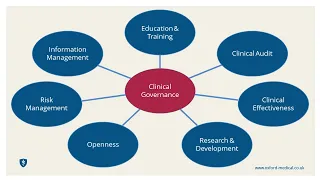
Audits and Reflections that identifies the risks and concerns as well as highlight strategies that are working well as a result this contributes to team learning and the safety and quality of patient care there is a list of steps and processes that you need in a practice to ensure that clinical governance is being implemented conventionally clinical governance has been defined using Seven Pillars to help you remember these I would like to share a pneumonic with you guys which is care UPS so the Seven Pillars of clinical governance are clinical Effectiveness and research audit risk management Education
and Training using information and information technology patient and public involvement Staffing and staff management you can be asked about one or all of these pillars so it is very important to have a basic understanding of what each of these pillars is starting with clinical Effectiveness and research clinical Effectiveness means that ensuring everything Health and Care Professionals do is aimed at achieving the best outcomes for the patients that you do the right thing to the right person at the right time and in the right place in an interview it is always best to answer questions with
relevant examples instead of providing just a textbook definition in clinical Effectiveness and research you can give examples of adopting an evidence-based approach in the management of a complex patient with atypical symptoms and you can always back the statement with your personal experiences it involves continuously improving your clinical practice formulating new guidelines and protocols based on your experience and evidence if the current practice is shown inadequate these changes in guid guidelines could be at the local level or at the national level for example the recent updates in the guidelines for the diagnosis and management of lowback
pain and another example could be the recent updates in the diagnosis and referal Pathways for cikina syndrome it also involves implementing nice guidelines national service framework and other national standards to ensure best possible care for the patients another important aspect is conducting research to develop the body of evidence so that that the enhanced level of care could be provided to the patients in future for example in the past it was believed that certain exercises can have negative effects on arthritic joints but now the evidence suggests that infect exercises have positive effects on arthritic joints the
second pillar is clinical audit which is about examining and evaluating the current practices against set standards of care the regular Audits and re audits enable the healthcare organizations to identify the areas of improvement celebrate successes and ultimately enhance the quality of care clinical audits is not a one-time process in fact it's a continuous process of audit and re audit to keep aiming for continuous Improvement in healthcare delivery for example the effectiveness of corticosteroid injections in NE osteoarthritis or the role of shock wave therapy in tendinopathies moving on the third pillar is risk management in the
dynamic world of healthcare risks are inevitable and these risks could be of different kinds for example the risks could be clinical Financial or even operational in nature additionally this risk management involves having robust systems in place to identify assess Monitor and minimize the risk to the patients staff and to the organization and to learn from our mistakes and when things don't work out as expected the healthcare staff and other workers should feel safe in admitting it and be able to learn and share what they have learned this includes complying with the protocols for example handwashing
discarding Sharps allocating different types of clinical wastes or even referring or signposting different patients correctly Etc learning from mistakes and near misses and Reporting significant Adverse Events via significant event analysis and looking critically and closely at the complaints Etc it also involves implementing the processes to reduce the risk and its impact for example regular reminders or putting up posters in the clinic for the patients and lastly promoting a blame-free culture to encourage everyone to report mistakes and problems without any risk of persecution next up we have the fourth pillar of clinical governance which is Education
and Training Healthcare professionals are expected to have updated skills and knowledge to provide high quality care to their patients in practice this involves attending regular courses and conferences known as CPD or continuous professional development or they can keep taking exams to upgrade their skills or have regular assessments designed to ensure that their training is appropriate annual appraisals are another effective means of identifying And discussing both weaknesses and opportunities for personal and professional growth the fifth pillar is all about engaging with those who are at the heart of healthcare the patients and the public here you
can discuss how you ensure a patient- centered approach and you can always back this statement with real life examples the best way of involving patients and public could be through a number of initiatives for example getting feedback questionaires filled by the patients or by the involvement of patient advice and license service also known as Pals or by the national patient surveys organized by the healthcare commission the basic aim of all this is to ensure that the services provided by the healthcare professionals are according to the needs and expectations of the patients secondly the feedback received
from the patients and the public is used to improve the quality and suitability of services for them the sixth pillar of clinical governance revolves around the safe and effective use of data information and Communications it also ensures that the trust or the hospital complies with data protection regulations efficient communication ation and the availability of accurate information are vital for seamless Healthcare delivery and this aspect emphasizes transparent communication within the teams and with the patients to ensure that everyone is well informed furthermore this aspect of clinical governance is about ensuring that the patient data is accurate
and up toate and the confidentiality of the patient data and medical records is respected and full and appropriate use of the data is made to meor the quality of outcomes and this could be done through Audits and finally the seventh pillar of clinical governance is Staffing and staff management and this aspect of clinical governance is about ensuring that there is adequate skilled and motivated staff for maintaining Quality Healthcare Services this pillar focuses on effective recruitment training and support for healthcare professionals and also ensuring that underperformance is identified and rest adequate measures should be taken to
promote staff retention by motivating and developing staff and providing good working conditions for them all right if you are still here first of all I want to thank you and regarding our discussion about clinical governance and its pillars it is evident that some pillars are more directly related to the responsibilities of healthcare professionals like clinical Effectiveness and research audit risk management and and Education and Training whenever you discuss clinical governance in an answer you may wish to discuss these in more depth as compared to the other three and you can always remember these key pillars
with the pneumonic care so there you have it the practical application of clinical governance and its Seven Pillars within the NHS this framework ensures that the NHS remains at the Forefront of delivering exceptional Health Care to its patients if if you found this video useful I would also recommend watching our interview series which I will link here and if there are any other Healthcare topics that you would like us to cover let us know in the comment section below until then stay curious and stay healthy