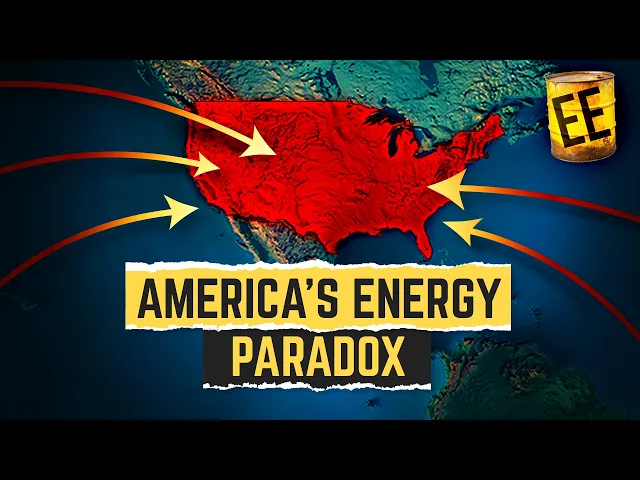
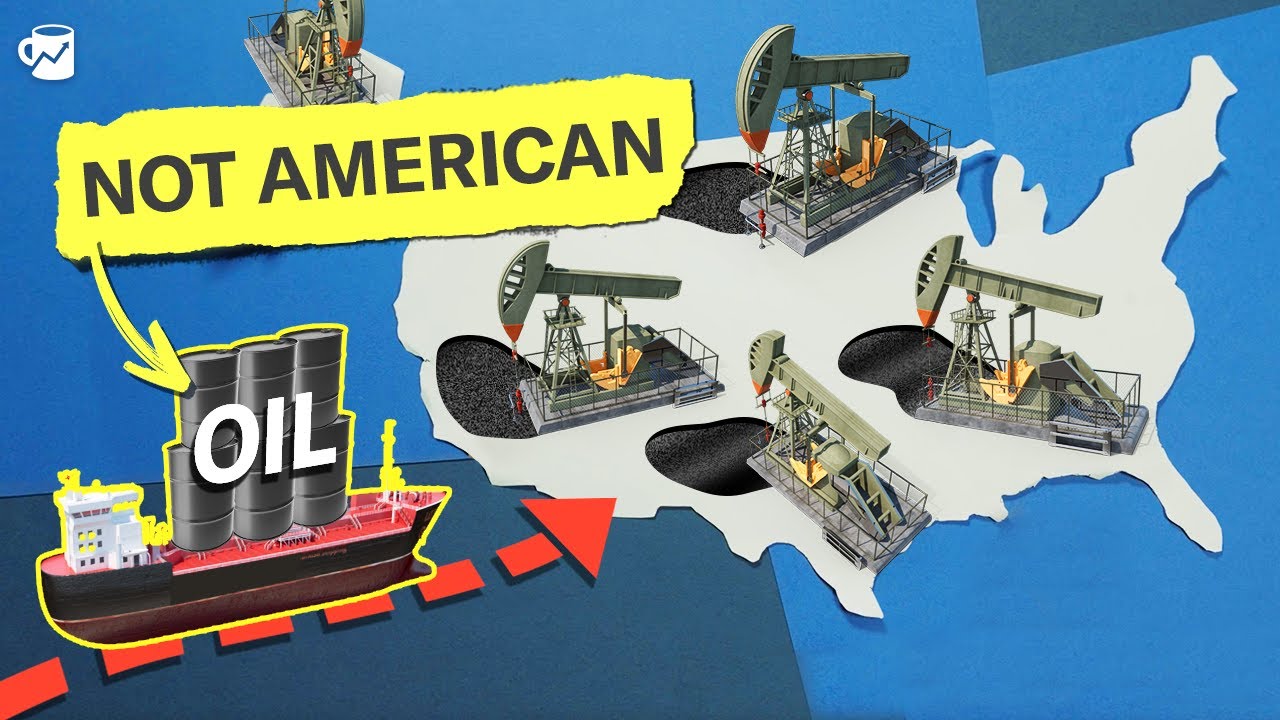
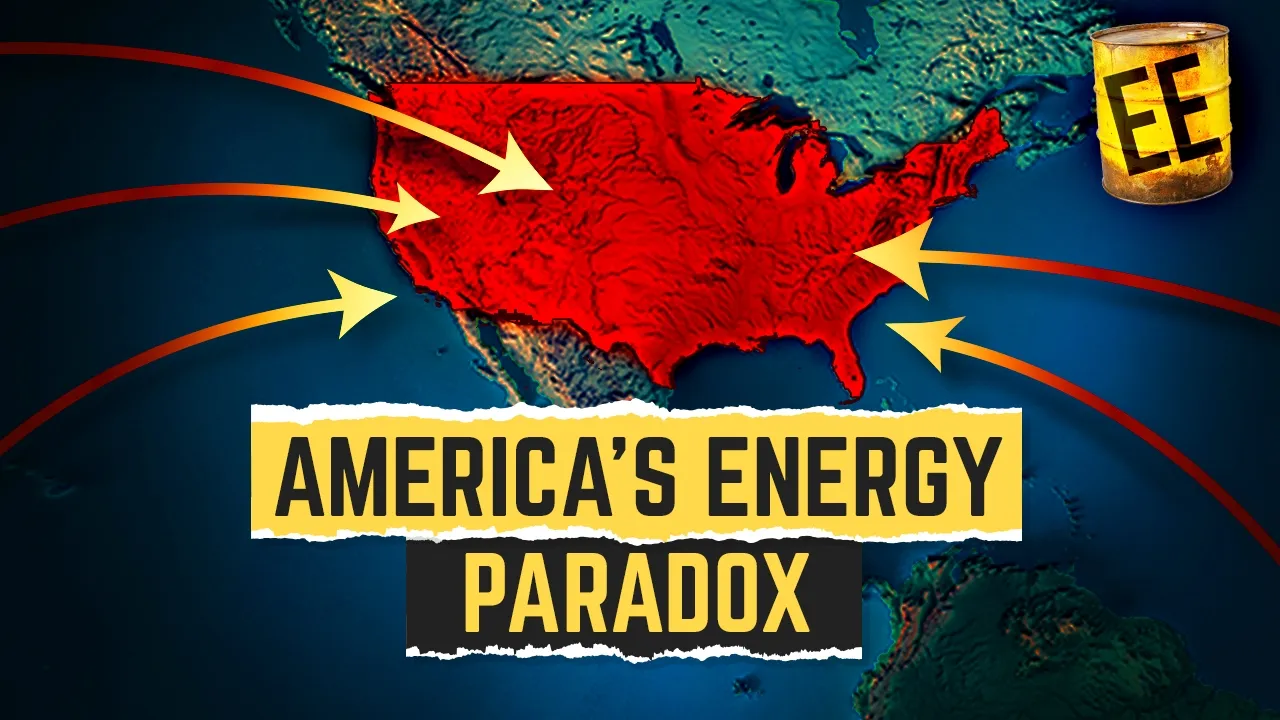
in 2018 the United States of America became the largest oil producing nation in the world then just one year later it became the largest oil producer of all time producing 12.3 million barrels a day to exceed levels that expert analysis previously thought were unfeasible and despite a turbulent period during the covid-19 pandemic when oil prices temporarily went negative production in the US is continuing to grow which has made even more bizarre since the number of oil rigs in operation is actually declining in just a decade us production levels have leap frogged those of geopolitical opponents
Russia and Saudi Arabia rapidly transitioning from import dependence to becoming the dominant Global oil superpower in fact the USA now produces so much oil that for the first time since the 1940s it's become a net exporter this is a far cry from the USA of past decades which was chronically relied on geopolitically tenuous suppliers who could stop selling to the US whenever they liked the country now enjoys its powerful position in the global market as both the largest producer and consumer getting a stronger hand in the trade deals and making it less susceptible to Market
control from the organ Iz ation of petroleum exporting countries it's also ensuring a consistent energy Supply to domestic heavy Industries and households supporting The Wider economy and living standards in a time when energy security is at the Forefront of government agendas the oil Renaissance in the US has been extremely timely but despite producing more oil than it consumes the United States strangely Remains the second largest importer of oil in the entire world and with the unavoidable truth that oil is a finite resource where the USA has an estimated 11 years worth of reserves remaining the
rapid speed at which this natural resources has been sucked up out of the ground brings to question just how long these unprecedented levels of production can be sustained especially as the industry faces irrefutable environmental concerns and strengthening competition from maturing renewable industry which is becoming more competitive and preferred by many so as always we have a few questions to answer how has the US become the largest oil producing country of all time why does the US still buy so much oil and finally how long can these production levels really be sustained looking at where us
oil production is today you may be surprised to hear that production levels actually declin consistently for 38 years from 1970 to 2008 during that time the world was becoming increasingly interdependent with lower barriers to trade and the most easily accessible us oil reserves became depleted it became more profitable for the oil industry to Simply import from other countries where Oil was more abundant and production costs were lower such as Canada Venezuela Mexico Saudi Arabia and Iraq for the most part this worked although not perfectly the USA struggled to contest opec's cartel power in the crude
oil market and OPEC was not afraid to use this power in 1973 the Arabian subgroup of OPEC imposed an oil embargo on the US for providing military aid to Israel during the yapor war against Egypt and Syria prices suddenly skyrocketed leading to shortages at gas stations and Desperate Measures such as a 55 mph speed limit on National highways 6 years later the Iranian Revolution occurred triggering another oil crisis and price hike American dependency on Middle East oil was recognized as one of its biggest weaknesses for the next three decades especially after President Bush's war on
terror in the 2000s the US oil industry dreamt of accessing the harder-to-reach crude oil that was literally sitting underneath them at home but the problem was that it was trapped in tight rock formations with no technology available to extract it profitably at scale Decades of trial and error ensued and at the turn of the 21st century the critical breakthrough was made by the team of the energy Tycoon George Mitchell and the Barnard Shale it was discovered that crude oil from sh could be extracted at commercially feasible Levels by fracturing the rock formation and loosening the
oil used using a specific mix of water sand and chemicals hydraulic fracking was then applied to horizontal oil wells which dramatically improve results enabling a single world to almost magically extract more oil at a lower cost in the early 2000s the Shale Gale truly took off with wildspirit independent operators who are fueled by private Equity rapidly acquiring land and investing in these new technologies and so the stagnant oil industry was gifted a new lease on life in Texas the perian Basin became one of the most productive oil fields on the planet elsewhere the economies of
small rural towns were completely transformed North Dakota home to the back and shower formation experienced the equivalent of modern day Gold Rush booming with Employment High wages and urban sprawl towns within backen like Wilson and Watford City attracted so much labor that North Dakota was the only state to have its population become younger in 2021 compared to 2010 the state had the lowest unemployment rate in the country from 2008 to 2014 and ran a ginormous fiscal Surplus from tax revenues during this time the oil industry was suffering from success with oil storage facilities swelling to
full capacity at alarming rates Cushing the storage facility in Oklahoma which is regarded as the pipeline Crossroad of the American continent and a benchmark for oil prices worldwide reached a record high of 69 million Barrels in 2017 the Boom in North Dakota Ended as fast as it began with production growth halting in 2015 remarkably Texas has continued to break alltime production High since growth began in 2010 with output increasing fivefold since then this state alone produces 43% of all crude oil in the US with growth in fracking becoming so astonishingly fast that the unlikeliest of
obstacles sand Supply suddenly became the major constraint on production since it's needed to fracture the rock formations overall the Revolutionary technology of hydraulic fracking and horizontal drilling spread like wildfire across the entire country and the effect was dramatic with production levels increasing by 28% from 2008 to the present day while traditional oil extraction techniques continue to be used fracking now dominates making up two in every three barrels produced in the USA but then why has fracking been so successful in the USA in particular compared to other fracking Nations like Canada or Argentina well it obviously
helps that the country has plenty of large shale formations that natural resource that fracking is designed for which many other countries don't possess by being the birthplace of the new technology the USA had the first mover Advantage which it rapidly capitalized on using its skilled labor force and a pre-existing infrastructure base of pipelines to move it this rapid scaling process was accelerated by the strong private incentives where land owners were quickly able to lease their land to oil companies due to a relatively favorable regulatory environment oh and let's not forget the abundance of venture capitalists
and private Equity investors in the US financial markets who quickly took the opportunity to fund startups hate it or love it the adaptability and dynamism that comes from private incentives in a country with legendary property rights means it simply attracted more investment into this new industry now the USA produces enough to match its own consumption levels given the US's bumpy history of Market instability from oil trade and the increase in geopolitical tensions lately you might expect that the USA is is using its own oil production to supply its own oil consumption but amazingly despite all
of this the USA is still one of the largest importers of crude oil in the world with only China importing more total petroleum Imports make up 41% of consumption and while levels have decreased since the fracking boom began Imports remain puzzlingly high so what is going on here simply put the crude oil being produced in country from fracking isn't suited to a large proportion of us refining infrastructure not all oil is made equal crude oil deposit have a range of varying chemical and physical properties that determine the refinement process that's required during the 20th century
the USA's refinement infrastructure was developed to process heavy sour oil which without going into too much details means it was dense and has a high sulfur content this is because the US was mostly dealing with this type of oil being imported from countries like Mexico Venezuela Saudi Arabia and Canada this expensive infrastructure base has taken decades to build and fine tune but the crude oil that the US is now producing from fracking is light sweet oil meaning it's less dense and has low sulfur content a huge proportion of the refineries that have been built in
the US cannot process this type of oil particularly in the refining Hub of the Gulf Coast oil companies could invest into developing new refineries or expanding current ones to build capacity in order to process the fracking oil but this represents an enormous investment of capital with a huge time Horizon before any new Refinery would be operational the industry does not know how long the fracking age is going to last and with the slow and inevitable March towards Renewables ever present the uncertainty surrounding the longevity of fracking makes any large scale infrastructure investment into the industry
extremely risky particularly when the investment is expected to take many years to even become usable and so the optimal solution for the industry has been to export the excess fracking oil which it can't refine and in return import the heavy s stuff which it has been built to refine this has quickly generated steady cash flow for the industry which is fuel growth it's also supported energy security of political allies in Europe following the ban on Russian oil which is now the top destination for US exports for the US there's another Strategic Benefit to this trade
the light sweet fracking oil is more expensive than heavy sour as it requires a less complex refinement process since at the end of the day they usually produce the same petroleum products at the same price there's more added value from refining heavy sour oil compared to light sweet oil therefore by selling the more expensive crude oil and processing the cheaper crude oil the USA is maximizing the value it retains both from the oil trade and from more complex refining ultimately this protects jobs incomes and profits in the states and oh boy have there been profits
exom mobile and Chevron the two largest oil companies in the US are making the highest levels of profit they've made in the last decade eventually this is in part due to global factors such as the gradual price recovery since Saudi Arabia flushed the market in 2014 and the sudden price hike in 2022 from the sanctions on Russian oil following the invasion of Ukraine but these caveats are exactly the point the US oil super majors and the rest of the industry were able to profit from these events because they had access to easily accessible high value
fracking oil to sell when we look at the almost absurd growth in the US oil production in the last 16 years though it's important to remember that oil wealth by itself doesn't guarantee economic prosperity and in dozens of other countries around the world it's done exactly the opposite it would be naive to just automatically assume that the USA is any different the resource is finite and Sh rock formations will at some point become exhausted so how long can these levels be maintained and how can the Boom in oil production be reconciled against the environmental backdrop
of global warming a maturing renewable energy industry and political Ambitions for Net Zero the US oil industry is in a period of consolidation it's suspected that the boom years are already over and the focus now is on efficiency for a market which given the huge upfront infrastructure Investments needed to operate has large economies of scale exxon's $60 billion purchase of the biggest oil producer in the peran Basin Pioneer Natural Resources and chevron's ongoing $53 billion deal for hes shows that the super majors are using their financial might to fully utilize economies of scale and maximize
profits while reservations are plentiful in just the Last 5 Years the number of publicly traded oil and gas companies in the US has dropped from 65 to 41 Acquisitions of competition who own access rights to oil rich land is a key way to realize these efficiencies through longer horizontal Wells a consistent Trend in the industry which has dramatically increased output per oil rig looking ahead the US Energy Information Administration projects crude oil and Lease condensate production to Peak in 2030 but to be sustained at that level for decades while this is promising the gift and
curse of fracking is that it is a quick process where extraction is much faster than traditional methods this explains why production has increased so dramatically in such a short time and also why there are concerns for the future because it means reserves can dry up quicker according to estimates of oil reserves the USA technically only has 11 years left at its current production rate now this is largely because these estimates do not account for a majority of oil reserves made available by fracking and are based on the reserves available with traditional Technologies but it does
still highlight that this industry is seeing the curtains and trying to get out what it can while it can the difficult of predicting future production levels is made more challenging due to political pressures the incoming Federal Administration has obviously been very vocal about their support for the industry but in a market where Investments can take decades to pay off this is still something that's weighing heavily on investors Minds the government may look to Titan regulation and curb oil production for a number of environmental factors obviously crude oil is one of the largest causes of carbon
dioxide emissions in the world not only is the end product itself releasing carbon dioxide but on-site natural gas flaring to reduce underground pressures means fossil fuels are being burnt as a byproduct rather than actually being put to use this represents a glaring example of waste and air pollution this is worsened by fracking's tendency to cause methane leaks a chemical which causes a 30 times stronger greenhouse effect compared to carbon dioxide if this wasn't bad enough it uses a huge amount of fresh water and the pumping of waste water into Wells risks contamination of local groundwater
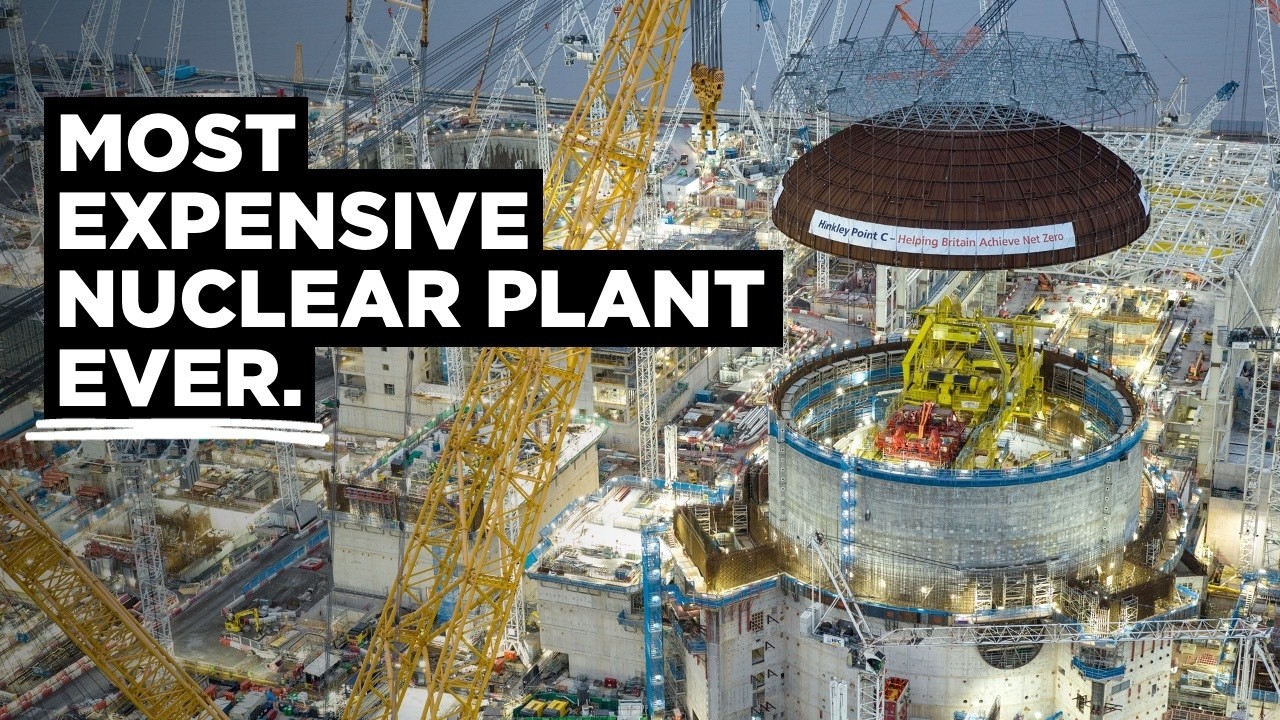
for these reasons complete banss or moratoriums on fracking have been introduced in many advanced economies and even by individual US states having rejoined the Paris agreement in 2021 the us is committed to reaching Net Zero carbon emissions by 2050 which represents a huge challenge for the Giants of the oil industry who must reinvent themselves through investment into renewable energies a maturing industry that has time on its side the oil industry is also under threat from nuclear energy having gone from Public Enemy Number One to becoming an Irreplaceable component of the Net Zero push the US
government having declared to Triple nuclear energy by 2050 now of course nobody can predict the future especially with a new government that was largely elected for their focus on short-term goals the US knows it can't rely on oil forever but for now it reigned Supreme now the significance of the US fracking Revolution on economic Dynamics is just one small part of the story even if this industry was totally unprofitable energy Independence may still be worth it with increasing diplomatic tensions affecting the global oil Market this supplies now more than ever that's why we've made a
second part of this video on our sister Channel context matters that explores the US fracking Revolution from a political perspective at a global level you should be able to click to that on your screen now thanks for watching mate bye