step number one you must pick the right time frame to trade using the 8 to 12 Bar Theory how long do you want your money exposed to the possibility of danger I teach my traders to be in and out within 20 minutes more or less that means that for us the two-minute time frame is superior it gets us our money inside of 16 20 minutes more or less there are Traders guys who are trading with the wrong time frame the time frame may not match their personality may not match their per their their trading style
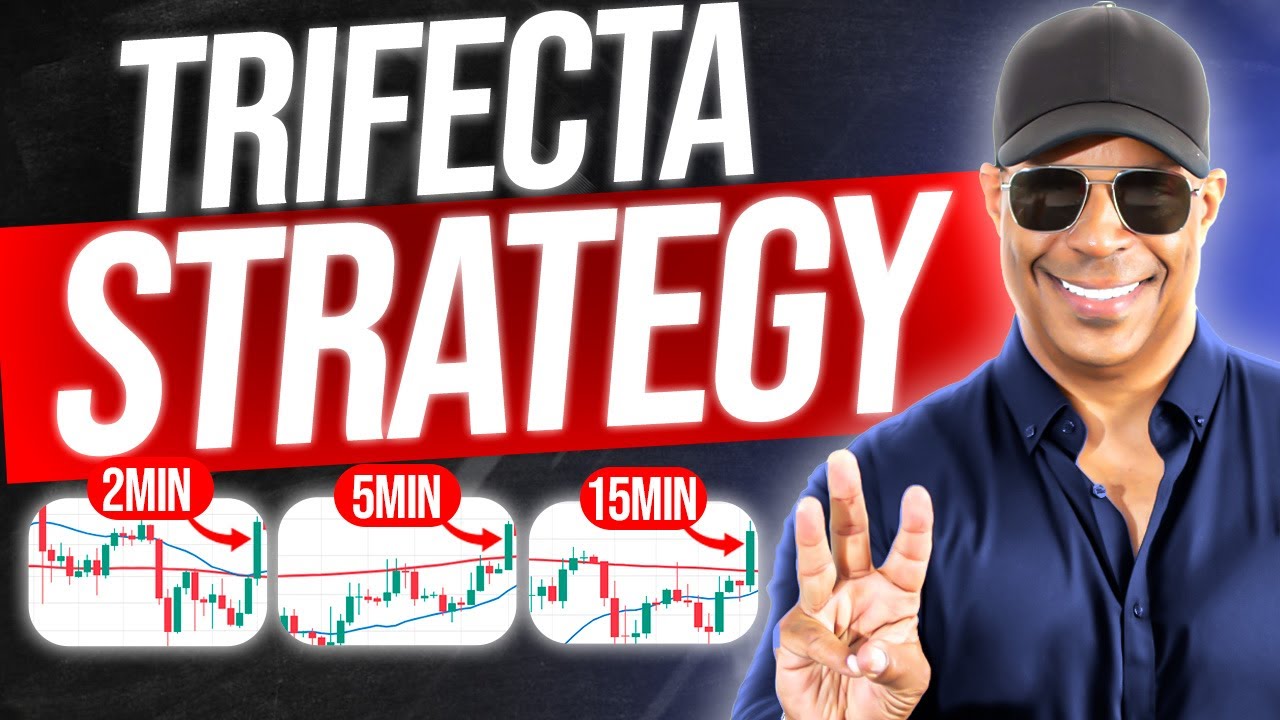
their trading approach or tactics the trading time frame can be you can be actually good at what you do but apply that goodness to the wrong time frame and you're still um behind the eightball as it will you have to choose the right time frame now if you follow up my work for any period of time I require that my Traders trade off of two dominant time frames from a from a charting perspective they're going to view and take their trades based on a two-minute chart and and or a f minute chart so everything that
I teach you to identify today I want you to think we're going to identify these events on a two-minute chart or a 5minute chart I want to explain quickly why I prefer traders to trade on a two-minute time frame because I use the 8 to2 bar approach to trading so what does that mean your average trade your average trade is going to last between 8 to 12 bars now think about this 8 to 12 bars which means that if you're trading a 2minute time frame then your average trade is going to be anywhere between 16
minutes 20 minutes you follow what I'm saying so you use that 8 to2 Theory and you if your if your goal is to swing trade for instance over several days you're not going to use a two-minute chart but if your goal is to trade the open of the market which last anywhere between 20 and 30 minutes the 2-minute time frame is perfect the five minute is okay but the five minute using 8 to 12 bars throws you past the open all right so the 2-minute time frame is the superior time frame for a specific approach
I also like the 2-minute time frame meaning that you look for your trades on a chart where every bar represents 2 minutes two minutes of trading the the other reason is because a bigger time frame a bigger time frame um slows your experience building down so your trades come less frequently using a 5minute chart or 15-minute chart that's another reason why I predominantly like the 2-minute time frame right it's it's small enough to give you a constant frequent flow of trading opportunities without being too close to the noise I don't like the one minute chart
very much and I certainly don't like the tick chart I think that's a little too close to noise so the 2minute is a little further away from noise it's fast fast enough to give us a constant flow of trading opportun opportunities without being mired in the minutia all right so the two-minute time frame is the big winner for me you can use the 5 minute time frame our trades are going to last anywhere between 15 it's more or less 16 minutes 20 minutes 20 22 minutes sometimes 18 minutes sometimes 16 15 minutes sometimes it's a
general guideline but that is The Sweet Spot of short-term oriented trading go to a longer time frame or a bigger time frame and your trades on average are going to last longer 90 plus% of my Traders predominantly trade off of the 2-minute time frame we have to choose the right moving averages now if you follow up my work for any period of time you know the two dominant moving averages I need you to have on every single chart you ever look at is the 20 period simple moving average and the 200 period moving average you
will never look at a chart no matter what time frame it could be a twom minute it could be a five minute it could be an hourly it could be a daily it could be a weekly it could be a yearly I don't care what time frame you're looking at you are to never look at a chart without the 20 period moving average and the 200 period moving average I don't consider a chart a chart unless these two moving averages are superimposed on the chart all right that's how important they are what this combination does
is it gives you a a view of the stock from a shorter term perspective and a longer term perspective the 20 period moving average being on the short end of the moving average spectrum and the 200 being on the the long-term end of the perspectum and the best ways to you to use moving averages is to have the moving averages represent shortterm and long term and that's what we're doing with the 20 and the 200 now taking the meta chart the two-minute chart of meta I've superimposed the 20 period moving average which is the blue
line all right I know for some of you this might be basic but it's necessary to lay the basics down 20 period moving average and of course the overhead red is your 200 Peri moving average now a lot of people say Oliver which what style of moving averages do you like simple exponential weighted triangular I have found no evidence whatsoever that the sexier varieties of moving averages are any more Superior than the simple so whenever I'm given a choice I I defer to the simple all right so these are simple moving averages not exponential if
you like exponential it's not that big of a deal then use exponential but simple moving averages of what I use all right so this is how you will view every single chart for the rest of your life you will view it Through The Eyes of the 20 perod moving average and the 200 period moving average these moving averages serve as the basis for a lot of trading activity Don says he gets trending and wide State confused not quite sure why now what you're looking at guys is Apple let me just pull up a two-minute chart
because we predominantly do our income based trading off the two-minute chart now I want you to state is is rather simple we've got the 20 per moving average here right and we have the red is the 200 right now if you look to the left hand side of the chart where are those two moving averages relatively close together and relatively flat so close and flat not exactly flat let's not be ridiculous but just close and relatively flat right here so you got close and relatively flat where on this chart are they relatively wide apart here
all right so if you were to compare the distance here from the distance here you would see that this is much wider than this many of these circles can fit inside of this big circle okay so narrow state is here wide state is here it's very simple okay now trending is different trending is different trending is what happens between the narrow State and the wide state do you understand so here is narrow State now this happened in the form of a gap so here is wide State let's do it like that narrow State wide State
and trending tends to H will tend to happen to get you to from narrow state to wide State you have to Trend there or Gap there okay but when it's when it doesn't Gap there it Trends there okay so if we look at here is sure what the heck happened there oh okay here is now you can see your your 20 period moving average is trending now the most powerful Trend guys is more or less a 45° angle of your 20 that's when you know when you get that 45° angle Trend you know Red Bar
take out taking out the opposite color is are viable events so you could take out the opposite color take out the opposite color take out the opposite color take out the opposite color take out the opposite color take out the opposite color until that changes 45° angle Trends are the easiest part of a trade to just ride and enjoy the gains okay um a stock doesn't have to move in a way that that that Del a 45° but when you get the 20 operating or moving at roughly 45° this is what we call a power
Trend it's they're very they are different Trends power Trends are 45° angle Trends and that's when you can pretty much just take every single red bar takeout to the upside if we get a power Trend to the downside it's just reverse you can pretty much take let's see if we can get something here so you can see this period of the 20 is more or less 45 it's not going to stay that way for forever but during that this period you're more or less 45° to the downside so every single time red takes out green
boom there's that sound red takes out green boom there's that sound red takes out green boom there's that sound you see now it's going to eventually fail but you'll get quite a few off during the 45 degree angle Trend so that's the difference between narrow like understanding State narrow and wide and understanding trending which typically gets you from narrow state to wide and back step nine I need you trading with the 20 period moving average people I need you trading with the 20 period moving average people and I need you taking trades at or near
that moving average let's talk about that I want you to note not note that during the trending not the narrow state phase but during the trending State during the trending stage this is your wide so we're wide we're narrow we're trending you are not to trade against the direction of the 20 see the 20 pointing upward don't take shorts against this 20 period moving average this is suicide I'm correcting traitors all the time they're coming to me all the time people they're coming to me all the time right they're coming to me and they're saying
Oliver I I can't find I I don't know what's happened to me I'm losing over and over over and over again and I can't seem to put my finger on it can you help me and I guarantee you they've drifted into fighting the 20 per moving average I guarantee you it's either that or they're playing number threes they're playing wrong positions it's one of two things you're fighting the 20 or you're taking trades in stupid positions all right you've drifted off position or you're fighting the 20 period moving average almost every problem stems from those
two things if you can make sure you do that stick to good positions and don't fight the 20 and make sure when your 20 is trending upward you take trades at or near the 20 let's go back to this so I'm taking this tail bar play but it's at this tailb bar is at or near my 20 I'm not taking this bar that's too far away from the 20 I'm taking this bar Elephant Bar play because it's at or near the 20 I'm taking this color change play because it's at or near the 20 I'm
not taking anything up here because it's not at or near the 20 okay um but don't fight the 20 and when the 20 is trending only initiate trades that are close to the 20 when it starts to Trend okay it's very important all right so here look this is Amazon on the 11th narrow state color change okay if I take this color change play here boom here's my stop two lots here's here's one that's close enough here's another here's red taking out green near look this bar is near the 20 this green is being taken
out by that red right there it's near the 20 this red is taking out that green right there not that far from the 20 I wouldn't do it down here so if red for instance was taking out this green bar there I would not take this one why because that is far from the 20 okay don't forget that once you start getting wide the odds of your plays working get smaller lower lower odds when you're wide all right so it's always coming out of narrow some trending and but once you go wide that's Beach time
okay so we largely play these two zones and we're done this is what I want you to be able to do people I want you to be able to play these two zones and be done finished gone Beach