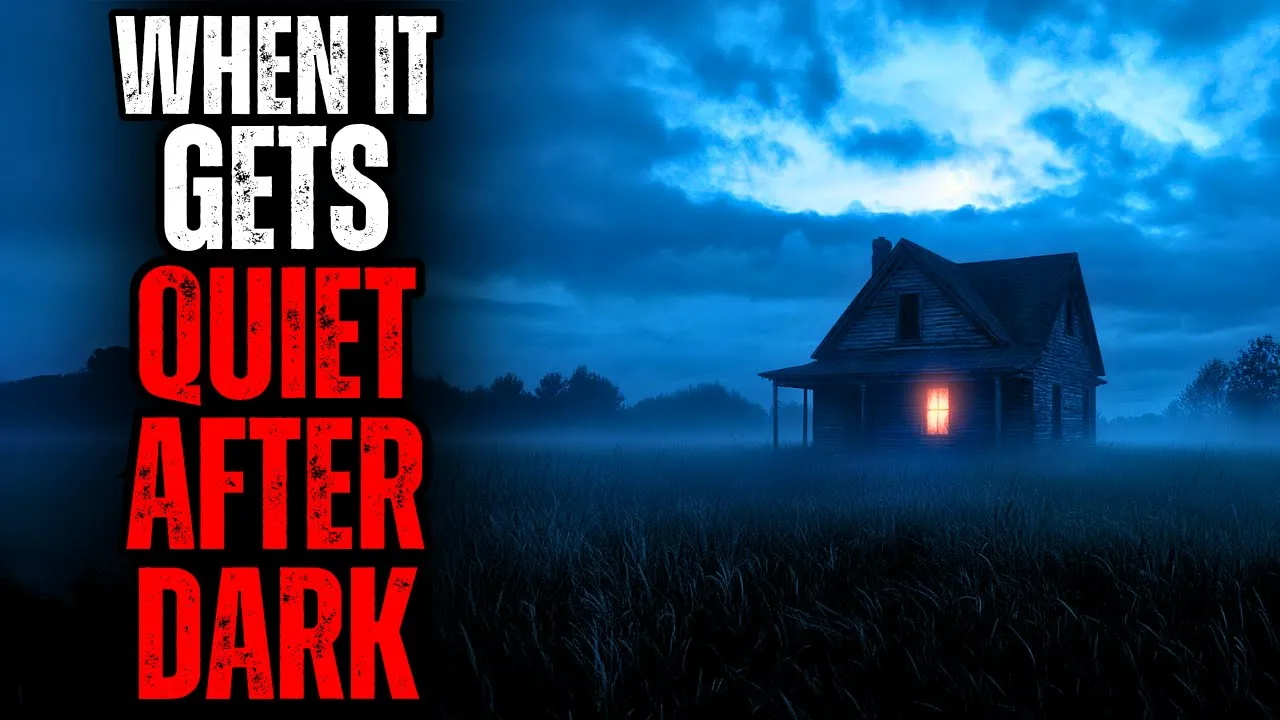
I thought it was just silence. A quiet night on an old Nebraska farm. But silence this deep, it doesn't stay empty.
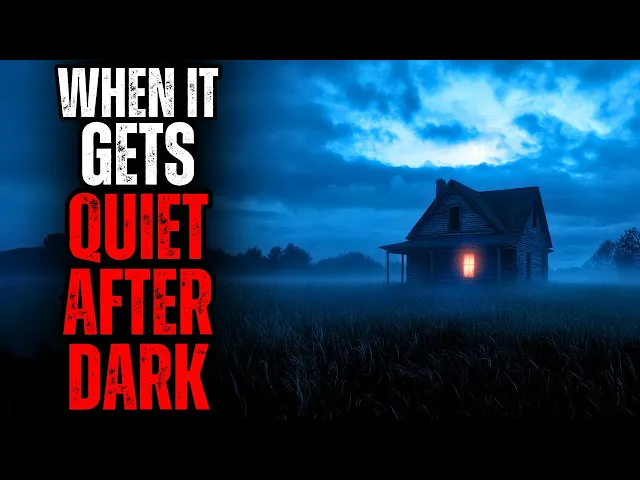
It calls something up. The first thing I noticed about the farmhouse was the silence pushing against the car windows long before I killed the engine. No breeze over the autumn corn stubble, no insects, no distant highway hollow roar, just an oppressive hush settling over the field like an invisible snowfall.
I sat with my hands on the steering wheel, headlights pinned to a sagging porch, and thought, "Silence shouldn't feel this heavy. " But the rent-free offer came with only one condition. live in granddad's place for a month and catalog whatever possessions were worth keeping.
So I switched off the ignition and let the night pour in. Once the engine ticked itself cool, the quiet somehow thickened rather than lifted as if the farmhouse absorbed every decibel within a mile and kept it hostage within its boughels. My parents had inherited the property after granddad passed in May.
A relic of blackened clapboards and buckled asphalt shingles marooned in the middle of Nebraska nowhere. They lived two states away, had no time to empty it, and knew I needed cheap shelter while finishing grad school on painfully thin assistantship pay. So, here I was, 28, broke and armed with nothing but a notebook, a flashlight, and poor cell reception.
I stepped out. A full moon glared down, illuminating ragged grass and the scal windmill beyond the barn. The house itself leaned left as though whispering a secret to the field.
Every cracked window reflected shards of moonlight. The front door hung half open, yawning into black. I remember thinking, "It's just a house.
" A rational person's mantra. Then I crossed the porch, the boards flexing under my boots. When my shoulder nudged the door fully wide, the hinge produced a sigh.
a soft exhalation that sounded too human to be metal and rust. I clicked my flashlight on and stepped inside. The interior smelled of old cedar, dust, and something else underlying like damp newspaper gone sour.
Wallpaper peeled in strips, revealing lathe and shadow. The silence followed me through the threshold, riding the beam of my light as they were afraid to be left outside. I found the breaker box near the kitchen.
No power. The lines had been cut years ago. Batteries would have to do.
My phone clung to one flickering bar of signal, just enough to text my mother. Made it. House still stands.
Call you tomorrow. The message spun pending then failed. I shrugged it off.
Upstairs, I chose the bedroom with the least mild juice stench and unrolled my sleeping bag on a mattress so concave it felt like a giant palm waiting to close. I opened the window to vent the mustiness. A breeze should have moved the curtains, but there was none.
The air outside remained dead still. Eventually, I slept. At 2:19 a.
m. , I woke, unsure why. The house creaked, normal for an old place cooling at night.
Yet, each groan held a pause between timber flexes. A hesitation that made it seem intentional, like someone testing the floor outside my door. I held my breath and listened.
silence. Then a single dull thump downstairs as though a heavy foot had slipped from a stair. I told myself rodents knock things over.
I rolled to my other side. The mattress wheezed. At once the thumps ceased as if the house noted my movement.
Minutes passed. I drifted off again. The next morning, I cataloged Granddad's belongings.
Mothnorded coats, cracked photo frames, a drawer of rusted farm tools. The to keep pile was small. A bronze pocket watch, two war medals, a leatherbound Bible with handwritten notes inside.
I stacked everything else for Goodwill. Sunlight abandoned the house earlier than expected, sliding behind a migrating wall of storm clouds. By late afternoon, gloom pulled in the corners.
I fetched the camping lantern, deciding to cook before darkness claimed more square footage. All the kitchen offered was canned peaches that expired last decade. I grabbed a tin of barbecue beans from my backpack.
I ate in silence, my plastic fork scraping the tin. Sometime after dusk, rain began, a tentative patter on the tin roof. I relaxed.
Rainfall meant sound. A reprieve from the overwhelming silence. Yet, when I listened, the water struck only the barn and distant outuildings.
The rooftop above me stayed dry. Curious, I leaned through a window. Moonlight painted the shingles bone white.
No drizzle at all. Yet my ears still caught the rain's rhythm somewhere behind the house, steady and unmistakable. I grabbed the flashlight and stepped onto the back porch.
The beam revealed damp boards beneath my feet. Although the sky overhead remained cloudless, the stars sharp. 15 yd away, the barn roof glistened wet, droplets shining on corrugated steel.
But between the barn and the house, the air birthe no rain. I couldn't make head nor tail of it. An uneasy chill crept under my jacket.
I retreated inside and locked the door, though I wasn't sure from what. Rain kept drumming out back, a sound now accompanied by irregular splashing, as though someone slogged through puddles in rubber boots. I slept poorly.
Something woke me thrice. First, the screen door rattling though there was no wind. Second, a low hum within the walls, electric but subtle, like a transformer miles away.
Third, a whisper that might have been my name delivered by the floorboards right beneath the mattress. Each time I convinced myself my dreams had leaked into waking. On day three, I discovered the cellar door.
It lurked behind a pantry shelf I shift in while tallying cookware. The iron latch was bent as if forced at some point, and the steps descending were steeper than modern code allowed. A stink of cool earth and spoiled grain wafted upward.
Granddad's log book had hinted at hidden preserves downstairs. Hoping to find antique jars worth salvaging, I lit a second lantern and ventured down. The stair tread sagged but held.
The cellar was larger than the house's footprint, its walls rough limestone sweating beads of moisture. Shelves lined the perimeter, but the jars were missing. Circles of dust marking their absence.
At the far end, the flashlight caught a door flush with the stone. Wood so dark it seemed scorched. No knob, only a ring of polished iron.
I pulled. The door opened smoothly, revealing a room no bigger than a wardrobe. Inside stood a single ladder descending through a rectangular shaft into blackness.
A gust of colder air rushed up, smelling of rainwet corn fields, even though the ground above remained arid. A rational man would mark the spot, photograph it, and return in daylight with backup. But curiosity, that small, corrosive voice, whispered that I might discover contraband or some family secret.
I hooked the lantern to my belt, slung the flashlight rope around my wrist, and began climbing down. The ladder rungs extended far deeper than expected. 20 rungs, 30.
The air turned thick and vibrated faintly, like being inside the throat of a sleeping giant. When my boots touched the dirt floor, the lantern spilled light onto a corridor stretching beyond the beam. Its walls were unfinished earth, but the ceiling formed a perfect arch, as if shaped by tunnelers with modern tools.
I advanced 50 ft before common sense regained the reigns. Alone underground beneath a condemned house with no cell service, I turned back. Reaching for the ladder, I felt something shift behind me.
The unmistakable feeling of being watched. I spun the lantern around. The corridor stood empty.
Yet the dirt floor carried a fresh footprint. One step closer to me than I remembered making. Barefoot, large, the heel sunk deep.
Adrenaline began to coarse through my veins as fear took hold. I backed up the ladder, taking two rungs at once. At the top, I slammed the small door and latched it.
I heard nothing below, no scrambling feet, no breath, only the house's usual stillness, amplified by my pulse. Storm clouds chased twilight again that evening. I double checked the locks and wedged chairs beneath the doororknobs.
Whatever solace I'd had in the house's familiarity evaporated. The walls now felt porous. Thin membranes between me and a presence pacing subterranean halls.
There was still no phone signal. Communication with the outside world was impossible. Around midnight, the hum returned, vibrating the air like an old refrigerator compressor.
It resonated through the bed springs and up my vertebrae. The pitch dipped, then rose, aligning with my heartbeat. "When it gets quiet after dark," Granddad once said.
"You can almost hear the ground talk. " "I'd assumed he meant crickets and the wind. " "I couldn't stay upstairs.
Once I'd calmed down, I needed to know for certain. I grabbed the rifle I'd stored for wildlife and crept to the cellar again. The house groaned behind me, or maybe told me to stop.
I lifted the lantern latch with trembling fingers. Inside the corridor, I noticed there was now a faint phosphorescent green glow, as if it was feeding on the lantern light. The hum pulsed stronger.
I moved faster, following the earthn hall until it opened into a chamber the size of a silo. The ceiling tapered into darkness. In the center stood a stone pedestal supporting an old mason jar, one of granddad's missing preserves.
Its lid had rusted through. Inside, black liquid sloshed like tar. The hum emanated from the jar.
That didn't sound right to me, but it did. Each pulse sent ripples across the tar surface, even though the air remained still. I leaned in.
The liquid reflected the glow of the lantern, showing my face, but inverted. Except the eyes in the reflection weren't mine. The pupils stretched vertically.
The irises were pale silver. I sensed a flicker of movement behind me. I spun around with my rifle held up in the air with shaking hands.
When I turned back, the jar was broken. The tar spilled onto the floor. There was no sound to be heard.
just fresh streaks leading up to the chamber wall and up, defying gravity, disappearing into cracks between stones. My nerve ran out and I ran. The glow of the beams intensified as I passed them, throbbing like exit signs at the end of a nightmare.
When I reached the ladder, the hum filled my lungs deep inside, making each breath vibrate. I shot up the rungs, burst into the cellar, and slammed the hatch. Silence, but not empty silence.
The farmhouse, quiet after dark, now felt cluttered, inhabited by unseen entities. The floorboards above creaked as though someone had crossed the hall. I braced the cellar door with a table.
Then I realized whatever escaped didn't need doors or ladders. It could seep through the wood like smoke. I raced upstairs to the bedroom and locked myself in.
I ratcheted the rifle, loading it. The quiet outside thickened until my eard drums rang. Then came a new sound.
Rain on the roof at last, or so I thought. I cracked the window again. The sky was clear.
Upon closer inspection, the patter emanated from inside the walls, trickling along the wooden beams, dripping onto the attic floorboards. Minutes later, viscous tar seeped through the ceiling cracks above the bed. Gelatinous droplets hitting the sheets with wet ticks.
Each drop extinguished moonlight where it landed, leaving impossibly dark spots. It was as though it absorbed the light around it. They widened, merging into a shadow puddle that bulged, birthing bulges rising like knuckles beneath a black cloth.
I fired once. The gun's roar shattered the hush. To my surprise, the tar recoiled, writhing violently.
The droplets on the sheets twitched, forming shapes akin to lettuce, although I couldn't make out the words. The haze of gunpowder hung in the air, but the tar reassembled before my eyes, rising into a human-sized silhouette devoid of features, its edges feathering into strands like oil in water. A voice spoke without a mouth, vibrating floor and bone alike.
Silence bore us. Your breath fed us. I backed to the door, clawing at the lock.
The shape took a step towards me. Its footprints burned black onto the floorboards as it went. I escaped the room and barreled downstairs to the front porch.
The corn fields under moonlight rustled, although I couldn't feel any breeze. Stalks of dry grass bending towards the house like rows of spectators leaning in for a better view. I couldn't take it anymore.
I felt around in my jacket pockets in desperation. Luckily, I had my truck keys on me. Without hesitation, I sprinted to the truck and turned the ignition.
The engine began sputtering and struggling. I didn't look up, but I had to. The black being was standing motionless in the open doorway, as though something was stopping it from leaving the confines of the house.
I watched with my mouth a gape as the impossibly black tarl-like substance began to engulf the house around him. It began with the door frame and then the porch and eventually it spread to consume the entire lower floor. I prayed to any god that wanted to listen for the truck to start.
After endless whining and sputtering, it eventually sprang to life to my immense relief. As I put my foot to the floor with my tires straining against the dirt, I took a glance in the rear view mirror. The farmhouse was now gone, replaced by an incomprehensible black void.
It looked as though someone had cut a section out of reality. I silently said a prayer to my granddad and sped away as fast as my truck could handle. As I drove down the dirt lane, the world seemed to be muffled.
The same feeling you get when your ears are underwater. But all of a sudden, as I passed the property line, my ears popped loudly back to normal. It defies all explanation to this day.
I didn't stop driving until sunrise. I didn't know what else to do. At a local gas station, I called my parents.
I told them I'd fail, that something terrible had happened at the farmhouse. However, my father seemed to be confused about the whole thing. Dad, listen to me.
I panted into the pay phone receiver, my palms slick with pump handle gasoline. The whole house, granddad's house, collapsed into some kind of void. Everything's gone.
Static crackled. Then my father's baffled voice. What house, Rob?
Granddad's place in Nebraska. The one that you and mom inherited. A pause long enough for my heartbeat to count to 10.
Rob, your grandfather lived his whole life in Arizona. He never owned land in Nebraska. He died when you were six.
You remember the desert funeral? We scattered his ashes around Flagstaff. Cold slid down my spine.
That's impossible. You offered me a month of free rent to clean the place out. Son, we haven't spoken in weeks, and you're still in Michigan finishing your thesis, right?
The receiver trembled against my ear. Behind me, a diesel rig idled, rattling the windows. A sound so real it made my lungs loosen until I noticed the other detail.
Though the engine roared, every dangling service bay flag hung limp. No vibration rippled the puddles by my boots. The sound wasn't moving the air.
Over the line, my father's voice thinned into a distant hiss. "Rob, are you there? " The hiss layered into that familiar low hum, the one that shook the farmhouse floorboards.
A second voice merged with his. Silence bore us. Your breath fed us.
I dropped the phone. The rig's growl cut midnight. The pump stopped ticking.
Conversation inside the mini mart froze in mid syllable. The clark's open mouth held an unspoken word. A hush foamed outward across the parking lot, swallowing each sound hole.
In the convex mirror above the pumps, my reflection wavered. My pupils had gone narrow and silver. A smear of darkness clung to my collar, sinking into the fabric like ink into blott paper.
I slapped at it. My hand came away clean, but a splotch appeared on the concrete where no shadow should fall, widening, waiting. The farmhouse hadn't trapped the thing.
It had been its gate, and it never cared about walls or addresses, only about finding someone to carry the silence past the property line. Miles of open road stretched ahead, humming faintly with the last noise of a waking world. Behind me, the station lights flickered, extinguished one by one in a spreading eclipse.
I understood then what the entity had written in tar letters on the bed sheets. Houses are just mouths. Travelers are the tongues.
When it gets quiet after dark, something always speaks next. And this time, my voice would be the first syllable.