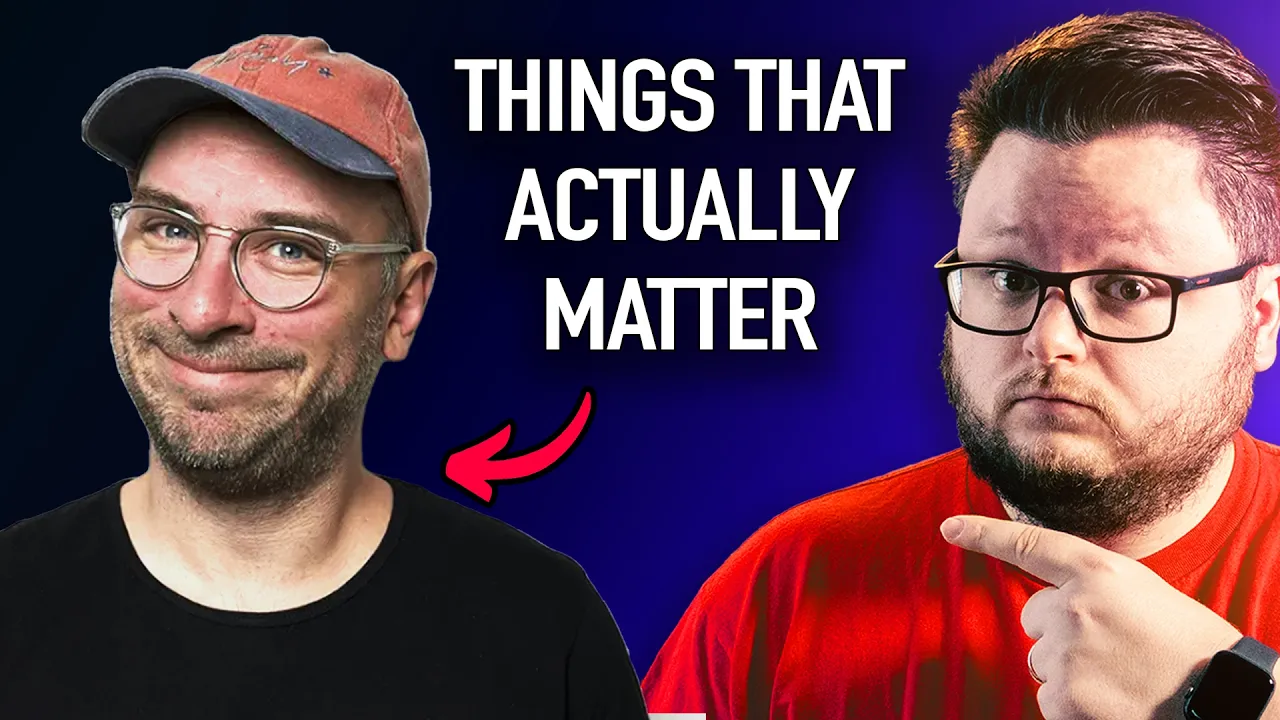
Jesse, if you only had one minute to give music artists the best advice you possibly could, what would you say? One minute on the clock. >> Uh, stop blaming stupid things and start thinking of bigger picture. And what I mean by this is so many people are like, am I posting at the right time? Does the algorithm hate me? Am I should I be concentrating more on Tik Tok? Think about bigger ideas. Think about how you Deepen your artistry. And when people are scrolling and on whatever app or when they're listening on whatever app, how
you make something that makes you stand out more and make them go, "Oh, wow. That is really, really crazy." There's so much time spent looking at likes. Likes don't matter. Shares matter much more. Think about what gets those shares, what gets people to do thumb stop, and you will get to much better answers. >> 47 seconds. >> That's right. So, uh, that's a very good point because I I get a lot of people who are asking me like, well, what hashtag should I use and what should my caption say and and like all that stuff
technically does matter, but like honestly like something like hashtags, I don't think there's anything that matters less on social media nowadays than what hashtags are using. I haven't even >> I Well, I mean the the thing I like to qualify this for is if you're in algorithmic jail, the algorithm has no idea what to do with you and putting one to three great hashtags, I have seen get people out of algorithmic jail that have been there for a while, but for the mo vast majority of us where the algorithm has some sort of clue if
you are sitting there thinking about improving your hashtag rather than thinking, you know, like I'm obsessed With this video and you know, you know me well. So, you know, I always I'm going to bring it to a place that's a little inappropriate. I don't know if you've seen this one great TikTok, but a girl runs up and she says, "I've heard you have a small leader." And then the guy goes, "No, I don't." And then plays the riff of his song on a bazookie. And then you see this band play this sick metal breakdown. That
is a genius idea that you should be thinking about. Thinking about what time of day to post it, the hashtag that works, it doesn't matter. That's a gateway that is incredible where people go, "Why is this hot girl running down an alley?" Then she says something provocative in in a split second you have a response to it from a guy who looks insane because he's in a full burka with a bazooki in his hand. But then you hear, "Oh, and it's a metal break." >> And then he breaks a glass about a Second later into
the video. So you keep going, "What the [ __ ] am I watching?" >> Yeah. >> Thinking about how you do that engagement is such a better use of your time than does 4:50 p.m. versus 1:50 p.m. work. Totally. Yeah. And honestly, even in like the ad world, it's the same thing. A lot of people obsess over what does my caption say and and like what font am I using or how am I cropping the video. It's like like have a great song And test different parts of the song and have really great diverse visuals.
Focus on it's like don't worry about this crazy technique because you can't even run fast enough to compete anyway. So, focus on running faster and then worry about that intricate technique. >> Yeah. I think one of the interesting things like you and I have for YouTube, we can because titles manager matter much more for us. So like you can now ABC test titles and thumbnails uh and Match them to each other and see what works. Like I've been doing a every 48 hours once I put up a video now. I go in and do that.
But what's also interesting is with trial reels, you can try three massively different approaches. And one of the things I recently did that was a massive failure uh that I'm sure you'll you'll mostly find this interesting is I tried a whole new thumb style where um we were basically making me look a little bit more film burned out Post-apocalyptic like just trying to kind of go to take it to your terms going a little fallout with it. >> Yeah. >> And um it [ __ ] bombed every video we did with that thumbnail. People are
like what the [ __ ] is he doing? And you know like me just sitting at this desk at this angle with shitty lighting was working better. So, and like when I was testing them that just that every video I put in that format, it failed to Anything else I tested. Even though I thought it looked more aesthetically cool, >> it's not what did it. And what we have to do now is with trial reels, >> make four versions of how you could do it and learn from it and then keep doing things. But I
think what you were saying here is very smart as usual, which is paint with much broader strokes and then get to the finer brush as you go. I test small words in my titles a lot of time Because I've tested most of my titles for six years and 300 [ __ ] billion videos. >> Yeah. Yeah. Yeah. That's a good point. You you have a ton of videos and you have a ton of data what works and what what doesn't in terms of like and you'll notice uh in my thumbnails as well as your thumbnails,
>> there's a lot of recurring themes. >> Uh like I we we like I'm sure you have templates like I do too. I have like Probably five different templates and I'm just moving words around, changing the size of things and and it's because I found over years of videos like what works and what doesn't. And so you you kind of start just leaning on that and you have to mix it up every so often. But you do find stuff that works and you lean on it. And that's why thumbnails can start to be repetitive. It's
like, you know, I'll see a Jesse video. I'm like, I feel like I feel like he used that thumbnail a month ago. But most people aren't paying attention to that, right? Most people don't see every video you upload. >> Yep. I do. >> And the reality is is that sometimes I am real tired and I'm just like, you know, this video is not my crown jewel. This is just >> a compilation of my short form and I go in, I find the one that performed best And I alter it slightly and I post >> and
that's reality is not every day are we showing up with our aame. You know, my newsletter this week, it was very funny. It was um my most popular one, but I will be real with you. I was just telling you I got sick from some food and I was supposed to release a video and release the newsletter with it and I couldn't do it because I can't put the newsletter out without the video because they coincide. >> But it was very funny is that I'm like, "All right, this is just not going to be your
best newsletter." But I did a very simple thought. It's my best performing newsletter in two months. >> Yeah. I think for artists too, a lot of artists are afraid to try stuff, especially once they start getting some momentum because they're afraid they're going to like ruin what they have or it's not going to feel on brand. >> And A lot of the times you're just wrong about what's going to work and what doesn't. So, obviously make sure you're not putting out crap, but >> it's it's shocking how frequently I'll see an artist who thinks something
they're putting out is not their best and ends up being their best performing song or vice versa. >> Yeah, >> this is the this is the hit single. I would bet anything that this is the song And then it ends up being like the worst performing song all year. >> It is one of those things when people ask me why to sign to a label. I'm like, you know, the consensus of ears that are enthused towards your genre of music can do a lot of wisdom. Like, you know, I will say this that like I
could complain about record labels for the duration of this podcast, but one of the things I think is super interesting is like when I'm in those meetings most of the time, If we're sitting there going, "What are is the best single?" Like I always joke about it with one of my most long-term clients is they consistently as a band are like, "We're going to not leave this song off the record." And we all are like, "What are you thinking?" That's the single. And it's a very funny thing because you do lose objectivity, but that's what
the consensus of a team does often help with is those missteps. >> Yeah, that's true. Yeah. Like I always Think of each person in a team as like a filter, right? So if you you give something to one person, they're going to filter out and give you a different result than a different person. So if you have all these team members that are giving their own individual feedback, it's like you're just you're filtering out the crap >> and you're ending up with something that's statistically most likely to do better. Now obviously there's the whole Death
by committee. Yeah. >> Where you have too many cooks in the kitchen and and that causes different issues. But but yeah, there's like a there's a nice thing having having a team. >> Yeah. I I think another interesting thing is one of the biggest problems in music of the death by committee is you start to get opinions of people who don't care about this genre of music or just working it sometimes and I I do a Thing all the time like where like I can do great work creatively for some clients whose music I don't
understand at all let's say their country and I don't really understand that culture I can still advise on how we get to better st things look at data and advise them but if they say which single it is I bow out. And one of the biggest things is it's like, you know, for example, you and I both like Spirit Box. I'm sure if we went into their last record, we wrote Down our four favorite songs. Three out of four, if not two out of four, are going to overlap. >> Yeah, it's a good point. the
a lot of times there are people on a team who just like shouldn't be having the certain powers at B right to decide like what's the single and I I've had uh clients consulting people whatever like ask me like which one of these songs do you think we should do and we always will give that feedback but there's very Often where it's put with an asterisk of like this just isn't our cup of tea like we we can tell the quality is there and that this is something we can work but like we're just Not
like I don't listen to hip-hop. >> So, I'm there's no way I'm going to be able to tell you what's like a out of these four tracks, what's the best, especially like for your audience, you know? >> 100%. Yeah. Like I I even when I listen To a lot of hip-hop, if you played me Playboy Card's last record and said, "What's the best song on this?" I'd be like, I don't know. They all sound the [ __ ] same to me. But like on some other hip-hop, I get it. And I very much take this
on. I sometimes don't speak the language of each artist. And some artists I like you know like I think of when I managed and produced that group man Overboard is like every instinct I had there were so few times that the any Of us would disagree because we were all so instinctually aligned because we were all listening the same stuff and coming from the same perspective. So like most ideas would not just be like do we agree but like how can we take that even further and somebody piling on the idea piling on the idea
piling on that idea and making it better and better and better because we all liked each other's ideas but then we had ideas how to make them better. >> Yeah. Now I was watching one of your videos lately and of course there's always mean comments in every video. I get them. You get them. It's >> I never noticed. Really? I get mean comments? No way. >> Yeah. I mean, SOCIAL MED is funny, too. I mean, if anyone doesn't anyone who's watching doesn't know this, Jesse and I, as well as Matt B and Dustin Boyer, have
a podcast called My Point4 Sense that'll be linked down Below. Um, and like sometimes the social media clips that shared for that are kind of crazy because like someone in the podcast will have some hot take and then it just randomly goes viral on TikTok or viral for us and it's like, "Holy crap, people are brutal." >> Yeah. Yeah. Yeah. Um, but I saw one and someone was like something along the lines of this Jesse guy doesn't know what he's talking about. He had one hit record years ago As a producer and that's all his
claim to fame is and now he's trying to give you advice. >> Yeah. And I know >> also took to Reddit to do the same thing and then what I wrote them they retracted it after I showed them otherwise. >> Yeah. And and so I I think like what that boils down is a lot of people just don't know what you've what you've done. Yeah. And uh this is an interview of You. So it'd be kind of cool to hear like >> what has been your journey from I've seen pictures of you in your 20s.
So random dude learning how to work in a studio to uh muse for and then like the music is now like what was that journey like and and why do you have any >> what is your experience and like what is skill set in this whole music marketing music business thing? >> Yeah. So, um, at 15 years ago, which, Um, for anyone who wants to do math was 33 years ago, or so, I'm sorry, at 15 years old, which is 33 years ago, I, uh, started producing records for money. Um, I was doing live sound.
I, um, would literally trade a Dorito bag in 240s to produce your record. And um I crazily enough started to have hits, meaning my records would sell more than a lot of the other punk bands in the New York scene um at the time. And so this is the '9s. >> Uh so that started to get me to going into nice studios where I wouldn't necessarily be the person turning the knob, but I'd be the person saying, "Turn that 80s hair metal reverb off my punk record." Uh, so that basically spiraled. Um, I worked at
record labels at the time. I mean, I basically did anything I could for money and I'd do what I still do, which is I'd work every hour of the day. I worked at um, three different punk Clubs, both putting on shows and being the sound man. I'd be in the studio all day. I had a record label job doing um, both retail and publicity. And eventually, I realized I don't like the rest of this. I just like record production. So, I got a job with Alan Duchess, who's a pre previous guest to this podcast. >>
Yep. >> A link to it. >> There we go. >> Uh Allan took me in. Allan is the um most credited engineer in music history. He's worked on an insane amount of music. Um >> isn't it something like 15,000 albums or >> It's it's it's 15,000 albums and something like 36,000 projects is what I think it is. It's it's I mean when working with when I worked for Allan, the craziest thing would be is we would overlap each day is I'd come in at about 7 and leave at about 8 9 when he would Wake
up again. But I would be running the studio the entire time just making parts like because we had to make CDs for masters back then and then mail them and then back up the data. So, I would just make parts all night a lot of the time and then I'd flip my schedule around and produce on the weekends or like a Friday through Sunday. Um, and um, yeah, it was it was absolute madness. But, um, eventually I got uh, ticketed to my own production business. Um, I opened a studio kind of by accident. I didn't
want to open a studio. This is back when you used to just freelance. And bands kept being like, "We need to get this done for cheap." And um you know, the next thing I know, I have these two guys who are literally uh with murder charges rapping about the murders they did in my parents' basement. Lots of fun stuff. My parents look back on this fondly. Um but so they threw me out of their basement And I got my own studio. Um and then right about that time, I got a call to work for Ross
Robinson. So, for those who don't know, Ross's, Corn, Limp Biscuits, Slipnot, Glass Jaw at the Drive-In, Blood Brothers, Death Tones, like every band in the book, Ross discovered. >> Uh, so Ross had me come to the cure with him. Um, and then I did Limp Biscuit with him and some other records. And, uh, then I came home and for quite a Long time I was producing records. Uh, had a lot of great records that did really well. Uh, and then I started to get this weird thing that would happen as I'd be in the studio
with a band and uh, they'd be like, "This is great, but how are we gonna get anybody to uh, listen to this record?" And I kept hearing that. And so I got tired of writing the same email and rewriting it. So I put it on a blog and that was Museformation. And uh, so that's 2009. Um, so I started just making instructions on what you're doing. >> I was a senior in high school. Not to make you feel old. >> It's it's fine. I'm very comfortable with the old now. Um, so the point being, um,
I, uh, am doing that and then I just, I'm just reading about music marketing more and some bands would say I'd be in the studio of the band on the label and They'd be like, um, you know, what do we do to get this heard? I saw you're doing this thing and I'd be like, well, what if we do this, this, and this. So then they'd go to the record company. The record company be like, you idiots didn't come up with that. I know you. And they were like, "Oh, Jesse told us." And then so
I'd start getting calls like, and then it started to be like, "Hey, can you listen to this record? What what would you do?" And I'm like, "$300 maybe." And, you know, I just slowly started realizing I like doing this. And then uh this band called Man Overboard came into the studio. I really liked them as people. I really um and I just kept telling them what to do and then they kept doing it. Then they were like, "Why don't you manage us?" I said no five times. Then their best friends, Transit, did the same thing
and I really liked them and I said no five times and Then said yes. And so then uh we signed them to a unprecedented record deal. My lawyer at the time said it was the uh single best record deal he had seen in over a decade and a half. Um because we built >> the best like best from the artist perspective. >> Yeah. Yeah. So we signed to Rise Records which at the time was one of the largest indie labels in the world. Um and um Rise gave us a very good deal because we Were
basically a big change of sound for them. They were putting out big records like by Devil's Prada, things like that. Man Overboard is a much more pop punk band. They wanted into that world. So we got really good terms for them, you know, terms like for example, if we don't sell this many records, we can walk because they should be able to get us to that point. That's really unprecedented. >> So like we had essentially a one record Deal if we wanted it. They stayed there for I believe four records at least three of off
the top of my head but I don't have their discoraphy in front of me. Um so anyway um and Transit got a great record deal too and um both went on to tons of success. Um I have this problem of that I can I mean you know this about me because you hear what I'm doing every week but I can't stay interested in the same thing very long. Um, so, um, I'm always researching Something else aside from my main thing. And, um, >> I started to get tired of telling 18-year-old kids in pop punk bands
to tune their guitar. So, I kept doing this marketing thing, and it turned out I was pretty good at it. I kept getting hired for it. And, um, I realized I didn't like management because it meant I had to go outside the house and socialize all the time, which I'm a social person, but the level management demands that is Excessive for me. Uh so uh yeah I kept kind of going and at that time too I started um because of my writing I started getting all these weird offers from like alternative press and all these
companies and I kept consulting and then I just kept getting more hired. I worked at Vice as a consultant. Um, all Huffy Compose, all these different weird companies. And um, >> I just got a very good rep for this. And At the same time, I was doing a music business podcast with Zach, Zach's managed artists like Brand New, Cave Town, Kevin Divine, um, City Rose, who's a huge hit for him right now. Um, and >> is that the um, what's his company called? >> Alternate Side and Many Hats Endeavors is >> also we'll link to
my interview. >> Oh, yeah. Yeah. Yeah. That's right. >> Was like, "That name sounds familiar." >> Yeah. Side. I had him and him and his business partner. >> Yeah. >> Yeah. >> Uh both extremely smart people. Um Zack, >> their streaming volume is nuts. They were at the same time in their interview they mentioned like what is their weekly streams and I was like shook. >> I think they pay out $10 million a month to artists >> um of just streaming royalties. It's Insane. Um, and Zach, I met Zach when he was like a sophomore
in high school when he came to my studio to profile Man Overboard. And it was very clear. I, funny enough, when I started before the podcast is I wrote for his blog. Um, I was the music business columnist there, which got me my music business columnist gig at Alternative Press. Um so but yeah during that time uh then I get a call from Atlantic Records um who wanted to explore more of what I would did and um So they gave me an interesting thing of they gave me a podcast um called inside the album and
then they gave me I hosted two other ones for them and a lot of what I was doing is I was showing the artists basically like what we were doing is we were learning that if you and it's similar to what's happening in music marketing right now which is that if you get people up to speed with the artist story, they have something to talk about that creates word of mouth. So, we did that with a lot of these artists is I was basically making these mini documentaries. It's very funny now because now as I,
you know, every like last year when I put out my debut documentary and it got like 4 million views, everybody's like, "What the [ __ ] Where'd that come from?" I'm like, "I've technically been making documentaries for seven years." I mean, really eight because when Zach left our podcast, I actually made a Documentary that got 100,000 views on Soundcloud. >> Um, that was uh a documentary on how we prevent bands from getting their vans stolen. I did all this investigative reporting. I actually had reporters work with me on it. It I I've always liked telling
stories and doing those things. But, so basically, this all goes to that I'm working at Atlantic Records. I'm getting to work on all these cool artists. It's very fun. I learn every, You know, like one of the things you and I have this very similar disposition and one of the reasons I really enjoy you is I wake up in the morning and I see Andrew's been up all night with his baby telling people on threads that they're wrong about things. And I usually 90% of the time agree with what you're saying. Fred does this thing
where like if you follow someone or interact with them like it'll show you posts that they've replied to. >> Yep. >> Um so I'll see stuff that you do the same all the time and then uh you know same deal. I'll usually jump in or just like like your post or something. >> Yep. Y >> but yeah it's it's like >> even if it's something I don't want to defend if I see something wrong on the internet and people are proudly proclaiming it, it just like infuriates me. >> Yeah. Like I've stopped I remember like
a couple instances people like oh Spotify pays you know 0.001 001 cents per stream. And I'm like, you're off by a factor of like a h 100,000. Yeah. Like it doesn't pay well, but it pays a third of a penny. And it's like, stop making me defend the giant corporation. Right. But it's >> Yeah. And it's one of the things I started to really respect about like from the moment I saw your channel, There were so many [ __ ] grifters when you and I were first starting to do this. And one of the things
I was like, "Oh, this person really cares about information being correct, which is what I care about, too." and a lot of my work and it's one of the things I very much enjoy about you and um >> thanks man. I enjoy that about you too. >> Thank you. >> When I first saw your video about the whole like Facebook ad thing, I was like It almost felt like a personal attack and then that's very much it was an attack on a different channel. >> We're have to talk later about who it was. But um
but yeah, and then it was like we had >> starts with an I, ends with an I mean it's very easy to figure out, >> but we um we uh we chatted then and then it was like, "Oh, okay, cool. This this guy's after the same thing I'm after, which is just like >> doing things and reporting on what's actually helpful and what actually works for artists and then like adjusting stuff like just using real numbers." No, >> in my opinion, if you're if you're showing like real numbers, it doesn't it doesn't even matter if
your opinion of it is correct at the time. It's like you put all the data there and everyone can make their own decisions. And and a lot of like the experience you do, especially in your um what's what's it Music trends? Is that your >> music marketing trends? Yeah. >> Music marketing trends. Musicmarketing trends.com um or your newsletter. And uh you do a lot of like this dude posted 50 times a day. this is how we grew like and there's there's numbers there. So even if someone doesn't agree with >> your interpretation of of how
it went down, >> all the data is there so they can make Their own their own judgment call and then they can argue that and then you could you know it's very it's much more scientific than just do this thing and see what happens you know. >> Yeah. And a lot of what I think I like is like teaching people how to think about things rather than just my analysis. I may say my thing, but um with that, I'll back to what I was saying that I found interesting in Atlanta because everything I thought About
a major label going in, I realized I'd been subjected to an echo chamber of people who talked a lot of [ __ ] >> believed a lot of publicity uh po posts uh or I'm sorry, press releases. Uh but I saw much different things. You know, for example, like the most shocking thing to me would be like I'd be with an artist while they'd be talking to the head of AR and they'd say, "I don't really like this, but it's your mistake to make." And all I heard was, and There's realities like Charlie XCX has
a whole record that Atlantic did not put out because they did not think it was viable. But under this was I was there after that. Under this reign of leadership, they were letting people make their mistakes. the Kelly Clarkson's versus Clive Davis or whatever era had gone and they were letting artists do their own thing and I saw lots of things that people had told me one thing and I saw quite different Things almost every time I walked in the door since I got a lot of different access. Now, I'm not here to say, "Wow,
major labels are beautiful, beautiful things." But what I will say is the reality was much of the [ __ ] I see on threads all day is drastic characters of what actually was going on. Um, at least when I was there. Um, >> my interaction with major labels and people that work there is the there's a lot of people who work at major labels That care very deeply about helping artists and making music successful. But a lot of the time the corporate um you know what executive team yada yada yada corporate [ __ ] the
executive team the financial limitations that the whole company is given >> usually forces >> the team to make decisions that artists do not like. So, it's like there'll be someone who's working there who's like their job is like >> blowing up this release and they want to do all this stuff and they want it to be successful and they care about the artist, >> but there's just a limited budget. There's limited hours and like some of these some of the I've had I've had people who work at Universal book a call with me on their
own dime to help an artist that is at their so the label is not paying for it. The person's personally because they care so much. Yeah. >> They couldn't get funding from their department to pay them. And that's just the reality of at a big corporation is the an ind the company can't be summed up to like the company. There's all these people that care and there's a lot of people who are just paper pushers or who don't care and then there's like the the corporate level stuff that you know it is what it is.
It's it's the whole goal is to make money, right? Um >> yeah and you know a story I tell about that all the time and it's uh a very poignant one is Chapel Ron is that I meet Chapel Ron right when she gets to Atlantic and she's very young. I can't remember how old, but like 15 to 17 tops. And we all are like, "Wow, what a talent." But songs weren't there. And so she gets dropped because the releases on Atlantic do not do well. Um, it was a much different sound. Um, but I remember
everybody I talked to about this was Heartbroken that the accountants were like, "Look, it's not working." And she's one of the greatest proofs of how stupid so many of the conspiracies are about major labels is it's like oh they mistreated her. They did the things. So the funniest thing about Chapel Ran. So Chapel Ron keeps putting out songs. I'm listening to them and my friend Britney Spanos at Rolling Stone. She is tweeting every day. This is the greatest artist. No one cares. She's got like tens of Thousands of streams 100 thousand tops. And we are
both like no this is the best thing. And I'm very rarely right about things early on in pop. Um, but we knew she's very good. And the funniest thing that happens is is about a year later after us screaming this, she uh finally hits and the back catalog goes bananas. I mean, uh, Pink Pony Club was on the charts in 2025, three three years after its release or two at max because the back catalog was so discovered and run Up. But you know what part of her back catalog did not get run up and no
one liked that gets still almost no place is those Atlantic records because she wasn't quite there yet. And all this thing of like Atlantic couldn't handle like I'm not in the business of uh defending somebody who doesn't write me checks anymore. I don't really care. >> It's just evidence of how stupid these things are with the Nepo baby or the label didn't do this. The crowd chose Which of those songs. There's some songs from a later era that did not pop off. The crowd discovers songs and when they're really great, if they actually get the
attention, they blow up. >> Totally. And if if if you person watching this who is like, Jesse, you're dumb. Labels are evil. If if you gave an artist $10,000 of your own money, >> and the goal is to make all your money Back, not even profit, just make all your money back, and then you do that, and then over the course of, let's say, three years, you make back 10% of what you gave them, are you going to give them another $10,000? No. >> You're going to move on to someone else. And and from the
label's perspective, that's all it is. It's like, we gave you all this money. we believed in you and unfortunately we were wrong. It or not even that we were wrong, it didn't work Out. Uh we can't we're not a money printing machine. We have to cut our losses and move on and good luck. and every like I talked to fixed >> um a couple weeks ago when that episode went live and >> and you know he was talking about how uncomfortable it is to have those hard conversations with artists because like it's it sometimes is
just like they really love the artist personally and professionally. It's just financially It's just doesn't make sense for them at that time. And it's usually amicable even when it's a drop situation because he's like we still have a record with them. We're still paying them quarterly. We still talk regularly. So even the artist often isn't upset that they're they're upset that they're dropped, but they're not like angry. So a lot of times the fans and the music industry people that were never involved, they're almost like white nighting in that case. Like >> I'm really mad
and Chapel Ran's like not even mad, right? >> Yeah. I I and I I think that that is also the other thing of that like there's an argument to be made that labels used to nurture and develop for a lot longer. But there's also this argument that like there wasn't the system there is now to do that nurturing in the indie world and get them heard and do a lot of the have financial Incentives and then bring them up to the majors later. Someone could argue perhaps a major label shouldn't be signing a teenager like
Chapel Road. I could actually hear that argument. I'd love to hear somebody counterargue it. But like when there's tons of other artists who have 500,000 monthly listeners, they're to basically have a lot of proof of concept already >> should do it. But what this also tells me is a thing that um you tend to see in This world is like, you know, a really good example is um I recently came across a person who um they're I can just say it. I met Audrey Hobert the other week and um it's very rare that I'm you
know I'm around famous people all the time for work like if I walk into my studio on a given day there will be somebody like Cynthia Revo on to like you know the biggest stars are in my podcast I know what >> big politicians too didn't you say like During the president campaign you were like >> yeah it's Kamla there >> for anyone doesn't know uh in addition to all the music stuff Jesse does he has like the biggest podcast production company in New York City. Is that correct? >> Yeah. Yeah, that's correct. Um Podream
Studios and Yeah. Yeah. I So I I have Pod Stream Studios, the centermost building in Time Square, and then I have Brooklyn Recording Paradise, which is a studio where a lot of big indies come in. But to >> say my thing, I am around A-list level charisma all the time. So I meet Audrey Hobert and I am like, "Holy shit." Like this is why you sign someone who's written two songs before because you're like that's a one-of-a-kind [ __ ] star level talent just like the most uniquely person but also like the vision she had
when she had no management, no nothing, Just like was handed over because they like the song she wrote with Gracie Abrams. You're like, "This person has a brain that works much better than most other people's brains, and she has a charisma that is much stronger." And I hear the argument for, "You better sign them before somebody else signs them because they're going to get got up." I hear that argument for that. When I met Chapel Ron, I was like, "This is a teenager with the intellect of a 30-year-old." >> And I felt it from that
moment. And I think there's this interesting thing that you could make that argument. But there's also the argument that there's the 26-year-old who's doing [ __ ] great with 500,000 monthly listeners that would probably do better with that money. >> Totally. And that a lot of artists are mad about that that like you have to a lot of times the labels aren't doing That development. They're just waiting until the artist proves themselves by making it successful on their own. And it's a bummer because a lot of artists they don't want to do that. Um which
I guess is a nice transition to us talking about how an artist can do that. >> Sure. Sure. >> So, um, you know, it's it's nowadays I don't think it's possible or it's borderline impossible to become a successful artist unless you do social Media. Would you agree with that? I I think the way I would like to always put it is that um you're chopping off a limb and somebody has climb climbed Mount Everest without a limb. But that's really [ __ ] hard to do and you better get real strong in those other limbs.
So if you're not going to do social media live show better be to the point that everybody's just going to share it for uh anyway. Um, you know, like you'll see like a McGee who like I could now Ongoing joke. >> Andrew, have you listened to McGee? >> I have no idea. >> I love this joke. >> Andrew never knows who anyone else is like an obscure professional. >> Yeah. Okay. So, to get you up to speed, what many people including Eric Clapton has said is that McGee basically reinvented the guitar. >> Um, okay. He's
by far the most interesting Guitarist I've heard. >> Is this this the one with uh like two million monthly listeners like MK.Geeek? >> Yeah, that's it. >> Gotcha. >> Um he plays guitar for Dejon as well, who also is having one of the biggest records of the year. >> Um and um Deon, I would also say even though it doesn't sound that much like McGee, it sounds a little like you could hear it in there, but Deon is his whole Other thing. Um and they're just it's just a cataclysmic level. You know what? I have
seen someone sent me uh some a thing of him in like a subway car playing some crazy song and I was like this is crazy. I remember seeing this video. >> Candy I think. >> Y >> Candy live. >> Yeah. Yeah. It's incred That's one of the coolest things McGee does actually Is that the um and same with Don is that there's versions in the videos that are not that are more just these alternate versions that aren't totally live. Like they're definitely mixed, but they're um >> uh totally different versions of the album. Like I
personally is my favorite song on the record and I think Elis is better in the video and Dean's last record absolutely he made a whole version of the record live. Uh I think that version's much better and I never Like live versions better. >> Um >> so my argument would be this is McGee does not participate on social media. So his management has made him a fan account. Um, and when he plays live, you look at the stage setup. And the same thing with Djon was the single craziest sounding show I've ever heard. I've been
going to concerts for 35 years. >> Yeah. >> Um, they make a spectacle that is so much bigger that everyone's going to share it. You know what I do when I walk out of M McGee's concert? I'm like, "Holy [ __ ] that was weird." But the other thing crazy thing he did is he played the same song five times and it was great >> in the set. >> Uh-huh. Oh, wild. >> And then Dean had his producer on the stage dubbing out doing the craziest Effects you've ever heard. Like swirling the delays across the
the surround and the audience all these crazy things like no no set I've ever seen before and then you're sharing that. So if you're going to not do social media, you need to have a mechanism that still propels you into the social media sphere where you get it. Now, if your plan is >> in this case, like >> you could argue YouTube is a form of social media, but I guess he's not Really doing much social media-esque things on there either. Like he has no shorts. >> Mhm. >> It's mostly just audio uploads, but it
looks like, >> you know, even then some of his the live things he done, there's only a handful. So, you're right. He kind of aside from some really epic live things, there's almost nothing. He hasn't uploaded a video in a year. Yeah. And um You know another great example of this is um we could do this fun one again. Have you heard though you have heard it because we talked about the podcast Geese. >> Yeah. Yeah. >> Okay. So Geese is the indie rock breakout of the year and they're not going heavy on social media
but my god like they made a record that is just one of those things where everybody's talking about it. They also put out a Ton of music in recent years including the singer having a solo record. And there's a ton of war. There's a ton of natural war drops. Like there's this weird thing that the singer's mom wrote the book on uh polyamory. So everybody's like, "Damn, this is why this [ __ ] is so [ __ ] up. This mob's out [ __ ] everyone." Always got to take it to that place. I know.
I know. Um so, but the point being there's a lot of conversation to be had about geese. They've also put out two major live uh recordings. They just put out one from Jack White's Third Man Studio this week. And before that, they did this thing called In the Basement where the Nigel Godrich, the producer at Radio Ed, has you play for a uh performance in this amazing basement studio that's just every one of them is like one of the best sounding live performances you ever heard. Um, so they're like doing things instead of it playing
the social media Game. But my big thing is the majority of people who say this are really saying, "Hey, can I be lazy and not put in the work and still get all the benefits?" >> Yeah. And the answer is no. >> Yes. Yes. Yes. Yeah, there's um I like I I've I've talked to people where they don't really do the digital thing period. It's all just touring. And in some cases, artists that make enough money to like their Whole band is living off of touring full-time. And you look in their Spotify and there's like
a couple hundred monthly listeners. You look in their socials, there's like a thousand followers that they've recruited organically. They never post. And basically they they did this just by like aggressively playing shows and then that turns into touring and then you know they're they they get a they're basically getting a reputation just for That. Um that's a lot of work though. >> Yeah. That's there's a lot of risk and money involved in that and there's a like in the past and I say when I say past I mean like I don't know even like is
like the 90s but even more so in the 80s and 70s and whatever if you wanted to get your word the word out about your music and you didn't have a label get in the road right like what else what else is there to do like unless you Have a bunch of money if you have like $100,000 and you can start doing like billboard ads or like literal billboard ads >> I I I I mean the the bands that I was signing in the '9s, you know, bands like it's bad now cuz canceled, but like
Anti- Flag, it was a great example of this is that like they had a sound and a message that was very unique. They were the most politically charged pop band of their day and they just toured [ __ ] Constantly. And you know, like in an era where it was nearly impossible to do, getting them to sell 250,000 records of the record that um we signed them on, uh it was just really mostly about three factors, which are were their factors of the day is we bought tons and tons of poster and endcap space. For
the people who don't know what an endcap is, it was the display at the end of an aisle for a record, which crazily you'd go to your distributor and we'd say, "We want to Run $30,000 of end caps and you'd get back." A lot of the time if the record already had proof of concept, $90,000 that you could trace right back to that purchase. Like when we would do ROI analysis with the distributor, it'd be nuts that like the record be doing good. It's on month three. you just do that thing and maybe the band's
not on tour that month and all of a sudden it's that just blowing up and that's the major change you did. >> It'd be [ __ ] crazy. Um that and better hiring a publicist for another $10,000 more than the 10,000 you were already paying the $10 to $20,000 publicist back then used to go very far. that to me all of these short form video stuff is good news to me because kids can do it when they're broke and just have talent and are really dedicated whereas it used to be do you have $100,000 to
get this off the ground or will you live in squalor like Henry Rollins describes and get in the van. >> Yeah. And and anyone can build a career in music for free nowadays. It's just not actually free. It's free in terms of money. It's just not free in terms of time. And that that's like the big trade-off. But like it's I I think overall it's a much better situation than it was before. The only people I know that miss how it was before either were never part of that because they're too young or more likely
Um it's that back in those days they had the financial means to do that those big things. >> Yeah. And the other thing that um you know has really I mean I was reminded of it um two weeks ago I found um that in 1995 I wrote an article on how to do a DIY tour. >> Um and um I had basically just interviewed everybody before my first one and then went on it and wrote what they taught me was mostly very silly Answers like pack more underwear than you think you need. The food's horrible
on the road things like that. Um but um the point being the knowledge that is out now did not exist and you would have to get gatekept knowledge in addition to gatekept things whereas now you have a lot of upward mobility and accessibility even when you're broke. It's just how much time can you dedicate it. I have a lot of sympathy for the people who can't Dedicate all the time to it. I technically in some ways still have a day job compared to what I'd rather be doing. I mean there's a reason I diversify my
money, but like >> yeah, >> I technically have a day job. I have a lot of sympathy for it. >> Right. Right. And um it's so now now everyone knows, you know, you can't skip social media. You can, but it's like basically doing yourself a Huge disservice. >> Um what's the name of the game? Like what's the order of operations that a band should assuming like they got great music, they got it recorded, they're ready to release it. >> What is the like kind of bullet point list of you're gonna do this, this, this, this,
and this. >> Yeah, >> I know you have a 4hour long and I I made this I made this road map so I Could remember this always. >> Um, so uh for anybody who doesn't know, the there's a link in every one of my videos to a road map. A bunch of Andrew's videos are in there, too. Andrew's one of two creators that I have uh that are not my videos. The only other person is one on color correction. Um because I should not be >> I was going to say I I should not be
teaching color correction. Um anyway um so uh the point being uh What I basically show in there is the first thing that we should really be considering is right now what stops thumbs from scoring stops people and goes who's that rather than just listening to the next song on the playlist is an artist who's very developed and I therefore I think the number one thing we have to deal with is artist development. Um, so I have a lot of methods on how you do this. One of them is a technique I made called a Lames
analysis where it explores who you are authentically are and you go deeper with it. Another one of those is um a the concept in marketing called positioning which is basically that most artists if you look at them and have one idiot saying to another idiot, well what makes them special? They go, I don't know, they're mid version of Blink182. um that's not exciting to go listen to. But when you're like, "Oh, this is sick. They do this, this, this." And you run Your mouth and there's all these special things because they've really developed and they
figured out what differentiates them authentically from other artists. That gets people talking. Word of mouth is the number one way people discover music and what makes people when they actually encounter something stop and go, "Oh, I want to know more about this." So therefore, that order of operations comes first. Then after that comes all the dumb [ __ ] you and I talk About which is you know releasing in a consistent sustained manner and getting good at developing your content, your ad strategy, your music videos, all those things are way way way further down the
road. And honestly the thing I started to believe is that uh artists don't spend enough time on the artist development side which is uh why I'm writing a workbook on that right now. And um yeah uh what a lot of my last book processing creativity was about as Well. >> Yeah, that makes sense. And that's it's not necessarily even about refining the sound necessarily. It could be. >> Yeah. I mean it it is and it I think that it's incidental that when you're working on the development you inherently get better at both the songwriting >>
the emotions involved and you understand what you should be doing as an artist. One of the most interesting things I see all the time is um you see this artist I particularly before I went to Atlantic I was doing a lot of um it was really a period in my production era where I kind of became known as like he'll make you see this band they're pretty good he'll make them a lot better and make that first record then we'll get them up to a bigger producer and they'll do the massive record and that happened
to me a ton of times >> um and but what a lot of the process I had learned when I was going through that period period was is that if you just get artists to think deeper about themselves um and it's even things like you know a good example is I'd be like okay what's the crazy you know you're you're a great example of this what's the craziest artist that you like that's not in the Prague metal space >> in terms of like unexpected >> just like it's not metal it's not like Just somebody you
really like that's not in that space >> dispatch >> I I have no idea who that is so tell me about them Oh, they're uh they're kind of like an acoustic rock. They got a little bit of regga influence. They're kind of I guess they'd probably be good fit to play shows with like Dave Matthews band mixed with Fish. >> This is perfect. So, what I would then do is I would turn to the band and I'd Find the most boring song and I'd have like six of these and then I would understand each of
them because I'd been listening to the records of it. I'd be like, "You know what? What might be interesting is if we took the reae rhythms of Dispatch and what if we try to find a way to put this into this song that kind of is a little generic and boring. And then I would just do that a lot. And if you just got artists to think about what they actually like, What they really resonate with, and not force your own influences into it and just like do this thing, you'd get to some really interesting
things. And some of the things I'm most proud of in artists I've worked with sound um even artists I did pre-production with that I didn't even end up doing the record with is that I know in their sound and they've told me it's like oh that came because you did that exercise with us and just >> so so it's it's kind of like playing uh you know making a puzzle out of their existing spread like this band is this this sequence of this uh what's a like a easel like this band is this easel with
these colors on it but like let's get this color and that color and that color and let's put that together and try to do. So, you're not like putting anything new on them necessarily. I mean, you might be adding some stuff, but you're trying to figure out of the things they Already like doing and can do well, how do you repackage that into something that feels >> Let's just think deeper on the things you like. That's really like the the my the majority of my production ethos from like about 2013 till I retired was just
trying to get artists to think deeper about the emotions they're projecting their songs and get really dedicated to making we have a goal of emotion. Let's make it as powerful as possible but Let's also think deeper about what the tools in our box that make us feel strongly like. You know, the biggest worst thing, there was this record label I used to work with and they were trying to make all the punk bands listen to the Beatles more and they'd be like, "I [ __ ] hate the Beatles." Literally making music because I hate the
Beatles so much and you're making me put the Beatles in my music. >> Yeah. >> Like that's the worst thing you can do. That's the worst thing ANR does is like adds I listen I love lots of dubstep, but like there was this whole era when Scrolls got popular. Put some dubstep in there and then you have these all these records where it's like somebody something pretty and it's all of a sudden whoa whoa whoa whoa. And you're like, why the [ __ ] is >> every band is doing there's so many artists doing like
country collabs and Country songs lately. I mean, some of them end up being good, but a lot of the times it's like, Jesus Christ, you really have to check that box here, huh? >> Mhm. >> But that's it's interesting. Um, and actually, so you sent me a a artist relatively recently showing teeth. >> Oh, yeah. >> Um, you were like, "This this this girl's blowing up on TikTok." And I went Down a rabbit hole cuz I checked it. I was like, "This is [ __ ] sick." >> It's so sick. Like what Hal Burnton's doing
on the drums there, the grooves he's doing, I'm like, "I want more of that." >> And I I don't know like where the hell this lady came from. >> So I I learned this, funny enough, Andrew, this is Kismmet. I learned this last night because I was researching her cuz I was going to do a thing on her on My channel. >> Yeah. So, she was singing on TikTok in cars and doing like metal covers uh like showing basically like here's a hot metal chick who can do those screams in a car and you know
one of the things about the car is we all know what the acoustics are so you can't fake it as much and like so she was doing that thing and then apparently she teamed with this producer whose name I'm forgetting but he's the guitarist and Wrote most of it. They got Halpert on drums and then they got um Zack Cervini on the production. Uh and for those who don't know, Zach Cervini does many of the biggest rock records including he was John Feldman's assistant forever and did like a lot of the big Blake Way too
and all that stuff. >> Damn. >> Yeah. And then also the girl I believe she goes by Nars or something who's doing her Tik Toks is incredibly Talented. If you watching her Tik Tok it's a it's a 10 out of 10. uh creative direction. >> So So it's like she was posting this organic content of her screaming in a car. >> Yeah. Apparently deleted it unfortunately, which is gonna suck for me. >> Some some someone backed up some of them. >> Oh, good, good, good. >> Or maybe I saw them before. >> I was going
to say please send >> Yeah, I saw some and like I even saw um Sleeping with Sirens, this show up on my page like yesterday. Sleeping with Sirens posted a video of showing teeth performing one of one of her songs in a car. And um her personality in those is kind of crazy, right? It's like she has this like kind of Midwestern accent, like she's like this sweet southern girl and then she's like screaming her [ __ ] head off and it's a cool dichotomy of it, >> but it's almost like her her account's growing
>> with this just organic fun metal >> girl content like because it's it's not too common that you see like one metal's like a sausage fest, never mind in the screaming department. two uh one very important detail too, her own unique movements. There's this really interesting thing that she does in some Of the videos is that she like we all we know this. We both consume a lot of metal. It's all just >> and she does this rock that's I'm doing a terrible imitation. No one wants to see me do this. But she does this
rock that's like, "Oh, that's her move." And it's like it's very distinct. And it's like yet again that thing I was saying before stopping the thumb because people go, "Oh, this is different." And it's it's [ __ ] sick. >> And and so it seems like like she saw the success and is like, "This is my opportunity to spin this into a music project of ours not to do >> and then found a badass producer who connected her with a badass drummer and then found a badass content strategy person and then just built that cool
team and then dropped the song." So, it was like it was almost like she did this thing accidentally and then just capitalized on the moment. >> I what I would also say there's one other ingredient in the stew, which is that there's clearly an influencer program going on publicity wise. Um, everyone who influences in metal has done a video on them and they did it so early that I'd be like I'd be a little shocked if it was all organic. >> A lot of a lot of those like reaction channels and stuff do have uh
ways to be persuaded. Really? I never noticed. >> Like they'll have a donation button or Patreon and like you know if you go to them and like I want to give you a thousand. It's not even that much usually. It's it's like >> $100 we'll make a video about your song. And some of them are really big too. >> I mean do you get this that so I'll get Hi Jesse. I loved your reaction video to Food House's song Lift it and Go. Um we'd love to send you $200 to do a reaction to this.
And I'm like I never Did that. I've ever gotten that just like like I don't know what but like I'm on some list where they think I do hyperpop reactions because some AI probably was just like this guy likes hyperpop and he has a YouTube and a Tik Tok >> and then there there's yeah they're using that just to find people who will say yes. But I it makes sense from a marketing perspective if you have the money >> cuz it there you can't just do one right you have to kind of do this uh
you you want this perception that wow this song is everywhere >> and the other trick about this is this is um not sunk cost f well in a way it's sunk cost fall but what I would more say is this is that um once you do this once if you just keep making sick [ __ ] you're just going to keep getting covered as long as you keep coming up with good ideas after this >> everybody's going to keep reacting to to you. As long as you keep doing it, you won't have to pay them
because you'll have gotten so much of an audience that they have to cover you. And that is the greatest trick of publicity. It's one of the best tricks that a lot of artists were privy. I used to scream this from the rafters, which was just that once you get to a certain size, you don't have to pay as much for publicity unless you want to level up. But if you're in a Niche, like let's say you're, you know, I work with some uh a big um what do you call it? Like goth band. That goth
band ain't getting in Rolling Stone. I I worked at Rolling Stone for three years. It I know who's getting in Rolling Stone and who's not. >> We don't need to hire the publicist unless they're going to try to get that. Every goth publication needed to cover them because it's a huge event. If they're going to give them a huge Interview with a new revealing detail about their divorce, they're going to drool for it. And one of the things people don't think about publicity is they go, "Oh, but if I do this for one song, I'm
going to have to do it forever." It's like, no, actually, if you just do it right and you invest in content after that, you will not have to as long as you keep making cool [ __ ] >> Cuz at first you're paying for it, but then if you're successful enough, the Person's going to cover you because that's what gets them the eyeballs. >> Yep. >> You know, when Rock Fee talks about the latest drama with Ronnie Radkkey, right? Like, >> do they do anything but that? >> Like he's so good at like just causing
[ __ ] that he knows people are going to talk about. >> Yep. And half of it I bet is just intentional because of that and half of It I think is just because he's a little bit unhinged. >> Yeah. I I think I think that much like many things with celebrities when you're doing speculation is that um you can there can be uh chicken and egg just going all day that like both things feed each other. >> Yeah. Yeah. And and so like a lot of a lot of um people cover stuff because it
gets them views, especially small creators, but even the big ones, it's Like they're they're funneling off of the SEO, search traffic and stuff off of that. People are looking up reactions when right after cool music video comes out. It's just how the world works. Um so that's kind of like the the brand and I guess brand development. Um or you said artist development. >> Yeah. Now, when it comes to actually posting stuff on social media sites, like what is the current best practice for like volume, would you say? Uh so When I dissect the artists
that are going viral uh on my newsletter and my member feed um what we see over and over is a very consistent formula which is they're usually posting three to seven times a week with the m median like depend you know you you understand averages but like what we basically see is fiveish is about where it ranks across any genre if you're just looking at the baseline of what people do Now, for people who don't know rubber band Theory, um rubber band theory is this idea that you put two rubber bands here and then you
pull back. So, there's periods as an artist where you're pulling back and you're not doing as much. >> You can go down to very little on that point, but when you're vibrating, your album's coming out, you're doing your single lead up, you're going on tour after your album's out. If you're in vibrating period, you should definitely Lean on the five to seven side. If you're away from your vibrational period, you can lead much more to the three side and stay in the algorithm, keep people engaged, uh, if you'd like to. But that really is the
reality is doing that. But the other thing I will say is that like what we're entering in an era of is used to be mostly about lowfi and just do hitting a quantity mark. And what we're seeing over and over again now is we're moving much more To equality. You know, there's this big do you follow Jason Perigen? you should follow. You You would really like. So, he's um Matt and I, one of our favorite fiction writers. He wrote like both Matt and I's favorite book of 2024, but he's also like a god tier Tik
Tocker, which is very weird to like >> smartest people alive, sci-fi writers. >> P R Yeah. Yeah. Uh, so Jason entered this really interesting video this week about how Tik Tok wants videos more like What you and I make on YouTube and that they're literally telling the creators in the programs like make more of this and we'll pay you. And Jason makes green screen kind of like what Ruff used to make like a green screen with just like the background and you're talking in front of it. And Rough hilariously just changed up his format, too,
because they literally have said, "We're going to dock 70% of your pay if you don't switch over to this format." >> Gotcha. >> Because they want it more TV- like because it's easier to sell ads to is Jason's theory. And I tend to think that Jason is much smarter than me, so I trust what he thinks. Um, >> so they're trying to compete more with YouTube than anything else. That's correct. Tik Tok. So they want long form content with a slightly higher >> kind of quality standard. So, but what this also tells me is that
they know That we're entering an era where they want a little bit more quality and less just I picked up my phone the worst prison background like if I didn't have anything in these walls like they just that's not what they're looking for as much anymore. So, what we're all going to be, I think, seeing, and we discussed this on the channel, uh, thing before we discussed it on the podcast before I got to see that video, is I think we are moving to a little bit more of a Polished world. >> Um, which is
not that hard to do. Like a little bit of color correction at a template, you can have this stuff basically done with maybe 30 more seconds of a video. Uh, so >> I better not see artists complaining about this because for the last 5 years in this post Tik Tok world we've been living in, >> I have seen nothing but complaints about how artists wish we could get back to a Day where you could have less posts at a higher quality because they'd rather have higher quality stuff than just a hoorde of slop. >> Yep.
I guarantee you that now we're going to have people reminiscing about the days where they could just upload loweffort, lowfi content and get views from I like I just see it happening already and it's going to be the most hypocritical thing ever. >> Andra, I can't imagine what lived Experience you uh got to come to this conclusion. I just I just can't empathize at all. I have no idea what you're talking about. >> It's inevitably and you like a lot of artists that we work with get it. um like the the ones that take it
seriously and who actually put in the work under like they know how to play the game and they they realize to do it, but it's really the the people who don't put the work in that end up complaining about It. Um anyway, so it's like the people that hate how the current system works are going to hate how the new system works and they're going to complain about how it was better, but they in reality they weren't doing either. So if you're watching this, don't don't be that person. Uh >> yeah, I I mean a
thing I'm kind of obsessed with lately is that um you know I talk a lot about this in my book process of creativity that you know a Lot of time writer's block is that you haven't gotten inspired so you can't persspire inspire persspire you know that sweating has to drink some water to persspire out of your armpit uh is how most people know that word but like I think one of the most interesting things is people don't think about the balance of that if you're not creating things like you just don't get good and like
the muscle that you have to do like I you know I'm I'm not going to claim to Be the most in shape person but like one of the I was telling one of my assistants this that um so I I work with this guy Rick Wilson. Um Rick is written many New York Times bestsellers. Um and Rick told me he's like I write uh 2500 to 4,000 words a day. I'm like it's got to be a lie. Stephen King only writes 2500 a day and calls it a day. He's like, "No, almost every day I
write that." And then I got to know Rick and I'm like, "No, Rick really does write This." Like, because I see his output. And um >> yeah, >> so I was like, "Wow, I could never do that." I like I used to struggle for YouTube to write 1500. If I'm writing something for a politics thing, like 1500 would be where I tap out. The funniest thing is 6 years later after building my muscle is 7,000 is kind of an easy day for me now. And um I can do 10,000 words in a day if I
got a good Night of sleep and I'm properly caffeinated. >> Is that's what you currently do? >> I literally am not kidding you on that 4hour video. Um I clocked I think that video is something like 5600 words and um >> it's 56,000. Sorry. Yeah. Okay. >> Um I think I clocked uh two different days where I hit 10,000. So, are all your videos scripted, by the way? >> Yeah. Everything I've ever done is scripted. >> Crazy. Wow. >> Yeah. I I can't because you know what it is? I'm so annoyed by word particulars because
of working in politics for so long >> that um I can't my brain will not allow me to not choose every word exactly right. Like it's hard enough for me. I like I make my living as a podcaster and producing podcasts, which is hilar. And I the majority of what I fix on my podcast is when I get one word wrong. I'm listening to the editor. It drives me [ __ ] insane. >> I I I think I've scripted three videos ever. >> Wow. >> Um I'd say probably onetenth of videos or something like that.
One out of 10. I'll script the first like 10 seconds. >> Yeah. I mean, that's where it's really effective is the first 30 seconds to one Minute is really honing that script in. >> You're trying to get your hook and your value proposition and all that crap in. And so, so like that's like that's probably one out one out of 10, one out of 20 or sorry, one out of 10, two out of 10, I'll script that. But like fully scripted, I think three. So it's crazy to me that you script every video. And I
and it makes sense. And I think like honestly there's some cases where I Probably wish I scripted more because like you can you the nice thing when you script is you can pre-plan to get more densely packed information in one thing, right? because you're writing it and you're like, "That sucks. Redo that." And you're reformatting it. And then the video is just the reading out the knowledge. So you get more time to hash out your ideas. Um I just hate it. So I don't do >> Yeah. I I there's a really interesting Thing with um
so I write teleprompter scripts for a living. Uh for people who don't know, I produce a bunch of podcasts and so I have to write for both myself and I have to write for very picky is the nicest word I can say. talent. And so they all have their particulars. >> And some want every word exactly as it is. Some want a rough sentence. Some want your script, but they're not really Going to read your script. You know, like there's many politicians who are famous for this is that you load them the script that you
both wrote together and then you listen back and none of it was done. But they're riffing off of what they saw there and saying it the way they want to say it in the moment when they're locked in. But a lot of people just do bullet points and I when I do um my political podcasts I actually just have bullet points because I can as Long as I have some particular words like you know I need to know like a great example is today I don't know the difference between full immunity and qualified immunity and
I'll never get it right unless I write it down because I don't actually if I I've learned that 20 times in my life I forget it every time the next time I have to do it. So, like I just basically write some structure to go through things. >> Makes sense. >> Or the words down that I'm going to inevitably mess up. >> When we're filming a podcast, um I think it's because you have such a tight working relationship with your editors. Um it's always shocking to me like where you'll just cut things >> like when
we make a mistake, you'll just like mid-sentence just stop and then just start right there. And then if the final edit comes out perfect, I'm like, "Oh man, he like really trusts his Editor to nail it." Whereas like I'm sure my editor would nail it, you know? Hey Jarrett, you're probably watching. Uh but like I've just always worried that like oh like what you I always just restart the thought. But it it is shocking to me sometimes how you'll piece stuff together. >> You'll say a word a way you didn't want it and you'll just
stop mid-sentence, resay that fragment and then mess up that word and then stop and then like The final edit is just like perfectly sequenced. But I guess it's years of >> telepromptering and editing podcasts, working with the same editor. >> On just one of my podcasts, we've produced 7,000 segments and those are usually 20 minutes long and people [ __ ] them up. And you know, the other crazy thing we do now is we have voice models of everybody. And so when somebody says 6 million people live there and it's really 8 million, I go,
>> "Yeah, >> output from 11 Labs." and I drop the eight and I don't even call them to get a punch. >> Something that matters a lot. >> Yeah. >> For for politics like that. That's the kind of thing that would get someone >> like ripped apart on news station. So that that makes a lot of sense. I've I've seen clips of of like Trump and stuff where he's he's getting shredded Because he says some false number and it's like >> Yep. I mean like that's it's embarrassing, right? If you say like this place has
this many people and you're off by like 25%. It's like how much do you actually care about your job, right? And it's easy to [ __ ] that stuff up. So, >> it's very easy. I much like the major label thing we were discussing before. One of the things I've been humbled by As I've gotten older is and I you really have it too like with watching musicians playing live like you know Olivia Dean recently did a Saturday live performance where like her hit song is incredible singing. She got on Saturday live and people are
like she sure is skipping a lot of notes. like there's just a lot of melody that she's just like, "Yeah, I don't think I need that." And um >> but like a thing I try to explain to People because when I was 17, I'd be talking like them. And there was a period in my life where for some reason I was getting recommended a lot and it was during the economic meltdown of 2008. Um, I was getting recommended that before somebody would do like the Today Show or Good Morning America performance, they'd come to my
studio and rehearse because we were very close to Midtown and it was cheap and they knew our number. And one of the most Interesting things you saw is that when the inner mix was [ __ ] up, how much all of a sudden it's like, "Yeah, I'm gonna skip that part of the melody. I can't hear where to get to those notes because I'm not hearing it right." But then when they would get it dialed in, you're like, "Well, now they sound 20 times better as a singer." So what I said to everybody after the
Olivia Dean thing, I'm like, "If she does this every time she plays, you go see her live and All the songs are like this, that's probably not a bad mix. That's probably that she can't quite sing these songs as well as she does in the studio." But one night at Sarah Live with terrible Sarah Live, everybody plays it. I've been around I've been to Sarah Live numerous times. Everybody complains about how bad the sound is. H which is wild to think that it's such a big place would happen >> also 50 [ __ ] years
like get it dialed in. >> Yeah. Yeah. For real. It's not like it's a small company or something. >> Apparently it's just a terrible room to mix like terminal 5. >> Now uh going into some like tactics outside of just like posting on social media. >> Sure. >> Um let's just do kind of like rapid fire. >> Yeah. um this thing is it good or bad and a sentence about why it's good or Bad. >> Sure. >> Places where you submit your music, which includes places like Submit Hub and Groover and Playlist Bush and stuff
like that. >> Make sure your music has a good home on the playlists you're submitting to. It's great. If you see a playlist that says best ind music, it has five hip-hop songs, seven black metal songs on it, skip. If it's like, damn, I belong on This, absolutely go for it. What about services where you pay a lump sum to get added to x amount of bigger playlists? >> This is a hard answer because there's some services where this is bangs because what they're doing is they have 10 curated uh playlists that they run ads
to and then they charge an exorbitant amount of money to get these to authentic listeners of these things that are really great. And then there are absolute dog [ __ ] scammers. >> Yeah. Just like everything honestly. Yeah. I mean, there's one I I've been doing stuff with now that I I don't know that I'm allowed to talk about publicly, but um I will forward you it if you have interest. >> Yeah. Yeah. I'm always down to check out new players and stuff. >> Um radio promotion. >> Great question. Certain artists, once you've achieved proof
of concept, the Song is working, um you can get some serious damage done if you're in the right genre for it. some indie rock artists, even met heavy music getting promoted to SiriusXM. SiriusXM is still the single biggest hit maker and determinator in heavy music right now. Is that >> Think of it this way. If you are at 200,000 monthly listeners and Sirius picks you up, you will be at 500,000 very fast. >> Yeah. That specifically um >> Octane >> Octane. Yeah. It's big and it's big in metal. >> Um and it's it's similar in
indie. Yeah. uh influencer marketing, specifically paying to have creators use your song in their existing content. >> So, this is another one where I don't think you should be paying most companies to do this anymore. Um, I have a whole video on how to do it yourself. In general, you need to research and if you can't find people who are doing things to similar songs to yours, it is pro, excuse me, it's probably not for you. thing I tell people to do all the time. Go on Spotify Viral 50, find the closest song to you,
go look up that sound, and if you see a lot of influencers clearly doing videos to it, you may be able to easily contact those influencers and say, "I have $200 for you to do your silly little dance to my Song." >> What do you think the success rate of influencer marketing campaigns is? Like if you had to throw a random percentage on it? >> Well, I mean, I've done some campaigns. For example, the biggest indie in the country told me that the ROI of $1,600 we spent one time to get this song going was
the single best ROI they ever spent on a campaign. >> Now, that was three years ago, so who Knows what's changed since then. But what I will say is with the right song fit, it can go great. The biggest problem is is that a lot of people turn to me and they say, "I have this song where I say, I'm barefooted on the beach. I'm watching Saved by the Bell. There's a character named Screech that's going to be a big hit on Tik Tok." And I'm like, "I'd love to have whatever you're smoking so I
could get out of my head for a moment." >> Oh, I guess uh on another note, like Tik Tok ads and YouTube ads. >> So, you know, was like the funniest thing? I used to have this saying that I've never met an artist, you know, like I've probably talked to 20 No, 3,500 to 4,000 artists about how they got some attention. >> Yeah. >> I had never heard YouTube ads till I met one. And so I like to tell the story of what they what was interesting is they Were making like god tier cartoon level
episodes of their music videos >> and they ran YouTube ads on them and they converted so well that they had millions of views and their cost per click I can't remember exactly what it was but it was like much I remember I watched your video on YouTube ads and it was like lower than what you were like ever was possible and it was real they you know they had all the things to back it up. I could see it was authentic Behavior. They told me what they did. >> But the big thing I I would
say is it took me one out of 4,000 artists to ever hear that. >> As far as Tik Tok ads go, there is some very weird weird things you can do for attention. If you're willing, if you're like, "My audience is on Tik Tok." >> You can buy attention on Tik Tok and you can buy very interesting targeting. But if you are pinching pennies, I would stay very far away from Tik Tok. >> Yeah. So, Jesse, all your links are down below. We'll have the podcast and your your channel link down below, but anything you
want to leave the people with? >> Think bigger. Think think bigger. And um also, um I I I I have to say it every time we talk, Andrew. I mean, I watch most of the videos. I love what you do and I really appreciate you and I appreciate our friendship and I appreciate that we're going to hang out Next week. >> Yeah. Same man. Yeah, I appreciate you, too. Thanks for coming on. This was awesome. And everyone, go check out Jesse if you somehow haven't yet.