so let's talk about environment type and this is separate from our individual day types we have a separate video on the different day types that there are they're about five to six day types and each one of those day types will influence whatever approach we have to follow so whether or not the market is trending whether it's balanced whether we have a double distribution and we're setting up for potentially a double distribution reversal those are individual day types okay what we're talking about when we're talking about the environment is how we are moving through time
what is the behavior over time what is the trading environment like right now is it balanced are we for example beginning to form a bracketed range respecting the high and the low of the range are we setting up for that are we currently in a trending environment where we have essentially value that began within a range but now is leading to Value being determined at new levels okay so when we're describing the environment the things that we want to be able to answer are is the market balanced so do we have for example just off
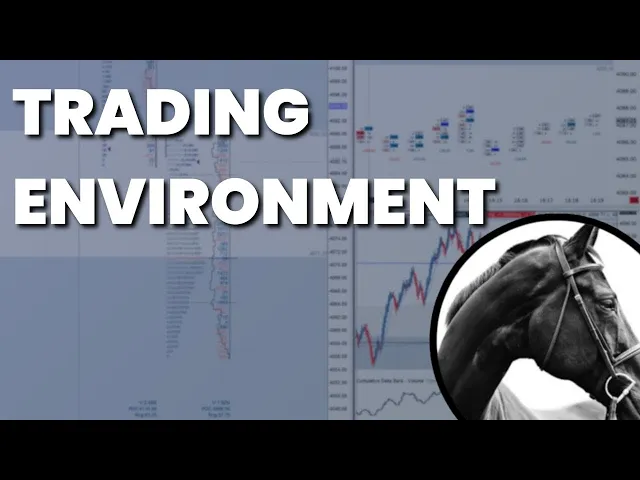
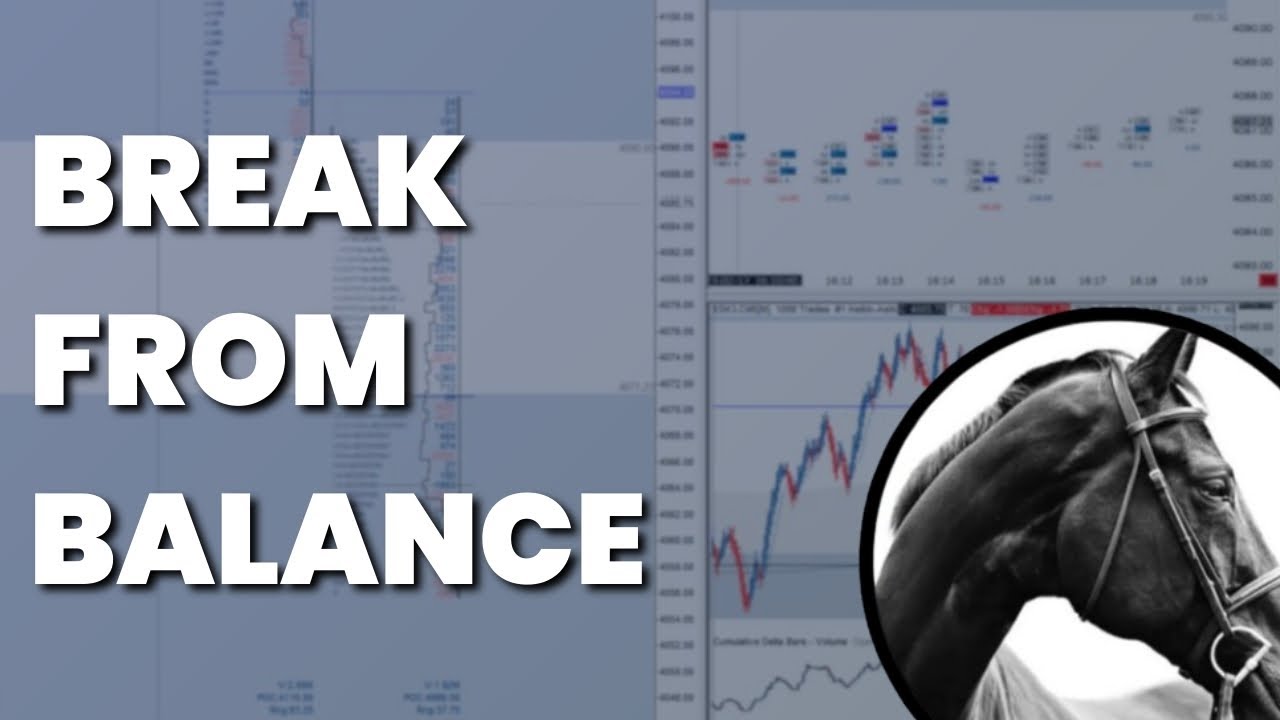
an individual day potentially a balanced range beginning to form so we see a structure like this which ultimately resulted in a break from balance but we see a structure like this and what this looks like is a balanced profile it is symmetrical it is pretty much showing a level of evenness between both sides of the market okay so this is a single daily session and for the most part this daily session was a range there is not much strength on part of buyers or sellers over the other there's a whole lot of agreement right here
okay the point of control the volume in the center this is your normal balance sort of gaussian distribution mark it like this is imbalanced right there is a whole level of inefficiency between not much writes transacted the market started off temporarily looking like it was in balance and then quickly moved to the upside this is a double distribution structure and in this case takes on the form of a short liquidation okay so the market is in balance and then very quickly moves to the upside and ultimately it is likely that the aggressor to the downside
helped this move to the upside okay so what we're looking to do is sort of describe the environment that we're in so that we could best situate ourselves moving forward if we see that over the course of few days we have something like value overlap so for example we have two days or essentially within the structures okay we have an inside day to follow and we begin to have this overlap in value so what we're looking at is essentially if we look at the high of this and we combine with the first low what we're
seeing is that there is a ton of overlap within value of the rotations to follow so the market might not be balanced on an individual level so from a single daily session but over time it is balanced right over time it is in relative agreement between these levels between around 9 800 9900 and to the lows around 9250 9200 so remember that a single profile while that day is important while that day's close is important okay if that close occurs through a important level that close occurs through a major and text contextual level that might
be important as far as follow through but other than that this is all just really one long day right this is essentially we're looking at a market this is a 24-hour market and we're going to pick up right off from where we left right so essentially this is just one continuous structure that is forming a liar a larger higher time frame balance range and now if we open this okay well that didn't work if we open this after compressing this we'll see that over time even though we had these deviations to the high each deviation
to the high was ultimately met with the level of rejection that had us returning back to the other side of the range so this is essentially what we're doing we're looking to describe the environment that we're in are we balanced are we imbalanced are we in a symmetrical structure that's forming okay are we in a trending environment is it one-sided and by one-sided you'll sometimes hear the term one time framing now what that means is essentially from the open so from let's say for example the initial balance right here which is the first hour of
the day from that period on there's been one side that has been in control okay so from the open to the close we're almost at both extremes or you can see that we have a very high rotation factor to the upside a very positive value in this case buyers are clearly very in control so that's another thing we're looking for we're looking to decide not only is the market shaping up to be balanced or imbalanced but is there one side that is beginning to show more control than the other okay so in a trend we
want to see that control is maintained right if we have a trend upward you would want to see that constantly you are creating new highs constantly you are creating higher value areas and constantly that volume is Shifting up as well so we're going to get all into this on the videos to follow but this is what we mean when we're talking about describing the environment so on the high time frame you might have one environment on the lower time frames you might have a trending structure and you have to keep this in context always or
rather keep your current positioning and context to Greater context rather keep it in mind keep it keep it in perspective because a lot of the time our approach is going to be dictated by what type of environment we're coming off of okay you could also see things such as whether or not the market is compressing over time time how is the ranges or rather how are the ranges changing over time so is something like our volume value area our TPO value area is that beginning to drop because we know that that is essentially the high
to low of these ranges for the value areas is that compressing over time is the average sub-period rotation size is that increasing or decreasing you would ideally want to see that that is increasing if a trend is increasing okay and potentially towards the end of a ranging environment you might see a ton of compression in those values so this is what we mean when we say identifying what type of environment we're in make sure that you watch the specific day types videos and after this we're going to be getting into trading a range trading a
trending environment and more of the specifics