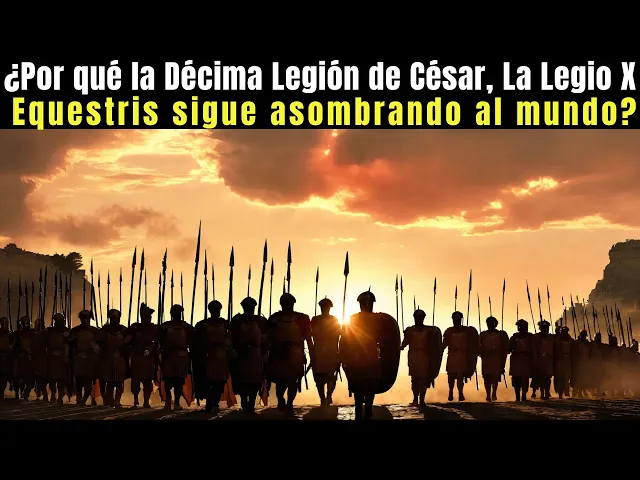
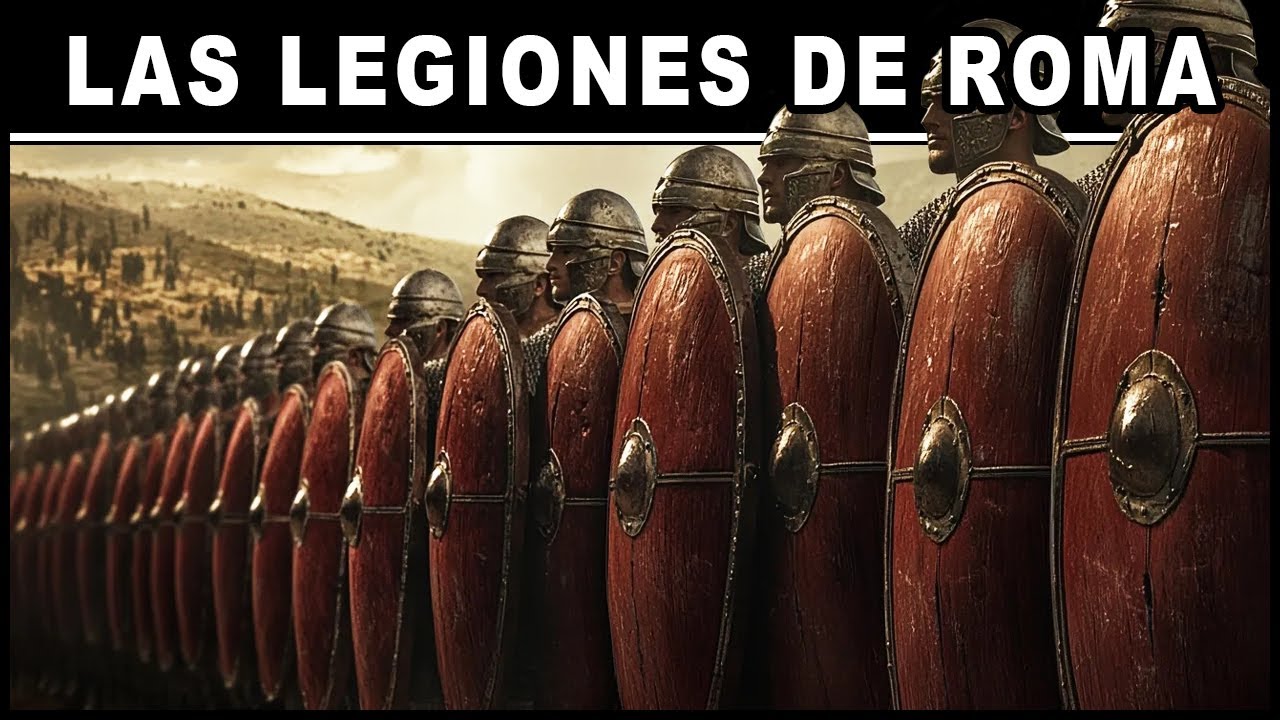
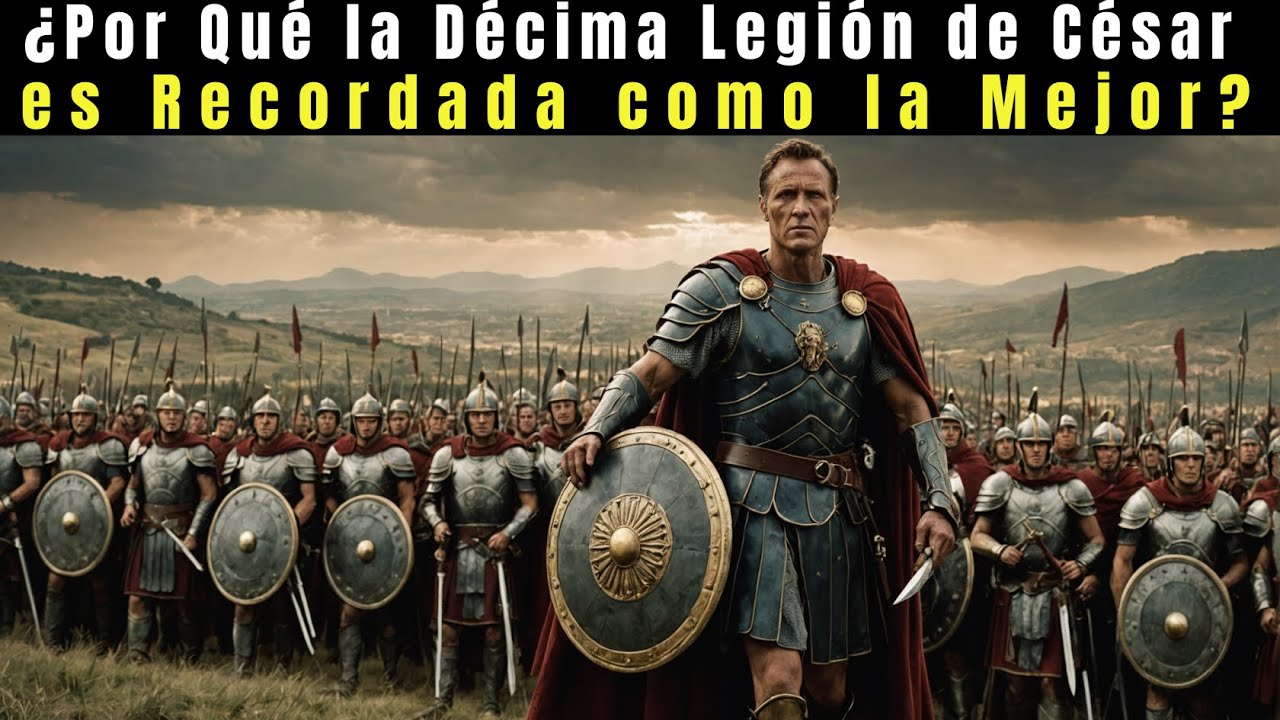
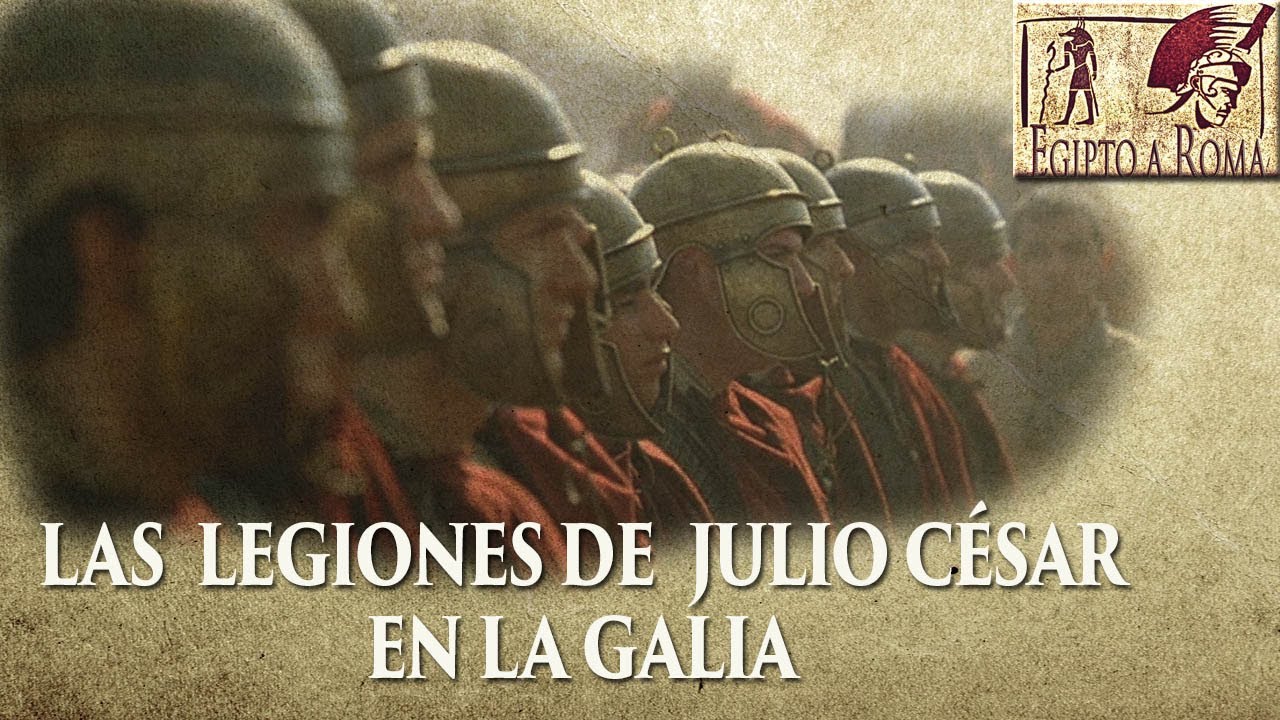
In this video, we delve into the chronicle of Caesar's Tenth Legion, highlighted among all in the vast narrative of Rome. Historically hailed as the most distinguished, this legion is considered by many military scholars to be the pinnacle of military strength of all time. We will explore the epic tale of Julius Caesar's Tenth Legion, witness to the most crucial moments in the history of the ancient world.
The story of the Tenth Legion dates back to the Republican era, although its origins are not entirely clear. According to some historical sources and archaeological findings, it may have been formed during the Social War, a significant conflict in Roman republican history. During this period, Rome's Italian allies, dissatisfied with their political representation, rose up in a war that encompassed all of Italy.
Another theory suggests that the Tenth Legion could have originated in Transalpine Gaul, possibly under the command of governor Calpurnio Pisone, who used it to subdue the Gauls in the Obrogi. Although the exact origin remains uncertain, it is a fact that the Tenth Legion played a prominent role in the Gallic campaigns led by Julius Caesar, thus marking the beginning of its legendary history. In this era of history, we find ourselves at the time when Julius Caesar leads the conquest of the Gauls.
The Tenth Legion, known as the Tenth Equestris, forms an essential part of Caesar's military force, under his direct command. Among the first adversaries Caesar faces are the Elvezi, a tribe that lived in the region of modern-day Switzerland. It was precisely the Elvezi who were the first to confront Caesar's troops and the Tenth Legion had a prominent role in the Battle of Genoa, which occurred in the year 58 BC.
Although the exact details of this confrontation are scarce, it is known that the Romans achieved victory thanks to their superior organization and more efficient management of their soldiers compared to the Elvezi. This is followed by another crucial and memorable confrontation, known as the Battle of the Arar River. This conflict, marked by 58 BC, originated when the Elvezi, deviating from Caesar's route of action, headed north in alliance with the Sequani.
Caesar, now determined to expand Roman rule over Gaul, embarked on an imperialist campaign. In his pursuit of the Elvezi, with extraordinary speed, he managed to surprise them while they were crossing the Arar River. Although three parts of the enemy army had already crossed successfully, a fourth part was about to do so when Caesar, together with the 10th legion, attacked without warning.
This strategic act led to a resounding victory over the Elvezi, who, bewildered, were easily defeated by Caesar and his 10th legion. This second encounter demonstrated the effectiveness of the Roman army under the leadership of Caesar in a campaign that was more offensive than defensive. The fight between Caesar and the Elvezi rages on, culminating in the momentous Battle of Bibracte, where the 10th Legion plays a crucial role.
In this confrontation, Caesar leads his men toward a strategic hill, securing an advantageous position. As the Elvezi advance towards them, the 10th Legion, from their elevated position, launch their javelins with precision, overwhelming their opponents. However, the arrival of the Elvezi's allies, the Boi and the Tauringi, changes the situation.
The Elvezi, reinvigorated by the support, intensify their offensive, while the allies ambush the right flank of Caesar's army, bringing it to the brink of defeat. At this critical moment, Caesar deploys masterful cunning to change the course of the confrontation. Caesar, cunningly and quickly, uses branches from the first line and the tenth legion to form an improvised defense on the right flank.
This maneuver surprises the attackers Boi and Tauringi, who are contained by this new defensive line. Thanks to this brilliant tactic and the extraordinary performance of the tenth legion, Caesar emerges victorious at the Battle of Bibracte. The defeat of the Elvezi is definitive, forcing them to retreat to their original territories.
The tenth legion also stars in a standout moment in its confrontation against Ariovistus. Who was Ariovistus? A German warrior prince initially invited by the Sequani tribe to their territory to combat the Edui, another tribe.
The Sequani offered Ariovistus a fifth of their territory as compensation. However, Ariovistus extended his power beyond what was agreed upon, breaking the pacts and establishing himself as a dominant force in Sequani territory. Faced with this situation, the Sequani and the Edui, putting aside their previous disputes, requested help from the Romans to confront Ariovistus.
For Caesar, this request represented a great opportunity but also a great danger, since it anticipated a battle of great magnitude. The crucial point lies in the diplomatic meetings between Ariovistus and Caesar, where Ariovistus takes the first step by agreeing to meet with Caesar to seek a peaceful solution. However, during the encounter, Ariovistus insists that both be escorted only by cavalry.
Why this choice? Ariovistus knows that Caesar's cavalry is made up of Gallic allies, not Roman soldiers, leading him to believe that he can induce Caesar's escort to betray or even attack him. At this critical point, the 10th Legion emerges as Caesar's savior.
Faced with the cunning trap and the imminent danger, Caesar acts with determination by disarming his Gallic allies and mounting the men of the tenth, in whom he fully trusts. He is sure that these soldiers will never fail him. In this way, the diplomatic meeting between Ariovistus and Caesar is carried out with the protection and absolute loyalty of the tenth legion.
This story reveals to us the unwavering trust that Caesar placed in the men of the tenth legion. However, the story does not stop there. Despite failed diplomatic attempts, Caesar and Ariovistus inevitably head toward conflict.
Caesar, with impressive speed, makes the decision to occupy the ancient city of Besanzone. At this point, the Roman soldiers prepare to confront Ariovistus, but begin to experience deep fear. The Germans were known for their imposing stature, their physical power, and their legends of superhuman strength.
The stories that circulated about the strength of these warriors instilled palpable fear in Roman soldiers at the prospect of facing Ariovistus. In the heat of the battlefield, fear becomes overwhelming, becoming the most feared enemy. Caesar, faced with this situation, intervenes to encourage his men.
He reminds them that Gaius Marius has already defeated Germanic peoples in the past, that the Romans have triumphed over the Germans before. However, upon seeing that fear persists among his troops, he utters a phrase that will endure in history: "I am not afraid to face Ariovistus, but if you do, I hand over everything to you and I will face him alone with the men of the tenth. " legion, in whom I fully trust.
This statement resonates deeply in the hearts of the legionnaires, fueling their fighting spirit and ready to confront Ariovistus. Once again, the Tenth Legion stands as the backbone of Caesar's destiny. The battle that follows, the Battle of Alsace, is an episode that demonstrates the crucial importance of the 10th Legion.
During this conflict, the 10th Legion occupies a vital position on the battlefield. The combat is fierce and violent, without respite or opportunity to throw javelins, according to ancient sources. It is a hand-to-hand confrontation, intense and dramatic, where Romans and Germans clash like beasts in a ruthless fight.
In the heat of battle, the right side of the Roman forces made significant advances, crushing their opponents with determination. However, on the left flank, the Romans were gradually beginning to give ground. At that critical moment, the situation was saved by the cunning and strategic vision of a young tribune named Publius Crassus.
From a position further away from the battle front, Crassus was able to get an overview of the situation and quickly sent reinforcements to the left flank to prevent a total collapse. With the extraordinary strength of his men, especially the 10th legion, Caesar achieved a victory over Ariovistus who was forced to flee, thus achieving an extraordinary result that few Romans had achieved before him. However, the saga of the Gaul conquest was not yet over.
Caesar advanced towards the deep north of the territory of the Gauls, entering the territory of the Belgae, what is now Belgium. There, accompanied by six veteran legions and two newly recruited legions, which had barely begun their training, they marched through the territory. Upon reaching their camping destination, the legionnaires began to build the camp, but were ambushed by tens of thousands of Belgian warriors, hidden in the surrounding forest.
These warriors had prepared an ingenious trap, using sharp branches cut from the trees to create dense vegetation and an impenetrable barrier. In this challenging scenario, the Belgian nervii laid a death trap for the Romans, unleashing an even more dangerous confrontation in Caesar's campaign in Gaul. Suddenly, thousands upon thousands of Belgian nervii warriors dramatically descended upon the Roman army.
The soldiers were caught off guard, without even having time to put on their helmets or complete equipment. They could only grab their gladios and shields to immediately defend themselves, facing a moment of extreme gravity. The Roman army was not annihilated for two crucial reasons.
First, the organizational structure of the legion remained intact during the march, as the centurions remained close to their respective units. Second, Roman soldiers demonstrated not only obedience, but also the ability to think and act for themselves in times of crisis and danger. Spontaneously, without direct orders from Caesar, the Romans built a first line of defense and bravely resisted the enemy assault.
Especially notable was the performance of the tenth legion, which faced the Atrebati tribe in a desperate attempt to break the Roman defense line. The legionnaires of the 10th demonstrated extraordinary professionalism in massacring the Atrebati and forcing them to flee, even pursuing them beyond the Sabis River in what would become known as the Battle of the Sabis River. However, while this part of the Roman formation was relatively safe, two other legions, the Seventh and Twelfth, faced imminent danger.
These legions were practically surrounded by the Belgian nervii and defended themselves bravely, but were at risk of collapsing at any moment. At that critical moment, Caesar takes personal command of the Tenth Legion and, meticulously organizing it, heads out in person to the rescue of the Seventh and Twelfth Legions. The legionaries of the tenth respond with impressive speed, shedding all fear and filling themselves with indomitable fury.
Within minutes, they carry out a terrible massacre of the Belgian nervii, annihilating hundreds and thousands of them, thus ensuring victory in the battle and the salvation of the encircled legions. Later, the tenth legion participates in Caesar's campaigns in Britain. During one phase of the Gaul conquest, Caesar decides to take a risk by approaching the British coast, where the British tribes had provided logistical support to the Gallic tribes.
Although the details are scarce, we know that in the first expedition in the year 55 BC, Caesar organized in Portus Aetius with a fleet of 80 warships, in which the legions embarked, including the tenth. Therefore, the 10th Legion plays a crucial role in secure the Roman fleet for this historic expedition to Britain. Landing in the region of Kent, the 10th faces the first British tribes, known for their fierce resistance, demonstrating once again their bravery and skill in combat.
The 10th Legion undoubtedly played a prominent role in Julius Caesar's British campaigns. Although the first reconnaissance expedition was canceled due to complications, the second expedition the following year in 54 BC continued with the participation of the 10th legion. During these campaigns, the Romans won various victories that led the Britons to submit to Caesar's authority by becoming tributaries and promising not to attack the Roman legions.
Thus, the tenth legion emerged as the protagonist of this historic and challenging expedition in the lands of Britain, where no Roman had reached before. Meanwhile, the Gallic campaigns continued, and the 10th Legion was present not only in moments of victory, but also in moments of defeat for Caesar. The arrival of Vercingetorix, leader of the Arverni, changed the course of the Gallic campaign by uniting all the tribes against the Roman invader.
One of the fundamental battles during this period was the siege of Gergovia. At this site, Caesar attempted to besiege Vercingetorix, who was besieged in the city of Gergovia. Caesar implemented an ingenious ploy by disguising his legionaries as peasants and having them march in front of the northeastern sector of the city.
This maneuver was intended to create the illusion that he was organizing an attack from the northeast, thus distracting the enemy's attention. In reality, the men were approaching the city from the south, preparing for a full siege. However, as Caesar relates in "De Bello Gallico", perhaps carried away by excessive confidence, and because they had been successful in the first skirmishes, a part of Caesar's army acted hastily.
They advanced too quickly towards Gergovia, ignoring Caesar's orders. The Gauls, fearful of an attack on Vastascala, took advantage of this recklessness and launched a devastating counterattack. The Roman legionaries were taken by surprise, outnumbered and outnumbered by the Gauls.
Their uncontrollable momentum proved overwhelming, and they were forced to retreat from Gergovia in disorder. At this critical moment, the 10th Legion was close to Caesar, who, in command of it, personally intervened to intercept the retreating Roman troops and save them from the pursuit of the Gauls. Once again, the 10th Legion proved its worth at Caesar's side, reducing the impact of this dramatic defeat.
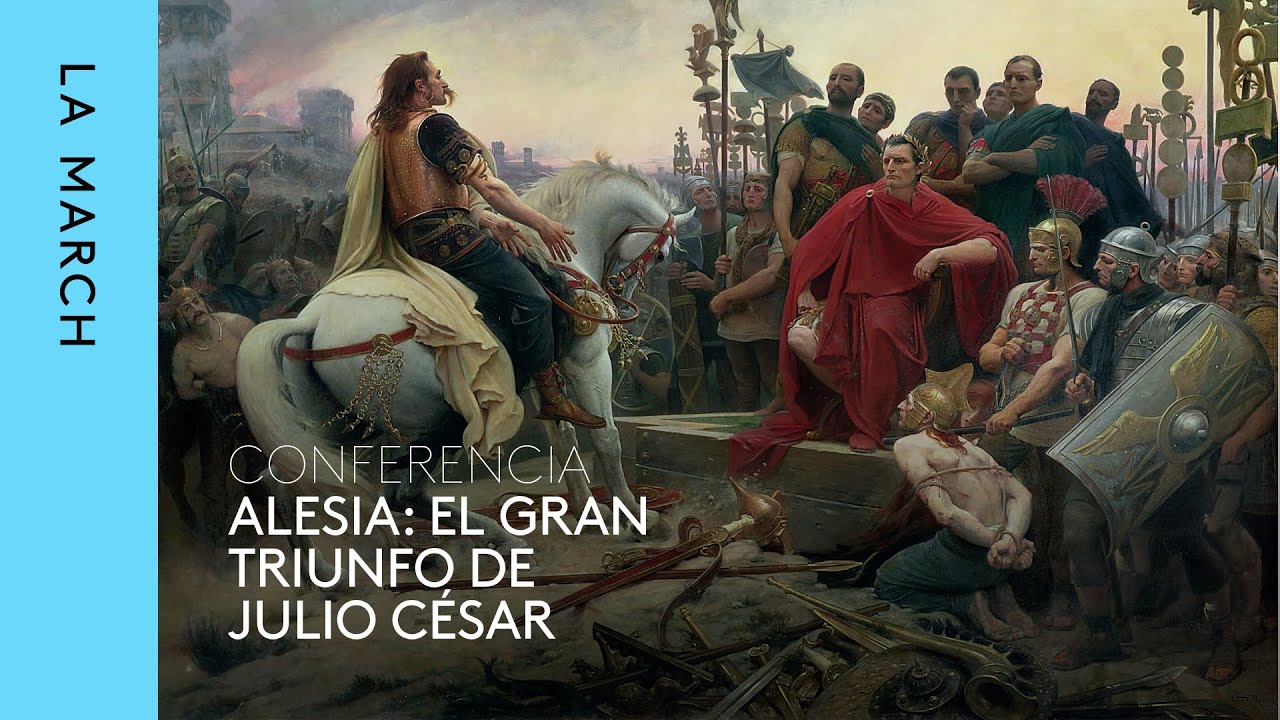
This was Caesar's first significant defeat in Gaul, and the 10th Legion was present even in times of great difficulty, supporting its leader at crucial moments. After the defeat at Gergovia, the Battle of Alesia breaks out, the last and decisive chapter in the conquest of the Gauls. Vercingetorix once again locks himself in the fortress of Alesia, summoning all the Gallic tribes to converge and confront Caesar with an overwhelming number of soldiers.
Caesar responds by building both a circumvallation to besiege Vercingetorix and a contravallation to protect himself from the Gallic rescue units. The Battle of Alesia becomes one of the most epic in Roman history, and although we do not know the exact position of the tenth legion, it is certain that it participated in this monumental battle. During the first day, intense fighting takes place between the cavalry just outside the contravallation, while the Gauls attempt to breach the Roman fortifications.
The next day, the Gauls launch a night attack, plunging the situation into an icy moonlight fight, where the Romans manage to resist thanks to the increasing precision of their projectiles at dawn. Finally, on the third day, the last major attack is unleashed. The Gauls, hidden behind Mount Aerea, suddenly burst in, attacking the Roman fortifications and managing to penetrate them in some areas.
It is a desperate and decisive confrontation, marking the climax of the Battle of Alesia and ultimately sealing the fate of the Gallic resistance against Roman expansion in the region. At that crucial moment, Caesar, clad in his general's purple mantle, personally led the battle at Alesia, closely followed by the 10th Legion. Pacing the fortifications back and forth, Caesar gave precise orders, provided urgent supplies, and, by his mere presence, strengthened the most vulnerable parts of the Roman formation.
His decisive intervention led to a magnificent final victory. Once again, the 10th Legion proved to be his most reliable ally, serving as Caesar's right arm in the battle that ensured the Romans' final conquest of the Gauls. After accompanying Caesar during the Gallic campaigns, the 10th Legion continued to be his faithful companion during the civil wars against Pompey.
As mentioned above, the 10th Legion was present not only in victories, but also in defeats. And the defeat in Durazzo is an example of this. When Caesar landed in the Balkans to confront Pompey, who was entrenched in the city of Durazzo with his army, Caesar decided, despite being at a numerical disadvantage, to build fortifications to besiege Pompey and defeat him on the coast.
In response, Pompey built fortifications opposite to Caesar's, beginning a true war of position. Both sides suffered, but Caesar faced greater difficulties, as his supplies were scarce and there was nothing to eat. The situation became even worse when it was learned that the southern part of Caesar's fortifications was not yet complete, leaving him vulnerable.
Pompey, taking advantage of this information thanks to a Caesar deserter, organized a sudden triple attack, breaking the fortifications and overcoming Caesar's blockade. This setback plunged Caesar into chaos, as his plan completely fell apart. It was a serious defeat, with the real possibility that Caesar and his army would be destroyed if Pompey had followed up with an all-out attack.
The situation was critical for Caesar, who was in imminent danger of being completely annihilated. Pompey decided not to continue with the all-out attack because he believed that Caesar had set a trap for him and that winning that way would have been too easy. He preferred to retire.
However, Caesar's situation was desperate, so desperate that his men admitted that the opponents would have won if they had had a competent general. César had to accept defeat at this difficult moment in his career. Despite adversity, the 10th Legion remained loyal to Caesar.
Throughout his career, Caesar defied everyone and unleashed a civil war against Pompey, mobilizing a huge force. However, in his first real confrontation, he suffered a devastating defeat. The 10th Legion continued to believe in him, protecting him and trusting that under his leadership they would achieve victory.
And that victory came shortly after, at the Battle of Pharsalia, the final showdown between Caesar and Pompey in the civil war. At the Battle of Pharsalia, Pompey had a large number of soldiers recruited from various parts of the Mediterranean as well as a central contingent of infantry and a force of cavalry led by Titus Labienus who had previously been Caesar's right-hand man during the campaigns in the Gaul, but who had now joined the Republican side and was on Pompey's side. On the battlefield of Pharsalia, Caesar faced a considerable numerical disadvantage against Pompey's army.
Aware of this situation, Caesar devised a strategy to level the playing field. He decided to hide infantry units behind his cavalry, while Titus Labienus and his cavalry would advance towards the enemy. Labienus's cavalry would simulate a retreat, thus attracting the enemy cavalry and leaving their flank exposed.
Once the enemy cavalry retreated, hidden infantry units would emerge to attack Labienus's cavalry from the front while Caesar launched an attack down Pompey's exposed flank. This tactical maneuver would allow Caesar to turn the tide of the battle in his favor. Caesar's plan was executed with precision and effectiveness, leading to victory for his army.
The 10th Legion played a crucial role in this strategy, being part of the central infantry contingent on the right flank. His presence and skills in combat contributed to the success of Caesar's master plan at the Battle of Pharsalia. At the Battle of Pharsalia, Caesar's men charged their adversaries, while Pompey's men stood still, intent on exhausting their opponents.
However, Caesar's soldiers realized that they were losing their breath as they ran towards the enemy. On their own initiative, they decided to stop, catch their breath, and then resume the attack. This display of tactical intelligence, carried out without his general's order, was extraordinary.
The 10th legion also showed this level of professionalism by having a similar idea, thus demonstrating its excellence in Roman history. The victory at the Battle of Pharsalia was Caesar's greatest victory during the civil war, and once again, the 10th Legion was at his side in this triumph. However, after Pompey's death, there were still followers loyal to him, which led to other battles, such as the Battle of Tapsus.
In this battle, the Pompeians, led by Titus Labienus, who had survived Pharsalia, deployed infantry, cavalry and elephants, while Caesar opted for his classic infantry and cavalry arrangement. The battle was intense, especially when the elephants attacked the center of the Roman line. The Fifth Legion had to resist the onslaught of these formidable animals, with the Tenth Legion supporting it from the right side.
The contribution of the tenth was crucial in holding the lines against the Pompeians in this fierce battle of Tapsus. The Battle of Munda was one of the bloodiest and most violent of Rome's civil wars. Despite the surrender of the Pompeians, Caesar's army was involved in a terrible massacre.
This episode is notably unusual, as Caesar was not known for allowing unchecked massacres, especially against civilians. There are several theories about what happened. Some sources suggest that Caesar may have suffered an epileptic seizure at the end of the battle, which would have left him unable to control his troops.
Other theories suggest that the uncontrolled violence may have been a result of the intensity and brutality of the battle, as well as the tension built up during the long and grueling campaigns. Regardless of the reason, the massacre at Munda was a tragic epilogue to Rome's civil wars, marking the end of a turbulent era and the beginning of Caesar's absolute rule over Rome. The Tenth Legion once again proved its worth at the Battle of Munda, Caesar's last major confrontation in Rome's civil wars.
In this battle, facing the last followers of the Pompeians led by Titus Labienus, the Tenth deployed its entire force on the right flank, under the personal direction of Caesar. Caesar's tactical skill and the ardor of the Decima were instrumental in securing victory at Munda. Caesar inspired his soldiers and drove them against the enemy with irresistible ferocity.
The Décima advanced with determination, overwhelming the adversary and demoralizing him with his ferocious attack. Seeing the bold move of the Tenth Legion, the enemy commander, Gnaeus Pompey, made the decision to reinforce the region where the Tenth had attacked, recognizing the danger this legion represented to his ranks. However, despite the efforts of the Pompeians, The tenacity and courage of the Tenth prevailed, contributing significantly to Caesar's final victory at Munda.
The Tenth Legion, after the victory at Munda, faced the shocking news of Caesar's death in the year 44 BC. For these legionnaires, who had fought alongside him in countless battles and campaigns, the loss of their leader was devastating. Despite the shock of Caesar's death, the Tenth continued its service and participated in the Battle of Philippi.
In this confrontation, they encountered Octavian, Caesar's nephew and his designated heir in the will , and Mark Antony, who had been one of Caesar's main allies in the Gallic campaigns and had led the cavalry under his command. The Battle of Philippi was a pivotal moment in Roman history, marking the confrontation between Caesar's supporters and the conspirators who had murdered him. The Tenth Legion, although still grieving the loss of its leader, once again demonstrated its bravery and skill on the battlefield.
Throughout its history, the Tenth Legion had been a vital pillar in Caesar's campaigns and had played a crucial role in many of his most important victories. Although Caesar's death marked the end of an era, the Tenth Legion continued to serve Rome, facing new challenges and writing its own legacy in the military history of the Empire. During the Battle of Philippi, Ottavianus and Mark Antony confronted Brutus and Cassius, the conspirators responsible for Caesar's assassination, who had reorganized powerful armies in the East.
The battle was complex and extensive, but we can simplify it to understand it better. Mark Antony devised a plan to build a tunnel and surprise Cassius's camp. The plan was successful, and Mark Antony managed to conquer Cassius's camp.
However, in a misunderstanding, Cassius believed that the approaching men were enemies of Mark Antony and chose to commit suicide to avoid falling into their hands. This confusion proved fatal for Cassius. After the death of Cassius, Brutus was left alone against Ottaviano and Mark Antony.
Although we do not know the exact movements of the Tenth Legion during the battle, we do know that Mark Antony divided his army into three parts with the intention of pushing the right-most third part of his army against Brutus' forces. The Battle of Philippi was decisive in the struggle between Caesar's supporters and the conspirators, and marked the end of the conspiracy against the assassinated leader. Although the Tenth Legion is not specifically mentioned in these events it is likely that they played an important role in the tactical actions of Antony and Ottavianus during the battle.
The Tenth Legion participated in the Battle of Philippi, although we do not know exactly its specific role or position during the conflict. However, his presence was instrumental in punishing the conspirators responsible for Caesar's assassination and in supporting Mark Antony and Ottavian in their fight against Brutus and Cassius. After the battle, a civil war broke out between Ottavian and Mark Antony over Caesar's inheritance and rule of Rome.
Although Ottavianus had been named in Caesar's will and had some backing, the Tenth Legion, like many other legions, was most loyal to Mark Antony, who was considered one of the greatest generals of the time and had a close relationship with Caesar. . Mark Antony, allied with Cleopatra, planned an ambitious expedition to conquer the Parthians, using plans that Caesar had prepared before his death.
However, the campaign was not as successful as expected due to logistical and supply problems. The enormous distances and challenges in supply lines caused difficulties for Roman legionaries, including the Tenth Legion. Although the Tenth Legion was present in this campaign, its participation was not sufficient to ensure the success of the enterprise.
This campaign marked a turning point in Marco Antonio's career and, eventually, It led to his defeat by Ottavian at the Battle of Actium which led to the establishment of the Roman Empire under the rule of Octavian, who would become Emperor Augustus. Parthian tactics, characterized by rapid attack followed by retreat, presented serious difficulties for Mark Antony's army during his campaign. Despite making significant advances in some areas of the Parthian Empire, he was eventually forced to retreat as he was unable to definitively defeat his opponents.
The dramatic return to Armenia, a disputed state between the Romans and the Parthians, marked the failure of Mark Antony's campaign. Although he managed to organize the retreat of the legionnaires and keep their morale high, the campaign was a disaster in terms of results. The Tenth Legion, like the other forces under Mark Antony, suffered greatly during this campaign, facing adverse conditions such as thirst and heat.
This was a painful time in the history of the Tenth, marked by the lack of victories that had characterized Caesar's era. However, the Tenth Legion's loyalty to Mark Antony remained firm, even during the Battle of Actium, the last confrontation between Mark Antony and Ottavian. In the Battle of Actium, Mark Antony and Cleopatra positioned themselves in the region of Greece, specifically on the Actium promontory, with their fleet.
Ottaviano, supported by Vipsanius Agrippa, adopted an intelligent tactic, appearing to retreat before counterattacking with his fastest and most maneuverable ships. This strategy proved effective, as Ottavian's forces managed to overtake the ships of Mark Antony and Cleopatra, thus ensuring victory in the battle and consolidating Ottavian's power as the future Emperor Augustus. The betrayal and desertion during the Battle of Actium was a pivotal and heartbreaking moment for Antony and his troops, including the Tenth Legion.
Cleopatra's decision to escape and Mark Antony's subsequent choice to follow her example left her men helpless and without leadership. With Ottavian and Agrippa taking advantage of the situation, the Tenth Legion was forced to surrender along with the rest of Mark Antony's forces. It is a sad end for a legion that had been so brave and loyal in the past.
The attitude of the veterans of the Tenth Legion towards Ottavian after the Battle of Actium reflects the deep bond of loyalty they had towards their former leaders, such as Caesar and Mark Antony. Although Ottaviano attempted to gain his trust and offered favorable conditions for his retirement, the legionnaires of the Decima still did not see him as their legitimate leader. This lack of emotional connection and mutual respect led Ottaviano to make the decision to permanently disband the legion.
It is a melancholic end for a military unit that had played such a significant role in Roman history. Although its epilogue was melancholic with its dissolution under the government of Ottaviano, its legacy will endure forever. That's all for this video, see you in the next one.