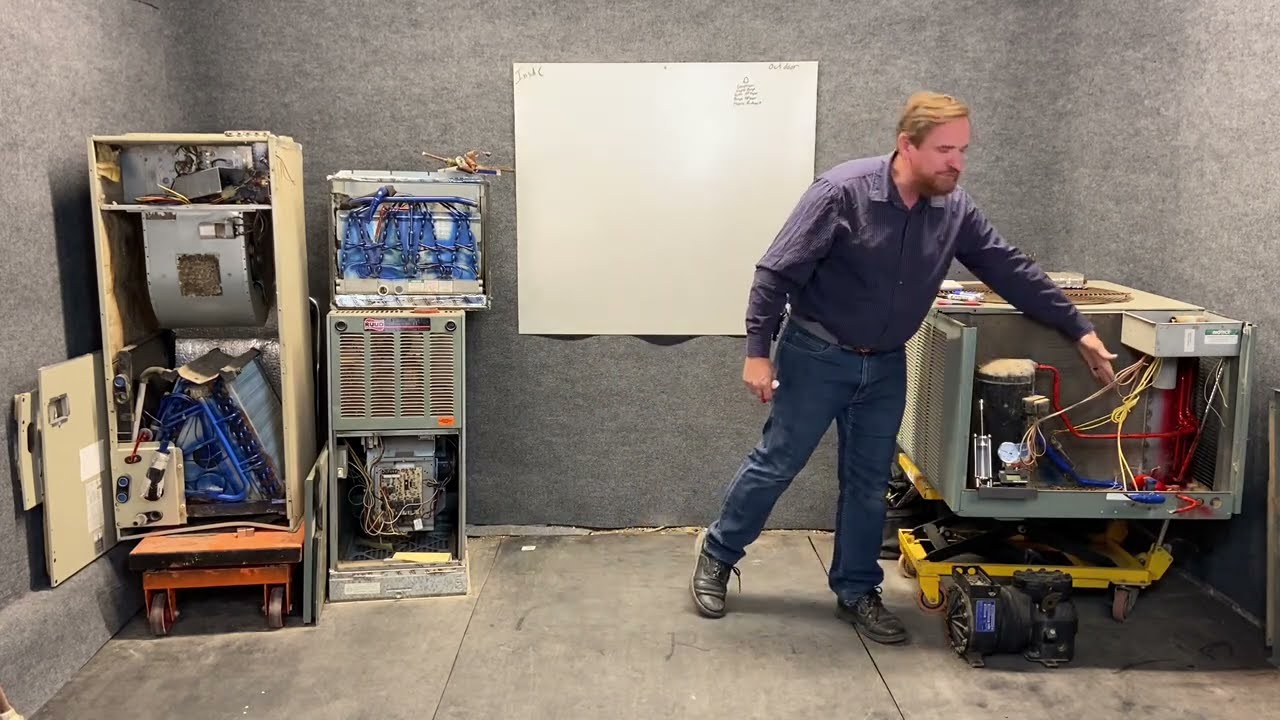
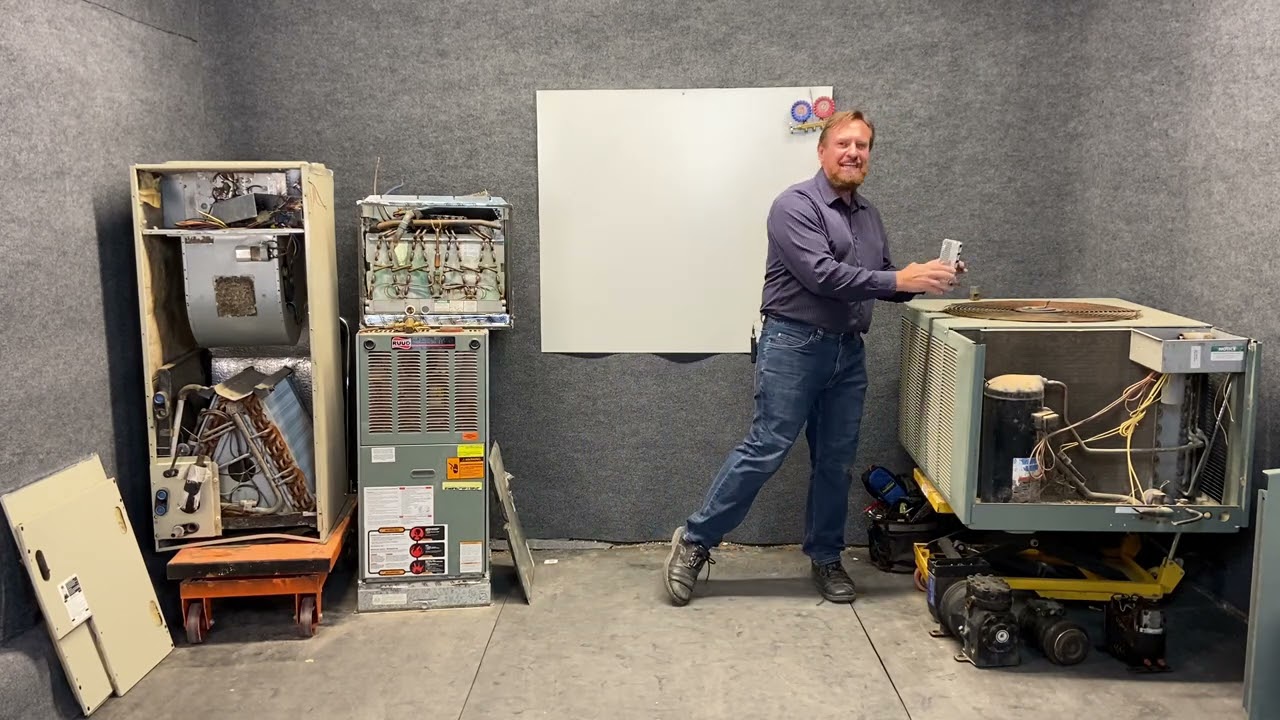
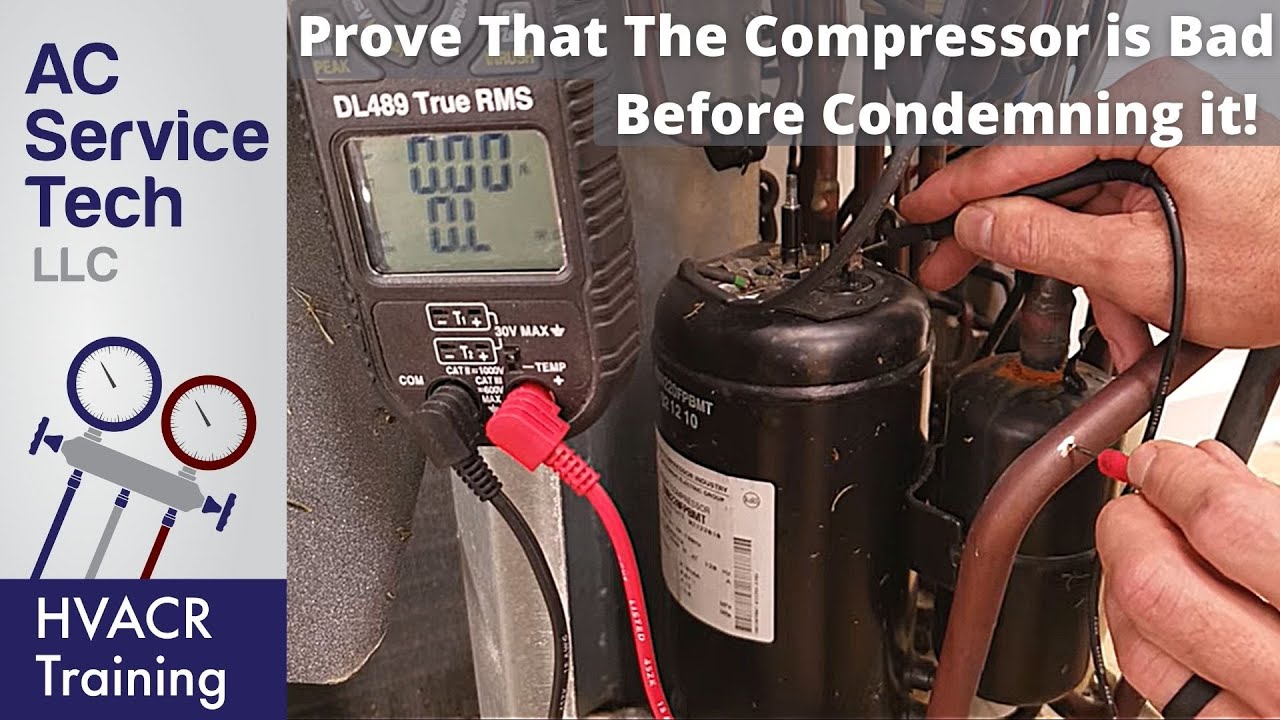
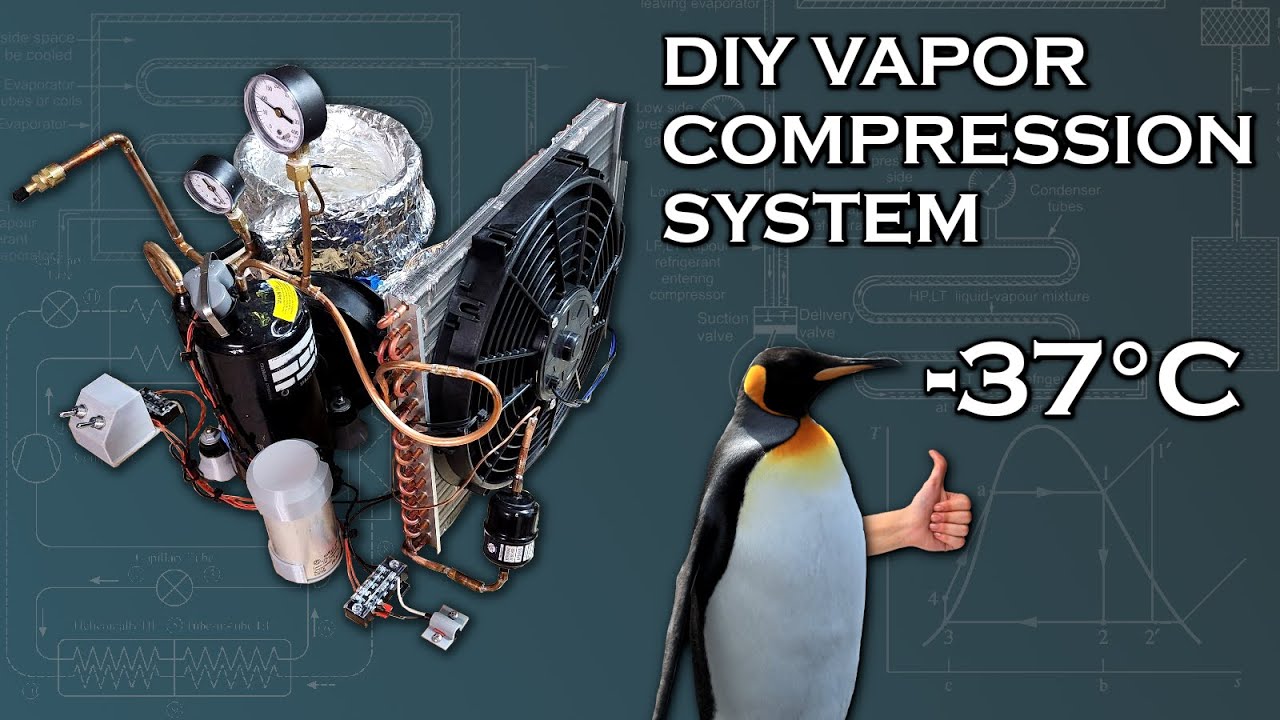
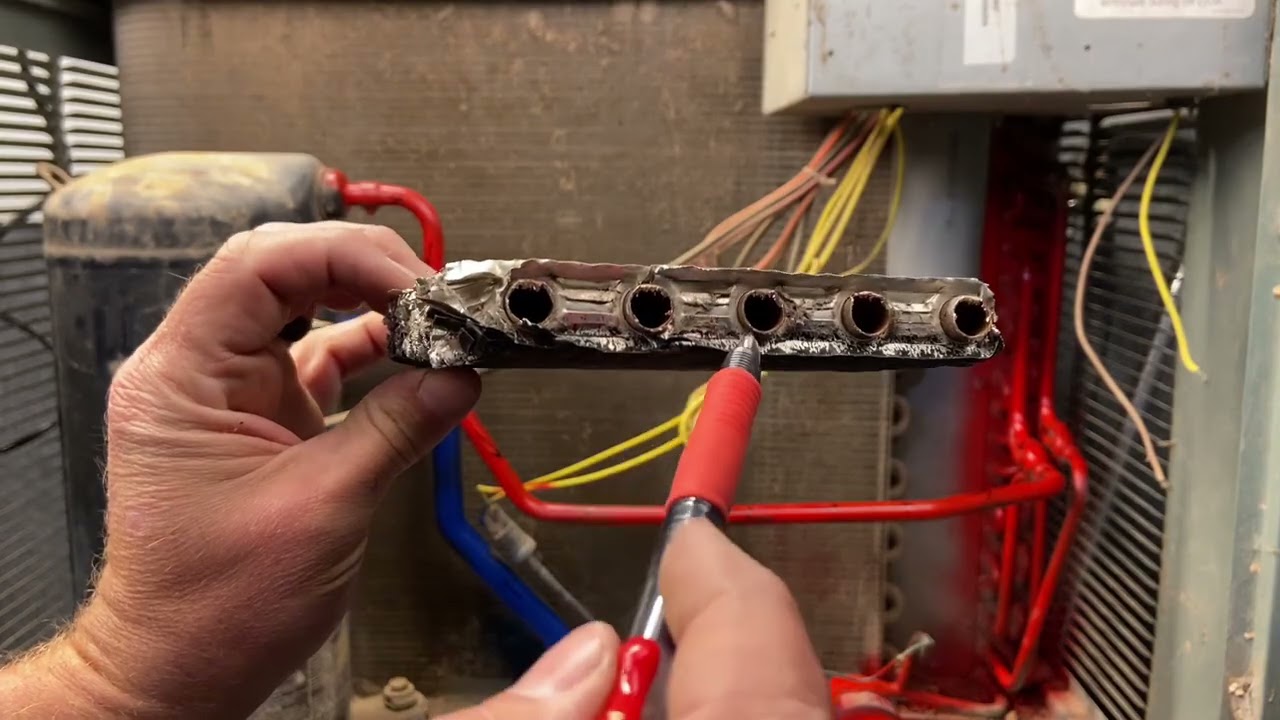
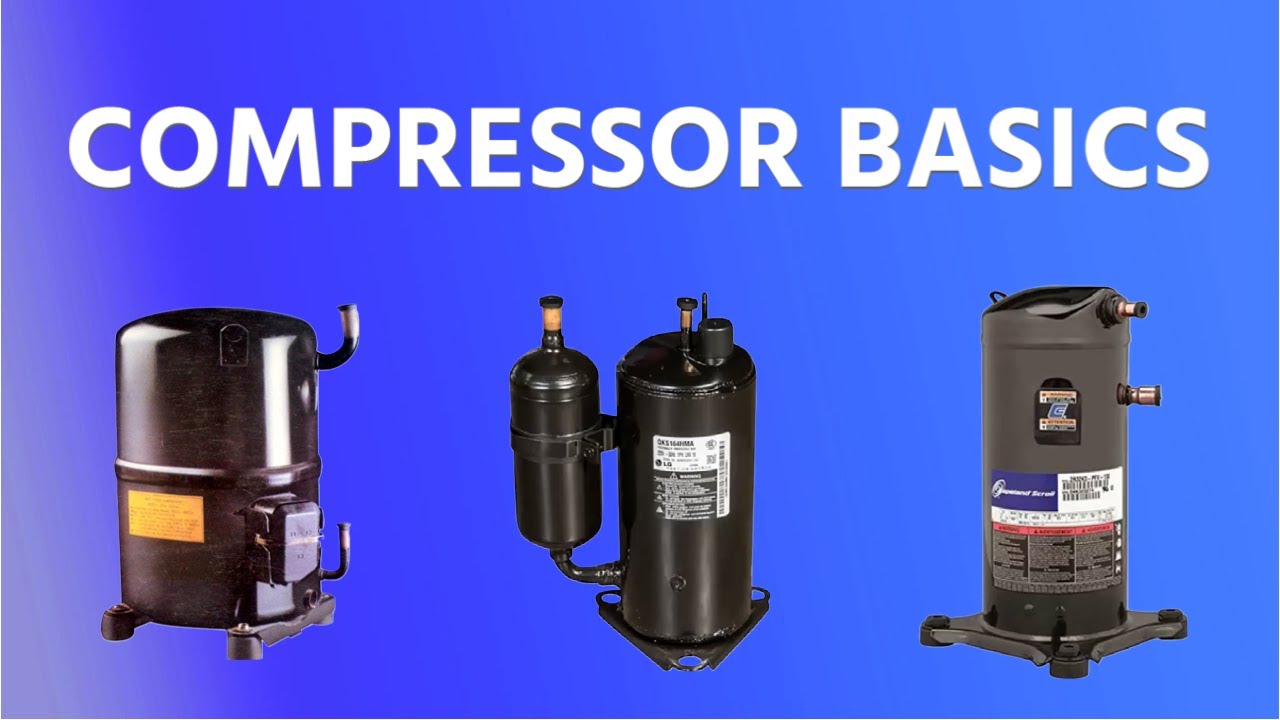
we're going to start a refrigeration cycle off with the compressor it's the easiest component to identify with refrigeration cycle now it's going to be a full cycle you can start anywhere in the system but it's easiest i've found for students to start with this compressor it is essentially the heart or the engine of the refrigeration system here i have an example of a compressor that's been cut open so this is the shell of the compressor and when you take the guts out you'll have a motor on top and you have your valves and piston at
the very very bottom so if we take the valve body off of this compressor we can see that there's actually pistons that go up and down it's compression a vapor compression refrigeration cycle so as this piston comes up it squeezes it then it pulls in more vapor and then it squeezes it and pushes it up we're going to go into more detail on this shortly but here's an example of even an automotive we can identify the compressor now here we don't have a motor powering it we simply have a belt connected to the engine here
we have a clutch and when we call for ac the clutch connects to the belt and then you actually start turning the pump action inside sucks in low pressure vapor pumps out high pressure vapor here's an example of a refrigerator system and what we've done here is we've actually cut the top off so you just see the guts inside the motor and whatnot but this is a refrigerator style and here is a commercial system this is what you see in a lot of walk-in coolers and freezers and such like that now the difference is this
one if you notice it's bolted together we still have a motor inside we still have the pistons the compression system but this is all bolted together we call this a semi-hermetic compressor which means it can be unbolted take apart rebuilt this compressor and all of these are what we call hermetically sealed they're welded together this weld means they're put together at a factory so they're harmonically sealed here actually cut the weld off to pull the guts out so a compressor there's some notes that we need to take so if you take your paper turn it
down sideways we're going to start making these notes leave a little space for the end because we're going to add to this greatly we need to know an hvac everything almost has almost everything has two words one we call this the compressor that's a very common term another name this component is a vapor pump because it pumps vapor now we also need to know what this compressor does we're gonna write down two names compressor and vapor pump we're also going to write down what it does and it does three things it sucks in low pressure
vapor it pumps out high pressure vapor and it moves the refrigerant so in this compressor where the blue line is sucking in low pressure vapor and then it's pumping out high pressure vapor very similar to an air compressor it sucks in air vapor from around the compressor and it pumps high pressure into a tank it could actually be considered a compressor or a vapor pump so it's a vapor pump now if we get liquid inside of our vapor pump it's going to we can't compress that liquid it's going to cause something to break and it's
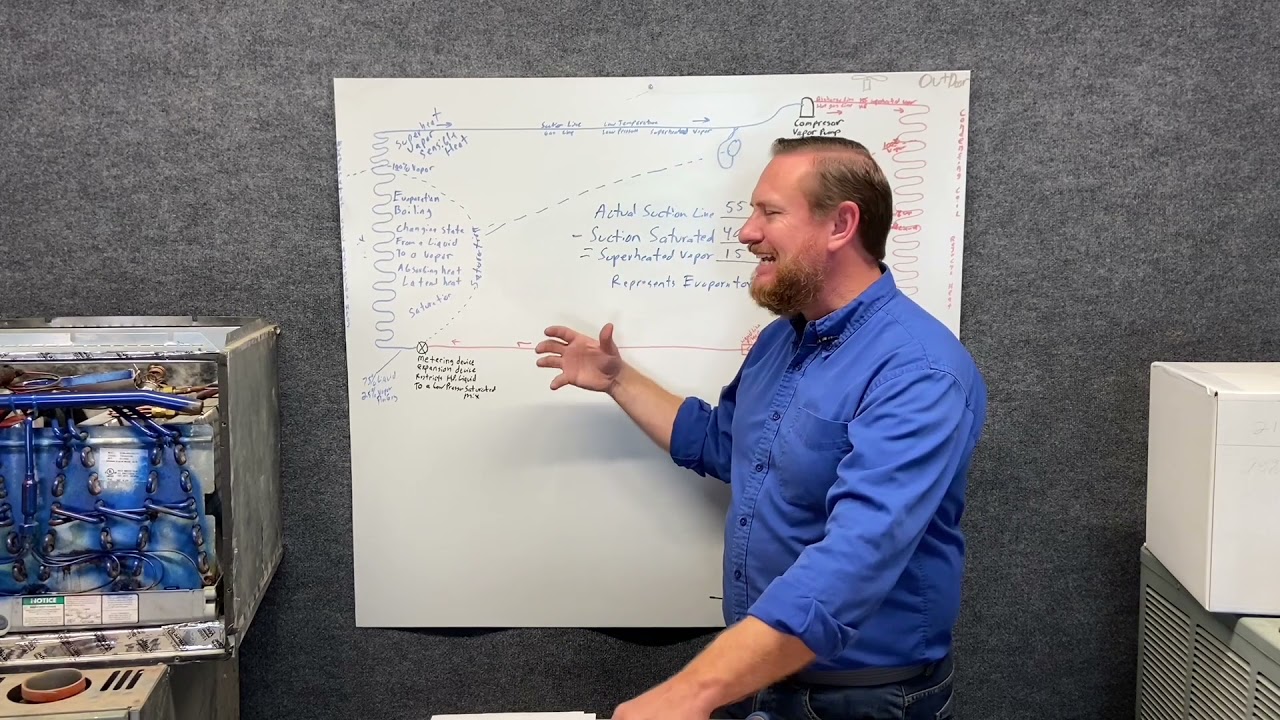
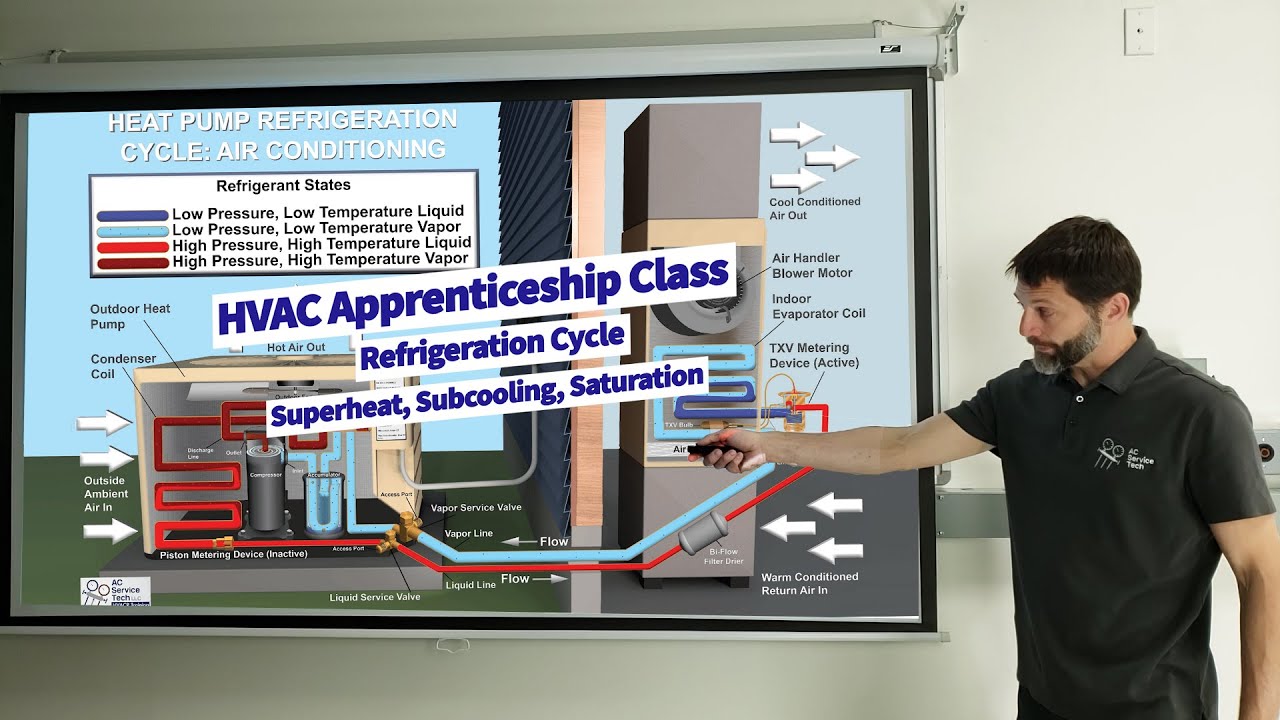
going to kill the compressor that's why we must know that they are a vapor pump the only pump vapor in this case so we're going to go into more detail about how the system works i like to start my refrigeration cycle with the compressor the compressor is what's doing the work here we have our power wires coming into the side of the compressor so there's going to be a motor here and this motor is what's pumping the refrigerant here we have our blue line so to speak which is our low temperature low pressure vapor coming
into the compressor our suction line and here's our discharge line coming out so if it is flowing out this way in red it's coming into the compressor this way as blue it's just simply a vapor pump sucks low pressure vapor pumps high pressure vapor moves the refrigerant this is the engine of the refrigeration system without having the engine there's no way to move the refrigerant there's no way to create high pressure low pressure and the system is going to be a complete veil so this is our system now notice this one's just came out of
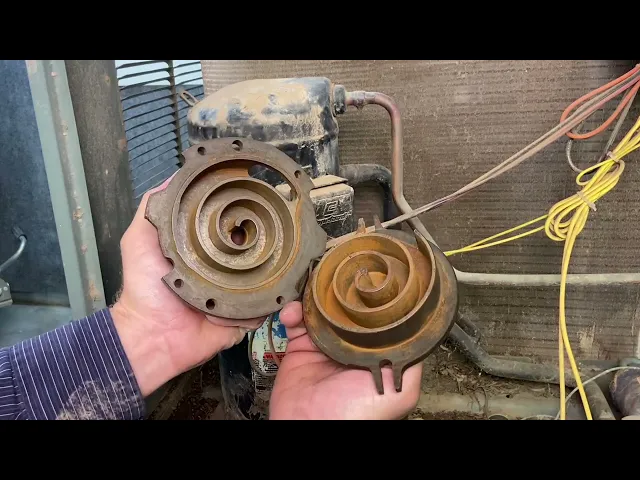
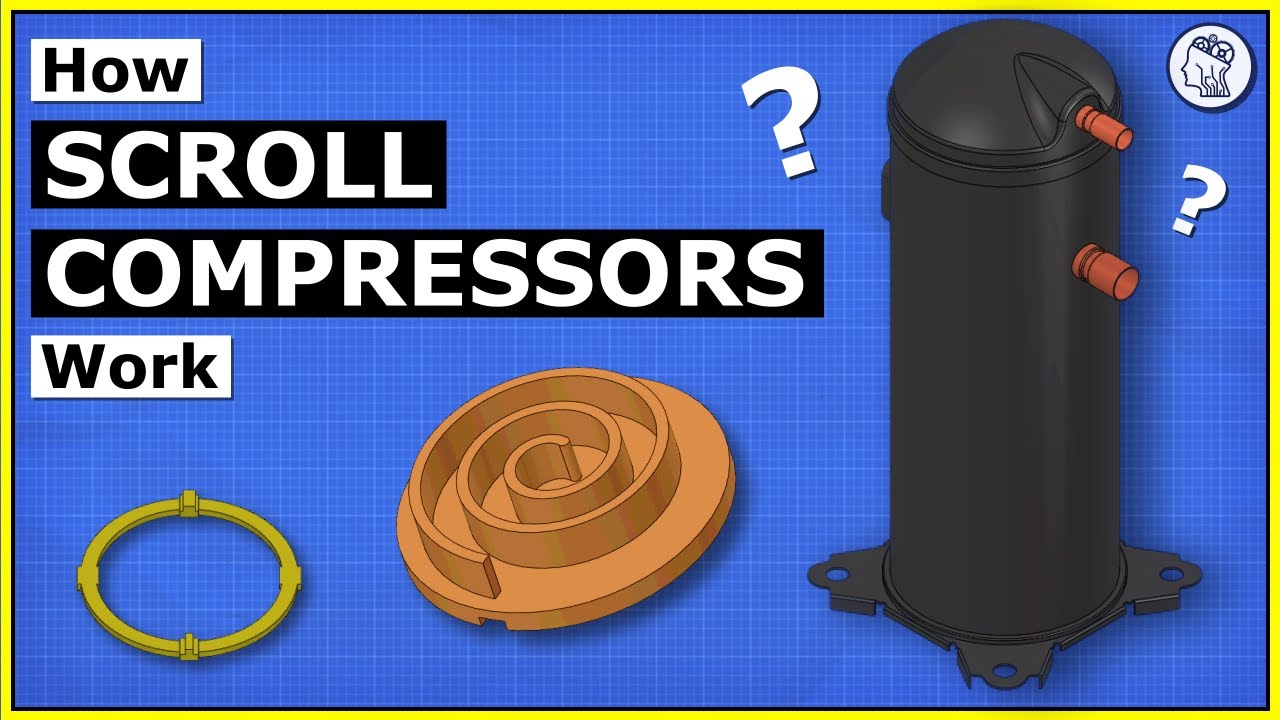
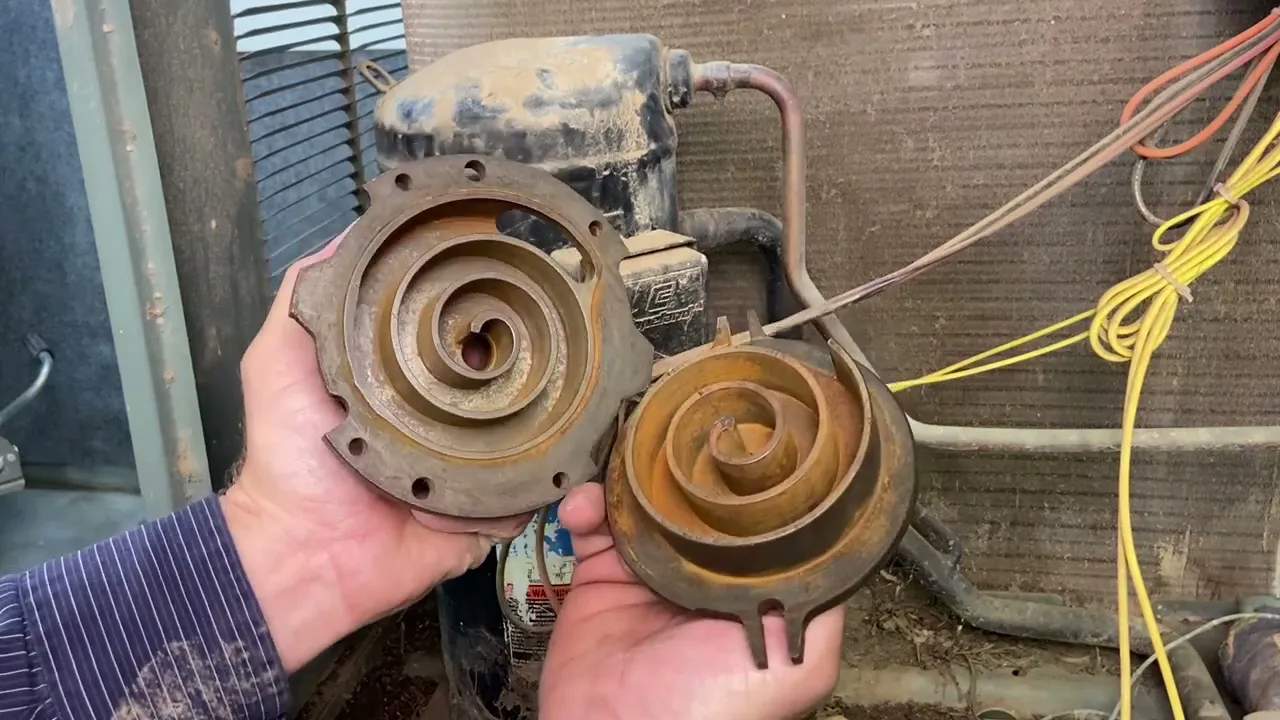
the field there's spider webs in it there's dust on it this is what you're going to be seeing this is what we take care of we do maintenance we make sure we clean this up we check the wire connections we clean these coils but we'll talk about that a little bit later on this particular type of compressor is called a scroll it's a copeland brand scroll compressor and it's pretty cool because it's got these two scrolls and what they do is they actually go against each other we're going to talk about how this works a
little bit later on in another video but this is still what we call a positive displacement compressor before we get there i'm going to introduce you to some other concepts the compressor is one of the easiest components to identify here's another example of a compressor this is what we call a shaft seal compressor this is going to be on usually in a car you have a belt coming to it that controls it there's a clutch that allows it to engage the belt to the compressor but as we turn this it actually turns the pump action
inside the compressor there's going to be a plate here we have our suction line and our discharge line is going to be connected to this plate but it's a automotive style compressor same exact refrigeration system same exact refrigeration obstacle here we have one of our most common types of compressor and it's called a reciprocating compressor there's going to be a motor here and this is the rotor and as this motor turns there's pistons that move up and down inside of here so you can see let's focus on just one of these it's up at the
very top and if we notice it starts to go back down when it's going down that one valve will close another valve will open it actually sucks in low pressure refrigerant we get to the bottom this valve now stops and starts to come right back up now as it's coming up the suction valve closes and the discharge valve opens and it's pushing out high pressure refrigerant through the discharge side when it gets to the stop before it comes down the valves switch now it's sucking in low pressure vapor through the suction side and then now
it's coming back up so it's pumping high pressure vapor out the discharge side so we're doing this in concession this is a three piston compressor i'm not sure what the size was or the total was on this but this is our compressor it's sucking in refrigerant and pumping refrigerant it's moving the refrigerant on the back side you get a little bit better view of how this thing is working positive displacement compressor now let's take a look at why we want to increase the pressure and why we want to increase that temperature so we'll look at
it right here we're going to zoom in if i have here a demonstration what's happening in this cylinder is the pressure change so here we have another cylinder the cylinder is up here at the very very top it's got a little tube connected to a valve we're going to shut this valve off it's saying there's zero psi in here right now inside the cylinder but really it's 14.7 atmospheric here this is set for celsius so it's 32.9 degrees celsius what i'm going to do is decrease the volume of the cylinder when i decrease the volume
of the cylinder we're going to see the pressure go up we see the pressure go up something else is going to happen if you focus right down here [Applause] [Applause] now if you saw the pressure went up and the temperature went up dramatically here's what else is cool when i drop the pressure the temperature also dropped dramatically temperature and pressure have a direct correlation so that is that this compressor needs to create that high pressure to get the higher temperature that way my condensing coil can reject that higher temperature so we need that compressor to
increase that now i'm going to put this into a vacuum and we're going to see it drop the opposite way so we're going to back this up here we can see it dropped into a vacuum and also our temperature drops as well this is where everything beautifully comes together we can see that our compressor decreases the volume to increase the pressure and also increase the temperature this is essential and for how our system works this is a science magnet so this was air what we're going to use what we're going to use is a refrigerant
as we decrease the volume we're going to increase the pressure and the temperature even greater this allows us better cooling effect so we're going to do is by increasing that pressure when we get to the condensing coil when we get over here to this condensing coil the temperature of this coil here will be higher than the temperature of the air so the air is going to be coming into this condensing coil and it's going to be cooler than the refrigerant so the heat's going to leave the refrigerant and go to the cooler air so this
is how we're getting the heat out of the refrigerant so the fan on this side is pulling air in and on the top side it's moving that warm air out of the top so this fan is essential and for this system to work