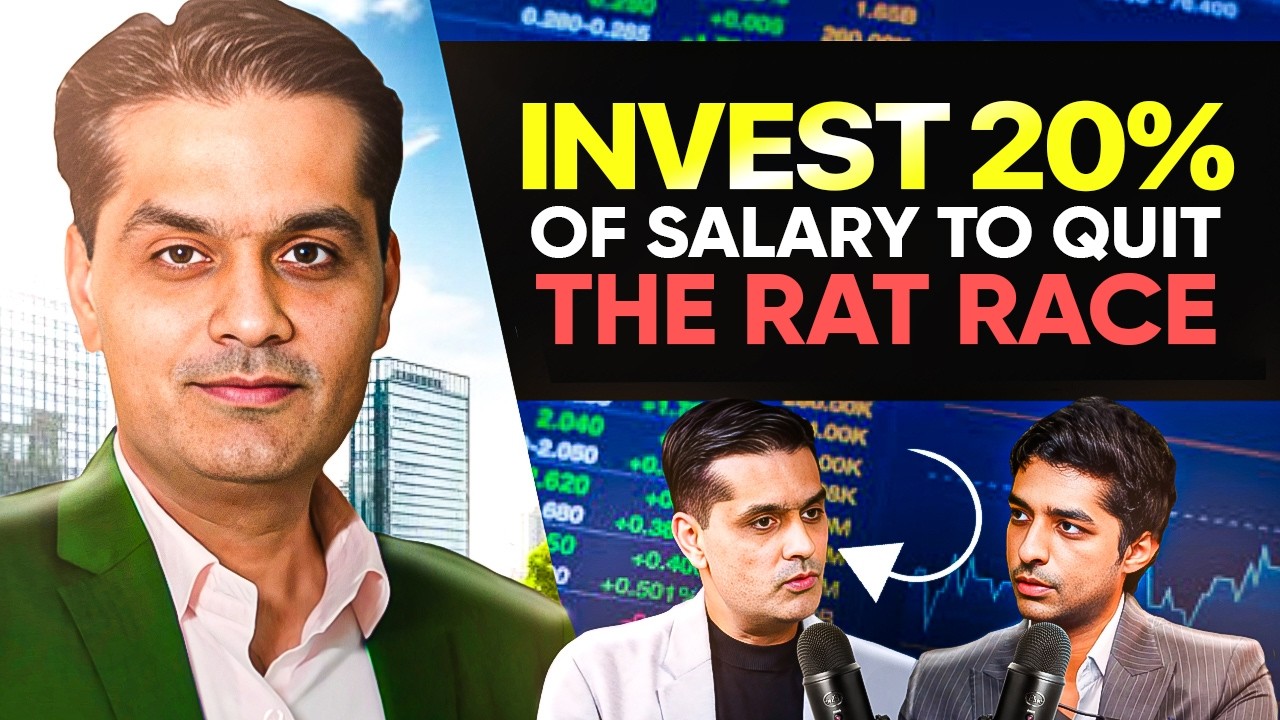
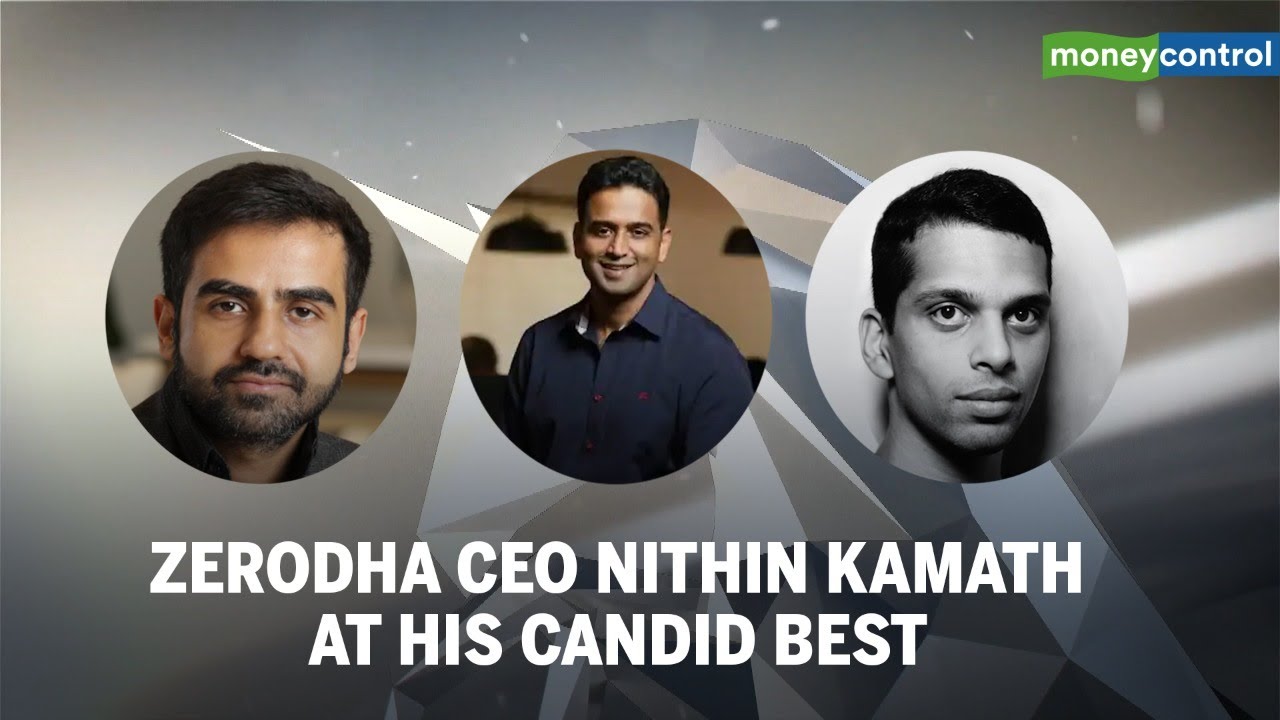
hi nikel it so nice to be here um I can't actually believe that I'm sitting right next to you here um I've been reading about you I've been reading articles about you watched videos about you and I can't believe I'm finally having a conversation with you here in your beautiful home thank you so much for having me here um uh I think the first burning question which everybody here all of my audience would want to know is how much rent are you paying at this place this place is unbelievable my God I'm must say to
all your viewers Sharon is very different off camera than he is on I'll figure out by the end of this interview if it's in a good way or a bad way okay but uh not much relative to property costs in India I think you're still able to manage rent at 2 3% MH so it's not not too bad okay so we didn't get anything out of that moving on to the next question uh so I just wanted to understand right and it is a very juvenile question but I think everybody wants to know right because
ever since uh we start understanding the importance of money right as an exchange of value and something that you can use to buy a lot of stuff with everybody wants to accumulate more and more and so I just want to understand how much money is too much money well I don't think there is one particular answer to that question uh money success all of these things are very relative in nature uh if you have more money today than you had yesterday you better about better about life from a financial standpoint right if youve reached a
peak and then you kind of have lesser money you don't feel as good but it would I would be hardpressed to put a number on it mhm uh one way of equating it is if you have enough money that affords you the freedom uh to maybe not work for a certain amount of time right or pick who your colleagues are and choose to only work with people that you like uh those are the real advantages which which come with money right uh I think the material stuff matters for a certain amount of time and then
it becomes kind of irrelevant right and uh these smaller things become more important to you I think freedom is the biggest byproduct of having some amount of success right and that I think I truly cherish I completely agree with you I think U what we are talking about here is the concept of financial Independence right it's it's not exactly about having all the money in the world it's about understanding that money is um is a reflection of your time right so if you have a certain amount of money you can decide to do what to
do with your time and that is nothing is more powerful than that you can say you have the power to say no to things you have the power to decline a job which you don't really want to do and there's nothing more uh satisfying and more powerful than that I think that's the true definition of money which most people tend to forget uh and material stuff like you said it is the law of diminishing returns right you get you get something and you you want something better than that so it doesn't last uh very long
right wonderful so moving on uh so most people in India at least in the Metro City so most of my audience are from the top five Metro cities and uh people usually start off with you know 30 40,000 per month so I started with 27833 per month living in Bangalore and that was not enough money at all and obviously at that age most people don't really think about uh investing most of us that's the first time we get money and we just want to enjoy it right it's not that we are relyant on anybody or
it's not our parents money so we start enjoying it by the time we reach 20 6 27 that is when most people will make around 1 lakh per month so that's around 12 lakhs per year so what is your advice for someone who's making 12 lakhs per year because uh the way someone would invest money making 12 lakhs per year versus someone making maybe you know a few crores a year would be very different someone who's making 12 lakhs a year would first start to build the certain Foundation which becomes a platform for him to
become richer later on so what would be your advice for someone making 12 lakhs a year how would he would he invest his money sure so when I started working right it was a long time ago about 17 18 years ago now I had a first job myself like you were making 27,000 uh not withstanding inflation back then I think my pay must have been 8,000 rupees a month or something like that uh where you live uh and how you live kind of defines how much money you need to earn so first advise if you
can work from home and you're living in an expensive city like Mumbai Delhi Bangalore uh it might be prudent to go out and explore a tier two Town move back to uh cities which are not as expensive uh because you take away that you know proximity to the office that you work in and if you can work from somewhere else uh I think it's good both for you from your uh your kind of cost of living to the kind of lifestyle that you want to have perspective but also in terms of the environment you know
like I think this urbanization and so many people living in cities is not boarding well for cities right uh so that would be you know one tip I I think if you can work from home uh pick a city pick a location or pick a town which is more efficient and your money goes the farthest there right uh 12 lakh rupees if you're a 27y old guy I'm guessing your appetite for risk is significant and you're probably going to see a uptick in how much money you make at least in the next decade uh I'm
fairly conservative a little bit of a pessimist when it comes to investing so I would say put something like uh you know 20 30% of your income in equity maybe put another 30 or 40% in asset classes which don't have too much risk uh it could be gold it could be fixed income uh it could be you know taxfree bonds corporate debt stuff like that uh and the balance I think should be a mixture of maybe some real estate and uh some kind of liquid saving which you can have access to at any point of
time uh you know Co happened and it showed us all uh why arbitrary money money which is not liquid and you can't access at any point of time is not as useful as money that is at hand and I think everybody needs to account for those emergencies and keep a fund like that got it so just to summarize so you're saying for someone who is at his 24 25 years old in order to build a good foundation first he should understand how to geograph geographically Arbitrage himself so move to a cheaper location like tier 2
tier three City maybe live with his parents that's what I did by the way for one year when the pandemic happened and it saved a ton of money you still live with your parents and now I moved here uh because I was tired of staying back home for the reason that you said right people are attracted to the Metro cities because there are so many Avenues to spend money right but we need to sort of understand that um uh at at our early stages you can actually save a lot of money by working from home
and then move to a tier two city until you have build a certain foundation so that is one thing uh the second thing that you said is really interesting to me you said the asset allocation that you talked about is really conservative but most people um when they say you know when you're very young 25 26 they most people recommend you know put as much as you can in equity stand it to 80% because Equity uh you know has its eventual Cycles it goes up and down and when you're you know investing for long term
it's eventually going to go up when you finally need the money when you make a big purchase uh just curious to understand why did you sest such a conservative approach see I think we are jaded in our Outlook of how well equities have done because our memories of the last 30 years when India has kind of opened up and we have only really witnessed the markets going up right uh if you were to go back in time you go back to the late 192s or the early 1900s or you look at America just before the
dotom burst in the 2000s right there have been many times in life where there is a prolonged bare market right I don't mean like 3 years or 5 years but you could have a bare market for 20 years 30 years we in India have not really witnessed uh in the last 30 40 Years of bare Market in either equities or in real estate hence we have ended up in this position where because neither us our parents or our grandparents have ever seen prices fall drastically uh we have started to believe in a way that real
estate prices can never correct right uh equities will always go up uh but I think history is a great great teacher but uh the idea is to not only look at the last 20 or 30 years but go back in time uh go look at different centuries and see what has happened and uh the key in stock markets is not making a great return this year or next year as long as you're able to remain solvent with little in some manner mitigated volatility for a long period of time if you last an entire cycle of
20 30 years in the Equity Market the odds of you making money are significantly higher so you would be better off having a more conservative portfolio but keeping it for the longer run but instead of you know having a portfolio with 80% Equity when if the markets fall 50% you're so disappointed that you either have to sell everything or you do not come back to equity markets right and I think one important point that you pointed out is um for the US market has a significant data that they can look at but Indian market is
barely you know 30 40 years and all of and most people quote you know over the past 30 years Nifty has grown around 14.6 percentage SE and that's very attractive to look at and we can't go beyond that before that because we don't just have the data so you're suggesting that we are Jaded by that we are thinking that's going to happen going forward as well so it's important to have a conservative Outlook as well based on what has happened over centuries and other mature markets like the US so can you tell us a little
bit about why you started through beon hedge fund so you were very successful in your first Venture everybody knows about zeroda it's a household name in India you made you made investing so simple for millions of Indians so why did you start true beon hedge fund because most people um or what what most people think that you know before becoming successful for the first time they'll be like I'll do this once I become successful I'm going to enjoy my life and that'll be it right so what is that um mindset uh that people usually have
once they become successful then they go to the next thing and they make it big there as well so what is your Outlook towards that see success is a very arbitrary concept right like uh when somebody sets out sets out to achieve a certain thing or build a profitable company I don't think anybody has that one given day where you know he's like satisfied and he's done what he set out to do uh as humans you know innately we're all unhappy and we constantly need Drive in life uh very often internally it is very hard
to inculcate that but we have to find external sources to get that right so each time you start a new company you know you have you have another reason to wake up and do something that day and I think that's very important uh why we started TR beon is because I was dealing with uh private Banks wealth managers across the world uh they were very expensive if I as a investor put money into a fund the distributor would make 2% the fund manager would charge 2% and all of these guys has made money even if
I lost money and I thought that was unfair right uh so the point of starting true Beacon is to have a model where only if the client makes money does the fund house charge a fee and the fee they charge is significantly lower than everybody else uh it's only about 10% of the profit a client makes and if the client does not make profit uh you don't pay anything right so I think that amount of efficiency is required even today uh I'm talking about the hedge fund space but if you were to to look at
uh private Banks I think you know you transfer money uh into your lrs fund you pay 20 bips in Forex charges uh you buy a certain private Equity public Equity product you pay the guy selling you the fund as much as 2 3 4 5% right I think there are many many inefficiencies that one could uh kind of like mitigate there and TR can is one attempt to solve one problem in that sector so I think most hedge funds around the world have this famous to 20 model right where two is the percentage charge on
the entire a regardless of whether the fund made money or not so you guys have eliminated that and the performance fees which is usually 20 in the market you've made that 10 percentage so the fund makes money only when the investors make money right uh so I just want to understand in India um hedge funds uh they come under aif category 3 and the minimum investment is 1 CR right but for let's say the the obviously the reason behind that is the government doesn't want you know normal retail investors to invest in something that they
don't understand easily and the general Outlook is that with someone who has more than one CR to invest he has the you know investing maturity to invest in something like this um but I personally feel that there are many retail investors as well in India including me right I would also want to invest in these sort of products right but I don't have one CR to just invest like that right so what is your considering the number of followers you have and all the money you're making you should be investing in products like that right
I should but I still don't have one CR for the audence out there uh I wish I had but wish I could believe that but okay pulling my so there's no one CR uh just to uh settle the uh argument uh but I would like to invest right so but legally I'm not allowed to what what is your outlook on this would you think this is fair for retail investors who have the maturity to understand how this product works but would still like to invest yeah I mean sure see I I think uh the the
minimum Benchmark of how much money one should invest uh is less a barrier like PMS has 50 lakhs mutual fund has a much smaller number right uh I don't think that is the problem the bigger problem for the industry is taxation uh if you were to tax three different products in three different ways but they essentially do the same thing I'm talking about a PMS a mutual fund and aif these are broadly three ways in which one can manage their money through a fund manager in India focused on the public Equity space uh taxation in
a is x in B is y and in C is Zed and I think uh the ambiguity that arises from that is not helping people people uh have to put in a lot of work to compute taxes make sure they're compliant and stuff like that uh uh I think some work needs to be done there from the regulator the government side but in terms of the minimum yeah sure I mean uh uh see the thing with uh having a lower minimum for somebody like us is let's assume you're a client who has 1 CR rupees
let's say you invest in true Beacon if we make 10% return for you which in our minds is a it's a good return a year you make 10 lakh Rupees you pay the fund house uh 10% of that profit which is 1 lakh rupees uh if you break that down is about 8,000 rupees a month right uh for the amount of work that goes towards managing your one CR that 8,000 is very little uh you know we have like really high-end teams we have people from like Harvard and Stanford and phds and all these guys
working on managing your money so even at that 1 CR at our fee model it doesn't make sense got it you need to you know come in with 10 crores 15 crores for us to be able to justify the amount of work that goes into managing your money got it yeah so we could charge a lot more instead of 10% we could be 2 and 20 and then it would make sense right right uh but the way we are approaching it is you know we'll charge so little but we have to scale for the model
to work got it got it so the issue is not more about the minimum investment for retail investors but it should make sense for the fund as well from a uh from an operational point of view to sustain so uh nckl uh do you uh invest in cryptocurrencies no I don't and what is your outlook on that why do you why do you not uh want to invest in cryptocurrencies because that has been the Talk of the Town last year why do you think uh that why do you not want to invest in cryptocurrencies or
so from a personal perspective uh we we work in a very regulated world right we're in stock broking Asset Management lending uh we will never we can never be in the position where we do something that is not 100% regulated uh right now in India regulation around cryptocurrencies is in the gray uh one does not know what is allowed what is not allowed uh they've come out with you know whatever Taxation and teds and all of that but on a pragmatic level how does that really work I don't think is extremely clear yet right uh
so just because of Regulation one would not do it at least somebody in my position but outside of that uh I I feel like the crypto world has moved from you know calling it a currency which they did a few years ago right to now calling it a asset class of its own uh you know I've been following the crypto story a little bit I I watch how it is becoming uh more efficient to kind of like transact in cryptos the whole mooving from uh proof of work to proof of stake to proof of History
I think it will get to a point where it is so efficient that for every crypto transaction the the kind of like uh cost per transaction in terms of of energy will go down significantly I think that will happen um but you know if you go back in time and try to figure out what is a currency right uh a currency is uh outside of being a median for exchange it has a intrinsic value which back in the day was gold you know we had Brett and wood we had the gold standard we we veed
off all of that I'm talking about the Fiat time is is is a the value of the currency is a norm which is accepted by the majority of the ecosystem right think of it as religion if everybody on the planet were Christians today for example uh there would be no contesting uh The credibility of a certain uh certain religious whatever like say Currency coin or whatever uh so Bitcoin cryptocurrencies as a religion have done very well in the last decade or so my two big problems with it is you know a there is no underlying
uh B today they are too uh energy inefficient in the manner in which they operate right and three the world is so divided on them where half the countries kind of will disallow it the other half will allow it uh for the the so many different types of cryptos which are out there and you know how is one to say that a will be prevalent tomorrow versus the Thousand others which are there in the ecosystem right uh but beyond all that I think uh the reduced regulation that uh cryptocurrencies have brought with them have uh
for for one reason or another created a ecosystem where a vast majority of crypto transactions happening in the world today are not happening for uh very legit legitimate reasons the few transactions that are happening right that's true and do I want to kind of be a part of that market and you know tomorrow what happens if uh you know say in America some guy without any kyc or without without having identification you know somebody who's on the peer-to-peer Network buys a AK-47 and kills 100 people using cryptocurrencies or you know something on a much larger
scale where somebody buys a larger weapon uh I always wonder what happens beyond that uh and I don't have answers to so many of these questions and hence I don't right uh my explanation for crypto would be different nfts on the other hand I think there is a use case for it uh but is the market uh extremely inflated today probably I think the metaverse has a great use case uh like this might be a very counterintuitive way of thinking about it but the whole carbon problem in the planet right like metae could be one
of the answers for it if instead of you driving from where wherever and coming here uh you know you could plug into a device and there's like uh it it feels so real tomorrow that it feels like we sitting next to each other you don't drive from your home to here right like that's right uh I think it has many answers there but uh I've been an investor in you know Facebook for a long time meta now and you know I thought they were brilliant and when they bought you know Instagram and WhatsApp and Oculus
uh in respect to the metaverse but uh between those two companies and that much money that they put behind it between Microsoft and Facebook which are probably leading the metaverse race uh I don't think they've been able to crack it yet so I don't think it is 5 years down the line maybe it is 10 years down the line but probably definitely a Ed case for it got it sorry for the long winded answer for question no that was really really enlightening um I just want to uh touch on one last thing in the crypto
space uh in defi right because that is sort of you know I I see a use case in that wherein you know when I want to lend some someone money I don't have to rely on a a central Authority like a bank to lend my money to someone because he will take its commission and he is anyway sort of like a middleman and ensures that my money is safe and going to the right kind of people whereas D5 is sort of removing that middleman I can directly lend it to someone and then I get all
the returns right I mean so small person percentage goes into the platform to sustain it but I get to keep the majority of the returns and that is really booming space right now there several startups which are coming in India as well sort of tapping on this opportunity and helping people invest in this space so what do you think about D5 definitely has a use case but see I can also tell you that you know instead of doing all of that using uh uh something a currency on the blockchain you can use a normal currency
remove the regulator and just do peer to-peer lending right if you want to borrow money you borrow from me and if I want to like borrow from someone I borrow from you that can happen in any situation it does not necessarily need the blockchain in a way uh you know there are a few examples right I can't remember the company there was this T5 bank which was scaling quite well up until a few months ago I can't I can't recollect what the name is not in India globally okay but again they have their own issues
um they were using I don't want to say something I'm not entirely sure about but uh I think whenever at the end of the day it's a peer-to-peer Network where a is lending to b b is lending to a without a regulator in between right uh in platforms like that I think the risks which exist with using the dollar or the Euro or the rupee or any Global Currency to a large extent many of these risks also exist there here you have the added advantage of knowing who your client is uh which geography he belongs
to having a having a you know court and a and a rule of law in a way in which if one kind of like uh uh does something incorrectly there is something that you can go back on right but is there a use case for you know having a DI you know bank or a lending platform definitely in the future yeah but uh do you absolutely need for cryptocurrencies to make that work maybe not yeah why not use like a government regulated currency for stuff like that right like I think that's what's going to happen
as well in this country at least yeah yeah so um so what are some of things that you're doing apart from what you're already known for you everybody knows you for zeroda and everybody knows everybody knows you for True Beacon as well so what are some of the side projects that you're doing which not many people know about right it has to be something new and never told to anybody something I've not told anybody anybody as in not on public at least okay I mean that is hard our PR person is here and she tells
people before it actually happens more often than not but uh something new so your space like we were discussing earlier right uh I think the influencer marketing platform is going to be huge right not just in India but across the world uh that 1,200 300 crores spent on influencer marketing in India I think will grow to be many billion dollars in a few years uh people will consume content and reach Brands through uh social media maybe a bit more than they do through TVs and newspapers so that's an interesting platform we have that uh investment
in coof fluence but nothing I'm personally involved with it's not like uh I'm part of the day-to-day working of any of the companies which are doing anything interesting there uh on the other side we have a new charity called ypp it's called young India philanthropy pledge okay uh so the idea is here we're focusing on Bangalore and and there have been many entrepreneurs who have made it big in Bangalore right uh often because of uh the circumstances that they grew up in like you know a lot of them are very hardworking and intelligent and all
of that but they've also done exceedingly well because they had this environment in which they could Thrive right that's right they were in the right place at the right time uh a lot of them believe in giving back to society so we've gotten a good group of these people together uh you know primarily unicorn Founders from Bangalore and uh we work on different projects from time to time right now we are working on a project which is uh uh trying to improve the standard of 200 government high schools in Karnataka so everything from you know
uh smart classrooms training the teachers uh building toilets in the school uh there is enough research to show that better infra has a direct correlation with marks with attendance and uh uh the idea is to do something there so it's called ypb that's an interesting project uh we started this company called guuh house uh I have a friend called abijit in Hyderabad and we've started this maybe a year ago and um we're doing a lot of prop Tech Investments uh propt in the sense of you know it could be fractionalizing commercial real estate or building
better uh ESG compliant building materials Solutions that's an interesting project uh at zeroda we have the rain matter climate fund where we do a lot of uh with Samir and rishab and den and uh Kash these guys do a lot of interesting uh Investments um so it's a very well-known fact that um what you're able to achieve in life and how much success you get in your life is very much much dependent on the kind of people you surround yourself with um take my case for example so when I started creating content I was doing
it by myself and then I met my brand manager aay Shukla and right so he that's him that's him right there so I had around 11 12,000 followers and then I met him and boom right he gets me in touch with the right kind of people I surround myself with the right kind of people and I get to learn a lot from them and that sort of defines how I want to you know uh what are the kind of things that I want to do in life and what are the uh things I want to
give my attention to who are those people for you I think I should tell your audience that uh when they started this uh meeting started you first asked him if you're looking good right then you told me you guys are single then you said you live together right and now you're praising him on the interview right okay what was your question again my question was who are those five people that you surround yourself with and how was that all all of them in my case are married and have kids let me start by prefacing it
like that but it would be uh it would be uh nithan my brother obviously to begin with then there's kage there's Richard uh there are can you tell us who they are like what do they do for yeah so Nathan's brother partner and everything and we've been together you know from childhood so we do all our work related stuff together uh Kash is our CTO who is like the brain of the operations and uh he's everybody's moral compass he makes sure uh we are doing things which are not just good for us but good for
the environment the ecosystem The World At Large Richard is the white guy that kudrat was talking about earlier he's a a British national who was in the Army for a long time a fighter helicopter pilot he moved to become the CEO of TR Beacon uh so again interesting chap then there is U uh there is ktic and Hanan and venu uh so a lot of the people we work with colleagues of ours are not people who have been recruited formally or stuff like that these are uh friends family first and then colleagues uh like uh
for example venu is my neighbor from when I used to be like 12 years old and play cricket and you know he's stuck to us and Kik is somebody I used to maybe have a drink with long back and he's with us and it's a very um uh cohesive team it's not it's not a corporate model where you you know kind of like figure out what the role is then figure out who fits that role but it's more uh people you've grown up with people you've grown together with uh who have been kind enough to
stick with us through the time and uh uh even if you know businesses exist or not I think these friendships will exist through time that's an interesting point because some people say you know you shouldn't start something with your close family members or close friends because if it doesn't work out then it has the potential to damage those relationships as well but you've sort of um approached it in a different way and you've actually made it a strength for you and it's working out really well for you as well right I hope you to no
in our case in our case it started off as business it was a very very Co so okay you you started off as as business and what are you guys now now we really good so we first started off talking right and then you went on a date no just we were on phone I'm like who is this 22y old guy right 21 so who wears the pants in this relationship I know he's a little bit older but I mean friendship like you guys are colleagues and friends too right like who is it yeah we're
like equals I guess equal I would agree yeah I can see the love okay I think we're [Laughter] done awesome um yeah so an important aspect about bringing building any company so right now even um when I hand when I do content creation it has become important for me also to you know hire people and it sort of become like a small uh startup uh and I'm slowly starting to realize you know the importance of hiring the right kind of people so it' be interesting to understand from you what do you look for when hiring
the right kind of people because gone are the days where people just look at pedigree and I know looking at pedigree was uh something which people look at to make the filtering process simpler um but how do you bypass that and look beyond that and hire the right kind of people people regardless of whether they have good pedigree or not because there might be some good gems in there with even even among people who don't have uh you know solid companies to back them up just to be like honest about it uh in a candid
manner I don't think I am good at hiring people I I don't even have anybody who reports to me uh I think what all of this you know you can call it success but being in the right place at the right time for so long right has afforded me is the privilege to uh do what I like and not really be responsible for you know teams performance or different guys are doing their job in the right way so I spend most of my time doing research investing uh everything Market related any Market any asset class
cuz that I I enjoy right and I foresee myself doing that for uh a long long time but when it comes to hiring people hire people who you can can be friends with you know uh I think it becomes very important especially if you're building something new you will spend so much time with these people right uh I think you have to hire people who you enjoy spending time with and you can trust in a way right I think that's important right also one more thing that I've recently discovered is uh show them what uh
what in the short term what it's going to look like working for you so that sort of is always at the back of their head right uh if I work well over here this is the kind of U platform that we can reach or this is the kind of recognition that we can reach so that sort of becomes a driving motivation for people to stick and for loyalty to increase because in today's world it is so easy for people to just you know move to the other company now because obviously money is one of the
number one things which people look at when taking a job right so the next question is a little bit uh more serious um so this is about uh what gives you sleepless nights and I'll I'll go first so mine is you know this I think this guy is going to make every question like that care yeah coming back yeah coming back so I'll tell you what gives me sleepless nights um so the content creation economy especially in the education space the finance education space it has blown up in this last year uh now nobody knows
where it's going how big it's going to get and how uh relevance is a very important thing in this industry right as most of the content creators they don't know how long is their lifespan like cricketers have around 10 15 years to do it people in the corporate job can work as long as 60 years old uh but content creators don't really know right four to 5 years is what most people fear it's going to be like so that is something that worries me how do I remain relevant for the longest period of time and
another thing is you know once you do something big once you do something disruptive if it works people tend to copy that right so it's the constant pressure to keep innovating and do something different and I'm sure companies also face this right when some somebody when a company does something right other competition is going to kind of copy that and replicate that uh so this is what gives me sleepless nights what is it for you what is it for you well I think uh a for your problem right I think uh there is so much
loyalty as a associated with creators of today I think since you're the very first breed of content creators really who have some amount of scale in India I think your audience will grow with you and uh I I don't think it's something you should worry about I think you're in a space which is you know blowing up and uh you'll probably have 10 times more followers even if you make less relevant content 10 years from now than you do today um for me sleepless nights is uh many many things uh I think you know the
existential question of why you're doing what you're doing right uh also you know I'm I how you answer that why you're doing what you're doing there's no there's no answer I mean you know you question anything for long enough it will appear meaningless right it could be a profession it could be a relationship it could be anything you do in life uh I think uh I I like psychology a little bit and uh that's probably my hobby like psychology and history I don't read books and finance anymore these are two things I like uh if
you think about anything in your life for long enough it will appear meaningless uh the question is do you want to remain unhappy uh questioning constantly what is the purpose of life or do you want to deceive yourself into thinking whatever you're doing has meaning and live happier in that manner so I I'm in the latter right now so I'm I'm kind of like telling myself that whatever stupid thing I might be doing in life has meaning and it's uh doing something for people it's making uh whatever a better place uh do I actually believe
in it no but can I superficially deceive myself yeah like if you look at somebody like uh there's this philosopher called kamu uh he says the biggest philosophical question the problem in life is suicide like you're born and you can think you you have to ask yourself why you're living and if you don't know why should you die okay uh I think many things in nature that way but humans uh do not work that way uh so that is it like you know deceive Myself by thinking you know like I was telling you about ypp
earlier or I can deceive myself thinking we've started this new company uh and growing that company is my meaning in life right is it true no but uh am I doing a okay enough job thinking that that I should think that is that is true yeah right so that is a deceiving part and I think that's important as well because when when we have a lot of free time especially when I was in my schooling years when when I finished my 10th grade I just have a lot of freedom just thinking about what life is
and you can get into that spiral right why am I even living what is happening what is all of this but most of the periods of time we always busy doing something or the other so we don't get to question these sort of things but when we have a lot of free time we do sort of kind of question oursel whether what we're doing has any meaning to it and that in happens right or wrong in life uh we often conditioned to think that things went well because of what we did right uh things did
not work out because of what we did like say your career did not work out because you didn't study enough or you didn't get good marks or you didn't work hard enough at your job and you didn't learn enough uh but when you step back and look at the broader picture uh everything is so Random in life like right the reason me and you are sitting here and having this conversation is we were born to families I'm not saying wealthy families but we were born to whatever families which could afford to give you a vaccine
send you to school right uh you know whatever education you have had uh that opportunity is not afforded to 90% of uh you know the living that's correct the the opportunities that we have had uh so whatever we have in life however we have got it is is uh in many ways less a factor of the great things we have done but more a factor of where we've been at what point of time and I think you should acknowledge that at some level and realize that you have very little control over the outcomes of Tomorrow
think whatever you're doing is important today and as long as you believe it you're happier of for having believed right and I think that's beautiful I think I'm going to continue doing that now a lot of our audience are very young you know 18 to 24 years old and they're watching this content uh to I'm not that old I know I know but 10 years away from you guys right uh but around 45 to 50% of my audience is in that 18 to 24 years old and all of us want to know what's the next
big thing so I wanted to understand from you if you were that young let's say 22 years old today and I know trading is your passion let's say you haven't discovered trading yet you don't know what that is right so if that were the case what would you be doing right now if wealth is your only motive what would you be doing right now in today's world as a 22 year-old kid content creation what do you guys okay no I think I think marketing is a constant in business right existed Through Time right there have
been different means of marketing okay whenever you're able to catch a industry when it's transitioning from A to B right uh you often end up catching the inflection point if you're doing something okay and I think you guys are at that point I think content creators uh not just for entertainment not just for Branding not just for news consumption uh in many ways you guys will become so relevant tomorrow like you know uh I wouldn't be hardpress to imagine if uh somebody becomes a really really big content creator in in the thought leadership space an
election could be influenced by what he thinks and who he thinks people should vote for uh having that reach to people will become inre increasingly relevant with time because back in the day you know somebody in Mumbai could probably access a million people right in his domain but with the internet and social media now somebody that same person can reach the entire country if if his thought leadership is valid in a way and people resonate with that right so I think you guys are in the right place at the right time and hus is totally
on you guys do you know take it forward and kill it with it so I actually ran a tweet as well on my Twitter I asked people you know what do you think is the easiest way to make money and surprise surprise most people said content creators and U that's interesting to me because um I was recently watching this um uh this interview on NAS daily and he says it is impossible to be happy as a content creator because we as human beings are not wired to uh be hated by millions of people or to
be liked by tens of millions of people right we can only have maybe 150 Connections In Our Lifetime but being a content creator that that sort of connection algorithm it goes for a toss right you're suddenly bombarded with thousands and thousands of messages where people are saying you know you're doing amazing stuff and then there are again thousands and thousand of people who are doubting you and saying you know what you're doing is right and that sort of you know messes with your head and the what he says is that you know you can never
be happy as a content creator right um do you think that's true well again if you go back in time right like you go back to the time of racism you go back uh I mean this might not be the best example I don't mean this in a contradictory manner in any form uh but when the whole white and black divide existed in America for example right when they bought African slaves to America uh things like entertainment things like you know Performing Arts all of this was reserved for the lower Strat of society m and
one Entertainer would entertain maybe like 20 people or 30 people or 50 people as as populations grew as as the stage on which these people were performing got bigger I think these people became more influential and more popular right to the extent that today the entertainers have become the biggest influencers and in in a certain euphemized manner the most powerful people right uh I think that trend is set to continue uh I think the realm of influence will only grow with time as connectivity increases globally right uh and if you're able to influence I don't
know how many people follow you today but let's say it's a million uh that is corroboration you know that's your random testing size if you are certain that 1 million people are loving what you're putting out right now I think in the future you should not be hard hard pressed to think that there would be 100 times more people who will follow you and you will become so much bigger by what you got it all right Nichol I think that is all the questions I had is there anything else that you would like to add
um apart from what we have just discussed no nothing really I think uh kudos to you guys being as young as you are right uh and so enterprising I think uh 20 years ago if I met a 26y old and a 22y old and uh uh you told me all that you guys are doing already it would be unbelievable so I think great job guys and keep up the good work and I hope I see you guys kale exponentially thank you so much n that it was wonderful interacting with you yeah