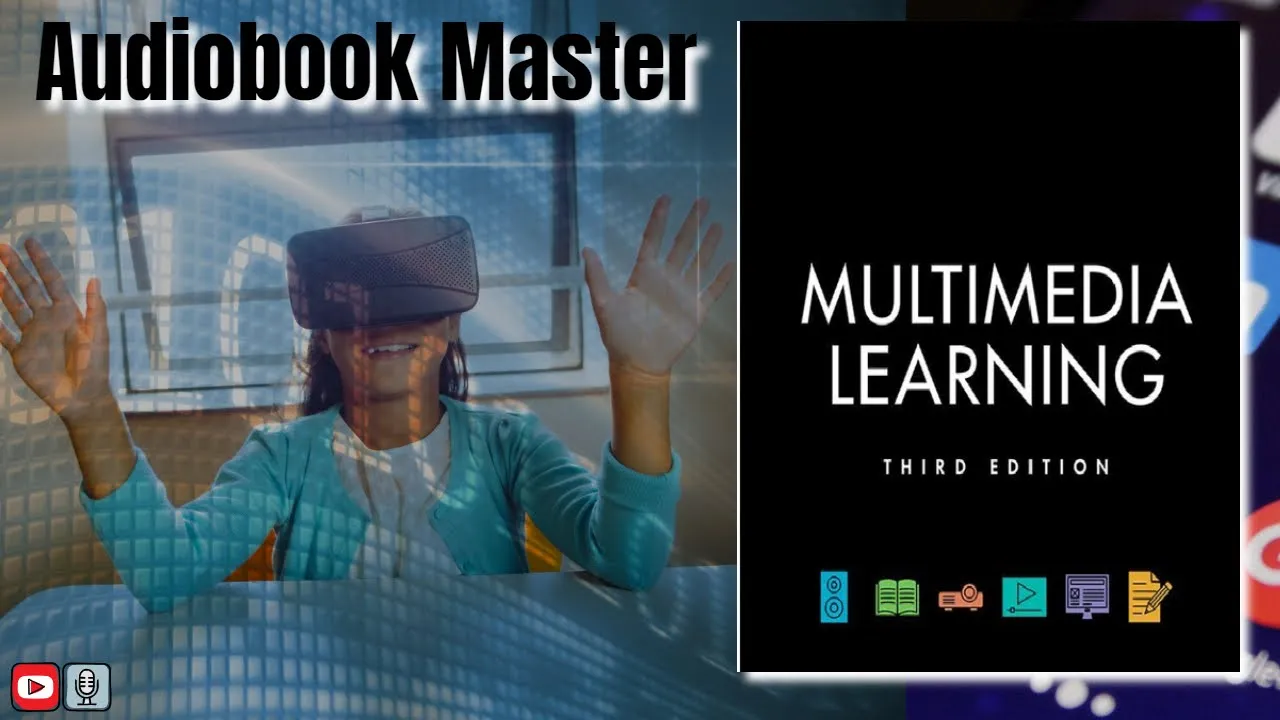
it's a pretty safe bet that you read or watch the summaries that we produce because you want to learn the concepts from the books it's also a pretty safe bet that you'll learn the concepts from the books better through these summaries than through the books themselves actually it's not a safe bet it's scientifically proven a lot of other things are scientifically proven in this book like the fact that you learn better with the combination of images and text rather than text alone and that we all have rather limited capabilities for processing information most importantly if
you're ever in the position to give a presentation where you want to make a lasting impression you'll walk away from this summary with the tools to do it what is learning if we're going to unpack how people can learn better using multimedia principles we need to understand how you and i learn learning as defined by mayor is a change in the knowledge attributable to experience and it is uniquely personal experience for instance what you take out of this summary and what your colleague would take out of this summary is going to differ in some substantial
way what we learn is broken down into five different buckets first we have facts knowledge of a place or event for instance prince william and kate middleton got married on a dreary london day on april 29 2011. second we have concepts knowledge of categories principles or models such as knowing how a car engine works third we have procedures knowledge of a step-by-step procedure such as performing open heart surgery or putting your pants on in the morning one leg then the other fourth we have strategies knowledge of general methods for orchestrating your knowledge to achieve your
goals for instance knowing what shots to hit on a very windy day on the golf course fifth we have beliefs thoughts about yourself or how your learning works for instance thinking that i'm no good at english learning always involves a change in what you know however you don't always have to acquire new knowledge you may just arrange existing knowledge and beliefs the funny thing about knowledge is that there's little we can do to measure it we can only make inferences based on your behavior which usually means on tests designed to measure what we recall and
understand recall tests how much we remembered but in the real world this type of learning is not very useful because the profits don't go to those who remember the most stuff from business school understanding is the golden ticket and it happens when we create a mental model from the information that was presented creating mental models and then using them to your advantage is what the best and brightest people in business do this is the type of learning that these multimedia design principles aim to enable how we process information now that we know what learning is
we can explore how we process that information these are the assumptions that the building blocks of learning are built upon and they might surprise you first we need to understand that we process visual information and auditory information separately the distinction between visual information and auditory information is in how we take it in if we start processing the information with our eyes which we do with images on screen text and video we use our visual information pathways if we start processing the information with our ears which we do with narration background music and other sounds we
use our auditory information pathways some scientists would include text on a page in the auditory information pathways but the crux of the argument is that we process visual and auditory information differently second we have a limited capacity to process information for anybody who struggles with remembering names and phone numbers this should come as no surprise in particular we're limited to a certain amount of information in each channel for instance when we're reading a book we're only able to keep a few words at a time in our working memory the same goes for images the most
common test for how much we're able to hold in our memories is the digit span test where we're presented with randomly selected digits and then ask them repeat them back in order a similar test can also be done with images the average person can remember between five and seven chunks of information at a time because of this limited ability to process information we're constantly making decisions on what to focus our attention on and what not to lastly we actively process information in order to try and make sense of it in essence we're attempting to make
mental models of the information so that it becomes useful to us there are many different ways that we process incoming information we might try and put the information into a process so we can follow step-by-step instructions in the future the hip bones connect to the thigh bone we might try and generalize the information so that we can apply it to more than the current situation or we might make a comparison of what we're learning to something else that we already knew these three assumptions of how we process information dual channel limited capacity and active processing
play a huge role in how we develop presentations that help people learn how to reduce extraneous processing the first step in crafting a multimedia presentation that is scientifically proven to help people learn better is to reduce extraneous processing or simply put getting rid of what isn't necessary there are five principles involved in this first coherence in order to help people learn we need to get rid of unneeded text graphics images and sounds there's evidence that people will learn more from a summary than they will from a full text and not only do they remember more
they better understand the topics any elaboration should come after the learner has developed a mental model of the material there is some argument for the addition of interesting information because it helps people enjoy learning more and thus are more likely to want to learn again however given an equal desire to learn these elements do not add to the learning experience second signaling people learn better when cues that highlight the organization of the material are added things like chapter outlines before the topic is presented headings to separate different sections of material and vocal emphasis on important
words are helpful here third redundancy people learn better from graphics and narration than they do from graphics narration and printed text essentially if you're going to do a presentation with a voice over and slides you wouldn't have the text you're speaking on the slides as well this overloads the visual channel with images and text that it needs to read and confusion ensues so the next time you see somebody presenting a powerpoint and reading directly from the slide tell them about the redundancy principle fourth we have spatial contiguity people learn better when text and images are
positioned close together rather than far apart fifth we have temporal continuity people learn better when text and images are presented at the same time rather than in succession how to manage essential processing now that we've dealt with getting rid of the unnecessary we can focus on how to maximize how people learn the necessary information essential processing is taking what you're learning and mentally representing it in your working memory for instance right now you're creating some sort of mental picture of the words and concepts you're learning about there are three principles that will help us create
effective presentations here first we have segmenting a multimedia presentation that can be broken down into user paced segments should be for instance in a segment that has five parts it should be broken down into five sections that the user can control before the presentation moves on to the next topic with video this is simple as the user can simply pause the video and re-watch anything that they don't completely understand however the other presentations such as a live webinar or seminar don't offer this flexibility so a good practice would be to make the recordings of these
events available afterwards there are limits to where this principle actually helps people learn better and they include when the material is complex or the learner has very little prior knowledge second we have pre-training people learn better from a multimedia message when they know the names and characteristics of the main concepts for instance when you need to take an algebra class before you take an advanced statistics class that's because the statistics class won't slow down to teach you all the algebra you need to know beforehand in these situations you are building a model on top of
another model not understanding the algebra is going to lead your brain to overload and you won't learn anything again however in a multimedia presentation where somebody has the ability to pause and then look up the gaps in their knowledge in google for instance this becomes less of an issue third and last we have modality people learn more deeply from images and narration than they do from images and text this creates three different levels of learning text alone then text with images and then narration with images with the latter being by far the most effective how
to foster generative processing genitive processing is the act of taking the information you are processing and making sense of it you take the information and make mental models and then you see how that model relates to what you already know this is the last and essential step in understanding new material and one of the biggest challenges to it is generative processing under utilization if you're bored get lost in the material or don't like the presentation in general you will typically tune out and not attempt to use your generative processing powers in this my friends is
a bad thing there are two principles that will foster this last important step first the multimedia principle people learn better from words and images than from words alone thinking back to the fact that we have two ways to process information auditory and visually words and pictures together allow us to create two working models of the material simultaneously and build connections between the two the verbal and visual information will never be equivalent though for instance no matter how much detail i go into if i'm explaining a beautiful sunset to you verbally both you and i are
going to form different pictures in our minds and these in turn would be different from the actual image i'm describing so pictures might not be worth a thousand words but they're certainly different than the words themselves keep in mind as human beings we haven't always had language to process but we've always had imagery to process lastly we have the personalization principle people learn better from multimedia when the words are in a conversational style rather than a formal style if you want to do this in your own presentation simply use i and you in the presentation
frequently because it makes it seem like you're talking directly to the audience why does this work on us so well we have a social response embedded in us that makes us pay attention to when somebody is talking directly at us have you ever turned around when somebody said your name in a crowded place but it was clearly talking to somebody else that's the social response in action not only do we pay attention more but we also make a concerted effort to make sense of what is being said to us overall you just learn a lot
better note a computerized voice does not add to this intended effect so don't use one in place of a human voice conclusion there you have it the rules for creating a multimedia presentation that truly allows you to impart information in a way that is remembered and also understood how can you use this information anything to do with training your employees can be greatly enhanced with this method if you're a presenter and give presentations this could be extremely helpful as well this would even be beneficial in complex sales presentations where your prospect needs to understand your
product before they can buy it just make sure to use your newfound powers for good and not evil hi i'm rhonda and this is an exclusive audiobook video recorded for the audiobook master channel enjoy your audiobook and have fun learning don't forget to subscribe and hit the notification button so you'll get updated on our next upload if you liked the video give us a thumbs up and say your thoughts about the book we just covered do you want to listen to a summary or review of a book that we haven't covered in the past say
it in the comments below or send us a message don't forget to check our other uploads enjoy listening