So hello everyone and very good morning welcome to the free qms internal utor training session as per the iso 901 2015 uh this session by is hosted by quality Asia certifications private limited and uh our tagline for this uh meeting session will be become a certified internal auditor on ISO 901 Quality Management Systems so uh this course will consist of 10 objectives so it'll begin with an Introduction then we'll be giving a revision history and purpose uh of this ISO standard then we'll be discussing about some important Concepts then we'll be talking about Clauses 1
to 4 that is the structure scope definitions and context of the organization then we'll be talking about Clause five leadership and Clause six planning then there will be Clause s support Clause seven Clause 8 operation Clause 9 performance evaluation and Clause 10 improvements Then we'll be talking about impacts on the organization for on you know for implementing qms and then we'll be talking about internal auditing practices so this will be a certified training so once you complete this training program uh a training link will be you know generated and you'll be getting one question here
that will be a Google forms link so all of you would have to attempt that Google form and on successful clearance of that examination That is above 50% marks you'll be getting a certified internal auditor credential and a certification from our side so the outcomes of this training session on upon successful completion of this course you will be able to understand the requirements of iso 901 quality management system you will have achieved the means to assess and improve your organization qms uh gain and sharpen your internal auditor skills be verified with internal a credentials on
ISO 91 on successful clearance of the exam so again uh the main the biggest benefit is you'll be certified with an internal auditor credential on ISO 9001 on successful clearance of the exam so this is basically an industry recognized credential and it is essential in any qms certified organization to have certified internal Auditors to uh you know work on behalf of the organization because it's a mandatory requirement for internal audits right then about our Trainer so our lead trainer for this training session would be Mr Atul Suri so Mr Atul Suri is a be in
electrical and an MBA he's a certified lead auditor for ISO 901 14,1 45,1 50,001 22,000 27,1 13485 and 26,000 for those of you who don't know the can say the what all standards are these so ISO 90001 is quality management system which we will be discussing about in detail is so 14,1 will be environment management system 45,1 is occupational health and safety Management system 50,000 one is energy management system 22,000 is food safety management system 27,1 is information security management system 13485 is medical devices quality management system and ISO 26,000 is social accountability apart from
all of these Mr Atul Suri is a be certified energy auditor cea and he's having a professional experience of 30 years plus in an industry uh in the industry with a strong foundation in engineering and Management 20 plus years as a seasonal uh seasoned management system auditor trainer delivering uh you know training and audits in multiple sectors and worked with various top- notot certification bodies as a lead auditor and reviewer such as quality Asia Intertech apaa Moody International irqs Etc and about quality Asia your trusted partner in ISO certification so we commit we are committing
to provide 100% auditing and compliance services with You know ensuring transparency and integrity in every certification we issue and uh we have comprehensive expertise in various full spectrum of standards and certification Services tailored to your organization's need uh we are imparting this free internal auditor training session on a monthly basis so this month we'll be doing ISO 90001 quality management system and every month there will be one training session which will be free of cost for All the industry professionals so this month it is ISO 90001 next month we'll be having a session on ISO
14,000 one and so on we have a global global reach but local touch so serving across multiple Indian cities and international locations we combine Global expertise with our local service commitment to Excellence our mission is to support businesses in achieving and maintaining their certifications unlocking new potentials and improving operational Efficiency then about our free internal aor training program so empowering your team with ISO expertise so we offer uh you know training sessions on different ISO standards each month which is an internation you know internal auditor training session and ensuring continuous learning and upto-date knowledge for
your team and it's a flexible learning option if you for example if you can if you are missing any part of it or you're not able to you know uh do it completely Over the whole day so you can access it on our quality Asia School website or our YouTube channel as well and then also you can give your examination and you will complete this credential and our mission is to you know increase awareness about the ISO standards and enhance ISO competence in the industry so since uh you know due to the industry mushrooming as
well as less focus on these things from the organizational point of view Due to high costs Etc a lot of people do not get the chance to get you know knowledge and competence about these ISO standards so our goal is to uplift the industry operational standards by empowering people with the Essential Knowledge and Skills they need to drive excellence in their organizations through this program this is the aim of this uh whole activity so from this point forward I'll uh you know transfer this uh training Session to Mr Atul Suri who will be our lead
trainer so once again thank you all for joining and I'll hand over this call to Mr Atul Suri will be taking this you know training session forward thank you so thanks so much so good morning to all of you first of all I congr congratulate all of you for taking a very wise decision you are uh basically investing your off day that is Sunday on acquiring a new skills so congratulations to all of you and I would request all of you to Take this session quite serious quite seriously you may have certain doubts also so
but you can just post post your queries uh in the chat box and we'll have at the end of the day towards the end of the day we'll have a Q&A session also so all your doubts would be cleared okay so again my advice is take all this session and the learning is very important because that will help you a lot in your career respiration and future growth also okay so let me just Share my screen so I'll first start with ISO history history of iso 9001 standard ISO 901 basically a quality management system standard
if you see the history of this standard basically it started in the year 1987 so that time there used to be three standards ISO 9001 ISO 9002 and ISO 9003 uh the criteria was even the Clauses and structuring was totally different the criteria was like this there used to be 20 Clauses 4.1 to 4.20 and again each Clause dedicated to some requirement of the standard uh but if you are a design organization you use to have ISO 9001 if you are not responsible for design then you used to have ISO 9002 and if design and
Manufacturing both are not there some sort of test lab or some non- manufacturing activity then ISO 9001 ISO 93 standard used to be there but later on and in fact 1987 also 1987 and 1994 same uh categorization of standards were There there were three standards 9,001 90002 and 9,00 3 but in 9,000 uh in the year 2 in the year 2000 there was a major change so 9,2 and 9003 were abolished and there was only one standard that was ISO 9001 which is generic standard and which is applicable for all kind of organization and one
important change happened during 1987 to 2000 was the earlier this standard was considered to be a standard for manufacturing sector But slowly service sector came up and if you see today's data of our country so probably service sector is outperforming manufacturing sector so they put up the requirements which are related to the service industry also so I'll just take you through the history of the standard some brief so it was first published in year 1987 so thereafter every seven eight years they are changing the standard and revising and upgrading it sometimes there are minimal changes
and Sometimes there are major changes for example 87 to 94 there were minimal changes but 2 there was a complete transformation of standard even the Clause numbering and structuring totally changed and between the period 1987 to 2000 the focus was on the compliance part making that means uh making documented procedures for each and everything and then following those procedures and then 2000 onwards the approach totally changed and it become a Process approach process based approach process based approach means result oriented approach so 2000 to 2008 some minimal changes were there and 2015 again a major
change was there till 2008 they were just talking about customer customer customer but 2015 they changed the approach to interested parties because see if you are running a commercial organization so customer alone is not the one thing who is driving the organizations there are Interested parties also interested party means stakeholders various stakeholders if you working in an organization you are also a stakeholder if you're providing some services to that organization then also you a stakeholder if you are a banker you have invested your money you have given some loan to the organization then you are
also a stakeholder if you are a vendor service provider then you are also a stakeholder if you are a means regulations related To say for example Factory license or say environmental Rel uh requirements or some safety regulation then also you are an interested party so 2015 the approach totally changed and it became an interested party so it is not custom alone you need to focus on the interested parties also and there is a after 2015 there is no official change in ISO 901 standard but yes one small modification of one small addition has come and
that was published in uh March 2024 so now they want to address climate change also climate change we all understand you global warming and all those things are there this is because we are not taking care of environment we are not taking care of of nature even if you see Delhi we are sitting in Delhi right now so there is extreme weather so extreme weather means in June it was extremely hot even temperature touched around 48 49 degrees in the month of July and August we had Extreme rainfalls so why this is happening so that
means companies are also morally responsible to take care of the environment so that is why in the recent Amendment it is just a addon thing he they now want as uh the company taking action on the environmental factors or the climate change also as a part of your review of interested parties need and expectation and external and internal isues so this is some brief history of iso Scandal as I told 2000 a major change was there so earlier there used to be 9,002 and 90003 standard also so 9,2 and 90003 were withdrawn in 2000 version
and the concept of Process Management that is process based approach was introduced which is very important because ultimately following the procedure is okay but ultimately we need to deliver the results also then only we can survive in the industry or the market so process based approach came into Existence in the year 2000 okay so the goal was always to have management system Effectiveness via process performance measures process performance measure means each activity we need to consider as a process so process has got certain outputs the process has also got inputs and outputs and process is
an activity which transforms inputs into outputs so that means we need to have adequate controls over the process so that we can get the desired results Fine and uh Improvement also became a continual Improvement so the goal was to have a management system Effectiveness via process performance measures this addition made more visible and reduced the emphasis on having documented procedures if clear evidence could be presented to show that the process was working well see documentation if you make a correct documentation then it will lead to earlier it was thought if you make a correct documentation
then it Will lead to the outcome the result also but there could be some instances where we were just following the procedures but we were not getting the outputs or we were not focusing on the outputs so that is why in 2000 there was a major transformation and they revised the approach that is documented approach to a process based approach and 2008 some minor amendment was there then came 2015 version and after 2015 the 2015 version was published on September 15 2015 so as Of now this is a currect uh this is the current uh
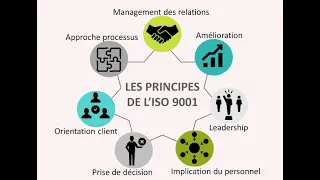
standard uh with some with one Amendment which has happened in the month of March 20124 that is we need to address climate change also in our quality management so basically these are the seven pillars on which this ISO 9001 standard is based there are seven quality management principles 2008 there were eight quality management principles but when they updated to 20151 because there was some Overlapping between two principles so they combined it into one and now officially there are seven quality management principles on which this ISO standard is based we will discuss these principles one by
one so first one is customer focus leadership engagement of people process approach Improvement evidence based decision making and relationship management so I will repeat once again there are seven Quality management principles on which this ISO 9001 2015 standard is based first is customer focus we will discuss these in details first is customer focus the second one is leadership the third one is engagement of people the fourth one most important that is the process approach the fifth one is Improvement the sixth one is evidence-based decision making and the last one is relationship management so let us
understand these seven management Principles quality management principles one by one okay and one more change they have done just for your information in 2015 version because see like like for example ISO 901 is quality management system standard but there are other standards also ISO 14,001 which is Environmental Management System standard ISO 45,1 which is occupational health and safety management system standard then there is ISO 22,000 which is food safety management system standard then There is ISO 27,000 one which is information security management system standard ISO 50,000 is also there which is energy management system so
now different standards are there and earlier it used to be different standards with different Clauses terminology for example ISO 9001 2015 version before let us talk about ISO 91 2008 so ISO 9001 2008 had five main Clauses Clause implementable Clauses I'm talking about Clause number 4 5 6 7 8 but if you see ISO 14,001 which was that time 19 which was that time 2004 version so their Clauses numbering was different 4.1 4.2 4 I'm talking about the implementable Clauses so their Clauses numbering were different 4.1 4.2 and up till 4.6 so different standards having
different methods of different style ofing of Clauses so in 2015 they come up they came up with a idea which is known as high level structure so high level Structure means he 20 15 onwards all management system standards which are updated by ISO organization they made this they made a system he all clauses would have similar Clause numbering means 1 2 3 would be the introduction part and Clause number four five 6 7 8 9 10 would be the main main implementable closet but of course the ideology would be with respect to the respective standard
for example 9,000 one will talk about quality aspects 14,000 will talk About environmental aspects 45,1 we talk about occupational health and safety management system aspects and likewise so because organizations are implementing multiple standards like for example if you talk about Automotive sector standard some company which is a supply of say maruti or Hira so they are implementing they are implementing 90001 also they're implementing 14,000 one also they're implementing 45,000 one also uh because of information security Importance they're implementing 27,000 one also if it is a very big organization then then they must be having a
Cen also in their premises so they are implementing ISO 22,000 also energy saving is also a requirement so they're implementing ISO 50,000 one also so if you are implementing multiple standards and if you have multiple set of documentation it becomes very cumbersome and you need to have more resources allocated for all that so with This high level structure what is possible is you can have a integrated management system where all the standards requirements are merged together into a common integrated management system manual where you address the requirements of various standards and then your implementation becomes
easy your audit internal auditing becomes easy and your external auditing also becomes comparatively easy okay so in 2008 version they came up 2015 version they came up with a high level structure he henceforth all ISO standards which are updated will be as for that platform I'll give example like ISO 901 came up in the year this revision uh came up in the year 2015 simultaneously ISO 15 also came up ISO 41 also came up with the same version 2015 okay now earlier safety related standard was OHS 18,1 so that was updated in year 2022 sorry
2018 so ISO 45,1 2018 was Also based on the same high level structure recently recently means two years back they updated the information security management system standard also that is ISO 2701 so it was ISO 27,1 2013 so they updated to ISO 2701 2022 so this is also based on High level structure so earlier organization used to have an IMS with 9,1 14,1 and 45,1 but since 27,1 that is information security Management system claes structuring was different so it used to be a standalone document okay so when this 27,1 2022 came up with the same
high level structure same methodology and similar structuring so organizations were able to integrate that means add on your information security management system also to the existing integrated management system so this particular thing that is high level structure was a also a major change which happened in The year 2015 onwards okay so the tagline is all management system standards hence forth after 2015 in principle use consistent structure common text and terminology so that they are easy to use and compatible with each other okay so that way organizations implementation and organizations followup and even getting their systems
audited by external agency external certification bodies like quality Asia or somebody else it became easy okay so This was also an important change which happened in the year 2015 that is high level structure with identical cext and common terms and definition so as I already explained the goal was to facilitate the integration of different Management Systems ISO standards and development of integrated management system so that makes the compliance part implementation part internal auditing as well as external auditing or some facing some customer audit comparatively easier For the organizations some examples are given like ISO 27,1
2022 9,1 2015 14,1 2015 45,1 2018 so they are all part of this high level suggust so that the integrated management system can be effectively implemented by the organizations now this PDS pdcs cycle is very important to understand because that is basically one of the core principles of I 91 plan your activities do your Activities check your activities and act that means take adequate actions normally what we do is in general it happens we plan certain things we execute also but checking and monitoring part and taking adequate actions that part is sometimes missing sometimes go
many times it is missing so unless you complete the loop you will not get the desired results because whatever whatever you execute there are bound to be certain challenges there are Bound to be certain Corrections which we need to do and there are always certain Lessons Learned okay so that lesson learned is very important so that when the cycle is repeated again then you are in a better position to execute then you are in a better position to get results okay so keep this principle always in mind not only for ISO but in all phases
of life also because life may be other than office activities we do lot many things we plan things we monitor we do Also execute also but many times our compliance and taking educate corrective actions uh is not up to the mark so make it a habit to follow pdca not only at your workplace but on but also in your daily routine activities so that you get a better result and better accomplishment so before uh moving to the various Clauses of iso1 let us understand some important terminology which has been used in ISO 91 2015 standard
so as I said the this Standard adopts the high level structure of anex SL and it has been it is it is being now used in all new standards whenever the changes happens in the new standards so basically all standards have got 10 Clauses all standards have got 10 Clauses Clause but the requirements are but the requirements implementable requirements are there in Clause number 4 to 10 okay so basic advantage of having this high level I repeat once Again it is to facilitate implementation of of multiple standards with a common set of document so that
compliance becomes easier a internal auditing becomes easier and also facing the external audit of certification bodies or even customer audits or some other regulatory audits become easy as I said this ISO 9001 2015 is on because see for any any standard any any gu line any methodology any code any rule you need to have certain basic guiding principles There has to be some basic pillar on which the building is to be erected so for ISO 9001 the basic principles are seven and we will discuss these principles one by one so this ISO 91 standard provides
a statement which describes principle why this principle is important that is the Ral explaining why an organization should address the principle what are the benefits of implementing that principle And what action needs to be done to address them so I repeat once again these seven principles are the core or the heart of iso 91 2015 standards this is the basic philosophy on which these quality management systems or quality man quality management standard is based the standard provides a statement which describes each principle it gives a reasoning why the organization should address this principle it also
tells you about the potential Benefits you are going to get by addressing these principles and what possible action should be taken so that you achieve the desired results the first and foremost important thing which we start with is the basic is customer focus okay the basic requirement of why we are implementing ISO 90001 standard in our organization is let the organization be a manufacturing sector let the organization be some service provider let the organization be for That matter any field let it be a school college let it be a hospital let it be a IT
company let it be a service provider company let it be some say electrical electrial manufact power generation company any field you think about the first thing why the organization is there is to serve some customer okay so the basic principle of implementing this ISO 9000 standard is to meet the customer requirements and strive to exceed Customer expectations because see everybody understands because there's competition everywhere no organization except maybe for a few government regulated businesses where there istic business every organization has got multiple multiple and multiple competitors so how to survive how to be ahead in
the race for that that you need to understand customer requirements and you need strive to exceed customer expectations so this is the first Quality measurement principle on which ISO 9001 is based is that your organization needs to have customer focus I will give another example those who are in the supply chain of automotive industry there there's a mandate that the service provider or the supplier should be minimum ISO 91 certif of course now they ask for multiple standards also they ask for ISO 14,1 also they ask for 45,1 also they ask for information security management
system Also even they have started asking for energy management system also but the most important or the basic standard which is the entry te it is like a entry ticket without that entry ticket you cannot enter the premises so that is ISO 901 standard because for that customer you need to have certain basic Norms certain certain criteria of the standard which your organization needs to fulfill so that you as an organization are able to understand your customer requirements And you are able to provide them delivery good quality good Services etc etc etc okay so the
first very important requirement is customer focus that is why the standard also starts with customer focus the First Quality management principle is customer focus the primary focus of quality management system is to meet customer requirements and to strive to exceed customer expectations you can survive in the risk only if you are exceeding customer Expectations you can meet customer requirement but so so but so can be met by your other competitors also but if you want to be ahead in the risk then you have to exceed your customer expectations also so this ISO 91 standard provides
you a platform provides you a guideline how you can address customer requirements and how you can try to exceed customer expectations so the rational behind is sustained success is achieved when an Organization attracts and retains the confidence customers and other interested parties to begin with it was customer only but as I said in 2015 interested parties also have come into picture so we need to take care of it is not only customer focus now it is customer plus other interested parties of course the Prime Focus will always be on customer but at the same time
we need to understand and identify other interested parties also and we need to Have a proper confidence of them also every aspect of customer interaction provides you with an opportunity to create more value for the customer understanding current and future needs of customers and other interested parties contributes to the the sustained success of the organization so it is not about what customer demands from you now it is also about what are their future needs and expectations okay and not only customers The other interested parties also so the rational is sustain success achiev when an organization
attracts and retains the confidence of customers and other interested parties every aspect of customer interaction gives you an opportunity to create more value for the customer so what we have to do is understand current and future needs of customers and other interested parties contributes to the sustained success of an organization see One very good example can be your mobile phone 10 years back or 15 years backs had you ever imagined that your mobile phone would be become like a mini laptop where you're able to send your emails also even you're able to attend your Microsoft
team meetings through your mobile because the basic function was of mobile was just to receive call and just to make a call but now your mobile is like a laptop now mobile is like your running office which is always with you You can see you can do all the activities and even the ler activities can be done you can see movies also okay so this is this is this mobile manufacturing companies did through R&D through Innovation through through forecasting what could be the future needs of the customers okay so as an organization whatever field we
are we need to focus Focus not only on the current needs of the customers but also on the future needs of customers and Also since 2015 talks about interested parties so interested parties are also to be kept in the loop and we need to understand their requirements also then only your organization can become a complete organization and with a focus on the future success and future goals the second basic principle of iso 9001 is leadership leaders we all understand at Country level we also understand who is our leader at state level also we understand who
is our leader at Organization level also we understand who our leader so the leadership is very important for implementing anym not only 90001 but all other standards also leadership is the more important most important because who are the leaders leaders are the people who show you the path and leaders are the people who gives you the freedom to achieve organization's goals to achieve departmental goals to achieve customer satisfaction to achieve whatever targets Have said so the trust and the motivation and the commitment for leadership is very important when you're Implement not only 90001 but for
that matter any standard because all standards talk about the leadership okay so the standard says that leaders at all levels establish the unity of purpose and Direction and create conditions in which people are engaged in achieving organization's objectives now what are are these Quality object objectives we will talk later on in detail but quality objectives are basically the goals and targets let us say for example your organization targets to enhance the sales start by another 20% 15% or your organization needs to plans to develop new products or your organization plans to enter some new markets
or your organization plans to start let us say export export also in addition to domestic okay so these are different Goals and objectives so basically ISO standard talks about quality objectives we will discuss about quality objectives in detail but ultimately the tagline is that are the people who basically provide you the resources to achieve organization's objectives okay so the rationale is creation of unity of purpose and the direction and engagement of people enables an organization to align its strategies policies processes and resources to achieve its objectives Because who is approving the strategies who is making
the strategies again the leadership who's making you may prepare some policy but who's going to approve itely the leadership leadership doesn't mean he leadership doesn't mean the owner of the organization but leadership also means local leadership leadership could be your boss also leaders should leadership could be your plant head also leadership leadership could be your regional manager also okay okay so Leadership includes the top management that means the owners of the organization see um now there are very big organization they have got multiple plants if you talk about those plants the owners or promoters or
the directors may not be knowing what is happening in the organization because they're focusing on the strategies but then they have delegated their leadership or their authorities to the people down the line so now we are talking about local Leaders also Regional leaders also departmental leaders also because ultimately these leaders prepare the strategies approve the strategies prepare the policies approve the policies approve the processes and most important thing they provide the resources to the objectives you have certain Target you have certain planning but in order to achieve the Target or planning you require resources the
Resources can be anything it can be man Manpower resource it can be material resource it can be material method resource machiner equipment different kind it equipment there are different kind of resources unless you have resources you can't fulfill your objectives okay so leadership is the quality management principle on which this ISO standard is based leadership also has to demonstrate the commitment one important thing like I'm doing lot Lot many audits so in each audit we also talk to the leadership leadership again it can be the company owner it can be the local head it can
be the branch head it can be the regional head it can be the plant head we always talk to leadership we try to judge them how they committed to implement the 9,000 not only quality management system but because as I said organizations have multiple standards so we try to judge their leadership based on uh whatever Resources how they're motivating their team how they're interacting with their team how they're communicating with their team so in each audit we always talk to the leadership we always talk to the top management and we see we judge their commitment
level also and wherever we feel like that leadership is not committed leadership is not uh providing the adequate resources leadership is not serious about meeting customer requirements or other interested parties Requirements we never recommend that Organization for a certification so leadership is very important quality management principle also very important one is engagement of people what does that mean engagement of people means see Oran if you talk from organization perspective there can be material there can be equipment resources there can be it resources but the most important resource is the human beings the person The people
who are working in the organization and those people have to be engaged also those people have to be given responsibilities also for those People's Key result areas have to be demonstrated for those people resources have to be provided so third third very important basic principle of iso 9001 is engagement of people so that means the statement says competent empowered and engaged people so I once again repeat these are the Three key words competent people competence means those who have got the desired skills the skill can be through education the skill can be through experience the
uh skill acquired could be through on job training competent means you are basically trained and you are efficient to do a particular job so first requirement is a competent people the second requirement is empowered even if you had competent people in the organization and you don't give them any Authority you don't give them any resources you don't give them the proper work environment they are not empowered to do anything they are not authorized to do anything so system will never get implemented so first thing is hire the right people the second thing is give them
the authority to do their work Empower them and third third thing is engage people also again if one and two is done and three is not done then again you will not get the results you have Hard competent people you have empowered them also but you have not given them enough responsibilities you have not given them targets you have not given them kras so again output will not come so competent people empowered people and engage people and these have to be throughout the organization okay and this requirement is not only for 90001 this is for
all standards because every standard requires a certain level of commitment From the persons employees who are working in the organization and it is not only about the employees only it is also about contractual people because lot many organizations nowadays they're Contracting people also okay because of some commercial reasons or because of some other obvious reasons sometimes they don't want to have so many Manpower sometimes they they think like if you Outsource certain activities then it is more cost effective okay but competent People import people and engaged people at all levels within the organization is a
prerequisite and it is a basic fundamental principle on which this ISO 9001 standard is based not only ISO 90001 all management system standards are based because ultimately who's going to go who doing to do the work who's going to do the work that is B basically the engaged people so it is very important that competent empowered and engaged people At all levels throughout the organization are essential to enhance the ornation capability to create and deliver value so first you have to create value and then you have to deliver the value that means the desired goals
the desired outputs so rational behind this objective is in order to manage an organization effectively and efficiently it is important to respect and involve people at all levels within the organization so recognition Empowerment and enhancement of competence facilitates the engagement of people in achieving the organizations's quality objectives ultimately we are talking about achieving the organizations quality objectives but what is the way the way is through the competent employees only the way is through empowered employees only the way is through engaged people only so again the key words are recognition empowerment and enhancement Of competence so
the third important quality management principle is engagement of people at all level within the organization next principle again very important one process based approach process approach as I said ke till 2000 year 2000 the focus was on the documentation part with the Assumption if you have documented procedure for anything things will be done properly but then the Result part the compliance part the output part was missing in that particular approach so year 2004 year 2000 onwards they added a new philosophy to ISO standard that is process approach so the statement is consistent and predictable results
are achieved more efficiently and effectively when are understood as managed are understood and managed as interrelated processes that function as a coherent system so process approach Means every activity is a process now we don't call HR as a department we call when like for example as external Auditors when we are preparing the audit schedule and all that when we are following with the clients when we are talking to them we don't call that as Department we call it as HR process we call it as a design process we call it as a production process because
why because we need to have a look at the process based Approach in HR process based approach means each process has got certain inputs and each process transforms that inputs into outputs so what is the methodology of transformation of inputs into outputs how the results are achieved what are the monitoring parameters what are the checkpoints guiding principles what are the instructions so all that comes under a process based approach those of who those of you who are from automotive Industry you may be even more aware about the turtle diagram so Turtle diagram demonstrate each process
like in as a part of that documentation uh each process ask for a turtle diagram for each process that means what are the process inputs what are the process outputs what resources are provided for that process what are the outcomes what are the inputs can be man machine material method environment everything and outputs can be the tangible tangible Measurements or the outcome of that particular process and then what are the checks and measures for that process very important quality management principle is process based approach because these processes are interrelated processes these processes are Interlink with
each other so one important philosophy to understand here is customer when we talk about customer it is not always the internal customer customer can be internal customer also What is an internal customer see any process any department or any activity to whom we are providing our services within the organization depends uh is is a internal customer for example HR process HR department now what HR department does for example design department requires some resources let us say they want some design engineer R&D engineer so design Department what will do it will place a request to HR
department he okay we Require for our design activities we require an engineer with this this qualification who should be btech mechanical or electrical or blah blah blah as per requirement with so much experience and this is this is this is this is going to be the job responsibility of that uh design engineer so we we are basically ailing your services you provide us that person okay so for HR department that design Department Which has placed the request is an internal customer exr department is not interacting with the external customer external customer may be an MNC
external customer may be some government organization external customer may be a customer like you and me okay but HR department is not interacting with us but HR department is facilitating the requirements HR department is facilit facilitating the needs and expectations of the internal Customer because if Internal customer requirements are met then only we will be able to meet the requirements of external customer okay so meet so that internal customer approach is also very important within an organization let us take the same Cas if HR department doesn't value or regard or understand priority of that internal
customer that is design department and they are not able to provide the design engineer to design section in time or as per the desired qualification or Expectation so what will happen design activities will suffer when design activities will suffer what will happen the product which is being designed by the designed Department either it will get delayed or it may not be as good as they thinking about so ultimately the delivery to the external customer will also get affected the delivery could be to you to me and ultimately we'll say no no we are not satisfied
this with with this product but the root cause was Because internal customer requirements were not adequately met or internal custom requirements were not given due weightage or importance so this is how this is been need need to understand we need to first of all we need to identify who all our internal customers are I repeat once again if internal customer is satisfied then only you can serve your external customer but if internal customer is not satisfied then you are bound to face problem with your external Customer you are bound to Face customer dissatisfaction you are
bound to Face customer complaints so again a very important quality management principle is process approach so we need to understand how the C uh how the Cs processes are interrelated with each other the Cs consists of interrelated processes understanding how results are produced by the system enables an organization to optimize the system and its performance again this fifth Principle I hope it is understood to everybody improvement improvement is need of the hour Improvement is need of the country Improvement is need of the state we want Improvement everywhere we want better roads we want better electricity
Supply we want cleaner and better water we want even better air to breathe okay so Improvement is desired everywhere and why we are running the organization because again organization needs Improvement organization needs Improvement in Top Line organization needs Improvement in bottom line I hope you understand Top Line and bottom line Top Line means the turnover of the organization and bottom line means the profitability of the organization organizations Are Burning Midnight Oil to get better Improvement to get better results to improve Top Line to improve bottom line to add more customers to add to capture new
markets so Improvement is desired everywhere Improvement we Require in our day-to-day life also you are doing this internal course because you want to improve your skills so it is not only for organization it is for individual first for us we want Improvement we want better salary we want better perks we want better work environment we want better privileges we want Improvement from our government we want Improvement globally okay so Improvement is very important so that is why this quality management principle is There Improvement successful organizations have an ongoing focus on Improvement so Improvement is essential
for an automation to maintain current level of performance and also to improve upon it to react to changes in the external and external conditions and to create new opportunities okay so the fifth quality principle on which this ISO standard is based is Improvement so organizations need to have an ongoing focus on improvement Improvement is not a onetime activity Improvement is an ongoing activity so organizations need to have ongoing focus on Improvement so this is also very important evidence-based decision making so there is a statement the decisions based on analysis and evaluation of data and information
are more likely to be to produce desired results so whatever decision we take that should be based on evidence that should be based on facts that should be based on some logical Things okay so there's a saying also in God we can trust we can believe without any evidence but for everything else we read we require evidence so decision making can be there properly only if you have evidence see shof Flor Improvement activities you can do only if you have evidence of how the production planning is happening what what production problems we are facing what
is the what what is the data related to customer complaints what is the data related to Customer feedback what is the data related to wend Performance what is the data related to achievement of our objectives and goals if we have data available with us then only we'll be able to make meaningful decisions but if data is not available it is just like a ha fire we don't have data and we just making some assumptions so decision B evidence based decision making is a very important quality management principles of iso 9001 whatever decisions and Actions we
take in the organization we need to have some evidence for that for example if you want to introduce some new product in the market for example you want to enter into some new territory some new products so you need to have some market research data you need to analyze I have seen companies where they have entered into the field let us say because see every business has got some business cycle some up and downs up phase is there when the product Demand is increasing that is basically demand and Supply demand is more Supply is less
so that is a up Upstream cycle of that particular particular industry but then there's a downstream also let us say some recession happen let say there is over Supply so what will happen demand will come down so I have seen organization where they have not done proper analysis of the data and they have made major investment decisions and ultimately they entered the business at The wrong end of the cycle where the demand was reducing and Supply was increasing and they decided to enter without any historical data without evidence decision making and ultimately that particular organization
turned into a s industry and I have seen this is organizations where they have done a proper market research they do lot of emphasis on market research compilation of data they have the services of experts also and they enter into the Market they foresee the market demand for example right now our country is a growing country the best GDP in the whole world not only our not only in Asia but the whole world India is a leading uh in uh leading country right now where every other country is facing some economic recession or some problems
or downward trajectory of uh growth India is leading the growth okay okay because industry demand is increasing likewise power demand is increasing Materials demand is increasing Manpower demand is increasing so if somebody now puts up some industry based on the future projections that would be a decision based uh that would be an evidence based decision making okay so analysis so likewise organizations also generate lot of data and your decision making should be based on based on that evidence so this is what the quality management principle of 91 is that decisions should be based on Analysis
and evaluation of data and information so that we are able to get the desired results the rational behind it is that decision making can be a complex process and it always involves some uncertainty it often involves multiple types and sources of inputs as well as their interpretation which can be subjective also so it is important to understand cause and effect relationship and potential unint consequences facts evidence and data Lead to Greater objectivity and confidence in decision making so I'm again repeating the last line that is facts evidence and data analysis lead to Greater objectivity and
confidence in decision making so generate lot of data in your organization and then at the same time evaluate also analyze it also so that will help you in decision making and that will give you your that will give you the desired confidence also in your decision making because without any Data without any evidence without any facts you are taking a decision if you're taking a decision that more likely it is going to be a bad decision but if you are analyzing the data if you are generating the data if you are evaluating the facts and
evidences then there's all the time more probability or very good probability of making a correct decision so the sixth quality management principle on which this ISO standard is based this Evidence based decision making and the last principle on which this ISO 901 standard is B that is relationship management relationship management means in earlier version 2008 version it this used to be called as Supply relationship because that time interested parties were not there but now since interested parties are there I gave example interested party even you being working in the organization you are also an interested
party being an Employee vendors are service vendors are interested parties regulat bodies are interested parties even industry in the neighboring Hood neighborhood could be your interested parties okay service providers are interested parties your bankers and interested parties your shareholders for the listed company they are interested parties so instead of Supply relationship which was there in 9000 2008 now they're calling it as relationship management because for Sustained success organizations need to man manage the relationship with the relevant interested parties such as providers because various St service providers various interested parties are various stakeholders so you need
to have a good relationship or need to understand their need and expectation and strive to try to achieve those needs and expectations so that is the last quality management principle on which is ISO standard is based that is Relationship management so the rational behind this principle is relevant interest parties influence the performance of an organization okay so sustained success is more likely to be achieved when organization manages relationship with all of its interested parties to optimize their impact on its performance relationship management with its provider and partner network is a particular important because different different
interested parties have got Different needs and expectations if it is a regulatory body they want regulatory compliances from you if there is a v if there is a vend as an interested party the vendor wants um transparency in the purchase orders and payment terms and all those kind of things if if there's a employee as an interested party then employee needs and expectation different with respect to it could be with respect to the salary and wages it could be to to for work Environment or growth opportunities carer aspirations different thing okay if is if it
is your neighborhood then it could be complying with the uh regulations of the society or the industrial area or maybe not polluting so that their activities are not effective so different uh different interested parties have got different needs and expectations so basically relationship management is required so that you understand their needs and Expectations and try to optimize because ultimately something or other is going to impact the performance of the organization also so relationship management with its providers and partner network is a very important criteria when you're implementing a quality management system as I said process
approach so U as I said that process approach has been made more explicit in ISO 9001 2015 so process based approach is basically the core Activity when you're implementing quality management system in the organization so there is a particular Clause of course we will discuss all the Clause uh when we go through the slides related to Clauses but just for your information this Clause 4.4 is the one which explicitly requires the identification of processes and their and their interaction so one of the requirement of iso 90001 standard is that organization need to identify Various processes
which exist in in in that organization and how these processes are interacting with each other so ISO 91 2015 standard includes details about the processes needed for a quality management system specifically mentioned in Clause number 4.4.1 which says determine the inputs required and outputs expected from these processes and output for one process constitute inputs to the other core processes you can correlate output with The internal customer conent so as we are taking care of the external customer we also need to take care of our internal customer so output from one process core process inputs for
the other core process your quality management system procedures should describe these processes from input to output and also describing about the controls what controls you have over these processes how these processes how this processes operate there's one more Clause of course we will take up these Clause as I said when these Clauses actually come but just to focus on some important requirements of these Clauses and just to understand some important terminology so the standard also talks about process based auditing so as an internal as an internal auditor once you qualify for internal audit you also
need to have a process based approach while auditing so Clause 5.1 5.1.1 says uh the C point of that Clause Says ensuring the integration of quality management system requirements into the organization's business processes so your business process business processes have to be integrated with the quality management system processes that means we should not have two set of processes where organization business is talking about something else and and quality management system is talking about something else okay I'll demonstrate further in subsequent slides and Examples so but the key requirement is that your or your quality management
system has to be aligned with your organization business requirements okay this is to say about to decide within or be built into the pro very processes that really produce outputs It is believed that this Focus would result in a holistic system with the primary objective of meeting customer requirement and enhancing customer satisfaction so the of course primary Objective for every organization remains meeting customer requirement and enhancing customer satisfaction but then we since uh we are also talking about interested parties so we also need to consider interested parties and also try measure the satisfaction level of
interested parties also so it is given so this particular slide is showing you an example of a process so each process has got some inputs for example let us say there is a assembly unit it is doing Assembly of mobile phones so there are certain inputs inputs what are the inputs man machine material method and the suitable work environment so components are there Manpower is there equipment is there Machinery is there testing equipment is there work sections are there Sops are there so ultimately the process happens process means the Assembly of mobile phone happens and
then there are the outputs outputs are your functionality of the mobile phones All the functionality all the features which are there in the mobile phone and then you also for executing the process you also require as I explained in the inputs also there are different resources so resources are will done who will do execute man machine material method what are the expected results and how it will be done that is the instructions and S so P so process transforms inputs into outputs and we require resources and resources which Execute those Pro which convert those inputs
into outputs what is to be done who will do it how it is to be done and what are the desired results so this approach you have to follow during your internal auditing also that means whenever you're auditing a process of course I'm not calling them Department I'm calling them process design process assembly process manufacturing process software development process product development process manufacturing Process production process maintenance process HR process store storage process incoming inspection process all everything is a process so first as an interal auditor you need to identify what are the inputs of the
process and what expected outputs of that process and what are the controls which are there to execute that particular process that is again man machine material method and environment who is doing what and how it is being done and what is the Expected outcome again uh there is a very important terminology which needs to be understood at this stage before actually proceeding to the slides or the Clauses of iso 91 standard there are two terms one is risk and another is preventive action and if you the first action has been removed from ISO 9000 2015
standard and is now being replaced by The Wider perspective of planning risk management as a core element of planning and having A management system in the first place see most of us understand this terminology and preventive action I will I will explain the difference if you refer to the earlier version of Standards basically Three core words were there correction corrective action and preventive Action Now what is the meaning of the these three part what is a correction what is a corrective action and what is a preventive action correction is doing setting a thing Right for
example you made some product had some defect maybe at the final inspection stage or maybe you received a customer complaint or let us say for that matter let us say we talk about an IT company so the product is the software so correction is some bug in in the software fine so so correction is a defect a bug in the software you remove that bug that becomes a correction you set right that product That becomes a correction handle the customer complaint that is you provide him some replacement or something because different companies have different policies
if it is a warranty complaint many companies like for example Apple they won't repair that product they will within warranty if some problem opens happens they will give you a new product so that is basically correction okay then what is corrective Action corrective action is based on the root cause analysis why why analysis why this problem again root cause can be because of man machine material method environment and then it is not just one layer of YY analysis it is multiple layer analysis why why y why why you ask the question why five times for
first reason let us say why man main reason worker made some problem that is why the defect occurred next why Why the worker made that problem because the worker was not competent the worker was not trained or worker was not skilled or worker was not given on job training okay then what could be the next why why the worker was not given training why the worker was not competent why the worker was not even why the worker didn't have that skills there could be several further reasons it is like a tree with various branches first
Branch Then further two branches then further four branches and it becomes a very big tree so there could be sever reasoning there could be several wise why the worker was not competent why the worker was not trained maybe there's not a proper HR department in the in the HR process in the organization where there's not HR process maybe there could be some reason okay so there could be end reasoning n number of reasons so when you take action based on that Particular reasoning so that the problem is not repeated again that is known as a
corrective action okay so I once again repeat correction is setting right the thing based on some complaint or some issue or some gev or some bug but corrective action is based on the reasoning why why analysis why this problem occurred and that why also to the level possible where you can to whatever possible you can go it should not but definitely Should not be one layer it should be bed on several layers of reasoning okay so you take action based on you address different problem different Wes so that those Wes are not that is a
corrective action but then what is a preventive action again there is a saying prevention is better than cure so preventive action is taking an adequate action at first instance is so that the problem does not occur at all so I go back to the previous slide again we Where you have a resources and you have got a process with the requirements that is input input is delivering the output and you have got different resources different methodologies what done who will doing who who will do it how it is to be done what are the results
so preventive action is making this reasoning strong making these resources strong making what who how it is done and what it to achieve strong so that problem does not occur at all that is Known as a preventive action but for example you take a vaccination to prevent certain disease to prevent some influenza to prevent some flu okay so that is basically preventive action problem does not occur at all but then this ISO 901 standard has removed this word preventive action so it may sound strange why why preventive action is removed is it isn't it important
yes definitely it is important then why it Is removed so the answer answer to this question is because this has been replaced by even a better terminology which is known as risk management risk assessment okay so I will explain this risk assessment in details when the subsequent Clause related to risk assessment comes but then one important change here is he risk assessment has taken place has come in place of preventive action so standard doesn't want you to take Preventive action rather standard wants to focus FS you you to focus on better planning better risk management
so that your you have a better system in place at the first instance we will discuss about risk ass details in the subsequent slides but as of now these are some important changes earlier there used to be three terms correction corrective action and preventive action correction is the immediate action taken to set right a non-conformity corrective action Is based on the root cause analysis and now instead of preventive action which used to be the action taken to prevent a non-conformity it has been replaced with risk assessment basically we have to do a risk assessment of
various processes identify what can go wrong in the and what measures we can take we will discuss about this uh risk assessment methodology in subsequent slides so all references are made to risk identification of risk and opportunities And planning action to address risk and opportunities identified risk based thinking goes throughout the entire ISO 91 2015 and it stays in line with the nxr SL that contains no specific requirements for preventive action so preventive action word is not there in the standard preventive action requirement is not there in the standard but risk based assessment is there
and we have to do a risk assessment Methodology and as an internal auditor when you are auditing a particular process first of all you first of all or rather very importantly you have to see the risk assessment of that particular department or the process what kind of risk assessment methodology there are different method methodologies for that risk assessment but very simple methodology basically risk is a multiple of occurrence and detection that is probability and likely of impact one Very basic example I will do I will give you let us say on the main road there
is a red light and people are driving somebody's driving a motorcycle somebody is driving a car that red light that red light is working properly green light red light is working properly and people are following people are following the uh the the traffic signal properly so the risk of an accident is minimal the risk has got two Constituents probability of occurrence that is likelihood and the impact level of consequence let us say if we use a matrix of 5x five likelihood versus impact so if people are for obeying the traffic light so the likelihood of
any accident is minimal so we will give let say we have to rate on a scale of 1 to five where five is very high probability if everybody everything is in order people are following the traffic regulation and everything rules and Regulation everything so the likelihood of accident is or any Mish happening is one okay on a scale of 1 to five where five is the highest but the impact is let us if any accident happen then if threatening also so impact is always on higher side so the overall this becomes 1 into 5 is
equal to 5 okay let us take another case the same case where the red light is not there or red light is not working or people are not Following traffic rules so what will happen the likelihood of getting that accident at that particular particular spot increases that means basically your risk impact will remain the same because impact you cannot control so one important thing to consider while doing a risk assessment is he impact of the risk is not in your hand let us say bad quality of customer complaint can impact your proc can impact your
uh product Market or can result in some say some Recall of product or some Financial loss of the company that impact you cannot control but what you can control is the likelihood that is the occence so in this particular case since traffic signal is not working or there's no traffic signal or people are not following traffic regulations so the impact of getting the likelihood of getting that accident will increase so that means in worst case scenario the risk score will become 5 into 25 that is 25 and 25 is a very high this very dangerous
uh status okay but if you follow the traffic rules the impact Remains the Same but the likelihood of having an accident will become almost negligible so the risk level becomes low so instead of preventive action this ISO standard wants to have a better method of making a risk assessment making a risk management so that the probability of occurrence of that particular Mish happening reduces and this this is a Wonderful thing if you ask me personally this is the best thing I would say he the best change which has happened to this ISO standard is that
they are asking for the risk assessment and I will give you one more example also based on my auditing experience I used to visit on behalf of a very leading certification body I used to a defense organization because it is a defense related so I will not name the organization because it is highly Confidential but I used to visit a defense organization basically a defense lab so they are doing lot of uh research related activities and I used to audit them before 2015 version also and after 2015 version also so when I used to visit
that organization see defense being a very important activity so people are very competent even you find people from and very good institutes very intelligent also but the work environment was pretty LAX so uh if you See the objectives say for example each organization has got certain objectives they're also developing some things for for the defense of the organization I'm talking about prior to 2015 so what I used to find was the company in spite having in spite of having resources in spite of having grants from the ministry of Defense in spite of having all the
competent people the results were not coming the outputs were not coming so it was a overall a disappointing Status but then 2015 version came they were also ISO 91 certified and the ministry of Defense also in their project guidelines they made a mandatory thing because their projects are whatever projects they are doing for the development these projects are approved by the ministry so they I don't know it could be because of iso 9001 2015 or it could be other reason also he in their project management guidelines they made risk assessment mandatory so now onwards Whatever
projects they are conceiving because ultimately they have to take approval and they have to get funds from Ministry so the risk assessment was a prerequisite of that draft project report okay so when they're submitting the DPR so first first of all they have to identify the project related risk and what mitigation plans they are planning and you won't believe in the next subsequent when I visited because of that risk management activity because of That risk based thinking the whole working culture of that particular organization changed and now they were doing the work very meticulously because
when they doing risk assessment they they are able to visualize what could happen what can go wrong another giving you example from the same activity prior to 2015 version there used to be a project what they were doing because these are highly sophisticated projects so they were Getting certain imported items also but government has got their own norms for importing everything and and then these are R&D projects so so import content or say volume is not very high so sometimes vendor also don't give you importance because you are placing a small order so prior to
that they were not basically like when when they are done with their various design activities when they are developing a prototype for that particular thing so they are stuck up Because they parts and next one year or two year there used to be no progress on that project because there are no parts but now once they started doing risk assessment they visualize he this is the lead time which which we are going to face for a new because these are not off the shelf item these are highly technical sophisticated items imported parts so we need
to have a vendor development proper vendor development keeping the lead time in view keeping The import time in view keeping the government procedures in view so like diagram part chart like a project plan so they preon their vendor development activities for the project activities and that was that was possible only through the risk assessment so this risk based thinking as per me this is the best thing to best change to happen to the iso standard fine so we'll discuss about this in further detail also context of the organization is another Change which is there which
was not there earlier because earlier it used to be customer oriented but now it is focus on internal and external issues and interested parties so there is a clause Clause number four which talks about context of the organization we will discuss the requirement of this context of the organization when we see the slides related to the various Clauses so focus on context of the organization this Clause four requires Organization to consider itself and its context to understand understand the need and expectation of interested parties and to determine the scope of the management system so this
thing we will discuss when we go to the respective slides so together these Clauses require ornation to determine the issues and requirements that can impact the planning of the quality management system and can be used as an input into The development of quality management system so this results in a broader business Outlook a more detailed operational planning leadership we Al uh we have already discussed lead management is required to demonstrate that they engage in key management system activ as opposed to Simply ensuring that these activities are uring so this means that there is a need
for top management to be actively involved in the operations of Their management system so as I explained uh when we are doing external audit we always talk to the leadership also but sometimes we find that that in the internal audit they are not auditing leadership probably they they feel afraid or there could be some reason why they are not auditing but ideally when you're doing internal so top management audit also should be a part of the audit plan leadership auditing is also a part of the internal audit plan so whenever You're making internal audit plan
make sure that you audit the top management also so as to uh because sometimes top management may not be aware of what exactly you're expecting from them uh while implementing the management system Let It Be 9,14 or 45,000 so when when you are in it is may we call it as auditing but it is more of an interaction so during part of your as a part of your internal audit you also interact with the top management maybe You can then apply the top management about what changes what happenings are going on with respect to the
management system maybe you can uh feel their involvement also and maybe you can just give them some tips also how they can be better involved in the management system so external audit we always audit leadership internal audit we normally find that top management or leadership is not audited so as part of your internal audit make it a note that you Should Al also audit uh top management it may not be a formal audit but more of an interaction with the top management to apprise them about the uh the efforts being made for implementation of the
system and wherever their attention or focus is required so polite and gently you can bring it to the notice also so make it a point he in your internal audit also you should also audit the top management that is the leadership one important change which has happened in ISO 9001 2015 is because see uh most of you who have seen this ISO 901 certificate so there is a scope statement also scope statement is the basically the key activity which you are developing uh which you are performing in the organization for example me of molding this
injection molded components now this is a generic statement but as per as per 9012 2008 it used to be accepted but now if we are talking about 915 9125 of onwards there's a greater emphasis on the definition of the scope so that means scope has to be very specific so for the same example let us say injection molding of plastic parts and their assemblies so we have to be very we have very specific injection molding of plastic parts up to what gramage or up to what Tage of machine because see tonage and capacity also varies
now some organization may have maybe small company have just up to 50 Ton of injection molding machines but some another organization may even have 1,00 t or500 t so it is very essential that the scope of the quality management system is very specific and uh so that is an important change in 91200 important requirement to verify for us also as an external auditor what is the scope of the def what is the definition of scope of quality management system because it has to be very specific it cannot be generate okay so normally it Is for
the organization to determine the scope of the quality management system but as an external auditor we always evaluate whether the scope is specific or not and if not we suggest them changes to the Quality Management System Scope so we have already talked about uh now there are 10 Clauses uh because that is part of high level structure and and for all new standards 94 15 45,000 150,000 27,000 22,000 so everywhere now these 10 Clauses are There so that you can integrate your management system into an integrated one little bit change in other terminology also like
earlier we called them suppliers so now because supplier activities also it can be services also so now Clause 8.4 which which is basically talking about the suppliers requirement now we call it external service providers so instead of saying supplier control we are talking about control of externally provided processes Products and services because organization can Outsource these activities the supplier can provide you processes also your certain sometimes manufacturing or development activities or even software development that is outsourced so product can also be outsourced Services can also be outsourced so just a little bit change of terminology
like Clause 8.4 addresses all forms of external provision whether it is by purchasing from A supplier Through an arrangement with an Associate company that is some Outsourcing work through the Outsourcing of processes and functions of the organization or by any other means so is required to take a risk based approach to determine the type and extent of control which are appropriate to each external provider and all externally provided products and services so whatever activities whatever processes you uh auditing or verifying so risk-based approach is required so That is why I'm saying that risk management is
the most important thing or most beautiful thing to happen in this 91 2015 standard so probably they are not able to find a better methodology could be the reason ke after 2015 except for that climate change addition there is no change because process approach they introduced in 20 so risk-based approach is the best thing to happen to this standard so whenever you're doing Internal auditing you need to follow this risk based approach and uh this is applicable for the vendor management okay so uh one more requirement which was added in 91 2015 is the ornation
knowledge ornation knowledge means the basically the intellectual information of the organization so organization should aim to take steps to capture and preserve knowledge and learning which is necessary for Effective operation of the processes and for ensuring the Conformity of their products and services sometimes it happens especially in small companies like somebody's an expert particular activity or process and then he or she leaves the organization because of some reason and then suddenly there is a vacuum and the company starts facing challenges okay so how to take care of that so basically when the employee that particular
employee is leaving the organization knowledge is also leaving along with him Or her so just to prevent that thing the the ISO standards now says that organization has to take steps to capture and pre preserve knowledge and learning which is effective operation of the processes and for ensuring the Conformity of Production Services that means we should not be a person dependent organization which should be a system dependent organization so what we need to do is we basically need to create a repository where all the Knowledge resources are captured so primarily this is a broad requirement
which is directly aimed at ensuring that organization has or obtains the knowledge resources which are necessary to respond to changing business environments referred to in Clause 4.1 this is some reference of clause you will understand when we go to the Clauses changing customer interested party needs and expectations which are referred in 4.2 and wherever related Improvement initiatives so the tagline is that we need to preserve organ knowledge so that see any organization will face this problem of people leaving and those kind of things but there should not be vacuum because of somebody leaving at a
knowledge Gap so that is why organization needs to take steps to capture and preserve knowledge because person comes or leaves ornation will remain okay so for but that for that continuity of that ornation that Knowledge or intellectual portion of that particular thing is required so we have to take steps basically there are different ways and methods uh it can be compilation of the intellectual property your standards codes references instructions control PL quality assurance activities quality assurance plans U uh even lessons learns Etc so those things should be preserved in the organization Ways and Means can
be decided by the organization because see This ISO standard basically it's a generic standard it tells you about the requirement but the ways and methods it is up to for the organization to decide but important thing is that organization knowledge has to be preserved okay then there are certain uh document requirements also in ISO 901 standard if you talk about previous standard 912 2008 it talks there are there are two things one is document and record so now it uses the terminology Documented information which includes both documents and records just for clarity what is a
do doent and what is a record because standard talks about uh preservation of both documents as well as records so whatever manuals plans Etc you prepare basically a uh document for example in ISO you prepare quality manuals you prepare documented procedures for quality assurance activities you prepare a quality assurance plan control Plan and you make various formats you make work inst sections Sops so all these things are documents but then what is a record let us say there is a format to record incoming inspection or in process inspection or say final testing of the software
so there is some methodology there is a form that when you fill up that data in that it becomes a record so these are two different terms which are used in the standard one is document and another is record so you Need to take care of both and these documents now can be preserved electronically also that mean we need not make hard copy records so the common terminology which has been used now is a documented information so documented information includes uh both the documents as well as records there are certain stipulations or requirements related to
the documented information also that I will explain in the subsequent slides now This is small exercise for you and uh thereafter we can break I think I will take a break because I think Mr s Sharma he's a guest speaker so he'll deliver his experience of because uh he has got a huge experience of imp 90001 he himself has been an external aitor also so he has got very rich experience in implementing ISO related activities so he will deliver his words at 11:00 a.m. so right now I'm giving you a small work exercise and uh
I will connect I'll Connect with you again at 11:30 so this Workshop is understanding the key requirement because I've explained you several things related to ISO 9001 2015 in the last half hours so the workshop for you is explain five key requirements which you have found in ISO 901 standard which are applicable to the qms you can even uh link these particular understanding or requirements with respect to the I'm sure many of you must be working in ISO 9 certified Companies so even you can correlate with your own experience of what you are implementing in
ISO while you're implementing the quality management system in your organization okay so mention the implication that these requirements will have on your organization implementing the standard and please comment your responses in the chat box so your report should include your groups recommendation you can work together in Groups also or as an individual also if you let group means let us say for example you're working you from same organization so you can also work in group but you need to share your observ ations and decisions related to the two things are key 9000 2015 standard requirements
which you have understood in last one and a half hours you you have to explain five key requirements and what implication these requirements have or can have on your Organization's quality management system over to you Sam thank you very much sir it's been a lovely presentation since morning and we having a very good audience also everyone has been very responsive and all so uh now uh we are having one small Workshop as you must have seen Atul sir can you please D share your screen so that I can share yes sir sure so as Atul
s mentioned so we have to list five key requirements found in ISO 90001 2015 standard so all Of you what you can do is in the chat box you can start by you know making a list and compiling it over there uh we will read over some of them the best responses and then we'll be moving forward towards our guest lect right so we have I think so we can do 702 we have 5 minutes so your time starts now you can start so I have got some responses in the chat box talking about risk
management scope definition Seven Pillars of qmp process approach is a Critical pillar then customer Centric customer Centric interested parties process approach engagement of people evidence-based approach pdca cycle relationship management risk-based continual thinking continual Improvement process approach organizational knowledge pdca cycle risk management evidence-based decision making so by the responses I'm able to Get that you guys are clearly understanding what Mr Suri is trying to convey so that's a good thing Mr himansu GAA five requirements of qms leadership engagement of people process approach Improvement evidence-based decision making these principle will help my organization to meet the customer
requirements and also meet organization's quality objective good response Mr himansu Kudos leadership top management need to audit naen G good response scope of the organization to be clearly defined thank you sasi ma'am decision making abilash G good response l g increased efficiency supplier management customer demands that's good great so thank you all uh for these responses and uh this clearly indicates your understanding of the same now I would like to invite our guest speaker Mr sandep Sharma from flipcart group of Companies sandep G I'd request you to please uh switch on your camera and I'll
just uh play the play your slide deck right so over to sandip G just a minute yes yes and G thank you very much we are able to hear you yeah okay thanks and good morning everyone uh first of all let me uh let me uh take this opportunity to thank Samar the MD of quality Asia and uh for taking this initiative and it's a great gesture from quality Asia to organize this quality auditor trainings so that is really a great and secondly uh let me also thankful to Atul sir uh for we are having
a privilege to have him as a faculty for this training so he's most respected and you can say popular name in our domain so uh I know him for a last long time so thank you Atul s and SM for all this so um I will not take much time so let me come back to me uh basically my name is s Kumar Sharma and I have been with the F1 and GS and you can say flip cart group of companies since almost last nine years uh I am graduate engineering electronics and communication and MBA
and marketing and I've been lead auditor for ISO 90001 14,1 and also Six Sigma Green Belt certified so uh overall I'm having 24 years service operations and quality domain experience so for last 9 years I've been in F1 and GS and flip cart group of companies so regarding F1 uh I Joined F1 in 2015 as a uh uh quality uh in quality uh in quality and then when it took over by flip card in 2017 so we U we were in uh uh you can say flip cart group of company so basically F1 is into
uh uh you can say walk we are having walking centers pan India so they are into repairs of all these mobiles laptops and other electronic devices so we are having pan India service centers where customer walk in and all that so we are Having AMC with some very reputed brand just like apple Asus realme uh V and all that and G is having we are having an installation of all these different products just like TV AC and ha product furniture and these products are bought by the customer from the flip cart portal and our Engineers
go there install at the customer site and we are having a repair sections also this is a brief introduction about the F1 and G And Flipkart everyone knows about e-commerce company being a e-commerce company so uh now I can switch over to another uh that SM can you please uh take me to the benefits of implementing ISO 901 in flip card sub F1 solution so F1 and F1 being in you can say ISO 91 certified since 2015 when I joined so we have seen many things here just like uh we can say that yes uh
once the process is everything is documented so it is not The person dependency so everything is documented and all that just like Su said said also if any person moves out so if you are having proper everything in record so definitely we will not face any issue if a person leaves because then it will not be a person dependent it will be a process dependent so that is what the first uh uh you can say benefit of implement the implementing ISO 9001 secondly as we discuss risk based approach and all that so all RC And
Capa so basis because this RC and kaapa came from the iso 9001 only because right now as I said that preventive action and all that that is not there in that but earlier Kapa was there in that I think 2008 if I remember correctly so it was there in 2008 that all this terminology were used but in directly indirectly this is still being used and it is very effective just like Atul s also said he correction then corrective action and then preventive Action so it is a good approach uh uh to stop that ke nothing
some issues and preventing from the occurrence so that is the second best you can say that key benefit of implementing ISO 90001 and third is we are having uh uh in a streamlining of internal audit audits throughout the organization for different function different processes so it help us to overall quality of the service offered whether it's a manufacturing definitely we talk About the product and if it is service we talk about the best service just like F1 and G's we are giving services so through internal audits we can ensure that K are giving the good
quality service to the customers so that is the third you can say benefit of implementing Ison then for definitely ISO 90001 standards are customer Centric so uh Improvement in customer satisfaction because we analyze the things if any issues are being Raised we proper analyze and all that so definitely it will improve overall the customer satisfaction also and fifth which can be because if you're are working in ISO 90001 certified company organization or definitely it is a moral to the to the team members who are working there I am working in ISO 91 certified company so
that is you can say employees getting motivated uh with this if any organization in which they are working is as on1 certified and Definitely if you I think you might be aware about that uh whenever any you uh take any business and you interact with some other you can say or uh business Brands and all that so definitely they asked that yes are you ISO certified company ISO 90001 certified company because they believe that ISO 90001 as you know that all is a international standard so they believe that ke the company which is ISO 9000
certified definitely they will be having a Streamline processes and good quality products and services they will be offering so that is what the belief we are having across you can say everywhere so that is why they asked that whether you ISO 91 certified company an organization is ISO 91 certified company definitely it is a boost to their uh business also so that is sixth you can say benefit of implementing iso9001 and which is above all because many are there but because of short of Time I will not take all that seventh which is also there
continual Improvement is there in overall process so definitely Improvement being a major Focus for all the organization everywhere Improvement has to be there to sustain in the market so definitely uh uh we are having Improvement continual Improvement that is in our quality policy also everywhere you will see uh everywhere in the quality policy it is mentioned continue Improvement so This is also uh a you can say benefit of implementing ISO 90001 in uh everywhere not in flip cart group of company or everywhere it is the major benefit yeah I think uh we can go to
the next uh slide please so as for me I have mentioned few uh Bank benefits which our the team members who have who are attending this course once they are certified as ISO 90001 internal auditor so definitely uh they will be a qualified because as per ISO 901 2015 standard so if you are qualified a internal auditor then only then you'll be able to conduct the audits so that is so you'll be meeting that and you'll be qualified to do the internal audits of the functions and other all branches whatever is there and by doing
suppose if I'm in quality I'm doing the internal audit of other function just like HR or maybe it or maybe PR governement definitely I will it will be opportunity for me to learn The other functions also properly so that is also a Advantage for the team members who will be uh getting this certification so for me and third definitely it will be a self-development and you will learn lot of things new terminologies and you can Implement there and definitely it will enhance your overall development in terms of in all respect and uh fourth it will
be additional qualification to be added in your resume also if you are applying uh Because uh it's a because nowadays if you will find that he many companies are ISO 9,000 certified companies so whenever you apply there definitely they will be seeking that the person who is having additional qualification of being a internal auditor also certified internal audit so that will be additional qualification for the resume also and so uh this will also identify areas of improvement increase efficiency and Effectiveness so that is also comes Under you can say uh the team members who will
be certified is 91 internal auditor so many others are there but I have just briefed few only and uh yeah but I think it is again thanks SM and thanks Atul sir for taking all this initiative and thank you very much thank you very much sandep G it was really very insightful and it's a pleasure to have you on board amongst our audience I hope our audience you know uh gained a lot of things from what you are saying And they could understand the benefits of iso implementation not just in their company but with their
own professional growth and it is you know always very good to learn about your great experiences and vast you know area of work experience so thank you again very much on behalf of my audience also I'll say for joining us on this session and giving us valuable insights thank you so much after this Workshop uh we talking about the Clauses 1 12 4 structure scope Definition context of the AUG so if you see ISO 91 2015 standard this is how it looks like you basically standard index these are the various Clauses Clause so this is
a PP I can change the font size particular slide I will you will find it okay just repeal Clause number 1 two three introductory part scope normative reference terms and definitions but Clause number main implementable Clauses this We will take these Clauses one by one and understand requirements Clause four is context of organization this further sub clauses 4.1 say 4.4 Clause 5 leadership 5.1 5.2 5.3 Clause number six 6.1 6.2 6.3 7 7.1 7.5 8 operations 8.1 8.7 9 performance evaluation 9123 or 10 Improvement 10123 last just for clarity clarification of new structure terminology and
concept High l Exp for subsequently the subsequent sles will point it okay so yes sir okay fine impl and again one two three are the introductory part but implementable Clauses are from Clause number 4 to 10 so Clause number first Clause is that this ISO standard international standard specifies requirements for a quality management system where an organization Needs to demonstrate its ability to consistently provide Production Services so as I said over a period of time changes have happened earlier it was considered to be a standard for manufacturing sector pre 2000 but now since service sector
is also growing and even at a faster pce than the manufacturing sector so instead of product now they are using the terminology products and services so all services like for example software Services Educational Services even hospitalized Services Healthcare Services all services which are there uh which exist in the ecosystem they are also part of this ISO system so that means this ISO standard can be applied to any organization which provides any product and services to its customers so basically when we are implementing 90001 by implementation of the standards requirements we are demonstrating our organization's ability
see there are two Words again word ability and capability standard is not using the word capability standard is using the word ability capability and ability that is my ability standard is is not talking about your theortical capability but standard is talking about ability so that is why when we are doing external audit or when you will do internal audit you have to verify the ability not the capability part that means you don't have you you don't have To refer to the future plans of the company okay that is from strategy or future planning point of
view it is okay but what you need to audit is the current status that is the current ability of the organization to consistently provide products and services which Meet customer requirement as well as applicable statutory and regulatory requirements now what is the meaning of applicable statutary and regulatory requirements is he those Statutory and regulatory requirements statutary reg requ but here we are talking about statut and Regulatory requirement related to products and services for example organization there are lots of regulations other than product and services also for example ESI had PF GST had taxation requ switches
MC electrical switches and MCB B Electric switches andet MC if you are meeting all the requirements of the standard you will not get ISO certificate because that is a major non-conformity so any non-compliance related to applicable statutory and Regulatory requirement for the products and services is a major non-conformance so organization cannot be certified for ISO standard in that way but once you're properly implementing the standard that means you Are demonstrating your organization's ability to consistently provide again the important word is consistently consistently means as always always it is not a one time service problem so
you have to consistently provide products and services and you are me the customer requirements as well as applicable regulatory requirements also so that thing you need to verify as an internal Auditor also at that thing we need to verify as an external aitor also and by the application of this standard your organization is aiming to an because ultimate objective is enhancement of customer satisfaction that is meeting customer requirements as well as exceeding customer expectations try to exceed customer expectation customer so that is your organization aims to enhance customer satisfaction through effective application of the System
including the process for improvement of the system and Assurance of the Conformity to customer and applicable statutory requirement so up 91 2015 impl demonstrate ability again I'm using the word ability it is not capability impl Conant provide products and services customer requirements meet or applicable statutory and regulatory requirements again just for your guideline the requirements of this Standard are generic and are intended to be applicable to any organization regardless of its type or size or the products and services it provides so that means requirement generic and these are basically the requirements which you have to
implement and because organization vary from employe or employes emplo single room multiple location just say s F1 and Because I'm doing their audits I've been doing their audits for last several years so there are a big organization it is part of flip cart group also and uh even I'm auditing at least 10 to 15 sites every year for 9,000 one so that means the organization size is also very big the locations ALS Al it is a multilocation so same 91 is applicable for a very big organization also same organization is applicable for a small organization
also so the requirements Can be implemented throughout the organization regardless of its type or size and the products and services it provides and as I said earlier it used to be a manufacturing uh standard more dominantly towards focusing towards man manufacturing but now products and services are also there and and legal requirements are regulatory requirements are the basically legal requirements applicable for a particular product or service then Clause to which References like 90001 is there there's one more standard that is 900025 but this is basically like a standard which explains the terminology fundamentals and vocabulary
because implementable requirements are mentioned in 90001 but if you want to understand some terminology for example we discuss what is risk assess ment what is corrective action what is correction what is document what is record if you want to understand the terminology some Basic things about 90001 implementation then you can refer to this standard ISO 9000 2015 but it is not a implementable standard it is not a standard for for which a company is awarded the certificate so you will always find a company certified to ISO 91 2015 and not ISO 9000 2015 so ISO
9000 2015 is a reference standard for understanding fundamentals and vocabulary so Clause two gives reference of if you read ISO 91 2015 standard Clause 2 gives Reference of 9000 20105 that is for updated reference latest addition of reference documents applies okay this just for understanding purpose then there are certain terms and conditions definitions are there certain terms and definitions are there which are mentioned in to uh three of iso 915 okay but main implementation starts with Clause number four and Clause number Four there are four sub Clauses 4.1 to 4.4 okay now we understand what
are these Clauses what are the requirements and what is to be implemented in our organization so first thing is as I explained he till 2008 version of standard the standard was focusing on customer requirements but now standard says you have to identify you have to determine your external internal issues and you need to consider all the stakeholders that is Interested parties when we are implementing the standard we need to understand the organization and its context context means we have to determine two things what are the external and internal issues which are relevant for the organization
and who are our interested parties and now with that recent Amendment climate change is also addressed in 4.1 and 4.2 so standard says organization Shall determine external and internal issues which are relevant to the purpose and its strategic Direction and which affects its ability to achieve the intended result of the quality management system and the organization shall Monitor and review information about these external and internal issues now what is the meaning of external and internal issues okay see there are two terms one is external issues and another is internal Issues external issue is a thing
which is beyond the control which is external to the organization for example you are providing your organization is providing some product or services and there's some rate of GST G government of India GST you external issue which will affect your business but you have no control over it likewise there are several but you need to be aware of these external And internal issues and you need to take action based on whatever is happening so the first line is you need to identify what are the external and internal issues and the second line is you have
to monitor and review information about these external internal issues see again repeating there are two things one is external context and another is is internal context external context you cannot control you cannot control but you need to Monitor and react Accordingly but there are internal issues also the internal issues internal issues are for an organization those issues which it can which are internal to the organization and which can monitor and control in a better way so normally we use a methodology basically there are two separate things one is external issue and another is internal issue
so external issues use a methodology which is known as pestel of course there can Be different ways and means but normally this is more prevalent one which we use we call it pestal is like political economical social environmental technological issues economic issues so what we do is peace political what are the political issues which can affect our organization what are the economical issues which can affect our organization what are the social issues which we can which can affect our organ what are the environmental issues which Can affect our organization and what are the legal issues
which can affect our ornation because all these issues are beyond our control but we need to be aware of these issues and we need to act according whever possible and the second issue is known as internal issues internal issues are specific to an organization and normally what we do is depending upon the depending upon the size of the organization we do a SWAT analysis what Is that analysisis dep te SW analis strength weakness opportunities and threat so organization level process level department level Team level function level threat scan example for example let us say we
are a very technically sound company so that is our strength or we have got very good infrastructure that is our strength or we are very competent Manpower that is our strength okay or say for example even commercial things can be a strength for example there is no depb on the organization that is a strength or our vendor management is quite good that is a strength or our clients are all leading companies multinational companies Fortune 500 companies that is a Str we are dealing with very uh high-profile uh customers or say very reputed customers that can
be a strength So these strengths will vary from organization to organization there's no copy paste of kind of thing even two organizations in the same field two software companies but with different client base different profile can have different sense and they similarly they can have different weaknesses Also may weakness let us say for example organization let us say high attrition rate and this attrition rate problem is more more Prevent it so what we say attrition rate is a weakness of my organization we are not able to retain the talented people or we are uh say
spending our resources on training and upgradation but then these employees leave okay so strength and weaknesses and opportunities and threats are unique to the organization so it is like introspection when you work upon some improvement weakness to improve upon it That then that comes a opportunity for example HR attrition is a weakness as of now because of our attrition rate is hi but let us say we want to improve upon it so we make some HR policies to retain uh the competent employees we give some better incentives or whatever different things so there comes an
opportunity to retain the talent so weak and for example we have got a very good Infrastructure but we have some cap we are not utilizing our capacity fully so then there is an opportunity to increase the marketing so that we can get better orders or again we have got a good infrastructure but our implementation or order delivery is weak so our opportunity is to improve our processes we add again use the same approach why analysis why we are not able to execute orders why there is a weakness in the system Ultimately every W is to
be followed by how how we can improve why is the root cause why we are not doing this why it is a weakness and how we can convert this weakness into an opportunity so again this thing I would say it is one of the very good feature of this new standard which was not there in earlier version standard external and internal issues internal issues are those things which you understand better and which You can to some extent control also but external issues are things again depending upon the size of the organization Tata relano so you
can control the external issues also but for a normal company you cannot control the external issues there are things which are which are beyond your control of you are a manufacturing unit which is using let us say Paint Company Asian paints I'm just naming a company raw material crude Oil petroleum product so uh marketus let us say the crude oil prices come down so ultimately petroleum products or say crude oil products they will become cheaper so that becomes an advantageous thing for Asian pains because the raw material cost will reduce sale price is already fixed
whatever rate you and me are buying point that is almost same they're not going to change it but raw material Prices keep on changing so ra material prices redu so that is a good thing for them so that is a problem for them so this is an external issue which is affecting the organization but they don't have control unless again you are a very big name and you can influence policy makers also right so this 91 2015 standard say external or internal issues information Rie and accordingly React whatever best you can do so standard has
given some guidance that understanding the external context can be facilitated by considering issues which are arising from legal technological competitive cultural social economic and natural environment whether international national Regional or local level there can be external issues which are local level Regional level National level International level and these external issues can arise from Legal things technological requirements competitive environment cultural things social things economic things and natural environment also and likewise your internal context that means the internal isues of the organization they are dependent on various factors like perceptions values and culture of the organization so
standard has given with some guideline whenever you are reviewing your internal and external issues give consideration To these things for external issues and these things for internal issues so what we need to do to meet the requirement of this standard or what we need to do being an internal auditor or the external auditor because everything has got some supporting document so organization must have documented their external and internal issues somewhere and this in and there information has to be reviewed Periodically also that means because external issues external tax also keep on changing it is a
dynamic thing likewise internal issues keep on changing it is a dynamic thing so you you need to periodically review it it cannot be a onetime document but Define the periodicity [Music] must review this document so there are two things one is an external issue top Management internal audit may you should also uh keep top management also one of the functions when you're interacting with top management then you should consider external issues also and when you are doing process audit then you also think about then you should also verify what are the internal issues of the
department or the organization right external issues such as legal technological Competitive cultural social economic natural environment or these are some guidelines given to you how you can review the external issues and uh interested party need and expectations not only from direct customers and Regulators should be considered need and expectation from end users suppliers Distributors retailers or all those who are involved in the supply chain and other relevant interested parties shall not be omitted that mean these also have To be considered so these are just guideline external context review legal technological competitive cultural social economical natural
environment local level pay International level pay Regional level pay Lo uh National level interested parties need and expectations not only from direct customers and Regulators but end users suppliers Supply inv activities processes involved and expectation R together these Clauses require the Organization to determine the issues and requirements that can impact the planning of the quality management system and can be used as an input to the development of the quality management system so when you are developing your quality management system for the first time so your internal issues and external issues provide you a very deep
Insight or thought into the development of the quality management system this Ultimately results in a broader business Outlook that implies more detailed operational planning especially internal issues because see external issues you cannot control but you need to be aware of the external environment also but when you are reviewing your internal issues then the the output of that internal issues in terms of improvement activities in terms of opportunities in in terms of taking care of your threats Or mitigate making plans to remove those threats or reduce the impact ultimately it will help you to make a
detailed operational planning things and that will improve the effectiveness of your quality management system so it is a very important requirement which was not there in previous version of iso but um very explicitly explained in the new version 2015 so not only the internal issues you also need to consider your external Issues while developing the quality management system being an internal auditor or being an external auditor is this requires Auditors to look more broadly when determining the suitability of the quality management system to scope stated by the client or the organization so this shall include
clients external and internal issues who are the client interested parties and what are the need and expectations so not only from External audit point of view but from internal audit point of view also you need to understand organiz cents interested parties and and expectation and organ internal and external issues identify that can be at organ level also and of course internal issues can be at departmental or functional level also 4.2 is you need like like external and internal issues you also need to identify the interested parties what are their need and Expectations so as I
explained all stakeholders are interested parties and these interested parties vary from organization to Organization for example if you talk about a very big organization it can be in anyi manufacturing let us say which is listed in stock exchanges interested parties stakeholders stakeholder let us say even if you have a you are a small shareholder you have bought 100 shares Of that shares of that organization then you also become an interested party if you are a big interest uh investor then also you are a interested party but if it is a private limited private limited company
then this particular uh this particular field of uh interested parties will not be there that mean shareholders will not be there because it is a privately owned company okay so you need to identify who are the interested parties which are relevant For our quality management system and what are their needs and expectations so as I said bare minum interested parties customers employes V different service providers compies contractual labor that contractual labor or the contractor is also an interested par is particular let us say your compan located in some scz special economic zone Industrial Area yeah
you are have Some polluting industry also means like you have some uh you are in red category then your operations affects your neighborhood also for example steel plant battery battery handling plant okay so case may you need to take care of your neighbor neighboring industry also so your neighboring industry also become an interested party because your acts and your actions will affect their working also so these are the different interested parties which are relevant For the quality management system and different interested parties have different need and expectations as an employee up need and expectation as
a investor as a promoter of the company need and expectation as a banker need and expectation as a supplier need and expectation as a neighboring industry need and expectation Al hand so basically you have to see whether your quality management system how does it Monitor and review information about these interested parties and the relevant requirements okay so this is a very important requirement which was not there in earlier standards but now it is there that first of all you need to identify external and internal issues relevant for your organization and you also need to identify
who are your interested parties which are relevant to the quality management system what are their need and expectations and how you Monitor and review these information so same way when you are doing audit as an internal auditor you need to understand who are the need and expectation who are the interested parties for that particular organization or maybe for the Department as I said the Departments May within an organization there are inter internal customers so internal customer is a very important interested party and Department may be dealing with the external parties also for example if you
Are auditing admin department or HR department so they're liening with external agencies you are auditing EHS Department environment health and safety so it is also liening with some regulatory body you are you are auditing marketing so marketing is interacting is interacting with the uh customer end user okay so interested party different if you are auditing purchase Department to interested party different because they're dealing with vendors so Different departmental functions also have different relevant interested parties different departments also have their own departments sport analysis St weakness opportunities set so whenever you're auditing those particular processes or
functions or departments you need to understand uh what are the issues related to that particular department and who are the interested part is which that particular department or process or person is dealing with Okay and you need to monitor you need to check how this information is being captured related to need and expectations and how these needs and expectations are basically being followed and monitored so relevant interested parties are groups or individuals who have the ability to impact or potentially impact the organization's ability to consistently supply products and services which Meet customer custom requirements and
Applicable statutory regulatory requirements customers shareholders board members and competitors would all fit into this classification so as I said each organization is unique there is no nothing like copy paste a so each organ will have its own set of relevant interested parties and this set will change over time and your interested parties and they also keep on changing with time for example if you have you are an electrical company and You have introduced some new product where uh this testing is mandatory or some star rating of the product is mandatory so earlier that interested party
was not there for example if you're making Transformer Transformer distribution transformer star rating mandatory because this is part of energy conservation act so that interested party the Bureau of Energy Efficiency it was not there early because that product line was not there in your kitty but now You introduce a product which which requires or you're making tube lights you're making fans you are making gas different products which were earlier not there in your product portfolio but now they have come and there is a mandatory star rating D agency Bureau of Energy Efficiency bwe it was
not there a regulatory body earlier when you were not making that product so that means your interested parties has also changed okay so point is again these relevant Interested parties also keep on changing their requirements also keep on changing so you need to keep a track of how these things are getting updated in the quality management system so as an internal auditor and or and as an external auditor you need to monitor these changes also over a period of time then 4.3 talks about scope of the quality man system so as I explained earlier one
important change which has happened uh over a period of time is now The scope has to be very specific earlier companies used to apply for broader Swope just to EAS on this let us say for example company 991 ceric so they used to add let us say again same injection s injection molding machine but you planning to enhance it further is C so that future expansion this used to happen earlier but now it cannot be done you have to be very about your scope that Means machine that means ISO certification scope cannot be given to
you for your future planning again ability is the key word Auditors demonstrate ability demonstrate scope of the quality management system final so that is why they made a separate sub Clause it was not there earlier he scope of the quality management system has to be very specific that means ISO 91 certification System Implement boundaries and ability of the quality management system guel determining the scope organization shall consider the external and internal issues which are referred in 4.1 which we discussed you also have to refer to the requirement of product and requirement of relevant interested parties
which we discussed in 4.2 and you also need to consider the products and services which you are Providing okay so app scope dependent external internal issues scope dependent interested relevant interested parties and scope dependent product and services just to add on 4.1 and 4.2 as per the latest amendment of March 2024 you also need to consider climate change because now you your organization those organizations who are ISO 91 certified or seeking ISO 91 certification they have to be Environment climate for they have to take the responsibility for climate change also so climate change responsibility organization
own because climate change is a vast subject even expert there are subject experts country experts are there there are national International targets also but you how you can contribute for climate change you can contribute by conservation of resources and by following all applicable Environmental regulations for Example if you are a manufacturing industry environmental regulations that me Environ manufacturing indry so you need to take haard waste authorization also and follow the terms and conditions follow the terms and condition means haard generate electronic generate so there is a e regulation also so you have to comply with
those regulations and even if let us say you are in a White category you are in office these consents are not applicable then also you have to to be environmentally responsible organization environmentally responsible organization you have to conserve natural resources eler water conserve Pap conserve so these are the basic natural resources which you can conserve so even though you are not seeking ISO 14,1 Certification J is a mandatory but since you have to address climate change so basically you need to address the any environmental regulation which is applicable for your organization that we will comply
and we will try or we will make targets for conservation of Natural Resources also where there is a saving for energy there's a saving for water some Target is there and there is a saving for paper consumption also b p and paper conservation because more use Of pap means more trees are cut message unless it is essential don't take a print out fine and you have to comply with environmental regulations and E regulations depending upon the size of the organization so scope as I said it has to be very specific the scope of organizations quality
management system shall be available and maintained as documented information so standard when you read The Clauses the several places you will find see everywhere you will find the word of use shell shell means it is a mandatory requirement shell means you have to follow it shell means you have to demonstrate it there's no use of the word should should is more like a recommendation you should do this but when again simple English when the word shall is use shell means it is a mandatory thing you don't have a choice if you're Seaking the Certification you
have to do this so if you're taking ISO 91 certification if you're implementing ISO 91 certification your Quality Management System Scope shall be documented okay and it has to be maintained as a evidence documented evidence shell means mandatory requirement so it says scope shall State the type of product and services covered and provide justification for any requirement of this International Standard that determines is not applicable to the scope of the quality management system see there are different Clauses Clause number uh implementable Clauses Clause number 4 to 10 with further sub Clauses and Sub sub Clauses
if you say that a particular requirement is not applicable for my operation then then you can then you can state in your documentation that this requirement is not applicable but then you have to give the logical reasoning Why it is not applicable for example if you are a manufacturing company uh which is not design responsible design responsible tool room injection molding sh just service provider you have got injection molding machines customer gives you tools and customer give basically you have some agreement or requirement from customer for molded complaints so that means you not Designing that
particular part being molded you're just molding it so your organization is not design responsible so you can say that Clause number 8.3 design and development is not applicable for us because we are not doing any design and development activities we only provide our services we have got injection molding machines customers provide us uh these molds and we do the molding so we are not a design responsible organization so you can seek Exclusion but let us take some another case where customer gives you some prototype or some sample or some drawing and says to you develop
this part and do the molding and give it to us so that means you are making the tool Excel M you have the design capability you are making the mold also you are responsible for uh mold Engineering also that means the flow of material how how to basically minimize the runner and different technical aspects of that Thing so that means you are a design responsible organization you are not just molding you even designing the mold you even uh maintaining the mold so you cannot seek exclusion for 8.3 so standard gives you uh the this thing
permission to seek exclusion or non non applicability for of a particular requirement of the standard but then you have to justify why it is not applicable and this as an external auditor or as an internal auditor also We need to verify whether the justification is correct or not okay so very important requirement that your scope has to be very specific and you can seek exclusion or nonc ility of a particular requirement of the standard but with proper justification and that justification is verified by the certification body as an external auditor and internally also when you're
are doing internal audit you can verify whether the justification given by the Company is correct or not and if you find that the justification for exclusion or not non applicability is not correct then you have to raise a non-conformity in your internal audit and you have to ask your management representative or the coordinator who is doing who is responsible for this is related activities to amend the documentation and make that particular Clause applicable fine Conformity to this International standard may only be Claimed if the requirements determined has not been applicable do not affect the organization's
ability or responsibility to ensure the Conformity of its products and services and enhancement of customer satisfaction so basically when you are seeking some exclusion you have to ensure that your ability as well as the responsibility to ensure the Conformity of products and services or meeting customer requirement or enhancment of customer satisfaction Is not affected because of this so as I said earlier 91 puts a greater emphasis on definition of scope which has always been important and critical aspect of quality management system so now clients or the cert the organization seeking 90001 certification they have been
required to specify the scope very clearly this must now be done in explicit consideration of organization context as well as in terms of what product and services you're Supplying to your customers and the standard also makes it clear that if a requirement of the standard can be applied given the organization determined scope then it must be included only in cases where meeting the requirement is impossible and where the absence of meeting the requirement does not adversely impact organization's ability to supply conforming products and services it is permissible not to apply so it is very clear
if you are Seeking any exclusion or non- applicability of a particular Clause you have to justify it right and as an internal auditor or as an external auditor Auditors will need to verify that organization scope exists as documented information and they must gather evidence that it has been produced in consultation with in consideration of organization's context and the Production Services to scope up bound Define scope is based on the Context that is internal and external issues and taking care of the inter parties need and expectations also so this thing you have to because external audit
so the first thing the external auditor does is he freezes the because once uh see audit processes like this say for example if you're applying first time for let us say you are coming to Quality Asia or any certification body for certification of 91 so first step is Always a contract review contract review with the certification body so certification body application information and this information also includes scope of c and then stage one audit happens so stage one audit auditor always first of all fix is the boundary so boundary is the scope of the quality
management system so what so what the auditor does is auditor sees your processes auditor Does the plant round also or premises round also and then in consultation with the management they free the auditor or the team of Auditors they free the scope of the quality management system it may or may not differ from what you have quoted but if there is anything which the auditor or the team doesn't agree to then you have to amend your amend then you have to amend your scope of the quality management system and it has to be as per
the requirement of the Standard and it has to be very specific okay because subsequent processes of auditing stage two audit and processes audit that will depend on that scope only so scope is the starting point for any certification body because they have to freeze the scope and they have to ensure that the audit happens as for the documented scope only okay sometimes there are situations when stage one audit scope is amended or sometimes there is a request from client side also To amend the scope but then auditor has to verify whether this scope is adequate
or not okay you cannot override something in your uh scope it has to be very specific to what you're doing currently it cannot be based on your future planning that is very clear and 4.4 was about quality management system the organization shall establish Implement maintain and continually improve a quality management system including the processes needed and their Interactions in accordance with the requirements of the international standard process apprach there are different processes within the Qs and these processes interact with each other based on the process based approach and the processes have got inputs and outputs
so basically this particular requirement states that you need to identify what are the processes and how these processes interact with each other so organization Has to maintain documented information to support the operation of these processes and retain this as a evidence as a documented information okay because everything is evidence based like one of the quality management principle was evidence based decision making so first of all the evidence has to be there what all the processes are being executed within the organization and if there are any Outsource processes or not and what are the control measures
for that so This particular Clause addresses that particular requirement so again we have already discussed the these points but I will just go through it uh once again organization shall determine the processes which are required for quality management system and their application throughout the organization and organization what they shall do is they shall so you will find everywhere the word shell shell means mandatory requirement the organization Shall determine the inputs required and the outputs expected from these processes how these processes are interacting with each other that is the determine the sequence and interaction of these
processes that means it can be your process flow or workflow or or how the processes are interacting two and for with each other what are the checks and measures determine and apply the criteria and methods including monitoring measurement and related Performance indicators so that means K or kpis key performance indicators key result areas for various processes with the idea that which are required to ensure effective operation in control of these processes then again a requirement he once you have identified the processes what are the kis kpis you also need to determine the resources which are
required by this process again resources can be man machine material method and suitable work environment so You have to identify what are the resources which are required these processes and you also have to ensure that these resources are available now then you are also have to fix the responsibility and authorities who is going to do what and how and when so that means fixing the responsibilities and authorities for the process owners and down the line then comes the requirement of risk and opportunities so as we discussed Risk management risk planning it's a very important requirement
of the standard so for these processes different processes you have to do a risk assessment risk planning for various processes what can go wrong what is the risk what can go wrong in the process what is the likelihood what is the impact so what is the overall risk cost what is the action plan to to monitor those risk what is the action plan to mitigate those risks what are The control measures so again a very detailed exercise and this particular requirement is addressed in Clause number 6.1 then you need to monitor also you need to
evaluate also evaluate these processes and Implement any changes which are required to ensure that these processes achieve their intended results so we are also focusing on the output and ultimately continual Improvement was Improvement was also one of the quality Management principle so you have to keep on improving the processes okay so process approach we discussed the process approach is a must and not an option so process approach is a mandatory requirement all the client and show that their quality management system is based on the process approach that is determining inputs and outputs for each processes
the sequence and interaction of these processes training on process Approach is also priority for those clients who do not have well develop qms so that means quality process based approach should be clearly understood and if you don't understand the terminology then you need to have some training also so that you understand it okay and uh one of the clauses which we will discuss subsequently it also talks about top management responsibility top management to make sure that qms processes are Integrated into the business processes that means you cannot have two set of uh objectives or two
set of business processes and for example you're making quality objectives quality objectives are goals I'm just giving you an example capturing new markets or management philosoph this is our Focus area but when you audit process audits linkage they're not talking about Export customer they're not talking about new Product development so that means these two things are working in different directions management Vision or ISO terminology or ISO documentation is talking about something else so this is not the right approach so this is the responsibility of top management to make sure whatever take ultimate business planning strategic
plan planning originates from the top management but then this has to be shared with the team also and this has to be documented and Merg with the quality management system also integrated with the quality management system also so ISO standard very clearly says that talk management has to ensure that qms processes are integrated into the business processes okay so qms should resign within or be built into the very processes that really output the product It is believed that this Focus would result in a holistic system with the primary objective of meeting customer Requirement and enhancing
customer satisfaction the primary objective customer requirement and enhancing customer satisfaction but you should you should not have two set of uh different approaches keep business approach different and Qs approach differ and responsibility is on the top management to ensure that your quality management system integrates into your business external auditor so you need to have a process based approach for Auditing a process that means you need to understand what are the inputs and outputs of the processes and what are the resources uh required for the processes what are the controls what are the uh measures who
is doing what and how and what are the checkpoints so auditing Auditors approach and Auditors knowledge and competence Auditors means both internal Auditors as well as external Auditors so Their knowledge understanding and competence on process based auditing is also to be ensured because if you are not understanding process based auditing or as an internal auditor if you're concept on process based approach is not good then you cannot be a good internal auditor and for Effective implementation of quality management system your internal auditing should be good because internal auditing is like doing a Self-analysis of the
organizations processes internal audit effectively so what will happen external auditor will highlight those non-conformities or gaps and it may or may not result in some let us say if some major non-conformities are there so the organization may not get ISO certificate or even if it is certified earlier and gaps are found later on because process based auditing was not done then you may get major non-conformity in the organization or Major non-conformities and it may suspend or even cancel the existing certificate so for internal Auditors also it is very important to understand process based approach to
auditing and then that you have to practice by doing internal audits also so now there is a small time for a workshop context of the organization mention five each of external and internal issues which are relevant to the purpose of your own organization and Its strategic Direction and that affects its ability to achieve the intended outcomes of your quality management system so what you need to do is you need to identify who are the interested parties which are relevant to your organization quality management system and the requirements of these interested parties so Sam you need
to take this forward so hello everybody and this is a workshop number two so basically as you must have learned about in the Clauses Four uh you need to mention external and internal issues that are relevant to the purpose of your own organization whatever organization you are working in or you aspire to work in in the near future so you can identify some interested parties and the requirements of these interested parties as well so please uh start writing your answers and uh in the chat box and I'll be discussing a few key answers that are
uh good enough To discuss over so I'll start by reading some replies which I have started you know getting in the chat box so external customers customer requirement on time delivery quality product at reasonable rate as per the specifications then uh customer legal body supplier employee that's good external parties customer supplier vendor statuary body certification body government bodies that is very right uh natural environment weather International national regulator local totally makes sense nin G then certification bodies compliance with the standard and other legal requirements that is also very right internal management that is good venkatesh
Babu SOA um interested parties clients vendor suppliers government authorities Banks abilash nice response third party contractors as interested parties they will be external interested parties right aash then from Mr lit External issue is change in the government regulations and Regulatory and statutary issues and change in the customer requirement and expectations that that's very right Mr lit thanks for the response Sunil G is saying government authorities that is also very right internal Department Sonu oaj nman sidiki G Customer supplier service providers legal compliances s ma internal issues leadership that's very right bastav G Internal parties internal
cross and functional departments regarding the training PP so training PP access to the video link and exams will be made available to all the attendees after the training program thanks thank you Deepak keny external customer vendor ontime delivery of the product and services government authorities legal compliance service providers that that's very right from EHS sahibabad paharpur Paharpur organization yeah bank and competent company sanjie internal leadership that's right external cultural social environmental and competitors that's a very right way of looking at it abilash such external issues Market situation that's right Mr kushwaha internal politics yes I
think so that is an issue but I don't think you would like to document this in your Organization right Atul sir yes yes we all know that is a very relevant point but yeah I don't think so you can document it in organization requirements for the parties delivery adherence customer satisfaction good quality low cost more life cycles thanks for the response imanu G then uh teamwork as an internal issue very right SEMA ma'am pradep Das G one training provider Second customer body third legal compliance for external customer fifth good quality that's right pitar Singh G
how are you non-availability of raw material minimum stock level not maintained internal audit not done as per plan competent person not available these are internal issues very right P Singh chitranjan G external issue is cultural social economic and natural environment very right sir Sonia ma'am it's saying customer vendor stockholders Legal compliance that is also very right then chandan Kumar G is writing legal requirement social requirement certification body government requirement service provider internal ontime delivery internal communication with top management SEMA ma'am lack of proper training that's also very right jish Kumar wages not provide timely to
the employees delay in response customer complaints very right sir Jagdish G lack of documentation agreed that's a Very common thing in the industry that we usually see when we are doing the audits thanks sea G sir ASI training related to the use of instruments that's also very right Bri G can you please elaborate what you are saying oh okay actually it is on time in full and error free okay can you please throw some more light on it I think so our audience would like to know about it yeah yeah actually if we are delivering
Some product on time but if there is a complaint like the performance is not for the customer expectation so it's like error so we want to have error free product so it's 100 whenever you are providing some product it should be error fre it should perform at the customer definitely sir so I would like to inform all Mr Bri Shasta is from DIC India limited it is a Inc Manufacturing Company a big giant in Gujarat NOA Etc thank you very much for your with so now We talk about we have covered Clause number four so
four had 4.1 4.2 4.3 4.4 4.1 was about internal and external issues then 4.2 was about interested parties need and expectation 4.3 was about scope of the quality management system and four was 4.4 was about and its processes so now we come to Clause number five and Clause number six leadership and planning okay so this is the overview all the Clauses uh we'll be specifically talking about leadership And commitment of course if you can recollect one of the quality management principle was leadership so again here the standard talks about what is expected from the leadership
what kind of commitment is expected from the top M with respect to the quality management system so I once again repeat he external audit we always audit the top management but normally we find that internal audit top management audit is being uh is not being done so I Sincerely advise all of you he in your organization when you are doing internal audit you must also keep some slot for the top management you may you may even call it top management interaction don't call it audit top management offensive how can you Auditors but just just make
a entry or in the in your audit plan top management interaction so top management interaction can always be towards the end of the audit like in external audit Also normally we keep a slot of interaction with the top management towards the end of the audits means we have almost completed our process sometimes it depends upon the time availability of top management also especially if it is say some director or owner of the organization because they have got other work priorities also and limited time also many times they come to the office also or to the
workplace also very limited timing so as for their Availability we have to modify our audit plan but we always interact with the top management so in your internal audit also you can keep a slot for the top management you can call it top management interaction so where you interact with the top management and normally it should be done by the management representative or the uh key person or the iso coordinator who is planning uh who basically doing all this audit planning maybe with one or two Important key members also it can be cross functional also
but the thing is that where you basically apply the top management about what are your overall findings with respect to the qms implementation or the gaps and you and simultaneously you can also just the com level of top management also with respect to the quality management system so what is expected from Top management is 5.1 1.1 is about General expectations which it show it says that ensuring that Quality policy and quality objectives are established for the quality management system and are compatible with the context and strategic direction of the operation so as a g an
example it should not be like quality like it should not be like top management vision is something else top management is talking about export Market new product development uh uh new markets new issues uh new segments and your objectives are not aligned with it so basically top Management has to ensure that policy and objectives are established and they are aligned with the context and the Strategic direction of the organization then they also need to take countability for the effectiveness of the quality management system for example if any organization uh if we find that the quality
man system is not adequately implemented or there is a collapse or the things are not in shape so we don't fix the responsibility on The lower staff we always say that top management has not taken any initiative to ensure the effectiveness of the quality management system because directions and instructions and resources always follow from the top leadership so that way top management has to take accountability for the effectiveness of the quality management system to management also has to ensure that Integrity of quality management system requirements is done as per the Organization business processes top management
also has to promote the use of process approach and risk based thinking so now these two words process approach and risk based thinkings are the key words of iso 991 or quality management system so top management also needs to ensure that this process approach and displ thinking is promoted within the organization top management also has to provide the resources because again Resources can be man machine material method work environment because these resources are basically provided by the or sanctioned by the top engagement the top management also has to ensure that these resources are available top
management also has to communicate the importance of quality management system and Conformity to the quality management system requirements that means whenever top management is interacting with the department heads or process owners so They should also take business targets and goals are there but at the same time they should also give importance to the effective quality management system compliance compliance with the procedures compliance with the customer need and expectations compliance with the specification so in general that communication should also come from the quality management system because this communication will act as a motivation to the team
working down the line Otherwise what may happen if the management is not talking about the management system Effectiveness slowly the compliance gets iterated okay so top management also has to ensure that the management system achieves its intended results and top management has to ensure engage direct and support the persons to contribute to the effectiveness of the quality management system promoting Improvement and supporting other relevant management roles to demonstrate Their leadership as it applies to their areas of responsibility so this is what is expected from Top management as a part of ISO 91 system because leadership
is one of the quality management principle the top management is required to demonstrate that they engage in key quality management system activities as opposed to Simply ensuring that these activities occur for example management review meeting it will come in Clause 9.3 and It is a very important requirement of overall compliance related to ISO 9001 so top management is expected to chair that management review meeeting because sometimes management because of shortage of time because of other work priorities top management may not be having the enough time to involve in day-to-day activities but at least we expect
the top management to be part of or to chair that management review meeting because that management review meeting has Different operational data which is discussed in that meeting so we always expect top management again as I explained top management can be a different hierarchy it can be promoters uh directors it can be local top management also Branch head also plant head also depending upon varying from organization to organization but we always expect whoever is respon overall responsible for that particular organization or office or regional Office or whatever it is he or she should be the
part of that management review meeting which happens periodically as per the defined frequency so top management has to be involved in the monitoring the effectiveness of the quality management system so 90001 standard requires top management to be handson with respect to the quality management system and uh standard says the top management may Also still assign this task to others for completion as I said there can be different level of hierarchies where the word promoting taking engaging supporting a these activities cannot be delegated and must be UND undertaken by the top management themselves so what you
need to do what we do as external auditor or what you need to do as an internal auditor is that we need to seek evidence that top management has a Hands-On approach again Top management different level director head manager pres Regal headp management particularity off Prem eff okay so Auditors must ensure that they are equipped to challenge top management with respect to their commitment to qms to be effective and gain the respect of top management Auditors will need to have a good understanding of management activities be able to engage with top Management on A range
of subjects and speak the language of top management so K Bar as an auditor Tech F you have to talk with top management and make a judgment about their because let us say if you are highlighting some shortcoming or some Gap at the at the level of top management then it has to be informed in a very polite or diplomatic way okay so you have to be very tful uh when you you have to be a bit tful also sometimes When you're dealing with a top management but ultimately you have to see evidence that the
top management is involved in the implementation or monitoring of quality management system not only quality management system like other standards also because it is with respect to whatever standard you are auditing because we are auditing multiple standards Quality quality bed apprach em environmental Approach safety related approach it information security energy management system energy saving for Focus so these are different things where we have to judge the top management about their focus and involvement so customer focus is also requirement where top management is involved top management shall demonstrate leadership and commitment with respect to customers focus
by ensuring that customer and applicable statutory and regulatory requirements Are determined understood and consistently met the risk and opportunities that can affect Conformity of product and services and our ability and the ability to en customer satisfaction are determined and addressed and the focus on enhancing customer satisfaction is maintained so customer focus should also come from leadership and commitment Clause 5.2 talks about policy so there is a quality policy requirement that top management Has to establish Implement maintain a quality policy now when there is a standalone standard you are implementing only 9,000 month then there is
a quality policy but each standard requires a related policy requirement for example 14000 environment 45 occational health safety policym information security management system 27,1 isms policy organ it is organization choice you can have Standalone policies also like quality policy separate Environmental Policy separate Occupational Health safety policy separate or you can integrate various policies and you can have a integrated policy also so it depends you can have a quality policy or you can have a IMS policy but in both cases the basic requirement is that policy shall be Appropriate to the purpose and context of the
organization and supports it strategic Direction and policy your keywords and let us say you're talking about customer focus let us say you're talking about regulatory requirements ments let us say you're talking about ontime delivery let us say you are talking about customer satisfaction enhancement whatever the keywords are mentioned in your quality policy you should set a quality objectives or goals Also and the requirement for goals is smart objectives specific measurable attainable realistic and time bound objectives requirement quality policy top management appr policy appropriate cont and strategic Direction support policy objectives and last two things are
last two points are also important policy reement Andy impr so and the second requirement Is the policy should be documented and maintained as as a documented information policy has to be communicated understood and applied within the organization and policy is available to the relevant interestate parties as appropriate so as a part of documentation first of all quality policy should be there documented policy secondly this policy should be communicated understood and applied within the organization that Means for example nor policies displayed at various location floor displayed office May displayed policy Rel interested parties be available normally
companies in their website also or in their promotional materials also marketing materials also they put up their quality policy so important thing is there should be documented quality policy appropriate organ cont strategic Direction policy Say quality objective and policy commitment applicable requirements and continual Improvement comply commitment so as an auditor what we do is as an internal auditor as an external auditor first of all we see the adequacy of the quality policy of course as an internal auditor you are not doing that because it is already approved by the top management but what you can
judge is as an internal auditor whether that Policy Point C point B the policies communicated understood and applied within the oration understand or policy apply so these are three words communication of the policy understanding of the policy and application of the policy again policy not merely a statement or slan objectives that people should say yes this we have to do for example policy talks about customer Satisfaction working style within the organization the focus on on Time delivery the focus on customer satisfaction the focus on meeting regulatory requirement the focus on continual Improvement should come out
so that you have to judge as an internal auditor quality policy policy if you find Gap in that particular aspect then you need to raise some non-conformity or some observation As appropriate top management Ro responsibilities and authorities top management shall ensure that responsibilities and prorities for Relevant roles are assigned communicated and within the organization so that means clearcut responsibility top management shall ensure that responsibilities and authorities for Relevant roles are assigned communicated And understood within the organization y as first of all we make an organization chart and based on the organization chart roles and respons
responsibilities are defined okay so again the responsibility of top management that top management should assign the responsibility and Authority for ensuring that quality management system conforms to the requirements of the international standard ensuring that the processes are delivering their intended Outputs reporting on the performance of quality management system and on opportunities of improvement in particular to top management top management shall ensure promotion of customer focus throughout the organization and top management shall ensure the Integrity of quality management system is maintained when changes to the quality management system are planned and implemented so top management Ro
that responsibilities and Authorities for different roles as per the organization chart they are communicated they assigned and understood within the organization okay just a lighter I just want to share a joke organization he went for the interview the interview panel board there was four five members panel board head he told that candidate see we are looking for a very responsible person for this opening so that person said Okay if you are looking for a responsible person then I am the right person you need not interview others also so the interview board chairman was uh head
was very surprised how you're saying very confidently that you are a very responsible person how can you demonstrate this responsible and you are saying very confidently I'm the most responsible person he says it is just on lighter s he says in my current organization Whenever anything goes wrong everybody points finger at me and says he's responsible so I'm the most responsible person okay so again this is just on Lighter Side we don't want such kind of responsibilities and so that is why it is very important that responsibilities and authorities for various roles and responsibilities are
very clearly assigned communicated and understood it is easier said than done responsib Authi responsibili and authorities proper communication responsibili authori understanding so again the responsibilities on top management that roles responsibilities and authorities for various positions in the organization are assigned communicated and properly understood so again the three keywords are see every statement you will find some keywords which are the requirement of the standard so again The key wordss are assignment of responsibility Authority communication of responsibility and authority and understanding of those responsibilities and authorities within the pan standard make manage representative used to be there
management representative ISO coordinator but facilitator is like a person he or she communicates basically he's sharing the information related to the effectiveness Of the quality management system to the top management but he or she is not directly responsible for everything good or bad which happens in the quality management system so that is why management representative is not a requirement of 2015 version though it was there in 2008 version so idea is that more responsibility for the implementation of management system or effectiveness of the management system is taken by the top management Fine now we come
to action to address risk and opportunities risk and opportun pre first s what are risk and opportunities because now the standard doesn't ask you to take preventive action rather it says you need to do you need to do a risk assessment risk management risk planning and I discussed one example also of that traffic signal he what is a risk what is the risk go and and it is dependent upon the occurrence and likelihood so Basically sorry impact so basically we have to do a risk assessment for various processes we have to make an assessment what
can go wrong in the process for example if you're doing production the production what can go wrong again think from this aspect man machine material method environment what can go wrong man problem machine maintenance so basically you have to list down what all possible risk there in the production related activities or For that matter let us say it company it processes and development of software so what can go wrong with respect to those processes or understanding of the processes or say understanding of customer different aspects and what are what is the overall risk go and
what are the measures which you can take to mitigate that effect so one key thing here is again whatever risk assessment you do you have to periodic Ally review it and keep on updating and I always Maintain risk assessment your total number of risk identified should not come down risk normally we say you should always have a positive thinking but when you're doing a risk assessment you're doing a risk planning you should think negatively what can go wrong process ma material meth environment point so think of as many risk as possible because ultimately you are
assessing Those risk in terms of the probability of occurrence of that R and the impact again and repeat impact is beyond your control but you can always control the likelihood that is occurrence of that risk through Best Practices through good practices through implementation of system through Sops through trainings through setting through through following the benchmarks industry benchmarks local benchmarks Global benchmarks okay So I always say that risk assessment is like an antivirus anus the number keeps on increasing let us say your antivirus 2023 version says this can identify on control 10,000 viruses okay but when
you take 2024 that number will not reduce from 10,000 to 9,001 to 9,000 rather it will increase from 10K to 11k that means the company your your anti antivirus service provider will say ke we have identified Another 500 or 1,000 new viruses whichever new version can take care so likewise when you are doing your risk assessment and when you are periodically reviewing it your identification of risk number should increase risk identify next time review that number should increase from 10 to 12 10 to 15 but it should not come down from 10 to 9 because
once you have identified an activity as a risk you should not delete it from the list that Means you should not eliminate it only thing is through your good practices you can keep the overall RK in lower category you can keep the overall risk in uh under the check U for example just I'm F1 I'm doing audit periodically so they have a very good system he for each identified risk they give a unique ID unique number so let us say 2022 they have identified 25 risk when I went in 2023 the number had increased From
25 to 28 I'm just giving you example when I went in 2024 for their audit the number had increased from 28 to say 30 so that mean they're identifying more number of risk but they are not overruling they're not elim they're not removing from their documentation any risk which they have already identified but since they have identified the risk so they have they have made a mitigation plan also and They have ensured that the overall risk has come down whatever their methodology is they have ensured that the number of risk which were there in higher
category it has comparatively come down so important thing is keep on thinking about new risk what can happen because this is also linked with your internal and external issues newer things come up in your internal and external issues and these newer things through new risk also and create more opportunities also so Your risk and opportunity should be live document thumb rule is whenever you identify a new risk your risk and your risk register should be updated but as a general principle at least once in six months or at least once in a year bare minimum
I'm talking about your risk register should be reviewed and updated because standard says when planning for the quality management system oration shall consider the issues referred to in 4.1 and the requirements referred in 4.2 That means internal and external issues and interested parties and determine the risk and opportunities which need to be addressed to give assurance that the quality management system can achieve the intended outcomes to enhance the desirable effect to prevent or reduce undesirable effects and achieve in so uh some examples are given actions taken to address risks and opportunities should be proportionate to
the potential impact on the conformity of products and Services options to address risk can include avoiding the risk taking the risk in order to pursue an opportunity eliminating the risk Source challenging the likelihood or Consequences sharing the risk or retaining the risk by informed decision so risk management itself it is a v subject okay so these are some examples given as opportun Cricket T20 cricket players are playing some batsmen are playing some ambitious St ambitious shorts ambitious shortss they just change their stance rightand leftand but at the same time there's opportunity also because if it
is hit properly then it goes for a four or six so you can you can basically take a informed on the risk you consider it as an opportunity also okay you can eliminate the risk Source also you can change the likelihood or consequence also you can share the risk also you can Retain the risk also by taking an informed decision so as I repeat risk and opportunity itself it is a v subject and but it is a key activity of iso 9001 implementation uh then opportunities can lead to adoption of new practices launching new products
because risk of opportunities be generate so what are these opportunities example can be that these opportunities can lead to adoption of new practices launching new product opening new markets addressing new Customers building Partnerships using new technology and other desirable and viable possibilities to address the organization for its customers needs okay so instead of preventive action now we are using the terminology risk based thinking so it is about the same risk based thinking also only risk and opportunities and the related Clause so now we come to Clause number 6.2 which is quality objectives and planning to
achieve them Because one of the quality management principle of iso 9001 is Improvement so how you can achieve improvement improvement is by setting quality objectives and planning to achieve them so these objectives are basically goals goals or targets so the requirement is that organization shall establish quality objectives that relevant function levels and processes so what does that mean if it is a small organization so we can Have organizational objectives but if it is a big organization then we can have multiple layer of objectives that means first is the organizational goal then we can percolate down
to departmental goals and also kras and kpis for various individuals or departments or various of positions okay but entirely the organization choice is there you have to decide what level of uh or at what level these objectives will set up but basic basic requirement is that your Objectives should be consistent with the quality policy so as I explained if your quality policy some key wordss like customer satisfaction ontime delivery or new development new products etc etc so you should have quantifiable measur and measurable objectives for uh those for for those keywords in the quality policy
and when you setting objectives we always use the terminology or method which is known as smart smart objectives s m a t that means specific objectives Objectives specific to a particular activity or process measurable objectives because see anything which you cannot measure you cannot monitor it so objectives shall be measurable where which you can quantify and measure it for example to attain customer satisfaction index of minimum 90% or reduce customer complaints by 10% so you have a measurable thing last year you got 10 complaints so this time Target is n again objectives have to be
attainable Realistic and time time bonds so this is the key thing for objectives so objectives requirement is objective shall be consistent with policy objectiv shall be measurable objectiv shall take into account applicable requirements objective shall be relevant to Conformity of product and services and for enhancement of customer satisfaction objectives shall be monitored communicated and updated shall means mandatory requirement so objective shall Be monitored objective shall be communicated and periodically you need to Monitor and update your objectives also as appropriate and these objectives are to be maintained as documented information that means record documented information means
it these objectives should these obes objectives are not to be verbal they have to be documented objetives decide organ LEL Department level functional level documented Wrent and objectives Achi you need to do planning also planning when planning how to achieve the objectives organization shall determine what what will be done what resources will be required who will be responsible when it will be comp uh completed and how the results will be validated so that means you need to have a defined road map for achieving the objectives respons and how the result will be evaluated so that
means for example if You want to reduce your rejection from say 1.5% to 1.0% so how you're going to achieve that need 1.5% 1% rection that means par analis tools use what are the main reasons for what are the things which are contributing to rejection rejection causes again resources can be machine material method environment manag system anything can again man machine material method Environment that means you need to have a procedure for change management also when the organization determines the need for changes to the quality management system the changes should be carried out in a
plan manner plan manner 4.4 4.4 quality management system and its processes management the purpose of the changes and their potential consequences the Integrity of the quality management system the Availability of resources and the allocation or reallocation of responsib and [Music] author resources and allocation or reallocation of job responsibilities responsibilities and authorities change impact purpose of the change and their potential con okay so again one small exercise just to awaken you after having the lunch please provide two things each that you would require your top Management to do in order to comply to the requirements of
iso 91200 standard 9 stand requ have take again respons so I'm looking forward to responses3 so 2:00 will start again right thank you so everybody I would like to have your answers in the chat box please chat visible sag have you checked this uh particular setting so help to define the Process 5s and safety top down business objectives and targets Define scope those are some nice responses top management have accountability support from Top management to implement qms proper training for internal process business understanding approved an equally visible quality policy create healthy work environment objective and
risk Assessment should be review or I awaiting more responses quality assurance radep Das G can you please elaborate so what we can do as a part to make this uh thing interesting I will select one or two good responses and I'll speak with them over their response so they are getting a chance to introduce themselves and uh then they can talk about this thing right so out of this let me select first person so Mr sonua context of organization and man Method and environment please elaborate sir please switch on your mic and camera and uh
you can just first of all introduce yourself and then your response okay let's let's move on to the next Mr Sunil Kumar adequate man machine method environment Mr Sunil Kumar can you please speak Mr Sunil Kumar hello hi sir how are you good morning good afternoon I guess good afternoon sir myself Sunil quality head in Flor India okay what was Your question sir so basically you have written uh adequate man machine method and environment so can you please elaborate on this actually this all will be available in any plants then only we can do anything
like men should be sufficient machine should be properly maintained material should be there RM like that and the methods should be also there environment will also affect that's why I have written like that definitely sir Definitely yes so next I'd like to pick uh Mr abuzar AI sir you have written to decrease rejection percentage first focus on root cause so first you can please introduce yourself and then you can talk about what you have written in detail please my name is MM and I am the quality associate at gind Advanced material Okay Advan right yes
sir so uh to increase the rejection percentage firstly we have to focus on that root cause uh uh so improving the uh decrease so decreasing the rejection percentage we we have to improved for RM just as like already explained right sir thank you very me yes please please go right thank you thank you so much so manprit Singh G is saying management should be aware about external and Internal issues and one second and must have a solution or alternate about that internal and service provided so I request manprit Singh G to please speak up okay
let's move on to uh Mr chitranjan Sharma so Mr chitranjan Sharma can you please elaborate on your point along with introduction of yourself okay I think let us move further we got it's already 2:00 sure sure move further so all right is my screen is my screen visible now yes sir It's visible it is visible now yes sir okay yes sir so now we move to next Clause that is Clause number seven which is support now again if you see support there are five sub Clauses 7.1 7.2 7.3 7.4 and 7.5 that is resources competence
awareness communication and documented information so what are the requirement so again first thing is that organization has to determine and provide the resources Required for establishment implementation maintenance and continual Improvement of the quality management system so everybody is clear now because Jo chat Bo reply you're talking about man machine material method and environment so as appropriate whatever resources are required with respect to man machine method and environment that organization has to deter and Provide because as I said earlier also each organization is unique SW be different issues different working style working methodology different different or
different capabilities and different organization different constraints with respect to the resources okay so there are different aspects so resources provability because this is generic requirement people organization shall Determine and provide the persons necessary for Effective implementation of quality management system and for operation of control of processes so that 9 then machine infrastructure buing assciated utilities organization shall determine and provide determine provide and maintain the infastructure infrastructure requirements machine materials building Hardware software communication technology organizations should determine provide and maintain the infrastructure necessary for operation of processes to achieve Conformity of Production Services stand building and
Associated utilities equipment including hardware and software transportation resources information and communication technology 98 a b and c but 2015 version publish because it the backbone of any indry information and communication technology because Microsoft then it would not have been possible for us to conduct or participate in this online training remote training fine so 2015 version information and communication technology has also been added as a part of infrastructure Organization human resour and provide and maintain maintenance related activities preventive maintenance breakdown maintenance predictive maintenance annual maintenance contract so everything comes under the infrastructure part providing and maintaining
the infrastructure then you need to have a proper work environment also now work environment varies from industry to Industry food industry work environment basically hygienic environment controlled environment electronic industry then work environment requirements are different construction industry then work environment is more concerned with the safety of operations it work environment is basically comfortable work environment as well as equipment for example service ET because these are heat emiting Devices so these heat limiting devices have to be kept in a controlled work environment that is in a AC environment indry work Environ Prov machine and infrastructure provide
then you have to provide the work related work environment also man machine material method environment method is your work working procedure or sop so that is separate so this particular Clause is talking about man part machine part and infrastructure Part and the work environment so standard says environment for operational processes organization should determine provide and maintain the environment necessary for operational processes and to achieve Conformity of products and services sometimes this environment is also linked with the regulatory requirement for example if you're making some food item the food item regulatory requirement that is FSS Food
safety standards authority of India food manufacturing or food key packaging delivery testing supply chain work environment related considerations that is part of Regulatory Compliance so that becomes a part of applicable regulatory requirements also so you have to evaluate conru work environment relates to OS safety so there are safety aspects there there's a separate act also building and Construction workers regulations about basically you have to to identify and you have to provide and you have to maintain that work environment which is required for operation of the processes and to achieve the Conformity of products and services
internal audit as an external audit you have to evaluate the work environment also whether it is safe and whether it is desired as per the requirement of the products and Services to with respect to product and services work environment evaluate work Environ aspect work envir then also you can raise a non-conformity or as an external auditor we raise non-conformity so example suitable work environment can be a combination of human and physical factors such as social psychological physical Etc just say parameters and temperature heat Humidity light air FL air flow hygiene noise Etc as for the
requirement of product and services so these factors can also differ substantially depending upon the product and services provided then monitoring and measuring resources also again manufacturing industry manuring and measuring resources monitoring and measur for example instruments for calibration so you have to first of all identify what all monitoring and measuring resources Are required to ensure valid and reliable results for example monitoring and measuring equipment you have you have to identify what all resources are required so standard says organization should determine and provide the resources required to ensure valid and reliable results when monitoring or measurement
is required to verify the Conformity and products and services so that means products monitoring and Measurement as a part of tting andalu Main so that they are fit for continuous usage organization shall ensure that resources provided are suitable for specific type of measurement and monitoring activities being undertaken and these are maintained to ensure continuing Fitness for their purpose resources Prov Prov function capability rev basically idea is to you you should have the right Kind of equipment which is required for monitoring and measurement purpose for [Music] example res a specialed tool which is known as Earth
resistance tester because should be less than one but up to 5 oh using a multimer multimer is a general purpose equipment and that is not the right inant of measuring Earth Resistance they are measuring the voltage but which is not correct so that means you have not identified what kind of instrument is required for making the right for making the right uh measurement instruments and as an internal auditor or as an external aitor normally we evalate this only measur instrum okay so this is very important basically Quality Department Department manf properly main ensuring maintaining them
to ensure their Contin to ensure their continuing Fitness for their purpose is also very important the organization shall retain appropriate documented information as evidence that means it is a mandatory record instrument is a nonon fine monitoring and measuring Resources perod ction International standard say verify that calibration can be done in-house also if you have the standards room or desired infrastructure or normally you Outsource it to some external lab so wherever measurement traceability is a requirement or is considered by the organization to be an essential part of providing confidence in the validity of measurement result measuring
instrument shall be calibrated or verified or both At specified intervals now that specified interval you have to decide on your own or sometimes the lab whose Services you are using they also recommend you at what frequency it needs to be recalibrated butf interval against measurement standards and the traceability has to be some national or International standard just say for example npl National physical Lab Lab instrument CBR first of allum that it should that itself should be calibrated and ultimately the calibration shall be traceable to some national or International standard trility then it will be considered
as a non-conformance to the requirement of the standard or k but that would be rarest of rare cases because there are sufficient Laboratories in the market local level National level instruments [Music] that you need to have some evidence for that instrum instrum next due date of C last of and important thing is instrument preserve Safeguard it from adjustments damage or deteriation that would invalidate the calibration status and Subsequent measurement results have to make it temper proof used to say then this measurement or calibration result will become null and wi so key requirement is that whatever
calibration is being done your instrument has to be safeguarded from adjustment damage or deration that would invalidate the calibration status and subsequent measur results or result out of calibration that means instrument monitor Measurement that instrument was defective that mean it was giving false reading so there may be a case where you need to validate the previous measurements also which you have done by using that instrument okay the standard says organization shall determine if the validity of previous measurement results has been adversely affected when measuring equipment is found to be unfit for its intended purpose and
shall take Appropriate action as necessary instrument calibrate but measurements also would be incorrect so in that case you need to take appropriate action maybe sampling basis rify the whole lot also which organizations they also recall their products based on some findings so that could be because of something related to that on on and Meas that instrument is not fit for use because it is giving false reading so they may withdraw product from the customer side or from the market and then revalidate it so standard says you have to take appropriate action as necessary let us
say AIT intern audit and external audit or audit if you get if you come across some instrument which was discarded after calibration okay discarding is one thing but what about the previous readings which you have Used using that particular instrument so you need to investigate that also or as an external auditor we investigate that also if you find some such case okay and the new requirement which is added in 2015 which was not there earlier and we discussed about it also that organ knowledge has to be preserved because we want an organ which is not
dependent on Persons the organ which is driv by the system organ shall determine the Knowledge necessary for operation of its processes and to achieve Conformity of products and services this knowledge shall be maintained and be made available to the extent necessary where addressing changing needs and Trends organization shall current its consider its current and determine how to acquire or access any additional necessary information or knowledge which is required and keep updating it so examples organ knowledge Is specific is the knowledge which is specific to the organ it is generally gained by the experience it is
the information that is used and shared to achieve the organization's objectives so sources org knowled internal sources external sources internal sources ownt proper that is all intellectual property intellectual property knowledge gained from experience lesson learned from Failure and successful projects because has got some learnings failure learning and success learnings so those learnings can be documented Lessons Learned From field and successful projects capturing and sharing undocumented knowledge and experience the result of improvement in processes products and services normally project organizations let us say company infrastructure project area Road Project area petrochemical project these are Big Projects
and normally these projects run for few years also what they doated information because there are always Lessons Learned challenges challenges could be some local issues also challenges could be related to some regulatory bodies also challenges could be because of some difficult terrain also so there are always some challenges company risk management maybe they have not reviewed It or maybe they have not understood the gravity of the challenge or maybe they have taken it lightly but there is some lesson learned also based on either the failure or the success so normally what they do is in
their review meetings and as a part part of their project closer report they always make a summary of uh Lessons Learned From the project it could be some good learnings also and it could be some bad experiences which they need to take care but let us say the Team changes of similar terrain me similar type of ter you executing some other project and your team has changed some new team has joined or uh people don't have the experience of similar kind of project so they can always refer to that repository where they can see what
kind of challenges were faced by the previous teams in executing similar kind of projects but orgal knowledge documented knowled sh what will happen it will be repetion of mistakes so that Is why standard is asking he organal knowledge should be preserved and organ knowledge can be captured from internal sources also as well as external sources also so external sources can different standards Academia conferences Gathering Knowledge from customers or external providers so you can select what are the ways and means from which you can gather the organiz knowledge but it is a requirement you need to
capture it so basically this requirement aims And assuring that organizations take steps to capture and preserve knowledge and learning which is necessary for Effective operation of their processes and for ensuring the Conformity of the products and service so normally what do judges client should ensure that they introduce processes to address the requirements in this Clause the notes to Clause 7.16 so not to Clause 7.1.6 gives good example Of what organal knowledge can include as well as how to how additional knowledge can be obtained so as an internal auditor or as an external auditor Auditors should
ensure that organizations have taken steps to identify the organiz knowledge necessary to establish the continuing Conformity of their products and services and Auditors should also ensure that organizational knowledge has been communicated as necessary within the Organization and that is being that it is being maintained and protected so as I gave you an example of project management what are the lessons learned from previous projects so as an external auditor we make a judgment or as an internal auditor you should make make a judgment about how this organizational knowledge is being preserved or communicated down the line
down the line or to the newer team or or to the newer projects Fine then 7.2 comes uh the requirement covers the requirement of competence competence is basically the competence of people those who are working within the organization so organization shall determine the necessary competence of person doing work under its control that affects the performance and effectiveness of the quality management system so competence of person doing work under its control so it also includes contractual employment Contractual employees because nowadays many organizations they are doing they basically keeping own employees as well as because of some
economical economic reasons or some regulatory reasons well they don't want everybody to be on role certain activities they're Outsourcing also even lot of contractual labor is there in organization so standard says those who are working they should be competent competent means those doing work under its control so Contra they are also under the control of the a so you cannot have two yard this criteria is for my own employees and this criteria is for the employees who are outsourced okay the key thing is you have to identify what is a desired competence for that particular
position or particular uh job requirement standard Li Ure that these persons are competent on the basis of appropriate education training or experience so competence Education competence can also be through training or experience because sometimes we visit Industries we find somebody's maintenance head I recently visited one uh molding company so that holding company the maintenance guy basically he was not well educated but he was so competent injection molding machine dismantle assemble so though he he may not be competent on the basis of education but he's competent on the Basis of his training or experience so it
can be a balanced kind of activities so organization can have different sets of competence based on it can be combination of it can be either based on education only or it can be Education Plus training or experience okay so organizations have the Liberty to decide but key word is the person should be competent to do the job and where applicable take actions to acquire the necessary competence and Evaluate the effectiveness of actions taken example somebody is work you have hired somebody some fresher engineer he's from a good engineering college or say Management Institute so he
has got the desired education but he doesn't understand let us say your company's ISO 91 certified or your company's ISO 27,1 certified for your company is ISO 45,1 certified so he has got the basic qualification as an engineer but he doesn't have the knowledge of those Standards but that additional knowledge can be provided to him because for example if he's working in EHS department so though he's trained on EHS methodology but he is not trained on the requirements of iso 45,1 standard which is occupational health and safety management standard so that training can be imparted
to him provided to him or arranged by the company so that he acquires the additional competence and additional skills also but here also the Key word is evaluate the effectiveness of actions taken that means whatever trainings are being provided it could be internal or external there should be some mechanism of evaluating the effectiveness also and you need to retain the record that is retain appropriated appropriate documented information as evidence of competence So This Record is a mandatory record fine applicable actions can for example Include provisioning of training mentoring reassignment of currently employed persons or the
hiring or Contracting of competence person so basically this particular Clause addresses the competence requirement emplo position activity you have to define the competence level that competence level could be based on education training or experience and compet for Examp so somebody has to be trained to operate that machine or to maintain that machine okay so that competent Gap should be identified and that competence Gap should be filled up through adequate training and that training should follow should be followed by evaluation of effectiveness of the training so that you can monitor what was the objective of the
training and how much he or she has learned from that and all this record you have to keep as a mandatory Record because it's a because it's a mandatory record as for the requirement of standard so as an external auditor or as an internal auditor you need to verify that record and make a judgment accordingly so once persons are competent you have hired them they are inducted in the organization or they are working in the organization so since your organization is implementing ISO 91 or quality management system so likewise this kind of requirement is there
in Other standards also 14 14 environmental aspects 45,000 Occupational Health aspects key information security basically isms controls Key Energy Management May energies management related so every standard expects that the people who are working in the organization they are aware of the basic things related to that particular standard that is one quality policy two The relevant quality objectives quality policy aess quality objectives relevant quality objectives for example organization may have 10 objectives but relevant objective that should be known to the concern person for example objectives Des so that means you should be aware of the relevant
quality objectives and their contribution to effectiveness of quality management system including the benefits of Improved performance so they must also understand what is their role and responsibility or what is what has to be their contribution for improving the effectiveness of the quality management system and improving the performance and they should also be aware of implications of non-performing with the quality management system requirements for example you are working in purchase Department quality policy purchase Rels stand system procede mey that should be known to the relevant persons of or all persons of the purchase department or for
that matter all respective Department should be aware of quality policy relevant objectives their contribution for improving the performance of that particular process and also the implication of not conforming with the requirements which are applicable for That particular department or section or process or subprocess then communication is also important for any organization communication can be internal communication as well as external communication because you are communicating internally within the organization and you're communicating with externally also with the relevant interested parties Bank certification Body your suppers regulatory bodies so communication is important tool for effective for improving the
effectiveness of the quality management system so organiz to determine internal and external communication Rel relevant to the quality management system including on what it will communicate when to communicate with whom to communicate how to communicate and who communicates so depending upon the size Of the organization communication for example a company is a listed company stock market listed comps because stock market or CB Securities Exchange Board of India Securities and Exchange Board of India they ask lot of compliances information from the from from that listed company so AB who the authorized person so normally such companies
have a company secretary the company secretary communicate Notifications minutes of meeting regulations compliances for example company environmental regulations are applicable so relevant department or person maybe can be let us say uh Department to be filled taxation Mattery commercial Department Finance departmental and within the organization also lot many internal Communications are there for example customer order is coming to Marketing department marketing further communicate production planning planning communicate production so there is a formal and informal communication always going on within the organization so depending upon the size of the organization the communication can be formal or informal
but you have to determine what all you will uh discuss and explain during the internal or external communication that is on what it communicate when to communicate with Whom to communicate how to communicate and who communicates so communication of relevant information is also an important requirement of iso 91 standard and while doing internal audit or external audit you need to evaluate the mechanism of communication also within the organization with both external and internal mediums now comes the requirement of documented information so since you are following or implementing an international Standard so there are certain mandates
with respect to the documentation also so what are these documentation so 7.5.1 is General it says that organization quality management system shall include documented information required by the international organization and the documented information determined by the organization as being necessary for effectiveness of the quality management system the extent of documentation for a quality management system can differ From one organization to another due to as I said ke each organization is unique standarded information that can vary from ornation to ornation which depends on various factors like size of the ornation type of activities being done processes
products and services the complexity of the processes and their interactions the competence of persons last one is very important competence of the persons so ideally when the processes are very Complex or critical so we expect documentation but at the same time it depends on the competence of persons also for example AB educ let us say hospital hospital is also Institute where he treatment is being given let us OPD dep sorry surgery Department surgery there's an Soper there are certain checkpoints because that operation theater is prepared by Related St but that St that staff is not
highly competent let us say but the most complex process is the surgery being done on the patient which is being done by a specialist doctor but doctor because that particular doctor is competent BYT of his qualification and experience processes and you have to Interlink with the competence of persons also so important care creating and updating the documentation when creating and Updating the documented information organization shall ensure appropriate identification and description format that is the documentation language media whether it is a soft copy and hard copy now several organizations have a paper paperless office also so
every but it depends upon the kind of resources which are available so for example if you visit or audit an IT company so it compan are basically paperless because everything is online Documented hard electronic form but some hardcore production processes are there shop floor you cannot have the this thing laptops or those kind of computer system formats use where those formats are being man manually filled so standard gives you the Liberty you can deci language also you can decide for example work section and uh some assembly work is being done and assembly means shop floor
personal They're not very well educated or so normally those work section for workers they are in local language some local language would be there but if you have a entry level criteria work it pass your diploma pass of here so you can have those work sections in English also so again you have to decide you have to decide ke idea is that language should be understood by the person for whom that work section or sop has been Made and those documentation have to be properly reviewed and approved also for suitability and advocacy for example that
sop work section for assembly there is a approving Authority let us say the hod of that production department is authorized to approve it so if some changes to be done in that sop based on some change requirement or change management procedure then only the authorized person has to approve it then only that change will become Applicable and that document becomes valid otherwise it becomes a non-conformity that unapproved document is form in use during the audit fine so so you also as an internal aitor you need to find out who is the reviewing and approving Authority
for that document whether some document change has been done and who has authorized the change so all this is part of documentation documented information required for the quality management System and this standard shall be controlled to ensure that it is available and suitable for use where and when it is needed so as I said it should be available it should be suitable for use and when and where it is and it should also be adequately protected for example from loss of confidentiality improper use or loss of Integrity so normally just documents those instrctions are Laminated
also so that that paper does not get damaged Etc so information has to be protected also and information has to be available at the point of use and suitable for the user person also so for control of documented information there are certain things which organization need to address for example distribution access retrieval and usage of the documentation storage and preservation of document mentation Including the preservation of legibility for example sometimes when we go for audit we go to shop L there are certain records we find because legibility is not there or maybe the person who
feeling up that format or record he or she is not basically I don't know language issues legibility issues to and control of changes just to give you an example uh uh so I'm quoting that company Also I had audited one of the sites of it was a one of problem on he uh I audited one of this uh repair service center of uh this company same f11 and G those people who are basically doing the repair activities they have to make their measurement and all that but particular because see operator engineer he was filling up
the checklist he was recording some information also But legibility was not there for so I pointed out this thing for I pointed out this thing to sh so what he did was he after that audit although I gave him a verbal Point only S engine and I was surprised when I vised the same premises again so already one training class training session was had been conducted engineers and they are of different Literacy level everybody's not an engineer and everybody is not a but they have some basic qualification so at least management or say from s
Sharma side efforts and preserv also very important so you have to problem where you're not able to understand because unless you read you cannot understand it is your responsibility to it properly maybe you can Useal okay because this is also requirement of the standard the preservation of legibility then control of changes version control control so this is also part of change of control of documented information and then you also need to identify retention and disposition for example some companies they are they Bound by law also he certain documents and records They have to preserve for
a particular duration which which is stipulated by law for example just a logistics company and your import export because as law also ISO you may say we will maintain the record for one year but as per the law they have to keep that document for or record for at least 10 years retention and disposition or record they have to decide as per the frequency which is stipulated by law once you doing an audit what is is There any stipulation or regulation also sometimes it is customer D also like automotive company Maybe there is a mandate
by just say o Tata Motors Hundai they stipulate their supplies also you have to maintain that record for a particular duration so that duration is decided by the customer not by the organization and in addition there are external origin documents also which need to be controlled ex external origin Documents can again those documents which are not originated within the organization for example standard draf other technical informational interational standards information because this is also documented information it is a standard it is a document but it has originated outside the organization organization decide for planning and operation
of quality management system Andent let us say there some Amendment from customer site or there's some amendment is uh there's some amendment in the standard national International standard so how will you communicate okay because for example some information is coming from customer site to customer contact point to person he can be a quality guy he can be a marketing guy but that quality or marketing guy because user of information are many that information May be used by planning department that information may be used by quality Department production department so how you communicate the change within
the a that is also part of control of documented information okay so this is what is the requirement of standard with respect to control of documented information so again now there is a small exercise some you have to take up all right Sir so can you please display the screen hello everybody uh we are on to the workshop number four auditing Clause support 7 Clause 7 support So as you all must have learned about the Clause 7 as Mr Atul Suri has told us and you must have read in the slides as well so now
you want you have to provide an example of types of resources that you need in ISO 9901 quality management system and explain why please suggest three methods to evaluate how competence of a person Doing work under your organization's control that affects the performance and effectiveness of Quality Management Systems please rank them in an order highest to uh highest with the highest rate of Effectiveness and least rate of Effectiveness and explain why so I hope everything everyone is clear with what you have to do and in the chat box you can start writing your answers and
the best answers we'll be discussing and you'll get a chance to introduce Yourself and and your company along with your response so your time starts now we'll take 5 minutes for this activities so quality assurance paharpur is telling about education training and competence so please uh whoever is there from the quality assurance Department I would like you to come up introduce yourself your company and then about your response this is yes this is Kumar from part hello sir am I double yes yes you are Perfectly audible thank you for the lovely introduction uh please elaborate
on your point education training and competence actually the question is how to evaluate the compet good afternoon what can I do basically it is it it depend on the education and subsequent training and most the competence of the indid okay okay that's great thank you very much sir so manprit sing is writing based on the skill metrics training can be Provided so manprit G we uh we'll ask you to please introduce yourself your company and then uh about your response please sir myself is maning I'm just current working as a hero cycle group as a
quality head my concern is that hero cycle group right yes sir yes my concern is that we have we can improve workers by uh looking their skill matrics and we we required Improvement we can provide training accordingly we which which operator or Which conern have to need a training we can plan according and we can provide a training based on that that will be better to improve the skills excellent response sir thank you so much Mr himansu GAA you have written a very good uh comprehensive response so I'd request you to please come up introduce
yourself and then your company and then you can talk about what you have written sir imanu G over to you Mr venkatesh Babu skill set of Workforce Can you please elaborate on the same along with your introduction yeah good afternoon sir uh what I had WR is the sir please introduce yourself first we would like to know I am with G's uh flip cart group okay you with flip cart group excellent sir welcome to the training yeah so what I had written was uh to in order to be a the qms to be successful right
sir thank you very much any he was trying to speak Mr himansu you writing good responses but you are not Speaking I would request if you would like to come and speak okay bries shast G we can talk about skill Gap assessment and performance assessment hello who is this one I'm audible sir yes yes you are audible who is this yeah this yesu yes sir so first of all I would like to thank uh all of you for giving me this opportunity for this s sir it's a pleasure so this from H India limited yes
I'm working as a process engineer so uh my this according to my Point of view uh the competence of a person can be identified through daily wise uh meeting daily daily wise meeting trainings or also to conduct weekly test uh of regarding particular topics or also so we uh we need to organize some uh like quality circles or competitions like uh in uh twice in a year so that will uh that will helps us to identify the operator competence and skills thank you very much for the response Manu G Miss Sima Siri hello yeah yeah
hello Hi Sam yeah I'm sea Siri and uh I am working I I'm currently not working I'm an author of some computer books so I would like to tell you that pleasure to have you in the meeting ma'am yeah thank you so much uh I would like to tell you that uh according to me we can evaluate the People by uh proper training and educating them and their experiences what they have in the uh teams and then regular assessments and reviews can be Done we can also have some quizzes uh during the team meetings uh
and that's all what I can think right now great great that that was an excellent response thank you so much for participating thank you I was left with Mr bries shast hello everyone hi hello so I am bries I am from DIC India I'm heading quality assurance of DIC India all for front welcome to the training sir yeah thank you very much so my response was Like we can do a gap assessment by doing the skill metrics what should what should be the desired skill and what is the current scale what is the gap and
how to bridge that Gap we can provide the training maybe on the job maybe off the job classroom training we can do that and it's a regular assessment also required like the performance assessment of the person maybe it's a quarterly half yearly or annual basis so these are the tools we can use to improve the Performance of a person by updating his knowledge and by identifying the skill gaps great sir thank you very much for your response it was quite resourceful uh Muhammad safin G Muhammad saudin G if you would like to contribute okay I
think let let me continue further all right sir all right so it was overall a very good response for the workshop so let me continue further so now I'll be starting Clause number eight that is operations now operations earlier Basically it was related it was a clause thought for manufacturing process only but now since service sector is also equally important so instead of manufacturing this clauses become operations so operations includes both products and services fine so again if you see operation different sub Clauses so it talks about operations planning and control we will take up
these sub Clauses one by one operational planning and control Requirement for product and services design and development of Production Services control of externally provided processes Production Services production and service provision release of products and services control of non-conforming sorry control of non-conforming outputs so these are the seven sub Clauses which we will cover in operations so first thing is operational planning and control so like for any process planning part is very important So likewise for operational activities also planning part is very important so because when you're identifying your qms processes you have to basically plan
Implement and control the processes also and for that what you have to do is you have to determine the requirement for products and services now these requirements for product and services can be say if you are doing design and development of activities yourself so you're defining the Requirements yourself but if you're are working for some Organization for some customer let us say some MNC or government sector or whatever it is where there are certain for example you working you are a uh you are in supply chain of automative components auto automotive part so there the
design responsibility is with customer so customer is providing you some drawing specifications some characteristics of the products or services So in that case that that information comes from the customers some cases legal requirements or product related requirements are also applicable statute and Regulatory for example if you are manufacturing any electrical product so there are test requirements there are product requirements there are testing characteristics so there are related National and international standards for those products and services so then the requirements will come from those National or International uh standards which you following for your product and
services so as appropriate you have to determine the requirements of product and services and incorporate those into operational planning and control and then based on those requirements you have to establish the criteria also for the processes as well as acceptance of products and services so what does that mean for example your industry is doing injection molding so injection molding Of plastic parts so now injection molding of plastic parts has got a injection molding machine also it has got mold also the appropriate raw material also which is to be used for example it can be Nyon
also it can be ABS also it can be polyprop so different varieties of raw materials are available so what raw material is to be used and most importantly what are the machine parameters to be set because injection molding machine has got its own cycle Time depending upon the product your molding there are temperature requirement also there are pressure injection pressure requirements also so basically both are important you have to establish the criteria for processes also so that your process is validated and process is under control and you have to have the acceptance norms for product
also product and services also processs esta and product acceptance be norms and service because Process produ accept norms and parameters set so all that goes into planning so as it is methology follow Japanese they spend maximum time on planning part because planning stage they take care of all the issues even planning may you take care of the risk assessment also what can go wrong with our product and services so planning phase is very important so key thing is establishing the criteria first of all you have to derive the Requirements for product and services as said
earlier also ke it can be based on some national International standard it can be based on your own design uh parameters or it can be based on customer requirement also okay then you have to establish the criteria criteria for processes as well as the acceptance of product and services then you need to determine the resources which are required for achieving Conformity to the product and services machine Param equipment train basally machine or equipment resources requir so you have to define the resources also you have to determine the resources also which are required to achieve the
Conformity of product and services let us say some organization is taking up some Road Project or some infrastructure project or some development project case planning will be on different aspects so planning would be based on the various Milestones Of the project so operational planning will vary from say say organization to organization or sector to sector operational planning educational sector for example some school or college or some technical college or Medical College so then it will be based on some other requirements for example engineering College engineering colleges are also taking I certification I have also been
a part of many audits of engineering Colleges planning planning is based on AIC guidelines so they have a course curriculum which they have to complete in say semester there are there is a semester system so semester system there are different courses courses there are different lesson plans lesson plans learning timetable classroom timetable so all this is part of operational planning so standard gives you the guidelines but these operational things vary from Organization to organization sector to sector but planning is very important because as it is said planning is half done 50% complete then only you
have to execute the plan ex then again you have to follow that PDC C plan do check and act but P planning stage is very important you have to plan correctly gaps are going to backfire fine so important thing is establish the criteria determine the resources Implement those controls in ordance in Accordance with the criteria that means whatever has been planned must be executed also so now you come to the D part plan do determining and maintaining and retaining the documented information retaining documented information so that becomes a mandatory record so as an auditor internal
or external you need to verify what are the supporting documents with respect to the planning it can be operational planning it can be Manufacturing planning it can be design planning it can be project planning it can be educational planning it can be even Hospital planning Healthcare planning this be sector it can be some Services planning this sector May operational planning is addressed under CL number 8.1 important thing is to have confidence that the processes have been carried out as per plan your plan matches your do P and D part matches and wherever and then you
have To do c part also checking and wherever required you take action also so pdca Loop is applicable but this particular Clause starts with a P part planning part so that your D C and A Part are also smooth smoothly executed so to have confidence that processes have been carried out as planned and to demonstrate the Conformity of products and services to the requirements because planning output Planning output can be a document for example project plan for example quality insurance plan for example control plan for example educational plan for example patient treatment plan or it
can be any plan so outcome come of planning is is in the form the output of the planning should be suitable for the aiss operations so output of the plan should be in a form which can be understood by the other departments for example planning part is being done quality Insurance planning part is being done by the uh quality assurance department and then those specifications are forwarded to let us say production for implementation or compliance so production people should be able to understand that plan okay and sometimes there may be need to change that plan
also so chain control procedure that procedure you have to follow so the standard says output of the planning shall be suitable for Organizations operations organization and control plan changes and review the consequences of unintended changes taking action to mitigate any adverse effects as necessary so has your organization had any intended unintended changes if so how are the consequences reviewed so this planning is applicable also for the Outsource processes just as I said the Outsourcing is allowed as per ISO standard coffee activities companies Outsource but that planning has to be Done by the Outsource activities also
maybe at your supply end so again either you provide them the specifications yourself or you ask your supplier to provide you the specifications and get it approved from you so the planning activities is applicable for Outsource activities also also because your customer knows you your customer doesn't know the Outsource agency from whom you are Services if something goes wrong with that Particular product or Services then you cannot say because for that Outsource activity also you are responsible to your customer so that means you need to control your Outsource processes also and further controls are mentioned
in Clause number 8.4 which is related to supplier management so 8.2 Clause primarily it is a clause for marketing activities Marketing sales and marketing activities So it says sales and marketing requirement for product and services you communicate with your customer communication with customer shall include providing information relating to products and services so standard tells you you the requirement you have to include have one to inter one to one interaction with customer through that is up to you but you have to address these things in your quality management system your Communication medium with the customer so
standard says what you have to communicate with your customer providing information related to product and services handling customers inquiries contracts or orders including changes then you also need to obtain the customer feedback related to the product and services including the handling of customer complaints and handling or controlling customer properties sometimes customer property is also with You for example let us take same example of injection molding machine com the customer has asked you to do injection molding but there's some part also which is to be some say metallic part which is to be inserted while uh
doing the ction molding or maybe some assembly where customer provides you some part so it has to be basically assembled along with the molded part customer provide that is a customer property so you have to take care you Have to handle or adequately control that customer property also and also establishing specific requirement for contingency actions when relevant to customers supp they also ask for business continuity plan business continuity let us say something goes wrong at your customers at your end so how you're going to serve the customer it could be some breakdown of machine it
could be some some local issues some worker strike some nonavailability of Material some power breakdown so even Cyber attack also so so customer may even ask you for a contingency action wherever applicable where relevant so these are the things you need to communicate with your customer so next thing is determining the requirement for product and services so when determining the requirement for product and services which you're going to offer to your customers so what you need to do is you shall ensure that Requirement for product and services are defined including any applicable statutory and regulatory
requirements and those considered necessary by the organization so sometime it happens like this for example if you're making electrical switches and you are providing to a contract or say building project electrical switches May applicable statutary regulatory requirement you have to obtain license from bis or if you are importing some Electronic uh items from say China or some other country then again you have to root it through bis so that bis quality Norms with respect to that product that are being adhered to so that becomes a applicable statutory regulatory requirement M so that requirement may or
may not be known to customer so it is your responsibility to ensure that applicable statutary and regul requirement are determined when you reviewing the requirement for Product and services okay then you need to review the requirements also now customer has given you some customer order or some contract you have got so organization again important thing is ability to meet the requirement there is no the word capability is not used the word ability is used so when you're making any commitment to the customer you must ensure that you have the ability to meet the requirement for
product and services To be offered to customers organization shall conduct a review before committing to supply products and services to a customer which includes requirements specified by the customer including the requirement for delivery and Post delivery activities require not stated by the customer but necessary for specified or intended use when known documented information same example customer may not be a because customer is not product your product specialist You are Specialist of your product the customer may not may or may not be aware is product related statutory regulatory requirement we have so it is your responsibility
to include or consider that statutory or regulatory requirement while committing to provide that product to your customer because customer is not product specialist okay so that requirement also should be considered which is not stated by customer but it is necessary for specified or intended Use because without that b marking without that say export sorry import done from China but rooting through bis Bureau of Indian standards for the quality specifications customer may not be aware of that requirement but you have to ensure that those requirements which are not stated by customer but necessary for specified or
intended use when known are reviewed before making a commitment to the customer before making an offer to the customer then of course Requirements specified by the organization statutory and regulatory requirements applicable to product and services and any differences related to contract or order requirements shall also be reviewed with the or discussed with the customer for example many times let us say customer is giving you some contract you always do a contract review and then could be some ambiguous points or some difference opinion or some changes required so you always make a Minutes of meeting with
customer and some amendments are also issued to the work order or the contract order right so all this is part of review of requirements for products and services important thing is organization shall ensure that contract or order requirements differing from those previously defined a resolved and customer requirement shall be confirmed by the C organization before acceptance when the customer does not provide a Documented statement of the requirements for example customer verbal order but since you have to do a review so you can send an acknowledgement mail to your customer we acknowledge your verbal order and
uh we we form we we agree to your require product requirements and we'll deliver this this this so and so so whatever it is so idea is that whatever require whatever requirements and from customer maybe some verbal requirement You cannot depending upon the company policy you cannot always force your customer to send you a documented order in case you want to serve that customer so at least you have to make some acknowledgement where the customer is not providing you a documented statement of the requirement okay so this record is a mandatory record because contract review
also comes under the category of mandatory Documented information so as an internal auditor as an external auditor you have to review what are the customer requirements what are the applicable statutary regulatory requirements related to product and services and how the organization has reviewed before making a commitment to the customer and any changes to the requirement for product and uh Services also have to be rooted adequately so that relevant persons are made aware of The change requirements when the require for product and services are changed so similar example which I quoted customer purchase order but there
after some amendment is there delivery postpone delivery some particular item order is cancelled and all that because customer will be communicating with the marketing person or whosoever the customer is communicating but executor is someone Else in the in the organization it could be a marketing person it could be a production person it could be a design person so you have to communicate the changes down the line drawing or specification could also change so you have to ensure that the change requirements are made aware to the relevant person within the organization okay so this is a
requirement of changes to requirement for product and services organization has to ensure that relevant Documented information is amended and relevant Personnel are made aware of change requirements when the requirements for products and services are changed then comes Clause number 8.3 which is design and development now design and development is one clause which several organizations seek exclusion where they are not designed responsible again the same example injection molding W customer is providing you the tool and Customer is asking you to do the job work just molding molding of the component and that's it so you're not
responsible for design and development activities but let us take some another which will become applicable for design and development customer same company company has got tool room also and Company is designing the MS Etc also it has got the desired infrastructure and customer is just providing you some Sample or some drawing or something some Proto okay you have to do the every activity company comp so that means design is applicable or let us say let us let us take another example Ln lent is making electrical switches electrical sockets electrical switch gear case there is no
customer requirement but there is an applicable applicable standard product applicable but product design is being Done by lnt Swit applicable national International standard for for example switches is 3854 is applicable is 3854 particular product switches performance okay specification also because it's a standard some basic information you you will get but the detailed engineering you have to do yourself mean l has to so in that case design and development is applicable so let us take A case where design and development is applicable for the organization so how to address and how to meet the those requirements
of the standard these are the requirements of clause number 8.3 which any design responsible organization has to comply with so standard says design and development of product and services now design is applicable for services also Services software software is also a service so software development is Design and development is applicable in case of organizations which are which are developing the software although software also comes under the category of product but there are other services also where design and development is applicable and especially for software design and development design and development Clause is applicable for example
you are making a Erp you're making some educational software you are you are making some lab Software you making some testing software so in that case design and development is applicable for that software it is not ke design and de development is applicable only for a tangible product it is also applicable for services especially software so what organization has to do organization shall establish Implement and maintain a design and development process which is appropriate to ensure the subsequent provision of product and Services so design and development May stages starting St design and development planning but
important thing to note here is because design design applicable design and development is a key activity design related her aspect her activity record is a mandatory requirement is a mandatory requirement maintaining that record so everywhere you will find that documented Information has to be maintained design and development nature complexity duration of the design and development activities which are the process stages including applicable design and development reviews so design and development you have to do reviews at appropriate stages the required design and development verification validation activities this may you will find two words design and development
verification and design and Development validation now these two words have different meanings verification validation what is the difference design and development verification any product has got sub parts sub functions also for example if you talk about a car now car car has got a mobile car or electric car whatever any car theyve got several systems driving system be fuel injection system be safety features be so there are number Of assemblies and sub assemblies individual assemblies and subassemblies verify as against the desired Norms like for example fuel efficiency a fuel efficiency for example particular sub function
of design verify sets that is a verification activity design and development verification but when the Complete product is ready and Complete product test as Against The Benchmark as Against the customer requirements as against company's own documented test plans or as again any type test then it is known as validation activities so that means and development verify against the Norms that is known as a design and development verification activities but Complete product activities design and development you must be aware design and development Verification and valid difference so you must understand clearly what is meant by Design
verification and what is meant by Design validation okay so design and development process responsibilities and authorities be involved because again different people different jobs different responsibilities are there so those design and development activities having resp responsibilities and authorities uh Which are involved in the design and development process should also be finalized by the organization andn design and development activities can be outsourced also it is allowed as per ISO Norms but again you should be clear Outsource Services validation then there are interfaces also involved like for example design and development is one department but it is
interfacing with other departments also interfacing means cross cross Functional linku lity so there are different interfaces between different people and different departments involved in design and development activities so all these things should come under the design development planning because again the saying is if your planning is better then your end result would also be good but if you leave or miss out certain things in planning stage then you are Bound to face problems in the sub subsequent stages the need for involvement of customer and user groups in design and development activities so these are gener
guidelines every guideline may not be applicable for every kind of product and services but you have to find out what all is applicable so you have to consider all these things when you're doing uh design and development planning maybe you can prepare a checklist okay This is applicable this is not applicable this is applicable this is how we are doing it so all this has to be addressed in design and development planning stages requirement of subsequent provision of product and services level of controls expected for design and development process by customers and other relev interested
parties aut design development there are certain regulatory requirements also so maybe You have to lien with the respective uh regulatory bodies or uh relevant interested parties also sometimes your design activities are being financed they also keep on monitoring and development so they also keep on monitoring so at different stages you have to interact with different relevant parties so all that should be identified during the design and development stages and this record is a mandatory record Design documented information required to demonstrate design and development requirements have been met so this record is a mandatory record planning
design you always consider certain inputs so as I explained inputs can be some national International standard inputs can be some performance and functional requirements input can be some inputs from customer inputs can be from some user segment and all that so different kind of inputs are there which You have to consider when you're are doing the design and development function of a of your organization organization should determine the requirements essential for specific types of products and services to be designed and developed so for that you need to consider functional and performance requirements information derived from
previous similar design development activities applicable statutory regulatory requirements Standard course of practices which organization has committed to implant for example uh there is a National Electric Code to National Electric Cod different products applicable Indian standards and these Indian standards are also derived from some say International standards I standards Elric designop so this is what it is referring to standards or CS of practices that the organization has committed to Implement 3854 is applicable and develop one of the very important input is is 3854 is 3854 car requirements are related to design and development that you have
to comply with and input me you also have to consider the potential consequence of failure due to the nature of product and services automotive industry design failure mode and effect analysis basically FME is also methodology for Risk assessment pfme process process F process failure mode effect analysis and design failure mode effect analysis again on same parameter man machine material method and environment what can go wrong in your product it can be based on some regulatory feedback it can be based on some field failure of uh similar products in the past it can be based on
some customer complaint for the similar kind of product so there are several inputs which you need to Consider while designing and development of uh your inputs key thing is that input should be adequate for design and development purpose complete and unambiguous because important input design and development stage planning stage inputs St then you are later on Bound to You are later on bound to experience some problems so conflicting design and development input shall be resolved again this is a mandatory record organization shall Retain documented information on design and development inputs again you need to have
controls because plan do check and act checking stage so we need to apply controls also organization shall apply controls to design and development process to ensure that results to be achieved are defined periodical reviews are conducted to evaluate the ability of results now again it is not capability it is the ability that means the outcome the Ability of result of design and development to meet the requirements verification activities are conducted again verification is separate activity and validation is a separate activity so verification activities are conducted to ensure that design and development outputs meet the input
requirements and validation activities are conducted to ensure that resulting product and services verification design and Development output output can be for a sub function output can be for a sub assembly output can be for a for a single module but when the final product is ready that is the resulting product then you are doing validation so validation activities are conducted to ensure that the resulting product and services meet the requirements for the specified application or intended use then again any necessary actions are taken because pdca check and action so Any necessary action are taken on
the problems determined during reviews or verification ation and validation activities and this is also a mandatory record documented information of these activities is retained so one note given is design and development reviews verification and validation of distinct purposes they can be conducted separately or in any combination depending upon the product single Product verification there can be overlapping between verification and validation activities the standard says these activities can be review verification and validation have distinct purpose so they can be conducted separately also or in any combination also depending upon the product so as it is as
is suitable for the product and services of the organization then you get a design and development output now output can be in The form of a product or output can also be in the form of a specification it is not only design and development output is not it is not the product only it can be specification also so organization should ensure that design and development it can be drawing also it can be bill of material also so design and development output can be in various forms the design and de organization shall ensure that design and
development outputs meet the input Requirements these are edicate for subsequent processes for the provision of product and services can when you designing a product then you need to take care of the manufacturability of the product also production time so those aspects also you have to take care whatever your design and development output are there for example specify which no supplier can meet because it has to be outsourced it has To be bought out that bought out part is not available so what is the purpose of that design it will not serve any purpose now so
your design has to be practical also so it says design and development output meet the input requirements design and development output are adequate for subsequent processes for provision of product and services they also include or reference monitoring and measuring requirements and as appropriate and acceptance Criteria so most of the organization where design and development is a department or a process quality specifications are they are basically approved by the design and develop department and quality Department Quality Function follows those specifications and even if some design change is there that design change or specification change is approved
and followed by or validated by the design Department design and development output Can also specify the characteristics and products which are essential for intended purpose and their safe and provision proper provision so design and development outputs can be in several forms but the key thing is you have to maintain record on every information related to design and development and if design and development any changes are there there can be changes design changes sof upgr so design Evenu improv model so these are based on some new development also and these are based on some new design
changes also so organization shall identify review and control changes made during subs or subsequent to the design and development of products and services to the extent necessary to ensure that there is no adverse impact on Conformity to requirements so again record is mandatory whenever you're making any Design change so you need to maintain record for design and development changes the result of reviews based on changes then who has authorized the change and what actions are taken to prevent any adverse impact so all these requirements 8.3.1 to 8.3.0 are applicable for any organization which is responsible
for design and development activities so next claw here is 8.4 which is related to purchase Supply management Supply Development so the title is control of externally provided processes products and services so externally providing means which you're Outsourcing so it can be process also it can be product also or it can be service also so you need to have control on your externally provided processes products and services so in your quality management system you need to identify what kind of controls you will have on the product and services and uh you need to apply the Last
line is important organization should determine and apply criteria for evaluation selection monitoring of performance and re-evaluation of external providers so now these external providers are basically suppliers who are providing you services or product or materials or some processes are also outsourced so in your quality management system you need to have criteria for Prospective perance andal for so you need to verify what kind of controls are there in the new premises so as applicable evaluation of external providers is also required but evaluation selection and monitoring of performance is essential evaluation and selection is for initial listing
of that supplier monitoring of performance is for continued performance evaluation of that supplier and re-evaluation of Supplier in case some major changes happen where you need to re-evaluate your supplier uh based on their ability to provide the pro processes or product and services in accordance with the requirements which are laid down by you and this Rec is also a mandatory regard organization shall retain documented information of those activities and necessary action arising from your criteria is minimum passing marks is 80% 80% approve but let us say between 60 to 80 you give conditional Improvement or
your questionnaire is there there are certain points where the supplier has not done well so basically you ask for an action plan from your supplier for improvement or the Improvement plan so in that case that is the necessary action arising for the evaluation that customer corrective action Improvement so that that record is also Verified during internal and external audits type of type and of control care that standard gives you some guideline for that organization shall ensure that externally provided process products and services do not adversely affect organization's ability to conent develop deliver conforming products and
services to its customers because your customer knows you your customer doesn't know or and you are accountable for whatever your service provider is Doing you need to have controls on your externally provided resource externally service provider so organization can ensure that externally provided processes remain within the control of its quality management system and you need to define the controls which you intend to apply on an external provider and those it intends to apply resulting output so some guidelines are there taking into consideration potential impact of externally provided Processes products and services because it is not
same control supp type of control would be different then let us say some supplier which is providing some accessory but engine parts are very critical and rubber mat is just a dust mat so you cannot have same set of control for both C suppliers to K category of supp control use that is your choice so you have to take into consideration potential impact of Externally provided processes products and services on Oran to ability to consistently Meet customer and applicable statutory and regulatory requirements and the effectiveness of controls applied by the external provider okay another case
could be you are buying some raw material from some suppliers okay now one supplier could be a multinational company or some very big brand let us Say again injection molding set of supp supper is like Reliance or say Indian ioc poop plastic raw material but since Reliance is a very big brand so yeah IO is a very big brand and they will not allow you to also to do the audit so you can give exemption okay so if if if my supplier is a very big brand or a multinational company or blah blah blah this
criteria then I need not audit my supp but let us say there Some another local that is also your supp but you don't have that kind of Trust on that I would say small scale industry Cas you define your criteria if the supplier comes under this category supplier is a small manufacturer with less than this turnover or blah blah blah then we will do it annual audit once in a year supplier audit once in a year okay so these kind of controls you have to Define in your quality management system so likewise when you're raising
your purchase orders to your suppliers you need to provide them the information also so that is the communication part with your external providers so organization shall communicate to external providers its requirements for processes products and services to be provided your criteria for approval of products and processes and services Methods processes and equipment your approval criteria for release of product and services your approval criteria for in competence including any require required qualification of personed man machine material method because you are a key supplier of your customer customer processes or product man machine material or method approve
let us say you make changes to anything for change becomes Applicable man machine material method change so you have to take approval from your customer you cannot take a decision on your own change then you have to come back to us and you have to take approval from us not only the competence part but on other factors also man machine material method this system is more prevalent in automotive sector Automotive proced so that is also a control where you have controlled not only the Competence part but also on the methods processes and Equipment then your
external providers interaction with the organization control and monitoring of external performance to be applied by the organization again Automotive sector is a very good example of system comp scorecard then scorecard is based on various parameters quality delivery after service and some other Norms also PPM Target parts per million rejection Target so there are different methods then you ask for so this is a way of monitoring your external providers performance and if you are non- automotive then you can have your own formula for evaluating the performance of your external provider but mandatory requirement is that you
have to monitor your external providers performance But that you can decide on your own there is one ISO standard there is one Indian Standard also is 1 4 different methods prescri external providers performance but suitability you have to see as for your organization okay and as an internal auditor or as an external auditor company formula supp performance monitor that you have to judge during your internal during your assessment as an internal auditor or external auditor Right and sometimes verification or validation activities are also carried out by by the uh by the organization or even your
customer at the external providers premises so these are different ways and means where the performance of external providers can be monitored and information can be communicated to the external providers so this all I have already explained important thing is Auditors shall have it is applicable for both Internal external Auditors Auditors shall have a good understanding about what forms of external provision being used by the clients for example suppliers associate companies out processes and functions and access assess whether the clients have done their potential impact analysis and apply appropriate controls in external provision of products and
services then comes the next clause which is production and service Provision like the execution of your operational activities to Clause number 8.1 operational planning Clause number 8.2 marketing contract customer requirements Clause number 8.3 design and development and development and cluse number 8.4 now com core activity your own production and service provision manfacturing IT Services educal Services Hospital Services whatever core function now comes your core activity for which your organization is certified that is the scope of the Quality Management System Scope of quality management system execute execution requirement again requirement production and service provision shall be
carried out under the controlled Conditions environment production and service operational activities ex again as applicable as I said everything is not applicable for any as condition the control condition avability of documented information information results achieve that means the functional and performance characteristics of the product and Services I have to ensure that I have the desired resources also avability and use of suitable monitoring and measurement resources monitoring and measurement plan quality assurance EX as the quality insurance implementation of monitoring and measurement activities as for at appropriate me appropiate stages to verify that criteria for control or
process of Products and acceptance criteria for product and services have been achieve specifications are being made okay so next C is about the implementation of those activities at whatever the defined stages are so that those executional activities result in a uh desired output then suitable infrastructure and environment Services different products different infrastructure and work environment for example construction Activities construction is required food food industry food safety Hy chemical indate electr indry dust environment air pharmaceutical industry clean room requirement depending upon the industry envirment andess the competent persons also desired competence skill level at various stages
that also I need to ensure then there are certain processes where periodic validation and revalidation is required so those Periodic validation and revalidation activities also need to be done where resulting output cannot be verified by subsequent monitoring and measurement for example processes aom is okay but manual soing so that manual soldering is based on the skill of that operator welding electr these are the processes where resulting output cannot be verified with subsequent monitoring or Measurement so there I need to define the skill of The Operators as well as periodically I need to validate and revalidate
those operators and the process related characteristics monitoring measurement of product sorry process characteristics validate okay and in addition implementation of actions to prevent human error proing mistake proing Autom or delivery release Post delivery activities applicable so all these things I have to take care when I'm doing the production and service so this is the requirement of clause 8.5.1 so basically the Crux production and service provision control condition ex and control conditions standard ABCD EFG requirement as identification and tracability Requirement so supply chain depending upon customer requirement depending upon regulatory requirements there are certain things related
to identification and traceability also identification trility requirement again it is to the industry and the process for example which most of the productsi serial number numberic trility number requ so as applicable you have to take Care of the identification and traceability requirement of the product sources so requirement says organization shall use suitable means to identify outputs when it is necessary to ensure the Conformity of product and services organization shall identify the status of outputs with respect to monitoring and measurement requirement throughout the production and service provision and organization shall control the unic identification number of
outputs Identification of outputs when traceability is a requirement and retain the documented information necessary to ensure traceability tracability requirement for example mobile phop number so this is with respect to particular requirement of the standard where identification and traceability is a must then in case any customer property or external provider property is there You have to take care of this this thing EX proper because it is not only customer is important the external provider is also important for the organization so property property material component tool equipment it is even applicable for intellectual property and personal data
in case of it companies so what property customer external provider belong then you have to take care of that also and then Preservation you need to take care of preservation aspects also wherever required uh so organization shall preserve the outputs during production and service provision to the extent necessary to ensure commity to requirements so preservation can include identification handling contamination control packaging storage transmission transportation and protection okay and in some organizations Post delivery activities are also applicable just for Example warranty claims so in that case we need to take care of post Post delivery activities
also organization postery activities regulatory requirements product related undesirable potential causes stand can include action under warranty and under warranty Provisions contractual obligations such as maintenance activities and supplementary Activities such as recycling or final disposal and in case any changes are there so that changes also Production Service provision process same methodology you have to follow and you have to maintain the record that is retain documented information describing the results of review of changes person authorization the change and any necessary actions arising from the review so I will stop here I think we have a guest at
4:00 Some you can take over right sir thank you very much and uh you can please shut down your screen I'll just share my screen so hello everybody and thanks for being a wonderful audience once again so now I'm having our guest speaker Mr shida dangi from R advisory LLC USA so I'll just request Mr shha to please switch on your and address our audience and in the meantime I'll just share the screen and present the slide shid sir over to you Yeah hi hey uh good morning everybody uh sorry good evening everybody it's good
morning for me actually veryy early around 5:00 so yeah it's a pleasure to be uh part of this panel uh I was just listening to uh my earlier colleague who was uh explaining so well uh I I would like to just take this forward uh from on behalf of our advisor so uh my name is sha DTI and I've been working as a senior operations manager for global locations at R advisory and U We are an IT consulting firm that specializes in a software called OMB that's Oracle Revenue management and billing and ccnb that is
customer care and billing uh which we use for most of the financial sectors utility companies and Healthcare and public uh sectors in the US and UK uh we are predominantly headquartered in Florida USA and we've got other five locations spread across from the east to west that's Australia Philippines India uh UK and Canada so uh with over six locations we uh manage the clients predominantly in us uh which are like large clients like Visa uh HSBC Bank uh then we've got siga in the um siga and Anthem in the insurance sector uh going to the
next slide uh we had started back in 2016 and uh we were a startup company uh and as we started growing we found the need of uh implementing ISO certification in our processes as well as from the demand of the client so there were two Perspectives over here wherein we we wanted to set our processes right even though most of our uh managers and directors they are from large companies but then when they come together we need to have set processes and policies in place so that the uh the processes would be the projects would
be run very smoothly our teams were scattered globally that's why uh we had to bring them together based on the processes and the policies that we defined and the Only way that we could do is by adhering to the ISO standards uh we were looking out for various agencies who could help us do this and during the evaluation process we met with Mr Sam Su and his team and uh that's when we found the connect between the both teams and uh we onboarded them it was a pleasure that we took the right decision taking them
on board and uh that's where we are right now we are in ISO 90001 and 2015 uh company as well as ISO 27,1 and 2013 Company so the benefits that we reaped uh by implementing ISO 20 9001 2015 was that most of our customers they are into a niche uh Fields like Insurance Banking and Healthcare where processed they are more processed driven and policy driven and we had to abide by those policies and processes and by following the ISO standards that's where we could comply with their Clauses and their requirements right so this actually gave
us in uh having uh like these six points That you see out here the enhanced customer satisfaction uh improved process efficiencies increased Market opportunities so when you have these ISO certifications they actually uh give a confidence within your company as well as the client that these guys can deliver right because they follow the industry norms and they follow the Clauses and the policies that are set by experts uh in the industry and uh proven uh by uh various processes right and They also help us in management of risk management and not only that after one
stage once you have ISO certified that you need to always be working on your processes and developing them and continuously improving them because the industry is changing every day and every uh every day and you need to keep up to that standard right the if you see like right now in the industry there's more of AI that has been implemented globally right so even our Team has developed an AI process wherein AI practice wherein we are also trying to bring in AI practice into our product and our processes and that's where we are also trying
to see where uh the ISO standards can help us uh and we abide by those policies and clauses right the same thing goes with the second the last point where it says compliance and standardization so it ensures that use other to the industry standards maybe it Healthcare Finance uh utilities or uh Legal or government or the government policies so that also gives you a confidence within you and your team that you can deliver the project as per the standards of the client this also like when uh the first three years I was working with this
team for the iso implementation that actually encouraged me also to take in the classes the the training sessions for being an internal auditor so by the being an internal auditor it actually Gives you the confidence as well as the knowledge and expertise to understand what an ISO certification is why you have to do it and how it benefits the company as well as you as an individual right so for the company it obviously is a really uh good uh what we say uh added asset that uh a company could have because you as an internal
auditor would help your teams uh with the knowledge that you already gain from the uh training sessions right so most of the Uh issues and most of the risks is already mitigated by you and uh as you coach your team in the various processes and documentation of your policies so the various points that I listed out here is that it gives you an enhanced career opportunity improved skill sets uh and the networking opportunities when you say networking opportunities it also gives you networking opportunities within your company as well as the various practices that you have
within Your company so our company is scattered six in six different global locations so through when you're implementing your ISO policies and ISO standards you generally go on uh discussing these standards and policies with various U what we say Regional heads Regional team leads and that also helps you in uh de developing Network skills uh with your uh internal teams then you have a better job performance when you say job performance it is not only on your Personal uh r goal and responsibilities but you extend that level to a level uh to another level wherein
you also try to take up more responsibilities from other global locations so you act more as a team lead as a where you coach other team small teams and you build a ISO team as a global team that would help in uh setting processes in various regions right so and as a personal satisfaction also you uh gain a lot of confidence wherein you are now talking to people in Various locations right in various six global locations right and then people actually come to you with problems and wherein you have the confidence in going through them
and studying them and then giving them back the responses and the answers and giving them the confidence to answer the Auditors external Auditors when they are being audited so they look look up to you as a leader and then you that also develops more confidence within you right and that gives you a Personal satisfaction obviously and uh not only that you don't stop over there then you start continuously learning because you see the growth within you that you have uh as a leader right so that's one of the most uh career benefit that I have
got because right now then people know you in the all in your organization as a leader and as a go-to person for any ISO related uh questions right so that's what I also had a growth within the company not only as a senior Operations manager but also as a ISO go-to person sir that was uh too much very great and thank you very much for the insights it was very deep and insightful and I think audience have must have got a lot of you can encouragement you know from your from the words that you told
us and secondly uh I like the point very much where you said networking within the organization so that is an aspect that I think so I have never talked about uh with my Audience in the in the past also so that is a very much new point right Mr aturi you would like to also say something on this thing because I think so it's a very brilliant point mute I think overall you have explained very nicely so I'm really quite glad and happy that you explained all this to the audience which is attending this program
thanks to you thank you thank you my pleasure my pleasure and thanks for impaneling me on this a nice session Yeah it is a pleasure to have you anytime sir and thank you very much for the great insightful knowledge that you have provided to our audience and I hope our audience will gain much from it and they can you know take it as an encouragement to implement these systems in their organization as well as their professional careers so Sam I think you didn't tell us but I think this all four of us are wearing the
green color maybe this is the code for to's session I Didn't know that I to wear green I think so that that wasn't on the but it's just a coincidence yeah so this this session is the go green kind of a session yeah go green initiative definitely def yeah yeah I would highly rate your team in being so flexible in helping us I'll tell one thing one thing to the to the entire panel that the team at suuri is so flexible that they will take up your U uh your project as their own and They'll
deliver it like you tell them it's a two days time they will deliver you one hour before that right and then they will not they will actually bring the confidence that yes I can go to this person time and again right and they have delivered every year and that's the reason we've like signed end up with them for very long time and I really appreciate Samar in being a partner more than a vendor I would not say he's a vendor I would never say that he's a Vendor he's been a partner all along our journey
and I congratulate to the team for being such a good one thank you thank you so very much sir Kinder words have never been spoken you so you you guys are worth it you guys and Pak and summer everybody yeah thank you so much than you thanks thank you so much for your time sir and you know waking up so much early for us so thank you so much no I'd like to tell everyone s is in us so it's 5: a.m. over there now so he has Espcially taken this time to address our audience
and talk about it great sir thank you very much have a nice really great thanks a lot bye you sir thank you sir so Arun you are saying kindly provide study material at my email ID yes sir you'll be receiving this once we complete with the training content we'll be mailing you the study material as well as the training uh question a link right so please rest assured everything will be provided to you and all the Material will be there in the PDF file and uh the submissions will be allowed by 12 midnight so I'll
be discussing this in detail over the last slide once the training content is over right so I think so we have two more minutes to go about so next one query was time can increase from 5:00 or we will close on five only just for no sir the training content is left over so we are focusing more on the content so maybe 1 hour or 1.5 hour we'll have to do extra around 6:00 p.m. or 6:30 p.m. so we'll try to wind up as soon as possible but definitely not winding up at 5: since the
content is left over when will be the exam so manprit Singh g once this training is uh done so what we'll be doing is we'll be mailing you the training exam and the same will be uploaded in this section as well so you can attempt it right away or you can attempt it before 12: midnight so all Submissions before 12 midnight will be considered 12 midnight is the cut off time so after the training you'll get five or six hours so you can take your time first of all relax after the training and then you
can uh you know attempt the exam since it's been a long day we do understand that 8.1 operation 8.2 requirements 8.3 design and development 8. monitor performance and it Requal and most importantly 8.5 product and service provision under controlled conditions execute which includes traceability identification requirement like for example unique ID for a product or a unique ID for a module as applicable customer related requirement sorry customer property external provid provider property availableall preservation aspect housekeeping aspects so now we are at a stage when Where our product is ready and it is ready for release so
product it includes product and services so if it is a tangible product measurable product to product services to services for example some software or some Educational Services or IT services or medical services whatever it is so now we are at a stage where we need to consider the release of product services so standard says the organization shall implement the planned Arrangements at appropriate Stages to verify that product and service requirements have been met again this is with respect to the compliance of your operational planning and control right so what we have to do is we
have decided the planned Arrangements planned Arrangements all the stages pre previous stages operational planning be review of contract customer requirement be design and development be here if applicable supplier management be here and Execution of production and service provision be here so all those planned agreements execution May controlled conditions also be considered so at appropriate stages we had identified the various checkpoints so the idea is that we have to implement all those planned Arrangements which we have identified at the previous stages with the objective of ensuring that product and service requirements are met okay to stand
clearly says the release of product and Services to the customer or the end user shall not proceed until the planned Arrangements have been satisfactory completed unless otherwise approved by a relevant Authority and as applicable by a customer controll conditions acceptance produ characteristics [Music] unless as a special case some approval we have received from a relevant Authority or the customer production units attached they are aware production and delivery R like for example you are providing your product and services to your customer and there is some change of planning at customer end or there is some pressure
from customer so as for the Norms as per your planned Arrangements you cannot dispatch the material to the customer unless you have done the final inspection as per Your Norms but since you are making this product for customer and customer has given you a deviation but this deviation has to be in writing for example if I'm the external auditor or you are the internal auditor and you come across a situation where the product has been delivered to the customer without any inspection report so you will ask you may say they said Final because we also
have check and measures so that is acceptable for me or that should be acceptable to you as an internal auditor because standard permits but in that case the evidence has to be there in writing customer mail because phone call Al will not work ultimately we require documented evidence so it can be in the form of some uh some some email from the customer or if customer does send email you can send an email writing to the Customer as per your requirement you have we have dispatched this material so so giving the description of the complete
lot but kindly Accord and approval so that we we can put it on record fine so standard clearly says arrang inspection and quality control checkpoints [Music] complete unless by the customer and in all cases Have quality control quality assurance activities for the release of product and services record you have to maintain because that is a mandatory record mandatory record evidence of Conformity with the acceptance criteria that me the characteristics of products or the quality control Quality Inspection checkpoints evidence and the tracebility to the person authorizing the release acceptance so this evidence is a Mandatory record
there may be a stage where some material is non-conforming so that non-conformity is known as non-conforming output the organization shall ensure that outputs that do not conform to the requirements are identified and controlled to prevent their unintended use of delivery so organization shall take appropriate action based on the nature of non-conformity and its effect on Non-conformity of product and services this shall also apply to non-conforming products and services detected after delivery of products or during and after the provision of services product Norms qualify it can be at any stage it can be at incoming inspection
stage you have got some material from vendor that material is not meeting the specifications and it has failed during inspection so that is a non-conforming material up in process inspection line Inspection you come across some deviation sorry you come across some specification which is not being met some Dimension some some any anything uh which is a non-conformity so that particular lot becomes a non-conforming material or maybe you have detected some non-conformity during the final inspection stage and sometimes this non-conformity is also detected when the product has been used to the End customer for Example during
this particular dispatch period because there is some uh [Music] faulty some some faulty mechanism of the product which has been detected after after the delivery has been made so this is a particular case where this applies to the non-conforming product and services detected after delivery of products or during and after the provision of services internal testing evidences [Music] whatever it is it becomes your responsibility to recall that product from the market and get it corrected as applicable so non-conformity manufacturing production formity can also be detected at a later stage Buton and you need to take
appropriate options depending upon the category or severity of non-conformity so that is when what is meant by control of Nonconforming output non-conforming output segregation containment return or suspension of provisions of product and services customer oring authorization for acceptance under concession so these are the different ways through which you can control the non-conformity but whenever you are correcting a non-conformity then again you have to root that product to the Complete chain where your planned arrangements or the all the checkpoints as per your quality insurance plans have to be reverified inss Conformity to the requirements shall be
verified when non-conforming outputs are corrected but standard gives you a methodology of dealing with a non-conformity [Music] corre yeah customer one time Dev concession and non-conforming Output record is a mandatory record so what record you need to maintain you have to describe the non-conformity what actions you have taken you have to describe if any deviations or conss have been obtained and you also have to identify who is the authority who has taken the decision with respect to dealing with a non-conformity so non-conform non-conforming output dealing record is a mandatory record so you have to maintain
the adequate record Related to the description of non-conformity the action taken any concession which is obtained that has to be documented and also you have to identify the authority who who has decided to take this action it can be inside your organization also let us say some plant head or some senior person or it can be a devision or authority given by customer also but record has to be maintained so as an internal audit or as an external auditor Non-conforming output record then we investigate that particular evidence on the basis of these parameters the description
of non-conformity action taken any concession obtained or and the identification of authority who has taken the action respect of that in respect of that particular non-conformity so again a small bshop summer not more than than 5 minutes all right sir all right so we'll try to keep this as Concise as possible right yeah so hello everybody and welcome to this Workshop number five so develop five checklist questions that can help your organization to check whether your qms is in compliance with the Clause eight operations right so as you all have studied Clause eight operations during
the last few slides of the slide deck uh we would like to you know like you to make five questions maybe not five uh you can just make some questions and you Can post it in the chat box which we can discuss as always and we'll take out the best of the answers and the person will get the opportunity to introduce themselves and uh you know detail on their answer so your time starts now please go ahead and write out in the chat box so I will I will just recollect all those points which are
uh which are part of this Clause number eight first is your operational planning 8.1 8.2 was your contractual uh obligation that is Review of requirements related to product and services 8.3 was design and development 8.4 was your control on externally provided products processes and services 8.5 was control of production and service provision which also includes identification and traceability control on any property which belongs to the customer or supplier and also preservation aspects and any changes which you make to your controlled conditions then it 8.6 was About uh release of product and services and 8.7 was
about control of non-conforming outputs all right sir not more than five minutes yeah so we start now and uh please uh you know write your answers in the chat box planning document design process all right sir I'm expecting more responses please I'm sorry it has to be it is both more different planning document and design Document design process yes sir yes sir so basically sir venkatesh Babu sir I would like to request you to POS it in the form of a question of a checklist right these are two aspects I would request you to rephrase
your answer and write it in the form of a question that you would let's say ask in audit or as an auditor you will make it as a part of your audit checklist so bries G we are having what is the procedure for handling Non-confirming products and customer complaints what are the operational controls so brijes G I would like to again introduce yourself and then you can just explain your question and how you'll go about it in the audit yeah yeah so I'm Bri also from D India also so regarding when we are doing some
audit in the operational function so we should understand what are their operational control procedure whether there those are sufficient to address All the quality management system adherance or not so we can check those procedures also and if there is some non-conformity how they are going to handle if some customer complaints came up so how they are going to handle so that this will give some confidence okay the right procedures are in place so that our Q system is in you know going in a right direction yeah great sir thank you so much for the valuable
Input uh then I'd like to call upon Mr perminder Singh so minda Singh G we would request you to introduce yourself and then your audit question Pera sing are you there okay moving on to venkatesh Babu sir can we have a planning document or is there a document for design process so can you please introduce yourself and then the your question yeah yeah uh when we go for the audit now we usually uh the first sorry for The interruption please introduce yourself first yeah vesh Babu from JS part of flip cart group I from JS
Network team uh so as a auditor uh the main question I would like to ask the audity means uh if when we start the process of planninga so the first thing is there is there a uh document so that is the main thing that that will give the know all the inputs regarding the planning so that that document we ask for similarly For the when we come to the design also that is the document first document we need to ask for the to be shown first in that thank you very much sir Mr Ash Ash
J I'm sorry Mr Ash J would you be able to speak up sir yes yes uh am I am I audible to all yes yes you're very much audible sir uh so this is ashutosh J from bahadur private limited we are the one of the leing manufacturer of plastic laminates Flexible packaging materials for fmcg companies so so during AUD it will be can be asked that how the planning and the controlled uh to meet the uh the objectives which has been set by the Senior Management and what are the procedures the the specific department or
the section is following to meet that all right sir thank you very much Sunil Kumar G Sunil Kumar G can you please come up Yes yes sir please sir introduction followed by answer sir myself Sunil I am handling quality in floater India pches private liit that is that's a supplier of pches and that's a leading company in India in business that's great sir that's very nice to have you over sir can you please explain your question my question question was how to handle any NC any NC we are getting from Uh customers or any complaints
we are getting so how we can handle that that was my question all right sir thank you very much uh Miss Sonia Miss Sonia can you please come up yes sir yes ma'am please introductions please followed by your question description this is Sonia inside from un quter okay Mayas Mayas limited jaur right yes sir yes sir great Please tell me actually we will verify the customer complaints last NC's during the Audits and um customer requirement control uh plan hello right ma'am thank you so just to inform all mayure unicas limited is a very good company
in japur they are into manufacturing of artificial leather yes one of our clients yeah thank you ma'am thank you sir fine I think so uh we good with the responses and we can start we can start with the rest of the Presentation thank you fine so you can see the screen yes it is visible sir okay fine so we have covered Clause number four clause number five Clause number six Clause number seven Clause number eight so now we move to Clause number nine so Clause number nine is performance evaluation and Clause number 10 is Improvement
right so let us uh cover these Clauses and then we'll come to Some uh skills related to conducting of internal audit so 9 is about performance evaluation which includes monitoring measurement analysis and evaluation 9.2 is about internal audit 9.3 is about management review so internal audit process we will uh discuss in details separately so I will cover internal audit just partially during this phase and then I'll cover internal audit in details once all the Clauses are Complete okay then 9.3 is management review then Clause number 10 is Improvement which talks about 10.1 is General 10.2
is non-conformity and corrective action partially we have already discussed it in controler non-conforming output and .3 is the last clause which is continual Improvement okay so first is n 9.1 monitoring measurement analysis and evaluation so organization says because it is pdca cycle so plan do check and act so Monitoring measurement analysis and evaluation is part of check and act okay so organization shall determine what needs to be monitored and measurement what what needs to be monitored and measured what are your methods for monitoring measurement analysis and evaluation which are needed to ensure that the results
are valid when the monitoring measurement shall be performed that is your monitoring and measurement plan and when The result results from monitoring and measurement shall be analyzed and evaluated so this 9.1.1 is basically a general uh Clause uh which addresses this requirement of monitoring the organization shall evaluate the performance and effectiveness of the quality management system and organization shall maintain the records so all records related to monitoring measurement analysis and evaluation are mandatory records which need to be Retained by the organization and which you need to verify as an internal auditor or external auditor and
it also talks about customer satisfaction monitoring so there is a general requirement related to monitoring measurement where you need to identify what you will need what you will Monitor and measure with respect to your product and services but there is a specific requirement of monitoring measurement analysis and evaluation of Customer satisfaction okay so the requirements is organization shall monitor customer perception of degree to which their needs and expectations have been fulfilled the organization shall determine the method for obtaining monitoring and reviewing this information so monitoring of customer satisfaction is a mandatory requirement of the standard
and you need to maintain the record but what method you will use for monitoring for obtaining monitoring Reviewing this information is is entirely dependent upon the organization standard has given you some examples how you can monitor customer perception there are different ways and means it can be depending upon the product and services you are there are different ways and means for example customer service one method obtaining customer feedback is another example customer feedback on delivered product and services minutes of meeting with Customer is another example even appreciation letters compliments received from customer project completion certificate
these are all various examples of monitoring customer satisfaction you can also do market share analysis for bigger organizations sometimes companies hire some external professional companies also to to get a feel of C where where where the customers are basically more in retail kind of products like fmcg companies so They have specialized company services also for obtaining customer feedback customer perception what kind of products what kind of services they require so it depends there are there is not there is not even a single method for customer perception monitoring there are various ways and means so you
have to pick and choose on your own but whatever methodology you follow that should be followed adequately okay even like in automotive sector you receive That customer scorecard so that customer scorecard is also a method of monitoring customer perception where some in automotive supply chain also some customers provide you customer scorecard but some customer don't provide you so in that case you can send your own feedback form to the customer with certain checkpoints and questions and you can obtain the feedback so there are different ways and means of obtaining customer satisfaction And then you need
to Monitor and evaluate also even warranty claims dealer reports also fall under this category but customer satisfaction monitoring is a specific requirement of iso 90001 standard then more importantly about analysis and evaluation so you need to analyze what all you will measure Monitor and evaluate okay the basic objective of this monitoring measurement and evaluation is it says organization Shall analyze and evaluate appropriate data and information arising from monitoring and measurement activities and this result of analysis should be used to evaluate the Conformity of product and services so you have a data for process performance product
performance you have data for Quality objectives you have data for contract review you have data for design and development activities you have data for production activities service provision Activ activities you have data for your monitoring performance of suppliers so lot of data is being generated even you have data for support functions like HR maintenance activities uh storage activities you have data for EHS activities you have data for admin activities so depending upon the size of organization there are lot of data and information being collected within the organization but this data has to be analyzed also
Analysis of data means he whatever data you having in the organization with respect to the processes you need to check it and you should identify the areas for improvement that is what is meant by that is what is meant by analysis of analysis and evaluation of data for example you have obtained customer feedback on 10 parameters from different customers and different customers are giving you different dating also so some Customer may be giving you some low score on the particular aspect some customer may be giving you some some on the same lower score on some
some other different aspect for example some customer may be unhappy with your delivery performance the other customer may be unhappy with your Quality quality related issues so each case is a unique case and each particular case needs to be analyzed from Individual cases Bas you cannot Make a generalized statement you have to consider it case to case basis that is what is meant by analysis and evaluation of the data the standard says the result of analysis shall be used to evaluate the Conformity of product and services the degree of customer satisfaction the performance and effectiveness
of quality management system whether the planning has been effectively implemented the effectiveness of action taken to address Risk and opportunities the performance of your external providers and need for improvement to the Quality manual system so as I explained lot many data is being generated within the organization so that appropriate data has to be analyzed and evaluated and some meaningful outcome should come out from the analysis of the data for example customer satisfaction data is not there but you have not analyzed that data you have not taken meaningful corrective Action based on that data so that
data is of no use so that is I would say raw data which is not used so first thing is to collect that data the second thing is to analyze and evaluate that data and you can use various statistical techniques also like parto analysis histogram there are different quality tools QC tools which which you can use for monitoring measurement and Analysis purpose internal audit we have separate slides for internal audit so I will Cover that internal audit in details uh but the basic requirement of internal auditing is the Clause 9.2.1 says organization shall conduct internal
audit at planned intervals now standard is not prescribing any frequency whether you have to do it every month month whether you have to do it quarterly whether you have to do it six monthly or annual so it gives the Liberty to you to decide the planning part but that frequency has to be Adequate internal effec basic objective internal audit stand quity manag system requirements for the quality system as well as International standard so I will explain this separately in the internal audit slides but basic objective internal audit system ISO quality management system or for that
matter because this internal audit is applicable for all the Standards so I would say your uh integrated management system 9ity management system requ satisf customsc requirements and international standard is 91 management system effectively implemented and maintained mement and maintain the audit program including the frequency method responsibility deta discuss in Subsequent slides guiding standard ISO 191 plan establish Implement maintain and audit program including the frequency methods responsibilities planning requirements and Reporting which shall take into consideration the importance of the processes concerned changes affecting the organization and the result of previous audits you have to Define the
audit criteria and scope for each audit again I'm repeating subsequent slides deta discuss select The Auditors and conduct audits to ensure objectivity and impartiality of the audit process ensure that the result of audits are reported to the relevant management that is the top management or the local management take appropriate correction and corrective actions without undue delay and retain this documentary evidence as information as evidence of implementation so internal audit record is a mandatory record Fine Again deta subsequent slides Discuss Clause number 9.3 is management riew top management top management review the organ quality management system
at planned intervals to ensure its continuing suitability adequacy Effectiveness and alignment with the Strategic direction of the organization so management review meeting again this has to be carried out at a planned interval standard Frequency you have to decide the frequency but whatever frequency you decide and document that has to be followed okay so the management review should be planned and carried out taken into consideration agenda point A B C D EF and with further sub points so all these points have to be discussed in the management review points can status of action from previous management
reviews any changes to internal and external Issues internal and external issues decide that internal and external issues you have to basically uh review in the management review meeting whether these are adequate or not any changes that have happened over a period of time since the last management review that you have to discuss then all the data which was generated as per Clause 9.1 like customer satisfaction feedback from interested parties the extent to which your quality objectives have been met Process performance process performance Conformity of Production Services non-conformity and corrective actions monitoring measurement results so whatever
data is being generated within the organization that has to be discussed in the management review meeting including audit results and the performance of external providers management review meeting may you also need to discuss About the adequacy of resources effectiveness of action taken to address risk and opportunities and opportunities for improvement so all these agenda points these are the review inputs which you need to discuss in the management review and top management of the organization has to participate in the management review okay and output of the management review is in the form of decision and action
taken which can be related to any opportunity for Improvement any changes to the management system or any resource requirement so again this re is a mandatory record organ and Retail uh documented information as evidence of result of management reviews then comes the last Clause Clause number 10 that is Improvement again 10.1 is general which says that organization has to determine and select opportunities for improvement because one of the quality management principle was Improvement so this Particular Clause talks about Improvement organization shall determine and select opportunities for improvement and Implement any necessary actions to meet customer
requirements and enhance customer satisfaction Improvement activities identify you can improve your product and services to meet requirements as well as to address future need and expectations corre correcting preventing or reducing undesired effects and Improving the performance of and effectiveness of the quality management system the examples Improvement correction corrective action Contin Improvement breakthrough change innovation and reorganization so these are some examples of improvement basic idea is you have to keep on improving your products and services keep on taking Corrections uh reducing the undesired effects keep on updating your risk assessment keep on improving your Quality objectives
keep on improving the performance of various processes processes identify marketing purchase production Business Development uh quality design development storage activities housekeeping and so there are plenty of things where you can do Improvement in an organization organization should ensure that they have systems in place to review their processes products and Services and the performance of quality management system as a whole with the objective of making Improvement now as an internal auditor or as an external auditor what you need to see is the objective evidence that Improvement is taking place so top management interact during the course
of external audit so we also talk to the management about what is their Improvement plan what improvements have happened and what is the future planning for example just to Share some examples which companies okay we are going in for green energy we have installed let us say solar solar power plant in our organization organization process Improvement organizations training skill enhancement so there different organ s have their different perspective or different vision for making improvements but as a part of audit process we have to seek evidence that yes Improvement is taking place in the organization and
as An internal auditor also you have to look for the evidence related to Improvement which are taking place okay Auditors should look for evidence that the organization is considering Improvement in respect of its processes products and services and overall performance of the quality management system then non-conformity and corrective action this is covered by Clause 10.2 alank Clause 8.7 that was talking about non-conform control of the non-conforming output output M product process and process and your sub Source Outsource activities this particular Clause talks about non-conformity as a whole okay so which includes the customer complaints so
whenever a non-conformity occurs includ any any non-conformity arising out of the customer complaint organ shall react to the non-conformity so this is a guideline for you this is a mandate for You you have to react to the non-conformity and as applicable take action to control it and correct it and deal with the consequences okay then you also have to look into the causes actions to eliminate the causes so root cause analysis which we discuss he ask this question why five times and based on the Y analysis then ask the question how how it can be
corrected so why why why why why then how we call it 5 W 1 ask the whenever a Non-conformity occurs ask a question why five times and then find a solution with question how how it can be corrected how it can be prevented to occur in future evaluate the need for Action to eliminate the cause of non-conformity in order that it does not reoccur or occur elsewhere by reviewing and analyzing the non-conformity determining the causes of the non-conformity and determining if similar non-conformities exist or could potentially occur this is applicable in Case of organ with
multiple offices or multiple sides because once a set of non-conformities detected at uh one one area it it is it is likely that it may happen in elsewhere also for example again giving the same example of F1 uh few years back I audited uh one of the service center and see because they are doing uh repair of electronic equipment so Earth is very important but most of the places their offices or their service centers they Are at a they are basically rented places so they're not directly responsible for the building maintenance or let us say
related activities so at one of the places I asked this question and all that and they were dependent on that building land owner building owner so they could not provide a non satisfactory reply so I rais a non-conformity this thing is not taken care at this particular site so I quoted Just one example but when they implemented the corrective action they ensured that I think more than 15 16 I'm not I don't remember the exact number but there are 15 16 centers there Regional Offices um Regional centers Etc and their head office so Mr sandep
Sharma and his team ensured that the root cause and correction and corrective action which they took place at one place it is implemented throughout the op means Based on that non-conformity he raised a circular to all the branches even the corporate office that I think is very important let us take immediately this action point and even if you are not directly responsible for ensuring the Earth and measuring the Earth resent and all that you follow up with the landlord or building owner or the premises where the office is there and take up action immediately so
what I mean to say is Jo Non-conformity in of multiple in other organization root cause and corrective action so you have to ensure that that this corrective action is taken throughout the organization because non-conformity exist it has the potential to occur elsewhere also F so you have to see the action taken in totality and not as a isolated case then implement the action needed review the effectiveness of any Corrective action taken then based on the RO uh non-conformity and corrective action if required you can update your risk and opportunities register also and wherever required make
changes to the quality management system the key line is that corrective action should be appropriate to the effect of non-conformities encountered and evidence of action taken on the non-conformity has to be maintained as a mandatory record so whenever you're Doing internal auditing or as an external auditor we look into the evidences of non-conformity and the subsequent action taken based on the root cause analysis that is the result of correct actions and the last Clause is that organization has to continually improve the suitability adequacy and effectiveness of the quality management system the organization should consider the
output of analysis and evaluation And the outputs from management review to determine if there are needs or opportunities that should be addressed as part of contined improvement so I leave it I'm just discussing the important things so we have discussed Clause number four clause number five Clause number six Clause number seven Clause number eight Clause number n and Clause number 10 so Jo 9.2 requirement internal audit key so I'm now explaining in Details how to plan the internal audit how to conduct the internal audit so subsequent slides are based on the auditing principle based on
ISO 190 one requirements so what are the audits the definition principles and types there is a definition of audit in ISO 9000 as I said now in the morning ISO 9000 is a standard which tells you about the fundamental and vocabulary so this definition of audit is taken from standard ISO 9000 2015 so audit is a Systematic activity independent activity and documented process so again there are three key words it is a systematic activity it's a system related activity it is an independent activity that is this activi is independent from the other activities which you're
executing in the organization and it is a documented process also documented process means you have a procedure for that and you have execution of that procedure resulting in the results Resulting in the results audit reports so the keywords are systematic independent and documented process for op obtaining audit evidence audit evidence audit evidence and evaluating it evaluating it objectively to determine the extent to which the audit criteria are fulfilled so audit criteria audit criteria is ISO 91 standard requirements or your own documented procedures the audit criteria is not only ISO 901 standard but it is also
Your own Sops and documented references or um or the procedures and processes which you have addressed in your uh documented quality management system which may be even over and above ISO 9,1 standard so you cannot say 91 requirement because your 91 standard is integrated with your statistic direction of the organization so audit criteria includes 9,1 standard requirements as well as your own management system Documentation okay basic requirement timely access to facilities documents and personal certain things are mandate mandated from the point of view of external audit but yes you must also understand because you can
be an internal auditor and at the same time you can be an audity for external audit and you can be an audity also for the internal audit so audit PR and including the top management audit conduct we need to have defined Auditing procedures or guidelines or methodology audit conduct we require the support and involvement of management also audit conduct we require competent Auditors also or the audit team and we have to ensure the impartiality and objectivity of the audit team first part audit second party audit and third party audit audit within the organization that is
known as internal audit so that is basically a first party audit so an Audit by the so type of audits basically three type of audits are there first party audit second party audit and third party audit first party audit internal audit conduct that is known as a first party audit is purpose an audit by the organization of its own systems and procedures is known as a first party audit and objective are to ensure maintenance and the development of the quality management system second party Audit which is an external audit audit customer you do audit of
your suppliers and suppliers or subcontractors that is known as a second party audit okay so audit performed by the organizations on suppliers and supp subcontractors is known as second party audit it is an external audit and objective is to determine suitability of the supplier and subcontractors and to appra suppliers and subcontractors performance for Example that is known as a second party audit or customer Prem that is known as a second party audit third party audit certification body for example quality OFA conduct certification audit for its clients that is known as a third party audit it
is also an external audit this is an assessment done by a body which is independent of the or suppliers and customers so it is an independent body Which is doing your audit so it is known as a third party audit or is objective because that third party is evaluating you against the Norms of a particular standard 9,1 14,1 be standard so objective of that third party audit is to determine that an organization's quality system has been documented and implement Ed according to a specified standard so again just pdca cycle same pdca cycle is applicable for
audit also Internal audit also external audit also or um second party audit also so stages can planning preparation performance reporting and followup so again just say operational planning important design and development planning are important Supply development planning important internal audit planning important internal audit objective internal audit Planning you decide the frequency and timing respons so basally responsibility scope of AIT methods of a and timing or duration of audit AIT planning audit planning internal internal AIT planning is about frequency and timing now that frequency and timing is based on status and importance status of status and
importance in any organization there are Core activities and there are support functions for example if your organization is doing design and development of product your organization is doing manufacturing quality assurance so basically core production related activities definition of scope scope against you are certified or you're planning to get certified activities exe functions and supporting activities for example Maintenance marketing we call them as support functions internal AIT external audit plan we always make sure core activi first of all we understand what are the core activities of the organization secondly we devote more time for those for
those core activities and lesser time for the support activities it is not that support activities are not important they are also equally important but core Processes are the critical activities so we need to spend more time on critical activities internal a external a external then we make sure critical activi that is production quality and design if it is applicable we spend more time and on the other activities we spend comparatively lesser typ for example production and quality may we may spend four hours of of our auditing But HR being a support function even one hour
is sufficient or maintenance 1 hour is sufficient purchase one hour is sufficient but if it is a core activity production and quality even design is a core activity so we'll spend at least two hours in auditing design activities okay so planning and uh frequency and timing is important so it is based on the status and importance of that activity responsibility competent auditor with Technical knowledge to if you are auditing that company you need to be competent auditor with the technical knowledge and in some cases for external audit if the auditor is not qualified because Auditors
be code allocated depending upon their qualification and experience but let us say they are not having a particular code then then technical expert also accompanies that particular auditor for example I'm an electrical engineer if I'm auditing any Chemical industry I may not be having that technical knowledge of the chemical processes so one chemical engineer will go along with me as an industry expert who will guide me or advise me on the technical aspects again another example even Banks and financial institutions they are taking ISO certification if I'm an engineer and I'm not aware of business
processes of a bank or financial institution to some chartered accountant or somebody with a Deep knowledge of like some mcom in basically mcom will accompany me as a industry expert the auditor first priority is the auditor should be competent himself or herself with that adequate technical knowledge of that process but in case sometimes it happens the auditor is not competent for that particular industry so the auditor the auditor team should comprise of it is a mandatory requirement for the certification body that the auditor team Should comprise of of a technical expert who will advise he's
like an adviser to the auditor who will advise on the technical aspects of that particular industry okay then criteria is organization own procedures specifications documents Etc then criteria is also ISO 91 standard or any other internal standard which is applicable for that organization and scope also it can cover a process it can cover an area of the company And how much time to spend it depends on the size of the scope as I already explained critical activities May we spend more time or as an internal auditor also you need to spend more time and support
functions may be spend comparatively lesser Time same Norms can be followed for second party audits also second party audits crer is little bit different competence of auditor frequency and timing also you can decide And but contract obligations particularity system 9 standard against of C so again scope can be the entire facility or a particular area of the process and duration also depends on the scope size of the scope as I explained third party audit to external audit auditor competence with qualified qualified auditor with necessary Technical knowledge and experience is a must but if auditor is
not competent for a particular technical code then he or she should be accompanied with a industry expert to guide him on the relevant industry codes and requirements criteria can be ISO 91 or any standard for which that organization is certified and the auditor is also approved for that and scope can be depend depending upon the defin so Su can you take this small Activity just 5 minutes sure sir let me take it over from here so hello everybody again welcome to the workshop number six that is preparing an audit plan so although it is a
very detailed workshop and we are running less of time so what you can do is you can prepare it for any one particular process let's say for a production or maybe anyone process in your company and keep it brief like you can take three or four slots basically The idea of this thing is to sample an audit plan so that you know how audit planning can be done and again our methodology for the workshop Remains the Same we'll be giving you five minutes you can write your responses in the meeting chat box and uh the
best answers we would discuss with them first of all they'll have the opportunity to introduce themselves and their company and then uh they can talk about the result the audit plan that they are Mentioning over here right so looking forward to the responses so there's one query is the test after the training yes definitely there's an exam we'll discuss shortly and I know the training was till 5:00 p.m. we'll wind up we'll wind up between 6 and 6:30 p.m. and because of the you know lot of content and all so thank you very much for
you know staying tuned for such a long time and please have uh you know some more patience and we can complete this thing shortly Right thank you very much in advance for the same so I'm looking forward to your responses please the question is basically you need to write WR an audit plan so maybe three or four slots and know what all auditing activities you'll take up let's say for example in production how all how will you audit what all processes will you take over Etc so three or four maybe slots you can design for
a particular Department an Audit plan sop of machines so I'd appreciate a response wherein you are writing three or four things together along with time slot let's say 1 Hour 2 Hour 3 hour something like that so starting with Mr kamesh prajapati audit plan for the supplier First Quality delivery agreed cost that is good kames G would you like to uh come on the mic and talk about uh first of all yourself and your company and then your response Mr yes Kam hello good evening sir very good evening yes Mr Sam uh I am audible
yes yes you are perfectly audible okay okay uh my name is kapati and I am working as a quality control qqc engineer in Saudi Arabia one of the you know uh company in Saudi Arabia it's a EPC company basically uh it's a construction procurement and uh uh engineering company excellent thank you thank you so uh Basically I would like to uh prepare the audit plan for the purchase or department where what are the things that I have to check first of all I have to make the uh scope of the audit what all the things
we need to checks particularly for the procurement Department in that first I will check the uh the vendor you know uh evaluation supplier evaluation like on the what basis uh the recuitment Department uh selected the vendors and also if uh what are the after selection of the vendors what are the total you know uh performance parameter on the basis of you know cost uh on the basis of delivery and on the basis of the product quility supplied from the suppliers for example if any uh supplier is failed to deliver the uh material within a specified
time or agreed time frame then then that has to be uh that record needs to be checked With supplier uh like the procurement Department escalated this issues to the higher management or not that should be the one of the you know uh plan for example if any supplier fail to deliver the material uh as for the agreed contract so that what as a auditor as a internal external auditor I have to check what are the action taken by the procurement department or whether they have escalated this issues to the higher Management or not because the
supplier is failed to deliver the product uh agreed within agreed time that is against the contractual obl it's against the contractual obligation so that could be the one of the example Sly there are the the Point can sh thank you very much for your response sir it was very insightful also I'd like to invite Mr Shar yadov who happens to be a very good friend of mine shakar g can you please take the Mic good evening sir besid evening so Shar from and I would like to just make a brief introduction for you so Shar
G is from havs and he is a supplier quality auditor a very established professional over there so Shar G please take this forward sir I have mentioned some points that I will cover during my internal audit of any production line like basically I will start with organization structure like who is looking after Quality production or maintenance team then RNR what are the responsibility of them the team members then when we go online we will go for the FBA or we will validate the Sops first then check whether the FPA is done or not then we
will uh cross check the tool history card is the tool history card or maintained or not in case of molding or FR quality then also the design records or any ecn or any process parameter sheet We have to cross check that as a records and final like final inspection and Forum change records and handling of NC like s the the handling of non-conformity will be both at the customer at the inous and so these are the basic things I will cover during the interal audit excellent sh that was very insightful thank you very much for
speaking up um I think so sir we can continue now since time is pressing back yeah yeah because uh uh otherwise we'll Get late so yes yes yes continue further with the slides screen is visible uh yes sir it's visible so now once you made the audit plan you're doing planning that means preparation for the audit so so normally talks start with notifying the person to be audited or the department to be audited and agree on a date and time internal audit me you have already finalized the date so not an issue so what we
do as a part Of audit preparation review some documents procedures forms previous reports corrective action requir some work section Etc and sometimes we PR update checklist also because like he was explaining ke for second party audit H has got a checklist so if you're are auditing as for the checklist so we have to follow the checklist otherwise Auditors can also prepare some checkpoints which may which may be formal or informal checklist then they Brief about the Auditors and the team of the audit so sometimes this checklist is useful but sometimes it is not mandatory also
it depends on the experience of the auditor like experiened Auditors they have been day and day out doing the audit so they uh by virtue of their experience they remember most of the requirements of the standard so they don't require any checklist but some Auditors they require checklist because uh they're not auditing so frequently And sometimes those checklist act like guidance to the auditor also so it depends so you can use the checklist or you cannot it is up to you whether you want to use a checklist or not but yes checklist also has got
certain advantages and disadvantages Advantage is always that it acts like a guidance to the auditor but but if you follow a checklist then you become too much focused on a s single area so again Auditor Choice whether you want to follow the checklist or not but if it is a mandate to follow the checklist for example in case of a supplier audit and and even some companies also as a part of their internal audit they make some checklist so you have to follow that checklist so it depends so checklist you can are various uh requirements
you can incorporate in the checklist like quality policy objectives the sequence interaction Between the processes how the activity goes on what are the relevant procedures what are the documents being followed what are the records being maintained so different points you can you can use for preparing the checklist but again it is not a mandatory I will skip this particular Workshop because otherwise it will take lot of time now when actual audit is being conducted so there are different uh uh this is how the audit is conducted normally an opening meeting is Conducted opening meeting is
not mandatory in case of internal audit but yes if you do internal audit maybe opening meeting it is always better then you conduct the audit you review the findings and then finally a closing meeting is done internal audit opening and closing meeting but it is suggested but in case of external audit third party audit opening conducting the opening meeting and closing meeting is is mandated because these meetings also Have their agenda points which need to be explained to the audities or the organization whom you are auditing so there are certain protocols related to opening meeting
Etc I'll just skip it but important thing for an auditor is Auditor's approach the auditor must deal with the top elment also as I explained he external audit may we always talk to the top management but internal audit also you should start interacting I will not call auditing but I will say interaction with the top management should be done so auditor must understand the key issues of the organization you must focus on the critical processes you must also understand that this audit is done being done for business Improvement you should meet the local area representative
and again important thing is that you should always talk to those performing the task explain the purpose of your visit be Calm polite reassuring these are some things which Auditors need to practice follow so never talk down during an audit never act Superior during an audit and speak clearly and carefully during the audit because sometime you use terminology let us say you talking about what is the corrective action you have taken for this non-conformity the other person may not be understanding the meaning of corrective action so you can explain to him what actions you are
Taking so that the problem or the non-conformity which happened or the customer complaint which happened it will not get repeated again again okay so you need to explain to the audity also what you want to uh what what you want to verify during the course of the audit so normally there is an audit process where you gather and select the information by doing the document review interviewing observing verification comparison with the audit criteria Review and finally the audit conclusion so sources of information is there information is there audit evidence is there audit finding is there
and this result of the audit audit conclusion is there so there is a definition of objective evidence in ISO 9000 which says what is objective evidence the data supporting the existence or verification of something is known as uh objective evidence objective evidence can be obtained through observation measurement Test or by any means so normally objective evidence for the purpose of audit consists of Records statement of facts or other information which are relevant to the audit criteria that that means the Norms against which you are doing audit that is ISO 91 standard or company's own documented
systems and which can be verified verifiable so what are the ways and methods of obtaining objective evidences so objective evidence can be collected By interviewing people those who are doing the processes observation of activities how the interaction between various function activities and processes happens monitoring measurement of processes and programs verification of documents and records verification of data reports summaries uh whatever data is being generated for example customer complaint customer feedback so objective evidence can be gathered through people Also people means those who are working in the department in the production area quality area design area
purchase area marketing area so you need to see whether you need to judge whether the person understand the systems and documentation those persons those employees are competent is there cooperation are there any system related processes so there are different ways and means through which you can collect the object objective evidence or the Audit evidence then you can observe the activities also are the processes being done efficiently effectively are the things being done in a logical sequence how the process is interacting what is the significance of Link these are just some tips how you can obtain
the audit evidence can the inputs and outputs for the process can be identified what monitoring and measurements are being done for the Processes what are the cap what is the capacity of processes what product measurements are being done uh resource utilization productivity the different Norms which help you in obtaining the audit evidence then audit evidence is also collected through the documents and records their issue status their completeness conciseness conciseness condition of the records legibility as I explained sometime documents are not Legible records are not legible so that is an issue because standard say that the
records or the evidences which you are maintaining they should be legible identity how it is identified the approval of the document or record the availability of document of the cord at the place then summaries feedback data summaries customer feedback vendor anal is vendor audit internal audit Financial measurements other measurements preventive appraisal preventive Appraisal and failure cost analysis cost of quality cost of non-conformity okay then you need to examine that documents and records with respect to the completeness accuracy authorization all the data is being analyzed what evidences are there what environmental conditions are there what extent
of conformities and non-conformities exist in the system what is the nature of Non-conformity so there is no guideline for any sample so SLE you have to select on your own doess interaction you have to use your own auditing skills and you have to make your own judgment normally let us say if you are examining or auditing a process and you come across employees who are very experienced and you are well with their processes you have audited earlier also and you Understand their competence also probing deta but when you come AC cause some new joines to
there is likelihood what new joiny he or she is not fully aware of the processes or the implications of non-conformity Etc probing frequency or maybe some other example where you find that employees are highly competent qualified to up probing or the the depth of your questioning or the depth of your this thing examination of Data reduces but at the same time you come across any organization where employees are not competent skilled then your probing frequency increases so you have to make your own judgment during the course of the audit depending upon the type of competence
depending upon the organization culture depending upon the infrastr leure and various factors so checklist I explained you can use checklist or you but it is not mandatory so normally this is the Questioning technique which you use who what when where why how so this is for you to understand the process because internal auditing me you are still aware of the processes but as an external auditor when you're visiting first time so you need to understand the process so normally you ask this these kind of questions who is executing this process what is being done when
it is being done where it is being done why it is being done how it is being done this is Basically these are the questioning techniques to extract more information about the processes to understand the processes okay so you have to control the audit also in that people being questioned answer for themselves internal audit external audit so the because you selected some sample some person whom you're questioning so you insist that person or the people whom you are questioning they answer for themselves then again you have to do Little talking as possible because you have
put up a question and answer is more elaborate to give other person uh more time to explain sometimes during especially during external audit and it is possible in internal audit also that the audit time try to basically waste your time because then you have to move on to other process so they will start with all sort ofies IND so all all those questions all those things will come up during the course of the audit the with the objective of wasting your time so don't be misled by those things so do not let others dictate the
pace of the audit sometimes your comp sometimes your questions are not properly understood like you ask for corrective action so other person may not be understanding the meaning of corrective action so repas the Misunderstood questions wherever you Find somebody has done genuinely good work you give compliments some basic eates at thank ET but be aware of the Hidden agendas and the emotional blackmailing some basic issues establish that companies demonstrating control over the operations involve Management in the audit process observe the work progression when necessary eval the evidences examine the inputs and outputs and also make
comprehensive notes because auditing is not about recording The non-conformity auditing is also about recording the Conformity that is objective evidence so when you are verifying objective evidence you also need to make comprehensive notes that will help you in preparation of audit report and sometimes you need to seek verification also it is not like that people will lie to you but sometimes you need need to verify the statements also for example he told you Somethinge function point if required you feel like you can rify that thing from the purchase also particular material requirement and all those
things so at times you need to see the verification of activities also but last point is very important do not accept pre-prepared samples sample should always be selected by the auditor himself internal a external A select to auditor will not share with sorry audity will not share with you any incomplete work okay so then audit becomes a formality because auditing is based on sampling and sampling sample always be selected by the auditor himself or herself during the internal audit or external audit so it is very important select the sample on your own then there are
certain basic principles for Auditors Integrity the foundation of professionalism fair Presentation due Professional Care confidentiality Independence evidence based approach all these things you need to take here these are some good qualities of internal and external auditors which you need to follow there are personal attributes also for Auditors ethical open-minded diplomatic observant perceptive versatile tenacious this is a deis a self-reliance so all these personal attributes should also be there as an Auditor then some general uh you should also have some auditing skills like awareness of auditing principles procedures management system references organizational context applicable legal and
contractual requirements which apply to the audity or the department or the process or the oration and discipline and sector wise Knowledge and Skills of management system Auditors okay then whenever there's a team of Auditors there are certain Responsibility of audit team leaders also I'm not going to details because already it is nearing around 6:00 there's some other things also to be discussed but these are more for the external Auditors okay what about audit reprove so finally once the audit is complete then you make notes or the audit team makes the note and you list down
the non-conformities it is not mandatory that Non-conformities have to be detected otherwise your audit process is not complete but in case you come across non-conformities you have to list down those non-conformities so analyze the results that deficiency review the non-conformity in terms of whether it is an isolated case or it is a breakdown of the system the audit is aware of the problem and the def deficiency has been reported earlier also then finally a closing meeting is Done where the audit outcome is discussed with the audities in case a non-conformity is raised then you need
to prepare a proper non-conformity report so that statement defines the non-conformity including the situation what that is a statement of non-conformity then you have to specify why it was a non-conformity so against what requirement of the standard or the client's own documented system you have raised that nonconformity and what is The objective evidence which you have observed for example I raised a non-conformity that the requirements of Indian electricity rules are not being followed okay so that is the requirement which is a legal requirement and the objective evidence I found was that giving the name of
that particular location so that at that particular location Earth annual Earth testing was not being done so I have raised the question statement of non-conformity Against what requirement it is a legal requirement and what is the evidence I found that at that particular location Earth annual Earth testing was done not done so that is an objective evidence with respect to that non-compliance then finally audit reporting followup and registration process so at the end of the audit uh auditing report is prepared so different certification bodies are there different reporting Norms so accordingly repair is Prepared but
in case of internal audit um the audit report is basically compilation of all the evidences which you collected and also the compilation of the non-conformities and then later on you have to do the followup or the management representative or the concern auditor has to follow up with the respective a a to ensure that again those root cause correction and corrective actions are being followed Fine audit followup is about verification that actions are implemented you have to ensure shortterm and long-term Effectiveness and record followup details and objective evidence reviewed and finally the closer sign of forms
so when you go for registration I think some of you take up this particular part all right sir I'll just take up this slide and then I have a few slides of my own right so taking up from here Thank you very much Atul sir for the lovely slides and uh the content that you have presented can you please present your last guide I'm not having that one okay just the last last one please yeah yeah so whenever you typically apply for a ISO certification this is a typical registration process flow right so it starts
by submitting an application that that you will find from any certification body salesperson for example from our team Mr Prine Nei and Team you can find this application form then based you have to fill up this application form and you have to sign up with them the sign up will consist of the application review and the quotation that they will give to you post that post your sign up there will be a stage one audit stage one audit is basically a document review audit wherein your documentation is reviewed then the certification bodies performs a stage
two audit that is basically Implementation audit wherein we check the effectiveness of implementation right post that if any special audit is required maybe due to you know follow up on non-conform or maybe any scope change any product addition site addition Etc package review and then the certificates are issued then you have to go through surveillance audits that are annual or semiannual and then it's a three-year cycle so after every threee cycle you there's a recertification so ISO is an Ongoing process as we have learned in Clause number 10 and it goes on until you uh
you know you can say succeed and grow your business right so thank you very much at sir you can just shop stop sharing your screen and I'll I have a few slides of my own so first of all I would like to thank the audience so it has been a wonderful and it has training session and I know it has been a long day so you all are you all must be having your own commitments and you know Want to close the session as soon as possible to I'll just take 5 10 minutes more of
your time and then maybe uh we can close the session and we can do the examination and all right so I'm just sharing my screen I hope my screen is visible now can someone please confirm yes yes visible visible all right all right so this is a list of certifications and internal a trainings offered by quality Asia as a certification body so we go we do eight Certification schemes that is ISO 901 quality management system that we have discussed during the day there is ISO 14,1 environment management system uh there is ISO 45,1 occupational health
and safety Management Systems ISO 50,001 Energy Management Systems ISO 27,1 Information Security Management Systems ISO 22,000 Food Safety Management Systems ISO 13485 medical devices quality management systems and ISO 26,000 social accountability Management Systems so 90001 we have discussed in detail you know a lot about the standard now and the rest of the standards there will be upcoming trainings during the coming time the calendar of which we'll be discussing in this SL deck itself one moment so I also I would like to just give you a brief about our team and uh you'll be getting you
know getting to connect with them soon as as in when you attend our training programs and other things right so as you met Mr Aturi he is the lead reviewer and Lead auditor and reviewer at our company so he's responsible for leading teams of Auditors and establishing excellence in auditing operations then there is Mrs sasuri she's the director for accreditations responsible she's responsible for maintaining accrediation status and heading audit review and certification decision process then there's myself Samar suuri I'm the managing director I'm responsible for Marketing and promotions and ensuring right visibility of our certification
body then there is Miss palak Ahuja she is a general manager certifications she's responsible for heading and managing certification and operations and ensuring client Success Through certifications then uh we come to our core team uh we have Mr pen Singh Nei he's the business development head he's responsible for heading sales teams and ensuring customer acquisition in most Ethically right Manner and there's Mr Sagar mahor he's the certifications head he's responsible for heading teams that are responsible for scheduling of application reviews audit reviews certification decisions surveillances and recertifications then we are having a team of Auditors
responsible for these this is a global team and it is a very widespread team responsible for conducting ethical and quality reach audits enabling Organizations to understand and upgrade their systems and processes and then there we have a team of executive spread over you know five offices in Delhi Mumbai Chennai Bangalore and chandigar these are responsible for managing the shows behind the then uh com upcoming training calendar so as we all told you uh we are basically you know conducting these internal auditor training programs as an Endeavor to improve ISO awareness and ISO competence in the
industry and in an as an overall motive to uplift the industry right so we have planned month one training per month and among these next seven standards so today on a Sunday we have conducted ISO 90001 training we are having upcoming ISO 14,1 internal aor training that is the environment Management systems on September 22nd then we are having on 20th October a certified internal aor training on ISO 45,1 occupational health And safety Management Systems November 24 certified internal auditor training on ISO 50,000 Energy Management Systems uh December 23 Sunday certified internal aor training on ISO
22,000 that is food safety Management Systems uh on Sunday 26th January we are having certified internal a of training on ISO 2701 Information Security Management systems on Sunday February 23rd 2025 we are having uh certified internal auditor training session on ISO 13485 medical Devices quality management systems on March 23 on Sunday we are having a certified internal aor trading sessions on ISO 26,000 social accountability Management Systems so for this financial year this is the plan like this one all of these trainings will be completely free of cost and they will be conducted on Sunday so
that you can you know utilize your time invest your time on a Sunday and you know gain insights and not not hampering your daily Professional jobs and works at the same time then uh all of these training sessions will be available on a quality Asia school and that is basically a LMS that we are developing it's a completely free of cost LMS wherein all the training sessions will be there so there will be videos there will be training content and then there will be exams wherein you can attempt so this is basically an Endeavor to
you know if you're not able to attend the monthly Trainings or you need to let's say an ISO 90001 training is done and it is not due for another two or three months then you can go to our quality Asia School website as well as a YouTube channel and you can uh you know watch these trainings uh have an access to your training content and then give the exams and post compettion completion and successful of post completion of your successful examination you will be able to get an internal auditor certificate Further uh closing this training
program now we are uh you know sending you our mail as well as we are putting it in the chat box your training material your training evaluation your training calendar and we have also created a WhatsApp Channel wherein we'll be circulating and floating uh you know promotional material Technical Training material as well as the schedules for our upcoming free internal UT training programs right so I'd request Sager to Put all of these material uh the four the training material training PP as all of you have requested for it the training evaluation form this is basically
a Google form wherein you'll be attempting the examination it is an objective type examination followed by a training feedback which is necessary for our quality and training purposes as well as I would also request all of you to attach your resumes or company profiles if you are business Professionals and resumes if you are working professionals so that you know we get an opportunity to network and refer you right from business to business and it will also it all it will all be a part of a single Google form wherein we can you know attempt this
and it's a very small paper it will just take you know 15 20 minutes to half an hour of your time so that is why I'm urging all of you to send it over by tonight only so we'll be accepting Application by 12 and please rest assured it is an achievable paper and it's not very tough it's an objective type paper and it'll take very less time to attend and moreover we'll be sending over the training material as well so it's an open book paper so I'll all request to know where you have spent the
whole day just spend 15 20 minutes more with us and you know help us to you know Grant you these certifications the training calendar for further trainings And I also request all of you to join the WhatsApp Channel since it will be a very good tool for communications since you might be all interested in taking up more trainings with us right so sagur I'll urge you I'll request you to you can you know just past all these things in the chat box right now and also um we can uh mail it to you you'll be
receiving the mail within next half an hour from sag's desk yes uh I have uh uh pinned the uh training evoluation form In the chat box so everybody can see it from the pin message it is here also uh yeah so training evaluation form is here Sagar please uh can you pin rest of the documents also over here or those will be shared over mail only in the attachment attachment will be shared in the mail uh you are not able to attach anything here okay that's fine so as of now so please every yeah what
you can do is we are here for the next five or Seven minutes so you can just shoot that mail and if anyone is not receiving the mail or some of them can receive the mail they can just confirm us so that you know we can have a confirmatory evidence with respect to this as suest by Sir we should do evidence of everything right so again uh thank you very much for being a wonderful audience and I hope this day was really productive for you and you learned a lot about this Thing and uh we
wish we wish to seek your support in our further training programs also you know as an Endeavor to uplift the industries by spreading ISO knowledge and ISO competence right and uh thank you very much powerport team for the wonderful comment that you have left in the drop box uh chat box right and uh I have a few requests that at least give 24 hours to submit the exam sir it is a very uh you can say simple and objective type exam and it's Open book I'll even I want you guys to just attempt it right
now after the training program it'll take very less time and uh it is we have kept it very you know in an objective Manner and a simple manner so that you guys can attempt it very fast so it'll just take 10 to 15 minutes of your time maximum half an hour so I'll request you guys to please submit it before midnight because it is you know uh first of all the momentum will not be lost moreover if we Give too much of time for attempting the exam the momentum gets lost at times and again it
will help our team to evaluate your results because if all the results are coming in the same day it will be easy for them to you know uh get you guys all certified and if it is coming on later stage it'll be difficult for the team to compile everything and some things tend to get missed that is why this is the whole thing so Mr Pinda where is the exam question paper s Can you repace the link yes yes yes I will yeah please please repaste the link in the chat box so Pinda G there's
a Google form link that is in the chat box we are pasting it again right sasi ma'am thank you very much for the wonderful comment we wish to provide you more I'm not able to access chat if possible sir you'll get it in the mail sag have you have you shot it over the mail uh yes uh just doing it okay so every you'll be receiving this VIA mail Only and we are here only in this chat box Saga is just shooting so we'll be here for the next five or 10 minutes or 15 minutes
and you can confirm if you have got and any one of you if you have not got within 15 minutes you can report Us in the chat box we'll just send it to you again Saga please let us know when it's done yes and also one more keep Loop also sorry please keep me in Loop also Because I'm not able to get open the chat box also no no we we'll definitely keep all of you in Loops we have all of your email ID and we are shooting it right away also I have a very
special request since all of us have been you know with us since the morning I would request all of you to please switch on your camera and we want to do a group photo so I hope it's not uh you know inconvenient for anyone to do That please all of you a general request please switch on your camera so I guess this Microsoft team feature I using it for the first time the together View and it's looking great it's such a wonderful audience today there are still uh you know cameras to be on Switched on
urging everyone to do that we want to show this uh great strength of unity it's one solid strength for Quality system you're having industry leaders from all Segments across in one chat box what can be better thank you so much sir uh all credit goes to you it's a pleasure serving you sir and we are looking forward for you joining into other training sessions as well as for the training calendars we will sir we will thank you so much Mr Sam for this your wonderful initiative and really like you know it's very fruitful and uh
like you are giving a knowledge without any money it's a Free of cost so this is the this is the least what we can do for you sir thank you so much agre true benefit that is much more than anything sir it suedes everything agreed agreed thank you Saga can you please confirm in the meantime whether the males have been short or not uh male has been uh sh yes I shared it so I if I can get some confirmations please It will be great I have personally received the mail so I request people to
please check their inboxes and please let us know I have also received it come on very nice sir thank you so much yes Mr Sam I have also received the same okay excellent sir excellent so anybody now who has not re received the link they can also speak up because I think so now is the time you can just write the chat box not Received not received uh I'll just request all of you to please uh for those who have not received just put your email IDs in the chat box and we'll ensure that all
of those email ID mails are specially sent yes or you can add uh yes please uh email ID in the chat box Emil ID so you can just put your email ID in the chat box and Sagar will ensure that You can get mail might be you get duplicate but it's all right it doesn't hurt also I request all of you to please join our WhatsApp Channel also so it will become a medium because uh this is one of our core principal in quality Asia that we you know we take a note to provide you
free of cost internal UT trainings on a regular basis so WhatsApp Channel subscribe so that we can send you updates over training programs over and above this calendar as Well uh a SM me and nagan we are not able to update in the chat box and neither we have received the mail oh okay okay so uh what we can do is uh we'll give you one contact number my contact number okay S names not nagan sir and second person can you please yes name name on the WhatsApp please on the WhatsApp I can share you
on WhatsApp you Have anybody's number from our team I can share on your WhatsApp I can share you on yeah yeah you can share me on the WhatsApp that's all right if you have my number or should I speak itan I shared your email ID s s I also shared your email ID in chat I please don't worry definitely double ID and we have shot maybe it is somewhere in the pipeline so we'll be Receiving it shortly and what we'll be doing is and after one or two hours we'll shoot another mail sure thank you
s what you can request in the WhatsApp team will send it to you yes so as s said technological improvements WhatsApp channels is a new feature and we would like to explore it as an effective mode of communication thank you everyone thank You very much for your patience thank you Jan Kumar G for the wonderful comments actually I'm very happy to see the success of this program that so many people have joined you know from 9:00 a.m. in the morning to 6:30 p.m. in the evening you are you know tuned to this thing so it's
a good thing to see thank you so much for coming over and looking forward to seeing you guys again in various Audits and future training sessions