welcome to unit 4 uh video 6 and we're going to be talking about mountains that are formed at oceanic continental convergence um so essentially how does oceanic continental convergence cause what humans wrongfully call mountains so uh remember uh the volcanoes form on the less dense plat so in this case it is on the continental crust side so when I have oceanic continental Collis an oceanic continental get a different so makes a lot of sense let's use in this case a dark tray for my oceanic crust dark and thin oceanic crust uh light and thick Continental
lithosphere so Oceanic lithosphere Continental lithosphere when this Oceanic lithosphere subducts underneath my Continental lithosphere it's producing volcanoes on my less dense plate okay so I'll get a line of volcanoes that are parallel to the plate boundary and trench and perpendicular to the move plate movement so once again if I look at this so once again here's my trench where my like where my nose is is the trench that's also my plate boundary no okay those are running in and out of the screen this plate is going to produce flux melting which is essentially which would
be right here in and out of the in and out of in and out of the screen which is going to produce a line of volcanoes here which is in this case in and out the screen okay so note that the trench the trench the plate boundary and the line of volcanoes would all be together okay in a line which is by the way perpendicular to my plate movement so if I view that from above I have my trench here right my plate boundary and my trench are here I I would then be getting a
line of volcanoes like this so let's say north and south north and south and then my plates would be moving East and West okay remember these volcanoes will be fed by Fel these volcanoes will be producing felsic rocks because they are fed by felsic magma they're fed by felsic magma because once again that's the less dense magma in this case okay now we as humans often call these mountains okay because as um side note European explorers were really bad at naming things okay so like you had these European explorers that were like exploring areas and
they see this tall high piece of land and they say look a mountain okay like imag like pie high piece of land people call it a mountain in theory it is a mountain to be fair geologically mountains are are technically created by diff a different mechanism it's technically caused by Continental Continental Collision but in this case you know you have a line of these this hill you have these line of volcanoes that make these big hills and we call them mountains even though geologically speaking they're caused by volcanism and they are volcanoes okay later in
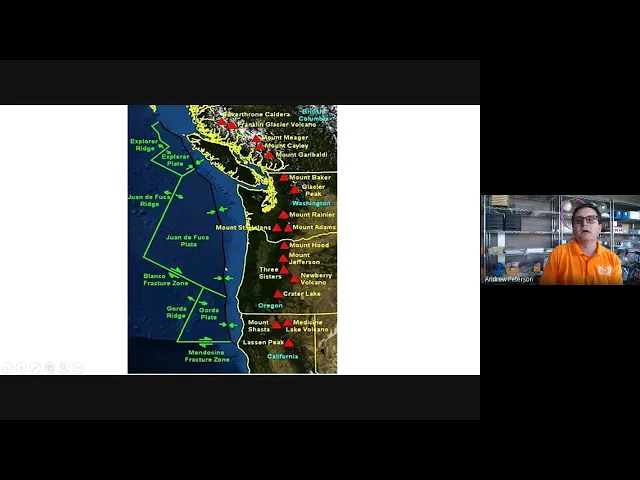
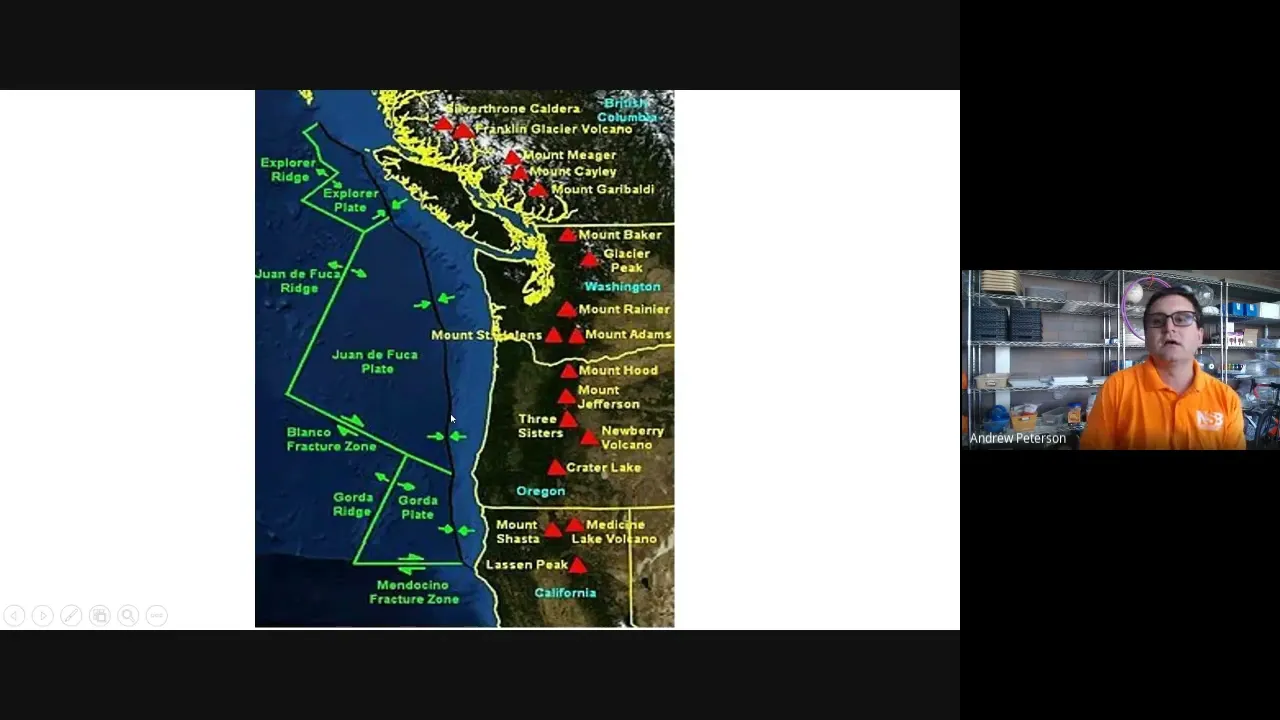
the year we'll talk about mountains so like a high piece of land that don't have volcanoes underneath them so here is an example on the west coast of the United States um so first off I have a couple plates the Gorda plate the Juan FCO and the Explorer plate and also the Pacific Plate those are all oceanic plates the plates are all moving towards the east in general and the North American Plate which is at this point continental crust is moving to the West so once again these plates are moving to the east these plates
are moving to the West so I get a trench forming which runs roughly North and South perpendicular to the plate movement and then I also get a line of volcanoes that um we get a line of volcanoes running North and South as well so once again this line of volcanoes is roughly parallel to this trench which is perpendicular to the movement of the plates okay once again it's not a perfect line because the Earth is curved and rocks don't when rocks break and bend and stuff they don't break in perfectly straight lines but nonetheless roughly
North and South roughly North and South the plate boundar is also roughly North and South but the plates are moving East and West once again please note the names of these uh uh Mount Major mount kayy mount can't pronounce that name Mount Baker Mount rineer Mount Adams Mount St Halland Mount Hood Mount Jefferson uh a lot of words of mountains because once again when you're when explorers came along we just called them mountains in some ways very wrongfully not just for the geologic and not from the geologic standpoint but also the cultural stuff of like
renaming um you know these these had names before white European explorers named them but the white European names are what we currently are using we call them mountains side note once again calling mountains is wrong both socially in some way socially and also geologically we call them mountains but really they are volcanoes but once again European explorers saw a high piece of land and they're like a mountain not the greatest naming system okay I'm actually going to skip over the slide and video seven