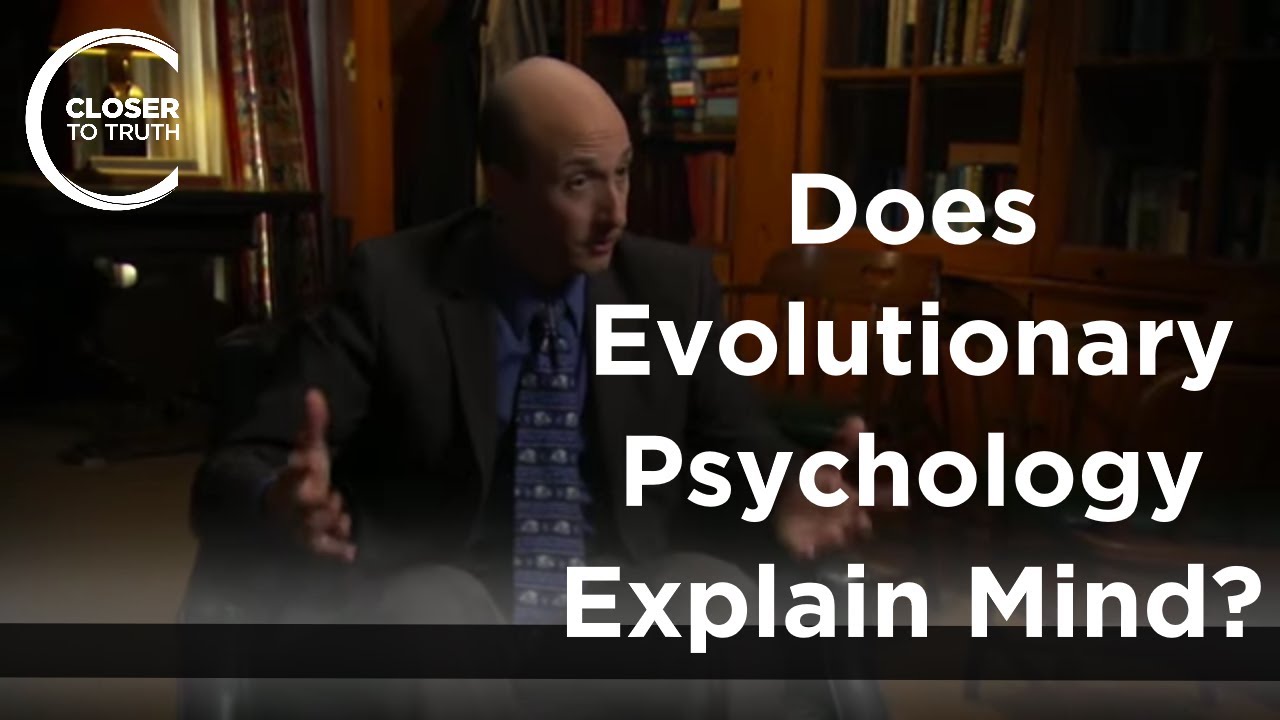
John many atheists would point to evolutionary psychology as a way of completely explaining religion without any residue so once you do that you show the psychological development the sociology the anthropology very good explanations they conclude that therefore there is no antecedent of that religion which is some sort of God or ultimate reality and that we can explain all of this a very naturalistic term so I kind of go with those arguments in terms of religion but I'm not sure that means anything I think we have to beware here of something called a genetic fallacy where
Genesis he refers to the source of the origin or the cause of a belief or an experience because evolutionary psychology seeks to explain the origin the cause of genesis of religious beliefs for the dis experiences the fallacy consists in supposing that you can move directly immediately from what you know about the Genesis or the origin of a belief or an experience to a conclusion as to whether that belief is true or false justified or unjustified or whether the you know experience is one that really gives us knowledge of some existence beyond itself so so that's
the first thing we need to be careful not to fall into the genetic fallacy I mean you can use all kinds of examples to to show why it is a fallacy I might be very very opposed to smoking I'm I think smoking is a terrible thing very very bad thing what caused that belief well the belief is caused as a matter of fact by certain things that happened when I was a child when I you know with my emphysema I was or my asthma or whatever it was it I had I was really really troubled
by smoke or maybe I have this aesthetic thing where I just really hate the yellow you know fingers of smokers so that's what caused me to think that smoking is a bad thing and yet it doesn't follow from that that my belief is false because we know smoking is a bad thing right so we stuck to asked one of the reasons that support the belief so the belief might be fully explained religious beliefs and experiences might be fully explained by evolutionary psychology and yet we might still have to ask the question expect permit of answer
question is there is there some truth here certainly it it helps us if one is looking not to believe in God to show a non spiritual or non senior natural development of religion and we didn't have evolutionary psychology then the claim is is that people believe in religion there are religious groups because God chose it God now picked his church God endowed a chosen people God spoke to two prophets yes I think I think there is still a way of there's still a way of turning what evolutionary psychology can produce into a problem for at
least traditional religious beliefs as long as we don't try to move directly as I suggested earlier to the conclusion that they must be false because we've explained them we might do so indirectly we might say well God would never use a mechanism like that if we're talking about belief in God okay it could be that there's some sort of immaturity that's exemplified by religion and that evolutionary psychology manages to expose and so we have this extra premise that God would never allow religious belief belief in God to be produced in that way and so we
might get the conclusion that that the belief is false or that it's unjustified but in this case of God may very well happen I mean it sure that's what theists will often say they'll say well why don't you suppose a God just uses that causal mechanism to produce the belief or the or the experience we have to look at what kind of mechanism it is we also have to think about this we have to think about the power that we might have in science to to replicate the circumstances in which that mechanism operates and so
imagine a case where you know scientists with a probable brain probe is able to elicit certain powerful religious experiences like we do well it seems that sometimes they are able to do that already I suppose that became you know just clearly possible and and you could just elicit this sort of experience that will well he might be inclined to think that God isn't really being present to that person every single time the the the event occurs I mean is is God supposed to be at the mercy of a brain probe right I mean so what
happens is this the theist then gets a reason to think that at least sometimes religious experiences apparently of God are not caused by God so when she goes out of the science lab or whatever wherever she's had this done and has an experience you know an ordinary life apparently of God she has to ask herself what if it's one of those times which one is it yeah and now there's a kind of skepticism about the ultimate source of that experience that becomes possible I think that's entirely legitimate yeah I think you can get away from
that and and that's that's one of the many reasons that I would give for being a religious skeptic especially when it comes to certain traditional religious claims about God which are often buttress especially in philosophy religion today by appeals to religious experience yeah on the other hand that if there is a God and if that God wants human beings to experience God there has to be a brain mechanism in order to do it sure the eyes to see yeah visual experience is ordinary sensory experiences required there to be a way that you can appreciate of
a God kind of experience and if God requires or human beings to be in organizations to worship or whatever that's part of the system it has to be a mechanism for that to occur it's not gonna be sure just jammed together and some in some command way it has to be a mechanism you know so you can build a consistent argument either way which well you can say that if God exists and is known to people through experience then at least sometimes religious experiences do have God behind them as it were causally speaking the question
remains though the question we were asking earlier how do you know you're in one of those situations instead of the alternative one where the experience occurs and the natural explanation of it gives the whole story personally from my point of view I would never trust the religious experience and then that's admit some people I think that may be a very sad thing to say but a lot of people are just waiting for religious experiences I think that's when they will finally able to believe but you're not one of those not none not at all because
if I would have won I would I would immediately find it I'd be very skeptical and will not be very scared of it because I I don't want to fool myself into believing through some emotional experiences or some odd and logical experience we're really just starting out in the process of explaining such things I mean evolutionary psychology and its present development is only really the tip of the iceberg or at least a potential iceberg so we have to think about what evolution might discover in the future I myself think though that when we broaden things
out that way to include the future then there's a way of turning evolution and evolutionary thought in the direction of an argument that favours religion instead of opposing it well the religion isn't going to be the traditional sort that we've been talking about it would instead be perhaps a religion without God without any details at all the sort of religion that would be appropriate for a very early stage of evolutionary development I think that if we think about evolutionary issues long enough looking not just to the past but also the future we'll see that we've
just begun and so we have to start thinking with religion all over again thinking about what sort of religion might be appropriate to such an early stage and we have evolution to thank for that







![Chris Langan - The Interview THEY Didn't Want You To See - CTMU [Full Version; Timestamps]](https://img.youtube.com/vi/9miVG2xT5jY/maxresdefault.jpg)