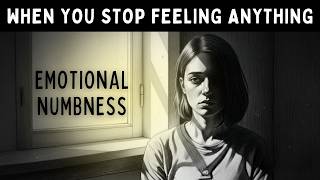
[Music] There's a moment in life that doesn't look like a breakdown. It looks like nothing at all. No tears, no yelling, no visible pain, just silence.
A kind of silence that hums in the background of your chest where feelings used to live. You wake up and the world looks gray. Not sad, not terrible, just muted.
Coffee tastes the same. Music doesn't hit the way it used to. And laughter feels like something you're watching through glass.
You tell yourself you're fine because technically you are. You're functioning. You're showing up.
You're smiling when you should. But somewhere deep down you know something's gone missing. That's what emotional numbness feels like.
It's not the presence of sadness. It's the absence of everything. Psychologists describe emotional numbness as a defense mechanism.
A kind of psychological shutdown that happens when the system is overloaded. [Music] It's what the brain does when it's been hurt too many times, felt too deeply, or held too much for too long. It's like when a circuit overheats, the power cuts off, not to punish the system, but to protect it from burning out completely.
And yet, the cruel irony is that protection can start to feel like a prison. Because once you've disconnected from pain, you've also disconnected from joy. The wall you built to stop the storms also blocks the sunlight.
I remember someone once described it perfectly. They said, "It's not that I don't want to feel, it's that I forgot how. " And that's the hidden tragedy of emotional numbness.
It's not the loss of happiness, it's the loss of aliveness. If you've ever felt that way, like you're existing more than you're living. You're not broken.
You're in self-preservation mode. See, the human mind is wired for emotional regulation. It's constantly trying to keep you safe.
When emotions become too overwhelming, too intense, too prolonged, your brain quietly steps in and turns down the volume. It's not trying to destroy you. It's trying to help you survive.
But that survival mode comes with a cost. Because when you stay in it for too long, you start to lose access to the very things that make you human. Empathy, passion, or and even love.
There's a theory in psychology called emotional blunting. Often linked to chronic stress, trauma, or depression. It's not always visible on the outside.
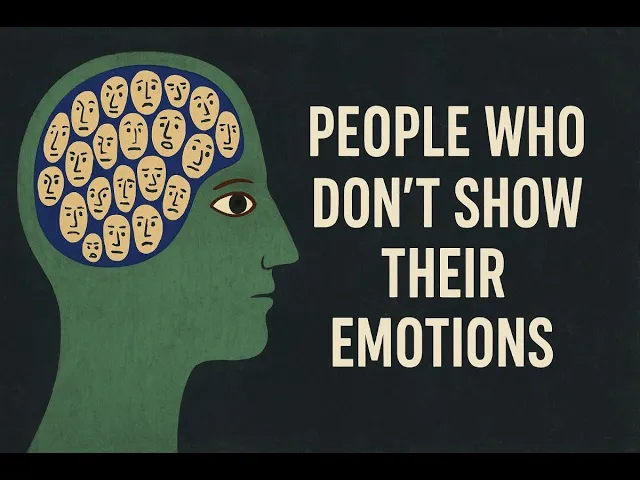
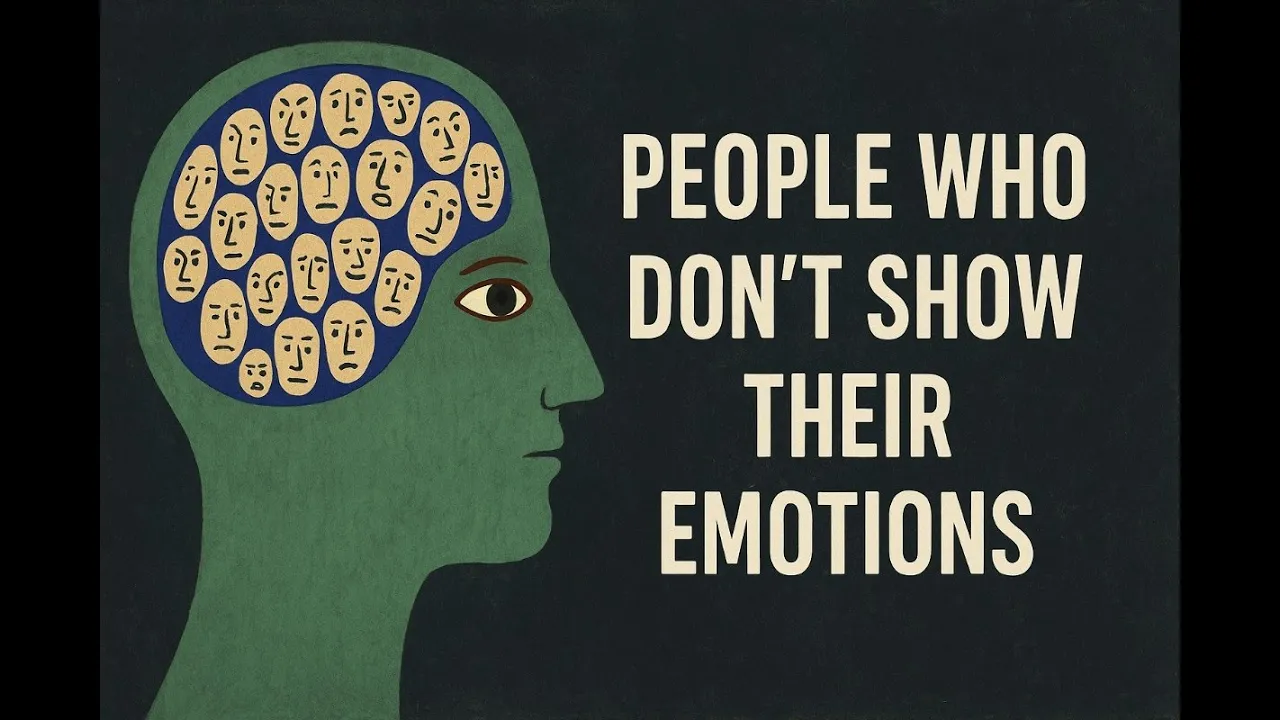
Sometimes the people who are the calmst, the most composed, are the ones who've shut down the hardest. They've learned that emotions make them vulnerable. So, they built a fortress.
And they've lived in that fortress for so long, they've started mistaking it for peace. The truth, numbness is not peace. It's quiet pain.
Pain that learned to disguise itself. People who've become emotionally numb often don't even realize it at first. It creeps in gradually.
They stop getting excited about the things they used to love. They stop crying when something sad happens. Not because they're strong, but because the emotional forcet has rusted shut.
They start to say things like, "I don't care anymore. " Not out of apathy, but exhaustion. Underneath that numbness is usually a story of overextension, of heartbreak, of emotional labor gone unnoticed.
It's the mother who kept everyone else together for years until she stopped recognizing herself. It's the man who's been strong for too long, holding in everything because he was taught to never fall apart. It's the friend who always listens but never speaks.
And it's the child who grew up in chaos and learned that feelings only lead to pain. Eventually, the body learns a cruel lesson. If feeling equals danger, then not feeling equals safety.
And so, it adapts. But here's the thing. Adaptation isn't healing.
It's survival. And survival isn't the same as living. Most emotionally numb people didn't choose this state.
They were forced into it by repetition, by the same disappointments, the same emotional betrayals, the same fatigue that taught them that caring too much hurts too much. So they stop feeling not out of weakness, but out of wisdom that's turned heavy. Because what's the point of opening up again if every time you do something breaks?
But here's where psychology meets hope. Neuroscience tells us that the brain isn't static. It's malleable, plastic, flexible, capable of renewal.
The same brain that learned to shut down can learn to open up again. Emotional numbness isn't a permanent sentence. It's a temporary pause, a signal that your nervous system needs rest before it can feel again.
And that rest often looks like stillness. But it's not the kind that restores you overnight. It's slow.
It's gentle. It's uncomfortable. Because reawakening emotion after numbness feels like thawing after being frozen.
It aches. It tingles. It's both relief and pain at the same time.
You start to notice small things again, like the way sunlight hits your desk in the morning, or how a song suddenly stirs something faint but real in your chest. And those moments, as fragile as they are, are proof that you're coming back to life. But to reach that point, you first have to face an uncomfortable truth.
Emotional numbness is not the absence of emotion. It's the suppression of it. And everything suppressed eventually surfaces.
When you stop running from your emotions, you start remembering who you were before you became tired. Before you became careful, before you started mistaking numbness for strength. Because emotional numbness at its core isn't a flaw.
It's a scar. It's the mark left by battles fought in silence. If you peel it back gently without judgment, without rushing yourself, you'll often find deep sensitivity underneath.
The kind of person who feels everything but learn to hide it because the world kept saying, "You're too much. " In fact, research shows that people who describe themselves as emotionally numb often score higher in empathy once they begin to reconnect. They aren't cold, they're sensitive souls who've gone into hiding.
And maybe that's the real paradox here. The most emotionally numb people are often the ones who once felt the most deeply. They were the ones who noticed everything, who remembered every word, every tone, every unspoken change in someone's eyes.
They were built to connect, but connection became the source of their pain. So, they shut the door, not forever, just until it felt safe to open it again. But time alone doesn't heal numbness.
Because numbness isn't time based. It's trustbased. You don't wake up one morning and suddenly feel again.
You rebuild safety moment by moment until your heart finally believes that it's okay to come out. And that's what most people misunderstand. They think emotionally numb people are heartless, cold, detached.
But the truth is, they're simply scared. Scared of being flooded, scared of losing control, scared of feeling everything all at once after feeling nothing for so long. The key isn't to force them to feel.
It's to give them permission to feel without judgment, without demand. Because numbness melts in the presence of safety. Not pressure, not confrontation, just gentle, consistent safety.
If you've been living in that state, please hear this. You're not weak for going numb. You were trying to protect yourself in the only way you knew how.
But your story doesn't have to end in emotional silence. Somewhere inside, the part of you that once laughed too hard, cried too easily, and loved too deeply, it's still there. It's waiting for you to knock on its door again.
And maybe the first knock isn't grand. Maybe it's just a small whisper. I miss feeling alive.
Sometimes people think numbness fades when life finally gets better. When the chaos ends, when the job stabilizes, when the heartbreak heals. But that's not how it works.
Because numbness doesn't come from the chaos itself. It comes from the aftermath. It's not the storm that silences you.
It's the quiet after the storm. When you look around and realize everything's changed, and somehow so have you. In that silence, your body still remembers.
Your nervous system still scans for danger even when there's none left. That's the strange thing about emotional numbness. It's not a lack of emotion.
It's a state of constant emotional protection. You're not empty. You're just guarding the last fragments of your energy.
Modern psychology calls it emotional avoidance. It's when the mind associates feeling with pain so strongly that it begins to disconnect preemptively. The result, you become calm on the outside but restless on the inside.
You laugh at the right moments. You nod at the right times, but it feels more like performance than participation. You begin to act alive rather than feel alive.
And at some point that becomes your identity. You start telling yourself, "Maybe this is just who I am now. " But it isn't.
It's who you became to survive. The truth is emotional numbness often hides a story of overwhelm, years of over stimulation, emotional responsibility, or quiet heartbreak that was never given the space to be processed. For many people, it's rooted in the idea that emotions are dangerous, inconvenient, or even shameful.
Maybe they were told, "Stop crying. " Maybe they learned that expressing fear or sadness only made things worse. So, the body adapted.
It muted what couldn't be understood. There's something deeply human about that because deep down we all want to avoid pain. We distract ourselves with work, with screens, with endless scrolling.
We say we're busy, but what we often mean is, "I don't want to feel right now. " But feelings don't disappear when ignored. They wait.
They gather quietly, layer upon layer, until numbness becomes the only thing left you can feel without breaking. And yet, this state, as lifeless as it feels, is not the end. It's a pause between who you were and who you're becoming.
The psychology behind recovery from emotional numbness, is both fascinating and hopeful. Studies in effective neuroscience suggest that emotions are like signals, energy in motion, designed to guide us. When we suppress them, the energy doesn't vanish.
It gets stored in the body. That's why numbness often comes with physical symptoms. Fatigue, disconnection, brain fog, even aches.
Your body isn't betraying you. It's whispering. I still remember.
And healing begins when you start listening again. Not perfectly, not all at once, but slowly, softly, without forcing it. You start by noticing.
You notice the moments when you want to shut down. When a song stirs something unfamiliar. When a memory flickers and you quickly distract yourself.
Those are the doors back into feeling. They're not threats. They're invitations.
One of the most powerful things you can do in that state is to relearn safety. Because emotional numbness isn't cured by chasing big feelings. It's healed by restoring small moments of safety consistently.
When the body feels safe again, the emotions start returning on their own. That's why mindfulness, therapy, and grounding techniques are so effective. They don't force emotions.
They build trust with the nervous system. You're teaching yourself that it's okay to feel again, that you're not in danger anymore. Because numbness is the body's way of saying, "I don't trust that I can survive another emotional hit.
" And healing is the process of proving that you can. But this healing isn't linear. There are days you'll feel a spark and days you'll go numb again.
And both are okay because emotional numbness doesn't disappear in one grand moment of clarity. It dissolves in fragments in micro moments of connection. The first genuine laugh you've had in months.
The first tear that doesn't scare you. The first time you say, "I'm not okay. " And someone simply listens.
In those moments, something inside you begins to fall. Not because the world became easier, but because you stopped pretending it was. It's also important to understand the subtle forms numbness can take.
Sometimes it shows up as irritability, sometimes as apathy, sometimes as constant distraction. For some, it's perfectionism. The need to control every detail to avoid emotional uncertainty.
For others, it's withdrawal. The quiet disappearing act of someone who's tired of explaining what's wrong when they can't even name it. Underneath all of it is the same silent plea.
I just want to feel safe again. And maybe that's where the real work begins. Not in trying to fix yourself, but in learning to be gentle with yourself.
Because numbness isn't healed by intensity. It's healed by consistency. Small daily acts that remind your mind and body that you're allowed to exist without defending yourself all the time.
Take a walk without headphones. Let a song hit you without skipping it. Watch a sunset and resist the urge to take a picture.
It sounds simple, maybe even cliche, but those are the acts that rebuild emotional presence. Because numbness can't survive where awareness grows. And somewhere in that process, something shifts.
You begin to notice the texture of life again. The warmth of light, the sound of laughter, the subtle ache of nostalgia. It's fragile, yes, but it's real.
And real always wins over perfect. That's something psychology can't fully explain. The exact moment when a person stops being a spectator of their own life and becomes a participant again.
It's not measurable, but you can feel it. It's when the world stops being something you endure and starts being something you belong to. But even then, the goal isn't to feel happy all the time.
The goal is to feel honest because emotional numbness often comes from the pressure to always be okay, to always appear strong, grateful, composed. Healing begins when you allow the full spectrum of emotion, joy, sadness, confusion, love, without labeling any of it as wrong. That's what emotional maturity truly is.
The ability to sit with what is without needing to escape it. So, if you've been living numb for a while, maybe it's time to redefine what healing looks like. It's not about going back to who you were.
It's about becoming someone who can hold more. More emotion, more life, more truth. Someone who isn't afraid of their own depth anymore.
Because you don't actually need to find your feelings again. They never left. They've been waiting for you beneath the noise, beneath the self-defense, beneath the years of pretending you didn't care.
And maybe this time instead of rushing to feel better, you can just let yourself be confused, messy, uncertain, but real. Because numbness thrives in suppression, but it fades in authenticity. That's the paradox of healing.
The moment you stop trying so hard to feel, the feelings start to return. Not as waves that drown you, but as rivers that carry you home. There's a beautiful term in psychology, re-engagement.
It means slowly rejoining life after emotional withdrawal. It's when you start making eye contact again. When laughter feels less forced, when your reflection looks like someone you recognize.
And maybe that's where your story is heading. Not toward perfection, but toward re-engagement, toward life, messy and magnificent as it is. You might not notice the change immediately, but one day you'll catch yourself smiling for no reason.
You'll feel the warmth of it spread through your body, quiet and certain. And in that moment, you'll realize the numbness didn't disappear. You outgrew it.
Because somewhere along the way, you stopped needing protection from your own heart. You stopped seeing emotion as weakness and started seeing it as proof that you're still alive. And that that quiet rediscovery of feeling is one of the most profound forms of healing a human being can experience.
So don't rush it. Don't force it. Just keep living, even quietly, even clumsily, until one day you wake up and realize the silence inside you has been replaced by something softer, something warm, something alive.