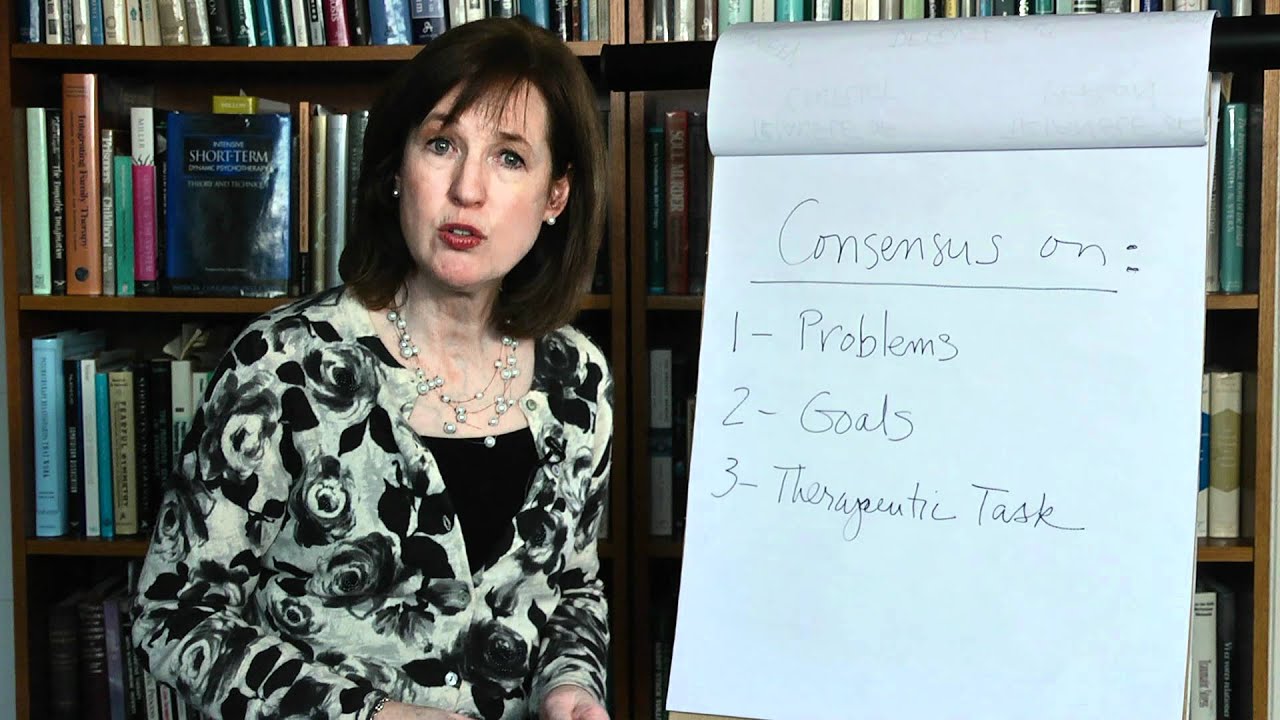
hello my name is dr. Patricia Coughlin and I'd like to welcome you back to the is TDP Institute website today I'll be talking to you about the next step in creating a collaborative alliance with your patient research suggests that the Alliance is not simply the result of therapists warmth and empathy instead it's the result of a collaborative effort between patient-therapist to reach an agreement on the nature of the problem the treatment calls and then the therapeutic task in order to be consistently effective in this effort the therapists must develop powerful interventions that are consistent with
its theoretical understanding of psychopathology and are also supported by research so if you're a biological psychiatrist and believe that symptoms like anxiety and depression are caused by a chemical imbalance you're going to prescribe medication to address that imbalance but as dynamic psychotherapists we believe that the cause of the patient's symptoms and suffering often lie in unconscious conflicts we're not interested in helping patients simply manage their symptoms instead we attempt to expose the underlying cause of the symptoms they're conflicted feelings toward others so that they can be resolved at the source and eliminate it all together
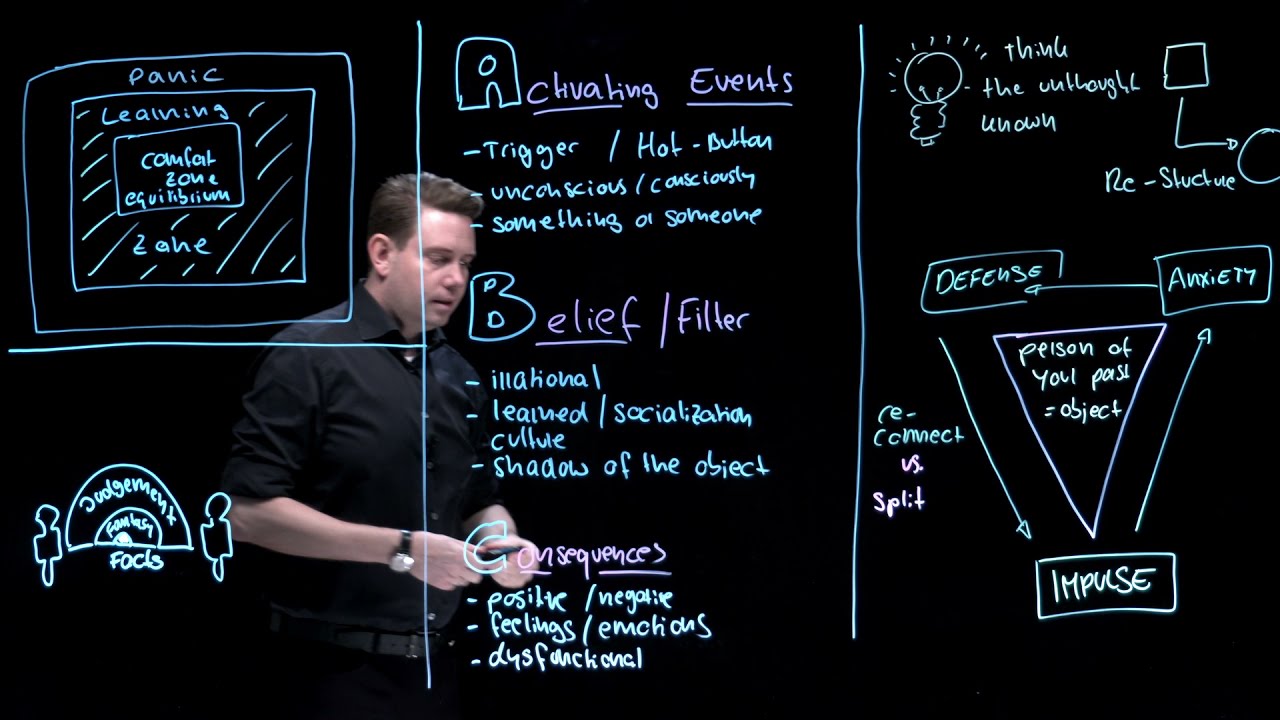
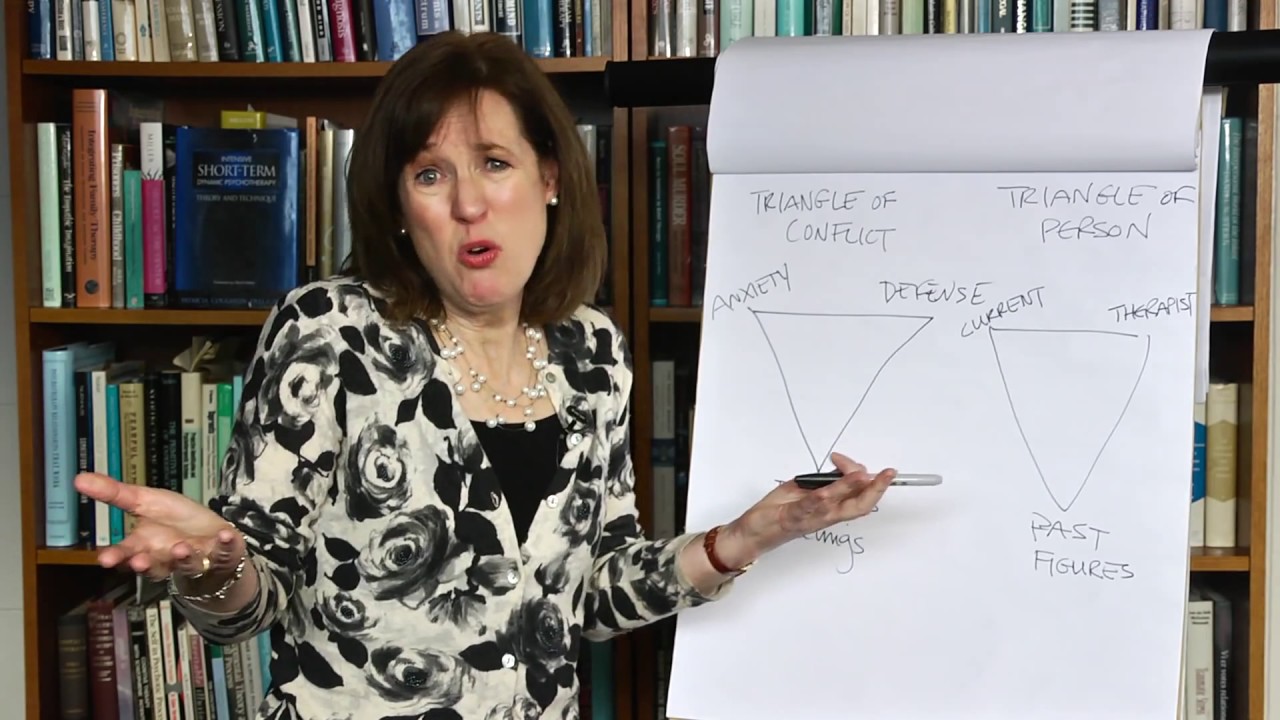
so let's look at what we mean by unconscious conflict dr. David Malan has used two triangles as a way to help us conceptualize these forces within the psyche at the bottom of the triangle of conflict our core emotions like love grief anger guilt and fear that are characteristic of our species recent neuro scientific findings support the notion that human beings are wired for emotion and emotional connection with others our basic human human feelings are built into the system and have been selected for throughout evolution however we often learn early in life that our basic feelings
needs and desires and impulses are not acceptable if we get punished or isolated for expressing these feelings they're going to get associated with anxiety now anxiety is a pretty uncomfortable state and we're highly motivated to find ways to avoid or reduce it these avoidance strategies which reduce anxiety and cover-up are threatening feelings get reinforced this is the essence of what we call the triangle of conflict now remember defenses often work right to reduce anxiety and avoid threatening feelings they're also often adaptive and childhood but they become rigid outmoded or overtly destructive and adulthood when defense
has become automatic and pervasive they create the very symptoms that suffering the patient comes to get our help with this is where the triangle of person comes into focus this chain of unconscious events feeling anxiety and defense which has its origin in the past gets repeated in the patient's current life and is often apparent in the relationship of the therapist our goal is to acquaint the patient with these emotional forces in order to break that chain of automatic functioning and put the patient back at choice so now let's look at how we can use this
knowledge and understanding to intervene effectively and solidify the Alliance once the patient identifies a problem they're having say depression and can give you a recent example of the problem we're going to begin to inquire about the feelings that were revoked in that recent situation so let's look at a patient of mine she came in saying that she had fallen into a depression after being yelled at by a customer she reported that she had burst into tears and then had to run to the bathroom with stomach pains since then she'd been unable to shake feelings of
sadness worthlessness and depression so I began by inquiring into her feelings toward this man what's your feeling toward him I asked I don't even know him really I just feel awful the patient responded now notice she doesn't answer the question rather than facing her feelings toward this guy she resorts to the defense of rationalization right and then she ends up feeling awful this must be pointed out to her so I say you end up feeling awful but that doesn't say what you're feeling is toward him how do you feel toward this man well I don't
think he was very nice she said that's a thought but what's your feeling I asked again Wow why can't I tell you my feeling I always thought I was in touch with my feelings but I guess I'm not she said now this is a very important moment the patient realizes that she's been mistaking her defense of intellectualization for her real feeling and she's distressed by it which means that she's starting to turn on that defense the very defense that's hurting her so I go on to ask so is that what you want to discover what
the feeling is toward him yes she said I know I should be angry I mean he was really rude now I will simply block her remaining defenses of tentativeness and continue to invite her to face her true feelings you should be or you are I asked well I guess I am again are you or not I am damn it she finally says okay I said let's look at how you feel that anger toward him right now at this point she says well now I'm getting nervous and I can feel tears coming up so I responded
to her it's great that you notice that because this is the engine to your depression rather than feeling your anger toward this man you get anxious and then weepy you keep the feelings inside and then you end up feeling awful I really see that now she said this is terrible okay so I can put her a choice do you want to feel that anger or do you want to keep it inside and feed your depression I want to feel it she said so here you can see how I worked the triangle of conflict in the
current situation with this abusive client the patient is now aware that she was anxious out her anger and that she had been suppressing it with rationalization tears and weaping 'us she also saw that she had channeled her anxiety into her gut and ended up with stomach pains so the attack was really on her when she got in touch with the physical experience of her anger aggressive impulses got mobilized she realized she wanted to punch him in the stomach and was able to see that she had also suppressed that impulse creating pain in her own stomach
helping her see this one-to-one relationship between her symptoms and defenses and the suppressed feelings and impulses is essential work in undoing the depressive mechanism she was able to see and experience how she had turned her anger and aggression back on to herself this increased her motivation and revived hope two crucial elements in any therapy I hope this example helps you see how through the process of inquiry patient and therapist can discover the underlying causes of the patient's symptoms and suffering in is TDP we asked the patient about his feelings we don't tell him what he's
feeling this is very important we're not omnipotent the all-knowing therapist but a resource a collaborator in the exploration of the patients in her life we ask enquire and probe for feelings while blocking defenses and monitoring anxiety in so doing we help the patient discover what is true for him as Freda from Reichman always said the patient is in need of an experience not an explanation by helping the patient experience his true feelings rather than getting anxious and resorting to defensive avoidance we can help him have a corrective emotional experience it's also an experience of authenticity
of being real alive and self expressed this seems to unleash a healing process within the patient that has been blocked and suppressed by excessive reliance on defenses our emotions are kind of internal guy system they contain information and energy without access to our deepest feelings we can easily get lost by helping patients get in touch with their feelings and desires they can get back on track and make healthy choices thanks for coming to the is TDP website in the next video segment I'm going to be talking to you about how to get an agreement on
the therapeutic task I'll see you then