Hello! We know that many species of animals have become extinct in recent centuries, but have you ever wondered how many of them we were able to capture in photos before they disappeared for good? From birds and fish, to big cats and animals from the African plains, in this video we will show you the latest photos of some animals that are already extinct.
How many of them do you know? Stay until the end to find out and without further ado, let's get started! Number 1.
The Javan tiger. What you see in the photograph was a species of tiger native to the island of Java in Indonesia. It is believed that it arrived there eleven thousand or twelve thousand years ago and has since developed its own characteristics.
With a length of almost two and a half meters and a weight of one hundred and forty kilograms, it was one of the largest predators on the island, where it lived with leopards and wild dogs in its wooded mountains. However, it was smaller than other varieties of tiger found in mainland Asia due to its isolation and the smaller size of the prey available in its habitat, such as “rusa” deer, “banteng” cattle, wild boars, reptiles, and waterfowl. .
It was declared extinct in 1979 after decades of indiscriminate hunting for its skins, and also due to the reduction of its land for agriculture and urban development. Number 2. The western black rhinoceros.
This is the last photograph of this subspecies of rhinoceros that inhabited the savannahs of central and western Africa. It was a huge animal over three and a half meters long and weighing more than a ton , with the two characteristic horns of this animal family. Its population in its natural state became quite large at the beginning of the 20th century, in fact it was the largest among all rhinoceros species with more than eight hundred and fifty thousand specimens, but it decreased after decades of poaching and ended up falling drastically to from the nineteen eighties.
The main reason for their hunting was the trade in their horns, which were in demand for traditional Chinese medicine, to make handles for ceremonial knives, and as a status symbol. Its extinction became official in the year two thousand and eleven. Number 3.
The Tasmanian tiger. It was not really a feline but a marsupial and was also known as "thylacine", "Tasmanian wolf" or "marsupial wolf". For millions of years this species and its ancestors lived in Australia, New Guinea and Tasmania.
His appearance was similar to that of a dog with yellowish fur and black stripes on the back of his back similar to those of a tiger, hence his nickname. It was one of the main carnivorous predators on the island, hunting in packs at night and taking refuge in caves during the day. Among their prey were kangaroos, some small rodents, and other marsupials.
Their extinction was due to competition for food with other species such as wild dogs and hunting by bounty hunters and farmers who wanted to protect their herds. In the year 2011, a well-reviewed fictional film called “The Last Hunter” was released based on reports of alleged sightings of live specimens of the Tasmanian tiger in its natural habitat. A form of homage to this unique and irreplaceable animal whose last captive specimen died in a zoo in 1936 and was formally declared extinct fifty years later, in 1986.
Number 4. The tarpan. This species was also known as the "Eurasian wild horse" and this photograph from the year 1884 is the last record of a living specimen.
It was characterized by having a grayish coat, with curly and short mane and a black line along the back. It was related to other varieties of domestic horses and is believed to have diverged from the rest to become a single subspecies about 160,000 years ago. It was declared extinct in 1909 and although there have been attempts to bring it back to life through selective breeding from other similar breeds, the results have not been definitive.
Number 5. The lion of the Atlas. Also called "Barbary lion" is an animal that is currently considered "extinct in the wild", which means that wild specimens are no longer found in nature and those that remain alive are in captivity within zoos and reserves.
. Unfortunately, in these places they often interbreed with other types of lions, which is why their genetic purity is in doubt. This black and white photograph shows the last specimen that was captured by a camera in its natural habitat from an airplane in the year 1925.
Characterized by its large size of more than three meters in length and three hundred kilograms in weight, it used to inhabit mainly the forests, meadows and mountains of the Atlas Mountains in Africa, hence its name, although it also lived in Asia and part of the scrublands of the European Mediterranean. Its extinction in its natural state was due to the growth of the Sahara desert, which reduced its territory and food sources, as well as years of hunting by shepherds seeking to protect their livestock. Number 6.
The Caribbean monk seal. This species inhabited all the coasts of the Caribbean Sea, both on the continental territory and on the Antillean islands. It had a large wingspan, could reach two meters and forty centimeters in length and weigh about one hundred and thirty kilograms, and was characterized by the brown and yellowish-white color of its fur.
It fed on different types of fish and crustaceans, which made it a target for fishermen who began to hunt it as they considered it a competitor for fish. In addition, for decades it was also a victim of indiscriminate hunting to obtain its oil. It was officially declared extinct in the year nineteen fifty-two.
Number 7. The bubal antelope. Also known as “Bubal hartebeest”, it was declared extinct in the year 1925 when the last known specimen died.
In this photograph from 1885 we can see a female in the London Zoo. It was a variety of antelope that inhabited large areas of sub-Saharan Africa, although the last wild specimens inhabited the north of the continent in territories of Morocco and Algeria. This animal became important in ancient Egypt, where it was probably domesticated as a food source and also used for ritual sacrifices.
Their extinction was mainly due to indiscriminate hunting during the nineteenth and early twentieth centuries. Number 8. The passenger pigeon.
This is a photograph taken in 1898 of a captive specimen. Although it was declared extinct in 1914, just a century before it was the most numerous bird in North America. Their flocks were so large that they darkened the sky, caused alterations in the breeze, the joint noise of their wings could be heard on land and hours could pass from the time the first bird was sighted until the last one was lost from sight.
Their extinction was due to the reduction of the forests they inhabited to allocate their lands to agriculture and mainly to uncontrolled hunting, since their meat was used as economic food for low-income people, slaves and farm animals. Number 9. The Persian tiger.
This photograph was taken in a zoo in the late nineteenth century. It is a tiger almost three meters long and weighing more than two hundred kilograms . It was also known as the "Caspian Tiger" and its extermination during the first half of the twentieth century was due to years of poaching and an initiative to establish human settlements in its territories.
However, there are recent studies that affirm that this species is not really extinct since they have discovered that genetically it is practically the same as the "Siberian tiger". In other words, two species that were believed to be different, whose scientific names are “Panthera tigris virgata” and “Panthera tigris altaica”, would really be the same and their small differences would have arisen after their geographical separation just two hundred years ago. Therefore, there are plans for the Siberian tiger that currently lives in southeastern Russia and northern China to be reintroduced to the territories originally inhabited by the Persian tiger to regain its wild presence in areas of Iran, Uzbekistan and Kazakhstan.
Number 10. The sea lion of Japan. This photo was recorded during the year 1934 on some islets called "Liancourt Rocks" halfway between the coasts of Japan and South Korea.
It was a large carnivorous species that inhabited the Sea of Japan, as it could measure up to two and a half meters long and weigh more than half a ton. It lived in groups and fed on fish and shellfish, like other subspecies of sea lion. Its extinction was due to indiscriminate hunting for its oil and skin in the late nineteenth and early twentieth centuries, and also to the deterioration of its natural habitat due to bombing by ships and submarines during World War II.
Although there were later sporadic alleged sightings, this animal was officially declared extinct in the year nineteen seventy-four. Number 11. The Bali tiger.
The last photograph that remains corresponds to a specimen hunted in November 1911 , but it is not of very good quality. It was a subspecies of tiger native to the island of Bali in Indonesia, it could measure more than two meters and thirty centimeters long and weigh about one hundred kilograms. It inhabited a small wooded territory within the island, so there were never a large number of specimens.
That made their extinction relatively quick after human settlements expanded by deforesting the forests to use the land for cultivation, which further reduced their habitat. In the end, the few specimens that were left alive were hunted for sport or as a precaution to prevent them from attacking human settlements. It was officially declared extinct in the year nineteen thirty-seven.
Number 12. The giant Pinta tortoise. This photograph was taken in December 2011, just a few months before this last specimen of this subspecies of giant tortoise from the Galapagos Islands died and was officially declared extinct in 2012.
It was originally from Pinta Island, hence its name, it could measure more than a meter in length and weigh almost ninety kilograms, it used to be active only eight hours a day and fed on grass, cacti, vegetables and fruits, although it could live six months without food or water. Their extinction was due to the human presence on the island, first during the seventeenth century due to the arrival of sailors who hunted them, then during the nineteenth century when they were used as a source of food on slave ships and finally in the second half of the twentieth century due to the reduction of food sources in its habitat when goats that fed on the same vegetation were introduced to the island. Number 13.
The bucardo. In the photo you can see the last specimen of this species, a female named Celia who was preserved using taxidermy techniques after her death in the year two thousand. The bucardo was a subspecies of the mountain goat that in the wild inhabited part of the territory of Spain, France and Portugal.
Its extinction was caused by excessive hunting and the trade in its horns. For years there were unsuccessful conservation attempts and there were even attempts to clone it after its extinction from DNA samples preserved in the laboratory. Number 14.
The Tecopa pupfish. This was a small fish that inhabited the hot spring outlets of the Mojave Desert in North America at temperatures of over forty degrees Celsius. It could reach four centimeters in length and fed on algae and larvae.
It was declared extinct in 1979 due to years of human intervention in its habitat, since thermal water spas were built and the water flows of its rivers were diverted. All this modified the temperature of the waters and forced it to migrate to other areas where it crossed paths with other fish, losing its genetic purity and disappearing definitively. Number 15.
The hemipus. This photograph was taken at a zoo in England in the year 1872 . This animal was also known as the "Syrian wild ass", was related to the Asian wild ass and inhabited the vast plains of the Middle East in territories that currently belong to Iraq, Iran, Israel, Syria, Jordan, Palestine and Saudi Arabia.
It was abundant in that area for thousands of years, it was characterized by measuring only one meter in height and having fur that varied from reddish to yellowish tones. Their extinction was due to overhunting during the eighteenth and nineteenth centuries, and the environmental consequences of the First World War. Number 16.
The cougar of eastern North America. This night photograph was taken in October 2017 and just three months later, in January 2018, this species was officially declared extinct. It became quite numerous a few centuries ago and was always elusive with human beings, but it was the victim of indiscriminate hunting by European settlers for the trade in its skins and as a way to protect the livestock from the new human settlements in its area.
territory. Although its extinction was recently declared, there are those who believe that it disappeared much longer since no specimen has been sighted in decades. Number 17.
The Carolina Parrot. In the photograph we can see a dissected specimen of this species that was declared extinct in 1918 after the last member of its species died in captivity at the Cincinnati Zoo. Originally it inhabited large extensions of territory in North America, especially wooded areas that included the states of Florida, Virginia and Louisiana.
The main causes of its extinction were deforestation to allocate land to agriculture, diseases spread by poultry and excessive hunting to use their feathers in the industry of women's hats and to prevent fruit tree crops from being eaten. . Number 18.
Schomburgk's Stag. This photograph is of a captive specimen at a zoo in Germany in 1911 . This animal inhabited the plains of Thailand where it fed on herbs, reeds and fruits.
The main cause of its extinction was the reduction of its habitat to allocate the land to agriculture and hunting to use it as food and to market its skins and horns. It was officially declared extinct in 1938. Number 19.
The melomys rubicola. It was a rodent native to the "Bramble" key, a small island belonging to the Great Barrier Reef in Australia and was declared extinct in the year two thousand and fifteen. It is considered the first species of mammal to become extinct due to global climate change .
As the island only has an elevation of three meters above sea level, it is vulnerable to rising water levels as a result of global warming. For decades, the sea water flooded their land several times, devastating the habitat of this species, reducing their food sources and causing the death of many specimens due to immersion. Number 20.
The cuaga. This is the only photograph of this subspecies of zebras that we all know, taken in a zoo in England in 1870. And this is another photograph of a specimen preserved using taxidermy techniques: Its name is simply an onomatopoeia of the sound it emitted.
The cuaga differed from its current relatives mainly because of the color of its fur, which, instead of being black and white, was reddish on the torso and white on the belly and legs. It used to inhabit the grasslands of the South African savannah and the only reason it became extinct in the nineteenth century was indiscriminate hunting for its meat and skins. Fortunately, thanks to the fact that their DNA has been fully studied and sequenced, there is a selective breeding project called "Cuaga Project" with which they are bringing this species back to life from common zebras.
What good news, don't you think? ! Number 21.
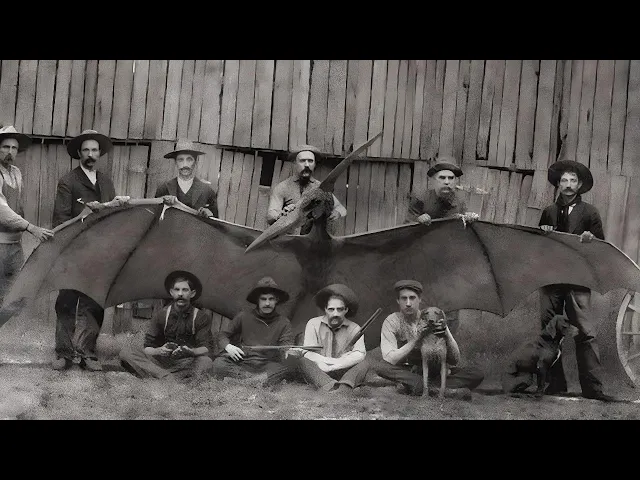
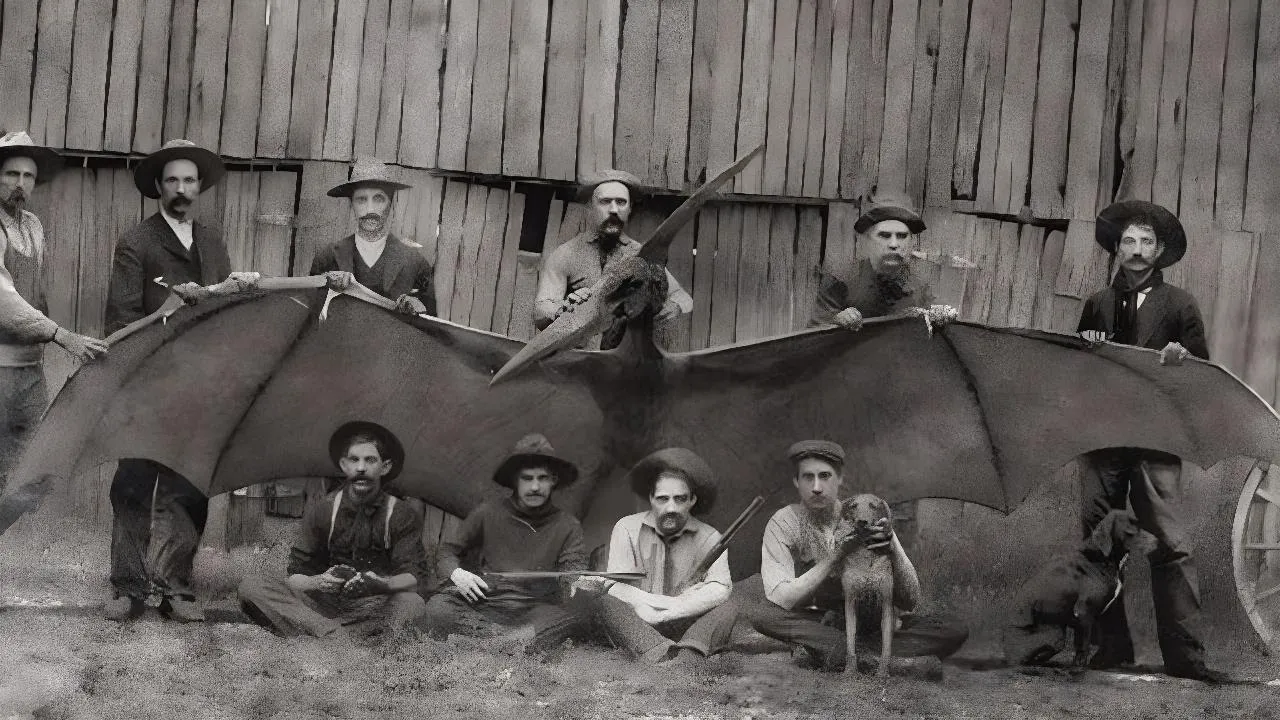
Pterosaurs or digital manipulation A few years ago, a series of photos supposedly from the American Civil War began to go viral , in which soldiers appeared with what looks like a dinosaur, possibly a pterosaur. This would be something really surprising, since these animals have been extinct for millions of years. Analyzing possible failures of digital manipulation, it is difficult to conclude that they are false, but certain Internet users contacted historians, who affirmed that some clothes of the alleged soldiers were not worn as was done at the time.
On the other hand, experts in paleontology and dinosaurs affirm in other forums that the pterosaur was not as big as it appears in the photos, nor did it have that morphology. And you do you think? Without a doubt, this list of extinct species is a reminder of the importance of preserving vulnerable species.
If you agree with that and you enjoyed the video, don't leave without giving it a "like", subscribing to our channel and activating the bell to receive notifications every time we publish new content. Thank you for staying until the end, have a happy day!