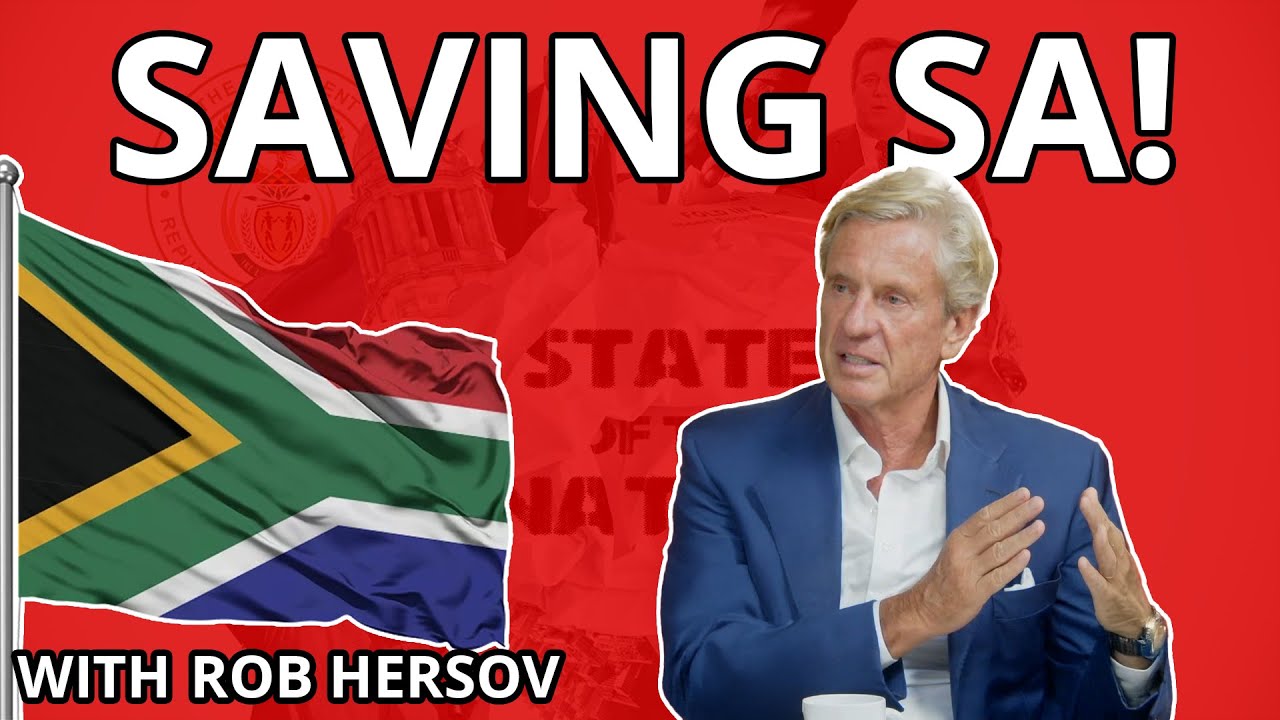
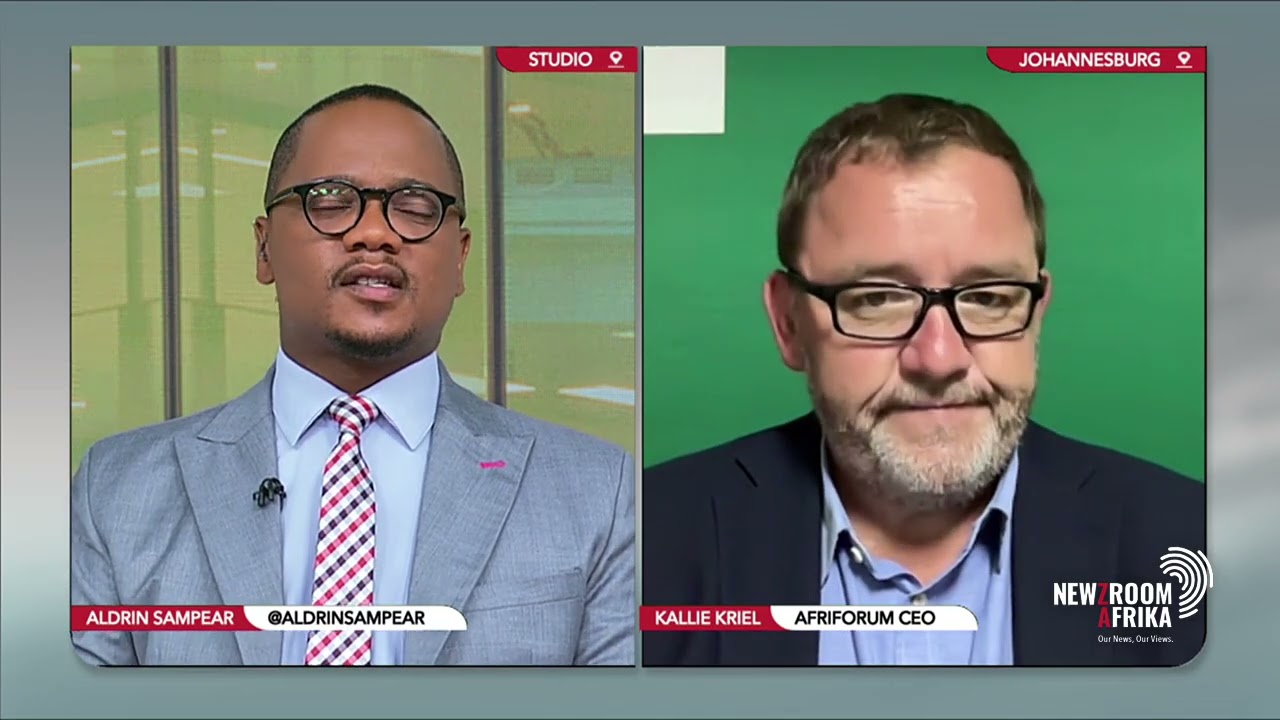
it's it's a great pleasure to be here and it's my first time uh at this conference uh when I was asked to attend I had I thought this was going to be one of the usual conferences of 30 40 or 50 people and I'm just taken back by how many people are there in at this conference I'm also especially glad that Helen Zilla is still here with us her party is the second largest party in the country so she is her party is very important to the future of South Africa and I will try and
explain why her party is important and I and I'm hoping that she will help us understand what is her party going to do to get to 51% of the votes the reason my topic is why is where is South Africa heading well we all know where South Africa is today it's in the hole and I think we all know where South Africa is heading uh if the ANC continues as the majority party is going to be deeper in the ho so the challenge that we are faced with as South African citizens is what are we
going to do about it for me I I've been very happy with the analysis that has been made about what is wrong with the government what's wrong with thec what's wrong with the policies of thec and what's wrong with what the ANC is doing but what are we going to do about it uh RW Johnson was talking about ANC activists well I was in Exile with the ANC so I guess I qualify for for for these activists who who who he was denouncing and saying they are out of touch with the people actually we are
not quite as out of touch as he said it's just that the activists are now the government of South Africa and they are paid millions of RS by the taxpayer and they are having a wonderful time with their corruption uh and and all the things that that that they do so for me I would like us to discuss more about what we should do to get the country out of the hold I think we we know why it is in the hold but I think we have to have a a a a correct diagnosis of
what the problems of our countries are all of us we go to the doctor now and then and if the doctor gives you a wrong diagnosis of your problem then you will never be be healed now Rob is a good friend of mine but he's definitely he failed his first year medical examination test his diagnosis of what's wrong with South Africa is completely wrong what fails South Africa and what has failed South Africa is not socialism what has failed South Africa is nationalism the nationalism of the africanas and the nationalism of the Africans for the
last 100 years South Africa has been ruled by NA nationalists the national party last year in fact was the year of many anniversaries one of the anniversaries was 100 years since the National Party became the government of South Africa so and the national party was in power for 70 years except for a brief period when they decided to get out of power because they didn't want to fight the Nazis EX for except for that brief period they have been ruling South Africa for 70 years for the last 30 years the African nationalists have been ruling
South Africa so we have had a 100 years of national nationalist rule in this country it's not socialist rule it is nationalist rule so what has failed South Africa is Africana nationalism and what has failed South Africa is African nationalism and that's what and what is it that's wrong about nationalism why is nationalism failing nationalism preaches three things it preaches grievance you have to be aggrieved the African nationalist of the National Party were AG grieved against the British that and they were AG grieved against the descendants of the British they were AG grieved against englishspeaking
South Africans that is what nationalism does the African nationalists were AG grieved against the African but they were AG grieved against the afri they started to be agre against the Africana people not just the national party so nationalism preaches grievance and promotes a culture of Grievous secondly nationalism promotes a culture of hatred that is one of the things that nationalism and lastly nationalism promotes a culture of entitlement we've had discussions uh there's been comments about black economic empowerment which is entitlement per Excellence but what people don't know and don't understand is that black economic empowerment
policies of thec were not developed by the ANC they were developed by the brudon it was the bruda Bor that came up in the early 19 uh 90s with the policy of black economic empowerment they use the national par they they use sunam to set up the first black economic empowerment company called new Africa investment limited new Salam took a division uh one of his divisions called Metropolitan Life and brought in the black leaders of the anti aparted movement and said you here is the company you can have it why do they do this they
did it in order to fracture the multi-racial nature of thec thec could never have a policy of black economic empowerment because thec since 1950 has been a multi-racial organization it could never have policies that favored any particular racial group but the na the the na the brud bond and sunlam came up with this policy they set up new African Investments and they got leaders of of the United Democratic front in particular and they gave them shares in Metropolitan Life and black economic empowerment has been a MJ major driver of corruption in this country ever since
so you have to ask yourself why would the brud bond do such a horrible thing as it they did it in order to weaken the incoming government of thec by fracturing the the multiracial nature of the of thec in 1994 I I think something like 40% of the colored voters voted for thec in the first democratic election after all these policies of uh discriminatory policies of black economic empowerment affirmative action and so on in the last election uh I saw one of the studies I think by the social uh Research Foundation only only 1.6% of
the colored voters voted for thec so you can see why the Brut Bond came up with the policy of black economic empowerment but why did the Afric thec accept this policy the ANC leadership it wasn't the ANC people masses as RW Johnson has pointed out so eloquently it was not the NC masses who accepted the policy of black economic empowerment it was the NC leadership who accepted the policy of black economic empowerment why because they benefit from it but the consequence of black economic empowerment besides driving corruption it also is against entrepreneurship because it drives
entitlement instead of getting the so-called African middle class to become entrepreneurs it gets them to become very wealthy from getting shares from existing businesses huge amounts of money are allocated ated into black economic empowerment deals if black economic empowerment was of any good to the economy of South Africa we wouldn't be have sitting with 40% unemployment with all these wealthy black people like s rapula sakima k i don't know who who else these are the beneficiaries of black e of black economic empowerment it is a black economic empowerment is a parasite on the existing economy
of South Africa it is parasitic on the economy of of South Africa and it is destructive of value in the economy of South Africa and it should be gotten rid of now how do we get rid of it so we have to get rid of the people of South Africa the voters of South Africa are getting rid have gotten rid of nationalism what happened on the 29th of May last year was the big great majority of the voters and of the African voters of South Africa rejecting nationalism they gave the African nationalist a chance for
30 years to run the country and they ran the country into a hole so that is why we are seeing the end of nationalism now I said I'm happy that Helen is here her party is the second largest party in the country and it is not a nationalist party however the question that now that the voters have rejected the national party they have rejected thec we left with one party that is a serious party we have a multiplicity of unserious parties but we are left with one serious party in the country which is the the
the Democratic Alliance but now what is the Democratic Alliance going to do to get the 51% of the votes that it needs to run the government of the country because today the da is being used to perpetuate the andc I'm not saying it shouldn't be in the government of of national Unity but but one of the effects there are lots of positives about the The Da being in the in the government of national Unity but there are also negatives and one of the negatives is that it perpetuates the ANC to stay in power and to
continue destabilizing the economy of the country with its policies so what I would like to see come out of this conference is what is the plan of action to get the the second largest party which is not a nationalist party to get to 51% of the vote but we need a program of action and we need h a we need more about what we who are here in this room what are we being asked to do not what are we talking about what's going wrong but what are we being asked to do so at least
we I don't know how many other leaders of other political parties are here uh besides the da but I think we need those political leaders who are here to also come and tell us what do they they think should be done to instead of continuing to keep the ANC involved in power it should go to the opposition benches now what is wrong with nationalism I tried to explain what's wrong with nationalism but nationalism is very powerful we are seeing it in the United States today with the Republican Party nationalism is a very powerful emotion nationalism
drove the Nazis to power that was the horse that the Nazis rode on its back to get to power so nationalism is capable of huge atrocities and genocide and uh and and huge destruction so it's not a small matter that nationalism in South Africa is being rejected by the voters we have to thank the voters before nationalism in South Africa morphs and changes and becomes like the xenophobic nationalism and the hat the driver of hatred that that it it is becoming in the United States and that it became in uh in Germany in the in
the 1930s the grievance within nationalism is a very powerful emotion and this has to be fought against and it has to be overcome the culture of grievance in South Africa has been entrenched during the last 100 years amongst the Africans population and amongst the African population and this culture has to be addressed and it has to be addressed practically it not just talked about but we have to address the culture of grievance in the in the in this country and it goes as I said with the culture of entitlement that we see in South Africa
now what form does entitlement take in the South Africa of today in thec it takes the form of affirmative action what affirmative action does in South Africa is been so destructive of our economy today the South African Civil Service which is essentially an African Civil Service other than a few specialized professionals like in El for example but it is predominantly certainly at the middle to the upper echelons of its management is maned by the African middle class the South African Public Service according to the latest study by the international monetary fund two years ago the
international monetary fund was asked interestingly by the South African government to study the Civil Service the public service and what the IMF found was that the South African public service is the highest paid in the world 16% of South African gross domestic product goes to the salaries of the public service in this country similar countries to South Africa at similar level of development such as Thailand in Asia Chile and in South America only 6% of GDP goes to the public to pay the public service so we ask ourselves why is our econ economy not growing
the reason our economy is not growing is because the profits from the private sector are being siphoned off through the the tax system and paid out as salaries for consumption to the public service when our economy was growing in the early two 2000 investment as a percentage of GDP was 25% 20 between 23 and 25% of GDP today investment is only 15% of GDP in South Africa why because if we took that 10% that that 10% of GDP which is being eaten up by the public service salaries and put it back into investment sector in
the economy we would have 25% of of investment as a percentage of GDP which means our economy would be job creating uh it would be reducing uh our our unemployment and the levels of poverty and the levels of social welfare that we we we are sitting within the economy so the the first action that has to be implemented and I'm glad that uh when during the last failed budget presentation the leader of the da pointed out this matter pointed out that there is an inflated and a bloated Public Service expenditure in the country well one
of the first things that needs to be articulated is that the cost of the public service must be cut at least in a half the cost of the public service in South Africa is destroying the economy is destroying the ability of the economy to invest by taking the Surplus from the private sector and giving it instead of being invested is giving it for private consumption in the public sector in the by the public SE and what do these public servants who getting this hugely inflated salaries du with their salaries they buy imports when you look
at the cars that the same leaders of the Civil Service are driving none of them buy cars made in South Africa when you meet the the so-called Blue Light Brigade there isn't a single car in their convoys that is made in sou they whole imported fully made up I once asked I was in China once and I once asked one of my hosts in the Chinese Academy of social sciences what car does the uh the president of China Drive he drove a f a a five a five Series BMW made in China the president of
South Africa I don't know what make of SUV they drive none of them are made in South Africa we do make SUVs in South Africa but this guy don't buy South African product secondly because of the huge amount of money that is going to the public service our country is deindustrializing industrialists are not able to keep up with the modern technology for their factories so the the factories are falling more and more behind in terms of their technology and in terms of their ability to be competitive the consequence is that the market that South Africa
should be most competitive in which is the African Market actually the Chinese are capturing that market from South Africa why because we are not investing in the technology in our companies that we need to invest inv in I can go on and on about what what needs to be done but my uh point is that what we need to hear from is not from me as an analyst we need to hear from our political leaders like Helen Zill what should be done to a program of action that we the citizens should do act action in
order to get our country out of the the Trap which it has been entrapped in by think by the nationalists in in this country over the last 100 years I thank you ladies and gent well let say thank you that was insightful interesting honest brutally honest as always and lots of questions have already come come through I guess what the one thing that did did kind of puzzle me a little bit you said in 20 and in the most recent elections South Africans rejected nationalism but if you add up the Nationalist party of MK and
the Nationalist party of the eff and thec it's about the same as it was before can you just unpack that for us and explain how they rejected the nationalism nobody expects eff to become the government of South Africa what you are seeing is a protest vote nobody is expecting the MK party to be the government of South Africa this is a protest vote for the main party against the main party so that's why I'm saying the vote voters have rejected nationalism they are not expecting eff and MK party to become the government before we go
to the questions I'd love to get your thoughts what Bill Johnson was saying a little bit earlier about the activists and being dissociated with the vast majority of South Africans and we know it's not not the first time we've heard this we've heard it from the IR over decades that South Africans are conservative Christians 86% claim to be Christians they they they work on those values and they are not associated with the values that are projected by those who are benefiting from the system which you articulated very well but how do how do how do
you make that connection how do political parties make that connection to the people without breaking the ANC completely what why should you worry or why should the voters worry about whether the NC is broken or not broken what the voters want is a future for their children so that their children are better off than they are they want stability in the country so that there is no crime so that women can walk on the street at night without being raped that's what the vter one if the NC cannot deliver the NC had promised it would
deliver that I was one of those who was making those promises that we would deliver that we failed to do so so the voters are saying no to the ANC so are you now saying that that's the opportunity for the second biggest party yes that that's why I was saying I'm glad Helen is here because at least she can hear said that her challenge is is is to create is to transform the da into a 51% party because that's what we have to be that's what our constitution allows for continuing with coalitions which include thec
is not going to take the country anywhere they they they are it provides temporary stability but this is temporary stability it will not pro it will not bring about the economic change that we need to be brought about because the NC will use its leverage within the government of unit of national Unity to block the economic uh changes that that are necessary Helen did ask a question of you uh she says Mr Becki in a proportional representation system parties do not normally get above 50% proportional representation creates Coalition politics could you comment on this please
but we shouldn't be having a pure proportional representation system this was agreed at cessa that after the first election there will be introduction of constituency systems of one for for or another and if you remember uh the late professor fale slabbert was appointed by Parliament to come up with a proposal that includes constituencies now the NC has been opposing the introduction of constituencies so what we have to do to be fighting for amongst ourselves that all of us in this room should be fighting for the introduction of constituencies the Constitution is clear that there has
to be proportionality yes but the constituency system has to be introduced so I agree that as long as we have the the the present system then that that's the Trap we which which traps all of us into in into the Apron Strings of the an if you wish that's why the NC has been opposing the introduction of constituencies because they don't want the citizen to choose their own Member of Parliament no applause thank you I thought that was a a brilliant Fel slabit uh the late Fel slabit was a was a giant of Sou African
politics and it's there was a lot in that report that maybe we should be dusting it off and bringing it to the four so that the politicians are reminded of what was promised and perhaps that is the most important thing that can come out of this conference Kos who you might recall was the COO at the Industrial Development Corporation and he's he's a regular at these events asks this question he says are considerations being given to reducing the number of provinces and the number of ministers or Deputy ministers it's terribly wasteful well that is a
small part of of the public service the big part of the Ser of the public service where this 16% of GDP is going to is a layer at the top of the Public Service of course the the ministers and the deputy ministers are part of that layer but we we shouldn't Chase red herrings the real problem is the phenomenal salaries in the middle to the upper SE section of the management of the public service whether it is state-owned Enterprises and then the incredible inefficiency and incompetence of these people that's why we're having collapsing municipalities ities
is that class is paid phenomenal salaries as Municipal managers as CEOs of transnet and and as directors general of arm different Ministries directors Deputy directors Chief directors and so on and so forth that's who we should Target the the the size of the cabinet yes it's inflated and it's overpaid but it's a red hering it won't solve the problem of that 10% of GDP that we want out of Public Service salaries so are you proposing a a chainsaw Malay type of approach to South Africa from Argentina repeating what kavier M has done in Argentina taking
the chainsaw cutting the the the public service down I think he went from over 20 down to 10 uh Ministries we've got how many 32 36 anyway who knows you stop counting after 10 I guess is that what you're proposing no no I'm I'm proposing that that 10% of GDP that is the cost of the public service must be transferred to the back to the private sector as investment now how you do it whether you do it by cutting the cabinet in half that on its own will not do it there a huge amount of
money that we're talking about that on its own will not do it so we have to do a major overhaul of the salary structure of the public sector in South Africa going to the municipalities going going to to the Metros going to the central government to the provinces to the state-owned Enterprises you know a few years ago uh Alec I visited a Chinese state-owned Enterprise that make locomotives at the time I was on the board of a small company in transnet that was doing Railway consessions in in the uh in other African countries it was
called Kaza so we were bidding for a concession to run the railway line from jibuti to Adis Ababa so I was sent to go to a Chinese manufacturer of locomotives uh in sichan uh to see if they could make the locomotives we needed with the gauge that we needed and so on the company employed 10,000 people was making locomotives for export even to Germany they were even supplying locomotives to Germany they were supplying locomotives to our mining industry in South Africa there were a big international trading company it was state owned I got there on
a Sunday because of my travel schedule and other things I had to do in China the whole management of of that state-owned company took me out to lunch on a Sunday so I asked them this is incredible in South Africa I've never have happened the Senior Management would be out playing golf or stealing money but now you the Chinese are taking me out then I asked the CEO how much money do you earn you w believe this the guy had a master's degree in mechanical engineering he was earning 300 an equivalent of 300,000 r a
year Brian m at the time was CEO of transnet I think he was earning 6 million RS a year so that puts you in perspective the huge damage that is being done to the economy of South Africa with this hugely inflated salaries to the public service D Kota says fantastic point on the 16% of GDP being spent on the public service problem is unions are deeply ingrained in thec how do you suggest this is broken well I think the ANC should have broken with the unions a long time ago the Triple Alliance a long time
ago the damage that its relationship for examp example with the South African Democratic teachers union that is doing to the public education system of of the children is immeasurable so however this is now academic because the the voters have rejected the ANC and its Trade union supporters so that's an a a rather academic question now the point is that they are no longer the government they they kept in power to the government of national unity and especially by the Democratic Alliance so the Democratic Alliance has to make demands on the on thec and what about
the argument that was given to us a couple of times already that the alternative to the government of national Unity is too Gastly to contemplate well there is no alternative to the government of national unit in real terms the VNC and eff won't work together that's why the eff broke away from thec the MK party won't work together with thec so in reality the DA has huge amount of power over the in the government of national unit because there is no alternative the many people like to imagine that there was an alternative of ANC EC
MK part there isn't such a the Jacob Zuma hates the ANC leadership they are the ones who removed him as president of South Africa malma hat thec leadership they removed him as president of thec Youth League so they they can never work work together so so that is the reality of our situation uh which we are sitting with until the next ANC leadership con conference elective conference where the man who's coming here tomorrow Paul mashell and I'm going to ask him this question because we've heard it repeated many times and there's a belief that were
he to be the president of thec he would coales with the MK and the eff well I don't know what Paul will will say first I don't know if he will be president of thec I doubt he doesn't know either and and secondly even if already the NC is sitting at 32% in the latest opinion poll so if he if he teams up with the MK party that won't give him 51% said so the reality is thec is on its way out the the the real question is what is the da which is a critical
player in the politics of the country how is it using the space that we have between now and uh 2027 when the NC has a new president and then between now and 2029 what is it going to do to get to 51% so if I if I read you correctly it's almost like the da is not using the muscle or maybe does not understand what muscle it has in the government of national Unity well in front of a leader of the da I'm been reluctant to to agree with you but I think I asked the
question I I agree with you that the da the DA has a lot of muscle in the government of national Unity okay it used it over the budget the the last time on February the 19th so I think it is learning that it does have a lot of muscle so hopefully we'll see it using that muscle in more areas as well and and and actually in your defense you did say that coalitions have just started and effectively we will see a a very interesting be interesting to see what happens in the budget this afternoon whether
or not well we'll we we need not speculate there Dirk falz asked well if they're going to talk about nationalism please then you can't exclude the theme of the Communist that went hand inand with nationalism those things are old it feels irrelevant today in other words nationalism irrelevant today that would align with what you talking with yes I mean the Communist Party in South Africa is a tiny legal faction within thec it has no standing of its own with the voters so I think it's largely they are threatening to stand on their own in the
coming local government elections uh well let's see what they what they do but I don't think they will get any support the selfishness of apartate led to the selfishness of thec despite the big tent ideology of the freedom Charter we need to stop blaming would you agree with that comment yeah I agree completely Mark Thompson asks would the constituency system deal with thec conference system in other words with at the moment where we have uh political assassinations for people to get further up on the list um largely related ated to the patronage that can be
dispensed uh when you're in that situation interesting that bull Johnson was saying at the last elective conference your vote was worth 10,000 Rand so if you got voted within the organization to go to the elective conference those 4,000 people then that was a clearly that was a a pretty nice place to be if the end of uh the current system that we have where the parties send people to Parliament in if that were to be changed in the way that the Fel slabit report suggested would that deal with those issues well I don't know who
you see it depends on the culture of each party because the a constituency system might entail a primary within each party as to who should stand for the MP for the part of for the let's say the da let's say we have a constituency in hermanus okay the and all the parties are contesting are contesting um the the the the constituency now if a party has a culture of assassination of its members amongst its members then it will do so if there is a primary but but not all parties in South Africa have that have
that problem Helen's response was uh is that thec higher has higher support than 32% the methodology of the srf uh did not allocate doubtful voters which creates a misleading result and I remember when they brought it out there were two very important things which I'd love you to comment on the one was that there was a belief now that after the ANC dropped below 50% there was a prior belief that there would be lots of violence that didn't happen and that has emboldened many ANC voters to leave the party and the second point was that
that 15% of previously staunch ANC supporters are now saying well we're up for grabs and hence the 32% those two points when push comes to shove might those 15% go back naturally to the ANC no I don't think so I I don't think because first remember the the NC is an old party it's membership people like myself are three or four generations their families in the ANC so to decide not to vote for the NC takes a huge amount of emotional debate within yourself but once that decision is taken that's it you you you you
won't go back it won't happen again that is the the vulnerability of thec is that it has a lot of strength with the voters because of the multigenerational nature of their voters but once that breaks which is has happened now it can't come back that's why parties like thec like ka's party for example Kuma's Party in Ghana once they the voter breaks with them they're finished they don't go back because the emotion that goes into making that decision to break with them is very painful because of the it's it's like changing your your religion it's
like Mo moving from you know from one Church to another church is a it's a it's a very painful um I haven't done it but I presume it's very painful so so that's why they won't go back to it because they they W don't want to go through that repeated experience we've we've got seven minutes left and I I would like you now to put on your cap as the chairman of the uh of international Affairs it's a it's a highly respected um body and right now there is much confusion in South Africa about the
relationships that we have in the International Community can you unpack for us please where we are what we're doing wrong and perhaps where we should be going well is a this is a very big question Alex so I I I I don't know first I don't know if I have the answer but well first we have to look at our relationship with the United States the United States is the biggest economy in the in the world is the biggest military power in the world is very we have over 600 American companies in South Africa we
all drink Coca-Cola which is an American product and so on so South Africa is very inter interwined with the with with the United States the mistake that the ANC has made is that it never after 1994 it stopped making investment in building relations between the United States government United States Congress United States students civil society and so on and South Africa that has been one of the major mistakes of thec because thec was part and ANC members who were students in the United States they were part of the campaign that persuaded the United States Congress
both Republican and Democrats to vote for sanctions against the aparted government in 1986 the the Republicans remember in 1986 the United States had a Republican president which was Ronald which was Ronald Reagan and Ronald Reagan vetoed the first bill of sanctions which was predominantly Democrats he vetoed he he vetoed that bill but the Republicans were mobilized under the leadership I think the the then um leader of the Senate was uh lugard the leader of the Republicans and they rallied behind the sanctions bill and the sanctions bill was passed over President Reagan's veto now instead of
the NC building on that Goodwill it abandoned that it abandoned that that was Point number one point number two the decision to get a negotiated settlement one of the major decisions for for the negotiated settlement was made at a meeting at a summit between goach of Russia and Reagan Reagan said to goov that he has to stop arming uh Liberation movements in southern Africa including thec and and gacho's reply was that we the Russian Communists have made enormous investment in thec if we abandon the ANC before aparted is is is gone we are going to
pay a price with the the Russian people so Reagan had to give an undertaking to goach that there was going to be a negotiated settlement in South Africa that was one of the key meetings where the decision for a negotiated settlement was made this was at at The Summit in in Iceland in uh between goach and Reagan so the United States has been very important to South Africa one of the there was time when thec they sent an ambassador there who who who who who who got sick and the and this Ambassador I would give
you the name got dementia and they didn't remove the Ambassador from the United States so the problems we have with the United States are not the problems of South Africa and we they're the problems of thec so those who are talking to the Americans have to point out that AOA is not an a a program for the a is a program for the private sector of South Africa which employs 75% of South Africans employed are employed by the private sector and they if they pull out or Force thec out of a Goa it's the private
sector that will suffer now somebody put pointed out that Reagan doesn't read I don't know was it you no no Trump trump doesn't read yes H pointed out that Trump doesn't read so maybe there there has to be more education of trump and his fellow Republicans I I don't know the the cowboy like Elon Musk whether he's educable uh but but the but but that is the reality is is that the they have to the the the current Administration has to be educated by all of us to understand the difference between South Africa and thec
mcki it's been a privilege thank you thank you e for right now you can get the cheapest Forex rate around right here on shift pay less for your dollar pounds and Euros here and get to shop more here and do more here and enjoy more la la here shift also lets you trade and transfer currencies and buy shares in the world's best companies it all happens right here on shift you won't find a cheaper Forex rate anywhere else no matter where you Bank download the shift app today in the world of business banking projections numbers
and your bottom line can often triumph over relationships at invest DEC we value both that's why we understand that running a successful business takes endurance drive and partners who are willing to walk the journey with you make the move from business as usual to invest de business banking out of the ordinary downings is South Africa's leading Marquee infrastructure company proudly celebrating 25 years of Excellence renowned for creativity Innovation and unmatched technical expertise our event Marquees and semi-permanent structures Elevate any project with style and sophistication whether it's a corporate event or a commercial project we tailor
every structure to meet your needs with worldclass Precision visit downings doc. to consult with our expert team mornings your trusted Marquee Specialists Nationwide