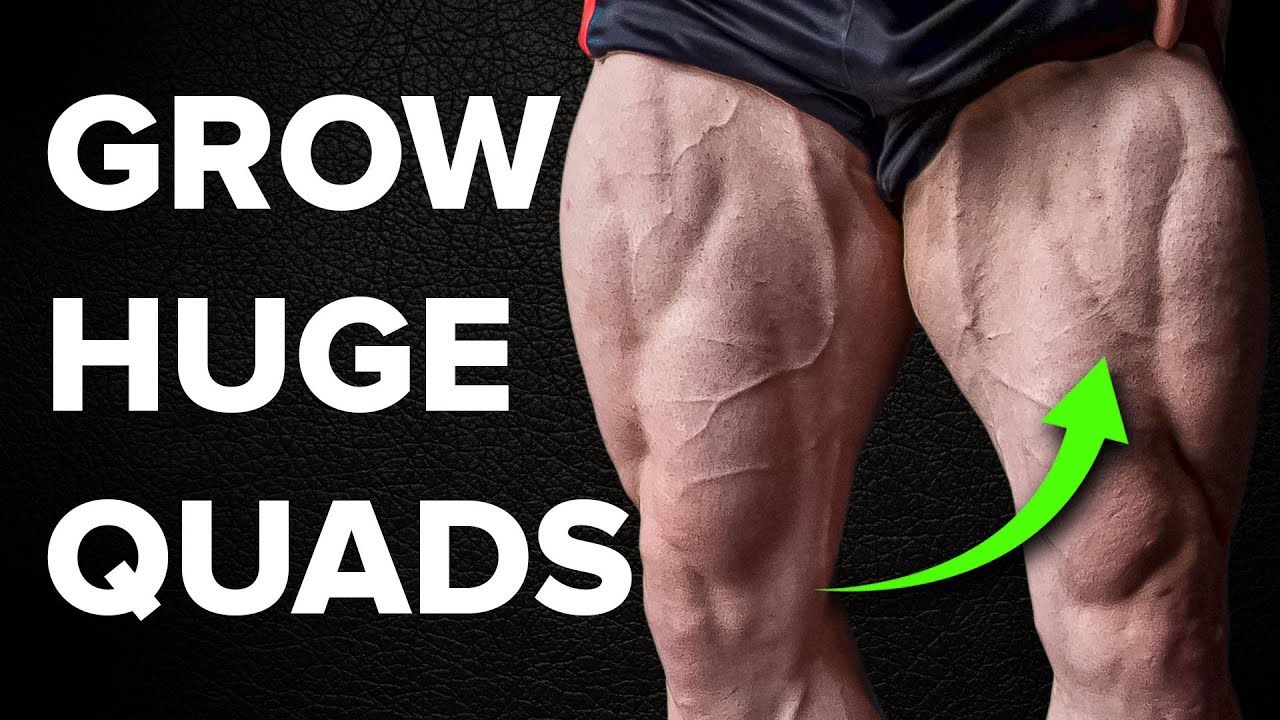
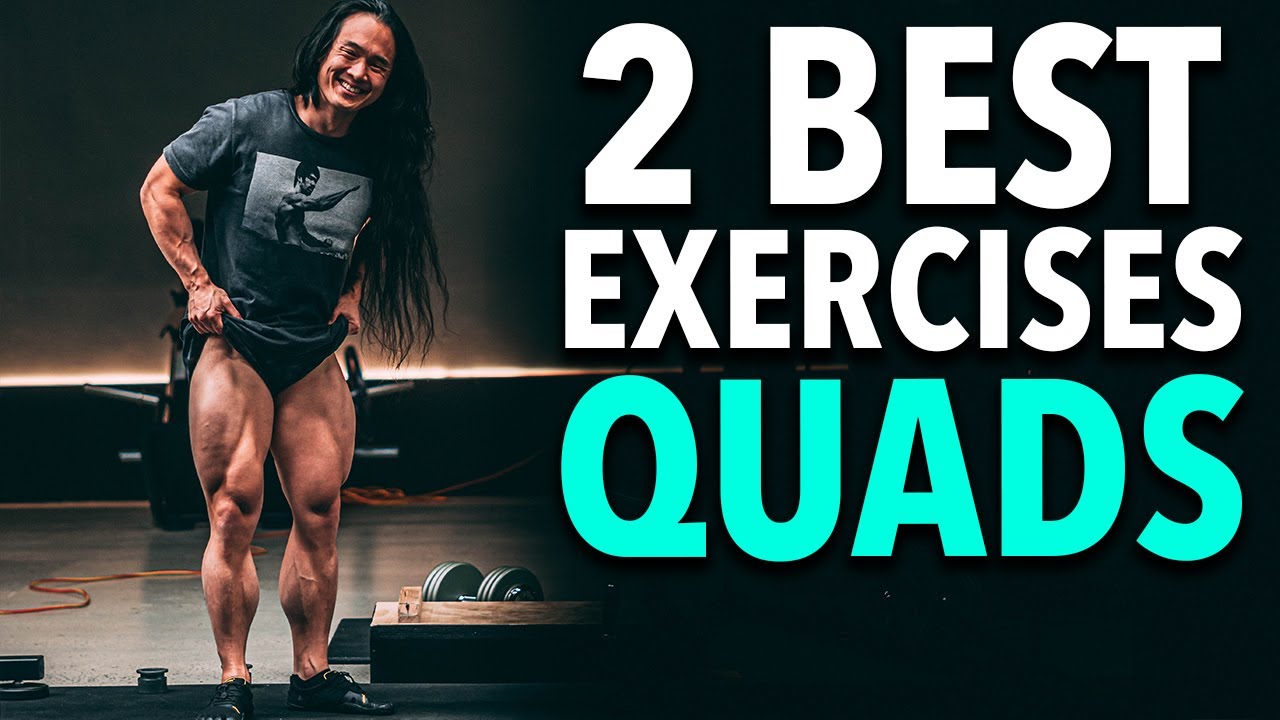
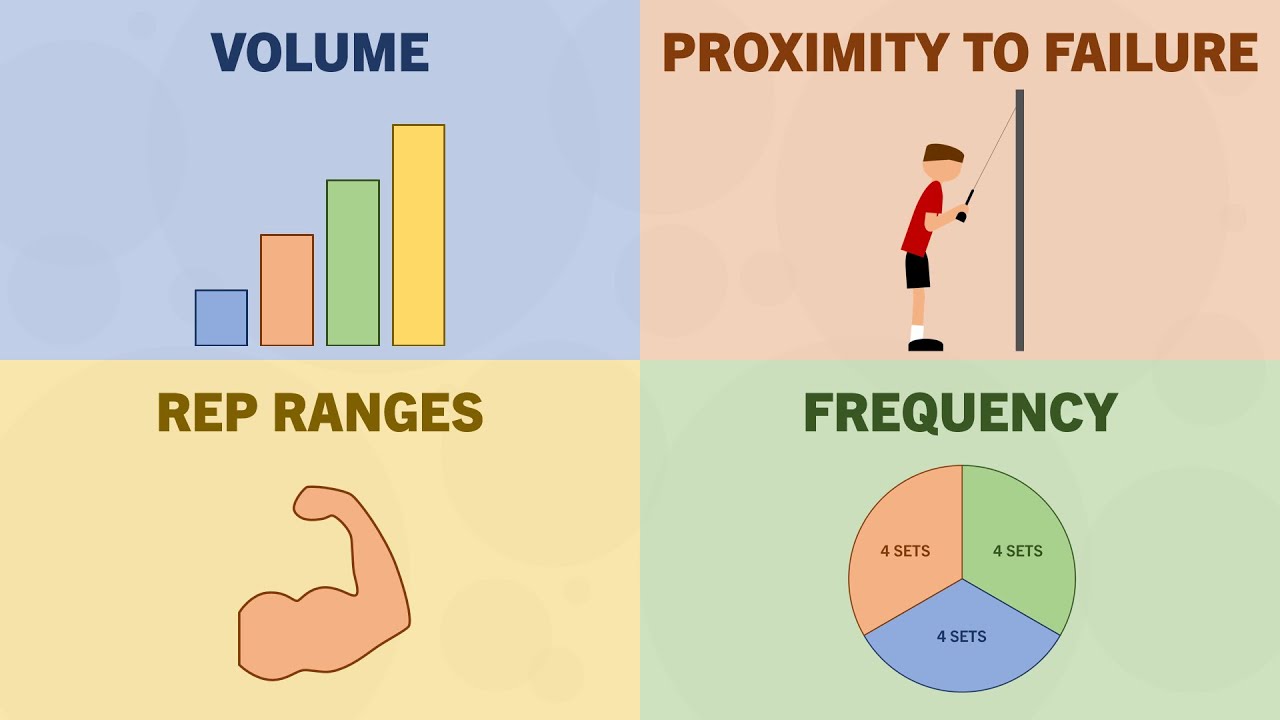
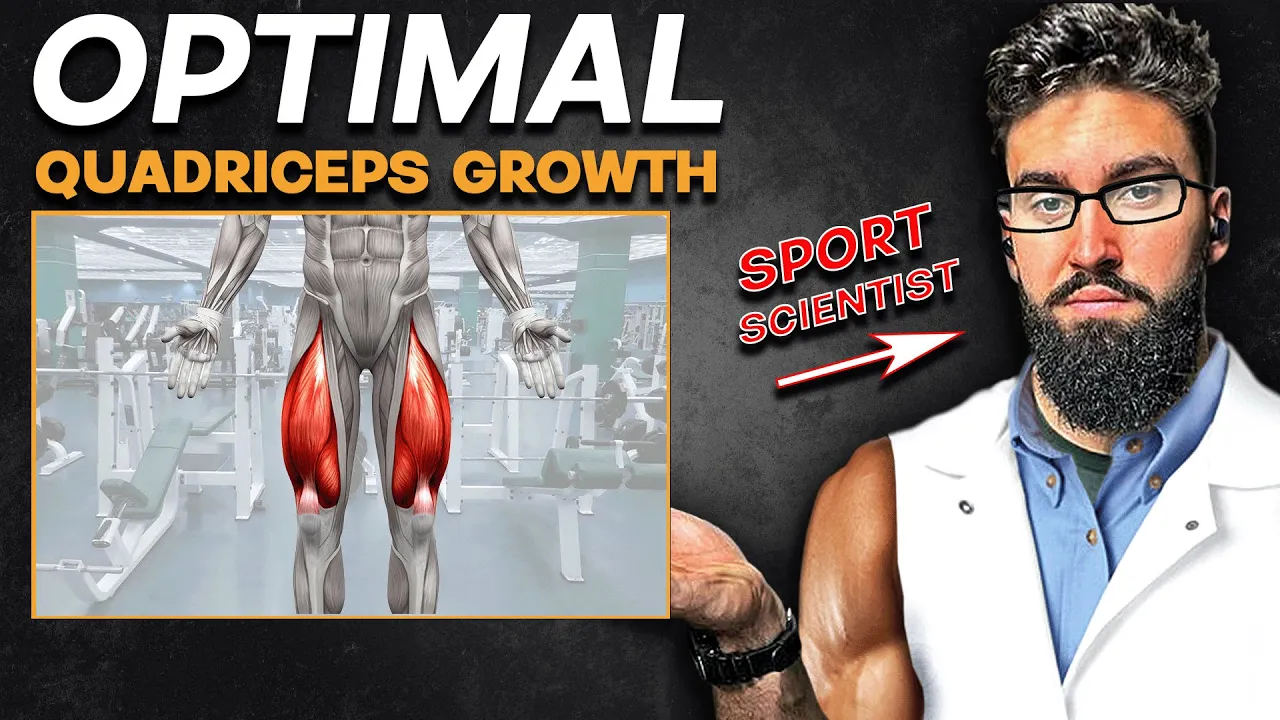
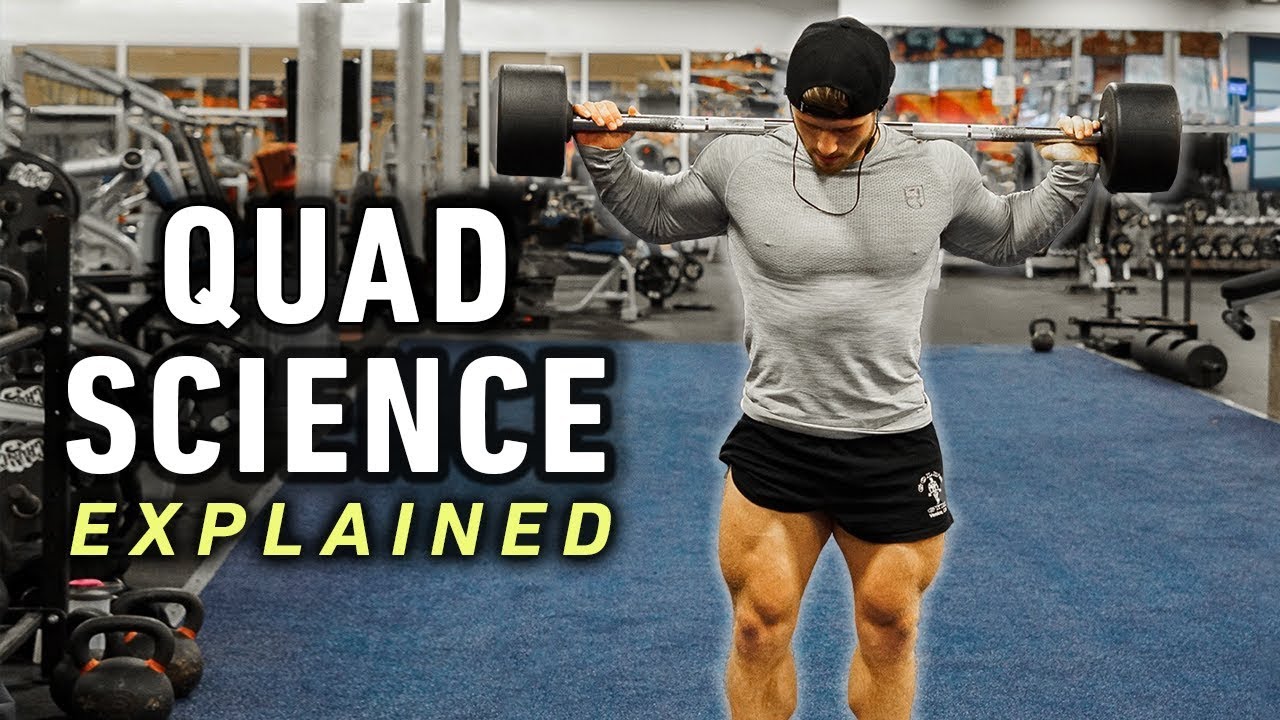
what do we look for in a good quadricep exercise well we look for the exact same things as we do for other muscle groups you can check those out in the description not to repeat myself verbatim but here's what we look for When selecting what is a good exercise according to the science for the quads the first criteria is stability if an exercise is wildly unstable it will limit how much force you can produce think about this let's say you were squatting on a bosu ball do you really think your quads would be able to
exert maximum force and thus get a good hypertrophy effect as compared to a regular squat where you're just standing on much more stable ground indeed there's evidence suggesting that unstable training will result in lower Force production than more stable training the next thing any good exercise for the quadriceps should do is Target one of the quadriceps functions and when we're looking at your whole exercise selection we want to make sure that you target most of the functions of a given muscle group so we get a complete stimulus for hypertrophy next for a good quadricep exercise
well the quadriceps should be the limiting muscle group it shouldn't be anything else but the quads that go out first ideally so something like conventional deadlift or even a Sumo deadlift may not be ideal for the quadriceps because other muscle groups like the hamstrings or the glutes or the adductors may very well give out first if we want to maximize hypertrophy we want the target muscle group to be the limiting factor next we want the exercise we select for quarup growth to be stretch friendly let me break down what that means there's two components here
the first one is position the exercise should put the target muscle group in this case the quads into a lengthened position secondly the target exercise should place the quads in that lengthen position under tension so it shouldn't just be an unweighted stretch at the bottom it should be a position where you have to forcefully contract the target muscle group and get more growth that way indeed this is the exact area of research that I've specialized in finishing my PhD recently on based on these two factors you can compare something like a leg extension to a
reverse ntic curl a reverse ntic curl would be better than a leg extension because it both puts the quads in a more lengthened position by going into deeper knee flexion and it also places more tension in that lengthen position than a leg extension does finally Beyond just putting the target muscle group in a position where is lengthened and making that muscle work in that lengthened position by having it produce plenty of force bonus points if that exercise is also well suited to doing lengthen partials as came out of my PhD there are than five studies
comparing length and partials to full range of motion and length and partials might be advantageous when it comes to maximizing muscle growth so when picking exercises for the quads we may want to pick exercises where you can safely perform lengthened partials here are a couple bonus points for exercise selection one we want the exercise to be time efficient this is mostly or exclusively relevant if you're someone who doesn't have much time or enough time to train at your disposal but in general we want to pick exercises that are a bit more time efficient if we
can less time efficient exercise exercises usually include barbell exercises when you're loading a barbell getting ready for that exercise it'll take quite a while to set up versus something like a dumbbell exercise or even a stack loaded machine the final point and a point in which barbells actually went out is micro loadability what's the smallest increment you can load a barbell with very very small by comparison if you're doing a cable exercise which yes more time efficient the increments there are quite large so for certain exercises having that micro loadability those small increments to load
by is beneficial in terms of facilitating progression week to week before we go into what the best exercises for the quads actually are based on all the criteria I just mentioned we need to make sure we understand what the anatomy of the quadriceps is now as the name implies quadriceps basically stands for four heads there are four parts of the quadriceps there is the rectus femoris muscle there is the vastus lateralis medialis and intermedius muscle fortunately the quads aren't too complicated let me break it down all four of these muscles do knee extension exactly the
movement you do in a leg extension is actually with with quad muscles do however the one exception there is the rectus femoris also does hip flexion so when we're training the quadriceps the main thing to look for will be knee extension to a lesser extent you could include some hip flexion exercises in your program if you specifically want to Target the Reus femoris however that should be a minority of your program the implication of these functions is that the quads will be most lengthened when your knees are fully flexed for the vastest lateralis intermedius and
lateralis since these don't do anything at the hip just Flex ing the knee will maximally lengthen them and for the rect furus you don't just want to flex the knee fully you also want to keep your hips as extended as possible to lengthen rectus femoris and this brings me to an interesting implication for quadricep hypertrophy we don't want to pick an exercise where a b articular muscle like the rectus femoris that does something in both the hip and the knee we don't want to pick exercises where that muscle is shortening at one joint while lengthening
it the other we have evidence for both the hamstrings for example in the squat and for the rectus moris in the squat that picking an exercise where a biarticular muscle lengthens at one joint while shortening at the other doesn't really produce hypertrophy very well and so for these biarticular muscle groups we want to pick an exercise that either does both of its functions at the same time or just isolates one of the joints and performs its action at that joint for example something like a squat or a lunge won't be ideal for the rectus femoris
because the rectus foror will be shortening at one joint while lengthening at the other however something like a reverse NY curl your isolating motion at only the knee joint allows the Reus for morus to be trained effectively so generally we can select compound exercises where both the hips and the knees move for the vasti muscles those three muscles that only acted knee but for the rectus femoris we'll want to pick isolation exercises where only one of those functions is being trained at once ideally knee extension as that's the main function that will also hit the
other quarter muscles will need to include both isolation and compound exercises in your program to get both Reus femoris growth but also overall qual growth and indeed this was evidenced by a recent study that hasn't been published yet that I was involved in at Brad sh and feld's lab in New York where he compared the effects of leg extensions and leg press on quad growth participants simply performed either leg extensions with one leg or leg press with the other and basically the Reus for moris grew more when doing leg extensions but the other muscle groups
grew a little bit more when doing leg press suggesting you do want both in your program if you want maximum overall quad growth so with all that nerdery about criteria for exercise selection based on the evidence and the anatomy of the quadriceps without further Ado let me present you with my picks for the exercises that will produce the most quad recept growth in the compound exercise category I think the single best quad exercise is the Smith machine squat now you could argue the feet forward Smith machine squat is equally effective and for the quads it
might actually be a bit better because it shifts the emphasis from overall low boy development minus the hamstrings to just the quads making sure they're the limiting factor but if I had to pick one great exercise within your program to make quad gains and overall lower body gains I would pick the Smith machine squat if you're only going for Quad development I would probably pick the feet forward Smith machine squat all the following applies to both the Smith machine Squat and the feet forward Smith machine squat we're talking about great stability the only Direction the
bar is going is up and down you can focus merely on extending your knees and pushing that bar up as opposed to having to worry about the stability concern especially for the feet forward Smith machine squat the quads should be limiting factor with the regular Smith machine squat you have a chance of the quads not being limiting factor but at any rate they will be quite close to failure at the end of the set now a really important thing about the Smith machine squat as a compound is that it's very stretch friendly let's review the
components first it definitely places the quads minus directus for moris but that's the case for any compound into that deep lengthened position going as deep as you can and in fact simply by putting your feet forward you might find you're able to get deeper and get a deeper stretch on your quads if you find usually that your depth is lacking the second component is resistance curve with a Smith machine squat you definitely have a lot of tension at the bottom of each rep and the final component which is why I prefer the Smith machine squat
over other squatting variations is that it's very length and partial friendly in fact you can unrack the weight in that middle position of the lift and just get straight into your length and partial set and let's say for example you fail a rep well you you can just reack it whereas with regular squats you might have trouble racking at the end if you're going very close to failure and doing length and partials so between being able to just start the set in that lengthen position already and being able to just react the weight at any
time if you were to fail a 4 rang of motion rep that might be otherwise dangerous during a full range of motion squat with free weights and even being able to set up stops at the top of the range of motion so you just work in that lengthen position I think the Smith machine is a great option and is super stretch friendly and even length and partial friendly so as far as a compound exercise that will Target knee extension and Target those vastest muscles or vast thigh muscles the Smith machine Squat and the feet forward
Smith machine squat I think may just be your best options particularly with regards to how they allow you to do lengthen partials better than a barbell squat would I think honorable mentions go to the leg press and the hack squat the reason why I don't think these are quite as good as the Smith machine squat or twofold one depending on the hack squat or leg press you have you may actually find that it doesn't allow you to go as deep as just a Smith machine would right many hack squats and leg presses I've used don't
allow me to get a full stretch on my quads so that's a pretty big downside and the second thing is a lot of hack squats and leg press are not length and partial friendly they don't have a rerack setting where you can rerack it after length and partial you will almost always have to do a full rep in order to finish the set so that kind of stops you from going as close to failure as you otherwise could if you had a low react setting where you could just stop the set after you're about to
fail a lengthen partial and not a full rep that said hack squats and leg press depending on your situation can absolutely be a great tool and often times they have more flexibility with regards to the rep range they can be used in versus something like a squat where if you go above 10 or 15 reps often times you'll find you gas out you get out of breath and your quads are no longer the limiting factor and now for the best isolation movements for the quads for overall quad growth but specifically for rectus femoris growth and
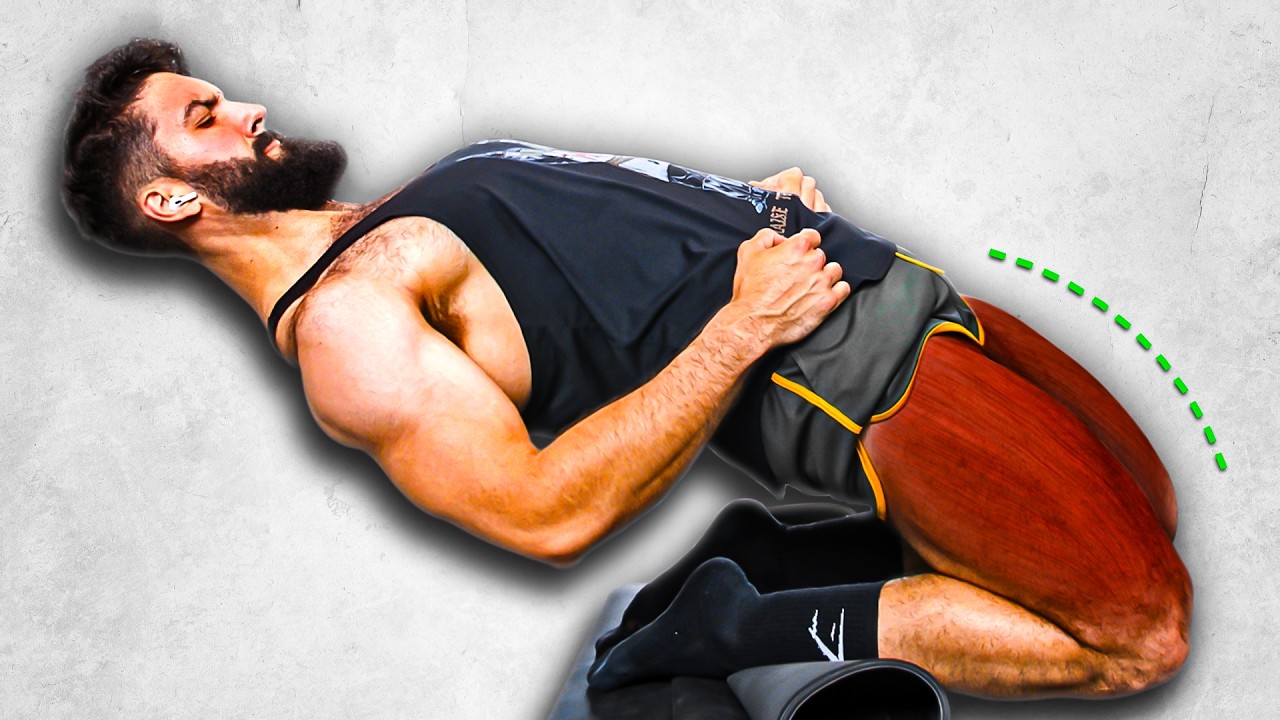
here the best exercise has to be the reverse Nordic the reverse NY curl is a very stable exercise especially if you have a hand out to hold on something if you need to it has a very advantageous resistance curve wherein the lift gets harder as you lengthen the quadriceps which is what we want it also allows your rectus femoris to be fully lengthened by flexing the knees fully and extending the hips fully in this position you'll feel a deep stretch in your rectus femoris therefore it's a really solid exercise for rectus femoris growth but also
just for overall qual growth as is the case for most isolation exercises there's no not really any other muscle groups that could give out before the quads do maybe you could get out of breath but on account of it just being an isolation movement usually the first thing to give out will simply be the quads the final thing is that the reverse Nordic curl by Design is essentially a lengthen partial already you're not fully extending the knee you're essentially going to about 90° of knee flexion at the top and therefore it is already functionally length
and partial and as I reviewed earlier in the video there are now five studies comparing length and partials to 4 in of motion training suggesting you might get more muscle growth by doing something like a length and partial over a full range of motion and so reverse n curls as what is functionally length and partial are a great option for hypertrophy as an honorable mention I think the squat is also slept on now I wouldn't actually recommend using the bench or machine people often use to do the squat because this often reduces how extended your
hips are you'll essentially mimic a regular squat where in you still flex your hips and thus you don't get your Reus foror fully lengthened however if you just do a body weight Squat and keep your hips fully extended it can be a great exercise offering many of the same benefits resistance curve getting a deep stretch and re sporis as reverse Nordic curls do the only reason I think they lose out a little bit compared to the reverse Nordic curl is because one I think there are more muscle groups involved like the Cals for example and
two in my experience it is a little bit less stable than the reverse ntic Cur would be however it's a great option and if you don't like the reverse n curl by all means try the squat the one exercise I wouldn't really recommend anymore for quad growth as an isolation exercise would be the leg extension while the leg extension does offer you a lot of flexibility with the rep range it is essentially unloaded on your spine the issue there is it is a shortened partial and the evidence we have on shortened partials for partial repetitions
at shorter muscle lengths versus for range of motion versus length and partials it's consistently worse for hypertrophy by maybe up to 20% or so compared to something like length and partial like a reverse n c and so leg extensions for me should be kept for when a person doesn't like reverse NY curls doesn't like squats or they find them painful what have you that's when you could use them but most of the time if you want more growth take the reverse NY curl or the squat that's the video if you like the video please comment
like subscribe I'm trying to upgrade the camera equipment the editing Etc so all support helps towards that if you want to see me explain the best exercises according to the science for any other muscle groups leave a comment down below and I'll get to it that's the video peace
![Taurine: The Nutrient of Youth [Science Explained]](https://img.youtube.com/vi/qH5QumHGrgk/maxresdefault.jpg)