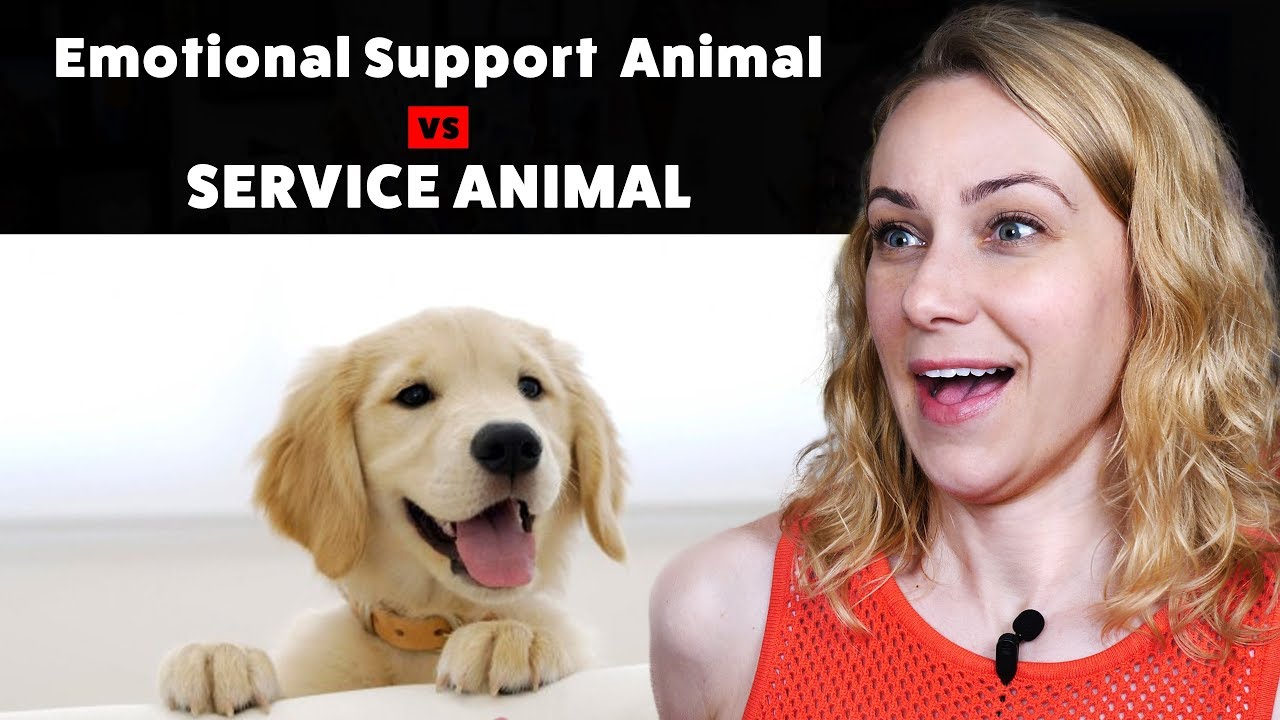
Hi, I'm Dr Tracey Marks, a psychiatrist, and I make mental health education videos. In this video, I'm going to talk about emotional support animals. I'm going to answer the questions, what are they and what do they do?
What rights do you have with them? And what's the difference between an emotional support animal, a psychiatric service animal, and a therapy animal? An emotional support animal is an animal whose presence is required for your mental wellbeing.
Required is the operative word here. They bring comfort and they minimize the negative symptoms of your psychiatric disability. Your need for this animal is documented by a mental health professional.
Anyone can derive benefit from interacting with an animal but there are certain protections and accommodations allowed by law if you have an emotional support animal. Before 2020, if you went to your therapist or doctor to write a letter saying that you need an animal for emotional support, you could fly on an airplane with your pet without paying an extra fee. If the pet was small enough, it could get a seat in main cabin with you.
With a similar letter, you can be allowed to bring your pet into places that normally restrict the presence of animals like a restaurant or you could get a housing pet waiver that you could use to rent property that restricts animals and not have to pay an additional deposit in the case of damage from the pet. What if you had a pet and wanted to take it on a flight and didn't have a therapist? Well, a whole cottage industry has popped up to address this need.
There are online sites where you can fill out a questionnaire, pay a fee and get your letter. This made it super easy to bring any animal that you want on a plane. Airlines got frustrated with some of the requests like this one for Dexter, the emotional support peacock, who was rejected from getting on that plane.
Then, there were complaints from passengers not wanting to listen to Stanley, the pot-bellied pig, oink and squeal all the way through the flight when his poor eardrums popped. So in December of 2020, the Department of Transportation ruled that airlines are no longer required to treat emotional support animals as service animals and were not required to provide accommodations for them. Most of the US airlines like Delta, American, United, JetBlue and Southwest stopped allowing emotional support animals on the plane but they still make accommodations for a service animal, and what's the difference?
The Department of Transportation defines a service animal as a dog, regardless of breed or type, that is individually trained to do work or perform tasks for the benefit of a qualified individual with a disability including a physical, sensory, psychiatric, intellectual or other mental disability. Notice the service animal is limited to dogs. The ruling also goes into detail about how the service animal must be able to travel the entire trip without relieving themselves or be able to do it in a sanitary manner.
I'm not sure what that looks like. Let's break down this definition a little. A service animal is trained.
It's not just your well-mannered, super smart dog. They have received specific training to handle a disability. An example of this is a dog who's been trained to sense when you're having a panic attack and calm you down by licking your arm.
Someone with autism who is very reactive to intense sight, sounds, or textures, may have a service animal that screens objects or situations for them to prevent sensory overload when their owner goes into public places. This is a very specific purpose and more than I want to have Fluffy with me because I love him and he makes me feel good. The requirements for training vary.
Usually, it's a rigorous program from a trainer but some certification programs allow you to train the animal yourself. Another part of the definition is a qualified individual with a disability and this is where things can get very gray when it comes to psychiatric disability. What's considered a disability?
You can have depression that comes and goes and you may be stable on meds without symptoms for the past five years. Are you disabled? The answer to that question usually depends on who's asking and what there is to gain if you are considered disabled.
Disability usually refers to some level of functional impairment, meaning there are some things in your social, occupational or personal life that you can't do when you're having symptoms. So in theory, you can have a mental disorder but have mild enough symptoms that it's not considered a serious mental illness. The National Institute of Mental Health defines a serious mental illness as a mental, behavioral, or emotional disorder resulting in serious functional impairment which substantially interferes with or limits one or more major life activities.
The operative term here is substantial. That word is used a lot in the literature around using animals to get accommodations. So the airlines drew a line in the sand and said you need a service animal to get flying accommodations but the Fair Housing Act still allows for waivers for emotional support animals.
The documentation needed has to come from a licensed mental health provider. This can be a therapist or a doctor. Some clinicians won't write such a letter and that's where these sites like Dogtor come in to fill in the gaps, and I'm not promoting the site or recommending it, in fact.
I'm just showing you an example of what I'm talking about, but why wouldn't your therapist write a letter for you? How hard is it? Well, here's the rub for therapists around these letters.
When your therapist writes the letter or completes a form and signs their name, they're supposed to be answering the questions, are you disabled by a disorder that's listed in the "DSM-5"? Does the disability require the presence of an animal to be able to perform necessary functions that you wouldn't be able to perform if the animal was not present? If so, what are those functions?
What does your disability keep you from doing? And what does the animal do to allow you to do that thing? If the therapist really can't answer these questions affirmatively, then they do sign off on a form for you, they are attesting to something that they don't really believe is true.
Here's an example. Let's say you own a dog that you've had about six months. You move to a new rental property and the landlord allows pets but you have to pay an extra $1000 security deposit for the pet and the deposit is not refunded because it's presumed there will be damage to the property.
Your friend tells you, "Hey, didn't you see a therapist a while back to help you with your relationship? " And you say, "Yeah, I was going through a hard time but things are better now and I haven't needed to go back. " Your friend says, "Well, you can get your therapist to write a letter saying your dog helps you with anxiety and you won't have to pay the $1000.
" You then contact the therapist and request an emotional support housing letter. The therapist who hasn't seen you in a year thinks, "How does this puppy that I know nothing about serve as an emotional support? " The therapist may not feel comfortable stating in writing that you're disabled from the stress and relationship problems that you had before.
You didn't really talk about anxiety all that much at the time, and also say that the dog provides essential functions that allow you to perform despite your disability. If the therapist just signs the form to make you happy and the property owner disputes it, the therapist can be pulled into litigation to defend their position, a position that they really didn't support but just took that position to help you. So that can present an awkward situation and interfere with the therapeutic process when your therapist needs to be loose with the truth to help you get something outside of the therapy.
So that's the behind-the-scenes issues that you probably aren't aware of when you ask your therapist to sign a form so that you don't have to pay a security deposit. Your therapist may tell you that you need to see an independent evaluator to make the determination and that may seem like overkill. You've got to go see a whole new person?
All you have to do is sign a form but it's more than just a form. Despite all these regulatory issues, whether or not you have your pet certified or not, or get some financial benefit or not, animals do confer positive, physical, and mental health benefits and it's not just dogs. There is lots of support for animals being beneficial and improving several health measures.
Some studies show physiological changes from human interactions with animals, and it's thought that the benefit comes from oxytocin release. Oxytocin is often called the love hormone and it makes us feel emotionally close to the object before us. It's released during labor, breastfeeding, sex, and other types of intimate touch.
So in the case of an animal and human interaction, the act of touching your pet and meeting their eyes increases oxytocin release which makes you feel close to them. This theory of oxytocin-mediated reactions could explain how some people feel like their pets are like their children. The bond feels that strong and goes well beyond just liking a cute animal.
The theory is that you actually fall in love with them. Studies have also shown that animal-human interaction improve social attention, interpersonal interactions, reduces cortisol levels, and reduces heart rate and blood pressure. Those benefits are how animals can be used as therapy animals.
Therapy animals, usually dogs, are trained to provide affection, comfort and calming. The training is not as specific as it is for service animals and therapy animals are not covered under the Americans with Disabilities Act, so they can't go into animal-restricted places or be used to get accommodations. They are commonly used for what's called therapeutic visitations.
Some schools will bring dogs in for student wellness events or even use them as an intervention for students in distress. Instead of seeing the school nurse, you go see the therapy dog. Therapy dogs can be helpful for people with social anxiety as the presence of the dog can be an icebreaker and make other people approach you more and feel more approachable when they see you with a friendly dog.
You can use your own pet this way in addition to having the pet for calming, grounding and companionship. Check out these other videos that YouTube thinks that you'd be interested in watching from me. Thanks for watching this one.
See you next time.