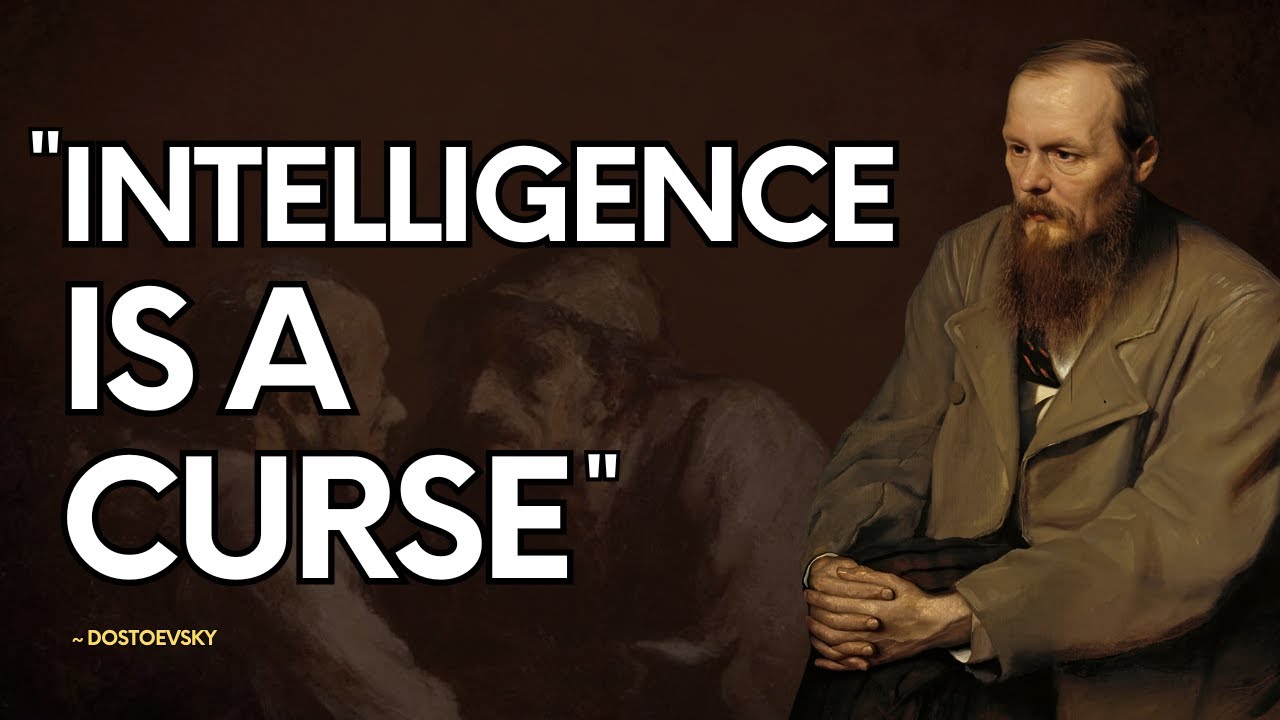
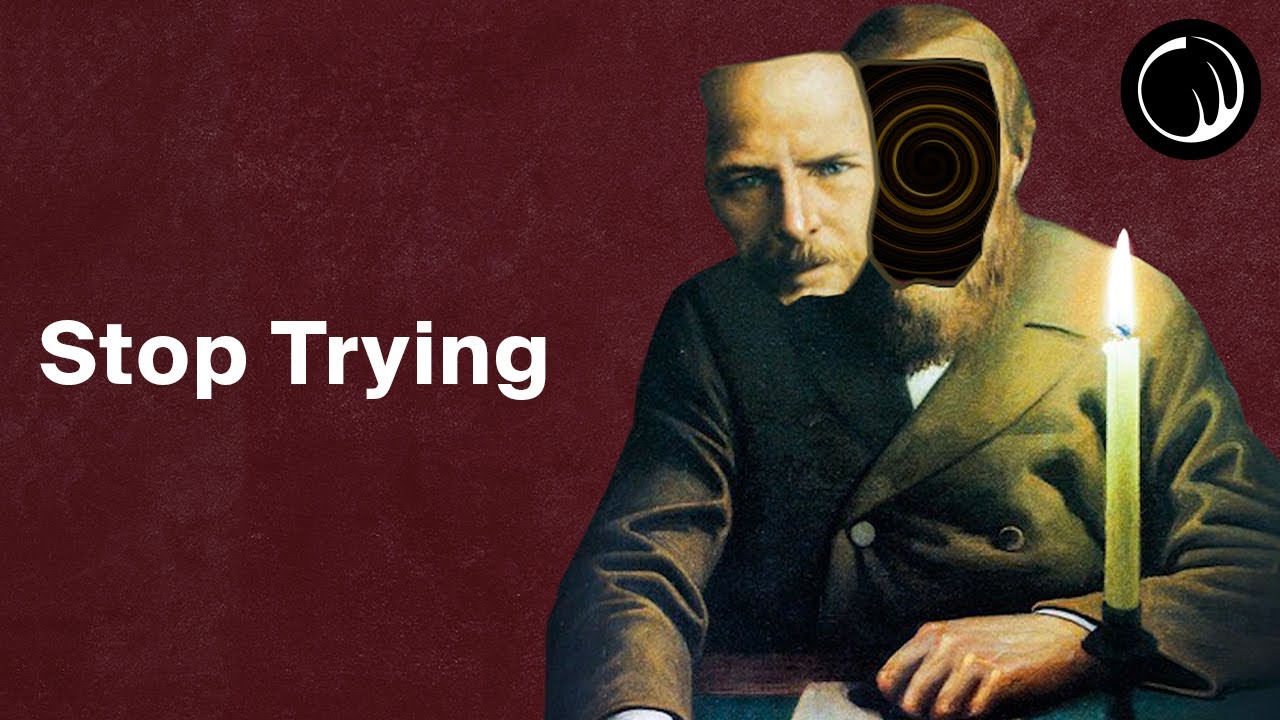
this beautiful line comes from Fodor Doo's novel Crime and Punishment and it's likely one of the lines that later impressed Kafka SRA Nicha and many others but what does it really mean in this video I'll explore that same angle of Crime and Punishment one through which dooi presents a modern thinker a man attempting to create his own meaning in life but did he truly succeed in his mission what drove him to seek meaning in the first place and how have modern ideologies become more of a curse than a final answer for all of us keep
in mind this is just one small perspective on crime and punishment and your opinion might differ anyway let's discuss the modern thinker in crime and punishment was none other than its protagonist scov he was a destitute law student living in St Petersburg struggling to survive on the meager financial support of his poor mother his life unfolded in two main stages the first being that of an egoistic individual raskolnikov immersed himself in radical ideologies rationalism utilitarianism and nihilism he spent most of his time alone detached from Human Relationships lost in abstract theories that distanced him him
from conventional morality after overhearing students discussing how mean and selfish The Pawn Broker was he convinced himself that she was a parasite on society acting on this belief he committed a brutal crime murdering her he justified this act by convincing himself that eliminating a worthless individual would serve a greater purpose he even rationalized that by taking her life he might be able to pay for his tuition and other expenses following the murder he withdrew further from his close friends resembling the underground man from dov's Notes from Underground his ego led him to believe in a
superior category of people those who were above societal and religious Norms Unbound by conventional morality before the murder raskolnikov had written an article arguing that some individuals those destined for greatness had the right to break moral and legal boundaries in pursuit of a higher purpose though he never explicitly used the term Uber mench his philosophy closely mirrored n's concept of the Superman an individual who transcends conventional morality raskolnikov saw himself as one of these exceptional figures he wanted to be like Napoleon his ego pushed him toward actions that he believed were Justified the same ego
can be seen in pin from a hero of our time pin too was obsessed with power applying nearly every makavelian principle to achieve his goals he was manipulative fond of women and at one point even killed his friend in a duel unlike raskolnikov pichurin succeeded in creating his own meaning in life at least for a while but the seductive appeal of these modern philosophies was clear they created an illusion that intellectual superiority could justify ethical transgressions and that Detachment from Humanity could lead to Enlightenment this is precisely why many people are drawn to the famous
mellian principle The end justifies the means but in raskolnikov's case this wasn't entirely true largely because of dovi himself dovi always sought to deliver a positive message by the end of his novels another character in crime and punishment sidoff represented the ultimate consequence of this way of thinking he embodied what raskolnikov might have aspired to become a man who had discarded all moral restraint sidri gof had killed his wife prayed on vulnerable women and attempted to Blackmail raskolnikov's sister Duna but when he tried to force himself on Duna she resisted and in self-defense attempted to
shoot him both rasnov and Sidra gof serve as parallel representations of Modern Men through them dostoevski Illustrated how different paths lead to different Destinies and what ultimately determines those paths this is what I'll be discussing next the greatest happiness is to know the source of unhappiness both raskolnikov and sidri galof spent part of their lives in depression raskolnikov embraced nihilism from the start whereas sidri gof only turned to it in the final stages of his life when Duna in self-defense tried to shoot sidri gof he was forced to confront his own worth his entire purpose
in life had been built around power the ability to seduce any woman he desired but in that moment Duna shattered his illusion destroying the very Foundation of his existence he fell into a despair so deep that he could no longer bear It ultimately taking his own life his journey reflects the descent from absurdism to nihilism at first he embraced the absurdity of life but in the end the belief that nothing truly mattered consumed him entirely on the other hand there was raskolnikov the man who in his pursuit of meaning killed two people only to be
followed by a torment far greater than any external punishment his crime shattered his inner peace his conscience rebelled against the very reasoning he had used to justify it every moment afterward was consumed by guilt paranoia and the unbearable weight of his own mind what he once believed to be the devil's help turned into an inescapable curse as I mentioned earlier his life unfolded in two stages the first was defined by chaos and meaninglessness fueled by his belief in nihilism he found no peace No Satisfaction only an increasing descent into suffering but in the final stage
he began to see a Way Forward DVI often portrayed characters in conflict with their own demons revealing the Deep flaws and self-deceptions of human nature yet he also suggested that Redemption was possible he shared something with Nicha Nicha warned of the rise of nihilism in European culture but he also saw it as an opportunity one that only a minority the Uber mench would be able to transcend dostoevski presented a similar path but with a crucial difference to him the way out of nihilism was not through intellectual ual superiority or power but through humility and human
connection raskolnikov found this in Sonia she was a prostitute yet she remained steadfast in her beliefs he had spent his life pushing away those who cared for him but in the depths of his suffering he finally saw something real in her he confessed his crime to her and she stayed by his side even when he was in prison in the end raskolnikov came to believe he loved her he began reading the Bible searching for something beyond the empty justifications he had once clung to that was Doo's way his stories always ended with the possibility of
redemption he believed that true happiness could only be found by believing in something greater as he wrote In The Brothers karamazov the mystery of human existence lies not in just staying alive but in finding something to live for this is exactly where Modern thinkers often lose themselves leading to confusion and depression and that's what I'll discuss in detail next above all don't lie to yourself the man who lies to himself and listens to his own lie comes to a point where he cannot distinguish the truth within him or around him and thus loses all respect
for himself and for others this quote speaks to the tragedy of Crime and Punishment the tragedy of self-deception as mentioned earlier in the video raskolnikov a brilliant but tormented student convinces himself that he is above morality he believes that some people like himself are extraordinary meant to shape history and therefore not bound by the same moral laws as Ordinary People he tells himself that killing a greedy old pawn broker isn't just acceptable it's Justified and that is the lie a lie so powerful that it distorts his reality a lie so seductive that it numbs his
conscience but the moment he acts on it he begins to unravel the murder doesn't liberate him it crushes him under the weight of his own self-deception his ideology which once made him feel powerful now isolates him completely he is consumed by guilt paranoia and a growing sense of alienation from the world this is where Crime and Punishment becomes a warning not just about crime but about the dangers of believing in an ideology so completely that you lose your ability to see reality modern intellectuals often fall into this cycle of self-deception they convince themselves that their
worldview is the ultimate truth they see those who disagree as either foolish or evil they become emotionally incapable of questioning their own beliefs and just like raskolnikov this leads them down a path of isolation the more they cling to their ideology the more they disconnect from reality they lose their ability to empathize with those who think differently they stop seeing people as individuals and start seeing them as ideological enemies there was one more thing missing in raskolnikov's life something that might have prevented him from committing his crime in the first place human connection through his
interactions with Sonia a woman who has suffered immensely but still chooses compassion over cynicism he begins to see the truth not a philosophical truth not an ideological truth but a deeply human truth he learns that life is not meant to be conquered it is meant to be lived that people are not ideological constructs they are complex flawed and worthy of empathy but no amount of intellectual rationalization can replace the simple Power of Love kindness and humility and this is the lesson modern intellectuals refuse to learn they believe that knowledge alone is enough that logic alone
is enough that ideology alone is enough but dostoevski shows us that without empathy without human connection without the ability to see beyond our own beliefs none of it means anything so how do we escape this trap how do we avoid becoming like raskolnikov so consumed by our own ideas that we lose touch with reality the answer is intellectual humility dostoevsky's most tormented characters often end up holding a Bible in the end symbolizing his belief that Faith provides the ultimate peace but his real mission was to warn against the rise of modern ideologies because he saw
in them a great danger one that could lead Humanity to collapse n later expanded on this same idea warning of the dangers of nihilism a topic I've covered in another video