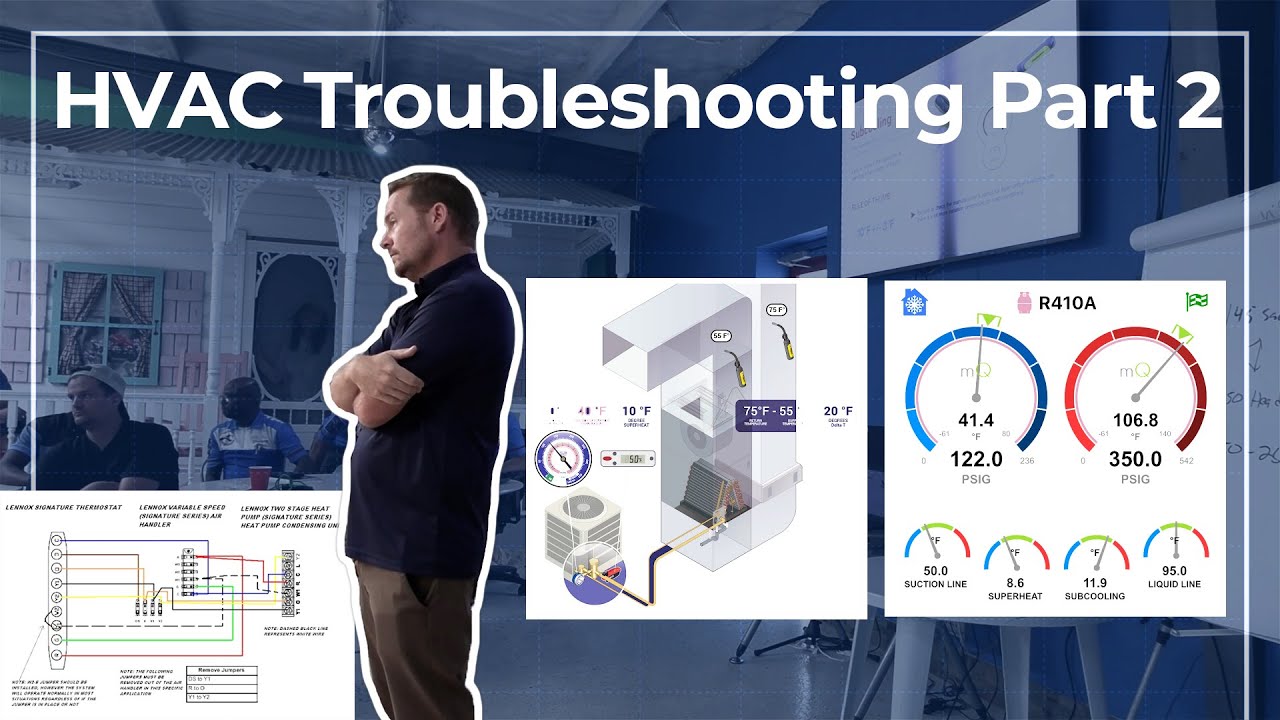
So the next section that we're going to do um I'm just going to switch this up real quick uh Matt is going to cover a bunch of air flow stuff so it's we're going to talk a little bit about ducks I'm still going to I'm going to just kind of sit up here and I'm just going to kind of comment as we go um but we're going to talk specifically about a bunch of airf flow ducting related stuff so I I thought we'd start with I I Know we've touched a little bit on it Brian
talked about like how like what is a monometer and how does it work just a a quick show of hands how many of you guys have a monometer okay almost everybody how many of you guys use it regularly okay yeah yeah yeah um you guys have been through NCI training right who here has been through uh some NCI training some of it okay I want to I Actually I want to quickly just take as a as a quick P like what are your thoughts about what you received from NCI training what do you apply just
a couple of you we've seen a lot of since we've done performance so it's of anyone else Kieran were you going to say anything all right Jerry the main thing I use we got a lot out of it I really just go down to two pages for the bulk of what I use out of it it's where It tells you the filter uh helps you size that better and then the payack before it tells you around see go with that right that get you through a lot of problems just those two things yep what what
was the second part Round The Round Up to the CFM yeah the flex duck oh how much CFM you should put through siing of the flex Ducks yeah so the the only reason I want to say that is because like I'm really buddies with those guys um we actually Talked to them beforehand to tell them we were coming down and they offered to let us use anything that they have and all that but I want to say that um we're not we're what we're going to say here is in uh is is not in contrast
to that it's in addition to that right so we're not going to focus on a lot of the same things um because we knew that you already had that piece uh so anyway yeah that's that's the way deeper dive and and and you can take those classes I Believe a lot of them you can do online if you like really want to get into this this is more like tell yeah I'm just upset that you were even weighing it that was even a question you know what I'm saying like that kind of hurts why' you
tell us that was telling me he was like he was thinking about doing another NC yeah so I guess I guess I'll just say this for me airflow has kind of been it It's one of those pieces that I think is the hardest to to do anything about that's been that's been my experience what's been what's been y''s experience is this something so you know you go out and you test static pressure like where do you go from there you know what's I mean I I find it I'm on the sales side now um but
when you try to do a upgrade very complicated and expensive and straight forwards not just a simple change de so It's you know them they don't they Liv in the HP 30 years they don't understand why Always Yeah question is is there a problem with the hormonal care I mean are they having fail motor they have you know everywhere it's you know a lot of rooms that they're not cooling out they're complaining about it whistling it's always whistling yeah so yeah so so you might have people that complain about things um but a lot of
Times this the the solutions are are expand this has been my experience anyway they're really expansive and then they're like ah I think I can live with that right so to to me putting this airflow piece together there's kind of been two aspects of it one it it's it's like like Simon was saying like and and kind of off of Brian's last point on the wide diagnosis if if I'm trying to see myself more as like a like a doctor right like I go to Someone's house and it's just like hey this this this isn't
right do you want to fix it or not no not interested okay just letting them know that that that's going on and um and this is especially true for me when I'm when I'm making changes to the system other modifications hey there's issues with your duct work you know we're going to do this other stuff but you know what are your expectations when we do this new thing You know well we got this hot room over here and and and I I think when we put this new unit in that's really going to that's really
going to take care of that no it's not you know like just telling them this won't fix that it's going to be the same as it was before is just a newer box right so like just kind of that doctor mentality I think for me for me has been helpful in in terms of just getting more comfortable talking with people about About this and saying oh the reason you know oh yeah the reason that Rim is hot well that's because you know this is a 3 ton unit and it's only moving 800 CFM of air
which is a 2 ton you know so we can fix that it's going to be you know3 or $4,000 do you want to do that no I don't want to do that okay you know like um just having those tools in my tool belt feeling really confident about it and then having a doctor approach That's been that's kind of that's kind of been my mindset going into this so so that's kind of how I think about it and then this is more about how do I actually how do I actually apply that and and so
we talked about we we've we've kind of touched on static pressure static pressure is not actually measuring air flow it's just it's just measuring pressure like Brian touched on earlier a great example is a balloon a tire I mean even a system if you if you Hook up your gauges to a system that's not running you're measuring static pressure it's just pressure that's not moving anywhere that's basically yeah yeah I don't know I don't I I guess we could just call it not not moving pressure and maybe that would be easier cuz you're like oh
static pressure man that that sounds yeah that sounds really like complicated wow like that's going to be hard to understand but it's just like yeah I mean So imagine like the highest static pressure in the World Imagine you had like an open an open return coming in the back it's blowing through and then in front of the coil you just had a box with no ducks connected to it right or yeah I don't know I actually don't I don't know if this would be a great a perfect example example but what would the pressure in
that box be it's open on one side and you're pushing a ton of air into it what would the pressure in the Box be would it be high or low it would be high right so that's that's an example of like think of that as like the worst duck system imaginable right like a really high static duck system is basically just like all the air from the unit doesn't have anywhere to go and and the way you're reading that is by just checking like the pressure in the box so you're just checking pressure and then
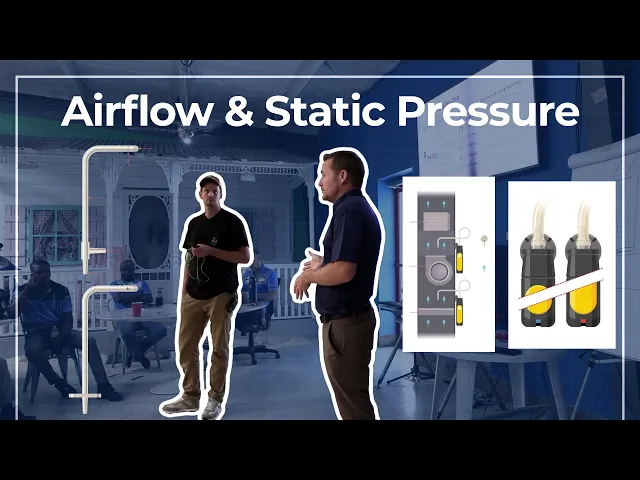
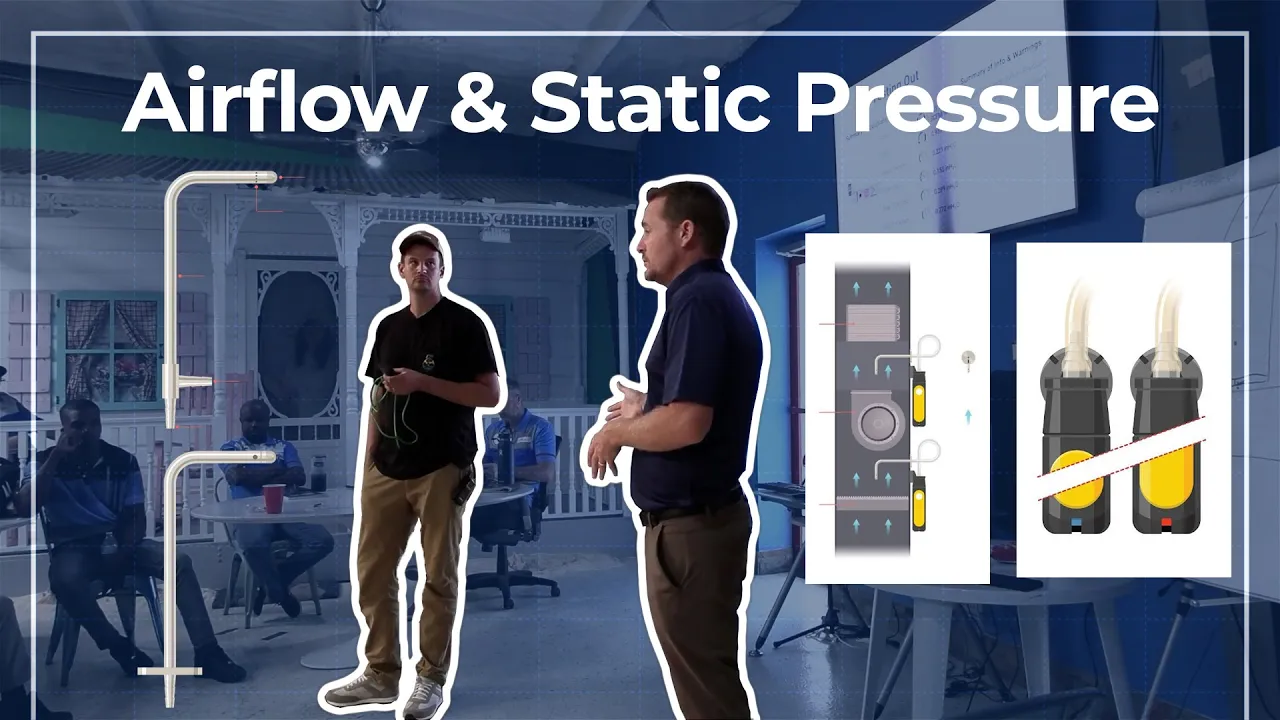
the manufacturer they're saying the these Pressures if you you know if you connect this this fan to this little dip switch uh then at then at this static pressure you'll get this much air flow and and um Brian do you want to do yeah I want I want to talk about this quickly so this is a good example of what I'm talking about so a lot of people will call a static pressure probe a pedo tube or pedo probe um it is not okay so a pedo is this little guy on the right and in
aedo you have a open port in the end So have you ever seen has everybody here seen static pressure tips before and what they look like so you've got it's a it's a 90° thing and then it's got little holes around the outside right it does not have a hole in the in the end so this one here does not have a hole in the end right got it this guy here has a hole in the end but it's a tube within a tube okay so you have your total pressure connection and you have a
static pressure connection so the static Pressure connection is like outside the tube within a tube and it's only measuring that same thing that the static pressure probe reads the total Pressure connection just goes right up through the center so it's measuring actual uh air pressure coming through velocity pressure so you point it towards the air moving towards it it's getting velocity pressure but it still has the static pressure as part of it so when you connect it to a monometer the Monometer just does the math you connect the negative part to the static pressure connection
you connect the positive part to the total Pressure connection and it does the math basically just subtracting the one from the other and it gives you the answer of what the velocity pressure is okay so total pressure minus static pressure equals velocity pressure you can then take velocity pressure by using a conversion chart blah blah blah math and the inside diameter of the duct you Can calculate what the actual air flow is now you're not going to do this okay I'm not telling you to do this so you can do it cuz in residential no
you're not going to do this test this is a dumb way to do it in commercial they do this all the time but the point is is that you see if you wanted to actually measure air flow you would have to use a pedo tube you'd have to use extra calculations blah blah blah static pressure does not measure air flow it Just measures pressure and like I said before it's this weird chicken and egg problem cuz in order to know if static pressure means good air flow you need to know what your air flow is
to know your stat like like it it's this thing and so you have to refer back to what the manufacturer says in order for our static pressure to actually be able to tell us something about air flow but what I prefer to do with static pressure is just ignore all that and just say hey Look assuming that the system is producing the air flow that it's supposed to do we have too much friction and too much friction means I'm going to have high static right so we're making some assumptions we're making a lot of assumptions
but at least it's something right rather than having to do a bunch of math if you want to know the actual CFM the system is producing then your best bet is to use the true flow grid nowadays It's like if that's what you want to do if that's what you're trying to accomplish then just use a true flow grid otherwise just look at the manufacturer charts with modern variable speed motors and x13 Motors if you set up the Taps properly you're going to get pretty close um and as long as everything's the way that the
manufacturer made it you're going to be in pretty good shape now the static pressure is basically just to say My ducks aren't good my filter's not good my coil's dirty that's what you're doing with it right you're not really calculating CFM a lot of what people teach you especially the fancy folks bill spone is one who I love and I've done this class with him so many times he teaches you how to calculate air flow using static pressure and Factory charts and pedot tubes and induct vein anemometers and doing uh log chubby CHF traverses and
we don't do that in Residential if you are in commercial test and balance that would all be great you're not you're in residential so you're not going to do those things you're going to check static pressure to say is there two much resistance to airf flow right you're going to use a uh a true flow grid if you want to actually see what your air flow is or if you got something like an evolution it'll tell you like it'll say here's what your CFM is here's what your static is great then At that point you
don't need any of that stuff Mak sense you got a question yeah what's a good static pressure what's a good static pressure we're jumping right to it well it it depends on whatever the fan coil says so they're rated for different amounts based off of the manufacturer based off of the model I know there were some old ones that were as low as like 0. 2 uh a lot of the modern ones are 8 so you want to keep it below the maximum that's kind of the the best recommended practice is it's kind of like
do you want to you're like well how fast can I drive my car it's like you it'll go 100 Mil an hour but um if you want it to last longer you know you should probably drive it at 60 you know you don't want to hit you don't want to Max those RPMs out so that is that's kind of the best The best practice for figuring out where your static pressure should be did you have a question Tony um why they have with they say the same to the same capacity two they say this is
a low aowow a low static unit Why why do they say that it's the same capacity oh yeah yeah like a one medium or high yeah basically the Reason is because like traditionally in commercial um you could use whatever static you wanted basically you just have to put it no it's because you have to consider that in the design right so for example if you design um if you design a unit that's supposed to go in an apartment okay and it's it's a pancake unit goes in the ceiling and it literally there's a duck here
and then there's like three ducks that come Off here and it's like boom boom boom that's it well why do you need to why would you put a much bigger motor in it than you need to put in it right that costs more money and it takes up more space and so they say look for this application you don't need High static or medium static just low static maybe 0.1 right it's got a little filter almost no duct work and so you have to design for that budget and this is where so I'm going to
back up again and say This is why I started by saying NCI and these other organizations that teach design okay that's a different thing we're not going to talk to you about how to design a duct system we're going to talk to you about as a technician what to look for right but to your point you got to know like if you're going to if you're going to design a space and you have long ducks and you don't have a lot of space to run Ducks so you know they're going to be small Ducks you're
Probably going to have to use a mid or high static system all right as an example look at some of these systems that are like High Velocity duck systems and the name is escaping me now some of the most common ones like space pack um where they're designed to run these tiny little ducks off of them and they run super high static super high velocity they're designed for it they got big old blowers on them right but you pay for that in efficiency right if you're going To run a higher static system the motor has
to be bigger it has to be able to work against more so it's going to be it's like what can it push against correct and so in commercial like when we design big HVAC systems in commercial there's some cases where it's designed to operate a 2 in static it's just designed for it it's easy just get a big old motor right you can do anything you want in residential the problem is is that we only get what we get they're Like here it's 0.5 that's what you got to work with you don't have any options.
five boom there it is and so you now you have to start with that and build your budgets accordingly like all right well my Supply DW is not great so what can I do well I can make a really big return and have like a gigantic filter so at least that way I'm budgeting some here because I know I've got so much use on my Supply so you have to kind of does that make Sense yeah let's see okay yeah so here we go there's your answer right I mean it's going to be written it's
going to be written on the unit and that's that's what you're going to be working with a lot yeah so again it it does it does matter where you measure I think that we covered this maybe in The Apprentice class or maybe yesterday just yeah it's it's all going to depend on where you put those probes so the when they ship the unit they Don't know what filter you're going to put on it so you're measuring like here's here's the filter here's the unit you're going to measure like between the filter and the unit yeah
I think you I think you have a slide from yesterday with it just a drawing yeah and again like the the point here is is that oh hey I got some old notes here um the point of this is that you do have to kind of know what's shipped in the box And so I know you guys don't do gas furnaces but just as an example and a gas furnace the coil is separate it doesn't come in the box so total external static has to be measured below and above the furnace so underneath the coil
so it's annoying as heck is what it comes down to with us everything is shipped in the box but there's a caveat sometimes they account for the filter that they shipped with the manufacturer from the manufacturer and sometimes they Don't right either way who cares you know measure it on that top side of the filter that's going to be a much more effective number cuz like I said even though the Bryant controller tells you total external static it's lying because it is only measuring it at the blower right so it's not total external static it's
blower static that they're giving you right so depending on where you measure the further you go away from the blower the lower the number is going to Get does that make sense cuz you're adding more things so if I measure if I measure under the filter and I measure in the supply duct I'm going to get a lower static than if I measure on top of the filter cuz the amount of work that you have to do gets more the closer you get to the blower cuz there's more friction on both sides more resistance to
the air flow yeah you can measure you can measure the static pressure drop of a grill so like a return Grill and and And if you go through the actual design process they're like here's your budget for a return Grill um so you can budget for you can budget for grills Ducks you know branches trunks uh return trunks uh every filter all of that you can budget out but again for a service tech what we mostly want to know is what's causing the problem is the static high in the supply is it high in the
return is it high is it is the static pressure drop High across the Filter is it high across the coil that's pretty much it right and all of that is contingent on is the blower giving us enough airf flow in the first place yeah and and so it it it's troubleshooting it's troubleshooting just like electrical or Refrigeration you kind of just have to know like what are the options what could what things could be going wrong it could be you know that the coil's dirty it could be that the filter's too restrictive it could be
the Duct Works bad right you kind of have to like build a list of possibilities and then just check each one okay so the basic process again like Brian was saying the chicken or the egg thing right you you you need to make sure that the that the equipment is set up for what you're trying to do right if it's a 3 ton you need to set it up for 3 tons of air flow at 350 CFM whatever that's going to be for you um find the manufacturer chart if you're out in the Field um
I like the I like the blue on app a lot I know it just started being like a paid thing but you can look up manuals and stuff and and and you can look up the a lot of the the fan chart NCI also has like generic uh fan table charts that you can use for PSC and ECM Motors um and you guys have yeah you guys have those so so you can get an idea of where the air is even if it's a unit that is just you're out in the Wild and again so
here's how you would do it right you look up your model number make sure everything's clean turn the unit on check your static pressure you look up your model number you it's an XY thing right you look up your model number you look up your static Boop you hit your number so that's that's how you check it so so this is stuff that this this is the kind of stuff that I have to deal with you guys don't you guys don't Really have to deal with this but Co but this is like an add-on right
so um so so in my market I have to figure out what's the pressure drop across this coil is it normal is it is it abnormal is it the answer basically is what it comes down to is when you're selecting a unit and this comes up a lot and even with fan coils is you have to know the application and in the past and again with SE 2 a lot of this has Changed but in the past you had to know based on this situation that I'm going to put this air handler in what do
I select do I select something that's got a three rating or do I select something that's going to be significantly higher than that and so like a really good example of that and again I don't know Bryant model numbers they may or may not be the same but a carrier um their fe uh air handler and FV air handler line uh they are the same okay Fe and FV um they Would have like the 002 or 003 Matt but you could also use the 005 and it would be higher static you would actually get better
air flow out of that at higher static and so a lot of times you would pick the 002 003 because it was smaller cabinet size it would fit easier but it would not perform as well um when you actually looked at the performance charts so that's kind of a version in in in uh gas furnaces it's like evapor coil so you know what your you know what your Static pressure budget is but you have some evap coils with huge static pressure drops and some with lower and so you have to choose accordingly measuring our performance
and thetic all can use me like for someone like need was just learning out that be something you recomend my off look on the app and then see It'll tell me based off of what I have if I have performance or yeah I mean that that is yeah measure quii does Work with that you can you can connect the manometers when you're talking about airf flow this part of it that's where true flow does a lot better um and again I know you guys don't have that yet and so we're going to talk just briefly
about that and and why it is kind of helpful yeah but you can use just a fan chart so so true flow if or or measure quick if you pull it up they're going to give you like here's your total CFM right um but it's not going to show you Where the problems are that's where you would have to go back with your monometer and so this is an example you could do this I did this with the true flow grid you can do this with just your monometer um and and and and it'll kind
of help you find problems right so this was house where this was a three a 3- ton system and this guy he wanted to he he was he he had a room that was uncomfortable and his unit was old so he was like he was like well hey like Should I get a bigger unit you know the upstairs is always hot um so so I was like well well let me let me measure the air flow right and so so this was a PSC blower motor which means uh you guys does everybody kind of know
what a PSC versus a ECM motor does anybody it's a nonvariable motor old school motor so it just comes on and just runs so it was. 59 total external static pressure which doesn't seem that Bad um and then and then I go through and I have each piece of the system uh that I can that I can evaluate right so the return the return duck system didn't seem that bad right but so so what I noticed right away with this is like okay so he's got a three ton unit but it's only doing 265 CFM
per ton so he was only really moving like 800 something CFM of air so he really has like a two-ton unit so he's asking me Like do I need a bigger unit do I need a 4 ton right I'm like well the air flow is way off on this thing right what if I could what if essentially I could get 30% more air flow and and use the same size unit like you know again it's just kind of like Gathering data and putting these pieces together and kind of trying to look at it and say
like based off of his complaints and his and his wants like what what's the best Solution for him is it going to be a 4 ton unit like does is that what he needs does he have a 3 ton right now that's working correctly um and and and it's just not keeping up like or or is there something else you know so so for this one I mean he had a huge huge airf flow problem so let's let's stop real quick so just looking at this what would you do say that again you want see
whatever the setting it was just set for high so he said first he said first Check to see what the units rated for right second let's look at the filter go ahead Jer yes it looks like I'd probably go increase to BU to return but on the flip side of that sometimes watch after you do that you might increase the static on your supply correct because to Jerry's point this is a key thing here so when you increase because you see the static pressure drop across the filter is pretty high like that's pretty darn high
for a filter right so if you Improve that problem and now your air flow starts to come up when your air flow comes up your static is going to go up everywhere else too right so even though right now your return might not look too bad once you get the filter in right then you may want to adjust the return as well so go ahead so so that that takes us into to to Fan law too right I'm like oh okay yeah let's let's put a bigger filter in what's going to happen right what if
I take this system From 800 CFM to 1,200 CFM and again right like my perspective on this is like I want to fix this for him right is is just changing the filter going to fix this for this homeowner or if I put that new filter in like am I going to am I going to create some other problem right or or I at least want to provide him with all the information that I can so that he can make an informed decision so so this is fan law 2 and essentially what you can Do
is if we if we know the original static pressure and we know the original airflow which you can use get using the chart right you can you know um you know what unit you have and what speed tap it's on and you can check your static pressure so so you know the CFM and then you're like okay I want to go to 1200 CFM right in my market we do 400 CFM per ton so it was 800 let's see if we can get this thing to 12200 what's Going to happen to the static pressure if
I do that right because it's going to go up but how much huh it three times yeah so let's see so so this is you this is me just taking the the supply I wanted to see what was going to happen Okay um if if I took this whole system up to 12200 CFM what would happen so I take my original static pressure I had around 800 CFM of Air flow my my new like my new goal is 1,200 so I put that on the top over there and then the squared thing really kills you
that's pretty much what you find out um is that any increase in air flow is like a yeah squared is bad in math right the numbers get the numbers get big really fast so uh 12 divided by around 800 you get 1.5 you have to square that 2.25 so and then you multiply that by Your original static and then that's like your new predicted static pressure at your new airf flow so just for the supply yeah that would be just for the supply so like right now you're like that's pretty good right 0.11 that sounds
nice but when you when you do the math you're like man it's going to go up a lot um and like a 30% increase in air flow is a you know 50 60% increase in Static pressure so it's just something to watch out for and this has happened to me other times where I like I'm like I'll change the filter out and I'll check the static pressure afterwards and it's actually higher you know um and and and again that's why this is like a learning process for for me as well right I mean it's just
like any other skill that that you learn with you know electrical stuff you're like oh it's the contactor you change the contactor you Ever have that like that sinking feeling in the pit of your stomach when you realize you were like wrong about your diagn nois you know and then and then uh you start sweating and the homeowner comes out and they're like how's it going you know what's uh when's this baby going to be up and running you know and you're like you're like oh it'll be it'll be just another minute or two just
had a few other things to check before we get Fired up and you're like running up to the attic just dripping sweat you know like um so you know like this is not a mistake-free process right like I like for me trying to trying to implement this stuff uh and especially if you test afterwards which yeah especially if you test afterwards we'll just jump to the to the test out afterwards um you know you you find out a lot of things this is very like revealing right I mean this is kind Of like me standing
up here in front of you in my underwear so I put a whole new system I put a whole new system in for this guy right um he doesn't want to do the whole duck system so that's kind of on him um but I'm like I can do this for you I can do this for you we can get it right you know we can we can we can hit what we need to hit all we got to do is upssize the return duct and put in a big filter um and and we're going to
get We're going to get you there right um and it it did not work out the way that that I wanted it to work out and I and I there's a couple reasons for that you know I so I started going back and kind of checking through this what happened you know I put a big filter in I don't know if like this is normally what I do so I'll put this is a different unit but kind of the same setup right like the filters that fit on the back of the Cabinets are almost never
big enough like you can you can go through and look okay so this is how I pick my filters right so I use and it's going to depend on whatever kind of like model of filters that you guys use but you can go through and look at the static pressure for that filter at that air right so I'm like okay cool you know um I'm I'm going to pick this one here and uh at at 1200 CFM it's going to be 0.12 okay that's pretty good you know Um so so uh so I did not
hit that I got .155 what happened was there was like a beam in the way so then I had to like make my PL them all weird and like tape off part of the filter um so so like a like a lot of stuff happened in the field and again that's kind of that front end like I needed to do some more planning on that front end of like hey there's a beam right there like what's going to happen when I you know when I Put this in here and then you know 25% of my
filter is not moving air through it it's got it it's just taped off you know um so so I get these readings you know obviously my stomach drops but the homeowner they don't know anything it's just airf flow right I mean he he it his house is more comfortable he's like wow we can keep this thing at 73 now um and before it would get below like 78 um but just going back through on the back End and and some of this is is interesting to me as well I don't know if you have any
thoughts on this Brian why the why the supply plan and pressure didn't work out with the math um what was it but what was it before it so I was supposed to be like I ended up with around 1100 CFM total air flow and at 12200 the predicted was .25 and it was like beyond that yeah so and also the evaporator cool drop like so I went back through and I picked out A new coil um when I when I buy a unit they're like here's your furnace here's your coil here's your outside unit the
one that they the one that they wanted to sell me was going to have a 33 static pressure drop and that's a I don't you guys know the cabinet sizes right like a BC cabinet so I'm like okay I want a bigger one that's going to have a lower pressure drop right just like a filter it's the same thing as a filter Right like the the bigger it is the more the air is going to move through it and you're going to have less of a drop so I'm like okay I want a better one
I'm going to put in this one that's 0. 22 um again why is it 0 28 I don't know um maybe I should have used like a duck transition or something um so so so anyway I the the homeowner's happy but I'm not Happy and and and this is a lot of the like test out on the back end for me and this is a lot of what keeps me really interested in this job right is like I just tried something I thought I knew what was going to happen and uh you know this is
sort of that like I got all my data I collected it all and then I do my test at the end and it's like like what is happening here you know but to me that's actually that's actually kind of exciting right Because um that's going to take me back in of digging through this process of like um going back in the fall and figuring out what it is that caused me to get these results and what can I do uh to you know actually actually get it right um so I I just want to see
if you have any thoughts on on all that uh yeah so thoughts are again the point here is even if you have the best tools uh and even if you are measuring Static and all this solving these problems is not easy and has to be done with care because just like he pointed out when you have that square Square effect um when you increase air flow you get big increases in static pressure okay and so that's also why it's very important that you have a pretty good idea that you've got the right air flow to
begin with for a technician who's not going through and doing all this design stuff um for you mostly you just need to Know that just fixing one part of the equation like oh I'll just put a bigger filter in it great that'll solve it it's not going to be that simple right it's it's not going to be that straightforward and that to me is the sort of the summary of in terms of how you apply fan law too and all that stuff yeah those of you in this room any of you who are going to
be designing and selecting equipment and trying to provide solutions to clients you need to Be really thoughtful about that and recognize largely what it is is just go bigger you know like just go bigger get your static pressure lower right that's that's a good thing to do bigger return bigger uh bigger filter bigger supply ducts if you can and especially the stuff that's close to the equipment try to get it as big and as well transitioned as possible to your point almost certainly um the reason why you see a higher Supply is because of that
Transition situation there A lot of times they make assumptions U if you look in the fine print there that um uh that you probably didn't didn't do so yeah yeah um what do we have next any questions yeah tell you what you got [Music] Supply I mean c Supply I'm [Music] [Music] Sorry why does it why does it need to be balanced to take more return on on the supp say no you got to put CFM CFM or are you talking about duck have you either make it balanced or you're saying that some people say
you have to have the returns bigger right more return Into people say should be Bal okay so let let me take that one okay so so yeah let's think of it this way so like um if I want to run if I have a pipe okay and I put one CFM of air in this end of the pipe how much air comes out of that end of the pipe one CFM I can't do anything other than that right like if I put one CFM in one CFM is going to come out that's how that works
so the the question is more likely why do you put a bigger return in a room than you Put the supply in a room right okay that's likely the question um and the answer to that is is that it's not like there's a proportionality between the size of a grill or the size of a duct and how much air is going in or out within the entire house the pressures are going to end up balancing right one way or another whether they bring in air from outside or whatever the case may be a lot of
times here my guess is do you guys do a lot of passive ducks a lot of Jumper ducks like where they're not actually connected back or is it a little bit of both a lot do duct oh you do duct it a ducted returns okay so the fact that the that the vent is a little bit bigger doesn't necessarily mean that you have more air flow right so if you were to take a a a balancing hood and you were to measure the return and you were to measure the supply they should be the same
right same coming out as going in if they're both ducted right They should be the same that doesn't mean that they're the same size though okay and this comes down to the fact that when we're designing uh Vents and duct systems on the supply side we want there to be some velocity coming out of the vent don't confuse that with velocity and the duct it's two different things we don't care if the air moves slow inside the duct when it comes out of the vent though we want to size that so that way it has
velocity so it throws Okay and this comes down to ber bui's principle which is the idea that and I always the best example is like if you go if you put your hand this far away from your face and you blow you can feel it here that's not all air coming out of your mouth you can tell actually that you can barely blow and still feel it like as long as you put your lips Clos enough together you can still feel it right well that's because when you create a Highpressure Air Stream a bunch of
air is entrained into that stream so most of what you feel hit your hand didn't come from your mouth mouth most of it came from the sides and the reason that is is because within a highspeed Airstream it creates low pressure on the sides have you ever seen that thing where you can you can use air and blow it up and a pingpong ball will bounce on the top of the air and it'll just stay there and that's because you have all of this air Coming in the sides that's holding it in place right that's
peri's principle that's what we use with Supply ducts we blow air at a reasonable velocity and it's not people say throw right like I'm trying to throw that air across the room really more what it is is you're trying to mix the air through the room so when this air comes across the ceiling here first off if it runs across the ceiling it actually sucks itself up to the ceiling a little bit that's why we blow Air across the ceiling because it creates a low pressure area top it over top of it and it kind
of runs across the room and down the outside wall but while it's doing that the whole way it's pulling air up from the ground right we don't want to do that on a return in a return we don't care because it's not it's going back into the duct you don't get that effect and so because we don't get that effect we just want it to be low static and so we make all of them Bigger it's not like you're just making if you just made one bigger and all the rest of them were the same
size as the supplies well then that one room would have a lot more air pulling in the return but because they're all bigger it should still be balanced return meaning amount of air coming out of the room amount of air going into the room are the same does that make sense go ahead yeah so one of the things I think of on the returns is uh like let's compare it To a garage like cars to air flow it's like just because you have a like like let's say you need a 3 ton and you might
make your garage for five that doesn't mean five cars are going to park themselves in the garage you're still just going to get three in there but go the other way around like let's say you have a two-car garage and you got a part five that never works out sure so make sure you have enough room go ahead Um most returns are by right where they by ther return uhhuh sure yeah a lot of times people put The Return by the ther we have bigger return P more quier right if it's bigger in relationship to
the other returns in the house right but let's say like let's use a ridiculous example let's say you have a gigantic return in every single room and gigantic Ducks going back to the unit it's not like just because the Ducks are big all of a sudden magically the unit's going to bring more air back to it the unit br brings the amount of air back to it that it brings back to it right and so that's going to be split proportionally evenly across all of the Ducks now if you have a bunch of small ones
in one big one then More's going to come in the one big one because that's static pressure right you're going to have pathol resistance kind of stuff right is more air is going to travel Down the lower resistance path but but what I'm saying is is that oversizing returns making them as big as you can is good but don't make one bigger than the others you're going to end up with imbalance and when you have imbalance in a particular room where one room is positive pressure or negative pressure either one then it's more likely to
bring in air from the outside right so if you have a negatively pressurized room bedroom it's not it's it's very Possible that some of the air that's going to come into that room is going to come in from the attic around the window everything else right that creates a moisture problem in that room if you positively pressurize the room okay that's fine for that room some of it's going to leak outside which isn't great but then the rest of the house is now going to be under negative so now the rest of the house you're
always taking it from somewhere go ahead I think There's a lot of confusion between oversiz and the grills and oversiz and the doting cuz a lot of times what happens is oh never put any Tri by2 or you know 12 by2 return grills but if it's a tiny little room you run into more balancing issues you you say everything gets a 14 or everything gets a 16 right right it's not going to be violence you're going to throw off the violence in re room so but it's fine want to give 14 14 grills but it
size The ducts according to the air flow correct right it's easier to balance correct and that's where the the what we're learning in humid climates what we're learning is that balancing the pressures inside of rooms where the doors are closed okay so if the doors aren't closed we don't care if the doors always open doesn't matter but in rooms where the doors are closed balancing the pressure in that room is a much bigger deal than we thought it was as we've Started looking at the data because what ends up happening is is when you have
an imbalance of pressure on either direction in a room it causes an imbalance of pressure in the rest of the house which then drives air either in or out of the house and when that happens in a humid climate that results in higher moisture in the house right make sense that's a really big deal to us CU even a little bit of humid Laden air humidity Laden air takes a lot of energy To get back out next so alls are same are if all the returns are the same so the return okay here's all I'm
saying the return needs to be proportional to the supply in that room that's all the amount of air that comes back out of that return needs to be needs to match the amount of air that's going in with the supply that does not mean that they need to be the same size okay does that make sense you don't have To have the supply be the same size as the return for the return to pull the same amount of air out of the room that the supply is putting in that's why you have to you have
to do the calul correct because you just like that right one Grill just like that create the house how big is the room how big is the space so they have in the room too because sometimes if you um make a calculator like example whatever and that room is a Master bedroom and they had three window when the oh got heat soide big TV that's heat sure and again so you're talking about so there's a couple different things so you have the acam manuals right that's the the Bible of how to do this but it
will make it even more practical you have to design your equipment which is how much air flow and how many BTUs in and out um well again you guys don't do heat so out How many be to use out um that the equipment needs to be designed for for the whole structure right then you have your individual room loads how much how many BTUs do we need to put in or remove sorry from each room depending on its size and the windows and occupants and all that stuff and then you have your duct design which
is how much air do we need to deliver and remove from this room in order to achieve uh that level of BTUs because BTUs ride on the back of Air right so we bring air in BTUs in this case right out on the back of that air and so that's all what we have to calculate there is no way to say well you just put all the same size returns and that's fine or you just put all giant returns and that's fine or you put all tiny returns or they're all that's not how you do
it now my what I advocate for if you're going in on a retrofit application is just make them big and put balancing dampers on them and then You can use the dg8 like we're going to show here to balance the pressures in the room when the door's closed or you can use an nlow Hood either way and now you just go yep it's what I designed for yep that return matches good and you're going to solve a lot of moisture problems and that's the main reason I'm not even that concerned about a lot of people
are concerned about perfect temperature balancing that's great sure get it within a couple degrees that's Amazing however you do that is fine by me but I'm concerned about you balancing the pressures so that way you're not sucking moisture in does that make sense CU that's what I'm for you guys that's what I'm trying to solve for here I'm trying to get houses that don't have mold and moisture problems CU if you solve that problem sure you can do a little bouncing here and do that there get it however you need to in order to make
the client happy the only way to do Both right perfect Supply Air to the room cuz customers do complain even 2° some people complain you walk in this room is hot the only way to fix it the the you know really really well balanc system in terms of Supply sorry Supply right load and to balance oversized and then you got balancing in the supply and return correct I said that one time everybody but it's the only way right to have balancing dampers on the return deck oh I mean if you're going to match you can
just match this you can use the supply Mar return it doesn't mean you or you can just go to jumper ducks and just make those big and then you're fine too which is that's what yeah right but you understand why that is if you have an active that's why it's so that you don't end up with positive or negative RS pressure in that room of more than three pascals what I want to Do now is I want to go ahead and do that before lunch I want to go ahead and just demonstrate this cuz it's
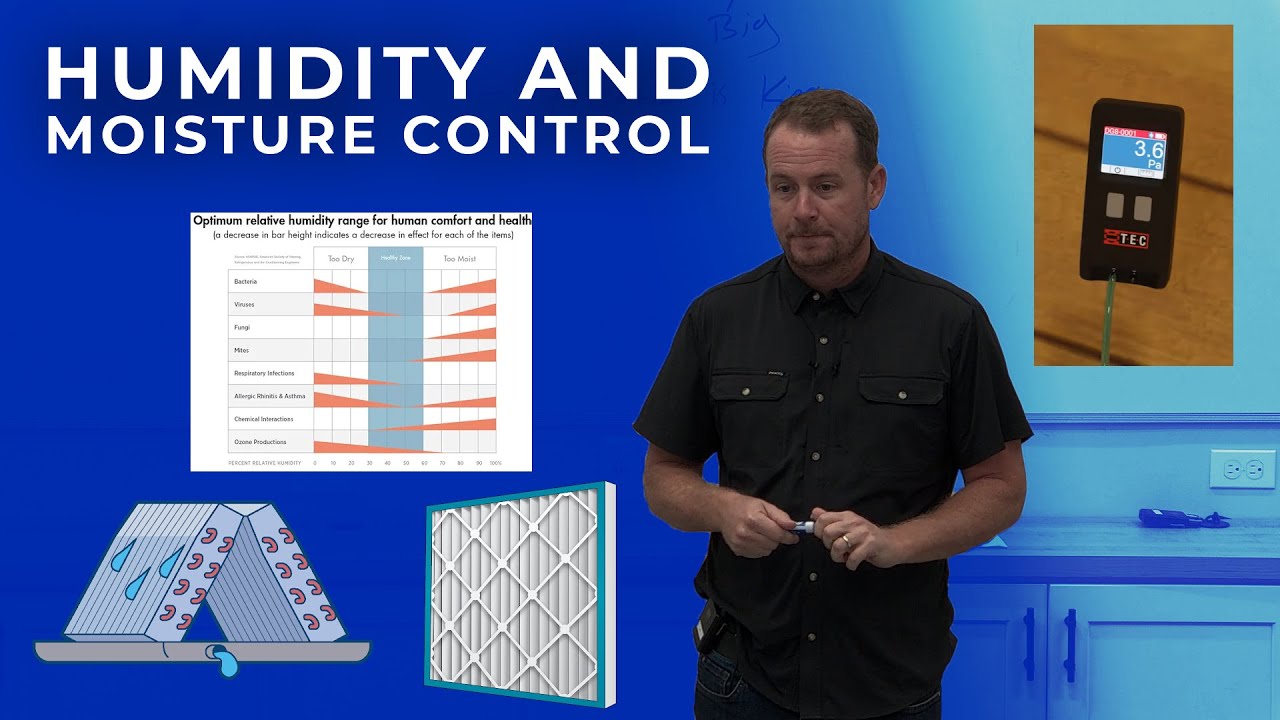
very simple um this is the dg8 from Tec and I want to be really clear there are only a handful of monometer that have this level of accuracy so you need to be able to measure in the fraction of a pascal uh so it's a tiny tiny amount of pressure it's kind of like the micron gauge of monometer this is not the same as your field piece your utility manometers all That that you use for measuring static pressure this is to measure pressure imbalances in a space so you can do things like measuring from the
space to a crawl space to an attic from measuring from outside and you can get a really good sense of where's your air coming from and where is it going right and this is also very helpful within a space so you can see in relationship from this room to that room what is the pressure IM balance now again you could do the Same thing by taking a piece of toilet tissue under the door right you can get a sense of which direction is the air moving moving but this gives you a sense of is it
enough to be a problem or not and the industry standard is as long as the structure is reasonably well sealed anything less than three pascals of difference is not a problem anything more than three pascals of difference is something that should probably be addressed right that make sense all Right so just real quick just real quick so this is a picture this is a picture of the true flow grid you probably seen it before um a lot of what we're talking about here with air flow is some of it is total system air flow is
the unit producing the air that we want it to produce right so in absence of a tool like this we have to use static pressure we have to look at blower charts all that stuff um I I'm sure eventually you'll probably have one of these and This is really great because it can confirm even if you only have one um you can confirm is this unit producing the air flow that it should produce and it works with this little monometer that I just showed you but then there's the question of each individual room right and
that's where you a tool like the dg8 by itself you can say look I don't know necessarily that I have enough Supply in this room but I can tell you whether it's balanced with Supply and return by Just sticking this under the door I don't know everything wrong with the house but I can tell you if the house is pushing air out of the house or it's sucking air into the house right and that gives you a sense of where duck leakage can be and a lot of other things because again if you have a
house that's under negative pressure then it's likely that I either have duck leaks in the Attic or I have have imbalance where I'm pushing air and kind of trapping those Boxes of air in the rooms like Matt was saying right and so it gives you another little kind of access point that you can that you can consider there's also a really neat little card and I didn't bring one with me but the it's called the rimulator do you have a rimulator on you I don't know I'll let me look and see uh and it's this
little card that you hold up against the door frame and you watch the pressure until it gets to zero as you open the door and So based On how big the crap is in the door it tells you how much additional return you would need or door undercut in order to make the room zero it's the it's the funniest little thing so do you get what I'm saying like so basically you're using the door as like a as like a gauge to throttle and say okay this is how much more return I need okay good
now look at the card depending on how big the crack was how big the under door undercut yeah this is it this is that's Literally it right and on the back it has a little it has a little chart there of like how you could fix it with different and again this is just one I'm going to talk after lunch I'm going to talk a lot more about humidity and this is just one thing to kind of understand what we're dealing with here air in and air out of the building is a really big deal
to control humidity and a lot of times when you're chasing problems that are driving you crazy these are the Things you need to know in order to be able to in order to be able to really solve those problems because a lot of times we throw dehumidification fancy equipment at it and it still doesn't solve it and this helps you kind of understand it a little more yeah yeah more things to just be able to check off right thanks for watching if you're willing give this video a thumbs up and drop us a comment don't
forget to hit that Bell icon to Stay updated with all of our future videos and as a quick reminder HVAC school isn't just a YouTube channel dive deeper with us at our main website hvacr school.com curious for more knowledge on the go we've got you covered tune in the HVAC School podcast available on all all your favorite podcast apps and while you're at it join our thriving Facebook group also don't miss out on our free mobile applications available for both iPhone and Android we're all about Community vortex byx