good evening I'm very glad to spend some time with you this evening how many of you have I not been with before how many have never been with me before been exposed to okay and how many have had a little bit of experience at least with nonviolent communication okay a little bit I'll try not to go too fast for those who haven't had any experience or too slow for the oldtimers I regret that I'll not be speaking to you in your language especially for St so U and though we only have a little time I'd
like to have this be interactive tonight because I think people usually get a lot more out of trying it out as we go along so if you've got something to write with and on I'll be having you try it out as we go along so uh think of somebody that you have a conflict with and uh this might be uh somebody at home maybe you have a child at home that says horrible things such as no uh or maybe you have somebody at work that's not producing as you would like or maybe something else so
think of a real situation where somebody is behaving in a way you don't like and what I'd like you to write down to get us started tonight is uh let's imagine that you go to them and uh you decide to be honest with them so write down what you would say to this person if you were to be honest with them about what they do that you don't like what would you say what maybe you've already done it then write down what you did say to them so I'll give you a minute or two to
get that written down what you would say to this person to be honest for okay now let's um take a look at what you wrote and if there's any language in what you wrote that the other person might hear as a criticism or blame or a psychological analysis that implies some pathology on their part my prediction is that one of two things will happen first you will create more resistance than cooperation and if the person agrees with your criticism and decides to change their behavior you'll pay for it nonviolent communication is based on the premise
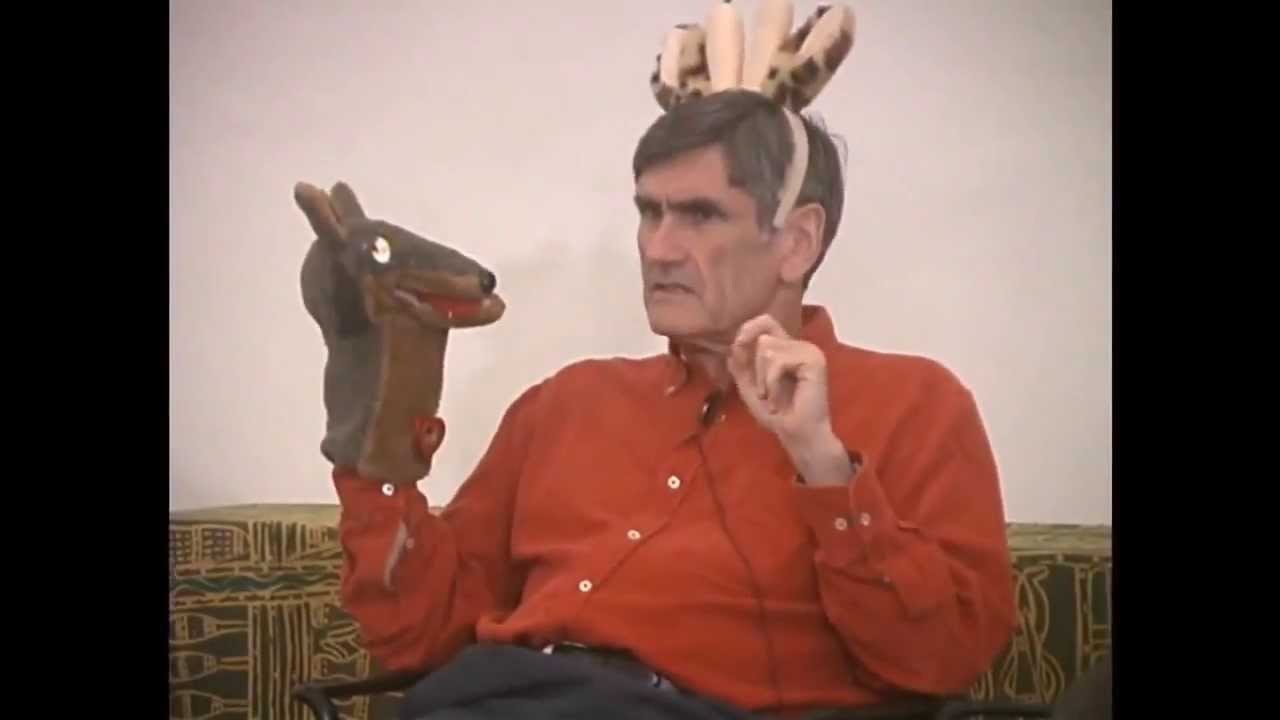
that any words we use that imply evil or bad or wrongness on the other person's part is the kind of thinking that creates violence on our planet so nonviolent communication shows us a way of being even more honest but being honest from the heart saying two things basically what's alive in you how you are and to do that very honestly but without using any words that criticize blame judge it's an honesty of the heart and for that reason I refer to it for playful reasons I call it giraffe language because giraffes have the largest heart
of any land animal okay now in giraffe language we're very honest but we're honest from the heart and this requires that we be able to be literate at saying four things to people when they're doing something that we don't like to make four things clear to them first to make clear what they did that you don't like if we're talking about something we don't like later we'll talk about how to be honest without any praise or compliments praise and Compliments are part of the same language that contributes to the violence on our planet so we'll
show you this evening another way of being honest when people do things we do like that has more more power and less danger than praise and compliments so one of the ingredients that we need to make clear is what the person has done that we don't like what has the person done that we don't like so write that down specifically what did the person do that you don't like now having asked uh thousands of people over the years uh that question what does the other person do my experience is that less than 20% of the
people answer the question that I ask instead of writing down what the person does they mix in a diagnosis let me give you an example I was working with some teachers in a school they were having a conflict with their administrator so I was asked by the school superintendent if I would help resolve the conflict between the staff and the administrator so I met first with the staff and I asked them that question I just asked you I said what's one thing that the administrator does that you don't like and one of the teachers immediately
says he has a big mouth now do you see the difference between the question I asked and the answer I got I didn't say what size mouth does he have I ask what he does and I pointed this out to him that and then he thought for a moment and says he talks too much I said too much is a diagnosis I'm asking for an observation he couldn't do it everything that came to his mind was a criticism or Judgment of the other person so one of his fellow students uh tried to help him she
says well I know what he does that he's talking about I say what's that she said he thinks he's the only one that has any intelligence no I said there's there's another diagnosis another woman tried to help her and she said he wants to be the center of attention all the time no that's a guess at what his needs are but that doesn't tell me the answered to my question now I wasn't surprised that they had trouble answering that because Jadu Krishna merty the Indian philosopher says that the highest form of human intelligence is the
ability to observe without evaluating studies of racism sexism and other form of dangerous thinking shows that people who think in that way can separate fact and opinion see so this is a very important skill to have if we want to be honest in resolving conflicts to be very specific about what people do that we like or don't like and not to mix it up with any evaluation so I showed them how to do this and finally they got clear what he got clear what he meant by talks too much here's what it sounded like when
he made an observation he said Marshall in our faculty meetings no matter what's on the agenda he usually tells a story about his War experience or childhood experience and our meetings last longer than they're scheduled because of that oh see that would be an observation that's what he did and it was decided that he would talk to him about that at the next uh meeting and he suggested that I be there just in case and at the next meeting I saw pretty much what they were talking about because no matter what was said the administrator
would start talking about other things and but nobody said anything at first you could tell from their nonverbal Behavior they weren't happy they looked at the ceiling uh they poked each other they yawned they looked at their watches they held the watch up to the ears so I said excuse me uh isn't somebody going to say something and the man who spoke up in our first meeting looked at the administrator and said Ed you have a big mouth so much for my teaching abilities so take a look at what you wrote down and see if
uh you answered that second question I asked you did you write down a clear observation it's a very important part of nonviolent communication now how do we evaluate that behavior in nonviolent communication well I've already told you we eval Val at it without reference without any language that implies wrongness no criticism no blame the center of this evaluation is our needs our needs see that's very important because you see all human beings have the same needs so if we evaluate from the heart from our needs the other person sees another human being like himself or
herself we don't then divide people up into categories of Good and Evil right and wrong but we make very clear what need of ours wasn't met I was asked to mediate between two tribes in Northern Nigeria a Christian tribe and a Muslim tribe about 40% of the population and both tribes had been killed in the war that they had every Muslim house had been burned to the ground so it took a colleague of mine quite a time to get the Chiefs in both sides to come into a room and see if we couldn't resolve this
without further violence so I asked uh when we were sitting on both sides of the table I said I'm very confident that if we can hear each other's needs we can resolve this without further violence so whoever would like to start I'd like you to just say what needs of yours are not being met in this conflict the chief from the Christian tribe looked across the table and screamed you people are murderers now do you predict that made the other side more compassionate about his needs see how tragic that about 80% of the people I
work with around the world they have almost no vocabulary for their needs but they're very good at telling other people what's wrong with them in a conflict situation which is why I think we have the violence on our plan Planet as I've already said so that stimulated a member of the other tribe to scream back across the table you've been trying to dominate us we won't tolerate it anymore so notice I ask for needs and each side told me about the pathology of the other side see how tragic how tragic well my job then in
that situation as mediator was to use some technology for translating criticism and blame into needs you see a premise of nonviolent communication is that all language that criticizes or blames is a tragic expression of an unmet need a tragic expression of an unmet need so when this chief screams murderer he had a need that wasn't getting met see but he thinks that you have to tell people what's wrong with them to get them to change when just the opposite is what often happens what you see is what you get if you see an employee as
lazy because they're not getting things done as rapidly as you like and they hear you using a word like lazy don't expect them to enjoy doing the work or as I put in a little song I once wrote tell me that you're disappointed if I say no to your advances but calling me a frigid man won't increase your future chances what you see is what you get so here I ask both sides what their needs are and now they're screaming diagnoses at each other so my job was to use some technology that I'm going to
show you how to use this evening giraffe ears with this wonderful techn ology you are conscious of what I just said that all criticism all blame is a tragic suicidal expression of an unmet need so with these ears you learn how to hear what's alive in the other person behind any criticism or blame that they express so I use the word wolf as a playful way of looking at the language of violence you see the language of violence I call Wolf language wolves aren't violent but I just like the word wolf so when this Chief
screams murderer put the ears on put these ears on what need was he trying to express it wasn't getting met got any idea holler it out what need do you think he wasn't getting met need for safety need for safety see she's got giraffe ears on she doesn't hear the criticism so I said to the chief chief U are you saying that your need for safety is not being met by how conflicts are being resolved you said that's right yes okay then I said uh to people on the other side would somebody on this side
of the table please tell me what the chief said his needs were that weren't getting met see a nonviolent communication we never assume that message sent is message received because when people have been blaming or criticizing or judging each other it's hard for them to see any truth see this enemy image that they have so when I said would somebody on this side of the table please tell me what the chief said his needs are one of the Chiefs said then why did you kill my son I had been told before I went in things
might be a little little tense cuz there were three people in the room that knew that somebody was in the room who had killed a member of their family so I had to do a little work with this person to kind of pull him by the ears to hear the other person's needs okay so now I've got one side with my help of this wonderful technology expressing a need I got the other side to hear it then then I translated their judgment of the other side that they uh they were too domineering too controlling and
I turned that into a need that they had a need for more involvement in decisions that were made more respect for their ability to make choices and I got the other side to hear it now just that much took about well over an hour because there was a lot of screaming going on but finally I got them both sides to hear at least one need we had others that we had to get clear as well but at that moment one of the Chiefs that hadn't spoken said to me Marshall if we know how to communicate
this way we don't have to kill each other see if we know how to connect with what's alive in each other without making any enemy images any criticism we can just hear each other's needs it's amazing how conflicts which seem impossible to resolve almost seem to resolve themselves so write down what need of yours isn't met in this situation that I ask you to think about what need of yours e now take a look at what you wrote down and if what you wrote down expresses what you want the other person to do then you
and I have a different definition of a need because needs as I Define needs has contain no reference to what you want the other person to do differently that's another important thing to do but we don't want to mix up our needs with our requests now it's taken me quite a while to develop a language of needs I went to schools for 21 years and I can never recall teachers asking me what my needs were see we have been systematically educated for about 8,000 years not to be very clear about our needs because we have
been educated to obey Authority we have been taught to exist within domination structures in which somebody considers themselves a superior who has a right to control others and this kind of domination requires a language of domination a language anguage in which this person claims to know what people are they know what's right what's wrong what's good what's bad what's selfish what's unselfish what's competent what's incompetent a very dangerous tragic language and that language is needed because within such cultures the justice system is retributive justice based on punishment and reward so if you want to make
life more miserable on the planet not only use a language that blames criticizes but use punishment or reward to try to influence people nonviolent communication shows us ways of being more powerful than we can ever be through using punishment or reward so the if you are a zar or a king or a president or someone who wants to control those below them you do not want people to have a consciousness of Life of their needs because people do not make good slaves when they're connected to life so that's why we have been educated ated to
associate the word needs is being needy selfish in the wolf World women are taught loving women have no needs they sacrifice their needs for their family men have been educated to believe that brave men have no needs they're willing to sacrifice their life for the king the Zar the president the flag or a bunch of other things see that's why in the schools public schools the primary objective is obedience to Authority teachers that I've worked with for the last 35 years almost all say the number one thing they're evaluated by is how controlled the students
are in their classrooms when the administrator goes by do everybody sitting up and looking at the teacher in quiet see so this is a very important part of nonviolent communication a need literacy and what goes with the needs are our feelings because when our needs are being fulfilled we feel pleasureful feelings when our needs are not being fulfilled we have Painful feelings so in nonviolent communication we evaluate the person's Behavior with reference to those three things a clear observation and then we tell the person how we feel about what they have done and then we
tell them what need of ours wasn't met so that's a language of life that's being honest by saying what's a lie than us notice in those three things there's no insinuation of wrongness on the part of the other person we're answering the question how we are without saying what the other person is but we don't stop there we have a very important fourth ingredient that we want to add to that because when we tell people what they've done and how it doesn't meet our needs and the discomfort we feel as a result of that we
want to end on a clear request that tells the person what we would appreciate they're doing to better contribute to our well-being so write that down imagine that you've told the person these first three things you've told told them what they've done and how you feel and what need of yours wasn't met now add to that a clear request what you would like the person to do now the important thing here is to make sure that you tell them what you do want rather than what you want them to stop doing see so in nonviolent
communication we don't say I want you to stop that we say what we want them to start doing what we want them to do instead I was working with some teachers in a school they were concerned with the number of broken windows that the students did and when we got to this part and I said what is your request what is your request of them one of the teachers said it's pretty obvious what we want we want them to stop breaking windows I said I have an easy answer for you then she said oh yeah
what I said kill them Recent research shows that dead students break no windows now as weird as that example is uh look in the newspaper on any given day and see how many of our world leaders Express their strategies with what they're going to get people to stop doing and then they use various forms of violence to get people to stop doing it so in nonviolent communication we want people to replace what they're doing with something that is better for them and better for us and we use a very clear language action language we don't
say what we want the person to be such as I want you to be more Cooperative it's too vague we use very explicit clear request in making request so any questions about those four ingredients that we've looked at so far that uh comprom comprise honesty as defined in nonviolent communication everybody's got that mastered already okay now let's imagine that you decide to try this out you go up to this person the next time you see them and as best you can after this very quick introduction you decide to try it out so you say those
four things to the person you try to make clear to them what they've done without making any diagnosis you then go into your heart and say how you feel and what needs of yours aren't being met by the behavior and you end on a clear request now predict how the person might respond what would the worst thing be for example I want to prepare you tonight for the worst that you could get back and write that down write down what's the worst thing that this person can say I didn't even have to say something uh
in a refugee camp that I was at in the Middle East I was working with about 80 people in this refugee camp and when my interpreter introduced me and said that I was from the United States I got a free diagnosis one of the things I like about wolf speaking people they're very generous with their diagnoses you see if you're around a wolf- speaking person you never have to go to a psychiatrist to find out what's wrong with you you'll always know so uh all this person had to do was to hear my interpreter introduce
me as from the United States and one of the people jumped up and said murderer boy was I glad I had this because if I had had these ears oh boy I probably wouldn't be here tonight these years you see if somebody says something like that to you you got a couple of choices you can put them on facing Inward and and then you take what the other person says as a criticism and you believe it and you feel like poor protoplasm poorly put together more commonly known as depression guilt shame or if you put
the ears on the other way you get angry and then I would have said you have no right to say that about me that isn't fair who are you to say what I'm a murderer and some of us have been very well educated to wear these ears we're ear bedex we can put these ears on both ways very fast you see so somebody can criticize us and we go Angry guilty depressed angry guilty depressed angry these ears are are distributed to the population by the makers of anti-depressant medicine and by arms manufacturers and divorce attorneys
you see because when people have these ears on there's going to be a lot of depression a lot of violence a lot of relationships are going to get broken so I was very glad that I had remembered to take my giraffe ears with me that night and with these ears I was able to hear him singing a beautiful song see with these ears on all you can hear is a Divine song being sung by the other person so what did I hear when I put those ears on this is what the children at home are
saying to you when they say no this is what the other person is saying to you this is what they're singing when they say the problem with you is if you have giraffe ears on here's what you hear going on inside that person they're singing this song see me beautiful look for the best in me that's what I really am and all I want to be it may take some time it may be hard to find but see me beautiful see me beautiful each and every day could you take a chance could you find a
way to see me shining through in everything I do and see me beautiful so what did I hear with these ears on what was beautiful I heard His Pain I saw his needs as I was walking into the refugee camp with my colleagues we had to kick out of the way out of the path several empty tear gas grenades that had been fired in there the night before when they had a riot in this refugee camp and on the side of was written made in USA so it wasn't too hard to guess what he might
be feeling what his needs might be but even if you guess wrong when you are sincerely trying to connect with what another person is feeling and needing that's very powerful that tells people that you care about how they are and when people trust that you care how they are that's your objective to connect at that level not to win not to punish you have more power so here's what I said to him when he screamed at me murderer I said sir are you Furious uh because your need for support isn't being met by my country
he was a little shocked to get somebody responding that way because when people communicate that way they usually expect the other person to either put the giraff reers Inward and get very apologetic or to put them on this way and get into an argument so he was shocked for a moment and then he said you're darn right we don't have housing we don't have sewage why are you sending the weapons so Siri you're saying that it is very painful when you have these basic needs that aren't getting met and you see weapons being sent You're
darn right do you know what it's like to live under these conditions so sir you'd like some understanding for how painful it is to live in this way about 40 minutes later he invites me to a Ramadan dinner at his house we now have a nonviolent communication School in that refugee camp all the parents all the teachers all the students learn nonviolent communication all because of this wonderful technology now for those of you who are a little shy and don't know that you want to be seen walking around town wearing these in our workshops we
show people how to put them on internally so now you see what nonviolent communication looks like it's uh when we speak we speak from the heart we're very honest but honest without blame and without demands you see we make clear requests but never demand now what's the difference between a request and a demand see they can sound the same a request and a demand cuz some jackals they make demands but they express them in a very polite way you see so they will say to their child I would like very much that you go in
and clean up your room and the child says no and then they turn pretty brutal did you hear what I said so if people expect that when we make a request that if we don't do as they request they are going to be blamed or criticized they hear a demand so it's important when we make requests in nonviolent communication that it is a request that our that the person knows that our objective is not to get what we want we are trying to make a connection that will get everybody's needs met so yes we say
what we want but we only want the person to do it if they do it willingly now when people trust that they're far more likely to do it it so that's not an overview of nonviolent Communication in Conflict situations it involves saying what's alive in us and what would make and what we would like to make things more wonderful and then no matter how the other person responds all we hear is what's alive in them and what would make life more wonderful for them and my experience is that when we can connect in that way
we can find a way to get everybody's needs met now one woman came to a training I did this was a three-day training fortunately because she did I didn't make it too clear to her after the first day she came in the second day and said Marshall I went home and tried it and it didn't work well I said let's learn from it let's hear what you actually said and she did a very good job with the mechanics she made a clear request she made a clear observation to her son she noticed that he didn't
do three things that he said he was going to do and she expressed her feelings clearly she expressed her needs clearly and she made a clear request so I said well you got the mechanics right that sounds very much like nonviolent communication what's the problem she said he didn't do it I said then what did you do I told him he couldn't go through life being lazy and irresponsible I said I'm glad we've got two more days of this Workshop because uh I can see that I have made the mechanics clear to you but I
haven't made clear what the purpose is it sounds sounds like you thought the purpose is to get what you want well yeah that's not the purpose of nonviolent communication to get what you want it's to create a connection that allows everybody's needs to get met that's quite different where everybody does whatever they do willingly that's the purpose not just to get what you want if your objective is to just get people to do what you want don't learn nonviolent communication go to a dog obedience school and and see how they train the dogs you very
hard for many people to learn especially when they are in the position of authority parents teachers bosses it's real scary for them the beginning of nonviolent communication they often mix it up with meaning that we don't have standards or rules and you just let people do whatever they want that's not it at all we'll have far more order far more willing Conformity to rules when people see how needs are met by these rules and they see the rules enforced by their protective use of force not punishment see in nonviolent communication we never use punishment but
sometimes Force yes so in our training we show people the difference between the protective use of force and the punitive use of force so that's how we deal with conflict situations in nonviolent communication but now let's see how we celebrate life in nonviolent communication how we express sincere gratitude see and not get it mixed up with praise and compliments when I say to people teachers parents managers in Industry I suggest for example the book punished by rewards by Elfie con and I point out the Silence of rewards and uh this really upsets people they can't
imagine going through life how you'd get anything done without rewards uh they tell me they've been through training programs that tell them if you praise and compliment children students employees daily research shows they produce more I suggest that they look at closely at the research Arch and I think they will see that it only works for a short time until people see the manipulation of the Gratitude of the the praise and the compliments so in nonviolent communication we do something far more powerful than compliment or praise far more honest we express sincere gratitude sincere gratitude
that involves the same three characteristics that we looked at in telling people what we don't like where I we make clear observations and then tell people how we feel and what our needs are those same three ingredients are how we Express gratitude in nonviolent communication only now we're talking about something the person did that enriched our life and the motive is not to motivate them it's not to reward them the motive is just to celebrate to celebrate how our needs were fulfilled by what they did I didn't make this very clear to a group of
teachers I was working with in Switzerland and after the workshop one of the teachers came running up to me and said you're brilliant I said it doesn't help she said huh I said I have been called a lot of names in my life some positive and some far from positive and I can never recall learning anything of value by somebody telling me what I am I doubt that anybody does but I can see in your eyes that you'd like to express a gratitude yes and I'd like to receive it but telling me what I am
doesn't give me what I need to really celebrate with you well what do you need to hear remember what I said at the end of the workshop those three things like first of all what did I do that made life more wonderful for you she said you're so intelligent doesn't help doesn't help oh I understand I understand and she opened up her notebook and she pointed to two things she had written there she said you said these two things yeah I did I did I did say those two things I said already you see that's
more helpful to me than are telling me I'm brilliant just that I know that somehow those two things my saying them had enriched her life in some way now I said it would really help me celebrate that if I knew how you feel as a result of what I said she said I feel hopeful and relieved oh and now if you can tell me what need of yours got met that leaves you feeling hopeful and relieved then I can really take in that gratitude and celebrate it she said Marshall I've got an 18-year-old son and
whenever we have a difference it just gets worse and worse and I have been desperately needing some concrete direction for how to connect with him she said those two things you said really met that need now put yourself in my shoes you see do you want to hear a gr a a compliment or do you want to see clearly how your behavior enriched the person's life and do you want to have in your head the worry of what are they trying to get from me or would you just like to trust that when somebody does
celebrate something you've done they don't have that other motive mixed in that they're trying to get you to keep doing it so that's how we Express gratitude now one of the hardest things is how to receive gratitude in a nonviolent way see let me show you how wolf speaking people receive gratitude if you want to scare the heck out of a wolf Express sincere gratitude to them wolf when you offered me the ride home today I very grateful because I really have a need to be with my uncle who's visiting so it's it really meets
a need of mine okay so I express this gratitude already I see Terror in the wolf's eyes and you all know what's coming right Nish to Duncan it's nothing it terrorizes wolves to receive gratitude see I've asked a lot of wolves around the world why they're so scared of getting gratitude and some of them say what's wrong with being humble and I have a cure for that I suggest they read what gold to my ear the Israeli Prime Minister once said to one of her humble politicians she said don't be so humble you're not that
great and uh so how do we receive gratitude in uh nonviolent communication with empathy the same empathy with which we receive people's pain we see what's in their heart we see what we've done how they feel what needs were met so we put all these three things together and that is what nonviolent communication is all about it's a language of life you see it helps us to stay connected with life Moment by moment see but it's hard to do it's hard to take in this gratitude if you have been educated in a wolf way see
as they say in the Course in Miracles it's our light not our darkness that scares us the most so uh we're not used to really seeing the power that we have as human beings to enrich life we're not educated to see that we have this Divine energy that we have power to enrich people's lives and that there's nothing that we like better than doing that but to do that requires this Liberation from this language we have been taught this Liberation from tactics of coercion punishment reward guilt induction we didn't talk much about guilt induction I
assume you all know how to do it right but just in case you haven't been taught how to use guilt in a violent way let me show you how to do it so this is one of my children who hasn't cleaned up their room to my satisfaction okay now the first step in making in trying to induce guilt you have to know how to look pathetic so put yourself where the child can see you and look pathetic what's the matter dad nothing come on dad what's the matter it hurts me when you don't clean up
your room now you'll have 18 years of daily fights about the room when you use feelings that way see a nonviolent communication we never never blame others for their our feelings we say what they've done but we connect our feelings to our needs we don't blame other people for them so we don't use blame induction we don't use guilt shame none of that what we do is we trust life we trust that if we stay connected to life everybody's needs can get met so in a sense it helps to think of nonviolent communication as a
dance of life where we connect with the life in the other the other connects with the life in US feel to G last last fire Thon right thank you thas boy I I'm excited I'm excited uh my high German is getting better I did that once in ink and a woman asked me afterwards what language was that uh I I'm living in Switzerland you know for a long time but I just there's some things about it I don't get like where I live up in the mountains when you pass people you sayit and when you
sit down at a meal you say a and one night after a workshop I said schf good m t on it's not so easy to say something but because mostly it doesn't help I learned that so just thank you very much from all our heart thank you Marsha feel for


![Ludovico Einaudi [relax, study, sleep, soft, calm, inspired piano medley]](https://img.youtube.com/vi/DIvewN35QT4/maxresdefault.jpg)