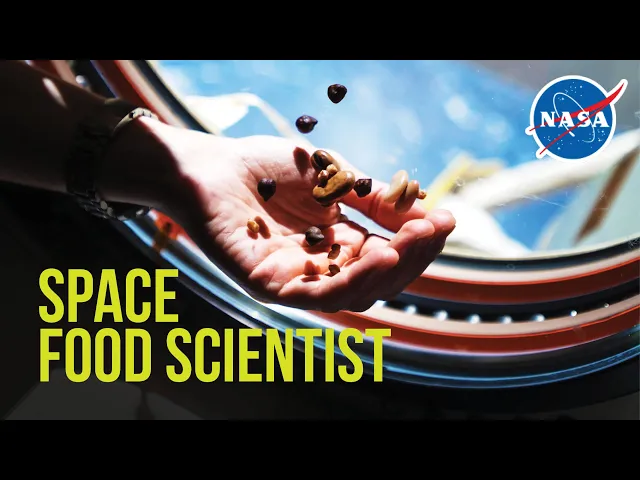
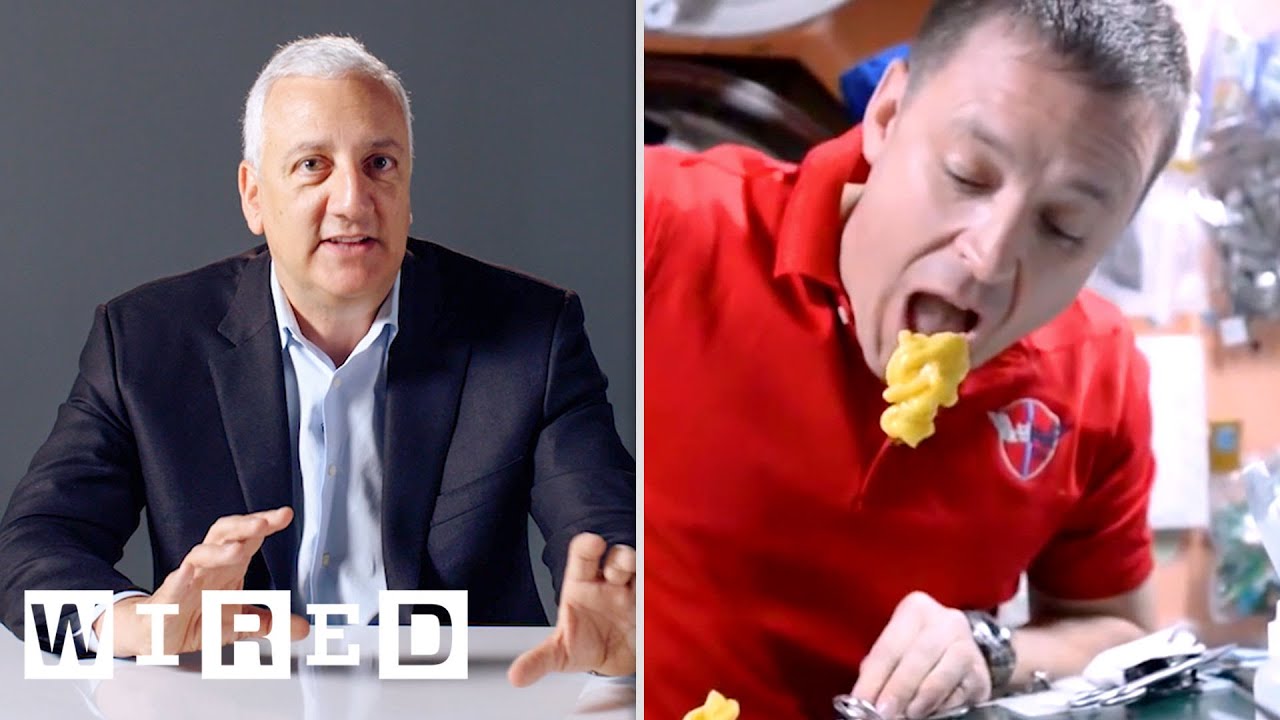
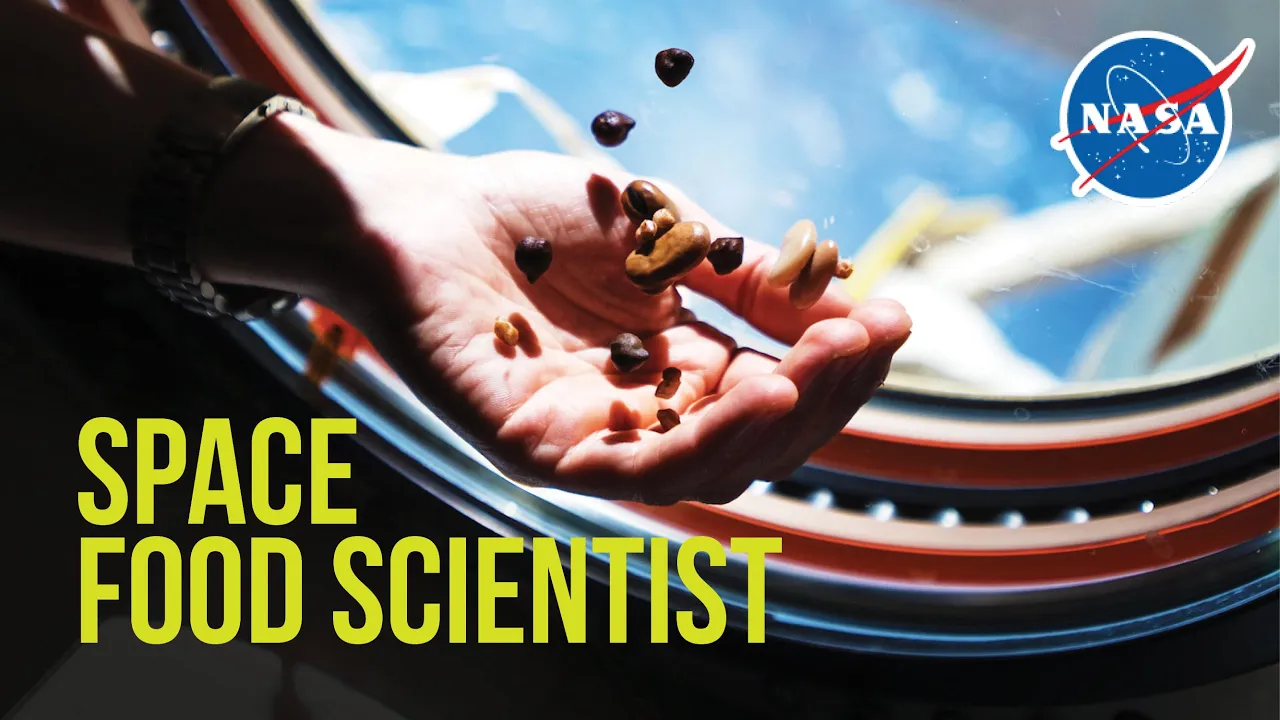
>> I would definitely consider space food as its own cuisine. On Earth, cuisines are created when people from a region use generations or wisdom to flavor, to prepare and preserve the food. And because of unique challenges we're facing for space food, like we need to meet the safety standard, we need to meet the nutritional standard and the food need to be able to work with a microgravity environment.
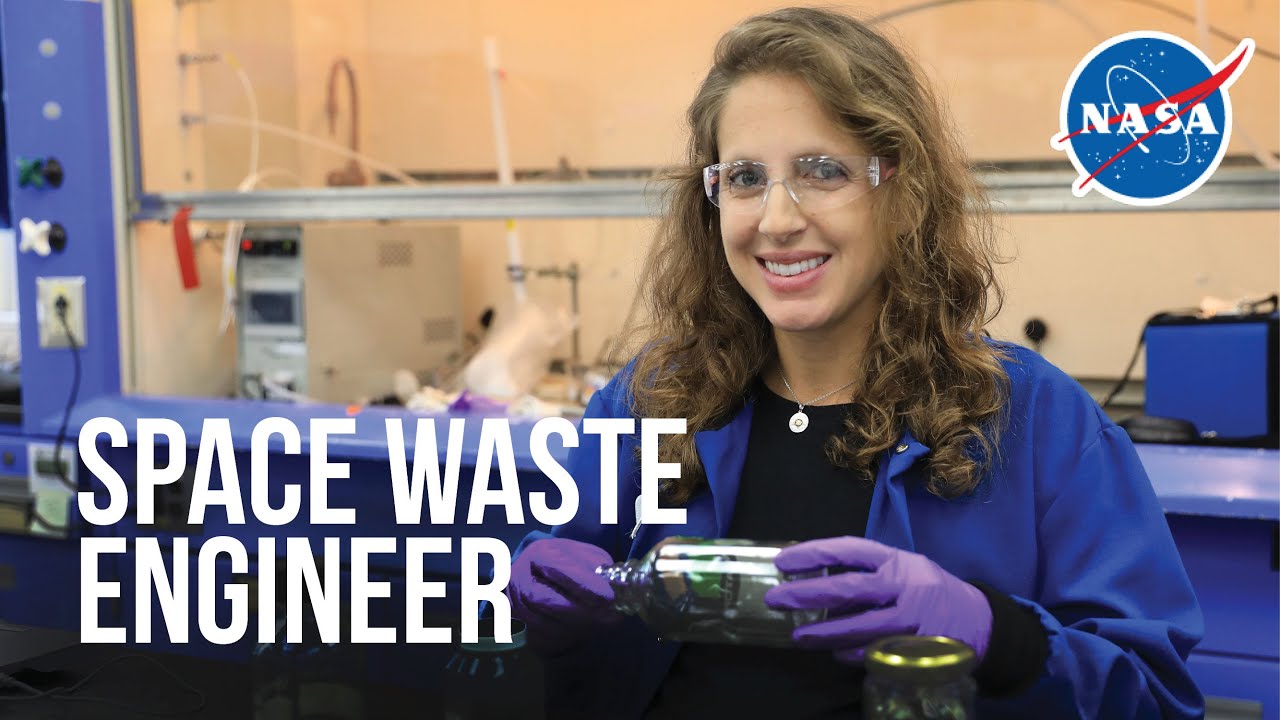
I think we formed our own cuisine. My name's Xulei Wu. I'm a food scientist, by training, working in the Space Food System Laboratory.
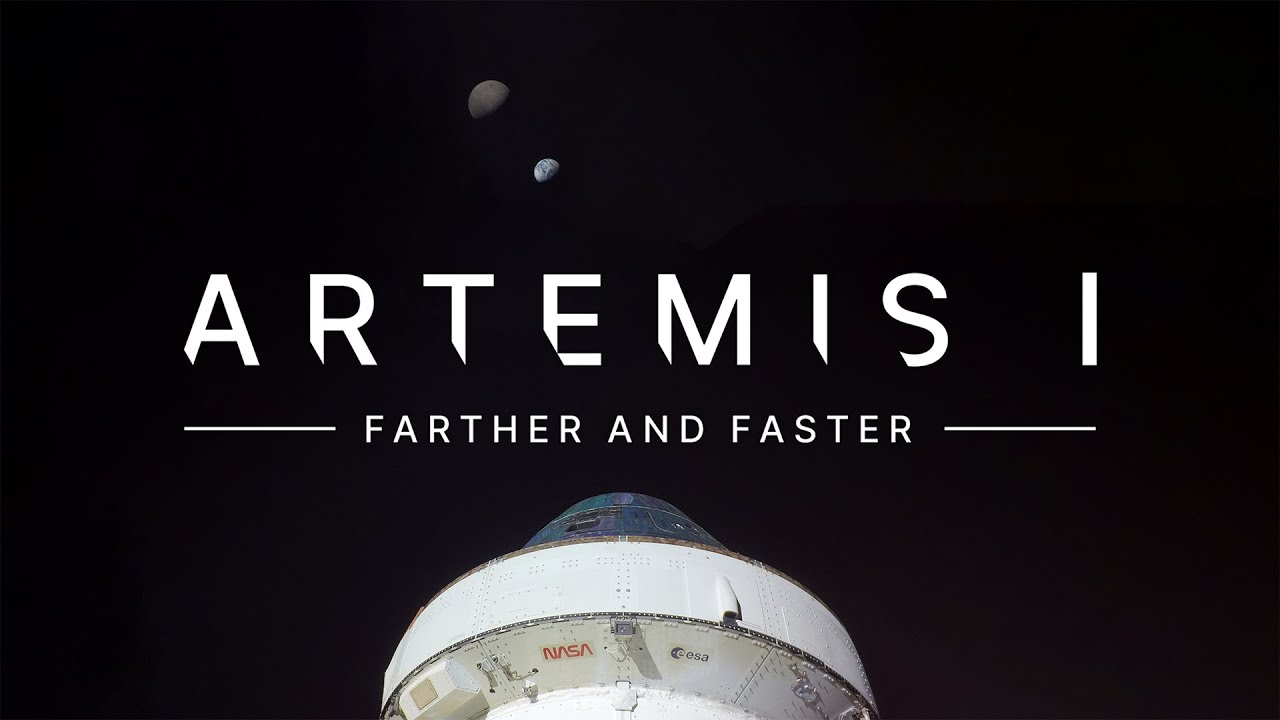
We create and produce space food for various space programs. I'm the food system manager, so I work with our team and also our counterparts outside of the food lab to ensure a timely delivery of the space food to support International Space Station and the very soon Artemis 2 mission. Many people, when they hear "space food", they will be like, "Yuck.
" But actually many of our food product tastes pretty good despite like, the need to be low-sodium and also need to meet the safety requirement. They're actually tasting pretty good. Food is very important.
Food will provide the nutrition the astronaut would need for their health and performance. Food also provides a critical mental well-being to our crew members. Even on the ground we gathered, we're celebrating with the food.
That's even so, when they're so far away from home. Because they're so far away from home, that's why it's very important to send the food that will be shelf stable for a long time. On the International Space Station Standard Menu, there are over 200 different food and beverage items that we supply.
We do provide a crew food session training to crew members. Once they are assigned for a flight, they will come in to try all the food that we provide on the standard menu. We're trying to make this easy for crew members, so we break into ten different categories.
So in those categories, we have breakfast, where they can find scrambled eggs, where they can find granola and blueberry, where they can find their own cereal. And then for lunch and dinner, then we break down to like a vegetable and soup, meat and fish, um, side dishes. And then we also have snack, and the dessert for crew member to choose as a well.
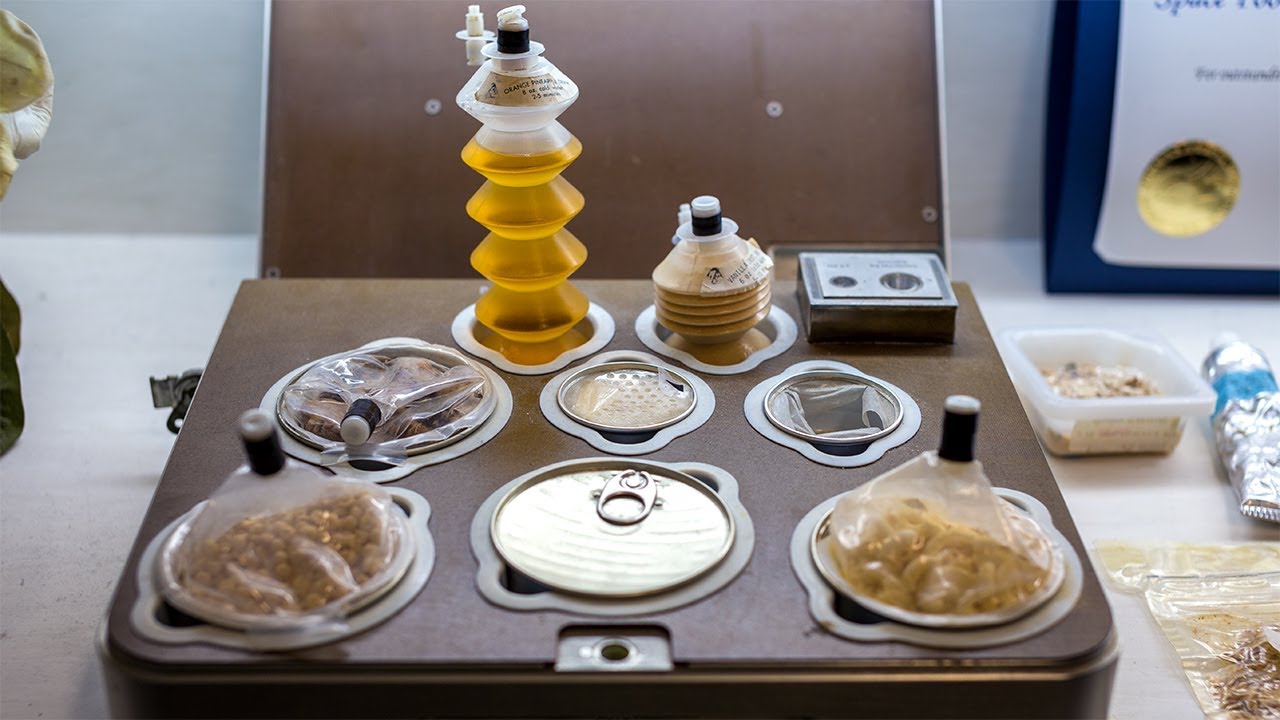
Among the space food we send to International Space Station. There are several major types. The first type, those green pouches.
Those will thermal stabilize the food. They're just like the canned foods you can find in grocery store. This type of food utilize high heat to make the product sterile, so that they do not require refrigeration or freezing.
They can heat up or eat as is by just opening the pouch. The other type of food, which I love, this is a freeze dried product. Freeze drying is a process to remove most of the water out of the food by removing the water out of the food.
The weight becomes super light and once they crew member adds the water back before consumption, it will reconstitute and represent the texture of this product again. So the food we provide right now to our astronauts we consider as ready to eat. So that means the crew member, all they need to do is either put this pouch inside of the food warmer to heat it up if they prefer it's warm, or they add water-- if it's a freeze dried product, they will need to add water first, and then they can heat up or let it hydrate for 10, 15 minutes before they open up and they eat.
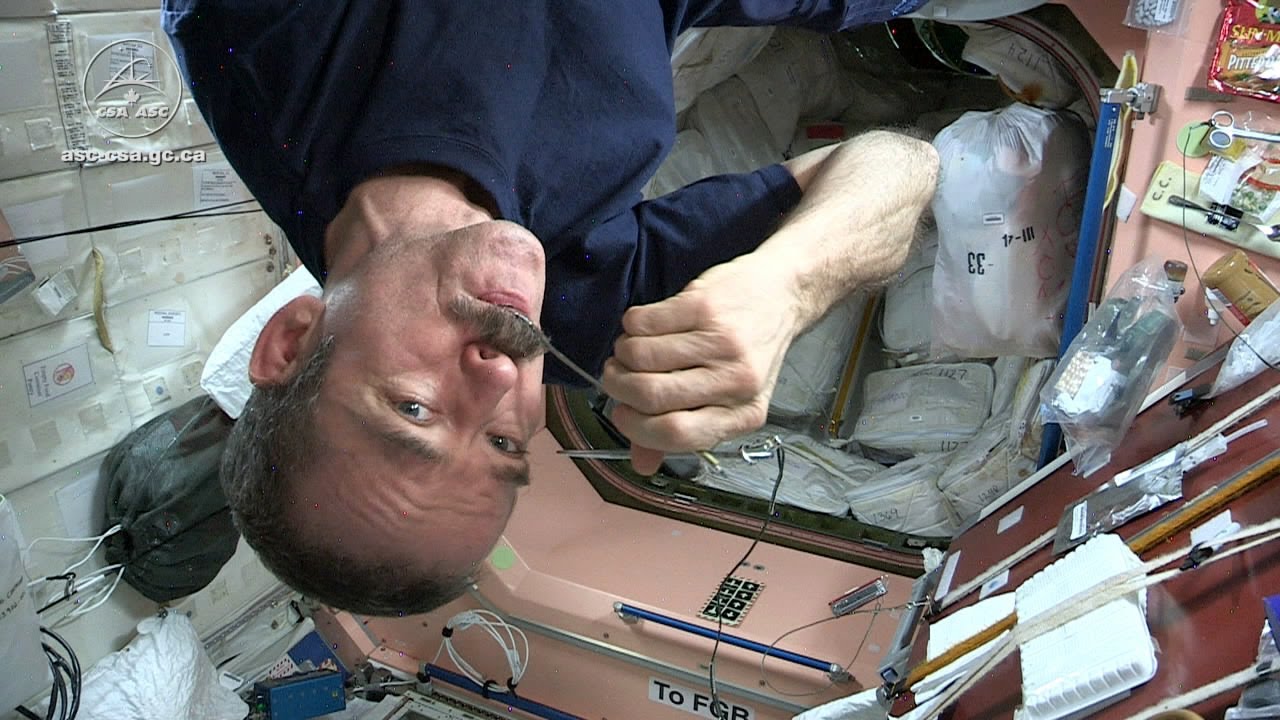
In the microgravity environment, water is supercritical. Water acts like a glue bonding the food together. And thanks to the surface tension of water, that allows the crew member to open the pouch carefully and use a spoon to scoop the food and deliver that into their mouths?
Definitely a lot of consideration goes into what recipes to create. First of all, we want the food to be tasting good. If the food not tasting good, then no crewmember would want to eat that.
And secondly, we also want to bring nutritional benefits to crew members. So we're looking at what's already available in the current food system and what's lacking. My favorite part of this job is really to serve a large purpose that I'm part of the effort to support human space exploration, so that one day we can go back to the moon, and one day we're going to make our presence on Mars.
As we're preparing for those longer exploration missions, we're in the process to evaluate the shelf life because for the longer exploration mission, it needs longer shelf life. Right now, for International Space Station, we're targeting three year shelf life. For Mars mission, we're targeting five to seven years shelf life.
So our food scientists are working to see what approach we can put in to ensure the food will still be good and nutritious, five to seven years after. Microgravity creates its own unique challenges. Salt and pepper.
At home, that's just on our table, a salt and pepper shaker. There's also crumbs. They could just float.
On earth, they just fall onto the table, fall onto to the ground. In microgravity, they can get into equipment, mess with equipment. Therefore, we have to dissolve the salt in water and send this as a liquid salt to be used in the microgravity environment.
I become interested in food science. Two reasons, one is, when I need to determine which major to choose, I find it's very difficult because I like multiple disciplines. I love physics, I love chemistry, I like biology.
It's a hard time. At the same time, there was a big scandal broke out in China. Many baby infant formula companies, they adulterated the formula with a chemical that actually could cause kidney stones and the kidney damaged.
That's kind of the trigger that I realized, I want to study more about food safety. And food science happened to be a discipline that involves multiple different disciplines in that process. I have never thought about landing a job at NASA because I was born and raised in China as a first generation immigrant.
Being able to work at NASA is something for me like a too good to be true. I don't consider myself very smart. I'm very hard-working, and I think it's important to discover what is your true interest, your true passion, what subject do you love the most.
And then connect this to a career that is making a contribution to the society. If you run into some issues and doubt yourself to be the right fit for the STEM field, my advice to you would be it's okay to have a difficult time. Give it a try.
Give it a shot. Because as long as you work hard enough, you will find out what you're truly fit for. Don't doubt yourself, you don't know what's your true potential.
Go explore. Go test it out.