Do you realize that anybody who knows how to use Notebook LM and Gemini can now pinpoint and validate their startup ideas with a precision that used to cost tens of thousands of dollars? Today, I want to show you exactly how to use these powerful AI tools to walk through a systematic approach for finding real needs and validating your concepts directly from online communities. In this way, we're going to replace guesswork with data.
You see, while I was running my marketing agency, we worked exclusively with software companies from innovative bootstrap founders all the way up to the largest SAS company in the world. I've personally run survey projects on behalf of these companies that cost tens of thousands of dollars. And I can guarantee you that today's AI tools, if used properly, can outperform those expensive projects every day of the week.
I've poured hours into developing this AI assisted workflow designed to tackle the entrepreneurs's worst fear, building something that nobody wants. As Sam Alman and his gang are betting on when the first oneperson 1 billion dollar company arises, let's make sure you've got a horse in that race. For that, we need to begin with the end in mind.
Thinking about what a savvy VC might be interested in investing in. Even if you're bootstrapping like I'm bootstrapping, and I probably recommend that above everything else, given all the access to these tools that we have, I know all too well that it's easy to fall in love with your ideas. So trying to view what you're going after from the standpoint of an investor is a great way to ensure that you're on the right path.
And for this, I'm jumping into the cheat sheet. I make a cheat sheet like this for every single video that I create. They are all instantly available to anybody who supports me on Patreon.
There's a link in the description. Check that out if you're interested. But the things that a venture capitalist is very interested in is this founder market fit.
So that's going to be the first step that we look at. Then we're going to be spending a lot of time doing some deep customer discovery work. That's really one of the main things that these AI tools unlock.
Then we're going to look at developing a distinct uncrowded angle as well as strong signals for monetization. And finally, we're going to get into a clear vision and momentum and narrative. That's our checklist to make sure that we are finding and vetting our startup ideas properly.
This first step here, idea generation, starting with what you know is critical. So many founders get some sort of idea. They hear something on the news in an industry unrelated to what they have any experience with and that's a recipe for disaster.
So just like anybody writing a novel needs to focus on writing what they know, founders need to do the same thing. Thiago Forte released a video recently that was a really awesome look at how to use Notebook LM for um self-reflection. And I think that that is a great tool to sort of think through some of the problems that you're facing and get a feel for some of the things that you might have a great founder market fit for.
I've got a couple different prompts here in the cheat sheet that can help with that. If you have a bunch of journal entries, you can load those into Notebook LM or if you have any sort of notion notes or anything that might serve that purpose, it might be great to load that into Notion. However, if you're using ChatGpt, they recently allowed you to um chat with all of your different chat strings.
So, ChatGpt now has access to um you know, any historical conversations. That's a great place as well to use prompts like this that just ask about, you know, what are some key themes or patterns that have emerged over the course of our conversations? you know what are some challenges some things that you know might lead you to uh unexpected areas where you might have some founder market fit there.
So that is one way you know these first few steps were just looking at you know all the different options on the table. One of the big mistakes I think is just going with the first idea that you have. You want to generate a ton of different options.
Uh I did a video all about Rick Rubin's creative process. I'm going to link to that in the description that talks about generating a ton of different options. That's what these first couple steps are all about.
So, for founder market fit, we're just using prompts like these to figure out where you might have a significant advantage. This includes where you might be an industry insider or where you might understand the user pain points better than anybody else. Once you've got a feel for that, we're going to move on to the next section here, which is just scanning the horizon.
And again, we just want to open up our aperture as wide as possible to think about all the different options that are available to us. And this one really focuses around where is the world changing? Where are things just naturally getting disrupted?
That's where the big opportunities are. We can use a prompt sequence like this to help uncover those opportunities. The example that I'm using today is my healthc care startup idea that I've been working on.
I've been lucky enough to have some significant healthc care issues recently which have really shown me where there are some pain points in the industry especially when it comes to downloading my own blood work and uh sharing that with other folks that can be a real pain. So that's the startup that I'm working on. I'm going to be doing some research here into the consumer healthc care space.
So I'm copying this prompt right into Gemini. It basically just says what are some ways the consumer healthcare industry is changing? What are some trends leading to these disruptions?
Exactly. This is exactly where I'm focused on this digital transformation and the rise of health tech, empowered and proactive consumers. Yep.
These are all of the things that align perfectly with what I am trying to do. So, I'm going to follow this up now with this prompt that just says, "How might these lead to opportunities for startups? " because I'm still in the vetting process of this startup idea and I want to make sure I get it right before I really dig in anymore.
So, following that up right here, just seeing, you know, what are some opportunities here because I want to just, you know, see how many different angles can I approach this. There's a lot I didn't consider in here. There are a couple resources that you might want to check out for this phase.
One is called exploding topics which shows you, you know, all sorts of graphs about what topics are becoming more popular. And another one here called CB Insights. I'm not being paid to recommend these.
These are just tools that have come across my radar as being helpful for this phase. This is also a phase where you might want to conduct a deep research consulting project like I've shown in a previous video. I'll link to that as well where you can do a deep dive into a lot of this research.
All right. Now that we've scanned the horizon, the next step is to really understand what problem we want to focus on. So there's a concept called netgraphy.
And this is a powerful concept because now with these powerful AI tools, we can do some amazing things that weren't possible. Like I said at the beginning of the video, I used to do massive surveys and studies to try to figure out user preferences um for these software companies. But the problem with that is everybody taking those surveys knew that they were answering a survey.
They knew that they were under a lens in some way and that shaped the way that they would answer that survey. Netnography turns that on its head and it really seeks to look at what these users are saying out in the wild. And this involves looking at forums like Reddit and Kora to understand what they're actually saying to folks when they're not filling out a survey or, you know, being interviewed on a, you know, product demo or something like that.
So, this is what we're going to use to understand this problem as deeply as possible. The first step here, you can use a general prompt in Gemini that just asks, you know, how are these people dealing with this? Just to get a general sense of what Gemini might say.
But the real magic comes from uncovering, you know, these different Reddit forums. So, I'm going to focus on this prompt that helps us look for online communities or forums that are related to users of consumer healthcare. Drpping this right into Gemini.
And here we go. This is what I'm looking for. Subreddits.
The health subreddit, chronic pain subreddit, diabetes subreddit. Those are all gold right there. I'm just diving a little deeper, asking for a full list of the subreddits that might be useful here.
Very cool. It has returned a ton of these different subreddits. So now I'm going to just take these subreddits and drop them right into Notebook LM.
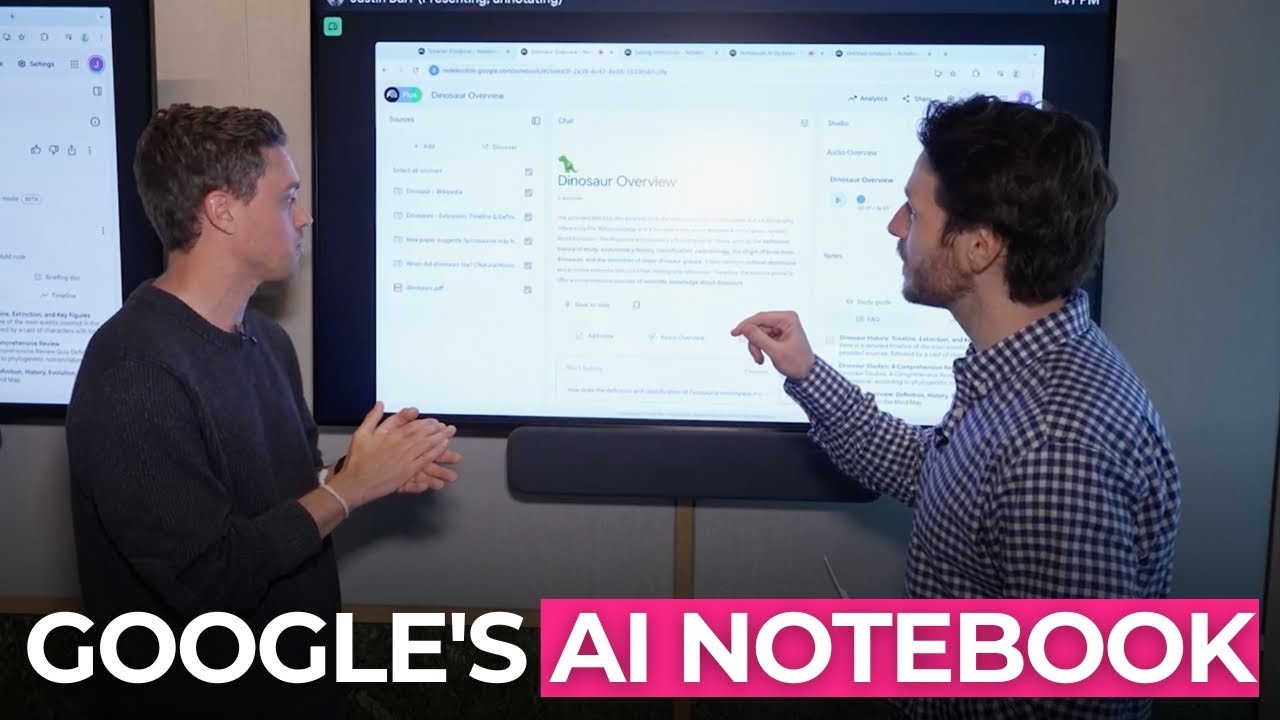
If you're new to Notebook LM, you just go to notebookm. google. com and you find something like this where you can upload all different types of information and then query that information in various ways.
So, we're going to add that health link, chronic pain and diabetes. So, we've loaded in a few of these subreddits here, and it just pulls in what's on that page. So, these are not automatically dynamically updated, I don't believe.
And they don't go deep into all of the different pages here, but there should be enough on those pages to get us a lot of good information. And you can obviously load in all sorts of different threads. Go as deep as you want into this step till you feel satisfied that you've got enough information in there.
And now we're just going to use prompts like these to try to understand the pain points as deeply as possible. And most importantly in the actual user's words, I'm copying this one right in. It just asks about different challenges or frustrations that users face when it comes to sharing and accessing their health information.
Exactly. Misinterpretation or dismissal of by health care professionals. Interesting.
Stigma judgment and being treated as drug seekers. That's an interesting one. I had not thought of.
Difficulty accessing necessary medications. Yes, I've had experience with that. But this is also showing me a bunch of things that I didn't um you know fully realize.
So, I'm just going to follow it up with what are some frequent words or phrases they use when it comes to how they express these frustrations. This can be really useful when it comes to marketing that we're actually explaining these problems in their own language. Let's see what this pulls in.
Really cool. Unseen and stupid is a phrase that is being used. One of these folks was described as a hysterical female.
Interesting. Now we're really getting into the psychoraphics of how these users feel, which is really powerful when we're vetting our ideas and trying to build a game plan here. Combing through these subreddits and going deep on this is I believe the number one way to get a firm handle on the problem and it can be done now at scale whereas previously that was just a whole lot of manual labor.
Now you can do it very quickly using Gemini and Notebook LM. Here are a couple other prompts from the cheat sheet that might be interesting. Listing all the questions found in the sources that users ask about product recommendations, tools, suggestions or solutions.
Help you get a feel for um identifying their needs. Also, this one for understanding themes. Identify the common themes, formats, stories, questions, guides, or tones present in the most highly commented posts.
So, those will get you pretty far. are some other resources here. There's a book called The Mom Test by Rob Fitzpatrick, which talks about how to conduct consumer interviews appropriately, and there's a lot you can take away from this book and put into your prompts.
He talks a lot about getting them to talk about their life, not your idea. So you might want to think about prompting um these large language models to you know figure out what are the lives of these folks like you know day in and day out versus highly focusing on your particular product. All right so now that we have a deep understanding for the customer's pain points it's time to find a distinct and uncrowded angle for your startup idea.
This is another uh angle that you want to vet your startup through. Here is a super powerful prompt for that. It just says, "From these Reddit threads, highlight examples where users describe cobbling together their own solutions using multiple tools or creating DIY fixes.
What does this reveal about unmet needs? " So, right there you can get a feel for what is not being offered in the marketplace that you can then capitalize on. This is another place where you might want to use Gemini to go out and gather a complete list of your competitors or potential competitors and perform a gap analysis.
Here's a killer prompt for that. This one just says, "I'm considering building a software product to help people with X, whatever you're trying to help people with. Please do some research around competitors in this space and return a table with three columns.
Number one, painoint. Number two, existing solution. Number three, opportunity or white space.
focus on where pain points aren't fully addressed. This is interesting. When you pop this in, it now automatically knows that we are going to be doing some deep research here.
So, it knows that it needs more than just one shot at this that it's going to need to do gather a bunch of information. We'll come back to that here in a second. While that's running, let's jump ahead and look at some monetization signals.
So, here's another prompt that I'm using inside of Notebook LM that just asks, "Are there any monetization signals from these comments? Is there anything here that leads us to believe they would pay for a new service in this area? " In running that in this example with just these three subreddits loaded, it gives you a lot of ideas around how you can position your product and things that you know folks might be willing to pay for based on you know the different costs, different things that they are struggling with including this cost associated with managing stigma and lack of support.
I can identify with that and all the time invested in figuring out these different health care issues. I can empathize with that directly. So these can give you some really interesting thoughts about you know the monetization aspect of your product or service.
And these are also really powerful when it comes to the marketing as well as you can start to make the case for why your product is worth something you know based on these uh different areas of pain and frustration. This cheat sheet goes much more in depth about some of the next steps here where you can start to think about a highlevel roadmap for this validation to the MVP to the scale process and even thinking through this allimportant go or nogo decision based on your checklist from that founder market fit, urgency of the problem, market size, willingness to pay, monetization, competitive def defensibility and speed to the MVP here. So, if this is something you're interested in, definitely check out this cheat sheet.
There's a link in the description. You get access immediately to this and over 130 other cheat sheets. I've got some coaching options in there as well.
Here's another powerful prompt. I've been using this one like crazy that just looks into pricing models in this space. Pricing is always such a conundrum, but using Gemini to do this type of research can really help you understand what people are accustomed to paying.
So, you're not just throwing some wildly, you know, um, new type of offer at them. Now, jumping back to that deep research, that report has finished running. Remember, this is the one where we're asking for a table of three columns focusing on pain points and way where they are not fully addressed.
And this is a long uh deep research report, but here is the table that we're looking for which maps out all the different pain points in this space and the open white space, the opportunity for a startup to come in here. So that alone is worth gold that would cost many tens of thousands of dollars to create previous to this technology. So I hope you got something out of this.
I hope you can think of this as a checklist for generating ideas, vetting those ideas, seeing those um ideas through the lens of a VC. Again, even if you're bootstrapping, kind of thinking, would somebody put $100,000 into this, a million dollars into this, $10 million into it, and viewing it that way very seriously before you commit to building something out like this. I've got another video all about coming up with innovative ideas, following Rick Rubin's approach.
There's a link to that right here. I will see you over there. Make your dreams come true.