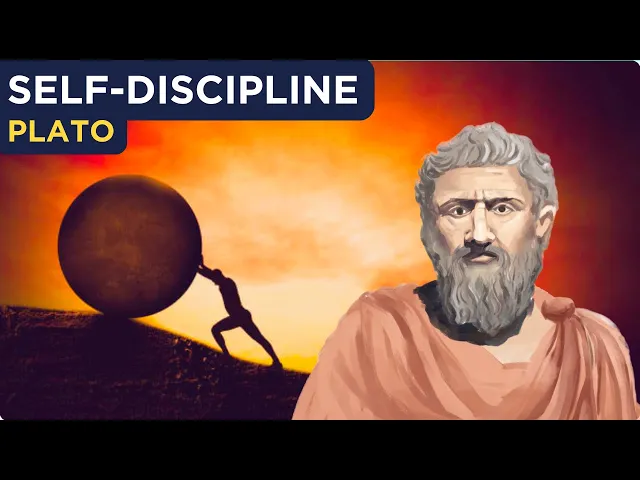
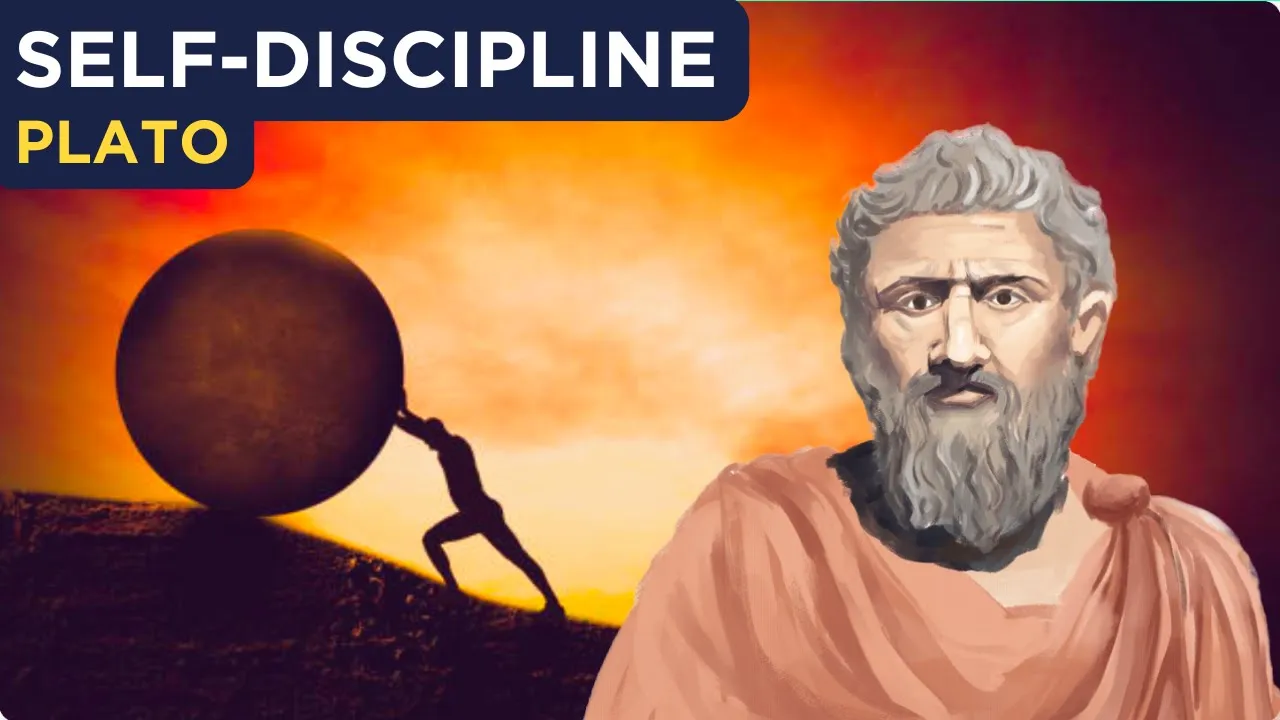
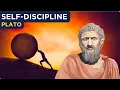
According to ancient Greek philosopher Plato, self-discipline is about using your reasoning capacities, thinking things through, and relying on your inner strength, your willpower. He once shared a story in a talk called Phaedrus. In this story, Plato creates an allegory to explain what he saw as the three core components of the human soul - The chariot driver, and the two, winged horses pulling the chariot.
The first horse is described as ”upright and cleanly made; has a lofty neck and an aquiline nose; his color is white, and his eyes dark; he is a lover of honor and modesty and temperance”. The second horse, though, is the opposite - Plato describing him as “a crooked lumbering animal, put together anyhow; he has a short thick neck; he is flat-faced and of a dark color, with grey eyes and blood-red complexion; the mate of insolence and pride” The driver's job is to somehow guide these two, opposing horses to a special, heavenly place and get the chariot moving in the right direction. So what are the three components of the human soul according to Plato, and how do they fit into this story?
The first one is the Reason or Logos: It's like the charioteer, guiding us to make good choices. This is the rational and intellectual part linked to thinking, wisdom, and the pursuit of truth. The second one is the Spirit or Thumos: Like the white horse, it's associated with the chest or heart region, encompassing emotions, courage, and the drive for honor and recognition.
And the third one is Appetite or Epithumia: Linked to the belly, it's like the black horse. This part represents our desires and appetites, including those for food, drink, and physical pleasure. Plato argues that a well-ordered soul is one in which reason is in control, with spirit supporting reason, and appetite following their guidance.
In an individual, the balance and harmony of these three parts determines moral character and the ability to lead a disciplined life. Plato's philosophical system is known as 'Platonic idealism,’ and in this video, we will delve into mastering the art of self-discipline according to Plato. But, before we begin, we’ve noticed that only 21% of you watching this video right now have already subscribed to our channel.
So if that’s you, thanks for coming back, we really appreciate it. And if you’re one of the 79% that aren’t, please consider pressing the subscribe button - and for extra credit, the bell icon too, so that you never miss out on any of our upcoming videos. And with all that done, let’s explore the art of self-discipline, from the wisdom of Plato.
1. Practice the art of measurement Plato says “Pleasure is the greatest incentive to evil” According to Plato, our soul is not disciplined when we put the Appetite part of the soul in charge instead of reason, and we end up making bad choices. Imagine a situation where you have to decide whether to have another drink or not.
If you let your appetite take control - in this case your strong desire for the immediate pleasure of consuming alcohol - instead of reason - like considering how you’ll feel in the morning - you might end up making a bad choice. According to Plato, this happens when our soul isn't disciplined, and we prioritize short-term pleasure over making sensible decisions for our well-being. But here's the important part: each part of our soul is real and important.
While it's true that wanting immediate pleasures can be harmful, we can't just ignore those feelings either. One of the main definitions that Plato gives to these mere pleasures are “deceivers” because they make us see things not as they really are but in a way that may not be good for us. Think about when you see something flashy or attractive, like a colorful book cover, or eye-catching YouTube ad.
Sometimes, just because it looks nice, you might suddenly want it without really thinking. Plato said these desires are like optical illusions - things that look good but don't really mean anything. Our life is filled with such illusions or trickery.
Like wanting tasty food, drinks, or wanting to be powerful or famous - these desires never seem to be satisfied. Living a life only focused on immediate pleasures may feel good for a short time, but it can't bring lasting happiness. Plato suggests a way to deal with the trickiness of quick pleasures, which he calls the "art of measurement.
" This philosophical approach encourages us to think carefully about what we really want. Instead of quickly going after things that make us happy for a little while, Plato says we should measure our goals against what will make us happy in the long run. To do this, we need to think about what we want and pick actions that will bring us lasting happiness.
As an example that will resonate with many of us just after the holiday season, there’s a good chance if you’re anything like me, you’ve been rather over-indulging on the snacks and junk-food, which is fun for a short time, but we know it’s bad for our health in the long-term. However, denying momentary pleasure for the greater good of our overall health can be pretty hard to achieve, despite our best intentions. Plato’s “Art of Measurement” would tell us that in order to break that cycle we need to force ourselves to pause for a moment between desiring something and acting on that desire.
And in that pause, we should consider our long term goals, such as wanting to be healthy and happy, and whether the action of eating that junk food will impact that. The truth is if in that moment of consideration you realize that momentary pleasure will not only negatively impact your physical health, but also result in a potentially longer period of guilt, as well, then it doesn’t align with your larger goals, and probably isn’t worth doing in the first place. But Plato's "Art of Measurement" isn't just for deciding what to eat—it can help make many parts of your life better.
For example, when you feel really strong emotions, instead of just reacting right away, you can take a moment to think about how your reaction might affect your relationships and how you feel overall. This is using the "art of measurement" for your emotional responses. But it’s not just about negativity and restriction!
When you spend time with your family, you can use this idea to think about how to make that time more special. Instead of just doing things without really thinking, you can measure if the time you spend with your family is making your relationships stronger. The more you practice the "art of measurement," the better you become at making thoughtful and wise decisions in various aspects of life.
2. Don't be a victim According to Plato "For a man to conquer himself is the first and noblest of all victories. " We might often realize there are areas where we struggle to fully control our actions, desires, or thoughts.
Sometimes, it's easier to let circumstances, or other people, or our own passions take the lead. You might think that you’re powerless in the face of circumstances. For Plato, this idea is simply wrong, and unjust to our human dignity.
According to him, we need to realize our potential and understand that we can manage our own lives. It might seem unrealistic due to social, financial, or bodily limitations, but you still have the freedom to express your will. Despite these limitations, you can actively transform your life instead of being a victim.
Think about it this way: imagine wanting a total transformation of your body into the shape of supermodels or bodybuilding legends. You know you have limitations based on your body constitution, and this mental project might seem unrealistic. People have different body types—some lean, some inclined to excess weight.
Even years of exercise can't change the basic limitations of your body. But here's the crucial part: it doesn't mean your will is powerless. Embracing the limits of your growth, you can improve yourself every day with consistent practice and a strong will to overcome challenges.
Yes, some limits can't be fully overcome, and we must face their harsh reality. Even if you can't achieve someone else's results, like say Arnold Schwarzenegger, you can achieve your personal best and create the best version of yourself. The key is recognizing and embracing your own will and striving to make it a reality.
And you don’t have to aim for the huge changes right away! Even simple things, like making a daily schedule or waking up a bit earlier, can help you cement your willpower into your everyday life. The inner will, in this context, implies a deeper sense of purpose or a commitment to higher ideals that guides the reason part of the soul in making decisions that contribute to the well-being of the individual.
It's all about taking small steps to make yourself better and more in control of your own life. Self-discipline means being in control of your actions instead of just reacting to whatever you feel like doing in the moment. It's like steering your inner self, your soul, towards doing things that are actually good for you.
3. Actively seek knowledge In the words of Plato “Knowledge becomes evil if the aim be not virtuous. ” According to Plato, doing good and making right choices is called virtue.
He sees virtue as a leader in charge of the rational part of the soul, which as we mentioned, is in charge of the spirit and appetite. When people actively seek knowledge about living a good and just life, they're nurturing this rational aspect of their soul. So, when we try to be a good person, our brain uses what it knows to help us make choices that are morally right and fair.
Acquiring knowledge and virtues, according to Plato's philosophy, involves a purposeful and ongoing process of learning and self-reflection. Begin by engaging with literature, whether books or articles, that explores ethical principles and virtues, focusing on stories and examples that highlight qualities like honesty, kindness, courage, and wisdom. Actively seek out wise individuals in your community or through various platforms, listening to their experiences and insights to gain valuable lessons on leading a good life.
Ask questions, whether in conversations or online forums, it is a powerful way to deepen your understanding of ethical concepts. You can take advantage of educational resources, such as online courses or community programs, that focus on philosophy, ethics, or personal development. Another crucial step is reflecting on personal experiences.
Consider instances in your life where virtues were demonstrated or ethical dilemmas were faced. To put this into practice, set aside some time each evening to contemplate your actions, thoughts and emotions. This will allow you to assess whether they align with your values and the virtues you aim to uphold.
These reflections offer insights into those values and areas for personal growth. You can also engage in discussions with friends, family, or peers about moral and ethical topics. This will broaden your perspective and refine your values through comparison with different viewpoints.
Acquiring knowledge and virtues is a lifelong journey. To make it work, you need to stay open to learning, stay curious, and actually use what you find out to become a nicer and more virtuous person as you go along. Self-discipline is like having a map that helps you stay on track in this journey of always trying to improve yourself!
If you enjoyed this video, please make sure to check out our full philosophies for life playlist and for more videos to help you find success and happiness using beautiful philosophical wisdom, don’t forget to subscribe. Thanks so much for watching.