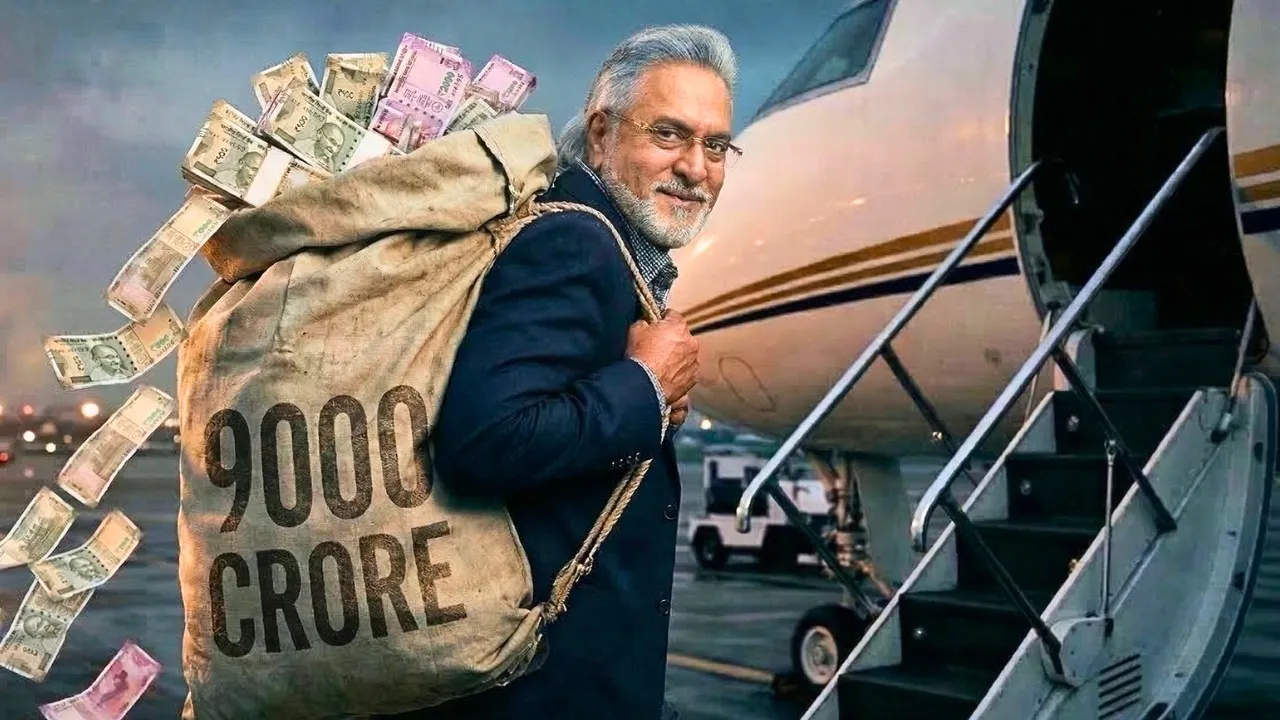
On December 18, 2015, Vijay Mallya spent 14 crores on his 60th birthday party, making global headlines. Spanish singer Enrique Iglesias and Sonu Nigam were among the performers. Champagne flowed like water, and the world's elite danced under dazzling lights.
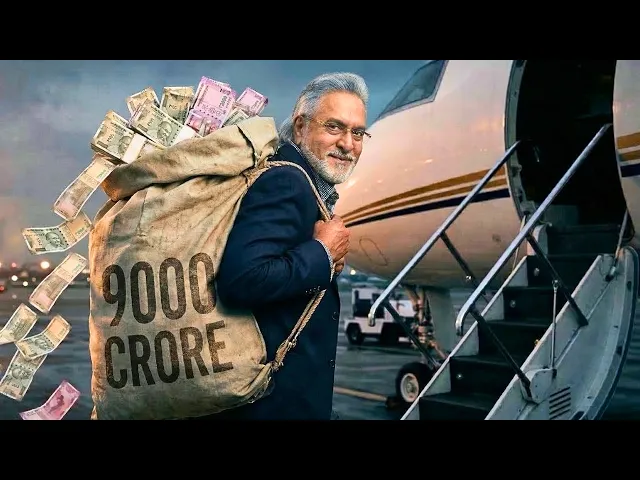
The night symbolized Mallya's wealth, power, and invincibility. However, no one could have predicted that just two and a half months later, he would flee the country forever, to escape a 9,000-crore bank fraud. This story begins not with Vijay Mallya but with his father, Vittal Mallya.
Coming from Karnataka, Vittal mastered analyzing company's financial statements during his college years. By 1940, he had made significant profits from the stock market. He then turned his attention to United Breweries (UB).
The British had established breweries across India to supply alcohol to their troops, and in 1915, these breweries merged to form United Breweries (UB). In 1946, Vittal Mallya began acquiring UB shares, and within just two years, at the age of 24, he became the chairman. Using UB's profits, he acquired multiple liquor companies and built a massive liquor empire.
However, his ambitions extended beyond liquor. Using his skills and profit, he acquired under-valued companies from other sectors. By 1981, he had acquired 10 breweries, 14 distilleries, seven processed food companies, six investment firms, and several other businesses, creating a business empire valued at approximately 350 crores.
Despite his vast empire, Vittal remained low-profile, meticulously managing expenses and valuing hard work. However, his workaholic nature took a toll on his health. In 1983, at the age of 59, he suffered a massive heart attack and did not survive.
This marked the entry of his 27-year-old son, Vijay Mallya. Vijay Mallya was born in 1955 and was his father’s only son. He spent his early childhood in Bangalore, living a life of luxury.
An extrovert by nature, he spent most of his time with friends, engaging in bike racing, cricket, and driving his toy Ferrari. At the age of 18, his father inducted him into UB’s Board of Directors, and he began learning the business. After graduation, he was sent to the U.
S. to understand international business. However, during this time, he received news of his father’s demise, which required him to return to India to take over the company.
Unlike his father, Vijay Mallya developed an image of a party animal who enjoyed a flashy lifestyle. Many top UB Group managers lacked confidence in his leadership, but with the support of majority shareholders, he became the chairman. From the beginning, Vijay wanted to do something different to prove his doubters wrong.
Hence, he diversified UB’s business beyond liquor into various other sectors. Predicting a fast-food revolution in India similar to the U. S.
, he launched a fast-food chain named "McDowell’s Pizza King" and opened multiple outlets in Delhi and Mumbai. However, in Mumbai, he faced stiff competition from the legendary dabbawalas. Their highly efficient lunchbox delivery system meant that people did not prefer eating out on weekdays.
Moreover, the eating-out culture in India was not as popular at the time. Consequently, except for a few stores, most of his outlets failed miserably, and by 1987, the business was completely shut down. Additionally, after Coca-Cola exited India in 1977, Mallya observed a gap in the carbonated drink market.
He launched his own cola brand, "Thrill," but consumers did not like it, leading to its discontinuation. Over the next 20-25 years, Mallya acquired companies and started some of his own in an attempt to diversify into various sectors, including engineering and manufacturing, chemicals, software, transportation, mining, hospitality, and even telecom. However, most of these ventures failed.
Not only that, he also sold off several successful businesses inherited from his father, including Berger Paints, which he sold for around ₹400 crore. Today, Berger Paints is valued at over ₹50,000 crore. Despite multiple failures, one major success covered everything —his liquor business.
When Mallya first became chairman in 1983, UB Group was not a market leader in any liquor category. In 1987, his father had launched the Kingfisher beer brand, but it lagged behind Mohan Meakin’s Golden Eagle. Vijay realized that no beer brand in India was targeting the youth.
He rebranded Kingfisher, transforming its logo from black and white to a colorful, vibrant design, changing the bird’s position from sitting to flying. While Golden Eagle’s traditional eagle logo appeared rugged, Kingfisher’s new logo symbolized energy, freedom, and youthfulness. Its slogan became "The King of Good Times.
" By implementing these changes, Vijay positioned Kingfisher as a premium beer targeting aspirational youth. By the way, speaking of youth, India's young generation is increasingly becoming a "time-pass generation. " These people are spending hours of their day just scrolling through reels.
This is happening because, due to a lack of skills, they are unable to get jobs. This means that in the future, they will neither have money, nor respect, nor happiness. But if you don’t want your future to be like this, you need to take action now.
In the future, only those people will be successful who know how to work using AI. That’s why you can join this three-hour hands-on AI training. The link is available in the description and pinned comment below.
In this training, you can learn ChatGPT and more than 20 AI tools for free. Whether it’s automating repetitive tasks, analyzing Excel data within seconds, or finding jobs—all this and much more will be covered here. This training is for everyone, whether you are from a tech background or a non-tech field like Sales, Marketing, HR, or even a Freelancer.
The first 1,500 viewers who join using the link below will get this training completely free. So, don’t miss this opportunity! The link is in the description and pinned comment below.
Let's get back to the video. During this period, another interesting development took place in Bangalore. In 1986, the city saw the opening of its first pub, "Ramda", followed by another named "The Pub.
" Traditional bars in India had poor lighting, seating, and cleanliness, but pubs offered superior lighting, hygiene, music, and a better ambience, attracting high-class crowds, including women. Recognizing this opportunity, Vijay introduced Kingfisher draught beer in these pubs, which became an instant hit. Soon, Bangalore had so many pubs that it was dubbed "India’s Pub Capital.
" The pub culture expanded to other Indian cities, benefiting Vijay Mallya the most. Additionally, he ensured maximum brand visibility for Kingfisher by sponsoring Derby, football events, and fashion shows. He launched the Kingfisher Swimsuit Calendar, which introduced actresses like Deepika Padukone, Esha Gupta, and Katrina Kaif.
Mallya even incorporated "Kingfisher" into his house name, transforming the brand from a mere product into a symbol of fun, celebration, and urban lifestyle. Following the success of Kingfisher beer, he focused on his whiskey business. He already owned strong whiskey brands like McDowell’s No.
1 and Bagpiper. He rapidly acquired other successful whiskey brands, creating an impressive portfolio, including Royal Challenge, Black Dog, and Antiquity. Not stopping there, he expanded into brandy, rum, gin, vodka, and even wine.
Mallya also drew inspiration from FMCG giants like Coca-Cola, which targeted different consumers with various drink offerings —Coca-Cola for the masses, Diet Coke for the health-conscious, and Thums Up for strong taste lovers. Similarly, he positioned Bagpiper Whiskey for the masses, McDowell’s No. 1 for the premium segment, and launched McDowell’s Diet Mate for the health-conscious customers —the world’s first low-calorie whiskey.
Likewise, he introduced different variants of Kingfisher beer, including Kingfisher Premium, Strong, and Maga. His marketing strategy was exceptional. Since direct liquor advertising was banned in India, Vijay introduced "surrogate advertising.
" To promote McDowell's No. 1 whiskey, he launched McDowell’s soda and bottled water, featuring Bollywood and cricket celebrities in ads, indirectly promoting his whiskey. He applied the same strategy across all his brands, achieving massive success.
By 2004, United Breweries had become the world’s fourth-largest liquor company. Understanding the importance of political connections for business expansion, Mallya entered politics. In 2002, with the support of multiple political parties, he became a Rajya Sabha member.
By 2005, he possessed the deadly combination of wealth and power, standing at the peak of his success. However, he was haunted by one thought—despite his achievements, he was in the liquor business, which lacked public respect. Mallya was now desperate to enter into a respectable business.
That's why he decided launch a world-class airline. But he had no idea that this one decision would lead to the downfall of his entire business empire. Vijay named his new airline Kingfisher Airlines.
His idea was to offer passengers a new class of seats between economy class and business class, and he named this new class Kingfisher Class. He offered a huge variety of food and beverages on his flights. Every seat had a dedicated in-flight entertainment system installed.
He personally interviewed each air hostess himself. The uniforms of these air hostesses were designed by top fashion designers, they were given high-level training, and were even guided on the specific exercises and diets they needed to follow. Despite all these features, Kingfisher's plan was to keep ticket prices the same or even lower than Jet Airways and Air India.
Vijay wanted to launch this airline on his son's birthday—7th May 2005, but despite all efforts, it was launched on 9th May. Its first flight was from Mumbai to Bangalore, and Mallya himself was on board, interacting with guests. Later, every Kingfisher flight played a video after takeoff, in which Mallya personally welcomed the passengers.
Very soon after its launch, many customers started shifting to Kingfisher Airlines, leading the airline to rapidly purchase new planes and expand operations to more routes in India. Soon, Mallya decided that he didn’t want Kingfisher to remain just a domestic airline but to turn it into an international airline. However, to obtain an international flying license in India, an airline needed a minimum of 5 years of flying experience.
But Mallya did not have that much patience, so he decided to buy an airline that had already completed 5 years in the Indian market. That airline was Air Deccan, a low-cost carrier. He acquired Air Deccan for around ₹1000 crore, and with this acquisition, he also obtained the license to fly internationally.
Its first overseas flight was from Bangalore to London, and its first-class section was highly luxurious. However, after the acquisition, Mallya completely neglected Air Deccan. Within a short time, he rebranded it as Kingfisher Red and later shut it down, stating that Kingfisher does not believe in low-cost services.
By 2008, with around 27% market share, Kingfisher Airlines had become India’s largest airline. Almost every flight used to fly full. But there was a problem —due to its high expenditures, the airline was still operating at a loss.
And then, two new competitors entered the market —IndiGo and SpiceJet. Both of these brands were low-cost carriers, and their main objective was to transport passengers at the lowest possible price. Kingfisher had planned that once they acquired enough customers, they would increase ticket prices.
But whenever Kingfisher raised ticket prices, customers immediately ignored quality and shifted to low-cost carriers. Mallya ignored the fact that Indian customers are highly price-sensitive. Basically, the premium business model on which Mallya had spent thousands of crores was flawed.
Also, Kingfisher Airlines had no control over the price —customers literally stole the airline’s cutlery, and no one stopped them. At Mumbai’s Crawford Market, cutlery with Kingfisher’s logo was being sold openly. Food was wasted in large quantities, and instead of reusing unused beverage bottles, they were thrown away.
Because of adding so many luxury features, the weight of the flights increased, leading to higher fuel consumption. Kingfisher Airlines was somehow barely surviving when the 2008 global economic crisis completely broke its back. This crisis led to two major negative effects: One, there was a sharp decline in the number of passengers traveling.
Second, aviation fuel prices increased by 23%. Kingfisher did not have sufficient cash reserves to withstand this crisis. As a result, in 2012, they had to return 32 planes because they were unable to pay the lease amounts.
Additionally, the airline had pending dues of ₹1000 crore with oil companies, and for months, they had not even paid salaries to pilots and other staff. In the second half of 2012, due to lack of funds, many Kingfisher Airlines planes were grounded. The situation became so dire that to keep the remaining planes operational, they started taking parts from the grounded planes and using them.
Ultimately, in October 2012, Kingfisher Airlines completely shut down operations, marking its total downfall. However, in the final struggling years of the airline, Mallya showed no signs of panic. Instead, he spent hundreds of crores buying an IPL team, maintained his Formula One team, and even ordered a private jet using Kingfisher’s money.
This private jet was highly luxurious and had original Picasso paintings worth crores. But all this was just a façade —behind it lay one of the biggest bank frauds in India's history. Right from the beginning, to run Kingfisher Airlines and acquire planes, Mallya took loans worth crores from banks.
By 2009, Kingfisher needed fresh loans, so Mallya approached IDBI Bank for a corporate loan. At that time, Kingfisher’s financial condition was so bad that no sensible bank would give it a loan. However, Mallya allegedly used his influence and got IDBI Bank to process a loan of around ₹950 crore within months.
Usually, when banks provide loans, they demand solid assets as collateral, which can be sold to recover money if needed. Interestingly, IDBI accepted the Kingfisher brand itself as the main collateral. They hired Grant Thornton, a private consultant, to evaluate the brand’s value, which was determined to be ₹4100 crore.
Based on this valuation, the bank considered it legitimate and approved the loan. Offering a hefty loan based on an intangible asset such as a band value is considered an outrageous bank practice. By 2010, Kingfisher Airlines had accumulated ₹7000 crore in debt, and had already defaulted on loans worth ₹2800 crore.
The banks that had given loans to Mallya began to realize that their money was about to be lost. At that point, the banks had two options: they could declare these loans as non-performing assets and book the losses, or they could give Kingfisher even more loans in the hope that the new loan would revive the company, which would then repay the entire amount. In Mallya’s case, the banks chose the second option.
In November 2010, under the leadership of SBI, a consortium of 17 banks was formed. Not only did they provide fresh loans to Kingfisher at a lower interest rate, but they also converted ₹1,355 crore of old loans into equity shares. Essentially, instead of recovering the loan amount, the banks took equity shares of Kingfisher —and not at market value, but at a valuation 60% higher than the market rate.
Additionally, the banks extended the repayment period of the loan to nine years. This time, Mallya also provided a personal guarantee of ₹250 crore, meaning that if the loan was not repaid, direct legal action could be taken against him. However, the banks repeated their mistake by accepting Kingfisher’s brand as collateral at a valuation of ₹4,100 crore.
Later, when the banks re-evaluated it, the brand’s value turned out to be not ₹2,000 crore, not ₹1,000 crore, but merely ₹100 crore. Despite receiving fresh loans, the airline collapsed in 2012. By November 2013, the banks realized that their money was completely lost.
As a result, to liquidate Kingfisher Airlines and UB Holdings in order to recover the money, the banks filed a petition in the Debt Recovery Tribunal. By 2015, the case had reached the Supreme Court, where it was proven that Mallya was a willful defaulter —meaning he had the money but was deliberately not repaying it. In October 2015, the CBI entered the case and launched an investigation into Mallya.
The investigation revealed that the loan Mallya had taken from IDBI was not used for its intended purpose. Some of the loan amount was used to repay an old debt, while the rest was transferred abroad to purchase personal properties. By December 2015, multiple cases and investigations had been initiated against Mallya.
Apart from the banks, Mallya had also failed to pay his 3,000 employees, leaving them struggling. The airline’s cabin crew and other employees were wandering in search of jobs, protesting for their rightful wages, and in one tragic case, an employee’s wife took her own due to financial distress. Meanwhile, Mallya, without any guilt, was planning his 60th birthday party.
In December 2015, he spent $2 million to celebrate his birthday in Goa, calling it the "Mother of All Bashes. " However, the public and banks did not take this well. Even the RBI Governor criticized the celebration.
On February 28, 2016, Supreme Court Senior Counsel Dushyant Dave advised SBI to file a petition in court to prevent Mallya from leaving the country. But SBI delayed taking action. Rumors suggested that a senior bureaucrat had tipped off Mallya that authorities were about to send him to jail.
A few days later, on March 2, 2016, Mallya boarded Jet Airways' Delhi-to-London flight with his girlfriend in the first-class section. He was carrying seven large suitcases, clearly indicating that he was leaving for a very long trip. Ever since then Since Vijay Mallya has never returned, leaving behind a ₹9,991 crore bank fraud.
Interestingly, five months before Mallya fled, the CBI had issued a lookout notice against him. This meant that if Mallya had reached any airport’s immigration counter to leave the country, immigration authorities would have detained him. However, it is alleged that Mallya used his influence in the government to get the lookout notice modified.
The revised notice instructed immigration authorities not to detain him but merely to inform the CBI about his movements. As a result, no one stopped Mallya. On March 9, the Attorney General informed the Supreme Court about Mallya’s escape, shaking India’s entire political and financial system.
By April 2016, non-bailable warrants were issued against Mallya, his passport was suspended, and he was declared a proclaimed offender. The Enforcement Directorate (ED) also attached ₹6,600 crore worth of Mallya’s assets. In June 2016, India initiated extradition proceedings to bring Mallya back from the UK, but he repeatedly challenged and stalled the process in UK courts.
Meanwhile, Mallya continues to enjoy a lavish lifestyle in London, frequently giving media interviews and using social media to claim his innocence. Recently, however, there was some good news. Finance Minister Nirmala Sitharaman informed Parliament that banks had utilized Mallya’s assets, including ₹6,600 crore worth of shares from the UB Group, to recover around ₹14,000 crore.
Despite this recovery, Mallya still faces money laundering and bank fraud charges and remains a wanted fugitive in India. Just like Vijay Mallya, Ratan Tata also inherited a business empire from his family. However, he carried forward this legacy with dignity, turning Tata into a symbol of trust.
On the other hand, Mallya chose the path of fraud, ultimately destroying both his father’s business empire and legacy. Today, Mallya’s personal wealth may be in billions or trillions, but he will never be able to buy back the respect he has lost. If you liked the video, I recommend you watch this next.