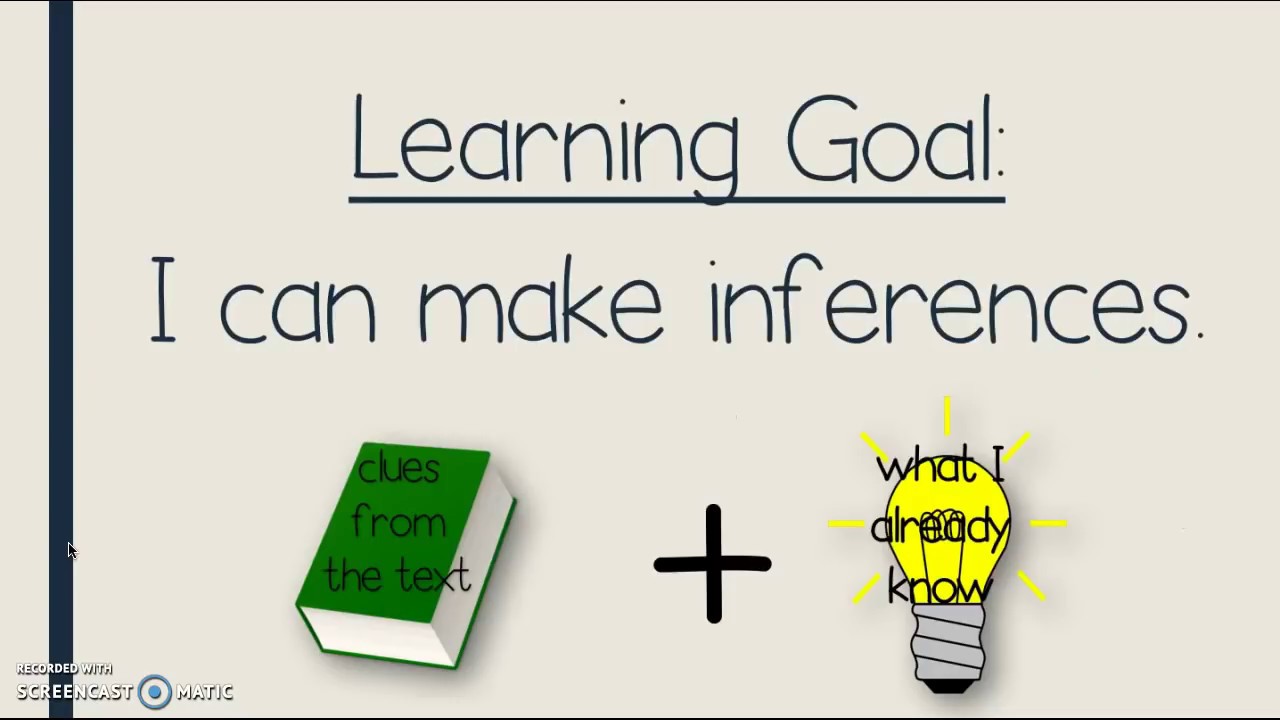
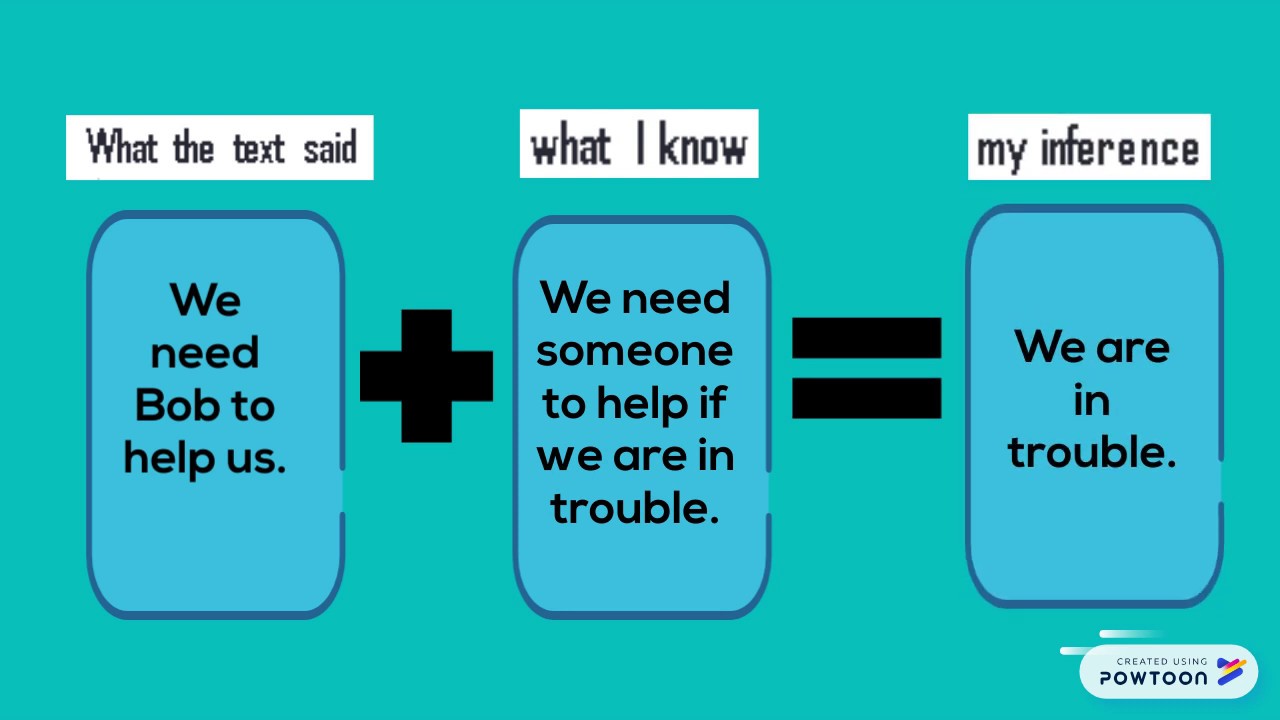
You’ve probably heard the expression “to read between the lines. ” When you “read between the lines,” you pick up ideas that are not directly stated in what you are reading. Discovering the ideas in writing that are not stated directly is called making inferences, or drawing conclusions.
Look at this cartoon. You can probably draw this inference from it: The dog has eaten the other dogs tied up at the parking meter. The fact that there are three leashes in the mouth of the big, hostile-looking dog would lead you to this inference.
Another inference you might draw is that the dog is waiting for its owner to return. In reading, we make logical leaps from information stated directly to ideas that are not stated directly. Look at the following paragraph: A famous psychology experiment conducted by Dr John B.
Watson demonstrates that people, like animals, can be conditioned—trained to respond in a particular way to certain stimulations. Watson gave an eleven-month-old baby named Albert a soft, furry white rat. Each time Albert tried to stroke the rat, Dr Watson hit a metal bar with a hammer.
Before long, Albert was afraid not only of white rats but also of white rabbits, white dogs, and white fur coats. He even screamed at the sight of a Santa Claus mask. Based on the information in the passage, which of these statements is a logical inference?
Because Albert tried to pet the rat, it is fair to assume that he wasn’t frightened of the animal. So the first statement is a logical inference. The passage gives no clues about Albert’s having previous experience with rats.
Therefore, statement B is not a logical inference. Here are three guidelines for making careful inferences when you read. Never lose sight of the available information.
As much as possible, base your inferences on facts. Use your background information and experience to help you in making inferences. The more you know about a subject, the better your inferences are likely to be.
Consider the alternatives. Don’t simply accept the first inference that comes to mind. Instead, consider all of the facts of a case and all the possible explanations.
Inferences are very important in reading literature. While writers of factual material usually state directly much of what they mean, creative writers often provide verbal pictures that show what they mean. It is up to the reader to infer the point of what the creative writer has said.
Creative writers often use comparisons known as figures of speech to imply their meanings and give us a fresh and more informed way of looking at something. One common figure of speech is the simile. A simile is a comparison introduced with like, as, or as if.
In this cartoon, Snoopy uses a simile when he writes about a pair of beautiful eyes. He says that they are “like two supper dishes. ” Another common figure of speech creative writers often use is the metaphor.
A metaphor is an implied comparison, with like, as, or as if omitted. Here are some metaphors. Tables and graphs also require you to make inferences.
As with other reading material, to infer the ideas presented in tables and graphs, you must consider all the information presented. To summarize, in this lesson you learned that many important ideas in reading are not stated directly, but must be inferred. To make inferences about implied ideas, use the information provided as well as your own experience and logic.
Inferences are also a key part of reading literature and such visual materials as cartoons, tables, and graphs.