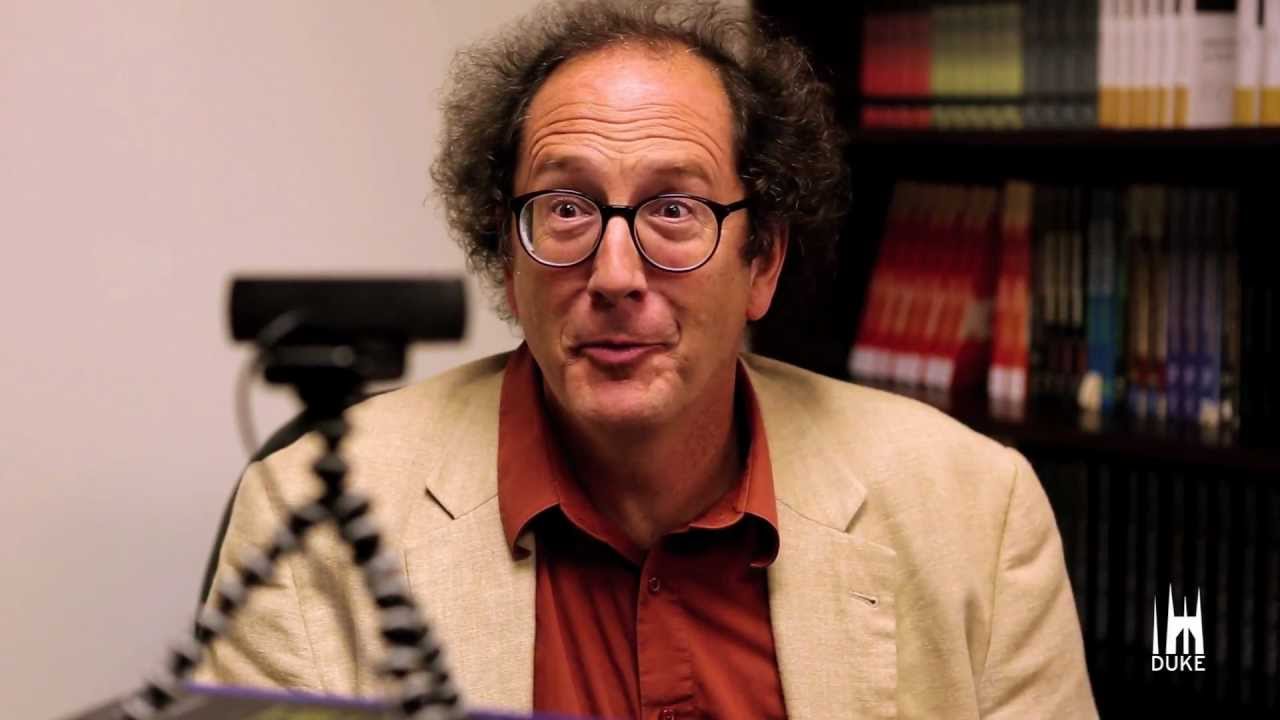
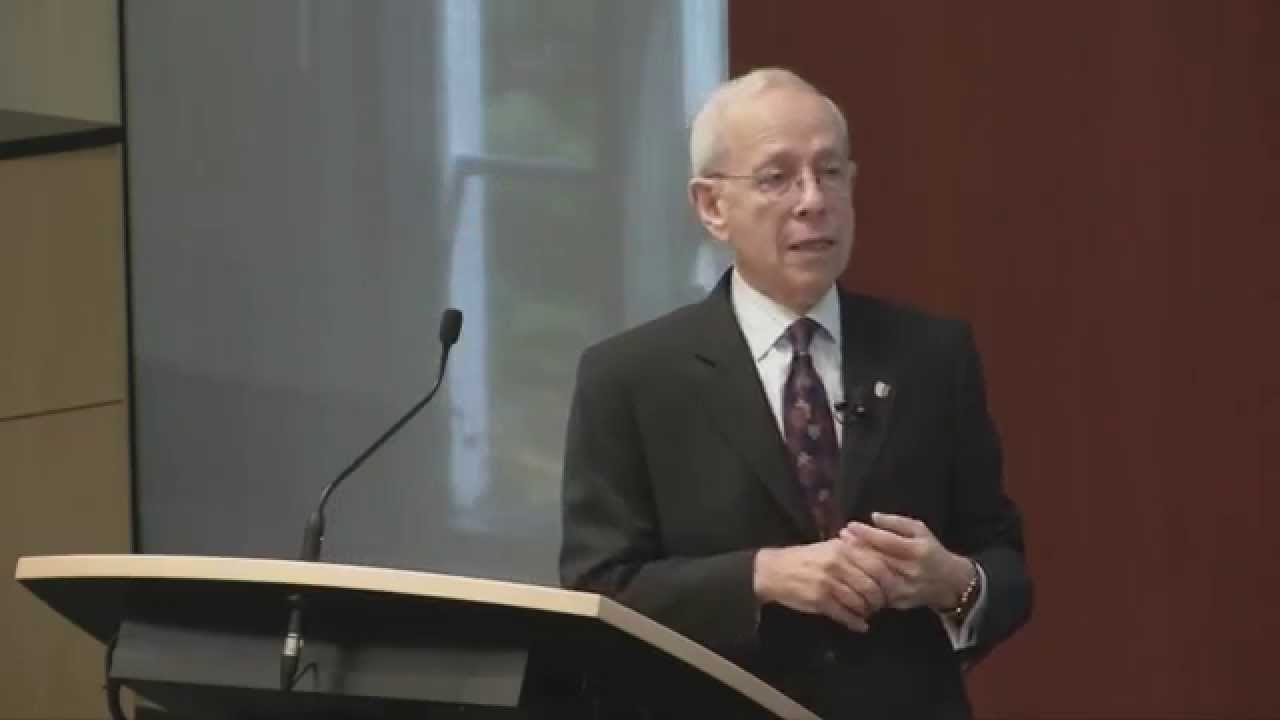
this is office hours at duke university today's conversation is with dan ariely professor ariely is the james b duke professor of behavioral economics here at duke he is author of the book predictably irrational and is a founding member of the center for advanced hindsight this year he will be teaching intro to behavioral economics at duke's fuqua school of business his most recent publication is titled large stakes and big mistakes you can join this duke office hours conversation in three ways by emailing live duke.edu visiting the duke university facebook page or using the twitter tag duke
live professor arielli we're at your office hours you've got this paper out in the review of economic studies large stakes and big mistakes it's particularly timely today with news out about bank bonuses so let's start with this study what's it all about so you know actually so this news about the bonuses came out today uh in some sense it's not really news but the news is that this year again banks have paid tremendous bonuses to their executives and um it's amazing it doesn't feel more of the of the headlines and i think it's because we're
all kind of upset and disappointed with bankers anyway and our trust in them is so low that even news like this that billions of dollars of banks that got tarp money are spending it on bonuses is is not as upsetting as it should be just our expectations have been really adjusted and i think this has to do a lot with the slow long-term recovery of the economy and how our trust in the banking system will take actually much longer to er to re-emerge but but the thing we became interested in was the question of how
effective are these bonuses so think about it we're paying all these amounts of money to these people and you could say let's just give them high salary and figure out whether that's worth it but bonuses are a very interesting part of salary it says you perform well and i'll pay you and it sounds much more reasonable right i'm not promising you anything upfront you will perform well and i'll give you a bonus based on your on your performance and if you think about it the idea is that if there's a lot of money involved big
bonuses we want to perform better no mystery in there right lots of money you want to perform better and then there's a link between the wanting to perform better and actually being able to perform better and that's actually a link that we don't know much about it and you can think intuitively imagine i locked you in a room and i closed the door and i said you have five hours to do the best productive work you can and in one condition i paid you five thousand dollars a lot of money in another case i would
say here is money that is contingent on your ability to perform well it's a bonus now the question is how would you behave differently in this closed room what would you do differently how would you be more productive will you actually be more effective in this and the reality is we don't know much about this link so to try and understand it we created a study um we basically took six six tasks one that demanded creativity and problem solving and memory and also some kind of physical skill like throwing a ball at the target and
so on so we had we had a set of tasks and together they took about 45 minutes and we had three groups the first group we said look if you do well on these six tasks you will get money as a bonus equivalent to one day of your salary if you do three out of the six you'll get half as much if you get two out of the six you'll get third as much and so on so every task you get is at one sixth of a day's wages that was group one group two we
doubled the incentives ten times so instead of one day it was ten days of work two weeks of work right with the weekends so we said if you do well on this task you will get ten times more money than the other people you get two weeks worth of wages and the third group we multiply it again ten times and we said if you do well on those tasks you will get six months salary now before you won the words are research budget coming from i should tell you we outsourced this so we ran this
experiment in india where we could pay people six months salary of their own salary and not completely uh deplete our research budget actually i don't think we could even pay six months out if we wanted to on a research budget but anyway that was the experiment and what happened people came to the task they did as well as they could they got the money and so on and between their one day saturday and two week salary we didn't see any change in performance performance didn't go up it didn't go down just stay the same between
the two week bonus and the six months bonus it actually went down dramatically in fact in some tasks performance went down from about 40 of the people who reached this threshold of performing well to about five percent of the people who are performing well now why is it that more money is actually is actually bad and you can think about this as money being a two-edged sword we want to do well but at the same time it's very hard for us and there was an old experiment like this with two rats running in a cage
and the rats basically had the maze and some parts of the maze were safe and some were dangerous and the rats have to learn which one is safe and which one is dangerous and the dangerous part had electrical shocks in them and across trial the intensity of the electrical shock varied so when it was not very high the rats didn't have any motivation to learn so learning was slow as the intensity of the shock increased performance was better and better and better there was a reason to learn but at some point it not only got
to a diminishing return where learning became slower and slower it actually became negative learning became slower and slower and slower less and less learning and you can think about it if you're in a situation there's a lot of electrical shocks out there and they are powerful it can overwhelm you you can be so afraid so captured by this that you would not be able to to do anything else and and in fact when i got this result i went to one of the big banks and i talked to them about their bonuses and they said
no no no we are not these kind of people these are kind of regular people we are different we strive on stress we work well on stress and we we have no problem with this and and i said you know i don't know maybe maybe you are but why don't we test it and and they they were not interested but i did ask them to tell me what they talk about in the office in the two three months before bonuses come out and they basically say they don't talk about anything outside of their bonuses so
even if they don't get really stressed their mind share what they're occupied with what they think about is just about just about the bonuses now there's one more interesting part to it when we started the experiment in india we wanted to create the most stressed with the least amount of money so we wanted to use loss of version the idea that it's more painful for us when we lose money than the happiness we get when we gain money so we gave people the money up front imagine you were the experiment i would give you six
months salary i said this is your money but if you don't do the task well you'll have to give it back to us the first subject we ran on this completely panicked they couldn't do anything they couldn't remember anything they couldn't focus they couldn't throw nothing the next subject was the same shaking not thinking not able to do anything but the second subject once they finished the experiment and we told them to give us back all the money they just ran away and we didn't have the heart to to chase him so we changed the
procedure but if you think about it a lot of people in wall street are actually in the second condition a lot of people on wall street are not the bonuses don't come to them as a surprise they already count on it they bank on it they buy houses and send their kids to school taking this into account making it very very hard not to even stress more over bonuses now what's the point of all of this and let's stop with bonuses and move to more general topics we have a lot of intuitions and ideas about
how life works for example we think that bigger bonuses will create better performance james you heard me and it's perfectly possible that in many conditions this will happen but this twitter question should get you to think that this can these results be applied to the u.s if the study was done abroad okay so somebody on twitter asked a really good question he said can this result apply to the u.s even if they were done abroad this is kind of a very interesting question about generally what happens with with cultural differences and in general i should
tell you that we don't find many cultural differences across across country at least only the stuff that we do which is usually kind of basic human behavior and but but we also decide to run this experiment in the us to to see how it how it works here so we run this experiment twice we read it once at mit and at mit we ran into two tasks one task that requires simple mathematical addition tasks so people had to add some numbers and one task that just had an effort task just putting your finger on two
keys on the keyboard and typing as fast as you can and both of them were for five minutes and what we saw that was for the typing task performance went up with more money but for the adding task it went down so what happened is that when it's just physical effort there's no problem more money yields better performance if i ask you right now to jump and i said i'll pay you 10 000 for each jump you manage to jump the next 10 minutes you'll jump very quickly and very very hard but the moment these
tasks require some cognitive skill some ability to think and so on it become much harder because you can't just race in the same way that you race you're jumping and say i'm not going to be tired i'm not going to stop thinking is not like that it's very hard to close your eyes and say okay now i really want to be creative let me try and be as creative as possible very good we have a question here about the type of payment and this is an email that comes in from tigron and he wants to
know if you paid by say vacation days or about free classes would that affect what goes on yes so so this is again the right question to ask what we're showing is that bonuses have a plus and have a minus they have a plus that they they get us to want to work hard but they have a mindset they get us to be stressed and now you can ask different questions about how you get the good thing about bonuses without the bad thing and you can come up with all kinds of solutions you could say
what if it was linked to your performance over the last five years not just over the last year uh what if it was shorter bonuses we don't have to wait a year you learn every month what part of it you're getting for sure and so there's lots of ways to do it and create less stress the question about what if it's vacation day what if its classes depends on whether this will create more stress or less stress so for example i can imagine that if we give people vacation days and they're already banking on it
they're counting on it they have they have a family vacation set up to go to wherever they want and all of a sudden they might not be able to get these vacation days it might be even more stressful but the issue is motivation and stress and how do we get the motivation up but don't get the stress up and that's kind of going to be the key very good viewers can join this duke office hours conversation in three ways by emailing live duke.edu visiting the duke university facebook page or using the twitter tag dukelive we've
got a question here from luke he's emailed in he is an incoming freshman here at duke and he wants to look at the other current conversation about healthcare reform and his question is if obamacare gets passed how will it affect the medical job market okay so you know there's a lot of important things in the in the new decisions about how to do healthcare and let me just tell you kind of a couple of what i think from my perspective of the real the real big problems so i recently went to visit mount sinai hospital
in chicago and they are dealing with a lot of asthma and we talked about asthma for this meeting and here is what happened in the city of chicago about one in four kids have asthma they live in bad conditions dust cockroaches er vermins and so on the kids are very susceptible to uh to to asthma and they get lots of asthma now they get these inhalers and they get the medications the medications are expensive and they don't always take them they end up getting to the emergency room and they get out of the emergency room
they cost a tremendous amount of money not to themselves because they don't have insurance but to society so what happened is we have these two entities one that worries about the the medications about the inhalers and so on and one that worries about emergency room treatment and for something like 200 improvement in their adherence for the medication we could sell something like 20 000 in terms of their emergency room bills but because these are different system we never we never do that so one of the hope is and under the new plan preventative care will
be a bigger deal because there's so many things that by preventative care we can actually save lots of money down down the line diabetes asthma is kind of a great example because if people take their asthma medications regularly there's almost no reason for anybody ever to get to hospital back for for an emergency procedure and the medications are not that expensive so it's a tremendous benefit so going back to this question i think that one of the things will happen to physicians is they will move away from acute fixing things to preventative care now it's
kind of interesting about how much physician could charge for it you know you have a heart pain you go to a heart surgeon and you say it's 400 thousand dollars what are you going to say ah forget it or i'll go somewhere else it's very hard and we pay lots of money for these procedures we seem to be willing to pay much less for preventative care so i think more physicians will have to move there and i think the salaries would have to be reduced accordingly just because people are not as willing to pay for
it but become a bigger bigger part of of medicine the other thing that will happen is that we will have to start doing some rationing i mean it will be very very tough to do because morally we don't like to ration health but we will have to do it somebody came somebody came to my office two weeks ago to tell me about a new heart pump a great technology many people eventually die from congestive heart failure right at some point it kills a lot of people we get old and so on and heart goes away
and congestive heart failure is a common thing this particular new device can extend the life with 50 extending the life for another year that's not that's not bad the question is how much does it cost per year of living it cost about 500 000 now if you live less it's actually more expensive if you live more it's a little cheaper because you average it but per year of living this device cost five hundred thousand 000 the device the procedures and so on now the question is are we going to continue supporting this are we going
to pay for this we have an unbelievable appetite for health i mean it's hard to say when are we going to stop and i have a little bit of pain in my in my knee for fifty thousand dollars i could get a partial knee uh surgery that would make me be able to play better basketball in the weekend is this good for the taxpayer uh to pay for it um you remember steve austin the six million dollar man right now six million dollar looks like a cheap version of what we can invest in our health
so another issue is to really will have to figure out what kind of things are worth it and what kind of things are not and this is going to be an incredibly hard task and i think much of what we're going to do in medicine is going to become evidence-based medicine when we will try to figure out how much value are we really getting from different kind of treatments i think physicians will move early in their food chain of medical treatment and do much more preventative care and i think there'll be much more requirement to
do evidence-based medicine because that will be what we're willing to pay for and kind of reduce a lot of stuff that we're not going to be willing to pay for very good viewers can join this duke office hours conversation in three ways by emailing live duke.edu visiting the duke university facebook page or using the twitter tag duke live we've got a question emailed in from brenda it's again about current events and this is about the stock market she writes dan i still don't feel comfortable putting money back in the market just yet what is it
going to take to get that comfort level back brenda yes so so brenda i feel exactly the same and i think this news from today about the bonuses and so on they helped to shake our confidence to even new laws if this was even even possible and basically kind of two ways to regain confidence and i think good intuitions can come up from thinking about personal relationship you know what would happen if your significant other betrayed you in some big way what will help you regain confidence first of all it can't happen overnight right many
people say i can never trust this person anymore let me start a new relationship with somebody else and i think this could have been one direction in fact i wish that instead of putting so much money into the banks that have betrayed our trust the government would have started some procedure to start new banks basically allow for easier emergence of new banks with new rules and new regulations and so on and i frankly think that that people would have created banks that are more socially responsible or more responsible and there's a lot of people i
think were interested in if if it was easier to create banks we would have seen more more action not to mention more innovation in banking so that's one thing right i wish we would have said you know bank x very unlikely i'll trust you back in the next seven years i don't have the time to wait for you to regain my trust let's start a new procedure the second thing of course is if you can't have real trust you can have monitoring so again think about kids or spouse you say look i don't trust you
but i'll put a digital camera on you so i know every moment where you are and i can track you and and so on and that's kind of what we're trying to do with some of the regulations on banking to basically control them better and be notified quicker what they're doing but you know they're playing shenanigans as well so this is not not very helpful so personally i think this is a good time for small banks to re-emerge as ones that don't play shenanigan the federal credit unions and so on and for new banks to
emerge and that what that what would really get your banking system back in line because if you had a few small new banks that started fresh with trust the other banks will have to do something to respond to this competitive pressure and i think they would change as well very good so let's take a step back here and talk about behavioral economics this field we're talking about trust that is a in a way a psychological factor so you're a professor of behavioral economics what's this tension between behavioral economics and traditional economics okay so trust is
a great way to to think about it so imagine the game you call the trust game you have player a and you have player b and you give player a ten dollars and you say look player a yeah you have ten dollars you can decide to go home in which you go home with ten player b goes home with zero you don't know who player b is you just play anonymously over the internet let's say all you can say to player a you can pass your ten dollars to player b if you pass your ten
dollars to player b we will quadruple it so by the time player b gets it will be forty dollars and now player b can decide whether to go home with forty dollars in which case you player a will get zero or they can decide to give you back half of it in which case you both will get twenty dollars now think about it if you're a player a you're player a and you say what would player do what would player b do if you think player b is perfectly rational person you would say they will
never return the money to me so i will never give them the money to start with because i know what will happen i will just lose the money but what happened so this is the economic rational prediction is nobody will give the money and if they do give nobody will return but what actually happened is that many people give and many people reciprocate now this is a place where people don't behave like rational theory they deviate from it in systematic predictable way people give a lot of money in this in this game and it's not
exactly just bad much of behavioral economics is about the mistakes we do here is not just about the mistakes it's also about the nice thing that we do to each other like the fact that we're too trusting and too reciprocating then the selfish model tells us but but there's another interesting version of this which has to do with revenge so again imagine you're player a you gave the money to player b and player b decide to go home with all the money and now i come to you and i said look i'm sorry you just
lost your ten dollars but i know where to find player b you don't know who he is but i know where to find him if you give me money i will go i'll find player b i'll take double the amount of money from him so if you give me one dollar i'll find him and take two dollars away from you you'll give me five i'll take 10 you give me 10 i'll take 20. and so on and so forth and now think about it would you you just lost your 10 would you spend even more
of your own money to get player b to suffer even more and right now you don't feel revenge you don't feel angry but the reality is when you do there's good chance you would people really are willing to spend lots of money to exert revenge against somebody and again everybody who got divorced or broke up with somebody feel this tension that when somebody is betrayed you're willing to go to lots of lengths to suffer a lot yourself to get the other party to pay to pay the price now here again revenge is a non-rational sentiment
why would you want to spend your money to punish somebody you don't know and you'll never meet them again it's not as if they're a good friend of yours and you hope to play again with them in the future and but it turns out you can actually think about this mechanism of revenge as a very useful mechanism so imagine you and i live in a jungle and you're thinking whether to steal something from me like my mango if you think i'm a rational person you would say that as long as i take dan's mango and
run away far enough it will be easier for him for me to go and find a new mango rather than chase you and under those conditions you might take my mango but if you think i'm a revengeful type and you know i will not sleep and i will not rest until i find you and take my mango and all your bananas and maybe a coconut you know under those conditions you will not start with me so here again we have something like revenge which is an irrational sentiment nevertheless could be incredibly effective in regulating a
society and get people to behave well and actually having some benefit now it's not all benefit and it's not rational but you can see how something that is irrational could nevertheless be helpful so where might this show up in an economics textbook when the next versions of traditional economics textbooks come out how are they going to take into account these insights from behavioral economics the irrational behavior yeah so you know there's a question of textbook and there's a question of the practice of economics which is the the discipline that influences most policy and regulation in
the legal system and so on and banking of course so my guess is the textbook will include a couple of chapters at the end that will be about behavioral economics so let's say here is the standard model you've understand the models here's all kinds of ways in which people deviate from the standard model but i don't think we know how to integrate it into economics right you say here is supply and demand and at the same chapter saying but it really doesn't work this way right it will be very very hard to do so i
think there'll be kind of standard economics in the beginning of a textbook and qualifications at the end the really important thing is not what happens to economics you know people often ask me why do you attack economics why not attack people in other field history sociology why is everybody picking on economics and the reason is that because economics became de facto the input for social policy and for business right economics is a beautiful field people should keep on doing it rational theory is beautiful game theory is wonderful there's no reason why people shouldn't try and
get insights from that the problem is that when you take these insights and you implement them to the market and you not just say i know something interesting you say i know everything there is to know about how to do taxes how to do healthcare and so on only listen to me and now you create a system that is just based on economics and could be wrong in very very important ways so i actually want not so much economics as a field to change i want the field of taking lessons from economics and applying them
to change so for example think about some education reform when we come to think about how much we should pay teachers and whether teachers should be paid as a performance of their kids or not and whether kids should be rewarded financially for getting good grades these are all possibly good questions those result in psychology showing that these are the answer is probably no but still there's all kinds of possibilities i would like us to sit with all the possibilities get input from economics get input from psychology maybe from sociology maybe from philosophy and basically create
some experiments and say the reality is we just don't know enough about this to spend lots of money creating one policy let's do some tests let's figure out what are the most likely candidate to be effective economics can suggest a few psychology can suggest a few and so on and let's do basically a horse race and see which one of those approaches seem to be the most effective and then run with it very good viewers can join this duke office hours conversation in three ways by emailing live duke.edu visiting the duke university facebook page or
using the twitter tag duke live we've got a question here from john posted to your blog dan and he wants to have some fun with this idea of market norms and social norms mixing he's thinking of a seinfeld episode when jerry starts dating his cleaning lady but then when they break up the social pressure of the broken relationship trumps the professional relationship she quits and he fires her so john says i'm sure there are more examples from seinfeld the simpsons may seems like it would work really well too professor ariely any any thoughts on uh
behavioral economics that you see played out on tv yeah so so sadly i don't watch enough tv although i will look for this design full episode if you can tell me kind of which if you remember which season it was i'll i'll find it and i i think it's kind of interesting to think how in literature and television and popular culture and even in jokes there's a lot of wisdom in those things and a lot of ways to to get a data and idea in fact on tuesday i'm having a brainstorming session with my students
and i asked them all to think about jokes and stories and things from from general popular culture that kind of bring a particular view of human nature and kind of get us to question something um i have used also a few of those in class so there's a seinfeld episode in which they talk about must lie situations in which they see a particular ugly baby and they feel that you have to lie and we've used that as an insight about under what conditions how do people decide how to weigh the cost and benefits of flies
and and so on there's of course with the social and market norm there's this um the movie where i forgot the name of the actor where he tries to get demi moore to basically buy a night from her husband and this kind of creates a huge conflict between um between the the husband of the wife who is getting to get paid a million dollars to spend the night with somebody else and how it changes their the relationship and and finally there's of course the well-known joke when uh somebody comes to a woman and say uh
ma'am would you uh have sex with me for money and she said me of course not you know what do you think i'm a prostitute he says you know how about for a million dollars he said oh for a million dollars i'll have i'll have sex with you said okay now that we've established your prostitute let's negotiate the price and i think it's kind of an interesting joke but it's also interesting from an economic perspective think about what it tells us it says the woman is saying i have a sacred value there's something i'm not
willing to sell which is my body and then you offered enough money she said okay i'm willing to sell it now the question is what what amount of money would you settle for and what happens more generally when we take values that we think are sacred and we put a price on them so we have discussions now about basically taking pollution and making it to a market so right now you know i spend time every morning once a week in the morning sorting the recycling trying to save energy i turn the lights off and so
on it's all in the social norm world we do it for our kids and for other people and so on and we drive priuses and we do all kinds of things like that what happens when you put a price on it what happens when you say to somebody you know what would you do this if i how about if instead of sorting your your recycling just pay me 25 a week and you don't have to spend this hour doing that right what would happen then will we stop recycling and not only stop there but stop
caring about the environment more generally so i think this this joke for example says what happens when you show people that they have no sacred values that for a certain price you will be willing to do it can you basically chip away at your social value and caring so thank for your question i think i think the idea of taking social and cultural discussions from television jokes and so on and getting them to get insights into human behavior is a fabulous idea and i'll tell you how it works after next tuesday we have another question
uh coming from everyday life this one comes from sean and it's about getting buying wedding gifts and so he asks this is a place where you have financial factors as well as social norms at work so is the best gift cash a gift card something from the registry or something off the registry yeah so that's i think this this is a very good question because what's best depend on what's your goal and we have efficiency versus we have friendship so in this whole notion between social norm and market norm there's an idea that what can
be financially effective is not necessarily what's socially effective if you invite me to come to your house for dinner the most financially effective thing for me to do is to give you cash say thank you very much i was going to buy a wine for 50 i don't know what wine you like maybe you prefer blender here's 50 do the best you can with it and it's economically much more efficient at the same time giving you cash is by no mean going to increase our friendship in any way it will not happen that tomorrow i
can ask you for a favor and you will be more likely to do it maybe even less likely say how much would you pay me now so we have economic efficiency on one side and that's where cash wins for weddings and everything else and then we have this other side in which you invest in a gift that actually create friendship but these are harder to do and you can actually miss and kind of gift cards are a little bit like cash but little less like cash and registry are somewhere in the middle i personally have
never given cash or gift cards or bought anything from a registry because the goal i try to optimize is is friendship right i much prefer if people don't bring gifts at all right then giving me giving me cash now if it's a it used to be that people very early got married and they didn't have anything so so cash could be useful but these days most people have a job they don't really need your your hundred dollars so i think about gifts as something that would is aiming at increasing our friendship and and because of
that i never i never give cash maybe now i'll get fewer invitations to things as well the the other thing which is kind of interesting is i sometimes think about um that i think people should have even though they don't know about it so think about like paternalistic giving when you have somebody you say you know you don't like this music right now but i really think you're the kind of person who should who should try it so i i try to think about gifts in a way that would expand somebody's horizon what what is
it that i think would make them better they might not realize it right now they might think oh i really want a beautiful bottle a wine opener but i think that they would be much happier if they tried something something else and and finally i think that experiences are very good gifts right so if you think about it physical stuff is physical stuff and you have a lot of faith and if you happen to hit the right thing it's great the reason we give flowers and wine is because we say we want to give you
a gift but we don't want to impose on you for a long time so wine you can drink flowers get away if you buy something a big ugly statue there's nothing they can do with it right it's kind of uh just get getting space so so from that perspective buying people experiences cooking lessons vacations all kinds of stuff like that is actually incredibly useful viewers can join this duke office hours conversation in three ways emailing live duke.edu visiting the duke university facebook page or using the twitter tag duke live we have a twitter question here
professor arieli it's from en lynn sheed who asks a practical question how can small business managers best use your ideas okay so you know we have we have lots of ideas there's one way for people to be rational there are many ways to be irrational there's all kinds of mistakes people do and you know when you think about kind of behavioral economics there's a question of how do you use these these principles one way is to get people to make a mistake that you want them to make another one is to make them to not
make a kind of mistake that you don't want them to make so we find for example that when people stand too many options they often say i just don't know what to do maybe another day and they just procrastinate right so you can think about how to reduce procrastination which is good for people you can think about how people how to get people to make a particular mistake that you want them to make that's another use i don't particularly like it but i think the real opportunities for small businesses is to think about where there
are free lunches where there are things that are not implemented right now but that with some understanding of human nature you can actually improve so i'll give you an example we're working now with a company called glow caps and what they have is a little pill box for medication that is internet enabled so the little top of the of the box has a little chip that communicates with the internet and we now get to learn when people are taking their medications or not and in general medication compliance is very low in the us and another
question is so what what do we do with it and now we have this glow cap we can tell people oh you know what we're going to pay you when you take your medication we're going to penalize you for it are we going to tell your mother if you don't take medication there's all kinds of solutions and we're testing a lot of them to figure out how do you take this human problem of not taking medications on time some memories some side effects all kind of other things and how do you inject technology that get
people to do more of what they should be doing so from a business perspective i think these are kind of the opportunities figure out what people don't do well that they wish they would do well and think about how you help people do it in the process make money in speaking about medicine and taking medicine you describe in your book and elsewhere how significant events in your life have shaped particular experiments and even your career is that something that's ongoing uh an intersection between personal life and the professional endeavors how does that work yeah so
you know the wonderful thing about studying human nature is we all have human experiences and often what happened to me is i experience something i think about it i said did i make a mistake didn't i make a mistake i see my wife making something i said did she make a mistake and then i get to think about it how do i want to understand this and then we start from there doing experiments so for example this idea of the internet enabled pillboxes came to me from my my own personal experience when i was in
hospital many years ago from blood transfusion i got infectious disease i got hepatitis c and after a while i started having to take a medication called interferon now interferon is a very unpleasant medication it has lots of side effects vomiting nausea and so on and i had to give myself a medication three times a week monday wednesday and friday so i would have to come home and give myself an unpleasant injection now think about it how would you do it you come in you give yourself an injection you know in an hour you're going to
be sick it's very hard to do now i didn't want to die from liver cirrhosis 30 years later but i clearly didn't want to spend three nights a week for a year and a half feeling feeling sick so every day i had this dilemma do i inject or not at the end of the year and a half the doctors told me i was the only patient who took the medication regularly the question is why why was i able to do it better than other people and and my the result the reason was that i had
a trick and my trick was that i love movies if i had time i would watch more movies and on monday wednesday and friday i would first go first thing in the morning i go to video store i would ran two or three movies i would carry them in my backpack the whole day when i came home i would inject myself put a video and start watching a movie and then watching another one i would put the blanket next to me for shivering put a bucket next to me for vomiting but i was ready to
enjoy the movies as much as i could so what i basically did was intuitively i took something very unpleasant these injections and something i really craved and i put it together now in reality i should have cared about not dying from liver cirrhosis in the future but this is not a strong enough motivation so i created a substitute for it movies that happen in the present and i think this is another general lesson we figure out what things we're not able to do because we just can't care so much about the future and how we
create things that bring those to the present so if you think about the pill boxes it's about that people should care about the medication they don't how do we create an incentive at the moment and the easiest one to do is financial incentives but you can also do social and other things like that so i routinely go around life making mistakes or have particular behavior of me or other people and then i look at it and try to analyze it take it to the lab try to understand it a bit better and then think about
how do we solve that professor early we're at your office hours there are questions lining up here you can say what else you want to keep talking about there's a question about baseball derivatives we've got what about negative consequences um anything else here that's on your mind that you want to talk about it let's let's try the negative consequences okay this question comes from mike and he is asking he sent by email you've talked a lot about positive incentives but what about negative does behavioral economics have any suggestions for the criminal justice system that deals
oftentimes with people who are not normal but social deviants thoughts on that okay so so first of all i should say that we know very little about social deviance because it's very hard very hard to study and in terms of the criminal system you know we've done lots of research on cheating i don't know if you if you know much of this research but we've done lots of research on cheating and what we find is that sure there's a few people who cheat a lot but there's a lot of normal people who cheat just a
little bit and the reality is they end up costing us much more so if you're looking at the stock market and you say how much damage it made of cost right one individual who cheated a lot compared to how much damage was caused by lots of people who cheated just a little bit here and there and still felt about themselves as normal law-abiding good people the reality is that much more was lost to the good people who cheating just just by a little bit so the exceptions are not that powerful economically now it's very sad
somebody broke into my car a while ago it was it was you know stressful and i had to clean the window and get a new window it was annoying but the reality was that they took much less money for me than what my stock broker probably does every day right or not every every month right so so there's an issue about the economic value and then there's the issue of what we emphasize so i think white color crime by normal people is much more common and much more devastating financially than the the blue-collar crime we
see the other part of your question is we talk about how to get people to behave better what do we do with positive and negative so what we know from animal literature from animal training is that negative rewards and punishments are very very effective but only if you direct people to what to do what to do so if you walk around the street and i just hit you from time to time when you're doing something i don't like you're just going to get confused and paralyzed and stressed if i hit you when you do something
bad but i also point you to what i want you to do that's the right that's the right solution and and finally i'll say something about the prison system our prison system is not there's no evidence that we're actually reforming anybody it's incredibly costly for society um per day in state prisons we pay about 120 dollars per person federal prisons it's about double than that it's really an incredibly expensive way to keep people out of society and that's what we're doing we're not using this money to rehabilitate people to get them back into society we
just are using it to to get people out and um i think it's one of those systems that we really have to think about how we're going to how we're going to fix and and finally you know our research we show that if you think about the three levels that we have which is the probability of being caught how much police is out there how much money people get to gain like where they decide to steal from and the size of the punishment that people can get one year in prison three five years these economic
variables don't seem to determine much of the economic activity of crime not nothing but they don't seem to determine much of it and instead what has to do with the evolving social norms of what people are thinking are is appropriate and inappropriate behavior and it's true that some groups develop incredibly uh strange norms about what's appropriate right for them it's appropriate to go into somebody's house and take their television and i think that's where we need to think about how we do interventions how do we create a society in which even the subgroups in society
don't have a feeling that some behaviors are kind of acceptable professor ariely thank you for holding these office hours any concluding thoughts um topics for wrapping up er the final thing i will just say you know social science is really fun right the idea that you can make an experiment about everything you drive you drink coffee or you garden you buy something everything is an opportunity for experiment and one of the wonderful thing is that we don't know really much about our lives we think that the mysteries about science is about the stars of molecular
biology and it's true but it's also about everyday life and what's wonderful about the kind of stuff we do is that we can all do experiments very easily about almost everything and that's what i would invite you to participate in and thank you very much continue the conversation online email live duke.edu visit the duke university facebook page or use the twitter tag duke live to learn more about duke visit duke.edu