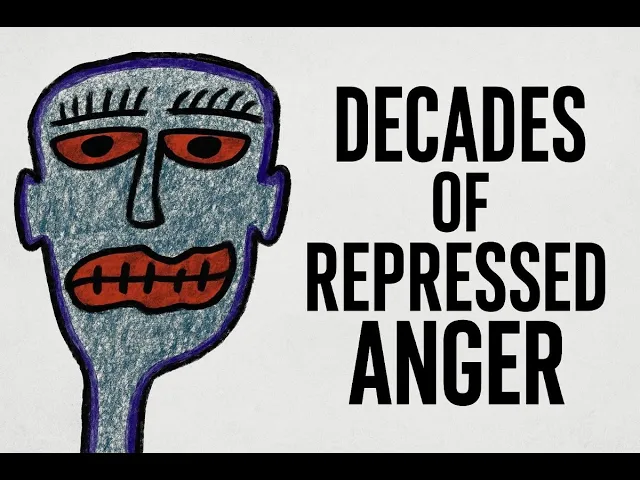
[Music] I want you to imagine something for a moment. Think about the last time you felt anger. Real burning anger, but didn't express it.
Maybe you clenched your jaw, pressed your lips together, or just stared at the wall and told yourself, "I can't say anything. I'll just let it go. " That tension didn't vanish, did it?
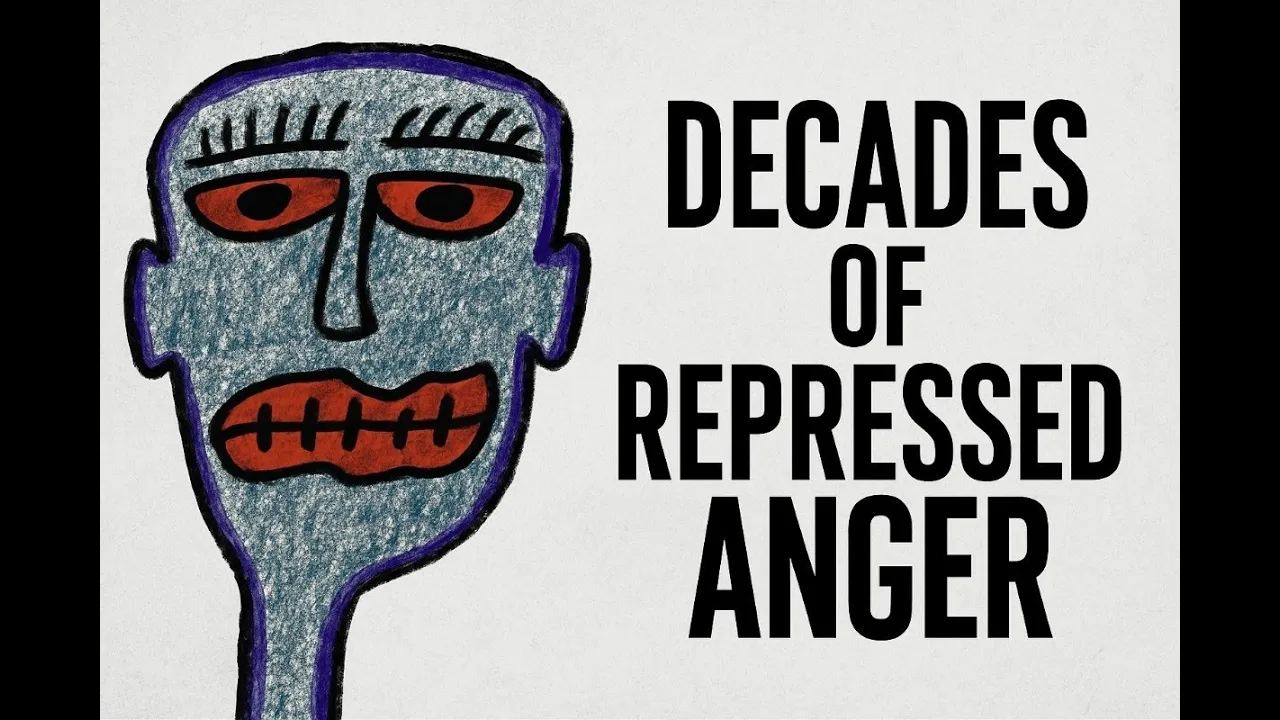
It moved inside, settling in the corners of your chest, whispering quietly in your mind. That's repressed anger. It's not the loud, explosive fury we often fear.
It's the quiet one, the one we think we've controlled, but it quietly controls us in ways we rarely notice. Here's the thing. Psychologists estimate that nearly 1/3 of adults habitually suppress anger rather than expressing it openly.
And it's not just a minor inconvenience. It affects our emotions, our relationships, and even our physical health. But what's fascinating is why we do it and what happens when we keep holding it in.
[Music] Anger at its core is a signal. It's our mind's way of telling us that something in our environment or in ourselves is being threatened, ignored, or dismissed. But when we repress it, we are essentially cutting off communication with ourselves.
We're saying, "I won't let my feelings exist. I'll bury them. " And yet, buried emotions don't disappear.
They fester, quietly shaping our decisions, our moods, and even our subconscious reactions. What makes repressed anger so insidious is how it hides behind other emotions. You may think you are feeling sadness, anxiety, or guilt.
But underneath, it's often anger that's been denied expression for weeks, months, or even years. Psychologists call this displaced emotion because the energy of anger is too powerful to ignore. So, it transforms, often taking forms we don't immediately recognize.
It might show up as irritability, passive aggressive behavior, or even self-doubt. There's a theory in psychology called the frustration aggression hypothesis, which suggests that when our goals are blocked, anger naturally arises. But if we continually deny this anger, it doesn't vanish.
It circulates internally. Imagine a pot of water on a stove. If you remove the lid, but don't turn off the heat, eventually it will boil over.
That's what happens when anger is chronically repressed. Sometimes it seeps out in small, almost invisible ways, a sarcastic remark, a sigh, or an unexplained mood swing. Other times, it erupts unexpectedly, catching both you and others off guard.
But there's something even more subtle at play here. The way repressed anger changes your perception of yourself and the world. When we deny our anger, we often start to doubt our own needs, our rights, and even our values.
We tell ourselves, "I shouldn't be upset. I must be overreacting. Maybe I'm too sensitive.
" Over time, this internalized message can erode self-esteem, leaving a person who is outwardly calm but inwardly restless. And yet, paradoxically, this repression feels safe. Expressing anger feels risky.
Maybe we were taught as children that anger is unacceptable. Or perhaps we've experienced punishment, rejection, or judgment when we did express it. So, we adapt.
We learn to hide our fire. And slowly, invisibly, it shapes the way we move through life. What's remarkable, though, is that repressed anger isn't just destructive, it's deeply revealing.
It holds information about boundaries we never enforced, needs we never acknowledged, and experiences we never fully processed. Carl Young, one of the pioneers of analytical psychology, described repressed emotions as forming a kind of shadow, a part of ourselves that exists outside of conscious awareness, but influences everything we do. This shadow is not inherently evil.
It's simply unintegrated energy. The moment we recognize it, we gain insight. Not just into our anger, but into the choices we make, the people we allow in our lives, and the patterns we unconsciously repeat.
Think about it like this. Every time we push down anger, we are stacking bricks in a wall between ourselves and the world. Some bricks are tiny, almost invisible.
Some are massive. With each brick, the wall grows taller. The distance between our authentic feelings and our daily actions widens and the world starts to feel colder, more frustrating.
But when we acknowledge the bricks, when we see and understand them, they stop being barriers and start being guides. Each brick tells a story why you reacted that way. What you needed, what was denied, and what you might reclaim.
[Music] Now, here's a pattern I've noticed in people who struggle with repressed anger. They often live in what psychologists call emotional suppression loops. It's subtle, almost invisible.
A person experiences irritation. They push it down. It resurfaces as self-criticism.
Then they feel guilt for even feeling frustrated. And the cycle repeats over time. from this loop can create a quiet but pervasive tension.
The kind that manifests as chronic stress, physical discomfort, or a sense of something is off that they can't quite articulate. So, what does science say? Research shows that people who habitually suppress anger are at higher risk of cardiovascular problems, immune dysregulation, and even chronic pain.
And while these outcomes sound alarming, the psychological implications are just as profound. Suppressed anger can impair decision-m, reduce emotional resilience, and make relationships more difficult. It's not about moral failure or weakness.
It's about energy that hasn't been expressed constructively. And here's the curious part. Repressed anger is often intertwined with what psychologists call empathic overextension.
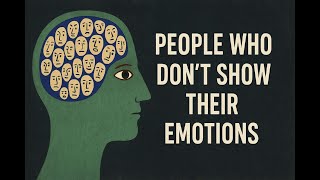
Many who hold anger inside are highly attuned to others feelings. They prioritize harmony. They avoid conflict and they often act as emotional caretakers.
On the surface, this seems admirable. But underneath, their own needs are invisible, silenced by a fear of rocking the boat. In other words, the very strength that makes them compassionate can also be the mechanism that buries their own anger.
Yet, despite all these challenges, repressed anger is not a trap. It's an invitation. It's a doorway into understanding ourselves on a deeper level.
When approached consciously, it becomes a teacher. Reflecting on what we are angry about, why we feel restricted, or which experiences trigger hidden frustration can illuminate patterns in our lives that were previously invisible. It's not about exploding or acting out.
It's about integration, acknowledgement, and healthy expression. Here's a curiosity I want you to consider. What if the moments when you feel inexplicable tension, irritability, or fatigue aren't random?
What if they are your mind and body signaling that there is anger that needs attention, and not the anger that shouts or storms, but the quiet, simmering anger that has been politely ignored for years. Understanding this could change how we navigate stress, relationships, and even self-perception. And here's something even more subtle.
Repressed anger doesn't just affect us internally. It shapes the energy we bring into the world. It affects the way we respond to challenges, how we communicate, and even the subtle emotional climate of our environments.
It's the anger behind the polite smile, the irritation under the calm tone, the tension beneath every agreement we make reluctantly. Recognizing it doesn't just free us, it frees the people around us from unconscious patterns we perpetuate. So, if you've ever caught yourself snapping at someone over a minor annoyance, feeling inexplicably tired after interactions, or holding grudges that seem disproportionate, you might be witnessing the echoes of repressed anger.
And here's where it gets even more fascinating. The process of acknowledging and integrating the anger is deeply philosophical. It's about confronting the parts of ourselves we've been told to hide, understanding our needs, and giving voice to the silent narratives inside us.
In fact, some of the most profound growth experiences in life involve meeting these silent suppressed emotions and letting them teach us. Anger when integrated becomes clarity. It becomes a guide to what matters, what boundaries we need to establish, and what patterns we need to change.
But to do that, we must first stop fearing anger. We must stop thinking of it as inherently negative. It is not the enemy.
It is a signal, a pulse, a whisper from the deepest part of our psyche. And now I want you to consider a small experiment. Next time you feel irritation rising before you push it down, pause.
Ask yourself, what is this feeling trying to tell me? What need am I denying? What boundary is being tested?
That simple act over time begins to unravel years of silent suppression. It begins the work of integration. And integration is not just about emotion.
It's about authenticity, agency, and presence in your own life. And here's where the story deepens. Because once you begin noticing repressed anger, once you start observing it in yourself, you realize it's woven into nearly every decision you make.
choices about relationships, work, even small everyday habits. All subtly influenced by anger you never gave a voice to. It's fascinating, almost like discovering a hidden character in the story of your life, one that has been silently writing chapters behind the scenes.
Psychologists often describe this as the unconscious emotional current. It's not something you actively think about. Yet, it pushes and pulls, shaping your behaviors in ways that feel natural, inevitable, or even justified.
But the truth is, once you acknowledge it, you can interact with it consciously. You can ask it questions. You can learn from it.
And in that process, anger transforms from a silent sabotur into a companion, a guide, a teacher. Let's take a moment to explore why repression happens in the first place. Many people grow up in environments where expressing anger is discouraged.
Perhaps you were told, "Don't be angry. It's rude. " Or, "You'll hurt someone if you show that.
" Maybe you observed loved ones holding back their feelings, modeling calm on the outside while their internal world was storming. The message is subtle but persistent. Anger is unsafe.
Anger is unacceptable. So, like any intelligent system, the mind adapts. It hides, buries, and redirects the energy that cannot be safely expressed.
But here's the paradox. Denying anger doesn't make life safer. It often makes it more complicated.
Research in psychology suggests that chronic suppression of anger correlates with higher rates of anxiety, depression, and even insomnia. It's as if the energy of anger refuses to vanish. It must move.
If it cannot move outward safely, it circulates inward. often producing tension, fatigue, or even subtle resentment toward ourselves and others. The emotion doesn't disappear, it multiplies in invisible ways.
And yet, there is hope because the very same studies indicate that acknowledging anger in safe, structured ways reduces stress, improves relationships, and enhances emotional clarity. It's not about yelling, lashing out, or hurting anyone. It's about recognition, articulation, and release.
Even journaling, mindful reflection, or creative expression can help. By giving form to what was silent, we reclaim a part of ourselves that has been lost. Here's a subtle truth that many overlook.
Repressed anger often comes from unmet needs. Not just big needs, but small everyday ones. Respect, acknowledgement, fairness, or simple consideration.
When those needs are ignored and the resulting anger is silenced, the mind begins to normalize the deprivation. Over time, this can lead to a kind of chronic invisibility where a person questions their own significance or validity. And that's when anger becomes the silent engine of dissatisfaction, quietly fueling self-doubt, frustration, and disconnection.
Yet, there is a powerful lesson in all of this. Anger is information. It is a signal telling us where our boundaries have been crossed, where we have compromised too much or where our values have been ignored.
It is not an enemy to suppress but a guide to understanding ourselves more fully. And when approached consciously, it becomes transformative. Now imagine this.
What if instead of seeing anger as something to avoid, you saw it as a teacher? Every irritation, every small resentment, every simmering frustration becomes a map. Each one points toward an area in your life that needs attention, healing, or adjustment.
And here's the subtle beauty. As you integrate anger into your awareness, it loses its destructive power. It becomes energy you can harness for clarity, creativity, and even compassion.
One fascinating aspect of repressed anger is how it interacts with relationships. People who hold anger inside often unconsciously project it onto others, not as direct aggression, but as tension, criticism, or distance. They may appear calm, even agreeable, but others sense a subtle barrier.
It's as if the body and mind are whispering truths that the voice refuses to speak. And the irony is that by suppressing anger, we can unintentionally create the very conflict we hope to avoid. The antidote then is awareness and gentle expression.
Not every anger needs confrontation, but every anger deserves acknowledgement. Psychologists recommend starting with reflection. What am I really feeling right now?
Why does this situation provoke me? What need is being ignored? Once we can answer these questions honestly, we can choose whether to act, release, or transform that energy.
The power is in conscious choice, not suppression. And here's where the philosophy deepens. Repressed anger is intimately tied to authenticity.
When we deny anger, we deny a part of ourselves. We tell ourselves that some feelings are illegitimate, that some experiences are unworthy of acknowledgement. And over time, that self-denial can become a profound source of internal conflict.
But when we recognize and integrate anger, we reclaim integrity, presence, and the capacity to live in alignment with our own values. There's also a subtle, almost poetic truth here. Anger, when acknowledged, is rarely violent.
It is usually a quiet, persistent insistence that we matter, that our experiences are valid, that our boundaries deserve respect. It's the energy that fuels self-p protection, advocacy, and sometimes deep creativity. Many artists, writers, and philosophers throughout history have drawn on this silent fire, transforming personal frustration into works of insight, empathy, and beauty.
And here's something you might not have considered. Anger is temporal. The longer it is repressed, the more distorted it becomes.
What started as a simple frustration can over years become a tangled web of resentment, projection, and regret. But the moment we acknowledge it, even softly internally, we begin to untangle that web, the energy flows again like a river that have been damned. And suddenly the mind and body breathe more freely.
I want you to notice one more thing. Repressed anger is deeply human. It is not a failure or a flaw.
Every person experiences it. What differs is whether we are willing to meet it with curiosity, reflection, and compassion. There is a kind of courage in noticing, naming, and understanding anger because it requires honesty, vulnerability, and self-respect.
It is a practice, a form of emotional literacy that can transform how we live and relate to others. And here's a psychological insight that might surprise you. Expressing anger constructively actually strengthens empathy.
When we recognize our own feelings, we become more attuned to the feelings of others. By honoring our own boundaries, we learn to honor theirs. By learning to articulate our internal tension without judgment, we develop a language of connection rather than conflict.
Anger paradoxically becomes a bridge rather than a barrier. Finally, let's step back and see the bigger picture. Life in many ways is a process of learning to navigate the silent currents within us.
Repressed anger is one of those currents. Often invisible yet incredibly powerful. It shapes perception, decisionm and emotional experience.
But it is also a doorway, an opportunity to engage with the self more honestly, to reclaim energy, and to cultivate deeper empathy and wisdom. So I want to leave you with this thought. The next time you notice irritation rising or a sense of tension you can't name, pause, breathe, ask yourself, "What is this feeling really trying to tell me?
What boundary or need is unacknowledged? How can I meet this part of myself with compassion? " In that simple act lies transformation.
It is the moment where silent energy becomes conscious insight. Where anger ceases to be a shadow and becomes a source of clarity, presence and emotional depth. Because at the heart of the psychology of repressed anger is this truth.
Our emotions are never enemies. They are messages, guides, and mirrors reflecting the richness of our inner life. To ignore them is to live half aware.
But to meet them, to integrate them, is to live fully awake, fully human, and fully engaged with the world around us. And so repressed anger is not something to fear. It is something to notice, understand, and respect.
It is the whisper of our own authenticity, calling us to pay attention, to reclaim our energy, and to live with deeper awareness. It teaches us that even the quietest fire can illuminate the path toward self-nowledge, emotional freedom, and the courage to be truly ourselves. Because in the end, acknowledging repressed anger is not about losing control.
It's about gaining connection with ourselves, with our emotions, and with the world we inhabit. And that connection, subtle and profound, can transform not just our inner life, but the way we move through life with grace, insight, and presence.