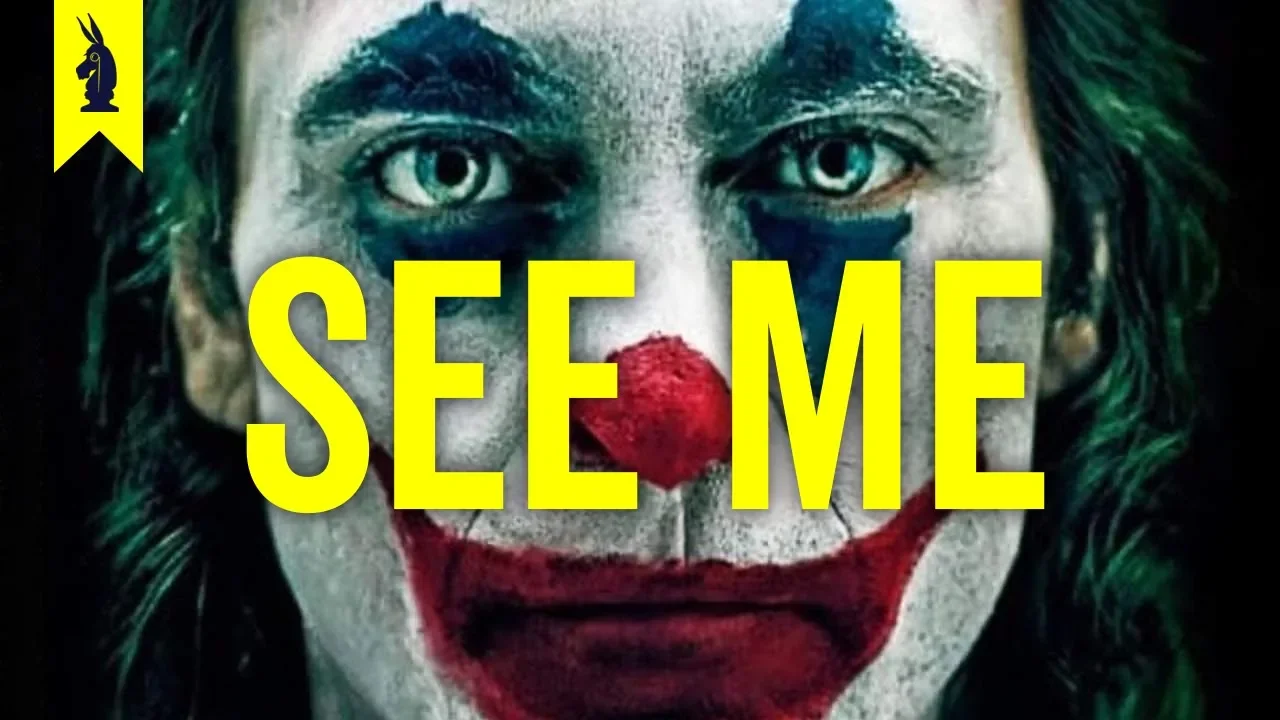
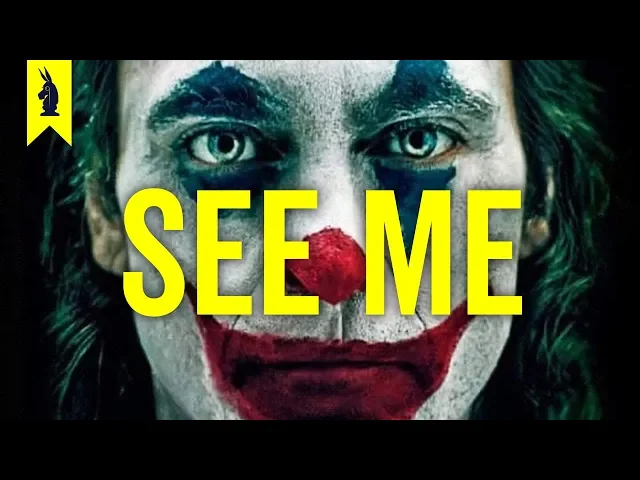
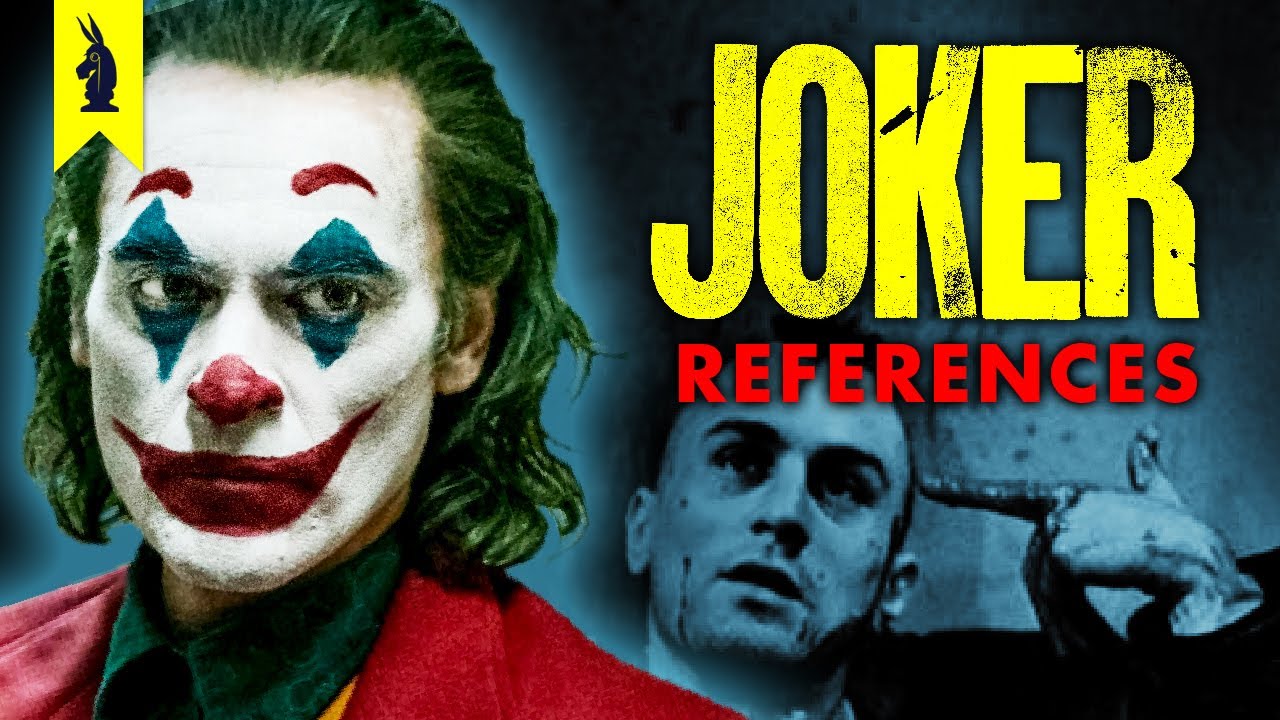
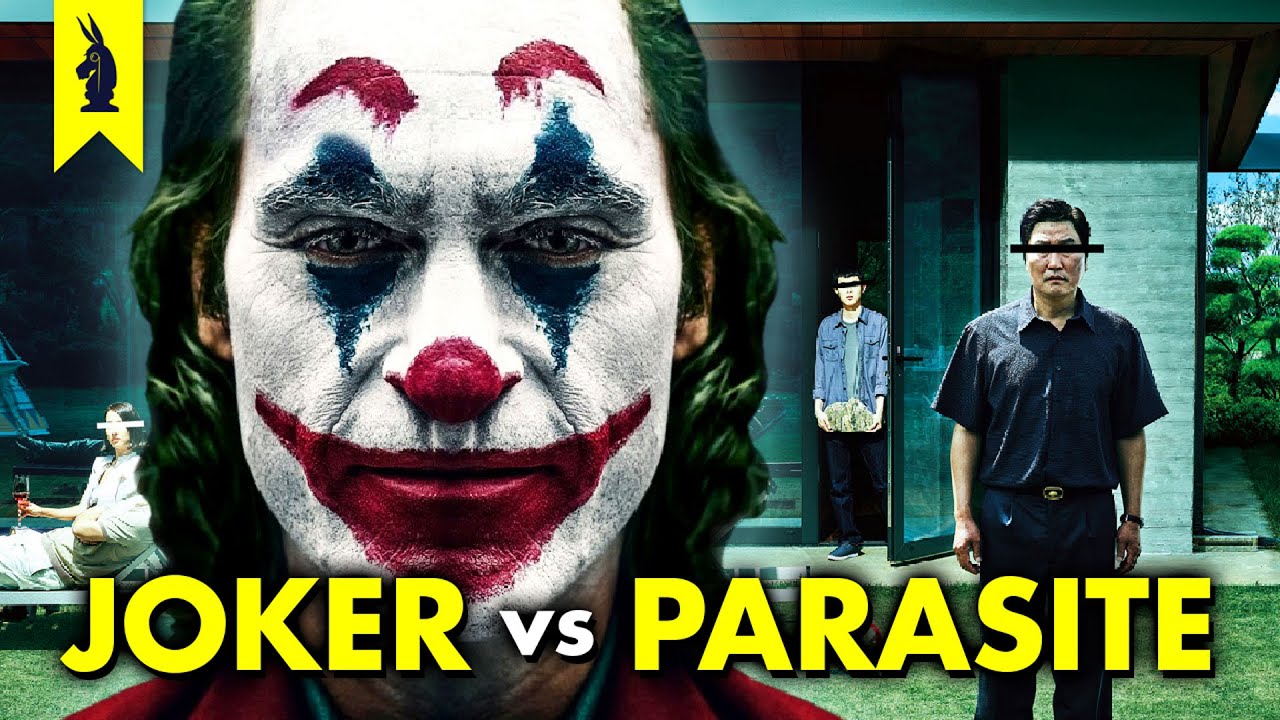
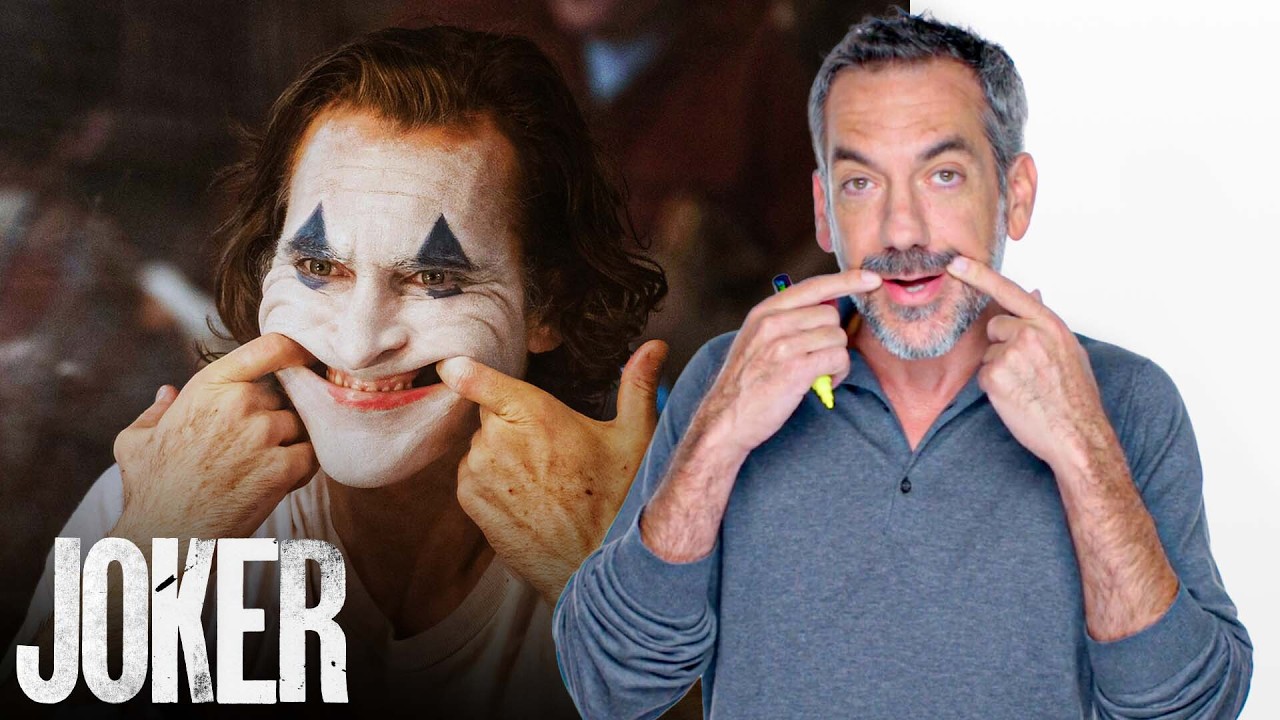
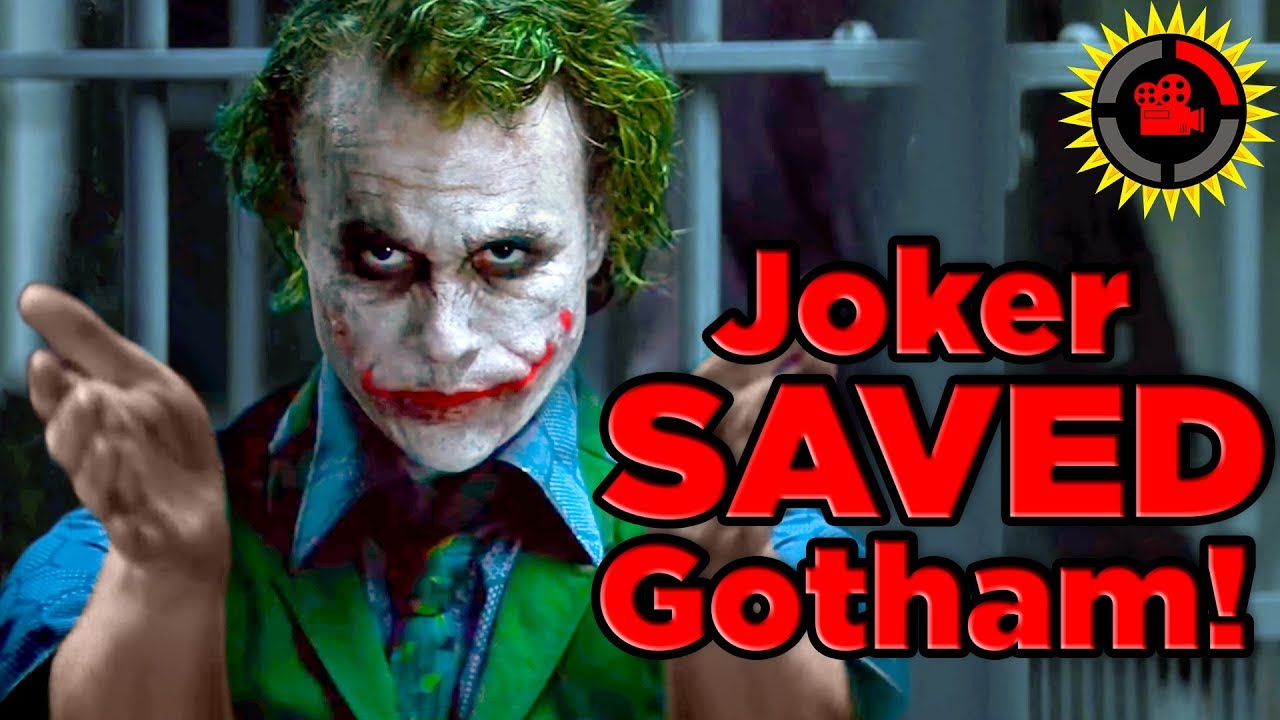
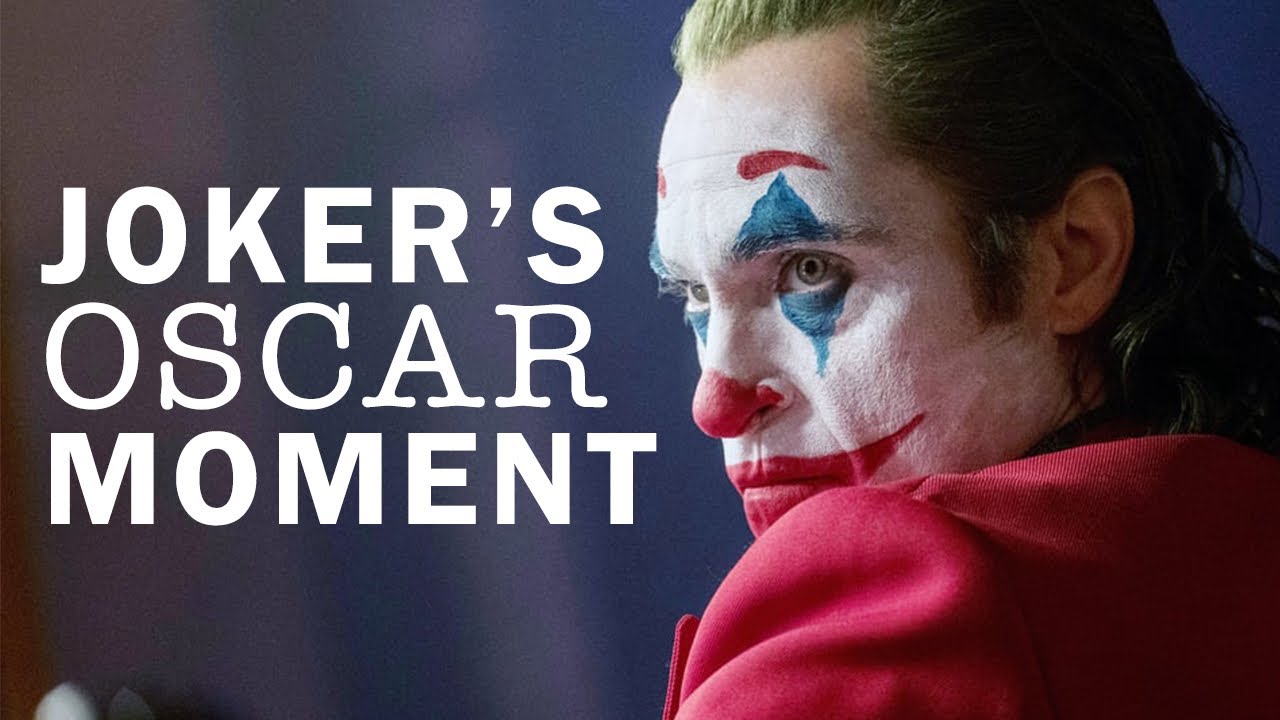
What’s up Wisecrack? Michael here and today we’re talking about the film that wants you to keep on smiling - Joker. Now, there is a lot to unpack in this film.
It’s like a cocktail of films past, heavily infused with the spirit of Martin Scorcerce’s Taxi Drver and The King of Comedy, among other films of the era. It’s incredibly ambitious, not only cause it’s got shots of Joaquin Phoenix dancing in puddles and laugh-crying his way to an Oscar nomination, but because of the impossible-to-ignore sociopolitical commentary. There’s also the fact that director Todd Phillips is OVERTLY going against comic lore by giving the character a definitive backstory.
But what exactly is the film trying to say? That you should, for the love of god, stay on your meds. Well, maybe, but we think there is something deeper going on - and that something is the politics of recognition.
So strap in for this spoiler-filled ride into Clown Town, in this Wisecrack quick take on Joker. And we’re also going to spoil a 1976 film, Network. Alright guys, let’s do a quick recap.
Joker follows the heavily medicated Arthur Fleck as he dreams of becoming a successful comic. But, due to his mental illness and resulting inability to stop laughing at awkward times, he’s tormented by asshole kids, rich adults, and even his favorite talk-show comedian. And it gets worse: budget cuts to social services keep Arthur from his much-needed psychiatric meds and he loses his job for bringing a gun to work, as one does.
He then uses aforementioned gun to kill aforementioned rich adult bullies. People revel in these mysterious yuppie deaths, causing a bizarre social movement where protestors blame the likes of Thomas Wayne and the rest of Gotham’s rich for the city’s problems. Fleck ends up on TV next to his talk-show hero, kills him, and denounces the society that abandoned him.
The broadcast leads to a city-wide riot, resulting in the now- familiar murder of Thomas and Martha Wayne. Fleck apparently ends up in Arkham Asylum, where he continues to laugh. The end.
Perhaps the most overt theme in the film is recognition: that is, the state of being acknowledged. Like you know, as a human with needs and feelings. That might sound vague, but it gets very poignant.
The audience is clued into this in a number of ways, some very subtle. For example, when Arthur is visiting his mother in the hospital he struggles to be “acknowledged’ by the automatic sliding door marked “Exit. ” Also, the Wall Street bankers that he kills are initially incensed that the woman on the train won’t acknowledge them.
More obviously, clues to this theme come from Arthur’s mother Penny, who is constantly writing letters to her former employer, Thomas Wayne, and beseeching him for financial help. Thomas Wayne is a good man, she reasons, so surely he wouldn’t just ignore the needs of a human being he once employed. Of course, her letters go unanswered, causing Arthur to go looking for his own answers.
Arthur too is in need of recognition: he spends his days as an anonymous clown advertising local businesses - the only people who acknowledge his existence on the street do so to torment him. Fatherless, he dreams of being recognized and subsequently loved by his comedy idol - Murray Franklin. He even daydreams of Franklin embracing him as a kind of surrogate son, highly reminiscent of similar scenes from Scorcese’s King of Comedy: “I really have to ask you that.
How do you- how do you do it? ” A brief exchange with a neighbor even leaves Arthur fantasizing an entire relationship with her. The only person who he can really confide in, besides his imaginary girlfriend, is a social worker, who he complains doesn’t truly listen to him.
Then budget cuts leave him entirely on his own and forgotten by the system. An unmedicated Arthur’s problems are now invisible to the world. The social movement that he spawns speaks more to the problem of recognition: Gotham’s everyday residents are left to rot, while people like Thomas Wayne live behind closed gates with personal butlers: blissfully disconnected from the misery.
Their demands are vague, but could be summarized as a mix between “eat the rich” and: “I’m mad as hell, and I’m not going to take it anymore” but we’ll get to that later. In one scene, Gotham’s well-to-do watch Charlie Chaplin’s “Modern Times” at a black tie event. Ironically, the silent film, about the dehumanizing nature of factory work, is being happily enjoyed by the people who probably own those factories, or at least, inherited the profits.
When Arthur finally makes it onto the Murray Franklin show, he doesn’t seem to be interested in the mass movement he’s created - he’s simply thrilled to be seen. He quickly confesses to the murders, and complains that, unlike his 3 wealthy victims, nobody would notice if his dead body littered the streets. He even tells Murray: The message seems to be: The system is broken, and everyday people are alienated and powerless.
They have no way to be recognized, especially politically, other than to riot, commit heinous acts or be the object of public scorn and ridicule. Arthur gets his first hint of recognition when the masses are galvanized by his anonymous murders. Then, he’s more directly recognized when he becomes the William Hung of 1980s comedy.
And real or imagined, he finally becomes the object of everyone’s attention as he basks in the adoration of rioters after he shoots Murray Franklin. He explicitly seems less interested in the politics of the revolution than he does in just being seen. Meanwhile, his mother, left to wither away in her apartment and ignored by the Wayne family, had her only moment of notoriety when she was revealed to the public as a neglectful mother, which Arthur discovers when he finds old news clipping about his own childhood abuse.
By contrast, Thomas Wayne is immediately seen and recognized by virtue of his wealth and power. If he thinks that the protestors are lazy ne-er-do-wells, his status gives him an easy outlet to make his voice heard. After all, he’s never been a politician, yet the media is constantly propping him up as the best possible candidate for mayor.
Recognition is a topic taken on by several political philosophers, but I want to focus on one in particular: Jacques Ranciere. For Ranciere, the act of being recognized is a foundational political act. Setting budgets and building bridges is not so much a question of politics for Ranciere as it is of bureaucracy.
Instead, going back to Ancient Athenian democracy, he defines a political act as one in which a person demands to be recognized as an equal. This was as true for ancient Athenians as it was for say, Suffragettes, factory workers, or civil rights activists. Historically, the response to these claims have always been some form of the same argument: that a group or person is not capable of acting politically or rationally.
For instance, when Aristotle defined man as a political animal because they had persuasive speech, he claimed that slaves were incapable of politics, since their speech was, to him, more akin to animal noises: capable of expressing sadness, hunger, or anger, but not much else. Which is a pretty convenient way to not pay attention to the guy feeding you grapes while you philosophize. I don’t think it’s a coincidence that, in Joker, Thomas Wayne does not address the protesters as people with opinions different from his, but as “clowns” who have done nothing with their lives.
It is implied, then, that these losers are not worthy of political recognition. The message from Phillips seems to be that, without some other means of recognition, people will resort to the loudest and most violent means: whether that’s rioting on the streets or assassinating a talk show host on air. That quest for recognition, political or otherwise, is also reflected in the film’s two biggest inspirations: Taxi Drver, where Travis Bickle seeks recognition from a woman he lusts for, and the King of Comedy, where Rupert Pupkin seeks recognition from his comedy role model, and talk show audiences at large.
But even more important may be the film’s least-discussed influence: the 1976 film Network. Network is a big ol Wisecrack favorite. I love it.
Jared and Alec probably love it a little too much. Network is the story of a news anchor, Howard Beale, who has an on-air mental breakdown, which turns out to be really good for ratings. So he continues to mentally breakdown on air as greedy executives profit off his illness.
But those mental breakdowns also come with a message: the world is a hot garbage fire, the system is broken, and we should all be mad. How mad, you might ask? Well, mad as hell - thanks for asking.
Howard decries the fact that crime and poverty are seen as a normal part of society. Importantly he doesn’t ask his viewers to write their congressman or protest or riot, but simply to affirm their human dignity with their anger: “You gotta say, I’m a human being goddamnit, my life has value” For Howard, that recognition of value comes from the simple mantra: “I’m as mad as hell and I’m not going to take this anymore. ” And boy is everyone else really mad, and not going to take it.
Howard’s invective is massively popular and, importantly, makes the once-struggling network a ton of money. His unfiltered rage even spawns more rage-filled TV, as the network airs the The Mao Tse-Tung Hour, starring a band of terrorists affiliated with the communist party. All is well and good until Howard’s rage is directed at his network’s sale to a Saudi Arabian conglomerate, thus endangering the deal and leading to his prompt assassination.
Both Howard’s and Arthur’s breakdowns are tied to their overall degradation in the world. Both are unceremoniously fired. Both feel trapped in an insane world, and both want their fundamental humanity recognized.
And just as Howard’s illness is exploited by network executives, Arthur’s illness is exploited by Murray Franklin. After his uncontrollable fits of laughter and bad jokes cause him to bomb at a nightclub, footage of the event is shown on television to a massive audience. The audience loves the cringy footage so much that they demand more, and Arthur is invited on the show to be the butt of more jokes.
When Arthur assassinates Murray, the film cuts to a grid of televisions showing the assassination interspersed with banal commercials - a clear nod to the ending of Network, where Howard’s murder becomes just another sensational news piece. There might also be a subtle hint to the profiteering off of others’ misfortunes when Arthur looks to the message in his journal that reads: Like Joker, Network is about a society failing its people, and what the resulting anger means. Network cynically argues that behind every earnest plea for revolution, there’s an executive with a plan to package and sell it.
Joker however, doesn’t take as crystal clear of a position. Instead it just suggests that people are mad, and that horrifying consequences will follow if they’re not placated. There’s really no good guy: Even if Thomas Wayne is an insensitive jerk, the protesters are a disorganized, violent mob.
And the Joker himself has no larger political project: he initially murders those who wronged him, but soon finds the recognition intoxicating. Arthur is clearly not a good model for achieving recognition, but a warning of the instability and chaos that a broken society can yield. So what do you think?
Should we even take Arthur’s monologue seriously? After all, it’s hard to call for civility right before you shoot a guy in the head. Or was it all just a delusion?
Let us know what you think in the comments. Thanks to all our patrons who support the YouTube channel and our podcasts. Be sure to subscribe and thanks for watching.
Peace!




![How about another joke, Murray? | Joker [UltraHD, HDR]](https://img.youtube.com/vi/WbliHNs4q14/maxresdefault.jpg)