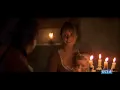
looking at our list of controllable properties of light we've talked about Direction intensity diffusion color and shape now we'll talk about frequency so what is the definition of frequency of light think of frequency as a very variation of intensity over time so if you think of my hand as expressing an intensity of light okay now if I'm going to change that intensity over time make it brighter make it darker make it brighter make it darker that's what frequency is and so if you think of this as expressing flame of a fire a television screen a
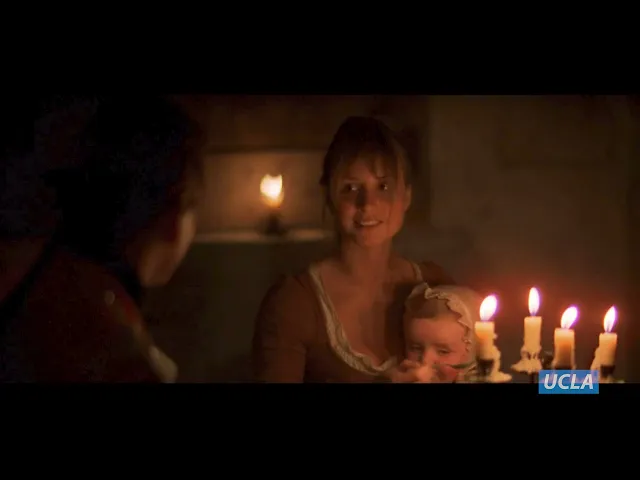
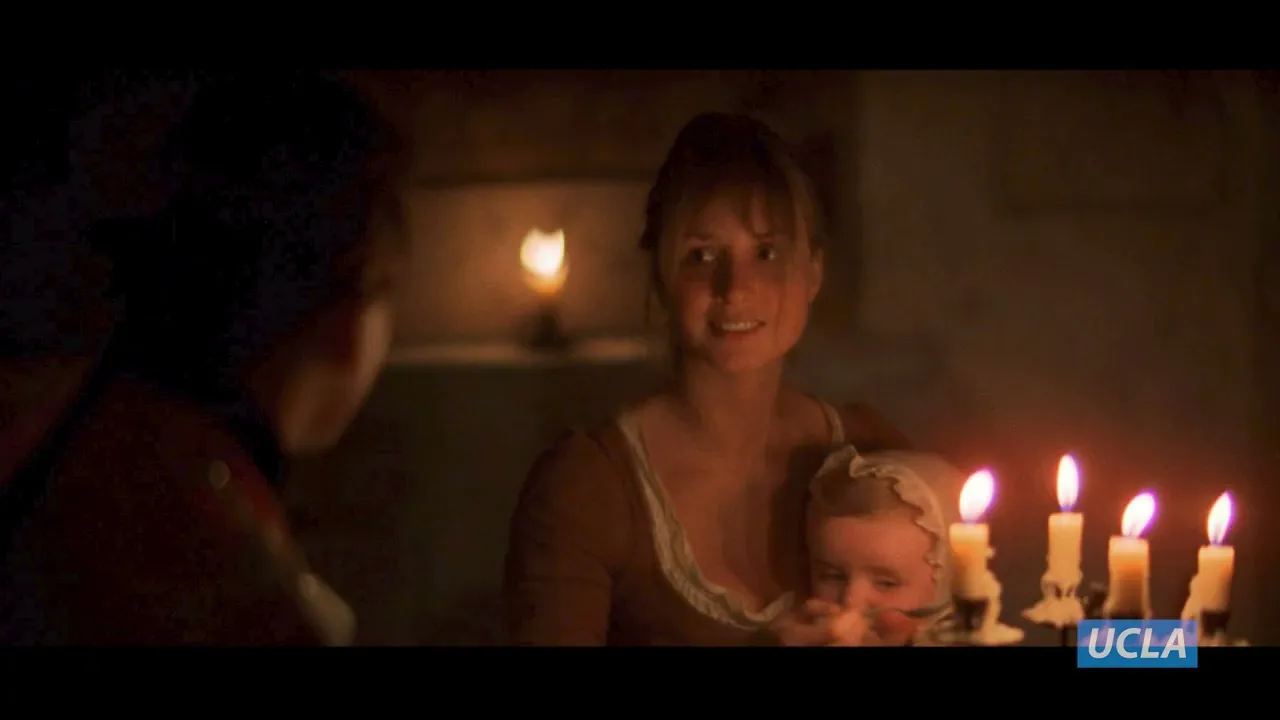
candle a torch a movie projector that's how we recognize that as what they are because of the frequency of the light because it's the intensity of that light is varying over time and that's how we can think of frequency so in these examples where you'll see in the clips you'll see these the candles and all moving but you get the idea here that those are candles and they have a frequency now here's an instance where that's not only a motivated source that is the source of light those candles are Illuminating the scene so very low
light levels um shooting with a special lens uh that was is developed by NASA uh for space photography Stanley kubric and John Alcott use that to use actual candles for illumination which means when those light flicker as they do the light on their faces flickers because that's the actual source of light so it's not only motivated it is the source of light and frequency is a part of that to make to for us to know it has veracity so in Hugo they're watching a a movie how do we know it's a movie could just be
a light sticking out of a hole in a wall well noticing the wall sconces oh wall sconces again um we've got uh that light again a clip you will see that it's it's doing this it's changing as they're watching the screen how do we see the beam of light well back in the day they did smoke in movie theaters uh and so you would have a natural projector beam of light as people smoked in the theater I'm sure they've added extra in there as well to create the the illusion so for frequency we have a
variety of on set technologies that we can use for um creating frequency as simple as just a dimmer that you might have on your wall at home where you just rotate a knob and have a dimmer um we can just do that manually we can also um use what's known as a flicker box uh that will um change automatically we can change the rate and the brightness and the rate of the variation of time um lot of different technologies that we can use uh to um create uh an influence frequency of a light source um
the key factors are if you're using multiple light sources the truthfulness of the frequency will be better particularly when it comes to fire if you just take one light warm it up and and make it go like this you know change the frequency it's not going to look like a fire if you have four lights each on a separate dimmer and you're varying the color temperature the diffusion and the intensity and you're doing all that it will look much more like fire so the key factors here are multiple sources and varying color temperature diffusion and
obviously we're in varying intensity because that's what a frequency is all about so again back here if we look at this so This is the real Source this is the other side of the shot in Barry Linden and so when those uh candles in the foreground flicker or used in the background in the back when those flicker you see the frequency of the the candle itself and you see it play on their faces this is also a real Source meaning those candles will that scene up in that chandelier those are Candles there a few I'm
trying to remember there's a couple thousand candles in that Chandelier and those candles are producing that light in that room and so when those lights flicker and addition to lights flickering on the table that flicker the frequency and it flickers in the room same thing here those are the real Source those lights are the real uh illumination again you see sconces candle sconces on the wall scones you know candle operas sconces on the table um each of those candles triple Wicked candles meaning the their three Wicks or the thickness of three Wicks makes a larger
tongue of flame and therefore why it's it gives you the brightness that it does but that's a real source that frequency that you see on them is produced by the actual candle itself in Gladiator this is a motivated source so there's a candle in the background the suggestion is that that those candles illuminate his face when those candles flicker they do not flicker on his face now our DP will of course director photography cinematographer will make sure that they do flicker a little bit but they will not flicker in time to the candles in the
background so this slight out of sync quality we generally do not notice that because it's a very subtle distinction but it is the way that a trained eye as you now have a trained ey will pick up that the candle itself is not the actual Source but to convince us that the source of light falling on um maximus's face there is that the light has a little frequency to it so that it suggests that the candles are producing that light even though the candles are not same thing here in Queen Queen's Gambit the TV light
flickers a little bit that television set is not Illuminating uh the Mother character at all it's suggested and the way that suggestion works is that when the image on the screen changes a little bit they just change the frequency just like this they don't do it like this it's not a candle it's the the frequency of the television set on the person depends on what they're watching if you're watching an action sequence yeah there's going to be a lot of changing if you're watching just a news show there's almost no change of frequency so people
often get that wrong with television sets they do this like well what the hell are they watching here we actually see what's being watched so the frequency will only change um with some electrician who's adjusting the frequency of the light on the mother when the uh image on the television screen changes here we have again motivated source that it would nice to think that that um torch is Illuminating that actor's face it's not he's carrying that torch making sure the shadow of the torch does not fall on his face because there's a separate light source
that's Illuminating him again which that separate light source will have a frequency so it feels as if that light source Illuminating him is the light is coming from that torch itself because of that torch's frequency here we have a great example which I love is from uh Barbie um those of you that seen have seen Barbie here's a great example of the artificial fire is somehow magically Illuminating them it's an artificial fire it can't illuminate them so it's a perfect illustration of frequency and how um uh the cinematographer Rodrigo petto um had to have lights
outside the frame that created the illusion of the toy fire uh that's in the frame there as if it's Illuminating Ken and Barbie uh that's I think my favorite frequency image now is because it's meant to be artificial and so it reveals uh the the cheat the tricks that we have to do to create the suggestion of frequency for a motivated light source