hi guys welcome to my channel my name is shang and i help individuals and companies think through their toughest problems before making youtube videos i was working in the tech industry for companies like google and niantic labs and various startups most recently i was a head of business operations at sturfy a metaverse startup focused on world skill augmented reality i closed multi-year deals worth millions of dollars across the u.s japan korea china and the middle east all this was for a product so new that it didn't have an existing market yet a literal zero to
100 scenario in this video i'll cover what new product market discovery and business development is like and also give you a few tips based on my experience in the trenches [Music] just a heads up that this video is primarily aimed at entrepreneurs ceos strategists and business and product managers but also really useful if you're looking to get into the tech industry or wanting to think more strategically so this is a very brief overview of what bd or business development is like and i don't have the time to go into all the nuances in just 15
minutes or however long this video ends up being if you guys have any specific questions definitely shoot me an email my website or leave a comment below and if there is enough interest from you guys um i might consider actually making a whole series on how to run a startup all right guys without further ado let's hit it [Music] all right what is a startup it might sound really obvious but it is such a fundamental question that not a lot of people ask themselves before joining one a very experienced tech veteran once told me that
a startup is great for discovery whereas a big corporation or company is good for implementation or scaling and what a startup is trying to discover are two things the first one is the validation of the value hypothesis right this is essentially learning about the market and trying to find product market fit for example uber started off with a hypothesis of rice sharing is something that a lot of people would need and it has a potential of replacing taxis as on-demand transportation for people within cities right so that is a hypothesis of a market need and
then the product itself then is or the startup is a vehicle to trying to discover or validate whether this is true the second thing that's trying to discover is a working business model because it's not enough to just identify a need or demand you actually have to figure out how to make money how to make profit because that essentially is what a business is right you can have the greatest need or the greatest demand but if you don't are not sustainable as a business then you're out of the market so that working business model of
how to monetize how to make profit is critical essentially to what that discovery part is too all right what is business development bd well it's exactly what it sounds like it is developing new business right it is trying to figure out how you're going to approach the market who you're going to sell to how you're going to sell it how much to charge and then closing deals at the end of the day not just deals but also you know getting sign ups for your service or product right depending on what company or what industry you're
in i always like to use this analogy of ninjas versus samurai so ninjas are stealthy they are covert ops essentially that you stand behind enemy lines and they will figure out and do whatever it takes to reach their objective right they're constantly essentially learning about the terrain what's going on the other side whereas samurai they are essentially infantry right they go through the front door they face the enemy or the the market head on and they follow a code they're highly scalable because there is an existing process that already works essentially ninjas are business development
people whereas samurai are like sales people that you are hired after your business developers have actually determined hey there is product market fit they have validated the market demand for your service or product and have also figured out a viable well way of monetizing the monetization or business model right but not only that have actually discovered a process that can be skilled that's when you can essentially translate this into a process or a code to hire salespeople or samurai to execute on it and who is usually the bd of a startup well it should be
the ceo or the founder first and foremost because the person who hatched up the idea for the company or product in the first place should be the one taking the charge to actually validate it become the main touch point with the market with the users and also create that feedback loop of essentially figuring out hey this is what people like this is not like and therefore we can actually translate it into product so the ceo is often the business developer the head business developer the head product manager and head everything right when you first begin
however once you get it to a certain size let's say you know five to ten people you might actually want to consider hiring a dedicated business developer or business hire essentially to go to the market with this will offload essentially a lot of the energies that the ceo can then now focus on fundraising or hiring which is a key ceo job and my experience is that i joined surfy when it was only 10 people uh everybody was an engineer everybody was a machine learning expert and i came in as a jack of all trades having
done product user operations marketing product design and strategy so they were essentially getting five people in one and not only that i was able to combine all these different hats all these different mindsets into thinking much more strategically about how to sell or how to go to market than a typical sales person or business developer right so essentially the more diverse the background that you have as a business developer the more resourceful you can be and more strategic that you can be as well and as business developers it's our job to figure out if the
problem is painful enough for people to pay big enough to support the company in the long term aka market size how to position yourself amongst competitors the most effective narrative to sell based on your customers fears desires identity the right business model that align with all the interests get enough cash essentially right to make sure that the company is surviving if not thriving and also validate enough of the market and the demand so that you can have the option go fundraising from investors if necessary that's a lot of responsibility i'm not gonna lie and that's
the reason why you have to think from so many different angles you can't just follow a set code like a samurai you have to be very flexible very resourceful and very attentive and observative in order to figure out all these different nuances as a business developer and ninja alright guys now i'm going to give you some tips on how to become a great business developer and like a lot of my videos i actually plan everything else in my map fashion so this is no different and we're gonna go through at least four of these right
the first one is know which product you're gonna go to market with so when i first started at sturfee we actually had two products that were about to launch it was either going to be a or both actually either going to be a game basically an ar location based game similar to pokemon go and ingress or we're going to become a technology platform giving this ai cloud tool to other developers and engineers game designers in order to create apps for these are fundamentally very different products essentially go to market right and my first job was
trying to figure out okay which one should we go with and i set up a series of user interviews for our game with various different users and getting them into a room and actually going through a design audit as well as real-time game demo to trying to figure out okay what is the feedback from it right and it very quickly became obvious that it was going to take a lot more resource than we had to make this game this product polished enough so that it would even stand a chance in the app store with this
data with this feedback i was able to convince the managing team the ceo the cto and the product manager to actually let go of this particular product so that we can actually focus on launching a technology platform instead which actually has way more optionality in the market because then we can actually diversify and try to figure out what kind of developers do we want to be on board right rather than putting our eggs in one basket so fortunately we had that option to go off of but definitely when you first start think about which product
if you have multiple product ideas or multiple value propositions which one you want to drill down first right and then do your homework and get user interviews to actually validate the hypothesis of your product the second tip is know your vertical a vertical is a specific industry or demographic that you're targeting because you can't just boil the ocean can't sell to everybody right you just don't have as much resources in order to do that you're not a big corporation you're still in the discovery phase you got to know your customers well sturphy we have three
verticals that we could sell to for our ai engine right our cloud service and these are apps devices and infrastructure players and all of them combined is kind of what i jokingly call the layer cake of of the tech stack right so basically all these have pros and cons and what we discover through the meetings and you know research is that we ended up having the best alignment with infrastructure players and the reason is the application players like facebook snapchat and google and niantic labs would actually see us as acquisition targets right which created essentially
a conflict of interest between us trying to sell to them versus them trying to buy us so there's always this little dance that's going on there but that also meant that they could open up early business but actually scaling it to future contracts and longevity as business partners might actually be very challenging right so it's not they were high priority but not a super high priority and then devices are like the apples the samsungs and before the china ban essentially is was huawei these are mobile players that also had a huge incentive in augmented reality
and the metaverse so on the surface it sounds like there was really good alignment but then there was kind of poor business model alignment because we're an ai service or software as a service right we actually sell based on the amount of engagement whereas these players the mobile players actually are more used to licenses right you would pay based on the per device level rather than per api call or engagement level essentially again we could do early stage testing and stuff but the longevity of in terms of business model alignment not so great and then
finally we have the infrastructure players right specifically telecommunication companies are rolling out 5g and need essentially these new applications to take advantage of the new infrastructure and it quickly became obvious that you know our business models were aligned because they are an infrastructure player we are infrastructure player they sell based on subscriptions we can actually bundle our service on top of the subscriptions and work together in tackling a new market right and there's also a heavy need for it as well basically you want to figure out your possibility of verticals and then really drill down
into which vertical makes the most sense for you and what that means is how i like to prioritize going back to my mind map is figuring out the prioritization right the market size the market size is key because even if they're they have a really big demand you don't have that market size then you can't actually generate enough revenue to make it worthwhile to create a business around or even to fundraise right and convince your investors that this is a big enough opportunity the second one is who is the most hurt this means two things
right it could either be competitive pressures or that it's uh you know these guys or your customers might be down in a slump they were really good before and now they're not and they're looking to pivot they're looking for new revenue streams right so these things are really critical the competitive pressures is are key primarily because that's going to drive what you know how much anxiety or how much incentive they are to get moving if they're very comfortable or have a monopoly position in the market you know it's like a lazy tiger in a zoo
they're definitely not gonna go out and hunt right they're just gonna sit there and be fed then the next one is who is the most willing to pay right are they how much margin do they generate actually as a business for your company for your customers if they actually have like you know a cash cow let's say an advertising like a google right they have a ton of money that they actually are willing to you know spray and pray and try to figure out hey which one is going to stick that's going to work to
your advantage because they actually have extra cash to spend and also you know what is the business model you want to go go with right again it goes back to the business model is it going to be a one-off um sow or basically a proof of concept poc or is it going to be a recurrent revenue subscription model where you're going to get month-over-run revenue year after year right which is far more stable than one-off sales so you know is your appetite for subscription-based or recurring revenue very very very important and then the next one
is what about risk and conflict of interest as i mentioned earlier we found out that application companies looked at us as acquisition targets right why buy from you when we can actually buy you as a company so when there is a conflict interest that actually increases the risk of business too because you actually have to think a little bit more about hey what is the strategic angle of these large companies are they just mining you for information or are they actually genuinely wanting to buy from you and also risk essentially um some companies or territories
are going to be more risky than others for example when we were operating with uh within china they wanted us to have all our ai servers essentially within china right and that increased the risk by a lot because it wasn't going to be you know amazon cloud services aws or microsoft azure or google cloud it was going to be somewhere that was you know less transparent far less control and much more likely for you know something bad essentially to happen as well right just lack transparency and higher risk these are all the questions you really
got to ask yourself and not only that think about the dynamics between all the different vertical players right how can you actually influence one of the stack based on the activities of someone else in there so for example in infrastructure right one of the reasons why we're able to sell to telcos major telcos like you know right like basically all the major telcos we were talking to essentially is that they didn't want to be overtaken by the application companies because they kind of missed a boat around 4g and 5g and the mobile era if you're
old enough to remember you know we were paying for text plans back then and then messenger came along imessage whatsapp right that completely displaced that whole you know you paid the phone company or the telco company for that privilege so that's just one example being overtaken um and now the telcos are essentially commoditized or they their pricing power has been decreased so much that they're a minor player of sorts in this whole digital age and a lot of that is carrying over that fear is carrying over to the 5g era so we were able to
essentially position ourselves as the telco friendly ai company that could work directly with them and you know within their infrastructure without posing a threat to them in the future like a google or a facebook or even apple right and that it would be a much more collaborative experience on equal grounds rather than adversarial down the line so really understand the competitive dynamics and if you're operating on an international level you know for example for us i was able to close business deals in japan and then convince koreans essentially to jump on as well because everybody's
looking at each other right if you can get a few major deals closed or customers you can actually essentially think about you know how to actually display this or market signal to other players that hey you're a legitimate service provider that you should trust me and that you know i'm able to sell this product essentially to you because all your competitors or your your buddies right are into our instance product so it is the kind of b2b or business to business equivalent of user testimonials man i've been talking real fast for a bit if you
have enjoyed this video so far definitely like or subscribe because i'm gonna be one of these youtubers telling you to like and subscribe uh because it actually does help this channel out a lot right all right tip number three is selling to a customer once you've identified your vertical which one you want to approach and have a pretty solid understanding now you're going to actually make a short list of the viable the highest probability uh customers right that you can find with that short list you're gonna have to reach out to them book those first
meetings however you can and before your first meeting and during those the subsequent meetings you're trying to figure out essentially a few things the need to knows right you got to know their business model because that's going to fuel essentially you know your arguments for around greed or why they want to buy you the market position which is more competitive around competitive fears right what their future plans are because then you can actually use some of the vocabulary that they're using in order to communicate to them because that's the only way you got to speak
their language right and then there's identity which is often shaped by the founders or the key decision makers within the company that you're talking to right each department depending on how big the company that you're working with is will have a different personality so you're gonna have to know the style as well right and then finally the key decision makers because often the person that you're the first point of contact with within a larger company or your client it's they're often not the they're like sourcing agents right they're trying to look for solutions to market
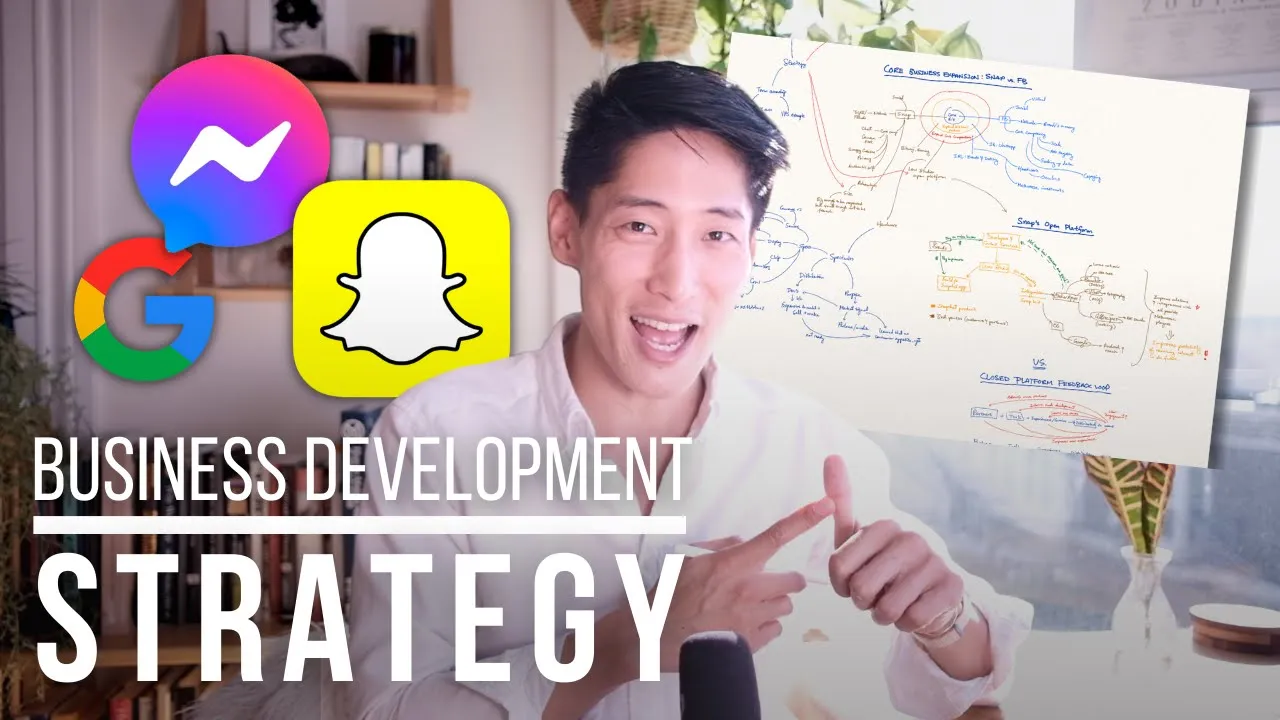
but they actually can't make the decision to buy from you right there and then they actually need to escalate it up to the right teams so always ask yourself if you're talking to the right decision maker the end decision maker of you know if you're gonna be able to make that deal done um and right now let me give you an example of just how deep that i go right as a business developer when i was looking into let's say the metaverse customers right the application companies snapchat and facebook i went as far as mapping
out their entire platform you know for example what is the nature of snapchat's focus what is their long-term views right well they've got the social angle they've got the hardware angle they're also pursuing an e an open ecosystem with other developers so they can actually create lens and you know face filters and then from a strategic angle it's like okay can i compare snapchat to facebook because they are competitors right how are they each trying to expand beyond just their core business of ads and social right maybe for facebook it's igm whatsapp they also have
you know in real life stuff and then for snapchat it's bitmojis gaming's the lan studios and open platform um and a lot of differentiation will really help me to be informed in my conversations with my counterparts and then you know what is snapchat's open platform well i mapped out essentially that this is the entire ecosystem that they're trying to create with like content creators going onto snapchat creating lens and then for their users to engage with right and constantly i'm asking myself okay where do we asturf fit into this whole flow right can we actually
as a world scale ar platform can we enable snapchat to you know create essentially city skill augmented reality experiences when you hold up your phone you're able to play like a game down an alleyway right or have these billboards pop up essentially before you in cities so these are the things that our technology enables but i actually have to first understand the entire dynamic of you know where our product fits into the whole grand scheme of things and this also is part of system thinking you also have to pay attention to major market movements and
events like you know developer conferences like google i o or apple's wwdc right these are announcements that can actually have industry changing repercussions you have to understand how these things are going to impact other players in your market so for example when facebook rebranded itself as meta right there are a few things it's going to cause a whole cascade of events and reactions from market players like from competitors right it's gonna force competitors to show their hand because holy crap you know facebook basically just changed their name into the metaverse company what is snapchat gonna
do right are they going to double down on what they do so snapchat actually said nope uh we're not going to be in the metaverse we're going to be ar we're going to be augmented reality and then niantic the pokemon go company was like well we're not going to do the whole virtual reality thing we're the real world metaverse so you have basically two augmented reality companies giants in this field going completely opposite ways right it's very important to actually determine where they're going so that when you actually pitch them or try to sell to
them you know what approach to take right and then there's also investors a lot of times it's like hey once you do rebranding investors might actually you know come in it creates a beacon for investors employees and also just like you know talent and ecosystem players right the whole thing is that it will bring this product to reality the fact that you know facebook is basically creating a beacon saying hey we're going to be the metaverse company everybody join on our boat that's basically what it's signaling to the market right and there's a time scale
essentially go to market time once that announcement happens and if it's impacting you significantly of all your potential customers this is the time in which you've got to move very very quickly right in order to adapt to that shift [Music] all right let me now walk through an example of how i actually approach one particular customer right so as i mentioned earlier we targeted large telecommunication companies right like the verizons of the world so one of the deals that i closed was actually with kddi the second largest telecommunication company in japan and the way that
i did it was actually going okay well of course it's a my map right these are the factors that i thought about it is greed fear and other factors right these are the core motivations essentially of a particular customer any customer for that matter well with greed it's about profit like how do we appeal the profit driving incentives right so for that you've got to understand hey what is our what are their sources of revenue how can we save them on cost because profit equals revenue minus cost right um and then from there i have
to understand okay where are their main revenue sources coming from is it mobile uh subscriptions and it turned out to be like nine percent of the revenue consumer cloud services which is business and then new sources of new revenue that they're trying to develop right and a lot of this is actually coming from their financial reports um and this is actually how deep that i go in order to learn about you know their different business units their revenue projections their plans learning the vocabulary of what they're what they're using right you really got to get
into the head of your customers that's really key on the cost side it's uh well it for us it's because we're a scalable ar platform therefore it doesn't take a lot of money essentially to implement right so it's not exactly cost saving but it is cost effective and can definitely make that argument and then from mobile subscription now that i know 90 of their revenue comes from cellular plans right like a lot of telcos do well how do we increase our market share and how do we increase our average revenue per user because it's already
a very saturated market in japan meaning that everybody who has a cell phone plan already has one therefore all the you know the three major telcos there are competitors are in gridlock right and in the united states if you go onto verizon site or t-mobile site your c you're gonna see stuff like hey we're gonna pay you 500 in order to switch plans that's basically the user acquisition cost the cost of acquiring a new user for a telco right that's super important because knowing this means that you know if we can make an argument around
hey our ar service is going to differentiate you in the market with a premium you know ar experience dedicated ar app or like you know enhancing the u usability essentially of your 5g infrastructure and it's going to make the middle move the needle from a market share perspective how much is that worth well you have the cost of user acquisitions 500 a user then even a movement of 1 market share assuming that the market size is you know 99 million japanese mobile users it's gonna be worth 500 million dollars right that's huge and we're going
to be selling obviously our service to them at a fraction of the price so you can really make that value to cost argument essentially and then it goes even further than that because depending on how we want to pitch to our customers it's like hey you know if we're going down the dedicated ar app way then you really have to understand like you know why do people use apps in the first place why would they need an ar application well the reason why people use apps is for three core reasons it's either utility because it's
useful entertainment or it's a status right so from a utility standpoint maybe it's like finding your way using augmented reality ar navigation um having these arrows point out on the map in front of you in front of your camera or is it entertaining like gaming tourism right music sports events or is it status for example like nfts which are super popular these days can you create these like cool ar nfts that can actually you know show off in the public right like a gallery turn any building into essentially a gallery these are all ideas in
which you know if we want to go down the dedicated ar app we would actually put that into a pitch deck and then tell that story right very different than we're trying to become a 5g error platform so really map out you know these different options and the different factors that go into these options and this is where my mapping is so so useful i'm not going to go into like the fears but you'll get a sense here you know and i'm happy to share this uh on on my website as well so you can
actually take a look at this also after you have done your initial research or even have closed the deal with the customer your job is not done yet right because there's always a lot more to learn the closing of the deal is just the beginning it's just trying to figure out hey this is you know what some people is willing to pay for but you got to continuously learn from every single meeting because what you're trying to do as a business developer at the end of the day is create a feedback loop between your company
and the market right you're you're at the closest contact to the market after all for example when we were working with kdi and a lot of other telcos i was constantly trying to map out okay these are what they're really looking for like if for an application ar application they're looking at sports entertainment and e-commerce right these are the learnings in which then we can execute on see if they stick or not and then i can actually use this in the next step which is scaling what skilling ultimately is is just increasing the output the
business output right based on all the learnings you've had previously and creating a system that can actually be replicated very easily and cost effectively that's basically scaling and in business development scaling is actually coming up with a sales process that works and you know it works based on your previous successes right but you have to systemize it so that you can actually hire again samurai or sales people to execute on it because samurai you can't expect them essentially to problem solve like a business developer that's not their job they're going to be really good at
hunting and bringing back the you know the prey essentially but you got to give them the right tools and the right knowledge to do that right and don't skill don't hire sales people until you have actually figured out a decent amount of product market fit and also know your pipeline like know your your stack of verticals right who you're going to sell to in those verticals identify a hit list of sorts that you want to go down and then only then should you be hiring sales people to execute on that i would say for the
most part the ceo again the ceo the core business developer needs to take on that role we are here to discover the market and we're here to discover what our value is to the world all right guys i've been talking for a real long time thank you so much for listening i hope this was helpful again it's really tough to actually go through all the nuances of business development in just like a few minutes definitely leave a comment subscribe and like this video as it helps out the channel a lot if there's enough interest let
me know because i can always create an entire series around running a startup right there's a lot of hats i used to wear so all right guys have a great one and i will see you soon bye now