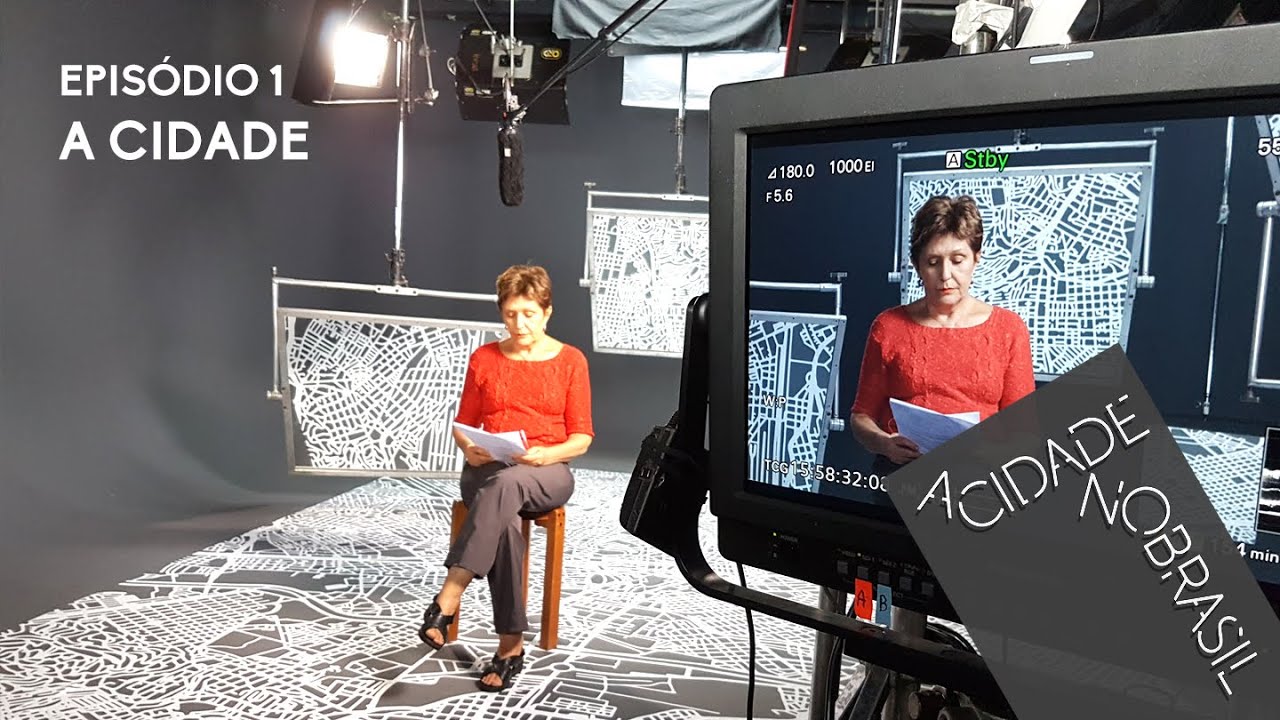
Much of what we know as rights are the fruits of people's demonstrations and remarks on Brazilian streets. Not everybody knows it and, consequently, human rights are considered a State gift. This project stemmed from the concern to find means of addressing the issues related to human rights in such a way it'd raise society awareness and catch attention to it.
I usually say that on human rights there's never a last conquest. No matter how much you do, there'll always be a place where some offense to the human rights is happening. Brazil nowadays, on the matter of some rights has a different stature if compared to the dictatorship period.
Today you can choose your religion, choose who you're going to marry, choose what you're going to say, what you're going to think, because a lot of people had to do lots of things, many personal sacrifices so you can have this current freedom. And it is not guaranteed. You also have to keep doing.
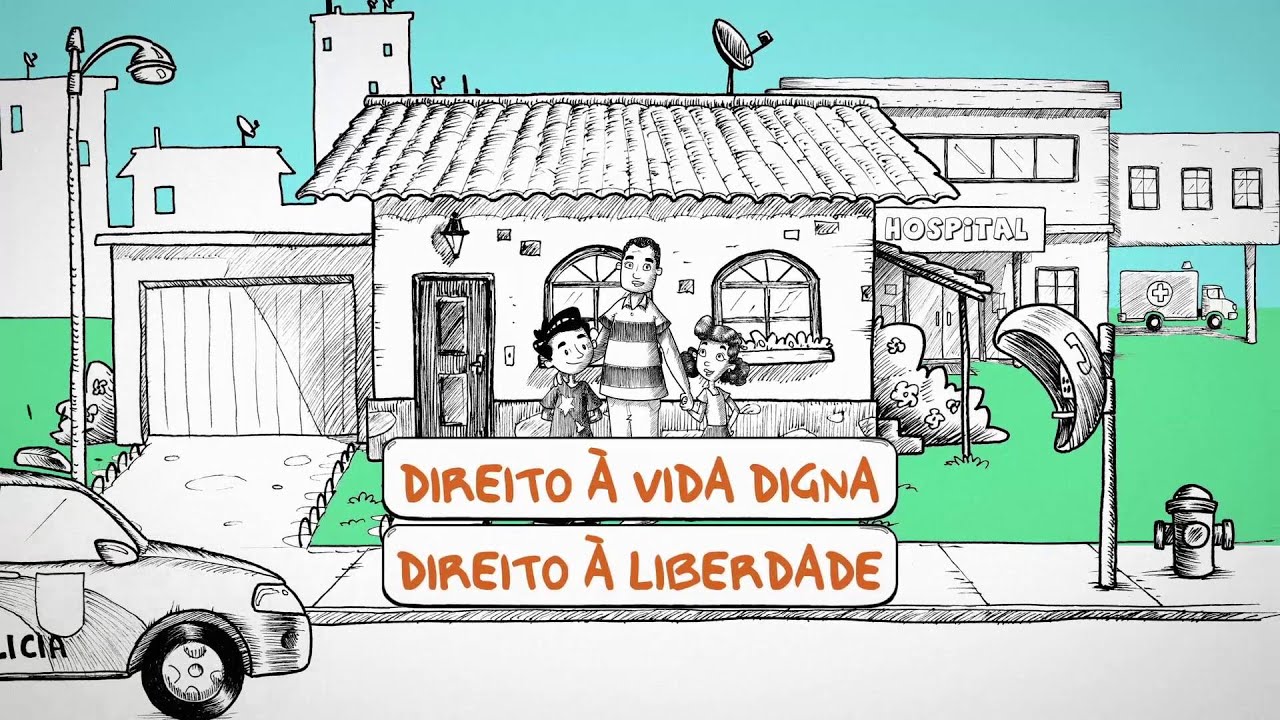
Human rights are not divorced from democracy. And if you can talk about democracy today the respect to basic rights is essential. When you talk about basic rights, you talk not only about the respect to the person's right, but also rights known as being related to the singularities of the social subjects.
The idea of bringing the project to the city's territory arose precisely because one of our perceptions was that sometimes, when you talk about human rights or dignity people think about something far distant from their reality. But we believe it's right beside us: History is here, it's not on the other side of the world, it's not about a different person, it's about you. I've been working a long time on Milton Santos' idea that what gives meaning to the set points, are the mobile ones.
So a landscape, a hill, a room, a building, they'll only get an effective meaning when you tell what has happened there. Man keeps evolving and will always want something better. I mean, younger people don't even know how most things had been achieved- how and what happened.
This is already incorporated. I think it’s very important, for those working with current demands, to understand how that point was hit from where they are fighting, from where they are militating. To redeem memories of conquests of the city of Sao Paulo the project's chosen characters who participated of fights for more rights.
Right to the City, Right to Work, Migrant's Right, Civil Rights, Rule of Law, Freedom of Speech, No Gender Nor Sex Discrimination, No Racial Discrimination. Right to the City You have to think the city as a whole. you have to think the city as a way to live with dignity, because without proper housing you don't have a set address for where to go by the end of the day.
Human being must be treated as whole. We want the city to be built in its horizontal phase. If a house is built in Itaquaquecetuba, another one in Jardim Angela, one should be built here in downtown either.
There are poor people in the whole city. All city's necessities are a single one. Over our history we've started understanding better and better that precisely the transport is not considered a right.
The first demonstration was actually a consequence of months, even years of the movement's base work- the fare increase’s came, we've called the demonstration and the population came out unanimously to fight for the fare decreasing. When the increase happened and we, with others social movements, with everybody who'd already rebelled against the increasing, went to the streets and said "no, we won't allow the increase" and the demonstrations kept arising, and people kept on going to the streets, somehow, the population itself started managing the transport. After what, people from Sao Paulo's districts started to mobilize themselves for the return of bus routes which had been cut but were used by them.
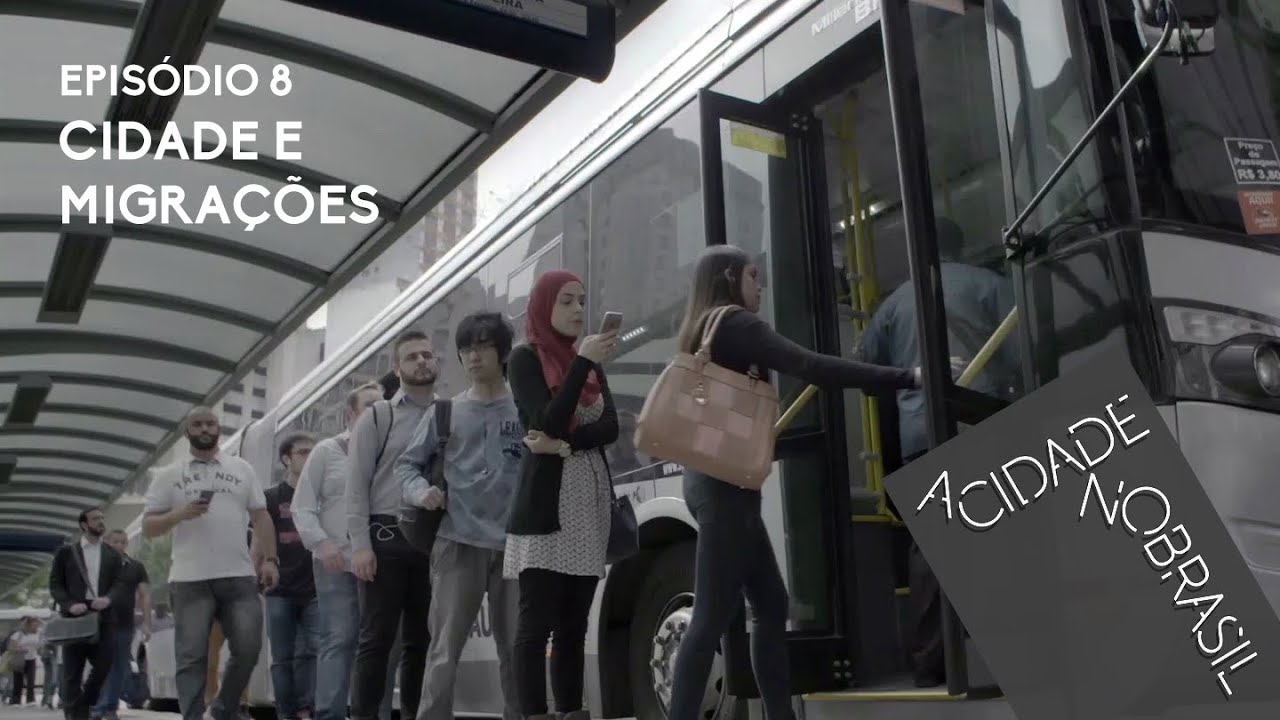
So we see all these little processes as a way in which, more and more, the people, the citizens, the ones who build the city, its workers, take charge of its construction, of its management, by telling how it is supposed to be done. Migrant's Rights The Migrant March is a request from the World's Social Forum on Migration. UN's declared December 18th as the International Migrant's Day and we came back to Sao Paulo and organized the first march already in 2006, at Kantian Square, a place which was completely abandoned, precisely because this Square is a Bolivian migrants' conquest.
Today we have another example, which is the Cobra Street. This one is being turned into a cultural heritage of the Bolivian community in the city of Sao Paulo, available to all the people who want to know it. No Racial Discrimination Sao Paulo is considered, and really is the country's greatest economic and political center.
And we must remember that every inch of this city has blood, sweat, tears and much strength, and much black people's life on it, but it's a place full of oppression, full of racism, where many people struggle to expand policies to fight racism. The Unified Black Movement have been composed of many groups and entities from the black movement back then. We called the demonstration at the Patricarca's Square, on the steps of the Municipal Theater, on 7th July.
From this demonstration on, the black movement started expanding to the cities, to all Brazilian states. Racism is never alone. Racism is often followed by chauvinism and many other "isms" that are harmful to the humanity.
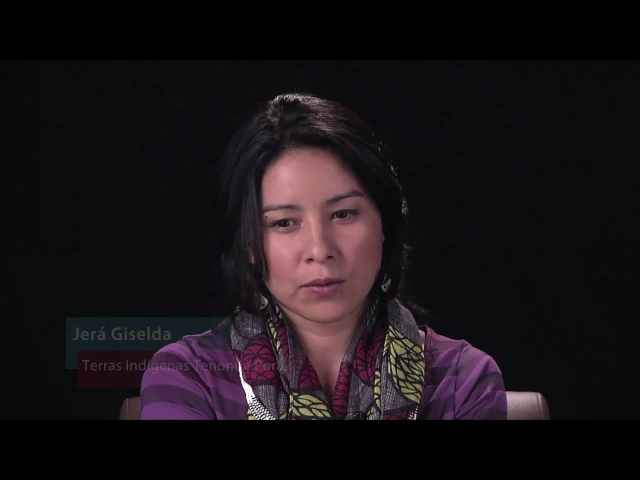
That's why the Black Movement has a historic of working with sectors. I think we've helped strengthening other sectors who are our brothers and sisters, our allies. I was born in 1970 and I followed the great caciques' fight for the State Government and FUNAI recognize the small lands, where we saw families growing up as the time went by.
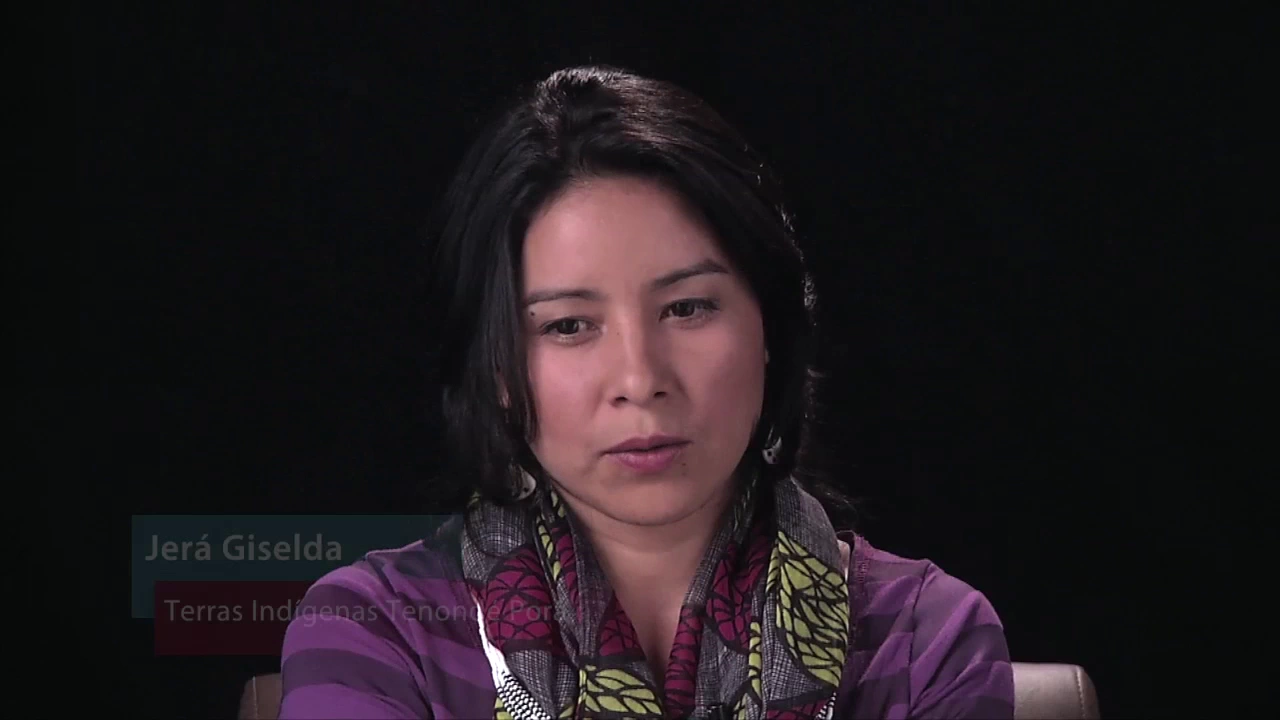
We understood the necessity of keep fighting so the government would think twice about the delimited areas in a boundaries' review process. The territory known today as Brazil was once a territory occupied only by populations of ethnic groups, natives, and after the European invasion, the "Jurua”, we had all of our lands taken, and nowadays we have to fight for 30, 40, 50 years, for a small piece of land. We want to delimit these areas which are on the boundaries of the big city, where there's forest, where there's no one living, where there's no one using it.
We only want to preserve it and have the opportunity to continue our people. Right to Work A significant portion of Osasco's workers used to work and study at the same time. So they were also the people who were used to think.
What made their awareness level increase. All this things have helped to develop those worker's critical consciousness. And within the labor movement itself, that was seeking for a political unit, a split has consequently happened.
So the creation of a Unique Central failed at that first. From this on, the journey has been hard, but CUT had, at least, 10 years of rising, then I guess it was also infected by the "power virus" and started going over to the other side. Nor Gender or Sexual Discrimination The "Brasil Mulher" newspaper, number zero, back then was released in October 1975, when women made a gathering to diagnose the Paulista women situation.
We used to meet there weekly, to organize the new's agenda and take them to the most different possible places. I guess that's when an embryo was shaped, or was created of a popular feminism, anti racist, anti capitalist. .
. The city of Sao Paulo has contributed a lot for this. We always think about feminism as a plural movement, so we must think how it focuses, materializes in the daily life of each of these women's group.
And that's what has guaranteed, until now, what has made us to organize, think the Slut Walk as a local movement. You are there, taking public space up, using your body to expose all these forms of violence which insist to tell that the women's place is not the public one, that the women's place is still, the domestic one. To woman, precisely, being there, on the streets is an extremely transforming step.
The parades emerged in 1969 and thereafter the fight begins, the social movements begin. In 1996 there was a calling to the people participate of a demonstration and, thereafter, in 1997 we took the Paulista Avenue. Why the Paulista Avenue?
It's the venue for the great social movements' claims. The Parade's main mission is the LGBT community's visibility issues. Back then, the homo affective relationships weren't certified.
And today we need a law that punishes refinements of homophobia. Unfortunately, it's a battle we've started against a huge inequality, because we are pursued and we have no support of the Legislative Power, all of our progresses are through the Judiciary, and this progresses, I want to highlight that, aren't a search for privileges, they're a search for rights equality. Civil Rights We must remember that the military regime, at the beginning when it didn't have a typical South American military dictatorship aspect yet, it had been supported by the Church.
And during this dictatorial regime, the human rights were basically unknown. Nobody was interested, on the government part, in respecting them. As a consequence: there've been a great reaction, led by the Church, I mean, in a quite penitentiary way for the fact that, back then, they'd supported the coup d'état.
Don Paulo had a leading role at that time. It was one of the few places in Brazil where sheltered that way, so generously, the prosecuted ones. Everybody was afraid, you know?
The Justice and Peace Commission role, founded by him, who I think he was one of the most important characters of Brazil in the 70's. He was the lay aspect of the church's performance in defense of the human rights. To people who looked for us and they were as diverse as possible, we've never asked "What's your political party?
" "What's your religion? " That didn't matter. It was a human person struggling, suffering.
I still remember the House of Detention's entrance. There was no gun, there hasn't been found a single fire gun. When the police arrived, and that's normal in a riot, the knives, all the melee weapons they had- and they must have it to defend themselves from each other, were thrown through the windows.
So, the Massacre was against defenseless people. The House of Detention has become a symbol of the violence against unarmed people. This kind of massacre, which has given us so many lessons and with so many consequences, can't be forgotten.
We must preserve the ability to think over these great human rights violations. Every time someone dies, we also die a little. The Federal Public Ministry has been working on the dictatorship subject and its search for victims' redressing, also searching accountability for the accused of committing those crimes.
And for the 50th anniversary, we've thought about something lighter. Something that could communicate better with the population. The will was bringing art inside the Federal Ministry to recall the coup's 50 years.
And I'm satisfied because this exhibition is at the Federal Ministry, because its main vocation is the human rights' defense, and the memory's defense, and the defense of the social rights, of the collective rights, of the cultural rights. So, the human rights exist and are to be protected. Rule of Law The Faculty of Philosophy used to be the Faculty of Literature, Philosophy and Human Sciences.
So it covered all the sciences you can imagine: Maths, Physics, Chemistry, Biology, Zoology, etc. And Philosophy, Social Sciences, History, Geography- so, there was a core considered "Human", and another one more like "Hard Sciences". And, in 1964, when the coup took place, we've realized that some teachers were promptly called to testify, while others were arrested- And that's exactly when the feelings really began to radicalize.
Then, in 1968, the Battle of 68 took place, that's when the dictatorship has really become into a fierce fight, let's say, against, as it seemed to us, the country's intellectual elite. The Battle, in fact, was a constant part, because the right-wing group, extreme right-wing group, used to get together at Mackenzie. So the confront was set just by crossing the street.
And it was a kind of constant fight. They used to invade- so much that, at a certain point, that was when the thing got really radical, the street was blocked and there were many schemes not to let the police access it, because it had been expected that it could happen. Additionally the students occupied the college to avoid its invasion by the CCC.
Thereafter, the Police and the Army occupied Maria Antonia st. and classes were taken to the University City's Campus. Freedom of Speech The Evening Party's emerged at a bar.
We had a bar in Campo Limpo, and there we used to do that we called the Candle Evening. And during that Candle Evening, we'd play the "pancakes", the vinyls, you know. It was back 95, 96.
and between a vinyl and another, between a song and another, someone'd say "Can I read some poetry? ” Then I also started bringing some poetry or stuff, things I had at home- then it slowly set into our lives. Thereafter people got to know that there in Campo Limpo, something was being done, then an interested person or another would come.
It's created a cultural melting pot there. I think expressing is inside and it's inherent. to every human being.
We are born with this genetic potential and creativity. And this creativity, when cut, trapped or not allowed to express itself, it ends, many times, in a society which will turn toward other directions. So, art has this vital role for growth both social, of what's around, also of the human being itself.
And it's important to think human being is what he aims to be or he can be whatever he wants to be. So we're asking ourselves: "What do people want to be? " I think the awareness of the human rights' needy to occupy these places has increased a lot.
I mean, I'm an optimistic about it, but I'm also realistic enough to consider that our situation is still very deficient about institutions that really preserve, promote and assure the human rights. The social movement can never stop acting, because we are culturally the "thermometers" to the Government keep progressing allowing us new rights, and opening a window inside our fight, to keep achieving progress trough time. Above all, I guess the young people don't realize how hard it was, and sometimes it's so difficult to transmit it that we get distressed about not being able to express perfectly, to make sure it'll never happen again.
We've joined forces, we’re a new raft together with a pretty intense list of historic feminists and I think that in the name of the collective we can't deny how feminism is really in evidence currently. We're feeling a large opening to treat this matters with the youth, with other social movements, it's a very deep change. The black people existence is a political existence.
The black presence in a place where there's only white people, where only people with money is, it's outrageous. It's outrageous by its form and content. Brazil faces a racist violence rising.
So, the claim for identity is really important, an underprivileged area identity consequently peripheral consequently class-based, consequently racial. This is very important in the fighting process of Brazilian people. I think we're facing a whole new period, that's when cities start seeing the migrants as important people, who contribute, who are active and have participation right.
We want a society which respect its differences, which recognizes others dignity to what we need to straighten the civil society. I mean, everyone who's got the human right's idea as a common agenda which can be supplemented with different views. If we would only get involved with the fights that concern us personally, I think that wouldn't have much to do with the human rights idea which is exactly the perspective that a human right violation against anyone, anywhere, it's a violation against everyone's dignity.
The Identity is always under constant construction, it's not something that comes ready. We're under constant construction. Our identity is progressive.
It wants to be what it is, by being. It's something in constant evolution and construction. We're in charge of the future, so we have to work today in the present, to build this future.
And create a fairer society, more supportive, more tolerating and with an ideal. I think we can't live without ideals, without willing something better to ourselves and to the other, above all. Otherwise there's no point in living.